Indiana Mallard and Wood Duck Numbers
It can be incredibly frustrating to hit the duck blind before dawn, only to sit through an entire morning flightless, wondering where all the birds have gone. Understanding the health and habits of Indiana's most popular duck species, the Mallard and the Wood Duck, is key to turning those slow mornings into successful hunts. This guide will take a deep dive into the numbers, behaviors, and habitat needs of these incredible birds, helping you decode their movements across the Hoosier state.
Understanding Indiana's Mallard Population Dynamics
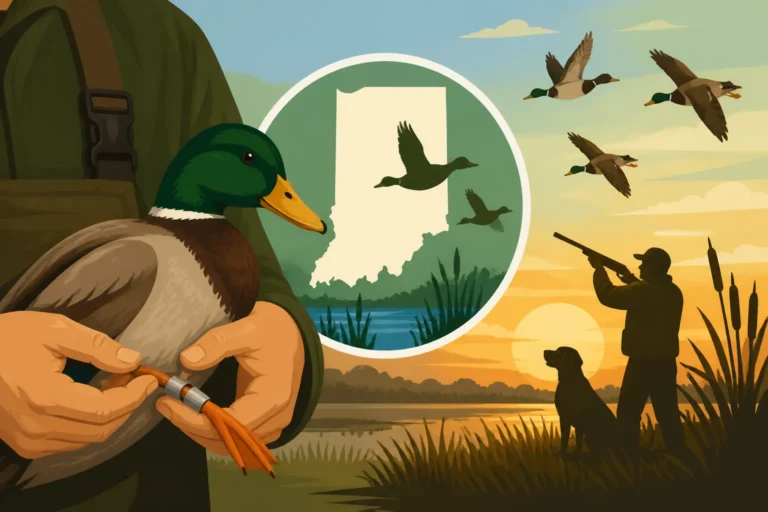
Mallards are, for many waterfowlers, the quintessential duck. Their distinctive green heads and loud quacks are synonymous with duck hunting, and their widespread presence makes them a frequent target across Indiana. However, while they might seem ubiquitous, their populations are dynamic and influenced by a host of factors far beyond our state lines.
The Mallard's Enduring Presence in the Hoosier State
Mallards are truly adaptable, thriving in a remarkable array of habitats, from small farm ponds and flooded timber to vast river systems and marshlands. This adaptability is one of the reasons they remain the most common duck in North America, and certainly a cornerstone of Indiana's waterfowl hunting scene. You'll find them dabbling in shallow water, grazing in stubble fields, and loafing on mudflats. They're often the first ducks to scout a new water source, and their relatively trusting nature, especially early in the season, can sometimes make for exciting hunting.
While many Mallards migrate through Indiana on their way to warmer climates, we also have a significant resident population that breeds here. These local birds provide early-season opportunities and a consistent presence throughout the season, as long as food and water remain available. Their resilience in adapting to human-altered landscapes, like agricultural areas, contributes to their enduring numbers, but it also means hunters need to scout carefully to find where these birds are concentrated.
The general trend for Mallard populations has been relatively stable, with fluctuations often tied to breeding success in the prairie potholes of the Dakotas and Canada. Good water conditions up north usually translate to more ducks heading south, and Indiana sits right in the path of the Mississippi Flyway. When those conditions are poor, hunters here can feel the pinch. That's why keeping an eye on reports from the breeding grounds can offer early insights into what kind of season we might expect.
Habitat Preferences and Migration Patterns for Mallards
Mallards are incredibly versatile in their habitat choices, but they do have preferences that concentrate them in certain areas. During migration, they'll seek out shallow wetlands, river backwaters, and, perhaps most notably, flooded agricultural fields. A cut cornfield or a standing soybean field near a water source can be an absolute magnet for Mallards, offering abundant high-energy food to fuel their journey. Think about those big open areas where you can set a large spread of decoys – that's prime Mallard country.
Their migration timing is heavily influenced by weather fronts and food availability. In Indiana, we typically see the major push of Mallards later in the season, often when the first real cold fronts arrive, pushing birds down from Wisconsin, Michigan, and beyond. This is when the big flocks descend, making for some of the most exciting hunting of the year. Understanding Duck Migration Timing Through Indiana is crucial for anticipating these movements. Local birds will be around earlier, but the influx of northern birds truly defines the peak of Mallard season.
You'll often find Mallards utilizing larger water bodies like the Kankakee River marshes or the backwaters of the Wabash. They love a place where they can loaf in safety but have easy access to nearby feeding grounds. This often means flying miles from a roosting area to a feeding area, a pattern hunters can exploit by setting up along flight lines or directly in feeding fields. It pays to use tools like GoHunt to study aerial maps and identify these key habitat components: water, cover, and especially food sources.
How Hunter Pressure and Environment Affect Mallard Numbers
Mallards are smart birds, and they learn quickly. Intense hunter pressure, especially on public lands, can quickly make them wary. They'll shift their patterns, becoming more nocturnal in their feeding, or seeking out untouched refuges. This is why tactics like spreading out, resting areas, and using less common entry points can be so effective. If you're hunting a heavily pressured public marsh, the birds you see on opening weekend might be gone or completely pattern-shifted by the next week.
Beyond hunting pressure, various environmental factors play a huge role in Mallard success. Droughts in the crucial prairie pothole breeding grounds can decimate nesting success, leading to fewer birds migrating south in subsequent years. Here in Indiana, wetland loss due to agriculture and development continues to chip away at vital staging and wintering habitat. Floods can also be a double-edged sword: too much water can scatter birds, making them harder to find, while ideal water levels create perfect feeding opportunities.
Conservation efforts are absolutely vital for maintaining healthy Mallard populations. Hunters contribute significantly through the purchase of hunting licenses and federal duck stamps, which directly fund wetland acquisition and restoration projects. Organizations like Ducks Unlimited also play a huge role in ensuring these habitats remain. Without these dedicated efforts, the enduring presence of Mallards in Indiana would be far more precarious.
Delving into Indiana's Wood Duck Populations
While the Mallard is the king of the open water, the Wood Duck is the jewel of the timber and creek bottoms. These exquisitely colored birds are a triumph of modern conservation, having rebounded from near extinction in the early 20th century to become one of Indiana's most beloved and challenging game birds.
The Unique Charm and Numbers of Wood Ducks
Wood Ducks are simply stunning, with iridescence that truly earns them the nickname "woodie." They're often an early-season favorite for hunters due to their early migration and preference for wooded wetlands. Unlike Mallards, Wood Ducks are primarily cavity nesters, meaning they rely on hollow trees or artificial nest boxes for reproduction. This unique nesting requirement heavily influences where you'll find them and why specific habitat types are so critical.
The story of the Wood Duck's comeback is remarkable. Through rigorous conservation efforts, including strict harvest regulations and widespread nest box programs, their populations have soared. Today, Wood Ducks are abundant across Indiana, with strong local breeding populations contributing to the early-season bird numbers. Wood Ducks in Indiana River Bottoms are a particularly common sight, their swift, acrobatic flight through dense timber a thrilling challenge for any shotgunner.
Their numbers tend to peak earlier in the season than Mallards, as they are among the first waterfowl species to migrate south in the fall. This makes them a primary target during Indiana's early waterfowl splits. While their total numbers might not match the sheer volume of Mallards, their consistent presence in suitable habitats makes them a highly anticipated bird for many Hoosier hunters.
Critical Habitat for Wood Duck Survival and Hunting
Wood Ducks are specialist birds when it comes to habitat. They absolutely thrive in forested wetlands, wooded swamps, beaver ponds, and the timbered edges of rivers and creeks. They prefer calm, shallow water with plenty of overhead cover from trees and dense vegetation. These environments offer not only protective cover from predators but also a rich supply of their preferred foods, such as acorns, aquatic invertebrates, and seeds.
The availability of suitable nesting cavities is a limiting factor for Wood Duck populations. Mature trees with natural hollows, often created by old woodpecker holes or broken limbs, are essential. This is why maintaining older stands of timber near water is so important for Wood Duck conservation. Where natural cavities are scarce, programs providing artificial nest boxes have proven incredibly successful in boosting local populations.
Hunting Wood Ducks often means focusing on these specific habitat types. Instead of wide-open fields, think small, secluded pockets of water deep within the woods. Creeks that wind through bottomland hardwoods, beaver-dammed sloughs, and flooded timber are prime locations. Their flight is fast and often erratic through the trees, making them a challenging but rewarding bird to pursue.
Early Season Opportunities and Management Challenges
Because Wood Ducks are early migrants, they provide fantastic opportunities during the opening weeks of waterfowl season. Hunters often target them by jump-shooting wooded creeks or sitting in secluded timber holes at first light, waiting for birds to fly from roost to feed. Their predictability in using specific flight paths within these timbered areas can be a boon for careful scouts.
Despite their strong recovery, Wood Ducks still face management challenges. Continuous wetland drainage and timber harvesting can destroy critical nesting and foraging habitat. Pollution in waterways can impact their food sources. Additionally, predation on nests, particularly by raccoons, can reduce nesting success, making predator control and the use of predator guards on nest boxes important management tools.
The Indiana DNR actively monitors Wood Duck populations through various surveys and banding programs. These efforts, combined with habitat improvement projects, aim to ensure that this beautiful species continues to flourish. Hunters also play a role by adhering to bag limits and reporting their harvests, providing crucial data for effective management.
Interpreting Numbers for Better Hunting Strategies
Knowing the general population trends and behaviors of Mallards and Wood Ducks isn't just trivia; it's vital information that can directly impact your hunting success. By understanding where and when these birds are likely to be, you can fine-tune your scouting and hunting efforts.
Using Population Trends to Inform Your Hunt Planning
Consider the larger picture. If reports from the northern breeding grounds indicate a strong hatch year for Mallards, you might expect more birds to eventually make their way to Indiana, especially with the onset of cold weather. Conversely, a poor breeding year might suggest you need to work harder to find concentrations of birds, or focus more on resident populations. For Wood Ducks, strong local breeding success means good early-season opportunities, but once those birds migrate, you'll be relying on birds moving in from farther north.
These trends inform your overall strategy. For instance, if you know the big push of Mallards hasn't arrived yet, you might spend more time targeting Wood Ducks in the timber or focusing on local Mallard flocks in smaller ponds and fields. As the season progresses and cold fronts push birds south, you can then shift your focus to larger water bodies and agricultural fields. Using mapping tools, such as those found on GoHunt, can help you visualize areas with the right blend of water, timber, and agricultural fields for each species.
It's about having a flexible approach. Don't go into every hunt expecting the same conditions or species composition. Local weather, water levels, and hunting pressure will always dictate where the birds are on any given day, but knowing the broader population context helps set realistic expectations and guide your scouting.
Scouting and Location-Specific Considerations
Scouting is paramount for both species, but your approach will differ. For Mallards, especially during peak migration, focus on aerial photos and ground observations of major flight corridors, large water bodies, and flooded fields. Look for areas with fresh sign, like droppings, tracks, or recently worked mud. Consider where birds might be roosting safely versus where they are actively feeding. Often, these spots are miles apart, and identifying both is key. You can use platforms like GoHunt to scout from home, marking potential hotspots on public lands or areas where you have private access.
For Wood Ducks, your scouting will be more granular and often involve walking. Look for small, secluded pockets of water within mature timber, beaver ponds, and slow-moving creeks. Their flight paths are often tight and follow the curves of a creek or the edge of a timber stand. Focus on finding consistent patterns of birds flying into or out of these areas at dawn and dusk. Hunting the Wabash River Bottoms or Hunting the Kankakee River Marsh Waterfowl are prime locations where these scouting efforts pay off. Pay attention to water levels, as Wood Ducks prefer shallower, easily accessible foraging areas.
When planning your hunt, consider local regulations, such as Indiana Duck Zone Boundaries and Indiana Duck Daily Bag Limit. Also, remember that Where Nontoxic Shot Is Required in Indiana for waterfowl hunting.
Gear and Tactics Tailored to Each Species
Your gear and tactics should ideally be tailored to the species you're pursuing and the habitat you're hunting.
Mallard Hunting Gear & Tactics:
- Decoys: Mallards respond well to large spreads of decoys, often including full-body field decoys if you're hunting a cut agricultural field. Motion decoys, like spinning wing decoys, can be very effective in attracting distant birds.
- Calls: Mastery of the Mallard hen call is essential. Learning to make various calls – greeting calls, feeding chuckles, comeback calls – can be the difference-maker.
- Blinds: Layout blinds are perfect for open fields, while natural blinds brushed into cattails or timber are ideal for larger water bodies. Layout Blind Hunting Indiana Farm Fields offers specific insights.
- Retrievers: A good retriever is invaluable for quickly fetching downed birds, especially in open water or dense cover.
- Shotgun/Loads: A 12-gauge shotgun with a modified or improved cylinder choke and steel shot (e.g., #2 or #3) is a versatile choice. For deeper dives into gear, check out Waterfowl Gear for Kankakee Marshes.
Wood Duck Hunting Gear & Tactics:
- Decoys: You don't necessarily need a massive spread. A half-dozen Wood Duck decoys or a mix of Wood Ducks and a few Mallards can be sufficient for smaller, timbered holes.
- Calls: While Wood Duck calls exist, they are often less critical than a good Mallard call. Sometimes a simple whistle or a soft Mallard call can attract them.
- Blinds: Natural cover is your best friend. A camo blind strapped to a tree or simply sitting quietly amidst dense cover is often all you need in the timber.
- Retrievers: Just like Mallards, a retriever helps immensely in dense, brushy environments where downed birds can disappear quickly.
- Shotgun/Loads: Given their fast, erratic flight through timber, a more open choke (improved cylinder or skeet) is often preferred. Smaller steel shot (e.g., #4 or #6) can be effective.
- Waders: Waders for Marsh Hunting are absolutely essential for navigating flooded timber and muddy creek bottoms where Wood Ducks reside.
Remember to utilize mapping applications, such as GoHunt, to pinpoint specific timber holes or small water features that might hold Wood Ducks. These tools can highlight subtle changes in terrain and vegetation that are invisible from the ground.
Conservation and the Future of Indiana's Ducks
The health of Indiana's Mallard and Wood Duck populations isn't just about hunter success; it's a reflection of the overall ecological well-being of our wetlands and waterways. Hunters have a critical role to play in ensuring these species thrive for generations to come.
The Role of Hunter Contributions in Conservation
It's easy to overlook, but every time an Indiana hunter purchases a state hunting license, a federal duck stamp, or other related permits, a significant portion of that money goes directly towards conservation efforts. These funds are specifically earmarked for wetland acquisition, restoration, and management, benefiting not only ducks but countless other wildlife species. Additionally, hunters often volunteer their time and resources to build nest boxes, plant habitat, and clean up natural areas.
Organizations like Ducks Unlimited, Delta Waterfowl, and the Indiana Waterfowl Association are powered by hunter dollars and dedication. They work tirelessly to protect and enhance critical wetland habitats, both in Indiana and across the broader flyway. Reporting your harvest, even if it feels like a chore, provides invaluable data to wildlife biologists, helping them assess population trends and set appropriate season structures and bag limits. This data is essential for sustainable management. You can find information on required steps like Indiana HIP Certification for Bird Hunters through official channels.
Challenges and Ongoing Efforts
Despite past successes and ongoing dedication, both Mallard and Wood Duck populations face persistent challenges. Climate change impacts breeding grounds in the far north, with changes in precipitation patterns affecting critical prairie pothole habitat. Here in Indiana, the continued conversion of wetlands for agricultural expansion and urban development remains a significant threat to crucial staging and wintering areas. The increasing pressure on public lands also requires thoughtful management to provide resting areas for migratory birds.
The Indiana Department of Natural Resources (DNR) works continuously to address these challenges. They manage numerous Fish & Wildlife Areas (FWAs) that provide critical habitat for waterfowl, often manipulating water levels and planting food crops to attract and hold birds. These FWAs are vital hubs for migratory birds and often offer some of the best public hunting opportunities in the state. Through strategic partnerships and science-backed management plans, they strive to balance hunting opportunities with robust conservation. Even independent hunters can use mapping tools like GoHunt to identify public land boundaries and conservation project areas, understanding the landscape from a broader, more informed perspective. By staying informed and actively participating, hunters remain at the forefront of ensuring a healthy future for Indiana's ducks.
| Feature | Mallard | Wood Duck |
|---|---|---|
| Typical Habitat | Open wetlands, flooded fields, large rivers | Wooded swamps, flooded timber, creek bottoms |
| Primary Diet | Seeds, grains, aquatic plants, invertebrates | Acorns, seeds, insects, small fruits |
| Nesting Site | Ground nests in dense vegetation | Tree cavities, nest boxes |
| Migration Timing | Peaks later in fall, often with cold fronts | Earlier fall migration |
| Flight Pattern | Direct, strong, often in large flocks | Fast, erratic, maneuverable through trees |
| Hunting Strategy | Decoy spreads, calling, field hunts | Jump shooting, small spreads in timber |
Disclaimer
This article is for general informational purposes only and does not constitute professional advice. Laws, prices and regulations vary by location and change over time. Consult a qualified professional for guidance on your specific situation.