Indiana Suburban Archery-Only Zones
It's incredibly frustrating when deer become an issue right in our backyards, causing property damage, spreading disease, and posing risks like vehicle collisions, yet traditional hunting methods aren't an option. This guide is all about navigating those unique situations here in Indiana, focusing on suburban archery-only zones. We'll dive deep into why these areas exist, the specific rules you need to follow, and practical tips for successfully and safely hunting deer where urban sprawl meets wild instincts.
Understanding the "Why" Behind Suburban Archery Zones
When you think of deer hunting in Indiana, chances are you picture sprawling woods or wide-open farm fields. But the reality for many Hoosiers, especially those living in growing communities, is that deer are increasingly becoming a presence in residential areas, parks, and even commercial districts. This isn't just about seeing a few deer at dusk; it's about significant overpopulation issues that lead to a host of problems.
The Challenge of Urban Deer Overpopulation
Deer thrive in fragmented landscapes, and our suburbs provide the perfect environment for them. There's an abundance of ornamental plants and gardens to feast on, plenty of green spaces for cover, and often, a distinct lack of natural predators like coyotes or bobcats, whose populations are typically lower or less effective in densely populated areas. This combination allows deer herds to grow unchecked, leading to a noticeable increase in their numbers within city limits and surrounding suburban communities. You'll hear stories from friends in places like Carmel, Zionsville, or even parts of Fort Wayne and Indianapolis about their prize hostas disappearing overnight or constant worries about deer jumping out in front of cars on busy roads.
This isn't just an aesthetic nuisance; it’s a serious ecological and public safety concern. Overbrowsing by deer can devastate local plant communities, harming biodiversity and changing habitat for other wildlife. Economically, the damage to landscaping, crops on the urban fringe, and vehicle repair costs adds up. And most critically, deer-vehicle collisions are a constant threat, causing injuries and even fatalities every year. These aren't just statistics; they're real accidents impacting our neighbors and families.
How Archery Hunting Addresses the Problem
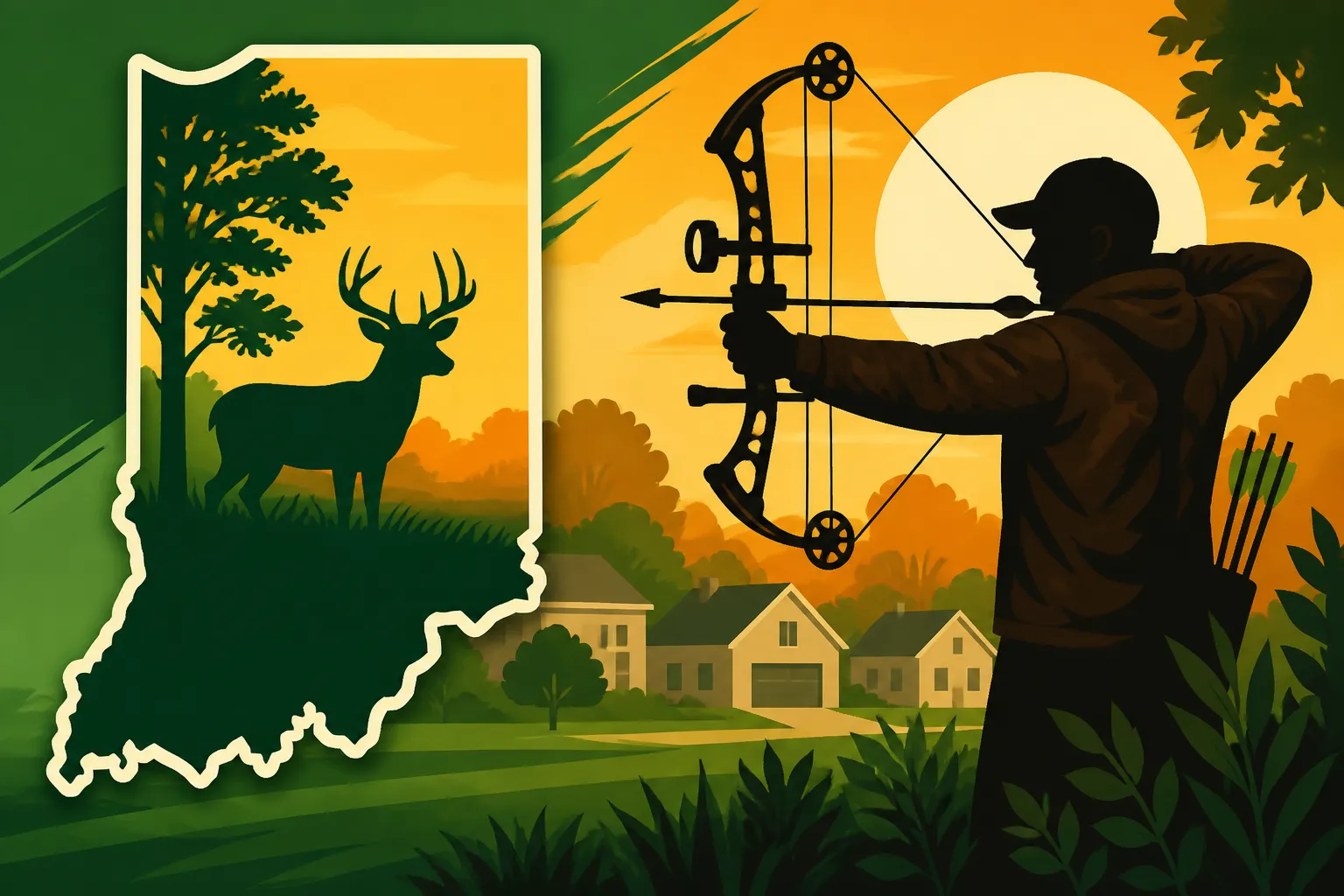
Given the density of homes, schools, and businesses, traditional firearm hunting is simply not a safe or viable option in most suburban areas. The range of a rifle or even a shotgun slug is too great, and the noise alone would be a huge disruption and a safety concern for residents. That's where archery hunting steps in as a targeted, discreet, and highly effective management tool.
Archery equipment, whether it's a compound bow or a crossbow, has a much shorter effective range compared to firearms. This significantly reduces the risk of an arrow traveling beyond its intended target, making it inherently safer for use in more confined, populated areas. The lack of loud noise also minimizes disturbance to residents and doesn't draw unwanted attention. Furthermore, archery hunting often requires a more intimate knowledge of the land and deer movement, allowing hunters to target specific problematic areas and remove individual deer that are causing the most issues. It's a surgical approach to wildlife management, designed to mitigate the negative impacts of deer overpopulation while prioritizing public safety and community well-being. It’s not just about taking a deer; it’s about providing a valuable service to the community.
Navigating the Rules: What You Need to Know
Hunting in an Indiana suburban archery-only zone isn't like heading out to the Hoosier National Forest. There's a whole different set of regulations you need to be aware of, primarily driven by local ordinances and specific program guidelines, which often supplement or even override standard state hunting rules in particular ways. It can feel like a maze, but understanding these distinctions is key to a safe and legal hunt.
Local Ordinances and State Regulations
While the Indiana Department of Natural Resources (IDNR) sets the statewide framework for deer hunting, including the general Indiana Deer Season Structure Explained, individual cities, towns, and even some county park systems have the authority to establish their own, more restrictive rules for deer management within their municipal boundaries. These local ordinances are paramount and can cover everything from permitted hunting days and hours to specific property access requirements. For instance, a city might extend the archery season well beyond the standard state dates, or they might restrict hunting to only antlerless deer to help control population growth more effectively.
It's crucial to remember that state rules, like the Crossbow Rules During Indiana Archery Season, still apply unless a local ordinance explicitly modifies or adds to them. This means you still need your proper state hunting license and deer tags. However, local programs often provide additional "bonus" antlerless tags or specific permits that allow you to take more deer than your standard state limits. The best way to get accurate information is to contact the local police department, city clerk's office, or the parks department in the specific municipality you intend to hunt. Websites like GoHunt can sometimes provide general info or links, but a direct call to the local authority is always the most reliable first step.
Equipment and Safety Requirements
When it comes to equipment, "archery-only" means exactly that. You'll be limited to traditional bows, compound bows, or crossbows. This typically means no firearms of any kind are permitted for deer hunting in these areas, even during the statewide firearms season. You'll need to ensure your bow or crossbow meets the minimum draw weight and other specifications outlined by the IDNR. For more details on what's permitted, check out our guide on Bow and Crossbow Setups for Indiana.
Safety is paramount in suburban environments. While the statewide Indiana Blaze Orange Requirements might apply in some parts of the archery season, many suburban archery-only zones do not require blaze orange. In fact, wearing camouflage might be preferred to avoid alarming non-hunting residents who might be using adjacent walking trails or parks. Always confirm this with local authorities. The primary safety focus in these zones is on shot angles, backstops, and knowing your surroundings. This means:
- Elevated Stands: Often a requirement or highly recommended to ensure downward arrow trajectory, minimizing the risk of an arrow leaving the property.
- Property Boundaries: Absolutely critical to know and respect. An arrow cannot leave the property you have permission to hunt. Utilizing mapping tools, which we’ll discuss more, is essential here.
- Neighbor Awareness: While you don't need to knock on every door, being aware of neighboring properties, potential pedestrians, and pet owners is vital. Ethical hunting in these zones includes being a good neighbor.
- Quiet and Discretion: Maintain a low profile. Parking in designated areas, being quiet, and quickly processing any harvested deer are all part of being a respectful suburban hunter.
Always check the specific program rules for additional safety stipulations, such as mandatory safety courses tailored to urban hunting or specific stand types.
Finding and Accessing Suburban Archery Zones
The biggest hurdle for many hunters interested in suburban archery zones is simply finding out where they exist and, more importantly, gaining access. These aren't typically "public hunting lands" in the traditional sense, but rather a patchwork of private properties, municipal parks, or other designated areas.
Identifying Participating Communities and Programs
While the IDNR doesn't maintain a comprehensive list of every local suburban archery program, many Indiana communities have implemented them in response to growing deer populations. You'll often find these programs in municipalities experiencing rapid growth or those with a lot of green space, parks, or large private landowners. Cities like Bloomington, Carmel, Zionsville, and even some areas around Fort Wayne and Indianapolis have, at various times, had formal or informal programs allowing deer management through archery.
The best way to start your search is local. Keep an ear to the ground in your community. Local news reports, city council meeting minutes, or simply asking at your local hardware store or outdoor outfitter can often provide leads. Search online for "[Your City/Town Name] deer management program" or "archery hunting ordinance." Once you identify a potential community, contact their city hall, parks department, or even their local animal control or police department. They can provide specific details about any organized programs, application processes, or lists of properties seeking hunters. Sometimes these programs are advertised as a way to assist landowners with deer issues, so look for those announcements.
Gaining Permission on Private Land
Unlike hunting at a Fish and Wildlife Area, where you might simply sign in, suburban archery zones almost exclusively rely on obtaining explicit permission from private landowners. This is where your communication skills and professionalism truly shine. The process of Getting Private Land Permission in Indiana is paramount here.
Many of these programs operate by pairing hunters with landowners who are experiencing deer damage. This means you're not just asking to hunt; you're offering a service. When approaching a landowner, whether through a formal program or by knocking on doors:
- Be Professional: Dress neatly, speak clearly, and introduce yourself.
- Explain Your Purpose: Clearly state you are an experienced archery hunter interested in helping manage the deer population on their property.
- Highlight Safety: Emphasize your commitment to safety, adherence to all local rules, and your plan for downward shots from an elevated position. Reassure them you understand their concerns about living in a residential area.
- Discuss Logistics: Be prepared to talk about how you'll access the property, when you'll hunt, and how you'll handle a harvested deer discreetly. This often involves specific entry routes, precise hunting times, and plans for quick and quiet removal of the animal.
- Offer References: If possible, offer references from other landowners you've helped or demonstrate your participation in hunter education courses.
- Get it in Writing: Always, always get written permission. This protects both you and the landowner. A simple letter stating permission, property description, and contact information is usually sufficient. Consider using mapping tools like GoHunt to clearly delineate the agreed-upon hunting boundaries on a map for both your and the landowner's clarity. This prevents any misunderstandings about where you can and cannot be.
Securing access to hunt Hunting Small Private Tracts in Indiana is often about building trust and demonstrating respect for the landowner's property and their neighbors. Be prepared for some rejections, but don't give up. The more professional and safety-conscious you are, the better your chances of gaining access. Also, be sure you understand Finding Indiana Property Lines to avoid any accidental trespassing.
Tactics for Success in Archery-Only Zones
Hunting in suburban archery-only zones presents a unique set of challenges and opportunities. The deer in these areas are often accustomed to human activity, but they are still wild animals. Adapting your strategy to this environment is crucial for success.
Scouting and Stand Placement
Scouting in a suburban zone will look different than in a vast forest. You're not looking for large tracts of untouched wilderness; instead, you're focusing on smaller green spaces, creek bottoms, unmaintained backlots, and thick fencerows that act as deer highways. Deer in these areas learn to move primarily under the cover of darkness or during the very early and late hours of daylight to avoid human encounters. They often utilize small, overlooked pockets of cover right alongside busy roads or housing developments.
Before the season, quietly walk the property with permission. Look for subtle signs:
- Hidden Trails: Deer will create narrow, well-worn paths through dense brush, often parallel to fences or property lines, providing secure travel corridors.
- Bedding Areas: These might be incredibly close to human activity – a thicket behind a commercial building, a dense patch of honeysuckle along a creek, or an overgrown corner of a yard. Deer seek out security cover, no matter how small.
- Food Sources: Pay attention to what homeowners are planting. Deer will hit gardens, fruit trees, and ornamental shrubs. Connect these food sources to the bedding and travel routes.
- Water Sources: Creeks, retention ponds, or even ditches can be vital water sources in dry periods.
Your stand placement will revolve around these findings, but with an added emphasis on safety and discretion. Tree stands are almost always the preferred method in these zones, allowing for a downward shot. This minimizes the risk of an arrow overshooting its target and traveling onto neighboring properties. When considering Treestand Setups in Hoosier National Forest, you think about terrain and wind; here, you're thinking about those, plus homes and roads. Ensure a clear shooting lane, but also that you have a completely safe backstop behind your target area. Always ensure your entry and exit routes are quiet and undetected, as disturbing deer in a small, confined area can make them nocturnal quickly.
Hunting Strategies for Pressured Deer
Deer in suburban archery zones are highly pressured, not necessarily by hunters, but by constant human presence. They are acutely aware of disturbances and will adapt their patterns quickly. This means your hunting strategies need to be stealthy, patient, and flexible.
- Early Morning and Late Evening: These are your prime times. Deer will move during low light to minimize interaction with people. Be in your stand well before legal shooting light and stay until after legal shooting light ends. This often means carefully walking in with a headlamp and walking out in the dark.
- Wind is King: Just like any deer hunting, wind direction is paramount. Your scent will travel far, and in a confined area, a swirling wind can quickly give you away. Always play the wind.
- Patient Sitting: In smaller areas, bumping deer can ruin the spot for days. Get into your stand quietly and sit still. Avoid unnecessary movement or noise. Sometimes, waiting out that doe for an hour before she offers a clear, safe shot is the difference between success and failure.
- Minimal Gear: Pack only what you need to avoid unnecessary noise. A good set of binoculars, a rangefinder (critical for precise shots in close quarters), and your bow are often all you need. You want to be a ghost.
- Discreet Harvest: If you're fortunate enough to harvest a deer, the process of Field Dressing a Deer in Cold Weather or warm weather needs to be handled with utmost discretion. Have a plan for quick field dressing and removal. Often, this means having a deer cart or sled ready, and a route planned to avoid being seen by non-hunting residents. Many hunters use tarps or game bags to cover the deer during transport, especially if navigating a more visible path. Once harvested, don't forget your responsibilities to Reporting a Deer Through Indiana's App within the required timeframe.
Hunting suburban archery-only zones is a unique and rewarding challenge. It requires a deep understanding of deer behavior, strict adherence to safety protocols, and a high level of respect for the non-hunting public. But for those willing to put in the effort, it's a valuable way to contribute to local wildlife management and experience hunting in an unconventional, yet exciting, environment.
Disclaimer
The information provided in this guide is for general informational purposes only and does not constitute legal advice. Hunting regulations and local ordinances are subject to change. Always consult the most current Indiana Department of Natural Resources (IDNR) regulations and specific local municipal or county ordinances before engaging in any hunting activities. It is the individual hunter's responsibility to know and comply with all applicable laws and regulations.