Safety Harnesses and Lifelines
Let's be honest, we all love the thrill of hanging a treestand in that perfect spot, looking down into a fresh scrape line or a well-used deer trail. But when you're 20 feet up a tree, gravity is a cruel mistress, and falls are a leading cause of serious injury, even death, for deer hunters every single season. This guide isn't about scaring you; it's about equipping you with the knowledge and confidence to make safety harnesses and lifelines an automatic, non-negotiable part of every hunt, ensuring you come home safe to your family.
The Harsh Reality of Treestand Hunting: Why Safety Matters
It's easy to get complacent. We've all done it—climbed into a stand in the dark, maybe a little rushed, and thought, "I'll hook up once I'm settled." Or perhaps you've been hunting from a stand for years, never had a close call, and that false sense of security has crept in. But the statistics don't lie. Treestand accidents are far too common, and they often happen in unexpected ways, even from seemingly low heights. The ground rushes up fast when you lose your footing, and the consequences can be devastating, from broken bones and paralysis to fatal head injuries.
The "It Won't Happen To Me" Mentality
This is perhaps the most dangerous mindset a hunter can adopt. We’re often willing to invest hundreds, even thousands, into bows, rifles, optics, and clothing, but sometimes we balk at the relatively small cost of a robust safety system or the "inconvenience" of using it every time. The truth is, accidents don't discriminate. They don't care if you're a seasoned veteran who's been hunting Hoosier hardwoods for decades or a novice on your first season. A sudden gust of wind, a rotten step, a slippery boot, a forgotten tool in your pack that causes you to reach too far—any of these seemingly minor events can lead to a catastrophic fall. It's not about being clumsy; it's about being prepared for the unpredictable nature of being elevated in the woods.
Common Scenarios Leading to Falls
Falls can happen at any point during the treestand experience, not just when you’re stepping from your climbing sticks onto the platform. Often, hunters are most vulnerable during the ascent or descent, when they are transitioning between steps or moving equipment. Imagine climbing up in the pre-dawn darkness, your hands cold, and you misjudge a step on your Climbing Sticks for Indiana Hardwoods. Or maybe you're packing up after a long sit, daylight fading, and your foot slips on a frosty rung. Even reaching for an arrow out of your quiver or bending down to retrieve something from your pack can shift your center of gravity just enough to cause an imbalance. Furthermore, old, brittle straps on a permanent stand, or even a faulty bolt on a ladder stand, can give way without warning, no matter how careful you are. That’s why a full-body harness and a reliable lifeline are absolutely non-negotiable insurance policies for your life.
Deciphering Safety Harnesses: Your Personal Guardian
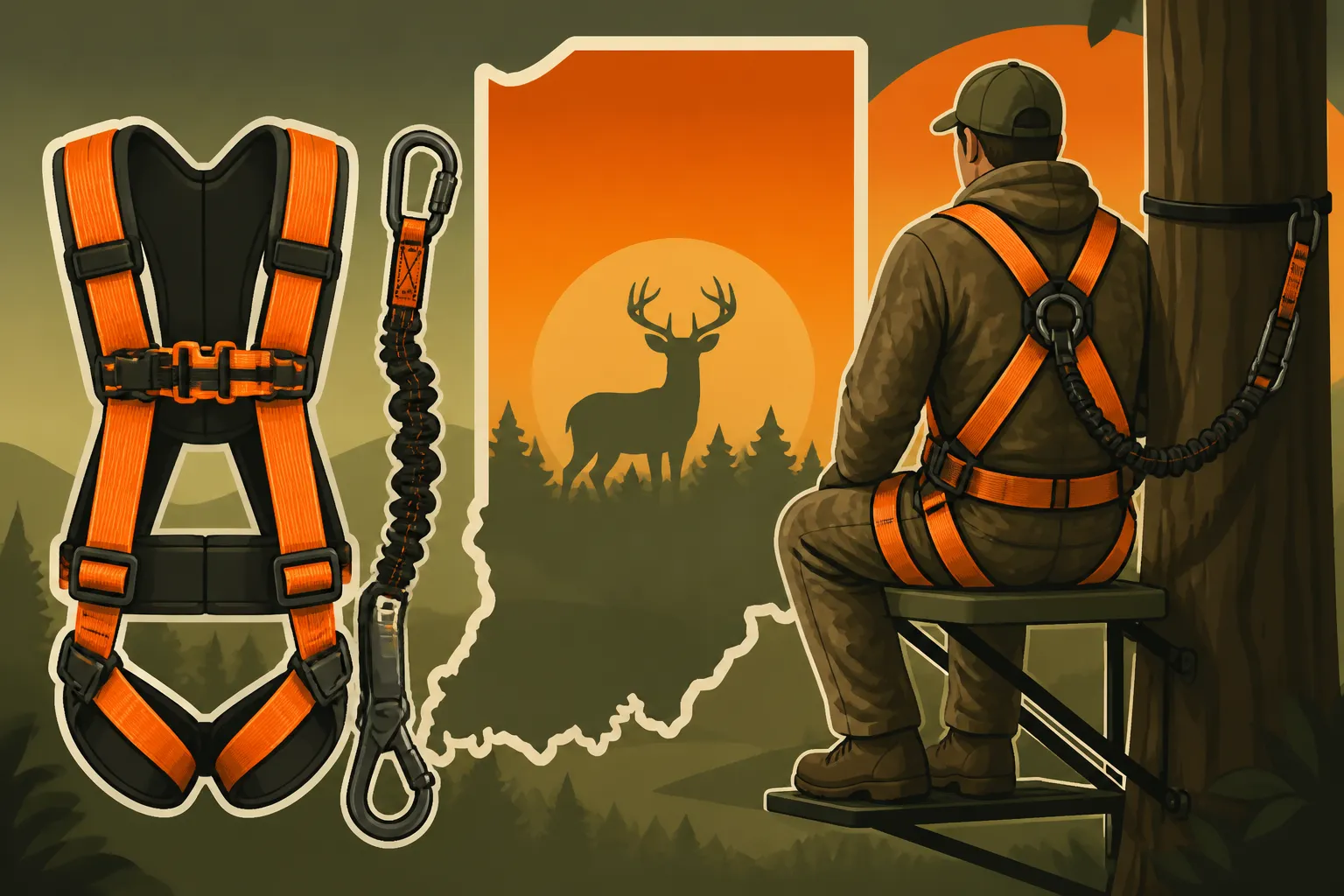
A full-body safety harness is far more than just a strap you wrap around yourself. It's a carefully engineered system designed to distribute the impact of a fall across your entire body, protecting your vital organs and spine. Modern harnesses are lightweight, comfortable, and designed to allow a full range of motion, making them a world away from the bulky, restrictive vests of yesteryear. You should treat your harness with the same respect and care you give your prized rifle or bow.
Components of a Full-Body Harness
A typical full-body harness consists of several key components that work together to keep you safe:
- Shoulder Straps: These go over your shoulders, much like backpack straps, and connect to the back D-ring.
- Leg Loops: These wrap around your upper thighs, designed to comfortably support your weight if you fall. Proper adjustment is crucial to prevent compression injuries.
- Chest Strap: This strap connects the shoulder straps across your chest, keeping the harness snug and preventing you from sliding out.
- Back D-Ring: This metal ring, usually located between your shoulder blades, is where your tether or lifeline attaches. It’s the primary attachment point for fall arrest.
- Tether: This short strap connects your harness's D-ring to the tree (via a tree strap or lifeline) and absorbs the initial shock of a fall. It should be adjusted for minimal slack.
- Suspension Relief Device: This is often a small strap or loop that can be deployed if you fall, allowing you to stand up or relieve pressure on your leg arteries while awaiting rescue. This is incredibly important, as prolonged suspension can lead to serious medical complications.
When you're shopping for gear, whether it's at a local Indiana outfitter or through online retailers like GoHunt, pay close attention to the construction and materials. You want durable webbing, robust stitching, and strong metal hardware that can withstand the elements and the stress of a fall.
Comfort and Fit: Why Proper Adjustment Matters
An uncomfortable harness is one that won't be worn consistently. Modern designs have come a long way, focusing on ergonomic fit and lighter materials. However, even the best harness won't be comfortable or safe if it's not adjusted correctly. You want it snug, but not constricting. The leg straps should be tight enough to prevent slipping but loose enough to avoid cutting off circulation. The chest strap should be centered and tight enough to keep the shoulder straps in place.
Take the time to put your harness on at home, adjust it, and sit in a chair for a while to simulate a stand sit. If you feel any pinching, discomfort, or excessive looseness, adjust it until it feels right. Remember, you might be wearing multiple layers of clothing depending on the Indiana weather, so practice fitting it over your hunting clothes. A poorly fitted harness can not only be uncomfortable, but it can also fail to perform optimally in a fall, potentially causing injury.
Inspections and Maintenance
Like any critical piece of gear, your safety harness needs regular inspection. Before every season, and ideally before every hunt, give it a thorough once-over.
- Webbing: Look for frayed edges, cuts, tears, or excessive wear. Any damage to the webbing compromises its strength.
- Stitching: Check for loose or broken stitches, particularly at attachment points and where hardware is sewn in.
- Hardware: Inspect buckles, D-rings, and carabiners for cracks, deformities, corrosion, or signs of stress. Ensure all moving parts operate smoothly.
- Tether: Examine the tether for the same wear and tear as the harness webbing.
- Expiration Dates: Some manufacturers include expiration dates on their harnesses, especially those with elastic components. Always adhere to these recommendations.
If you find any damage, replace the harness immediately. Don't try to repair it yourself. Exposure to UV light, extreme temperatures, and harsh chemicals can degrade materials over time, even if they look fine. Store your harness in a cool, dry place away from direct sunlight.
The Unsung Hero: Lifelines and Their Installation
While a safety harness catches you, a lifeline ensures you're connected to the tree from the moment your feet leave the ground until they touch it again. This continuous connection is crucial, as many falls occur during the ascent or descent, before a hunter has a chance to connect a standard tree strap. Think of it as your continuous personal safety net.
What is a Lifeline and How it Works
A treestand lifeline is essentially a long rope that runs from the base of the tree up to your stand's platform and back down, secured at both ends. On this main rope, a prusik knot is tied, creating a movable loop. Your harness tether attaches to this prusik knot. As you ascend or descend, you slide the prusik knot up or down the main rope. If you were to slip or fall, the prusik knot instantly cinches down on the main rope, arresting your fall.
This ingenious system ensures that at no point are you disconnected from the tree. You can climb up, attach your Portable Treestands Worth Packing In, and descend, all while being constantly tethered. It’s an incredibly simple yet effective piece of equipment that dramatically reduces the risk of a fall during the most vulnerable parts of your hunt. For those hunting public land like the Hoosier National Forest, where you might be using different trees frequently, a personal lifeline that can be easily set up and taken down is essential.
Installation and Usage: Step-by-Step
Installing a lifeline correctly is critical. Here’s a basic overview:
- Preparation: Before heading to the woods, make sure your lifeline is untangled and ready.
- Anchor the Bottom: Securely tie or loop one end of the lifeline around the base of the tree, ensuring it's at ground level.
- Deploy the Rope: Toss the lifeline over a sturdy branch above your desired stand height, or simply pull the rope up the tree if you're installing it from the ground with a throw bag.
- Secure the Top: Once the rope is over the branch or at the desired height, pull it taut and secure the top end tightly around the tree, well above your head when seated in the stand. The lifeline should be as vertical as possible, with minimal slack.
- Attach Prusik Knot: Slide the prusik knot and carabiner onto the main lifeline rope.
- Connect Harness: As you begin your climb, attach your harness tether to the carabiner on the prusik knot.
- Ascend Safely: Slide the prusik knot up the main rope as you climb. Maintain three points of contact with the tree or your climbing system at all times.
- At the Stand: Once you're on the stand platform, adjust your prusik knot so it's above your head, and ensure your tether is snug but allows you to turn.
- Descent: When it's time to climb down, simply reverse the process, sliding the prusik knot down the main rope as you descend.
Never remove your harness or disconnect from the lifeline until both feet are firmly on the ground. This constant connection is what makes the lifeline so effective. Even if you only hunt a few feet off the ground, falls can still be serious, so use your lifeline every time.
Descending Safely After a Fall
Should the unthinkable happen and you do fall, your harness and lifeline will catch you. However, being suspended in a harness for an extended period can be dangerous. It can lead to "suspension trauma" or "harness hang syndrome," where blood pools in your legs, potentially leading to unconsciousness or organ damage. This is where your suspension relief device (often called a relief strap or foot stirrup) becomes vital.
If you fall, immediately deploy your relief strap and step into it. This allows you to stand up in your harness, taking the pressure off your femoral arteries and keeping blood circulating. Once stable, assess your situation. Can you climb back onto your stand or climbing steps? If not, do you have a cell phone to call for help? Can you lower yourself to the ground? Some harnesses come with descent mechanisms, but in most cases, you'll need to wait for assistance. The most important thing is to relieve pressure on your legs and stay calm while waiting for help. Always let someone know where you are hunting, especially if you're out in remote areas of Hoosier National Forest Hunting.
Making the Smart Choice for Your Indiana Hunt
Choosing the right safety harness and lifeline isn't just about picking the first one you see. It's about matching the gear to your hunting style, the terrain you hunt in, and the specific types of stands you use in Indiana. From the rolling hills of Brown County to the flat farmlands of northern Indiana, conditions vary, and so should your consideration for your safety gear.
Matching Gear to Hunting Style
Your choice of treestand safety gear should align with how and where you hunt:
- Mobile Hunters (Public Land): If you're a run-and-gun hunter, frequently moving your Portable Treestands Worth Packing In on public land, you'll want a lightweight, easily packable harness and lifeline system. Look for harnesses that integrate well with your pack and don't add unnecessary bulk. A good example might be a minimalist harness or even a saddle hunting system, where the harness is part of the setup, like those explored in Saddle Hunting in Indiana Hardwoods. These systems prioritize mobility and ease of setup and takedown.
- Permanent Stand Hunters (Private Land): For those who leave ladder stands or hang-on stands up all season on private land, you might opt for a more robust, perhaps slightly heavier, harness that prioritizes comfort for long sits. The lifeline can be a permanent fixture, installed once at the beginning of the season. Ensure that if you're leaving a lifeline up year-round, it's designed for extended outdoor exposure and regularly inspected for UV damage or animal chewing.
- Ground Blind Hunters: While not directly related to treestands, it's worth noting that if you combine treestand hunting with Ground Blind Rules on Indiana Wildlife Areas, your harness only needs to be worn for the elevated portion of your hunt. However, having a designated system for your treestand work is key.
Key Features to Look For
When evaluating different harnesses and lifelines, consider these features:
- Weight and Packability: For mobile hunters, ounces equal pounds. Lighter systems, often made with advanced materials, can make long walks into a hunting spot more bearable. Check out options from brands you trust, some of which might be available through retailers like GoHunt, known for stocking quality hunting gear.
- Ease of Use: Can you put it on quickly and adjust it easily, even in the dark with cold fingers? Are the buckles intuitive? This reduces the "hassle" factor, making you more likely to use it every time.
- Comfort: Look for padded shoulder straps and leg loops, breathable materials, and a design that moves with you rather than against you. Trying it on with your typical hunting layers is essential.
- Accessory Loops and Pockets: Some harnesses offer loops for attaching calls, rangefinders, or other small gear, which can be convenient for keeping essentials within reach without adding a separate pack.
- Certification: Ensure the harness meets relevant safety standards (e.g., those set by the Treestand Manufacturers Association, or TMA). This ensures it has been tested to withstand significant force.
- Length of Lifeline: Choose a lifeline long enough for your typical treestand heights. Most come in standard lengths, but ensure it covers your highest stands.
Debunking Common Excuses and Misconceptions
Let's face it, we've all heard (or made) excuses for not using a safety harness or lifeline. It's human nature to rationalize away perceived inconveniences, especially when the danger feels remote. But when it comes to treestand hunting, these excuses simply don't hold water. It's time to set the record straight and prioritize coming home safely.
"It's Too Much Hassle"
This is perhaps the most common refrain. Hunters often feel that putting on a harness, attaching a lifeline, and managing the extra gear takes too much time or effort, especially when hurrying to a stand before daylight or trying to slip out quietly after dark. However, modern safety systems are designed with ease of use in mind. A well-adjusted harness can be donned in moments, and a lifeline, once installed, becomes second nature to clip into. The few extra minutes it takes are a tiny investment compared to the potential consequences of a fall. Think of it as part of your pre-hunt ritual, just like checking your broadheads or loading your rifle. Many experienced Indiana hunters who Scouting Indiana Public Land Before Season prioritize setting up their safety equipment before the actual hunting begins.
"I Don't Hunt High Enough"
Another dangerous misconception is that falls from lower heights are less dangerous. While the impact force increases with height, serious injuries and even fatalities can occur from falls as low as 6 to 8 feet. A broken leg, a fractured spine, or a severe head injury can result from even a short drop. The risk of injury is present any time your feet are off the ground. Therefore, the "I'm only 10 feet up" argument is invalid; any elevated position requires a safety harness and lifeline. The ground is just as hard whether you fall from 10 feet or 25 feet.
"It's Uncomfortable and Restrictive"
Older harness designs were certainly guilty of being bulky, restrictive, and downright uncomfortable, leading many hunters to abandon them. However, technology has evolved dramatically. Today's harnesses are often made from lightweight, flexible materials that conform to your body. They allow for a full range of motion, letting you draw a bow or shoulder a rifle without feeling hindered. Many are designed to be worn over or under your hunting clothes without adding significant bulk. Brands available at retailers like GoHunt have invested heavily in ergonomic designs, ensuring that comfort is no longer a valid excuse for neglecting safety. If you find a harness uncomfortable, chances are it's either an older model, or it's not properly adjusted for your body and layering.
Here's a quick comparison of common safety gear components:
| Component | Primary Function | Best Use Scenario | Key Benefit |
|---|---|---|---|
| Full-Body Harness | Distributes fall impact, secures hunter to tether | Any elevated stand, ladder stand, hang-on, climber | Prevents serious injury, keeps hunter upright |
| Lifeline (Rope) | Provides continuous connection to tree | Permanent stands, frequently used hang-ons | Constant safety during ascent/descent |
| Tree Strap (Tether) | Connects harness to tree (for static connection) | Once in stand, for temporary connection | Shock absorption in a fall |
| Prusik Knot | Sliding knot on lifeline that cinches during a fall | Part of lifeline system | Automatic fall arrest |
| Relief Strap | Allows hunter to stand/relieve pressure post-fall | Emergency after a fall | Prevents suspension trauma |
It's clear that the advancements in safety gear have largely eliminated the valid reasons for not using them. Investing in quality safety equipment and committing to using it every single time you hunt from an elevated position is an investment in your life and your family's peace of mind. For more on getting ready for your hunt, consider checking out articles like Indiana Hunter Education Requirements or how to pack for long days afield with Packs Built for a Hoosier Forest Day Hunt. Don't let a moment of complacency turn a passion into a tragedy.
Disclaimer
This article is for general informational purposes only and does not constitute professional advice. Laws, prices and regulations vary by location and change over time. Consult a qualified professional for guidance on your specific situation.