Scouting Indiana Public Land Before Season
The sheer thought of stepping onto unfamiliar public land in Indiana as opening day looms can be paralyzing. You've got limited time, possibly hundreds of acres to cover, and the nagging feeling that every other hunter in the state is already out there finding all the good spots. This guide is here to cut through that overwhelm, offering you a systematic approach to effective pre-season scouting so you can feel confident and prepared when the season finally arrives.
Why Pre-Season Scouting is Non-Negotiable on Indiana Public Land
Let's face it, hunting public land is a different beast than hunting private ground. The deer act differently, the pressure is immense, and the landscape can change year to year. Skipping your pre-season scouting is like trying to bake a cake without looking at the recipe – you might get something edible, but it's probably not going to be what you hoped for. Investing the time now will pay dividends in November, allowing you to react to changing conditions rather than just wandering around hoping for the best.
Beating the Pressure Cooker of Opening Day
Indiana's public lands, from the sprawling Hoosier National Forest to the smaller Fish and Wildlife Areas, see a significant influx of hunters, especially on opening day. If you don't know where you're going, you'll be one of the many just walking around, bumping into other hunters and spooking deer. Pre-season scouting allows you to identify those overlooked pockets, those out-of-the-way benches, or those thickets that most hunters won't bother to penetrate. You're looking for terrain features that deter the casual hunter, creating sanctuaries for deer that you can then strategically approach. This isn't about avoiding other hunters entirely, but about finding areas where their presence will be minimized or where the deer are less likely to be impacted by them directly. It’s about being proactive, not reactive, to the inevitable human element.
When you've put in the work, identified a couple of potential stand locations, and even walked in and out in the dark during your scouting missions, you'll have a tremendous advantage. You'll know the best routes to your spots that minimize disturbance, which wind directions are favorable, and precisely where you expect deer to funnel through. This intimate knowledge not only boosts your confidence but drastically increases your chances of encountering deer that haven't already been pushed off the property by less prepared hunters. The goal is to move efficiently and silently into areas the deer are still using, even under pressure.
Understanding Habitat Changes and Mast Crops
The woods are constantly changing. A prime bedding area from last year might be a logging clear-cut this year, or a reliable food source could have been wiped out by a late spring frost. Relying solely on past knowledge, especially on public land that might undergo active timber management or controlled burns, is a recipe for disappointment. Pre-season scouting gives you a real-time snapshot of the current habitat conditions, helping you adjust your strategy before the season even starts. For example, a heavy mast crop like acorns will draw deer into different areas than a year with poor mast, where they might focus more on browses or agricultural fields bordering public land.
This annual assessment extends beyond just food sources. Water levels can fluctuate in marshy areas, creating new travel corridors or cutting off old ones. Blowdowns can create new thick cover, and new trails might emerge from deer exploring these changes. Being aware of these dynamic shifts allows you to adapt your plans. If you find a fantastic stand of white oaks absolutely dropping acorns in a spot you hadn't considered, that's invaluable information you wouldn't have without boots on the ground. Similarly, if you notice a crucial creek crossing has become a dry ditch, you'll know to look for alternative water sources or crossings.
Digital Reconnaissance: Your First Line of Attack
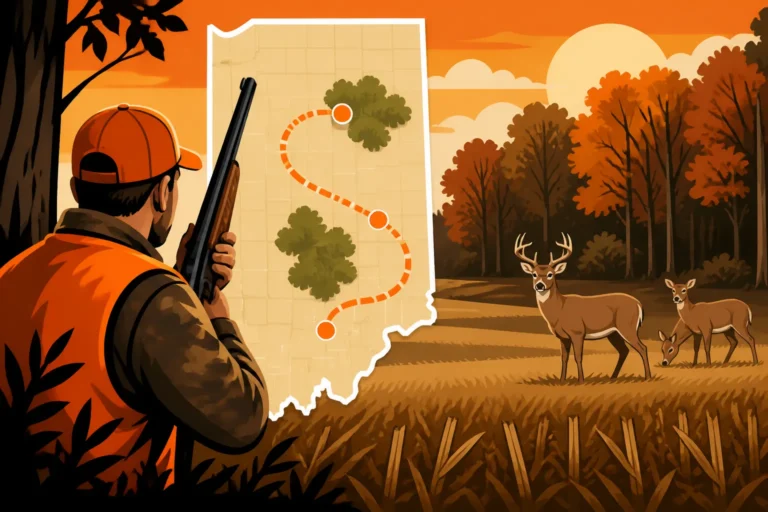
Before you ever lace up your boots, your most powerful scouting tool is probably already in your pocket or on your computer: digital mapping applications. These tools allow you to cover vast amounts of ground from the comfort of your home, identifying potential hotspots and planning your ground visits efficiently. Don't underestimate the power of a few hours spent behind a screen; it can save you days of aimless walking in the woods.
Mastering Aerial and Topographic Maps
The foundational elements of digital scouting are aerial and topographic maps. Aerial maps, often high-resolution satellite imagery, reveal a wealth of information about cover, field edges, water sources, and potential bedding areas. You can spot thickets, clear-cuts, mature timber, and the subtle transitions between different types of vegetation. Look for areas with diverse habitat – where open woods meet dense cover, or where a creek bottom transitions into a steep ridge. These "edges" are often natural travel corridors for deer. Topographic maps, on the other hand, tell you about the lay of the land: elevation changes, drainages, ridges, saddles, and benches. Deer are creatures of efficiency, and they will almost always use the path of least resistance when traveling. Understanding how to read a topo map can reveal hidden funnels and natural ambushes that aren't obvious from the ground. For detailed information on this, check out our guide on how to read a topo map for southern Indiana deer.
Combine these two map types for a powerful overlay. An aerial image might show a dense pine thicket, but the topo map will reveal if that thicket is on a steep hillside (less likely for consistent bedding) or a flat bench (much more likely). Pay close attention to subtle elevation changes, even just a few feet, as these can be significant travel routes. For instance, a small finger ridge extending out into a swamp can be a major travel corridor during high water. Also, look for those long, sweeping ridges in places like the Hoosier National Forest; deer will often traverse these, and finding saddles along them can be gold.
Harnessing DNR Resources and Hunt Apps
Beyond generic mapping, specialized hunting apps and state DNR resources are absolute game-changers for Indiana public land hunters. The Indiana DNR offers incredible online mapping tools that show public land boundaries, specific property rules, and sometimes even recent timber harvests or management activities. Knowing exactly where property lines are is crucial, especially on smaller public tracts or where private land abuts public ground. Many of these resources are accessible through the Scouting With the Indiana DNR App – a must-have for any serious Hoosier hunter.
Tools like GoHunt, onX Hunt, or similar GPS-enabled mapping apps take this a step further. They combine detailed public/private land ownership overlays with topo and aerial maps, allowing you to mark waypoints, track your movements, and even check wind direction specific to your location. With GoHunt, for example, you can identify isolated parcels of public land that might see less pressure simply because they require a longer walk or have tricky access points. These apps often update frequently, ensuring you have the most current boundary information and landowner data. Using the Indiana OnX and DNR Map Tools can save you from inadvertently trespassing or wasting time on over-pressured areas.
Boots on the Ground: Translating Maps to Reality
Digital scouting is a fantastic starting point, but there's no substitute for actually walking the ground. The real world always looks a little different than the map, and your boots-on-the-ground scouting missions will confirm or deny your digital hypotheses, reveal subtle nuances, and uncover sign you simply can't see from a satellite.
Locating Key Deer and Turkey Sign
Once you've identified potential areas on your map, it's time to hit the woods and look for fresh sign. For deer, this means focusing on trails, rubs, scrapes, and droppings. Well-used deer trails often crisscross the landscape, but the key is to find those major thoroughfares, especially those that connect bedding areas to feeding zones or water. Look for fresh rubs on saplings and small trees, indicating where bucks have been marking territory. Scrapes, particularly those near overhead licking branches, are also prime indicators of buck activity. Remember, fresh sign is paramount. A rub from last year tells you a buck was there, but a shiny, fresh rub tells you he is there, or at least has been very recently. Finding Sign in Big Hoosier Forest Timber often means looking for clusters of sign rather than isolated incidents.
For wild turkeys, your scouting mission will involve looking for scratching, droppings, and dusting bowls. Turkeys are creatures of habit, and they'll often frequent the same areas year after year, especially if it offers good roosting trees and open feeding grounds. In the fall, look for areas with abundant mast, especially acorns, where flocks will be feeding heavily. In the spring, focus on open hardwoods where gobblers might strut and hens might feed, and listen for morning gobbling. Finding good roost trees, often the tallest trees on a ridge or in a creek bottom, is also a huge advantage for spring turkey hunting. Understanding how to read their activity can be the difference between a successful hunt and an empty vest.
Identifying Funnels, Cover, and Food Sources
The map might show a pinch point, but walking it will tell you if it's a true funnel. A funnel is any natural or man-made feature that restricts animal movement into a smaller area, concentrating their travel. This could be a narrow strip of timber between two fields, a saddle in a ridge, or a bottleneck in a river bottom. These are classic ambush points. You'll want to investigate these areas carefully, looking for concentrated deer trails or turkey tracks. For more on this, consider our guide on Hunting a Funnel Between Two Woodlots.
Beyond funnels, identifying bedding cover and current food sources is paramount. Bedding areas are typically dense, secure cover where deer feel safe resting during the day. This could be a thick clear-cut, a dense cedar thicket, or a steep, north-facing slope with heavy brush. Food sources change seasonally. In early archery season, deer might be hitting standing soybeans or alfalfa. Later in the fall, acorns will be king, and as winter sets in, they'll switch to browses, leftover agricultural crops, or even specific plantings. Knowing what deer are eating right now is critical. Late-Season Food Sources for Indiana Whitetails are often different from early season options, so adapting to that is key.
Understanding Public Land Access and Pressure Points
A crucial part of ground scouting on Indiana public land is understanding access points and potential pressure. Look at where people park their vehicles – these are often indicators of high-traffic areas. Can you find a lesser-used access point that requires a longer walk but gets you deeper into the woods, away from the crowds? Walk deep into these areas to see how far the average hunter penetrates. Often, deer will retreat to these harder-to-reach pockets once hunting season begins. Pay attention to obvious trails made by human foot traffic, not just deer. If you find an old logging road that few people seem to use, that might be your ticket to finding undisturbed game.
Also, be mindful of rules and regulations specific to the property you're scouting. Some Fish and Wildlife Areas require signing in, others have specific rules about where you can place a treestand or use a ground blind. Knowing these details ahead of time prevents unwelcome surprises. For a deep dive into how hunting pressure affects game, consider our article on Hunting Pressure on Indiana Public Land. Remember, your goal is to locate spots where deer feel secure enough to live out their daily routines, even with other hunters on the property.
Timing Your Scout: When to Hit the Woods
Scouting isn't a one-and-done activity. The woods, and the animals in them, are constantly changing, and your scouting efforts should reflect that fluidity. Knowing when to go out and what to look for at different times of the year will make your efforts much more effective.
Early Season vs. Late Season Scouting Missions
Many hunters think of pre-season scouting as a late summer/early fall activity, and while that's crucial, year-round scouting offers distinct advantages. Early season scouting, say in late spring or early summer, allows you to observe areas with minimal disturbance from other hunters. With leaves off the trees or just budding, visibility is often better, making it easier to identify terrain features, old rubs, and travel corridors that become obscured later. This is an excellent time to identify potential bedding areas before they become too thick. You can also spot the general location of mast trees, like oak and persimmon, though you won't know the crop's abundance yet.
Late season scouting, after the hunting seasons have closed, is equally, if not more, valuable. This is when you can see where deer were actually spending their time during periods of heavy hunting pressure. Fresh tracks in the snow can reveal travel patterns, and you can find sheds, which tell you where bucks were overwintering. By knowing where deer retreated to and what food sources they were hitting during the toughest hunting conditions, you gain insight into their survival strategies that can inform your strategy for the next season. A table summarizing the benefits of different scouting periods can be quite helpful:
| Scouting Period | Primary Focus | Advantages | Disadvantages |
|---|---|---|---|
| Late Winter/Early Spring (Post-Season) | Shed hunting, identifying thick bedding cover, old rubs/scrapes, terrain features. | Excellent visibility, low human pressure, reveals winter survival areas. | No fresh sign from upcoming season, less accurate for summer patterns. |
| Late Spring/Early Summer (Pre-Season) | Observe browse, water sources, early mast development, general deer patterns. | Good visibility before full leaf-out, minimal disturbance, identify travel routes. | Insect pressure can be high, deer patterns still evolving, less fresh rub/scrape activity. |
| Late Summer/Early Fall (Peak Pre-Season) | Fresh rub/scrape lines, current food sources (crops, soft mast, early hard mast), active trails. | Best time to find current deer activity, most relevant to upcoming season. | Can coincide with early hunting seasons (archery, youth), higher human presence. |
Considering Weather and Hunting Pressure
Weather conditions significantly impact scouting effectiveness. After a good rain, tracks become much more visible, revealing fresh travel routes. Snowfall, especially a fresh couple of inches, is a dream for sign interpretation, showing exactly where deer are moving, bedding, and feeding. Conversely, dry, crunchy leaves can make silent scouting difficult and might push deer movements more toward creek bottoms or damp areas. Planning your ground missions around favorable weather will yield more insightful information.
Always be mindful of hunting pressure. If you're scouting in late summer during youth seasons or early archery, try to minimize your impact. Stick to observation from a distance, or scout during the middle of the day when deer are typically bedded. The goal is to gather information without alerting the animals to your presence or pushing them off the property before the main season even starts. If a piece of public land is known for heavy traffic, you might want to focus your ground scouting on those areas that are difficult to access, or those interior pockets that require a long walk to find Finding Ground Others Walk Past.
Essential Gear for Your Scouting Missions
Just like a successful hunt, a successful scouting mission relies on having the right tools. Being prepared for varying terrain, navigation, and even unexpected situations ensures you can focus on gathering information, not on getting lost or uncomfortable.
Navigation and Communication Tools
Your most critical piece of gear will be a reliable GPS unit or a smartphone with a hunting app like GoHunt or onX Hunt. This allows you to pinpoint your exact location, mark waypoints for promising sign, potential stand sites, or even tricky creek crossings. Make sure your device is fully charged, and consider carrying a portable power bank. While apps are great, having a physical map and compass as a backup is always a smart move, especially if you're deep in an area with spotty cell service, like parts of the Hoosier National Forest. For more guidance on using these, consult our article on Using Go Outdoors Indiana Without Cell Service.
Beyond navigation, a good set of binoculars is invaluable. You can glass distant ridges for deer movement, scan thickets for bedding deer, or identify a mast crop without having to bust through dense cover. An 8x or 10x magnification is usually perfect for timbered Indiana terrain. Don't forget a headlamp, even if you plan to be out before dark. Things can change quickly in the woods, and having light to navigate back to your vehicle after finding that perfect scrape line is crucial.
Staying Comfortable and Unobtrusive
Scouting often means covering a lot of ground, sometimes in less-than-ideal conditions. Wear comfortable, durable hiking boots that offer good ankle support – Indiana public land can be rugged and uneven. Dress in layers, as temperatures can fluctuate throughout the day, especially from early morning to mid-afternoon. Consider wearing lightweight, breathable camo or earth-toned clothing, even if it's not hunting season. You don't want to alert animals to your presence or make them associate human scent with their core areas. A good pack to carry water, snacks, a rain jacket, and your navigation tools is essential.
Lastly, think about scent control, even during scouting. While you're not actively hunting, minimizing your scent allows you to observe deer without alerting them, giving you a truer picture of their behavior. Avoid wearing clothes you worked in or that smell of gasoline or strong detergents. If you're going to use trail cameras, remember to follow Trail Camera Rules on Indiana Public Land and set them up quietly and efficiently, minimizing your time in the area. The less impact you make, the more reliable the information you gather will be.
Developing a Public Land Hunting Strategy
Scouting isn't just about finding where the deer are; it's about building a robust hunting strategy that accounts for the unique challenges of public land in Indiana. It’s about being prepared for anything and having a plan, and a backup plan, for when things inevitably go sideways.
Creating Flexible Hunt Plans
One of the biggest mistakes public land hunters make is becoming too rigid with their plans. You scouted a perfect spot, but on opening day, someone else is there, or the wind shifts unexpectedly, or the deer simply aren't using that area anymore. A good public land strategy requires flexibility. Instead of one perfect spot, aim to identify two or three primary spots and an equal number of backup locations for each desired wind direction and type of hunting (e.g., morning ambush, evening feed). Having options allows you to adapt to changing conditions or unexpected pressure.
Your scouting efforts should reveal multiple ways to access an area, different stand locations within a hotspot, and alternative routes for entry and exit that minimize disturbance. Think about how deer will react to pressure. Where will they go if pushed off a main ridge? Could you intercept them along an escape route? This detailed knowledge, gleaned from your extensive scouting, allows you to pivot quickly, turning a potentially blown hunt into a successful one. Consider how a Deer Drives on Indiana Public Land might be set up, or how you might avoid one if you're still-hunting a ridge.
Respecting Other Hunters and Regulations
Public land means sharing the resource, and a successful season often depends on how well you navigate that social landscape. During your scouting, you might encounter other hunters. Be courteous, share general information if appropriate, but respect their space. If you find a spot that clearly has another hunter's stand or signs, move on. There's plenty of public land in Indiana to go around, and finding your own honey hole is far more satisfying than encroaching on someone else's.
Always be meticulously familiar with Indiana's hunting regulations, specific property rules, and ethical hunting practices. This includes understanding Indiana Hunter Education Requirements, bag limits, legal equipment, and blaze orange requirements. The DNR website and the "Go Outdoors Indiana" app are invaluable resources. Knowing the rules isn't just about avoiding fines; it's about being a responsible hunter and ensuring the future of our sport. By scouting ethically, hunting safely, and respecting both the land and your fellow hunters, you contribute positively to the overall public land hunting experience for everyone.
Disclaimer
The information provided in this guide is for general informational purposes only. Hunting regulations and conditions can change. Always consult the most current Indiana Department of Natural Resources (DNR) regulations and local property rules before hunting. Hunting involves inherent risks, and safety should always be your top priority.