Spring Turkey Hunting in Indiana
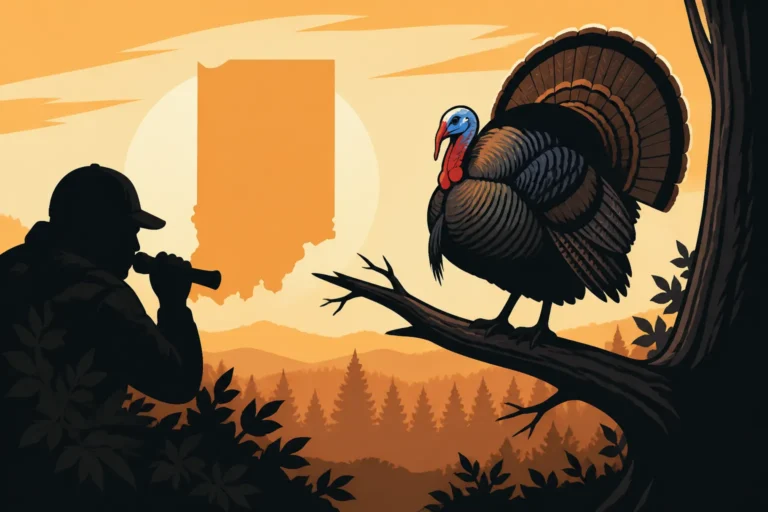
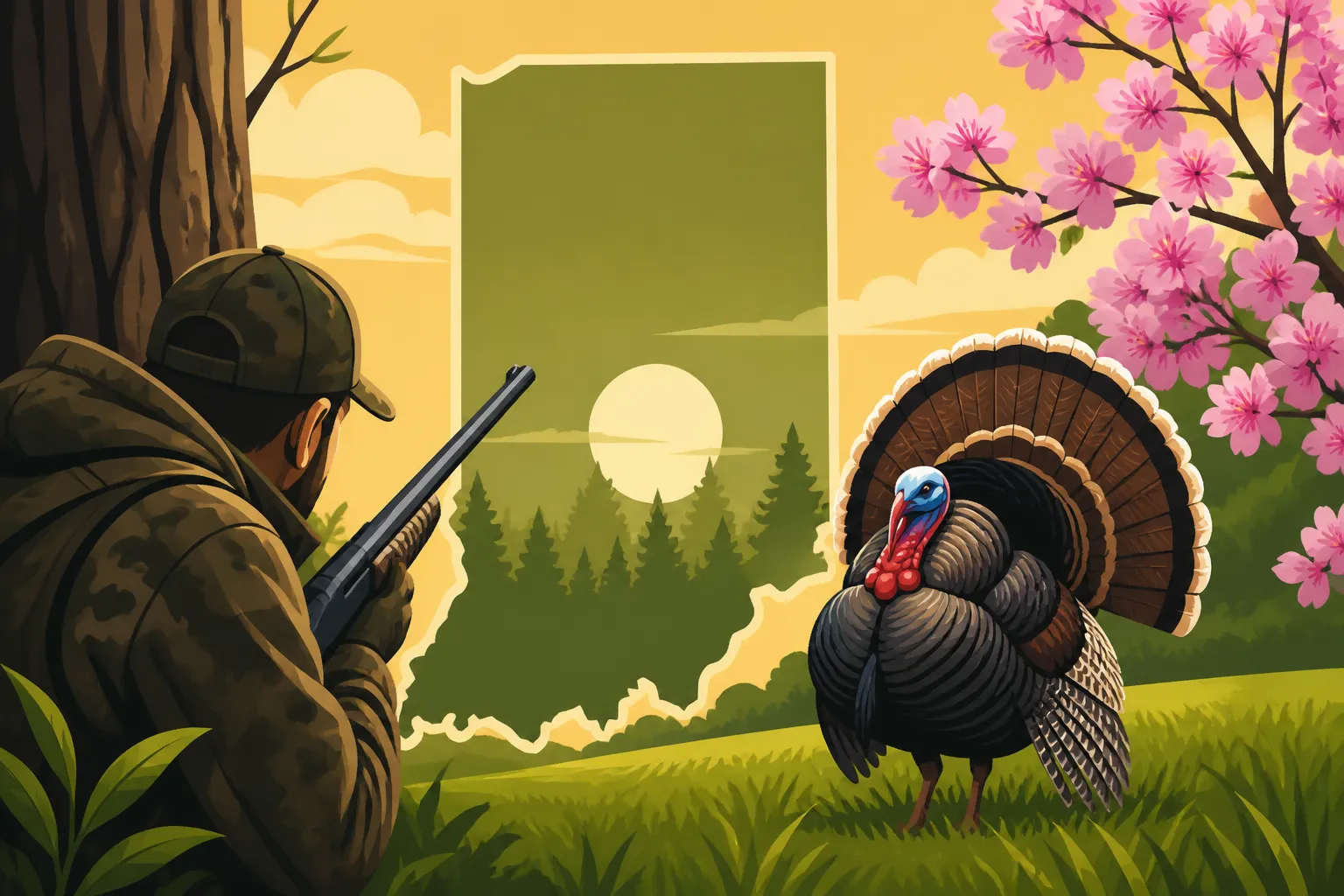
There's nothing quite like an Indiana spring morning, still and crisp, that suddenly erupts with the thunderous gobble of a wild tom. It's a sound that quickens the pulse and ignites a passion in every turkey hunter. But let's be real, those elusive longbeards can also bring a fair share of frustration, leaving you wondering if you're doing something wrong when they hang up just out of range or go completely silent. This guide is here to walk you through everything you need to know to navigate Indiana's spring turkey season, from understanding the regulations to mastering calling techniques and adapting to those notoriously cagey Hoosier gobblers.
Understanding Indiana's Spring Turkey Season
Spring turkey season in Indiana is a cherished tradition, but it comes with its own set of rules and nuances that every hunter needs to know inside and out. It’s not just about getting out into the woods; it’s about doing it legally and ethically, ensuring the future of this incredible resource for all of us. Trust me, the last thing you want is a run-in with a conservation officer because you missed a small detail.
Key Dates and Regulations
Indiana's spring turkey season is a relatively short but action-packed window, typically kicking off in late April and running through mid-May. Before the main event, there's usually a special youth season, which is a fantastic opportunity to introduce the next generation to the thrill of turkey hunting without the added pressure of adult hunters. It's always a good idea to double-check the exact dates each year on the Indiana Department of Natural Resources (DNR) website or their handy Go Outdoors Indiana app, as they can shift slightly. You can find all the specific details on the official Indiana Spring Turkey Season Rules page, which is your go-to resource.
Beyond the dates, understanding the legal shooting hours is crucial. Generally, hunting is permitted from roughly 30 minutes before sunrise until a certain time in the afternoon, often around noon or 1 p.m., depending on the specific year's regulations. This mid-day closing time means you have to plan your hunts strategically, especially if a tom is playing hard to get in the late morning. The bag limit is a critical regulation: you're allowed one bearded turkey per hunter per spring season. That means you're looking for those proud gobblers, not just any turkey. Licensing is another non-negotiable step. Every hunter, unless specifically exempt, needs a valid Indiana hunting license and a spring turkey license. Non-residents have different options, so make sure you understand those requirements if you're coming from out of state. For our younger hunters, the Indiana Youth Turkey License Rules outline how they can participate, often with a mentored youth license, which is a fantastic program for learning the ropes safely.
Tagging and Reporting Requirements
Alright, you've done the work, made the shot, and your heart is pounding with that unique mix of elation and respect. Now what? The first and most immediate step is to tag your bird. This isn't optional; it's a legal requirement. You'll typically have a tag or a confirmation number from your license purchase that needs to be securely attached to the turkey immediately after harvest. This process ensures proper record-keeping and prevents any confusion if you're stopped by law enforcement. Don't put it off, even if you're excited to show off your bird. The DNR's official Indiana Turkey Checking Requirements will detail the exact procedure, including what information needs to be on the tag and where it needs to be placed on the bird.
After tagging, the next crucial step is reporting your harvest. In Indiana, this is predominantly done electronically, either through the Indiana DNR's online portal or, even more conveniently, via their Go Outdoors Indiana mobile app. This digital reporting system is pretty efficient once you get the hang of it, but it can feel a little clunky if you're not used to it, especially when you're still buzzing from the hunt. You’ll need to input details like the date, county of harvest, and whether the turkey was bearded. There’s usually a specific deadline for reporting, often within 48 hours of harvest. This data is incredibly important for wildlife biologists to monitor turkey populations, assess harvest success, and make informed management decisions for future seasons. So, while it might feel like an extra hoop to jump through after a successful hunt, remember you're contributing to the conservation of Indiana's wild turkey populations by complying.
Legal Firearms and Archery Equipment
When it comes to putting a spring gobbler on the ground, having the right equipment that also meets legal requirements is paramount. For most turkey hunters, this means a shotgun, and thankfully, Indiana is pretty straightforward with its regulations. Generally, any 10, 12, 16, 20, or .410 gauge shotgun is legal. What's more important than the gauge itself is the shot size and type. You'll need to use shot no larger than #4 or smaller than #7.5. Many hunters opt for specialized turkey loads, often featuring dense shot like tungsten super shot (TSS) in smaller sizes like #7 or #9, which offers incredible range and pattern density. You should always pattern your shotgun with your chosen choke and ammunition before the season. Our guide on Turkey Shotguns and Chokes delves deeper into optimizing your setup for lethal performance.
For the archery enthusiasts out there, Indiana's spring turkey season also allows for the use of bows and crossbows. The regulations for archery gear are fairly standard: your bow must have a minimum draw weight, and broadheads need to meet certain cutting diameter or blade length requirements. For crossbows, there might be specific draw weight requirements as well. The key here is ensuring your setup delivers enough kinetic energy for a clean, ethical kill and that your broadheads are designed for turkey. Many bowhunters prefer mechanical broadheads that open up upon impact to create a larger wound channel, while others stick with large fixed-blade heads. Regardless of your choice, practice is essential. You want to be absolutely confident in your shot placement and effective range, as turkeys present a relatively small vital area, especially when they're strutting or displaying. Always double-check the current year's hunting guide for any updates to equipment regulations.
Scouting for Spring Gobblers in the Hoosier State
Successful spring turkey hunting in Indiana starts long before opening day. It begins with diligent scouting. You simply can't expect to consistently tag a tom by just showing up on public land and hoping for the best. These birds are creatures of habit, and understanding those habits is your biggest advantage. It might seem like extra work, but trust me, those pre-season efforts pay off in spades when you're sitting in the woods listening to a gobbler hammering at first light.
Pre-Season Reconnaissance and Roosting
Pre-season scouting is absolutely critical for spring turkey hunting. This isn't just a suggestion; it's a fundamental step that separates consistently successful hunters from those who struggle. Ideally, you should be out in the woods weeks, if not months, before the season even opens. Start with aerial maps. Apps like GoHunt or OnX are invaluable for this. You can identify potential roosting areas—often mature timber stands near water sources or along ridgelines—feeding grounds like open fields (agricultural or clear-cuts), and natural travel corridors such as creek bottoms, logging roads, or subtle saddles in the terrain. Look for areas that offer a mix of cover and open spaces. You're trying to piece together a puzzle of where the turkeys live, eat, and travel.
The real magic of pre-season scouting often happens in the evenings, just before dark, when you're "roosting" birds. This involves quietly driving or walking access roads and listening for gobblers to sound off as they fly up to their roost trees for the night. You're not trying to call them in; you're simply trying to locate them. This is where a good pair of binoculars comes in handy too, as you might spot them silhouetted against the evening sky. If you can pinpoint a roost location, you've got a fantastic starting point for opening morning. Knowing where they're spending the night gives you a massive advantage, allowing you to set up well before first light, hopefully in a position where you can intercept them as they fly down. We cover more on how to identify these areas in our Scouting Indiana Public Land Before Season guide.
Identifying Key Turkey Habitat
Not all woods are created equal when it comes to holding turkeys. In Indiana, whether you're hunting the rolling hills and deep timber of the southern counties or the more fragmented woodlots and expansive farmlands of the north, certain habitat features consistently attract turkeys. Mature timber, especially hardwoods like oaks and hickories, are paramount. These provide critical food sources (acorns, nuts) and, crucially, large, sturdy limbs for roosting. Look for stands of big trees with open understories where turkeys can fly up and down easily. Creek bottoms and river corridors are also magnets for turkeys, offering water, diverse vegetation, and natural travel routes. These areas often feature excellent roost trees and provide natural funnels for bird movement.
Beyond the trees, turkeys need open areas. This could be anything from agricultural fields (especially corn or soybean stubble fields, or newly planted food plots) to timber clear-cuts, old logging decks, or even just grassy openings in the woods. These open spaces are where turkeys feed, strut, and dust themselves. When scouting, you're not just looking for "turkey woods"; you're looking for specific turkey sign. This includes fresh tracks in mud or soft dirt, droppings (gobbler droppings are typically J-shaped), strut marks on the ground where a tom has dragged his wingtips, and dusting bowls – shallow depressions where birds have fluffed their feathers to clean themselves. The more fresh sign you find, the higher the likelihood of consistent turkey activity. Knowing Where Indiana Gobblers Roost can give you a significant leg up, as roosting locations are often adjacent to prime feeding and strutting areas.
Utilizing Technology for Scouting
In today's hunting world, technology is an indispensable tool for scouting, and Indiana hunters are fortunate to have some excellent resources at their fingertips. Mapping apps like GoHunt or OnX are game-changers. They allow you to overlay private and public land boundaries, topographic maps, and even satellite imagery. This means you can identify those hard-to-reach pockets of public land, pinpoint subtle terrain features like saddles or benches that act as travel corridors, and mark potential roost sites or strut zones from the comfort of your home. You can even use these apps in the field to navigate confidently, knowing exactly where property lines lie. This is especially helpful on fragmented public lands where boundaries can be confusing.
The Indiana DNR also offers its own app and online mapping tools, which are excellent for checking specific regulations for Fish & Wildlife Areas (FWAs) or State Forests, and for locating check stations or parking areas. While trail cameras are more commonly associated with deer hunting, they can certainly be used for turkey scouting, particularly on private land where regulations allow. Setting up a camera near a known feeding area or a strut zone can help you identify specific birds, understand their routines, and determine gobbling activity without putting human pressure on them. Just be mindful of public land rules regarding trail cameras; some areas prohibit them. The frustration of finding unpressured birds on popular public land is real, but using these digital tools can help you identify those overlooked corners or navigate to areas that other hunters might not bother with, giving you a crucial edge.
Essential Calling Strategies for Indiana Turkeys
Calling a wild turkey is an art form, a conversation that takes patience, practice, and a keen understanding of turkey vocalizations. It's not about making the loudest or most complex sounds; it's about making the right sounds at the right time, mimicking the natural language of the woods. For many, the thrill of drawing in a gobbler with a well-executed call is the very essence of spring turkey hunting.
Mastering Basic Turkey Calls
To effectively communicate with a wild turkey, you need to master a few basic vocalizations. The foundation of turkey calling rests on the yelp, cluck, purr, and cutt. The yelp, in its various forms (tree yelp, plain yelp, assembly yelp), is probably the most common and versatile call. It simulates a hen looking for company. Clucks are short, sharp notes that indicate contentment or a warning. Purrs are soft, rolling sounds that convey reassurance and calm, often heard when turkeys are feeding. Cutts are sharp, aggressive, rapid-fire yelps that can express excitement or challenge. Learning to produce these accurately and realistically is paramount.
There's a wide array of call types available, and most serious turkey hunters carry a selection. Box calls are great for beginners, easy to use, and can produce loud, resonant yelps. Slate or glass calls (friction calls) offer incredible versatility, capable of producing soft purrs to aggressive cutts with practice, making them perfect for varying conditions. Mouth calls (diaphragm calls) are perhaps the most challenging to master but offer hands-free calling, which is invaluable when a gobbler is approaching and you need to remain motionless. Push-button calls are simple and effective, particularly for quick, realistic yelps. The key isn't necessarily to own every call, but to become proficient with one or two types and understand when to use each. Our comprehensive guide, Turkey Calls Worth Carrying in Indiana, dives deep into the different types and their applications.
Situational Calling: From the Roost to Mid-Day
The art of turkey calling isn't just about making the right sound, but about making the right sound at the right time. Your calling strategy will change dramatically throughout the day, depending on the situation and the bird's mood. At first light, when gobblers are still on the roost, soft, subtle calls are usually best. A few quiet tree yelps, mimicking a hen waking up, can be incredibly effective without overdoing it. Once the birds fly down, you might shift to a fly-down cackle followed by some excited yelps to signal a hen hitting the ground. The goal is to draw the gobbler off the roost and into your setup. Our guide on Calling an Indiana Gobbler Off the Roost provides even more detailed tactics for this crucial time.
As the morning progresses, especially if a bird has gone silent or seems hung up, your tactics need to adapt. Mid-day can be particularly challenging. Sometimes, a period of silence is the best call, letting the woods settle down and making the gobbler wonder where that hen went. Other times, a more aggressive approach with louder, more insistent yelps and cutts can re-engage a bird that's gone quiet. Don't be afraid to experiment with different calls and volumes. If a bird is henned-up, meaning he's with real hens, it can be incredibly difficult to pull him away. In these cases, sometimes the best bet is to try to call the hens, hoping the gobbler will follow. Remember, turkeys have keen hearing, and over-calling can quickly educate a bird. Adjust your cadence, volume, and call type based on the bird's response – or lack thereof.
The Art of Locator Calls
While yelps and clucks are direct turkey communication, locator calls serve a different, equally vital purpose: to get a gobbler to sound off without giving away your position as a potential hen. These calls mimic other creatures in the woods, and a tom, being territorial, will often gobble in response, announcing his presence without approaching the sound directly. This allows you to pinpoint his exact location and plan your approach.
The most common locator calls include the owl hooter, crow call, and coyote howler. An owl hooter is excellent for early morning, right before dawn or just as light breaks, as owls are naturally active at this time. A few hoots can often elicit a shock gobble from a tom still on the roost. Crow calls are effective throughout the day; a sharp, realistic crow caw can often trigger a response. Coyote howlers can be particularly potent, especially if used sparingly. The sound of a coyote often makes a gobbler gobble aggressively, viewing it as a rival intrusion. You can also use hawk screams or even pileated woodpecker calls. The key to using locator calls is subtlety and timing. You're not trying to spook the bird, just get him to reveal his location. Once he gobbles, go quiet, assess his direction, and then plan your move. You don't want to overdo it; a few well-placed locator calls are usually all you need to get the intel you need.
Setting Up for Success: Decoys and Concealment
Getting a gobbler to respond to your calls is one thing; getting him within shooting range is another. This is where strategic setup, including decoy placement and meticulous concealment, becomes absolutely critical. Turkeys have incredible eyesight, and any false move or unnatural sight will send them scurrying, often without a sound. Your goal is to make your setup look as inviting and natural as possible.
Strategic Decoy Placement
Decoys can be a game-changer in spring turkey hunting, turning a hung-up gobbler into one that charges in. However, their effectiveness hinges entirely on strategic placement. There are several popular setups, each with its own psychology. A lone hen decoy is a classic, simple approach, mimicking a solitary hen looking for a mate. This can be very effective, especially for wary gobblers. A jake and hen decoy setup is a bit more aggressive. The presence of a young male can often infuriate an older gobbler, making him come in to assert dominance. The jake should typically be placed 10-15 yards in front of your position, with the hen decoy slightly behind and to the side, mimicking a breeding scenario.
For the most aggressive approach, a full-strut gobbler decoy can be incredibly effective, especially on dominant toms. This setup explicitly challenges an approaching gobbler, often causing him to come in aggressively, looking for a fight. When using a strutting gobbler, ensure it’s visible from a distance. Regardless of the setup, always position your decoys so that an approaching gobbler will present a clean shot when he gets within range, usually 20-30 yards. Many hunters place their decoys facing away from their position, as a gobbler will often circle to face the decoy, presenting his broadside to you. Make sure the decoys are visible and in a relatively open area where a gobbler can see them from a distance. For more detailed insights, check out Decoy Placement for Pressured Indiana Birds. Remember, decoys are a visual lure, and they work best when combined with effective calling.
Concealment and Blind Selection
When a gobbler is locked onto your calls and decoys, his eyes are scanning everything. That's why meticulous concealment is absolutely paramount. Turkeys have full-spectrum color vision and can spot even the slightest movement or unnatural shape. Your silhouette is your enemy. The best concealment starts with choosing a natural backdrop that breaks up your outline. A large, sturdy tree is a turkey hunter's best friend. Sitting against a big oak or a cluster of pines with your back to the trunk can make you virtually disappear. The key is to be completely still. Even a slight twitch of your head or hand can blow a setup. We detail the best practices in Setting Up Against a Big Oak.
For those who prefer a bit more comfort and forgiveness for movement, a ground blind is an excellent option, especially if you're hunting with kids or during inclement weather. A quality pop-up ground blind offers 360-degree concealment and protection from the elements. However, simply setting up a blind isn't enough; you need to "brush it in." This involves cutting natural vegetation like branches, small trees, and brush and weaving them into the blind's exterior to make it blend seamlessly with the surrounding environment. This breaks up the blind's unnatural shape and makes it disappear, preventing turkeys from detecting an artificial structure. Always clear shooting lanes before the season, or well before first light on hunt day, so you don't have to make noise or movement when a bird is approaching.
Understanding a Gobbler's Approach
Once you've made a setup and a gobbler has committed, understanding how he's likely to approach is crucial for sealing the deal. Turkeys rarely come in on a string, walking directly towards your calls. Instead, they are notoriously cautious and often circle, trying to pinpoint the source of the sound or get a better look at the "hen" they hear. They're trying to figure out if what they're hearing is legitimate or a setup. This circling behavior is why broadside decoy placement is so effective.
You need to anticipate this movement. Have multiple shooting lanes cleared in various directions, especially to your sides. Often, a gobbler will hang up just out of range, sometimes 60 to 80 yards away, trying to get the hen to come to him. This is incredibly frustrating, and it happens to every turkey hunter. Patience is key here. Avoid calling too much, as it can make him suspicious. Sometimes, a soft purr or cluck, almost as if the "hen" is losing interest, can entice him to take those last few steps. Be ready to adjust your body ever so slowly if he takes an unexpected path. Knowing when to make a move, or when to simply let him walk away and try another spot, comes with experience. Every approach is a lesson in turkey psychology.
Run-and-Gun and Still-Hunting Tactics
While setting up and calling from a fixed position is a popular and effective strategy, sometimes the birds just aren't talking, or the terrain dictates a more mobile approach. This is where "run-and-gun" and still-hunting tactics come into play, offering dynamic ways to find and engage turkeys, especially on large tracts of public land in Indiana. These methods require a different mindset, one of persistence and adaptability.
When to Go Mobile: Run-and-Gun
The "run-and-gun" strategy is exactly what it sounds like: moving quickly, calling, listening, and repeating. It's particularly effective on those mornings when the gobblers are tight-lipped, or you're hunting expansive public land where covering ground is essential to locate birds. Instead of sitting and waiting for turkeys to come to you, you actively go to them. This involves walking access roads, logging trails, or field edges, stopping periodically (every few hundred yards) to make a series of aggressive calls – usually loud yelps or cutts – and then waiting for a response.
The key to effective run-and-gun is efficiency and stealth. Move quietly between calling setups, and once you make a call, be ready to freeze and listen intently. Use locator calls like a crow or owl hooter to shock a gobbler into sounding off without giving away your exact location as a hen. When you do get a response, the goal is to quickly and quietly move in the direction of the gobble, trying to get into a setup where you can call him in. This might mean setting up against a tree, pulling out a fan, or deploying a quick jake decoy. Safety is paramount here; always be sure of your target and what's beyond it, especially when moving and calling in areas that might have other hunters. Our guide to Run-and-Gun Turkey Tactics on Public Land offers more detailed strategies for staying mobile and successful.
Still-Hunting Through Indiana Timber
Still-hunting for turkeys is a lost art for many, but it can be incredibly effective, especially on quiet mid-days or in areas where birds are heavily pressured. Unlike the aggressive run-and-gun, still-hunting is a slow, methodical crawl through the woods, using every bit of natural cover to your advantage. You're not calling; you're observing. The pace is excruciatingly slow – taking 10-15 minutes to cover 50 yards is not uncommon. You're looking for turkeys, but also for fresh sign: tracks, droppings, or even the subtle movement of a bird feeding in the distance.
This tactic works best in relatively open timber or along creek bottoms and ridgelines where you can see a fair distance without dense undergrowth obscuring your view. Use your binoculars constantly, scanning ahead and to the sides. Look for the distinct colors of a turkey, the way light reflects off their feathers, or even just the movement of a black mass in the shadows. Pay attention to terrain features like small rises, downed trees, or thickets that can conceal your movement. When you spot a turkey, the game changes. You can then try to set up and call, or if you're close enough, try a very slow, strategic stalk to get into a shooting position. Still-hunting demands immense patience and discipline, but the reward of silently slipping in on a gobbler can be incredibly satisfying.
Adaptability to Pressure and Conditions
One of the biggest lessons you'll learn as an Indiana turkey hunter is the need for adaptability. Our birds, especially on public land or around heavily hunted areas, can become incredibly wary and call-shy as the season progresses. What worked on opening day might completely fail a week later. This pressure often makes gobblers less responsive to aggressive calling and more prone to hanging up or going silent. You have to be willing to change your game plan on the fly.
When birds are pressured, scale back your calling. Less can be more. Switch from loud, excited yelps to soft clucks and purrs. Consider using minimal or no decoys, relying solely on your camouflage and quiet movement. If gobblers are consistently hanging up, try repositioning your setup, moving closer or even attempting to flank them if the terrain allows. Weather conditions also demand adaptability. On windy days, gobblers are harder to hear, and your calls don't carry as far. You'll need to move closer to birds, use louder calls, or focus on areas that offer some shelter from the wind. Rainy days can silence birds, but often a break in the weather, or even just a drizzle, can spark a gobbling frenzy. Don't be afraid to experiment. The most successful hunters aren't those with the fanciest calls, but those who can read the mood of the woods and adjust their tactics accordingly. Validating the frustration of a quiet morning is important here; it happens to everyone. Persistence and a willingness to try something different are your best allies.
Specific Challenges and Tips for Indiana Hunters
Hunting Indiana's spring gobblers comes with its unique set of challenges. Whether it's navigating crowded public land, coaxing a hung-up tom into range, or dealing with the unpredictable Hoosier spring weather, you'll need a few extra tricks up your sleeve to come out on top.
Hunting Public Land Crowds
Let's face it, Indiana has some fantastic public hunting opportunities, but with that comes pressure. On popular Fish & Wildlife Areas (FWAs) or State Forests, especially on opening weekend, you can encounter a lot of other hunters. This can be incredibly frustrating when you're trying to work a bird, only to hear another hunter's calls, or worse, have them walk in on your setup. The reality of Hunting Pressure on Indiana Public Land means you often need to think outside the box.
One key strategy is to walk further. Most hunters won't venture more than a quarter or half-mile from a parking area. If you're willing to put in the effort to hike a mile or two back into the timber, you dramatically increase your chances of finding less pressured birds. Scout these obscure pockets using your GoHunt app well before the season. Another tactic is to hunt mid-week. If your schedule allows, taking a day off work during the week can put you on birds that haven't been harassed for a few days, and you'll encounter far fewer people. Consider hunting areas that are harder to access, like those requiring a creek crossing or a hike through thicker terrain. Always wear blaze orange when moving through public land, even during turkey season, and take extra precautions to identify your target and what's beyond it. A gobbler in the hand is worth two in the bush, but safety is always paramount.
Dealing with Hung-Up Gobblers
This is perhaps the most common and infuriating challenge in turkey hunting: the hung-up gobbler. He's gobbling his head off, perfectly responsive to your calls, but he just won't commit. He's sitting at 60, 80, even 100 yards, expecting the hen to come to him. This usually means he's either seen you, seen something unnatural, or he's with real hens and just calling to challenge other gobblers.
There are several tactics you can try. First, patience. Sometimes, doing nothing is the best option. Go completely silent for 15-20 minutes. He might get impatient and come looking. Second, repositioning. If possible, and if you can do it silently and unobserved, try to circle around and get in front of him, or move to a spot where he'll have to come closer to see the "hen." Third, fanning or reaping. This aggressive tactic involves holding up a real or replica turkey fan and crawling towards the hung-up gobbler, mimicking another tom coming to challenge him. This is extremely dangerous on public land or anywhere other hunters might be, as you are mimicking a turkey. Only use this tactic if you are 100% sure you are alone and safe, and it's legal in your area. Fourth, reverse calling. Instead of yelping at him, try softly purring and clucking as if you're slowly walking away. This can sometimes make him nervous that the hen is leaving and cause him to close the distance. Understanding when to cut your losses and move to a new spot is also a skill; don't waste hours on a bird that's simply not going to commit.
Weather Adaptations and Gear
Indiana spring weather is notoriously unpredictable. You can start the day with frost on the ground and end it with sunshine and 70 degrees, or a torrential downpour. Being prepared for anything is key to staying comfortable and effective in the field. Rain can silence birds, but often a break in the weather or a light drizzle can trigger gobbling activity. On rainy days, focus on hunting field edges or areas with slightly more open canopy where birds might seek shelter. Use louder, more aggressive calls, as sound doesn't travel as far in damp conditions.
Windy days are perhaps the most challenging. Gobbling activity often decreases, and it's incredibly difficult to hear birds or for them to hear your calls. On these days, you need to move closer to your target, potentially setting up in more sheltered areas like creek bottoms or dense timber, and rely heavily on visual decoys. You can use your GoHunt app for detailed weather overlays to plan your day. As for gear, layering is essential. Start with a good moisture-wicking base layer, add an insulating layer, and top it off with waterproof and windproof outerwear. Brands like Sitka or First Lite offer excellent layering systems designed for active hunting in varied conditions. Comfortable, waterproof boots are a must for navigating muddy spring woods. Don't forget bug spray; ticks and mosquitoes can be a real nuisance. And, of course, a good turkey vest with a kickstand seat, like those highlighted in Turkey Vests With a Kickstand Seat, makes those long sits much more comfortable.
| Call Type | Best Use Cases | Pros | Cons | Volume Range | Ease of Use |
|---|---|---|---|---|---|
| Box Call | Yelps, clucks, cutts; all-around versatile | Easy for beginners, loud, good range | Requires two hands, can sound unnatural if misused | Medium-High | Easy |
| Slate/Glass | Purrs, clucks, yelps, cutts; versatile, realistic | Extremely versatile, realistic, good for soft calls | Requires two hands, can squeak if wet | Low-Medium | Medium |
| Mouth Call | Hands-free calling, soft purrs to aggressive cutts | Hands-free, very realistic once mastered, compact | Difficult to learn, sensitive to moisture | Low-High | Difficult |
| Push-Button | Quick clucks, yelps, purrs; great for close work | Easy to use, realistic soft calls, compact | Limited range of sounds, not as loud | Low-Medium | Easy |
| Locator Calls | Shock gobblers, pinpoint location | Gets responses without revealing hunter's position | Doesn't directly call turkeys, can spook if overused | High | Medium |
Post-Harvest: Care and Conservation
Harvesting a wild turkey is a tremendous accomplishment, but the journey doesn't end when the bird hits the ground. Proper post-harvest care ensures you honor the animal by maximizing the quality of the meat and preserving any trophies. Beyond that, responsible hunters understand their role in the broader conservation picture, ensuring healthy turkey populations for generations to come.
Field Dressing and Meat Care
Once you've tagged your gobbler, the next immediate step is field dressing. The goal here is to cool the meat down as quickly as possible, especially on warmer spring days, to prevent spoilage and ensure the best culinary experience. While some hunters will simply breast out a turkey in the field, a full field dress involves removing the entrails. This might seem like a messy job, but it's straightforward. Lay the bird on its back, make a small incision near the vent, and carefully cut around the vent area. Reach inside and pull out the organs. Make sure to remove the crop (where the bird stores food) as well, as fermented food can quickly taint the breast meat.
After field dressing, the turkey needs to be cooled. If you're near your vehicle, get it into a cooler with ice as soon as possible. If you're deep in the woods, consider carrying a game bag to protect the bird from flies and dirt. The meat of a wild turkey, particularly the breast, is lean and flavorful, but it needs to be handled correctly to maintain that quality. Once home, either butcher the bird yourself (breast, thighs, legs) or take it to a reputable wild game processor. For those hot early season hunts, having a plan for immediate cooling is absolutely essential for tender, delicious meals.
Preserving Spurs, Beards, and Fans
Many turkey hunters consider the spurs, beard, and tail fan to be prized trophies, reminders of a successful hunt and the magnificent bird they harvested. Properly preserving these elements ensures they last for years to come. For the beard, simply cut it off at the base, where it emerges from the skin, leaving a small patch of skin attached. For spurs, you can either cut off the entire lower leg section or carefully cut around the spur, removing it with a small piece of the leg bone attached. The tail fan is a bit more involved; you'll need to carefully cut away the entire tail section, ensuring you get all the tail feathers intact.
Once removed, these trophies need to be cleaned and dried to prevent decay and insect damage. For beards and spurs, simply rubbing them with borax or salt and hanging them in a dry, airy place for several weeks usually does the trick. For tail fans, spread the feathers out into a fan shape, often using cardboard and pins or a dedicated fan-spreading kit. Scrape away as much meat and fat as possible from the base of the tail bone, then liberally apply borax or salt to the skin side. Pin the fan in place and let it dry in a cool, dark, and well-ventilated area for several weeks. Once completely dry, you can mount them on a plaque or display them as desired. These small efforts will ensure your trophies are a lasting memory of your Indiana gobbler.
Contributing to Conservation Efforts
Beyond the personal satisfaction of a successful hunt, every ethical hunter plays a vital role in wildlife conservation. By purchasing your hunting licenses and tags, you are directly contributing to the funding of wildlife management, habitat restoration, and research conducted by the Indiana DNR. These funds, augmented by excise taxes on firearms and ammunition through the Pittman-Robertson Act, are the backbone of modern conservation efforts. It's a system where hunters directly pay for the privilege of hunting, and that money goes back into ensuring robust wildlife populations, including our beloved wild turkeys. The Indiana Turkey Population Trends show us that our hunting system works to maintain healthy herds.
Furthermore, responsible hunting practices are a form of conservation. This means adhering to all regulations, respecting bag limits, and ensuring ethical, clean harvests. Consider participating in citizen science programs, such as reporting turkey brood sightings to the DNR during the summer. This data helps biologists monitor nesting success and poult survival rates, providing crucial information for future management decisions. Teaching new hunters the importance of ethical behavior, respect for wildlife, and adherence to regulations is also a critical part of ensuring the hunting heritage and healthy wildlife populations continue for future generations in Indiana. We are all stewards of the land and its creatures.
Disclaimer
Please be aware that hunting regulations, dates, and requirements can change. Always consult the official Indiana Department of Natural Resources (DNR) website or the current year's hunting guide for the most up-to-date and accurate information before planning any hunting trip. This guide is for informational purposes only and should not be considered a substitute for official regulations.