How Indiana’s Archery Season Runs Into January
That crisp autumn air and the changing leaves feel like just yesterday, don't they? Yet, here we are, facing the tail end of Indiana's archery season, which for many, means bundling up and heading out into the biting winds of December and even January. It's a unique opportunity, extending far beyond what many other states offer, but it comes with its own set of challenges, from understanding the shifting deer behavior to staying warm enough to actually hunt effectively. This guide is all about navigating those late-season archery days, ensuring you're prepared, knowledgeable, and hopefully, successful when the woods get quiet and cold.
Understanding Indiana's Extended Archery Season
Indiana offers one of the most generous archery seasons in the country, stretching from early October all the way through the first Sunday in January. This extended timeframe presents both incredible opportunities and significant challenges for bowhunters. It means you can pursue whitetails from the lush green early season, through the peak rut, and well into the deep winter. But embracing this full window requires a shift in mindset and strategy, especially as you push into the colder months.
The Calendar Shift and Its Impact
When the leaves are gone, the temperatures drop, and many hunters have already packed away their gear after firearms season, Indiana bowhunters are still in the game. This long season allows for unparalleled flexibility, letting you adapt your hunting schedule to weather patterns, work demands, and personal preferences. However, it also means you're contending with rapidly changing conditions. Early October hunts are about stealth in thick foliage, while late December and January hunts are about surviving the cold and locating deer on their dedicated winter patterns. The landscape transforms, and with it, the deer’s priorities. It’s no longer just about the rut; it's about survival. This extended season also means you might be sharing the woods with muzzleloader hunters for a period, which influences deer movement and pressure, so understanding the full scope of Indiana Deer Season Structure Explained is crucial.
Strategic Intent Behind the Dates
The Indiana Department of Natural Resources (DNR) designs these season dates with specific management goals in mind. Allowing archery season to run into January provides additional harvest opportunities, particularly for antlerless deer in areas where populations might be high or in Deer Reduction Zones. It's a strategic move to help manage herd health and mitigate crop damage. For hunters, it means a longer window to fill tags, especially those often-hard-to-get doe tags. This flexibility also supports recreational hunting, acknowledging the passion of bowhunters who dedicate significant time and effort to their pursuit. The ability to hunt well past the chaos of firearms season means the woods can be incredibly peaceful, offering a completely different hunting experience, albeit a much colder one.
Late-Season Whitetail Behavior Changes
As the calendar flips from December to January, you're looking at a completely different animal than the rut-crazed buck of early November. Whitetails, especially in Indiana, shift their focus dramatically once the breeding season is over and cold weather sets in. Understanding these changes is absolutely paramount to putting yourself in a position for success during the extended archery season.
Focus on Survival: Food and Cover
When the temperatures plummet and snow often blankets the ground, a whitetail’s priorities narrow down to two things: finding enough food and securing adequate thermal cover. Energy conservation becomes critical. Deer aren’t expending precious calories chasing does or fighting rivals; they’re trying to stay warm and fueled. This means they will concentrate around the best available Late-Season Food Sources for Indiana Whitetails. Think standing corn, unharvested soybeans, browse in protected thickets, and any remaining mast crops like acorns, if they’re still available and not buried under snow. They'll also seek out thick cedar thickets, dense pine plantations, or south-facing slopes that catch more sunlight and offer a reprieve from the biting north winds. These areas provide both shelter and often some form of sustenance. Finding these dual-purpose locations becomes the key to locating deer during the harsh conditions of January. It’s not about finding any food, it's about finding the best food near the best cover.
Post-Rut Recovery and Grouping
After the exhausting demands of the rut, bucks are often depleted, having lost a significant percentage of their body weight. They need time to recover and replenish their reserves. During late December and January, you’ll often find bachelor groups of bucks reforming, particularly if they can find a good food source. Does and fawns will also congregate, forming larger winter herds for mutual protection and to more efficiently locate food. This grouping behavior can be a double-edged sword for hunters. On one hand, finding a group means you've found deer. On the other, more eyes and noses make getting a shot even harder. Still, identifying these larger congregations near prime food and cover is often your best bet for success. Don’t expect the same frenetic activity you saw in November; late-season deer movement is much more deliberate, often occurring in distinct feeding and bedding patterns that are heavily influenced by weather. Hunting during Hunting the Late-Season January Lull requires immense patience and a keen eye for these subtle patterns.
Essential Gear Adjustments for January Hunting
Hunting in January in Indiana is a completely different beast than chasing deer in the mild temperatures of October. The cold can be brutal, and proper gear isn't just about comfort; it's about safety and ultimately, success. You simply cannot ignore the elements when you're facing single-digit temperatures and potentially snow.
Staying Warm and Concealed
Layering is not just a suggestion for late-season hunting; it's an absolute necessity. Start with a good base layer that wicks moisture away from your skin, followed by insulating mid-layers like fleece or down. Your outer layer needs to be windproof and waterproof, capable of shedding snow and blocking the biting wind that can cut right through you. Brands like Sitka, Kuiu, and First Lite offer excellent cold-weather hunting gear designed for these conditions, focusing on warmth without bulk. Remember, sitting still for hours in a treestand will make you feel colder faster than almost any other activity. Hand warmers, foot warmers, and insulated muffs are not luxuries; they're vital tools. A good quality, insulated face mask or balaclava is also essential to protect exposed skin from frostbite and to help contain your breath. And while the leaves are gone, concealment is still key. White or snow-patterned camo can be highly effective if there's snow on the ground, but even dark, drab colors can work well against the bare timber. During the firearms season overlap, remember that Indiana Blaze Orange Requirements may still be in effect for some hunters, so always check the current regulations to ensure you're safely and legally afield.
| Gear Category | Early Season (Oct) | Late Season (Dec/Jan) | Rationale |
|---|---|---|---|
| Outerwear | Lightweight, quiet camo | Heavy insulated, wind/waterproof camo | Extreme cold, precipitation, wind |
| Base Layers | Moisture-wicking light | Heavy merino wool/synthetics | Intense cold, moisture management |
| Footwear | Ventilated hunting boots | Insulated, waterproof boots (800g+ Thinsulate) | Frozen ground, snow, water |
| Gloves | Light shooting gloves | Heavy insulated mittens/muff | Maintain dexterity vs. extreme warmth |
| Headwear | Cap/headnet | Balaclava, insulated beanie | Prevent heat loss, protect face |
| Accessories | Bug spray, water bottle | Hand/foot warmers, thermos, sled | Survival in cold, transport deer |
| Optics | Standard binoculars | High-light gathering binoculars (50mm+) | Low light conditions persist longer |
Tuning Your Bow for Cold Weather
The cold doesn't just affect you; it can affect your equipment. While modern bows are incredibly resilient, temperature fluctuations can impact string tension, limb performance, and arrow flight. It's a good idea to shoot your bow in cold weather before heading afield in January to ensure there are no surprises. A simple check of your arrow rest, sights, and cam timing can prevent a critical miss. Your release aid might feel different with heavy gloves on, so practice with your full cold-weather setup. Additionally, broadhead selection remains important. Fixed-blade broadheads tend to be less prone to failure in extreme cold than some mechanicals that might have moving parts or o-rings that could freeze or become brittle. Ensure your arrows are adequately spined for your setup, especially if the cold slightly alters your draw weight. Don't underestimate the challenge of drawing a bow when your muscles are stiff from the cold and you're bundled in layers. Consider practicing from a kneeling or seated position, as you might find yourself more limited in movement in a late-season stand. When you're packing your Bow and Crossbow Setups for Indiana, make sure it's ready for winter.
Strategic Scouting and Stand Placement
You can't just pick any tree or blind location in January and expect to see deer. Late-season hunting demands precision scouting and stand placement directly tied to whitetail survival needs. The deer have been pressured for months, and their patterns are tight, often dictated by the most efficient routes between food and cover.
Identifying Key Late-Season Funnels
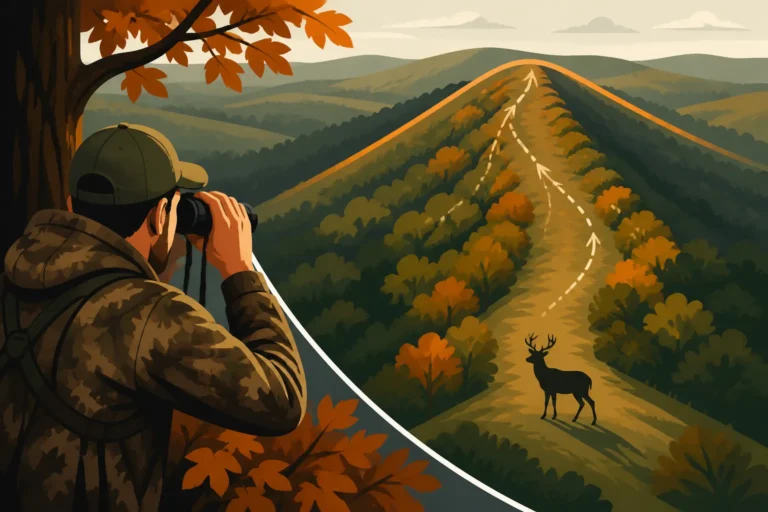
With leaves off the trees, visibility is often at its highest, but this also means deer are more aware of their surroundings. They will gravitate towards areas that offer natural concealment and efficient travel routes between their bedding and feeding areas. These "funnels" could be narrow strips of timber connecting larger woodlots, brushy creek bottoms, old fencerows, or even terrain features like saddles and pinched points along ridges. During this time, deer often favor creek bottoms for travel because they offer both cover and a consistent path. These areas also tend to hold more browse, providing a quick snack on their journey. Using mapping tools like GoHunt or the Indiana DNR's online resources to identify these potential travel corridors before you even step foot in the woods is invaluable. Look for transitions in habitat—where a dense thicket meets open timber, or where a stand of pines borders a hardwood flat. These are often natural bottlenecks that deer use, especially when trying to avoid detection. Understanding Reading Aerial Photos for Southern Indiana Deer can significantly aid in identifying these crucial terrain features.
Leveraging Thermal Cover and South-Facing Slopes
As previously mentioned, thermal cover is king in January. Deer are constantly looking for ways to conserve energy. Thick cedar groves, dense pines, standing switchgrass, or even brushy clear-cuts provide excellent protection from the wind and trap what little warmth the sun offers. These areas will almost certainly hold bedding deer. When scouting, pay close attention to south-facing slopes. These areas receive more direct sunlight throughout the day, melting snow faster and providing a warmer, more comfortable bedding site. Deer will often bed on these slopes in the afternoon, soaking up the sun's rays. Your stand placement should be designed to intercept deer moving into or out of these thermal cover areas, or along the edges of south-facing slopes, particularly in the late afternoon. Consider placing a ground blind or stand on the downwind side of these bedding areas, allowing you to observe movement without alerting deer. A good strategy might involve hanging a stand on an adjacent ridge or a bottleneck funnel between a south-facing slope and a prime food source. These spots are often low-traffic but high-reward, especially if you get in undetected. For mobility, Portable Treestands Worth Packing In can be a game-changer when you're trying to set up quietly near these sensitive areas.
Effective Hunting Tactics for the Deep Winter
Hunting in January means you need to adjust your tactics significantly. The deer are savvy, the conditions are harsh, and opportunities can be few and far between. This isn't the time for aggressive calling or random still-hunting; it's about calculated moves, patience, and maximizing every precious moment in the woods.
All-Day Sits and Patience
Unlike the early season or the peak rut, when deer can move throughout the day, late-season deer movement often concentrates around prime feeding times, typically early morning and late afternoon. However, the bitter cold and shortened daylight hours can sometimes push deer to feed more frequently, even during the middle of the day, to maintain their body temperature. This means that if you're committed to a good food source, an all-day sit can dramatically increase your chances. Rather than getting down for lunch and risking spooking deer, bring snacks, a thermos of hot coffee or soup, and hunker down. The sheer mental fortitude required for Cold-Weather Sitting Strategy in Indiana cannot be overstated. You might not see anything for hours, but that one brief window of movement, often around midday when other hunters have left, could be your only shot. Deer are on tight routines, and breaking those patterns can be risky. If you're confident in your spot—near a prime food source and good cover—then patience is truly your greatest ally.
Still-Hunting and Tracking in Snow
While long sits are effective in many situations, sometimes the best approach, especially after a fresh snowfall, is to still-hunt or track. A fresh blanket of snow reveals everything: tracks, rubs, scrapes (though scrapes are less active now), and most importantly, travel patterns. Still-Hunting Southern Indiana Ridges can be incredibly rewarding. Move slowly, taking one or two steps, then pausing for several minutes to scan for deer. Use your binoculars to pick apart dense thickets and shadowed areas. The quiet of a snowy woods can work to your advantage, muffling your footsteps, but it also makes every snap of a twig sound like an explosion. If you find fresh tracks leading from a bedding area towards a food source, you can often slowly follow them, predicting where the deer might be headed or where they might be bedded just ahead. This requires extreme stealth and an understanding of how deer use topography and cover. Remember to hunt into the wind to keep your scent from blowing ahead of you. If you're in an area with particularly dense cover, Using a Ground Blind on Indiana Public Land might be a better option than a treestand, allowing you to move into position more quietly and offering greater concealment in the bare winter woods. When you do harvest a deer, Field Dressing a Deer in Cold Weather has its own unique considerations, so be prepared.
Maximizing Your Late-Season Success
To truly make the most of Indiana’s extended archery season, it’s not just about gear and strategy; it’s about a holistic approach that covers everything from pre-season preparation to post-hunt analysis. Every little advantage adds up when you’re facing the challenges of deep winter hunting.
Intensive Pre-Season and In-Season Scouting
Even though it’s "late season," the work actually starts much earlier. Your early season Scouting Indiana Public Land Before Season can provide invaluable insights that become critical in January. Knowing where the acorns fell, where the thickest escape cover is, and how deer travel through certain terrain features when leaves are on, helps you predict their movements when the landscape changes. As the season progresses, shift your focus. Use trail cameras on travel corridors leading to known food sources, and don’t be afraid to put boots on the ground, even during periods of non-hunting. Look for tracks in the snow or mud, fresh droppings, and browse lines that indicate heavy feeding. GoHunt's mapping features can be incredibly helpful for identifying potential late-season hotspots and planning your approach. Pay attention to bedding areas. Deer will often leave a lot of sign around their winter beds, and knowing these locations is half the battle.
Adapting to Weather Conditions
Weather dictates late-season deer movement more than anything else. A severe cold front can trigger significant feeding activity right before it hits, as deer try to stock up on calories. Conversely, an extreme cold snap might keep deer bedded down for longer periods, only moving during the warmest parts of the day. A light snow cover, as discussed, is a hunter’s dream for tracking. Heavy snow, however, can make travel difficult for both you and the deer. Keep a close eye on the forecast, not just for temperature and precipitation, but also for wind direction and speed. Your stand choice should always factor in the prevailing wind to keep your scent from blowing into bedding or feeding areas. Be prepared for anything; Indiana weather can change on a dime in January, from mild thaws to bitter blizzards. This constant adaptability is what separates successful late-season hunters from those who pack it in after Christmas.
Understanding Overlapping Seasons
One crucial aspect of Bowhunting Indiana's Long Archery Season is the overlap with other hunting opportunities. Specifically, the archery season runs concurrently with the Indiana muzzleloader season for a portion of December, and small game seasons are also open. This means you might share the woods with more hunters than you would in early October. Be aware of orange requirements, maintain heightened situational awareness, and always identify your target clearly. More hunters can mean more deer movement, but it can also mean increased pressure. Knowing where other hunters might be, and planning your approach to avoid heavily pressured areas, can give you an edge. Sometimes, those pressured deer will seek out overlooked pockets of cover, making those small, difficult-to-access spots prime hunting locations.
Disclaimer
Hunting is an inherently dangerous activity. Always prioritize safety, understand and follow all Indiana DNR regulations, and hunt ethically. This guide provides general information and recommendations; individual results may vary. Consult official state resources for the most current rules and regulations.