Calling an Indiana Gobbler Off the Roost
There are few things more frustrating in turkey hunting than hearing that booming gobble from the roost tree, a sound that promises an exciting morning, only to have the bird fly down in the opposite direction or simply disappear. It’s a situation many of us Indiana turkey hunters know all too well, and it can really test your patience and calling skills. This guide is all about giving you the strategies and confidence to consistently call an Indiana gobbler off the roost and into your lap, transforming those early morning frustrations into success.
Understanding How Indiana Gobblers Roost
Before you can call a gobbler off the roost, you need to understand why he's there in the first place and what he's thinking when that first hint of dawn starts to color the eastern sky. It’s not just random; there’s a method to their madness, and understanding it is your first step to success.
Why Gobblers Choose Their Roosts
Think of a turkey's roost as his fortress for the night. They pick specific trees and locations primarily for safety and a clear view of any potential predators. Here in Indiana, you’ll often find them favoring the tallest trees in a timber block—think mature oaks, sycamores along river bottoms, or even towering cottonwoods near old fields. They want a good, sturdy limb that offers a wide, unobstructed view, allowing them to spot foxes, coyotes, or even us hunters approaching from a distance.
Beyond safety, roosts are often chosen for convenience. They'll generally be near areas where they spent the late afternoon feeding, providing an easy fly-up at dusk and a quick drop-down to breakfast the next morning. Proximity to water is also a factor, as is the presence of other turkeys. Often, a gobbler will roost near a group of hens, hoping to be the first one to greet them when they hit the ground. Understanding these preferences is key to predicting where they might be, and resources like Where Indiana Gobblers Roost can give you even more insights into these patterns. If you're using a mapping tool like GoHunt, you can often identify these prime roosting spots by looking for mature timber close to food sources or water, even before you step foot in the woods.
Interpreting Pre-Dawn Gobbling and Fly-Downs
The pre-dawn show is more than just exciting; it's a critical intelligence-gathering period. As the woods begin to lighten, gobblers will start "shock gobbling" at owls, crows, or even distant sirens. These initial gobbles are your best chance to pinpoint their exact location, especially if you were only able to get a general idea from a distance the night before. Listen intently. Does he gobble from the same spot, or does he shift slightly? Is he alone, or are there multiple birds chiming in?
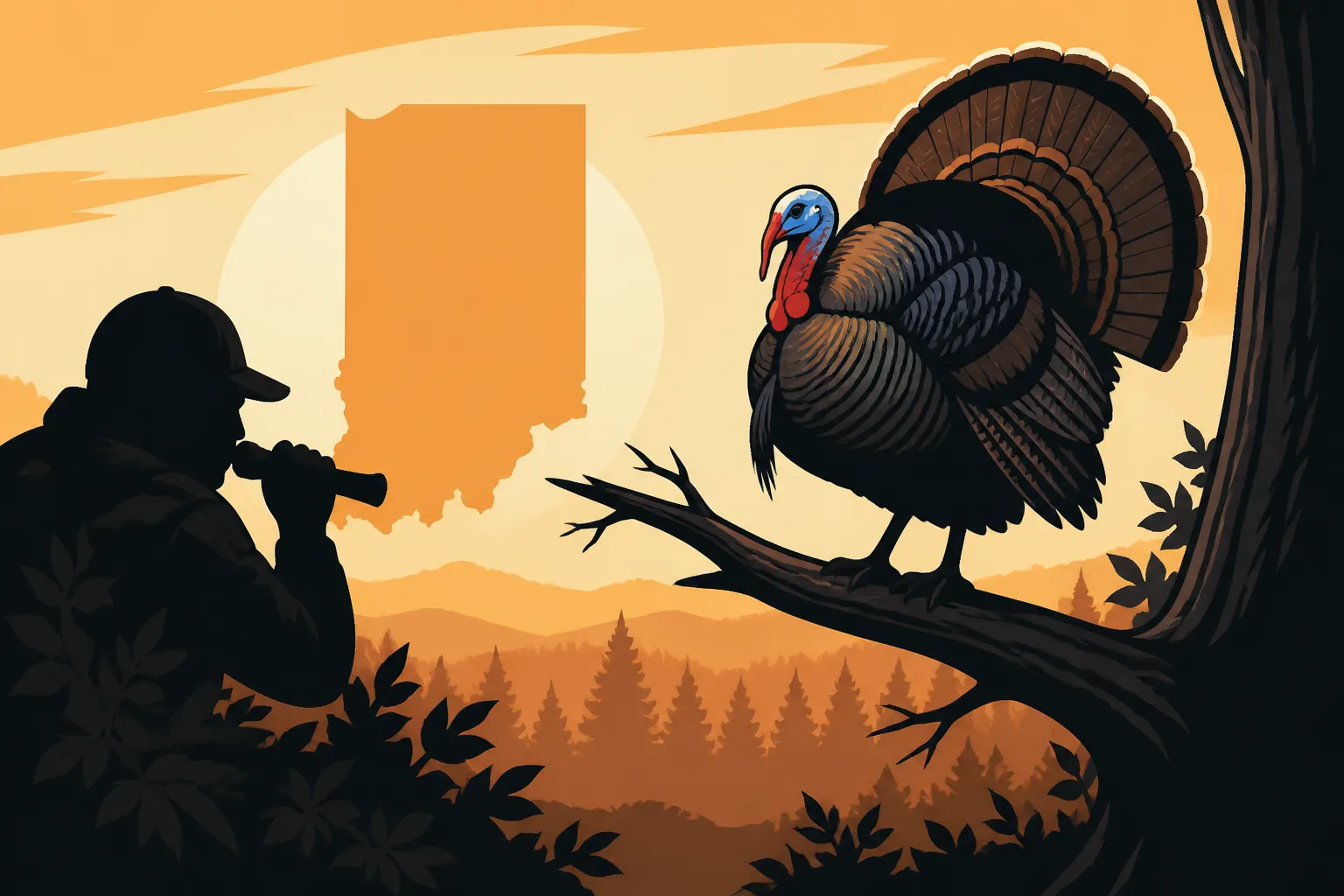
As daylight truly breaks, the gobbling often becomes more frequent and enthusiastic. This is when the birds are starting to get antsy, eager to hit the ground. You'll hear the characteristic "tree yelps" and "clucks" from hens, signaling their readiness to fly down. A gobbler will often puff up and strut on his limb, showing off to any hens in the vicinity. The actual fly-down usually happens within 15-30 minutes of official sunrise, but it can vary. On a calm, clear morning, they might drop sooner; on a foggy or windy day, they might wait a bit longer, seeking better visibility before committing. The sound of heavy wing beats followed by a soft thud indicates a bird has hit the ground. Your ability to interpret these sounds—and remain absolutely still—is paramount during this critical window.
Strategic Setup for Roosted Birds
Once you've located a roosted gobbler, your setup is arguably the most crucial part of the entire hunt. A perfect call can be wasted if you're not in the right spot, or worse, if the bird spots you.
Finding the Perfect Setup Location
This is where the rubber meets the road. Your goal is to get as close as safely possible to the roost tree before the first gobble, without alerting the birds. "As safely possible" usually means within 100-150 yards, ideally on the side you expect them to fly down. But what makes a "perfect" spot?
First, natural cover is non-negotiable. You need something that completely breaks up your outline – a wide oak, a thick cedar, a blowdown, or a dense briar patch. Don't just pick a tree; pick a thicket. If you're on public land, which often sees more pressure, finding good cover can be a challenge. That's where meticulous Scouting Indiana Public Land Before Season really pays off. You might find a spot near a Setting Up Against a Big Oak that offers sufficient concealment.
Second, consider the fly-down path. Gobblers typically fly down to open areas where they can strut, such as field edges, logging roads, or thinned timber. Position yourself between the roost tree and that anticipated fly-down zone. If they're roosted near a Turkey Tactics for Farmland Field Edges, you'll want to be hidden along that edge. Avoid setting up directly under the roost tree; you’ll get busted every time. Instead, be far enough away that he can fly down and still need to cover some ground to get to you. Remember, turkeys love to strut and gobble from open ground, but they are incredibly wary of moving into unfamiliar cover.
Third, think about topography. Ridges, creek bottoms, and subtle terrain changes can work in your favor or against you. If a bird is on a ridge, he'll likely fly down to the flatter ground below. If he's in a bottom, he might fly up to a slight rise. Use these natural features to channel the bird towards your position. Always imagine the turkey's approach – where will he walk, what will he see, and what might make him hesitate?
Dealing with Multiple Roosted Birds and Obstacles
Sometimes, you hit the jackpot and find several birds roosted together. While exciting, it can also complicate your setup. Multiple sets of eyes mean a higher chance of getting busted. If you have a lone gobbler, you can often be more aggressive with your setup. But with multiple birds, especially if hens are present, you need to be stealthier. Hens are often the first to hit the ground, and where they go, the gobbler usually follows. If they fly down away from you, your chances of pulling the gobbler close diminish significantly.
Obstacles are another major consideration. A creek, a thick fence, or an impenetrable briar patch can act as an invisible wall for a gobbler. Turkeys prefer to walk around these barriers, not over or through them, unless absolutely necessary. If you set up on the wrong side of a creek, even if he can hear your calls perfectly, he might just walk the bank looking for an easier crossing out of your range. Use the "GoHunt" app or other mapping tools to identify these natural barriers during your scouting phase. Sometimes, using Turkey Decoys That Work on Pressured Birds can help pull a bird across a psychological barrier, but physical barriers are tougher to overcome. Always confirm there's a clear, unobstructed path for the gobbler to walk from his fly-down spot to your position.
Mastering the Art of Calling Off the Roost
Calling a gobbler off the roost isn't about blasting out the loudest series of yelps. It’s a subtle, strategic game of seduction, mimicking the natural sounds of a hen waking up and enticing the gobbler to join her.
The Initial Soft Calls and Waiting Game
The first calls you make are crucial. Resist the urge to hit him with a full-blown excited yelp right off the bat. Remember, he's still on the limb, potentially with other hens. Your goal is to sound like an unattached hen, just waking up, maybe a little lonely, but definitely not desperate. Start with very soft, subtle tree yelps, clucks, and purrs right as the woods begin to lighten, often before he even makes his first gobble. Sometimes, I’ll wait until he gobbles once or twice on his own to confirm his location and mood.
Think about mimicking reality: a hen isn't usually screaming her head off from the roost. She's making soft, contented sounds. Use a mouth call or a slate call for these initial, subdued calls. The idea is to make him think there's a hen in the area, but not give away your exact position or make him suspicious. Call softly, then go completely silent for 10-15 minutes. Let him gobble, let him wonder. This silence builds anticipation. You can find excellent options for these subtle sounds in a good collection of Turkey Calls Worth Carrying in Indiana. Patience is paramount here; it's a waiting game.
The Fly-Down Sequence and Aggressive Follow-Up
As the time for fly-down approaches, and you hear the hens starting to get more vocal or the gobbler's rhythm picks up, it's time to shift your strategy. After he gobbles, hit him with a series of soft wing beats (simulated by slapping your hat against your leg or using a wing-beat call) followed immediately by a few soft clucks and purrs. This tells him, "Hey, I just flew down, and I'm right here!" This is a powerful enticement, especially if he's alone or the hens he was roosting with flew down in a different direction.
Once he flies down, the game changes. Now he’s on the ground, potentially strutting and looking for that hen he heard. This is when you can increase the intensity of your calling slightly. A series of contented yelps, clucks, and purrs, mimicking a hen feeding and content, is often effective. If he gobbles aggressively, respond with a confident series of yelps – but don't overdo it. You want him to come looking for you, not for you to go to him.
The key is to read his body language (if you can see him) and his gobbling response. If he’s gobbling harder and getting closer, keep it consistent. If he hangs up, which happens frequently, you might need to go silent for a bit, then offer a very soft call, or even try the "GoHunt" method of subtle movement, if the cover allows, to appear more realistic. Sometimes, if the initial setup fails and the bird moves off, you'll need to transition quickly to Run-and-Gun Turkey Tactics on Public Land to stay in the game. Many successful hunts during the Hunting the Indiana Spring Turkey Opener often start with this calculated roost strategy.
Common Pitfalls and Troubleshooting
No matter how well you plan, turkey hunting throws curveballs. Knowing how to react when things don't go perfectly is what separates the consistently successful hunters from those who get frustrated and give up.
The Hung-Up Gobbler and What to Do
Ah, the "hung-up" gobbler. Every turkey hunter knows this particular brand of frustration. You've done everything right: located him, set up perfectly, called him off the roost with finesse, and he's on the ground, gobbling his head off… but he just won't come that last 50-70 yards. He's often strutting back and forth, just out of range, hoping you will come to him. This is incredibly common, especially with pressured birds or during the latter half of the season When Indiana Gobblers Go Quiet in May due to increased hunting pressure or breeding activity.
So, what do you do?
- Go Silent: Sometimes, the best call is no call. If he's hung up, stop calling completely. Let him wonder where you went. His curiosity might just get the better of him. Wait 15-30 minutes, then offer a very soft cluck or purr.
- Subtle Movement (if safe): If you're in incredibly thick cover and can safely move a few yards away from him without being seen, try it. This can often make him think the hen is moving off, and that might be enough to pull him in. This is a high-risk, high-reward move. Make sure you use your GoHunt topo maps or scouted terrain features to pick a path where you won't be seen.
- Change Calls/Volume: Try switching from a slate to a mouth call, or vice-versa. Sometimes a different tone is all it takes. You might even try a slightly louder, more aggressive series of yelps if he's being particularly stubborn, as if challenging him to come investigate.
- Decoys: If legal and you're already set up with decoys, ensure they're positioned correctly. A submissive hen decoy or a jake decoy can sometimes draw him in, as he wants to investigate or run off the "intruder."
Adapting to Pressure and Weather Changes
Indiana gobblers, particularly those on public land or near heavily hunted areas, are incredibly sensitive to pressure. If they've been shot at or called at aggressively, they become "call shy" and wary. These birds will often gobble less, respond cautiously, and hang up more frequently. If you suspect you're hunting pressured birds, dial back your calling intensity, use fewer decoys, and focus even more on concealment and patience. Your best bet might be to let him fly down naturally, go silent for a good hour, and then try subtle calling, as if you're a new hen just wandering into the area.
Weather also plays a huge role.
- Windy Days: Gobblers often gobble less on windy days, and their calls don't carry as far. You might need to be closer to the roost and use slightly louder calls to cut through the wind. Strong winds also make it harder for them to hear you, and for you to hear them.
- Rainy/Foggy Days: Turkeys often stay on the roost longer on wet or foggy mornings, waiting for visibility to improve. Gobbling can be sporadic. Be prepared for a delayed fly-down and dress appropriately with good rain gear.
- Cold Snaps: Early season cold snaps can make birds a bit less vocal, but they still need to feed. They might fly down later but be more receptive to feeding calls once on the ground.
- Knowing the Indiana Turkey Population Trends in your specific hunting area can also help you gauge the level of pressure birds might be experiencing.
Finally, always remember your gear. A good pair of boots that can handle Indiana mud and snow, appropriate layered clothing, and a reliable shotgun like those discussed in Turkey Shotgun Gauge Choice are essential for staying comfortable and focused, regardless of what the Indiana weather throws at you.
Here’s a quick guide to some common calling scenarios:
| Scenario | Timing | Calling Strategy | Rationale |
|---|---|---|---|
| Pre-Dawn Roost | 30-45 min before SR | Soft tree yelps, clucks, purrs (very subtle) | Mimic a hen waking up, establish presence without alerting. |
| First Gobble | Around first light | Go silent, let him gobble 1-2 times, then subtle calls | Confirm location, assess mood, avoid overcalling. |
| Fly-Down Imminent | 15 min before/at SR | Wing beats, soft clucks/purrs, contented yelps | Simulate a hen flying down and feeding. |
| On the Ground, Distant | After fly-down | Moderate yelps, clucks, purrs; consistent. | Keep him interested, pull him closer with "contented hen" sound. |
| Hung-Up Gobbler | 50-70 yds, not moving | Go silent, very soft calls after a wait, subtle changes | Challenge his patience, make him think the "hen" is leaving. |
| Silent Fly-Down | Any time | Assume he’s on ground, soft calls 15-20 min later | If he doesn't gobble, he might still be close, don't rush him. |
Learning to call an Indiana gobbler off the roost is one of the most exciting and rewarding aspects of spring turkey hunting. It takes practice, patience, and a deep understanding of turkey behavior, but when that big tom finally commits and struts into range, it’s a moment you’ll never forget.
Disclaimer
Hunting is an inherently dangerous activity. Always prioritize safety, understand and follow all Indiana hunting regulations, and be aware of your surroundings and other hunters. The information provided in this guide is for informational purposes only and should not be taken as a substitute for official DNR regulations or professional guidance.