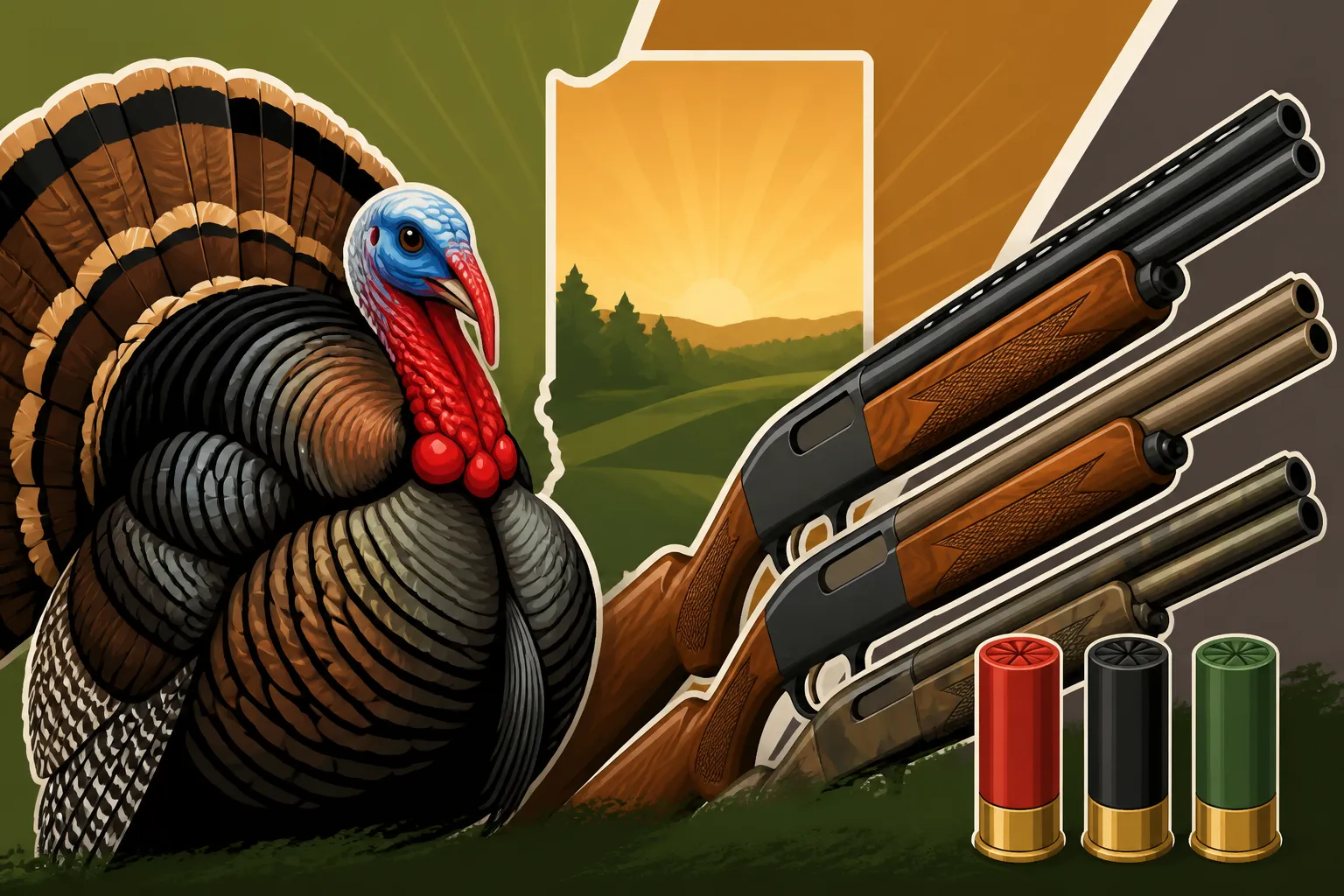
Turkey Shotgun Gauge Choice
Choosing the right shotgun gauge for turkey hunting in Indiana can feel like stepping into a perennial campfire debate. Every hunter has their strong opinions, and sometimes the sheer volume of choices and anecdotes can be overwhelming, leaving you wondering if you're making the "right" decision. This guide aims to cut through the noise, helping you understand the real-world performance and practical considerations of different shotgun gauges so you can confidently pick the best one for your Indiana turkey season.
The Classic Debate: 12 Gauge vs. 20 Gauge for Indiana Turkeys
For decades, the conversation around turkey shotguns almost always started and ended with the 12 gauge. It was the undisputed king, and for good reason. But times, and especially ammunition technology, have changed, bringing the 20 gauge squarely into the spotlight. Let's dig into why these two dominate the conversation.
Why the 12 Gauge Remains a Dominant Force
There's no denying the raw power and versatility of a 12 gauge. When it comes to putting a dense, lethal pattern of pellets on a gobbler's head and neck at traditional turkey hunting ranges, the 12 gauge has always delivered. It simply holds more shot, meaning more pellets in the air and, ideally, more pellets on target. This larger payload often translates to a wider, more forgiving pattern, which can be a real advantage if that gobbler is strutting at the edge of your comfort zone, perhaps 40 yards out in a wide-open cut field or across a ridge line in the Hoosier National Forest Hunting.
Many hunters swear by the 12 gauge because it offers that extra cushion of confidence. If you're hunting open country or calling birds that might hang up at those extended distances, knowing you have a big payload can make all the difference. Ammunition for 12 gauges is also incredibly abundant and diverse, from various shot sizes to different types of loads, offering a vast array of options for patterning your particular gun. It's the standard, and as such, most dedicated turkey loads were developed with the 12 gauge in mind first. For many, a 12 gauge is just "the turkey gun," a reliable tool that has put plenty of longbeards in the truck.
The Rise of the 20 Gauge and Its Advantages
In recent years, the 20 gauge has absolutely exploded in popularity for turkey hunting, and it's easy to see why. The primary advantage is undoubtedly its lighter weight and significantly reduced recoil compared to a 12 gauge. When you're Run-and-Gun Turkey Tactics on Public Land, covering miles of ridges and hollows in places like Yellowwood State Forest or Morgan-Monroe State Forest, every ounce matters. A lighter 20 gauge shotgun is a joy to carry all day, allowing you to move faster and stay fresher.
Furthermore, the reduced recoil of a 20 gauge makes it a fantastic option for younger hunters, those who are recoil-sensitive, or anyone who simply prefers a more comfortable shooting experience. Let's be honest, those magnum turkey loads in a lightweight 12 gauge can really thump you. A 20 gauge allows for more comfortable practice sessions, which translates to better shooting in the field when that big tom finally steps out. What truly propelled the 20 gauge into the big leagues, however, is the advent of Tungsten Super Shot (TSS) ammunition. This incredibly dense shot material delivers devastating knockdown power from smaller gauges, essentially allowing a 20 gauge to perform like or even better than a 12 gauge with traditional lead loads. This technological leap has made the 20 gauge a truly formidable and highly practical choice for Spring Turkey Hunting in Indiana.
Beyond the Big Two: Considering Smaller Gauges (and the Bigger One)
While the 12 and 20 gauge dominate, it's worth acknowledging that other gauges exist and, with modern advancements, can also be effective turkey tools.
The Nimble .410: A Modern Turkey Slayer?
For the longest time, the .410 was considered a novelty for turkey hunting, perhaps suitable only for very experienced hunters taking ultra-close shots. That perception has been utterly shattered by the widespread availability of TSS loads. With TSS, the .410 has transformed into a legitimate turkey slayer, capable of delivering shockingly dense and effective patterns out to 30-40 yards, depending on the specific gun and choke setup.
The appeal of the .410 is immense for certain hunters. Its extremely light weight makes it perfect for those who prioritize ultimate portability, perhaps for deep woods hunts or for a minimal setup when you're literally crawling to birds. Recoil is virtually nonexistent, making it the absolute best choice for young hunters or anyone who cannot tolerate recoil. Imagine a kid on their Indiana Youth Turkey License Rules hunt, confidently shouldering a lightweight .410 without fear of being rocked back by a heavy magnum load. It changes the game entirely. Of course, the trade-off is a much smaller pattern window, demanding more precise shooting and careful range estimation. But for those who embrace its limitations and exploit its strengths, the .410 can be incredibly rewarding.
The 10 Gauge: Power When You Need It (or Think You Do)
On the other end of the spectrum sits the formidable 10 gauge. Once a more common sight in turkey camps, its popularity has waned significantly with the advancements in 12-gauge and now 20-gauge ammunition. The 10 gauge is all about maximum payload and maximum punch. It throws the heaviest patterns of any common shotgun, theoretically offering the longest effective range and the greatest margin for error.
However, the downsides are considerable. 10-gauge shotguns are heavy, often cumbersome, and recoil can be absolutely brutal. If you're a hunter who sits in a blind all day or uses a sturdy rest, the weight might not be an issue. But for mobile hunters who might be on the move Calling an Indiana Gobbler Off the Roost or repositioning in thick timber, that weight becomes a real hindrance. Ammunition selection is also far more limited and often more expensive than for 12 or 20 gauge. While it certainly has the power to anchor any gobbler, for most Indiana turkey hunting scenarios, the practical advantages offered by modern 12- and 20-gauge setups, especially with TSS, often outweigh the brute force of the 10 gauge.
What Truly Matters: Patterning and Ammunition in Indiana
Regardless of the gauge you choose, two factors are far more critical to your success than the number stamped on the side of your barrel: the ammunition you use and how well you pattern your shotgun. Neglect these, and even the most expensive turkey gun will underperform.
The Critical Role of Turkey-Specific Ammunition
Modern turkey loads are a marvel of ballistics engineering. Gone are the days when a standard game load was considered "good enough." Today, ammunition manufacturers produce specialized loads designed specifically for turkey hunting. These include copper-plated lead, buffered lead, and most notably, Tungsten Super Shot (TSS).
TSS, in particular, has revolutionized turkey hunting. Its extreme density (significantly denser than lead) means that smaller pellets carry more energy and maintain their velocity better, resulting in tighter patterns and deeper penetration. This is why a .410 or a 20 gauge loaded with TSS can outperform a 12 gauge loaded with traditional lead shot. When selecting ammunition for Hunting the Indiana Spring Turkey Opener, always look for dedicated turkey loads. Brands like Federal, Winchester, and Apex Ammunition offer excellent options across all gauges. Don't be afraid to experiment with different brands and shot sizes within your chosen gauge; each gun is an individual, and what patterns well in one might not in another. Understanding Tungsten Turkey Loads Worth the Price will make a huge difference in how you approach ammunition selection.
Patterning Your Shotgun: Non-Negotiable for Success
This cannot be stressed enough: you absolutely must pattern your shotgun with the exact ammunition and choke tube you intend to hunt with. This isn't just a suggestion; it's a mandatory step for ethical and successful turkey hunting. A shotgun is not like a rifle; there's no universal "zero." Each combination of gun, choke, and ammunition will produce a unique pattern.
Here's a simple breakdown of how to approach patterning:
- Choose Your Choke: Most turkey hunters use an extra-full or specialized turkey choke tube. These constrict the shot charge more than other chokes to deliver the densest possible pattern.
- Select Your Ammo: Pick a few different brands or loads of turkey-specific ammunition that you're considering. Remember, TSS is a game-changer for smaller gauges.
- Set Up Targets: Use large paper targets (at least 3×3 feet) with a turkey head and neck silhouette.
- Shoot at Hunting Distances: Start at 20 yards, then move to 30, and finally 40 yards. Always shoot from a rested position to eliminate human error.
- Analyze Your Pattern: After each shot, examine the target. You're looking for a dense cluster of pellets, particularly within the kill zone of the turkey's head and neck. Count the pellet strikes in a 10-inch circle around the densest part of your pattern. A good turkey pattern should have at least 100-120 pellets in that 10-inch circle at your maximum ethical range. This is where tools like GoHunt can come in handy for documenting your results and comparing different loads effectively.
- Adjust and Repeat: If your pattern isn't satisfactory, try a different choke tube or a different brand/load of ammunition. It's often a process of trial and error, but it's time well spent. Knowing your gun's limitations is key. This critical step, often overlooked, is precisely what Patterning a Turkey Gun at 40 Yards is all about.
Making Your Choice for Indiana's Diverse Terrain
Indiana offers a rich tapestry of hunting environments, from the rolling hills and deep timber of the south to the flat farmlands and smaller woodlots of the north. Your chosen gauge should complement your hunting style and the specific terrain you'll be traversing.
Matching Gauge to Your Hunting Style and Location
Consider where you'll be chasing longbeards this spring. If you're hunting expansive private farmland in central Indiana, where birds might cross open fields and your shot opportunities could be longer, a 12 gauge with a heavy payload of dense shot might give you the most confidence. This setup excels for setups like Turkey Tactics for Farmland Field Edges where a bird might hang up at 40-50 yards. The added range and pellet count can make a difference.
Conversely, if you're planning on being a highly mobile hunter, navigating the steep, thick ridges and hollows of southern Indiana's public lands, a lightweight 20 gauge or even a .410 loaded with TSS could be your best friend. These setups are perfect for Run-and-Gun Turkey Tactics on Public Land, where you're constantly moving, setting up quickly against a tree, and trying to get a gobbler to commit to close range. The portability and reduced bulk are huge advantages when you're covering miles on foot, carrying calls and decoys. Remember, the goal isn't necessarily maximum range, but consistent, ethical kills at your effective range, which you've determined through patterning.
| Gauge | Pros | Cons | Ideal for Indiana Scenarios |
|---|---|---|---|
| 12 Gauge | High pellet count, wide pattern, diverse ammo selection, proven track record. | Heavier, more recoil, can be cumbersome in thick cover. | Open fields, longer shots, static blind hunting, general purpose. |
| 20 Gauge | Lighter, less recoil, highly effective with TSS, agile. | Smaller pattern than 12g (with lead), less forgiving at extreme range (with lead). | Mobile hunting, run-and-gun, younger hunters, rough terrain, close-to-medium range. |
| .410 | Ultra-light, minimal recoil, highly effective with TSS, extreme portability. | Very tight pattern, demands precise shooting, limited effective range (even with TSS). | Youth hunters, recoil-sensitive, expert hunters, close-range setups, deep woods. |
| 10 Gauge | Maximum payload, ultimate power, very dense patterns. | Very heavy, significant recoil, limited ammo choice, costly. | Specialized long-range setups (less common now), static blind setups. |
Personal Comfort, Recoil Management, and Ethical Shots
Ultimately, the best shotgun gauge for you is the one you can shoot accurately and comfortably. There's no pride in owning a powerful 12-gauge magnum if you flinch every time you pull the trigger, or if the recoil prevents you from practicing enough to become proficient. An ethical turkey shot aims for the head and neck, a small target that demands precision. If your gun choice makes that precision more difficult, you're doing yourself and the birds a disservice.
Take the time to handle different shotguns. If possible, shoot a few different gauges at the range. Pay attention to how the gun feels, how you manage the recoil, and how consistently you can put pellets on target. Don't let someone else's opinion dictate your choice. Your confidence in your equipment directly impacts your ability to make a clean, ethical shot when that Indiana gobbler finally steps into range. Remember, a well-placed shot from a 20 gauge or even a .410 with modern TSS loads is infinitely more effective than a poorly placed shot from a 12 gauge. The choice comes down to personal fit, consistent patterning, and your commitment to ethical hunting practices.
Disclaimer
This article is for general informational purposes only and does not constitute professional advice. Laws, prices and regulations vary by location and change over time. Consult a qualified professional for guidance on your specific situation.