Turkey Tactics for Farmland Field Edges
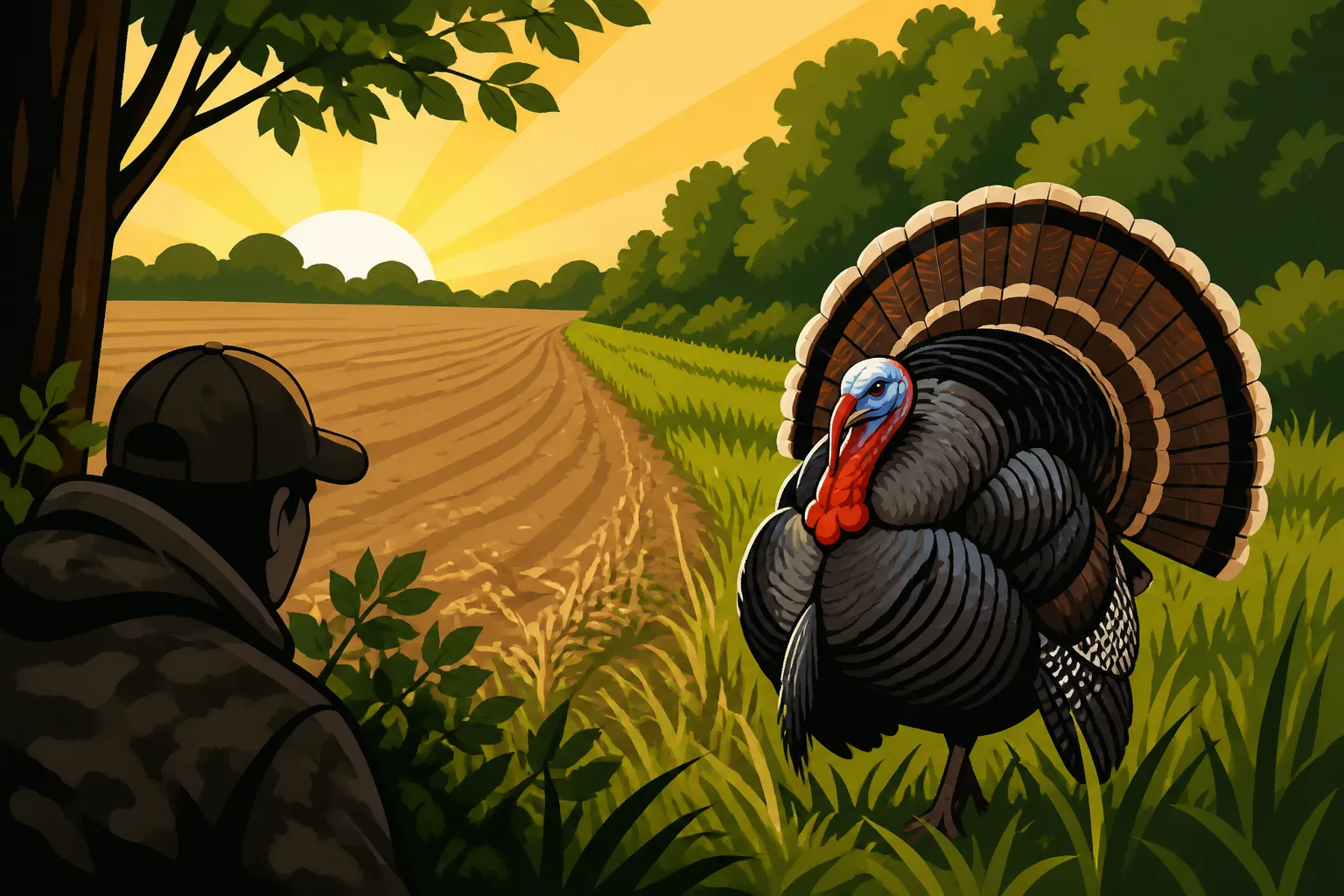
There's a special kind of challenge that comes with hunting wild turkeys along Indiana's farmland field edges. You see them out there, strutting in the sun, seemingly oblivious, but the moment you try to close the distance, they melt away or stand just out of range, drumming and gobbling but never committing. It’s a frustration many Hoosier hunters know all too well. This comprehensive guide will walk you through proven tactics for outsmarting those wary field edge gobblers, helping you turn those tantalizing sightings into successful hunts.
The Unique Challenge of Farmland Turkeys
Hunting turkeys in Indiana’s big timber, like the Hoosier National Forest, often involves navigating dense woods and relying on close-quarters calling. But out in the farmland, where fields meet small woodlots and fencerows, the game changes entirely. These birds live a different life, and recognizing that is your first step to success.
Why Field Edge Birds Behave Differently
Farmland turkeys are creatures of habit, yes, but their habits are dictated by the open landscape and abundant, changing food sources. Unlike their deep-woods cousins who might spend most of their day scratching in leaf litter for acorns, field edge birds are often found gleaning waste grain, chasing bugs in cover crops, or strutting for hens with maximum visibility. This open environment makes them inherently more wary. They can see danger coming from a mile away, and they use that advantage to keep their distance.
Their patterns are often tied to the agricultural cycle. During spring planting, they might be picking through freshly tilled ground for seeds and insects. Later in the season, after crops like corn or soybeans have emerged, they'll use the cover of the crop rows to move undetected or feed on the edges. They’re constantly adapting, and as a hunter, you need to adapt with them. On private land, these birds might also experience different levels of hunting pressure compared to state or national forests, which further shapes their behavior. Understanding these nuances is crucial for success.
Common Frustrations and Misconceptions
One of the biggest frustrations when hunting farmland turkeys is getting "hung up." You set up, a gobbler fires off, and he just sits there, strutting and drumming 100 yards out, refusing to close the gap. It feels like he’s mocking you! This happens because he expects the hen to come to him, especially if he has real hens nearby, and he has the open ground to see if you’re real or a fraud. Trying to run-and-gun across an open field, a tactic sometimes employed in dense timber, is almost always a recipe for disaster with these birds. They’ll see you long before you get within range.
Another misconception is that all turkeys respond to the same calling. A loud, aggressive calling sequence that might pull a gobbler off a ridge in southern Indiana might send a field edge bird running for the hills. These birds are often exposed to more human activity—farmers on tractors, hikers, even casual drivers—and can become call-shy or simply associate loud sounds with danger. Patience, subtlety, and strategic positioning are far more valuable here than sheer vocal volume. Many hunters feel compelled to constantly call, but often, the most effective strategy is to call sparingly and let the silence work in your favor, especially when dealing with When Indiana Gobblers Go Quiet in May.
Essential Scouting for Farmland Edges
Effective scouting is the bedrock of any successful turkey hunt, but it’s absolutely non-negotiable for farmland edges. You can’t just walk in blind and expect to call a bird across an open field. You need intelligence, and that comes from careful observation, both digitally and on the ground.
Reading the Landscape: Aerial Maps and On-the-Ground Reconnaissance
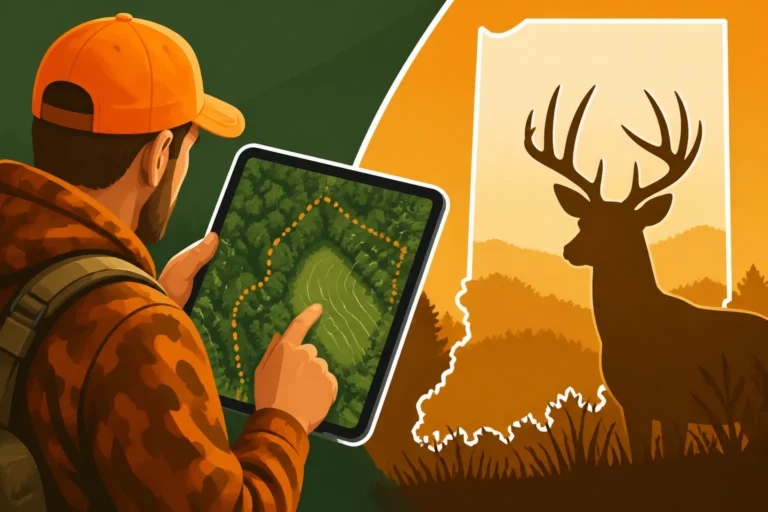
Before you even step foot in the woods, spend some serious time with aerial maps. Tools like GoHunt, along with the Indiana DNR's Go Outdoors Indiana mapping system, are invaluable. Look for those small woodlots, creek bottoms, fencerows, and drainages that break up the vast fields. These are natural travel corridors and often define a turkey’s world. Identify pinch points where birds are forced to travel through a narrow strip of cover, or areas where field edges meet thicker timber, offering both feeding opportunities and escape routes.
Pay close attention to changes in elevation, even subtle ones. A small rise can be a strutting knob, and a slight depression can offer crucial concealment for your setup. Pre-season scouting on the ground, before the leaves are fully out, can reveal old strut marks, droppings, dusting bowls, and tracks that indicate where birds are consistently active. Remember, scouting is also about understanding access points and verifying property lines, especially if you're exploring Hunting Small Private Tracts in Indiana. Always be respectful of landowners and their property.
Pinpointing Roost Sites and Travel Corridors
The number one piece of intel for field edge turkeys is knowing where they roost. Turkeys prefer to roost in large, mature trees, often near water or in protected areas of a woodlot adjacent to feeding fields. Listen at dawn and dusk for gobblers sounding off. If you can pinpoint a roost tree, you’ve got a massive advantage for a morning setup. Once they fly down, turkeys will almost always head straight for food.
Observe how they move from their roost to their preferred feeding areas. Do they drop down into a creek bottom and follow it? Do they walk a specific fencerow? Or do they immediately hit a certain part of a field to scratch? Identifying these travel corridors allows you to position yourself to intercept them. Often, a gobbler will fly down into an open field and strut for hens he expects to be there. Setting up along the edge of this fly-down field, concealed but with a clear view, can be deadly. You might even find success with Roost Hunting Indiana Gobblers strategies, positioning yourself quietly before daylight.
Decoy Strategies for Open Ground
Decoys are absolutely critical when hunting field edge turkeys. In wide-open spaces, a visual aid can be far more convincing than even the best calling, bridging that final gap when a gobbler hangs up out of range. But it's not just about having a decoy; it's about having the right decoy and knowing how to place it.
Selecting the Right Decoy Setup
For farmland edges, a single hen decoy is a great starting point. It’s less intimidating than a full gobbler setup and can often entice a real tom to come investigate. If you’re feeling more aggressive or hunting early in the season when dominance is being established, a hen and jake combination can be incredibly effective. The jake often triggers a dominant gobbler’s territorial instincts, making him eager to run off the younger rival. However, be cautious with a full-strut gobbler decoy, especially if you’re hunting highly pressured birds or in areas with other hunters; some gobblers might avoid it, and other hunters could mistake it for a real bird.
Consider the time of season and the pressure on the birds. Early in the Hunting the Indiana Spring Turkey Opener, gobblers are fresh and more susceptible to aggressive decoy tactics. Later in the season, when birds have been hunted hard and might be "henned up," a subtle single hen might be your best bet. Realism matters, too. Lifelike decoys, like those from Avian-X or Dave Smith Decoys, often make the difference. The less "plastic" it looks, the better.
Placement is Everything: Angles and Visibility
Decoy placement isn’t just about where you put it, but how it’s oriented. Always try to face your decoy(s) towards the direction you expect the turkey to approach from. This ensures the gobbler sees the most lifelike profile as he comes in. If you’re using a jake or full-strut gobbler, position it so the real tom will approach it head-on, giving you a broadside shot opportunity as he circles to challenge the intruder.
Place your decoys at a distance that gives you a comfortable shot, typically 10 to 20 yards from your blind or cover. This way, when the gobbler commits, he’s well within your effective range. Ensure your decoys are visible from a long distance, but make sure there are no obstacles between them and your shooting lane that could block a charging bird or your shot. On a slight rise, your decoys will be visible further, which can be an advantage. For even more detailed insights, check out Decoy Placement for Pressured Indiana Birds.
Calling Tactics for Farmland Gobblers
Calling is the art and science of turkey hunting, and it’s where many hunters either succeed wildly or fall flat on their face with field edge birds. The key isn't necessarily calling more, but calling smarter.
Mastering the Art of Soft Calling
When dealing with wary field edge birds, often less is more. Loud, aggressive calling can spook a tom that’s already on high alert from the open environment. Instead, focus on soft, seductive calls. Gentle yelps, clucks, and purrs can pique a gobbler’s curiosity without raising red flags. Think of yourself as a contented hen, subtly inviting company. A few soft tree yelps right before fly-down, followed by a quiet fly-down cackle, can be incredibly effective to simulate a hen waking up and dropping off the roost.
These soft calls, often delivered with a mouth call or slate call, are especially effective when a gobbler is already in sight but hanging up. He can see your decoys, he knows hens are there, and a little encouragement might be all he needs. Avoid long, drawn-out calling sequences initially. A few quiet calls, then silence, often works wonders. Let him wonder, let him search. Different call types, as covered in Turkey Calls Worth Carrying in Indiana, offer a range of subtleties.
Aggressive Calling: When and Where to Use It
While soft calling is generally a safer bet, there are times when aggressive calling is called for. Early in the season, when gobblers are still eager and establishing dominance, loud cutting and fast yelping can sometimes trigger a response. If you’re trying to locate a bird in a big woodlot bordering a field, or if a gobbler is answering but not moving, a burst of aggressive cutting might just tick him off enough to commit.
Shock calls, like crow calls or owl hoots, can also be used sparingly to get a gobbler to reveal his position without directly calling to him. However, use these with caution, as overusing them can alert a gobbler to your presence. The general rule for aggressive calling on field edges is: if it’s not working after a few attempts, back off. You can always tone it down, but it’s hard to un-spook a bird. Remember, the goal is to convince him to come to you, not to scare him away.
Setting Up Your Ambush Point
Once you've scouted and planned your calling and decoy strategy, the final piece of the puzzle is setting up your ambush point. This is where concealment, shooting lanes, and patience come together to create the perfect trap.
Utilizing Natural Cover and Ground Blinds
The open nature of farmland edges makes concealment paramount. Look for natural features that offer cover: a thick fencerow grown up with multiflora rose and small trees, a brush pile left by a farmer, a natural depression in the field, or the edge of a standing timber line. The goal is to be completely hidden from a turkey’s keen eyesight, especially from their high vantage point as they approach.
For maximum concealment and comfort, a good ground blind is often your best friend on a field edge. Pop-up blinds allow you to set up quickly, offer full concealment for you and your gear, and allow for movement (like reaching for a different call) without being detected. Make sure to brush in your blind thoroughly with natural vegetation to help it blend into the surroundings. If you don't have a blind, use the thickest natural cover available, breaking up your outline and ensuring you're completely still as a bird approaches. Always scout for a spot that offers a clear view of your decoy spread and likely approach routes, but keeps you hidden.
Shot Placement and Readiness
Knowing your effective range is absolutely critical, especially with the unique challenges of Turkey Shotguns and Chokes. Pattern your shotgun well before the season to understand its maximum ethical range with your chosen turkey load and choke combination. For most setups, this is typically 30-40 yards. Stick to that range religiously, even if a gobbler is strutting just beyond it. A wounded bird is a tragedy no hunter wants.
Once you’re set up, be ready. Turkeys can appear silently or charge in quickly. Have your gun shouldered or resting in a position where you can quickly raise it for a shot. Minimize any movement. When a gobbler comes into range and you're ready to shoot, aim for the head and neck. A clean shot to this vital area will drop a bird instantly. Patience is key. Wait for the bird to commit, perhaps give a final soft cluck to stop him, and then make your shot. Many a turkey has been missed by an impatient hunter moving too soon.
Adapting to Conditions and Pressured Birds
Even with the best scouting and setup, turkeys are unpredictable. Weather changes, hunting pressure, and the birds' daily routines can throw a wrench into your plans. The most successful field edge hunters are those who can adapt on the fly.
Dealing with Mid-Day Lulls and Changing Weather
Turkey activity often peaks in the early morning and late afternoon, but those mid-day hours can be brutal. During a mid-day lull, birds might retreat to shady timber to loaf, or they might continue feeding in areas with good cover like tall grass or standing crops. Don't give up! Sometimes, taking a break, relocating to a different field edge or a shaded woodlot, and then resuming a patient sit can pay off.
Changing weather also plays a huge role. Rain can make gobblers quiet and seek shelter, but a light drizzle can also make them more receptive to calling, as the sound carries better and hides your movements. Wind is a huge factor; it can make birds harder to hear, and they'll often position themselves with the wind at their back to hear approaching predators. If it's very windy, try to hunt areas with more natural windbreaks or shift to a more aggressive calling approach if the wind is carrying your calls away. Be aware that When Indiana Gobblers Go Quiet in May often coincides with increased foliage and sometimes less enthusiastic breeding.
When Birds Hang Up: Troubleshooting and Adjustments
The dreaded "hang-up" is almost inevitable when hunting field edge turkeys. A gobbler sees your decoys, hears your calls, but just won't come that last 50 yards. What do you do? First, try a change of pace. If you've been calling aggressively, try going silent or switching to soft purrs. If you've been quiet, try a few excited cuts. Sometimes, shaking a small bush to simulate a hen moving can draw their attention.
If the bird is truly locked up and won't budge, you have a few options. If you're hunting with a partner, one person can try to circle wide and call from a different angle, creating the illusion of a hen moving away. Otherwise, consider a strategic retreat and relocation. Sometimes, walking away and setting up 100-200 yards down the field edge, or even coming back later in the day, is your best bet. Always be mindful of your Indiana Spring Turkey Bag Limit Rules and other regulations, but don’t be afraid to try different things. Every turkey hunt is a learning experience, and adapting to these challenges is what makes you a better hunter.
Field Edge Turkey Tactics Quick Reference
| Scenario | Calling Strategy | Decoy Setup | Hunter Position | Notes |
|---|---|---|---|---|
| Early Morning Fly-Down | Soft tree yelps, fly-down cackle, light clucks/purrs. | Single hen or hen/jake combo 15-20 yds from blind. | Ground blind or thick cover along woodline/fencerow. | Set up pre-dawn. Focus on subtlety. Be ready as they hit the ground. |
| Mid-Day Loafing | Intermittent soft yelps, contented clucks. | Single hen facing approach. | Shaded woodlot edge, inside thick fencerow. | Turkeys often seek shade and bugs. Patience is key. Try short sits then move. |
| Gobbler Hung Up 100+ yards | Go silent, soft clucks, or aggressive cuts (sparingly). | Hen/jake or single hen. Adjust angle if possible. | Concealed, minimal movement. | Don't overcall. Let them come. If no movement, try a wide, quiet reposition. |
| Active Strutter in Field | Intermittent soft yelps, purrs. Mimic a receptive hen. | Hen/jake or full strut gobbler (if low pressure). | Well-camouflaged, facing the strutting bird. | Rely on the visual. Only call enough to keep his attention. |
| Pressured Birds | Very soft, infrequent calling. Focus on purrs/clucks. | Single hen, highly realistic. | Max concealment, ground blind essential. | Silence and realism are paramount. Focus on ideal approach path. |
Disclaimer
Hunting is an inherently dangerous activity. Always prioritize safety, follow all local and state regulations, and obtain proper licensing before heading afield. The information provided in this guide is for educational purposes only and should not replace proper training or professional advice. Be aware of your surroundings, practice ethical hunting, and respect private property.