Still-Hunting Southern Indiana Ridges
Still-hunting the rugged ridges of southern Indiana can feel like trying to find a needle in a haystack, especially when those elusive whitetails seem to melt into the timber as soon as you step foot in the woods. It’s a challenge born from vast, dense public lands and a deer herd that's intimately familiar with every hunter's approach. This guide is all about equipping you with the know-how to slow down, read the subtle cues of the forest, and effectively hunt those ridge-running bucks and does in Indiana's beautiful, yet often frustrating, hill country.
Understanding Southern Indiana's Terrain for Still-Hunting
Southern Indiana is a world away from the flat, agricultural fields of the northern part of the state. Here, you'll find sprawling hardwood forests, deep ravines, steep hills, and winding creeks. This topography creates unique challenges and opportunities for hunters, particularly those who embrace the quiet art of still-hunting. It's a method that requires patience, acute observation, and a deep understanding of how deer use the landscape to their advantage.
The Unique Landscape of the Southern Hills
The southern region of Indiana is characterized by the unglaciated uplands of the Shawnee Hills and Crawford Upland, which include large tracts of public land like the Hoosier National Forest and various state forests. Unlike the relatively uniform woodlands you might find elsewhere, these areas feature dramatic elevation changes, rock outcrops, thick undergrowth in some spots, and open, mature timber in others. This diverse terrain offers endless hiding spots for deer and makes their movements less predictable than in areas with distinct field-to-bedding patterns. The constant undulations mean that wind and thermals are rarely straightforward, often swirling and changing direction with the contours of the land. It’s not uncommon to walk a half-mile ridge only to find a steep drop-off into a creek bottom you didn’t even know was there, forcing you to recalculate your approach.
Why Still-Hunting Excels in This Environment
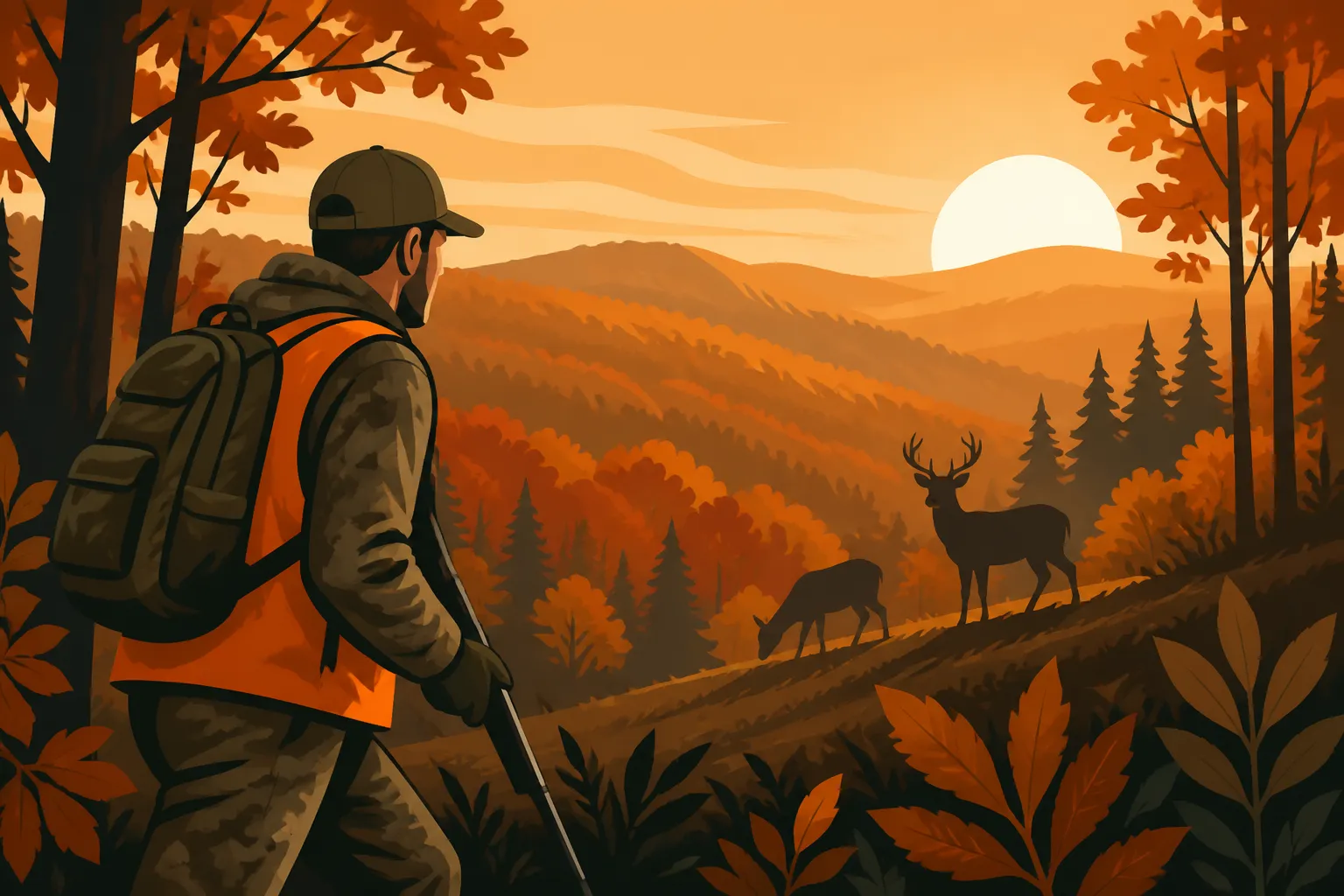
Still-hunting, or slow-stalking, is essentially hunting on foot, moving deliberately and quietly, stopping frequently to observe and listen. In the vast, broken terrain of southern Indiana, this method truly shines. Unlike sitting in a fixed stand, still-hunting allows you to cover ground, adapting to changing conditions and deer movement. You're not relying on deer to come to you, but rather actively seeking them out on their terms, within their habitat. It's particularly effective when deer are on the move during the rut, or when they're using specific micro-habitats like isolated oak flats on a ridge or a subtle bench feature. The sheer scale of the woods here, often miles from any road, makes it difficult to effectively scout and place a stand for every potential deer movement. Still-hunting turns the entire forest into your hunting ground, letting you react to fresh sign or unexpected encounters. Plus, the sheer quietness of the approach, contrasted with the crunch of dry leaves, is often the difference between seeing a deer or just hearing it bust out unseen.
Reading the Landscape: Key Sign and Features
Success in still-hunting southern Indiana ridges isn't just about moving slowly; it's about moving intelligently. This means understanding how deer navigate and utilize the complex terrain. You need to become a detective, constantly searching for clues and interpreting the story the land tells. Before you even set foot in the woods, doing some homework using mapping software can make a huge difference in identifying promising areas for Scouting Indiana Public Land Before Season. Apps like GoHunt offer detailed topographical maps and public land boundaries that are invaluable.
Identifying Deer Travel Corridors
Deer, like us, prefer the path of least resistance. In the hilly, rugged terrain of southern Indiana, these paths often manifest as saddles, benches, creek bottoms, and subtle ridge points. A saddle, for instance, is a low spot on a ridge that connects two higher points. Deer frequently use these as natural crossings, especially when moving between bedding and feeding areas on adjacent slopes or valleys. Benches are flatter, often narrow, strips of land that run horizontally along a hillside, offering easier travel than the steep slope below or the thick top of the ridge. Look for old logging roads, worn trails along creek beds, or even faint deer trails cutting across benches. Overhanging limbs, rubs, and scrapes along these paths are clear indicators of regular use. Sometimes, the "corridor" isn't a trail at all, but rather a slight dip in elevation or a change in timber type that makes passage easier.
Pinpointing Bedding Areas and Food Sources
Deer bedding areas in southern Indiana are typically found on secluded benches, thick points, or leeward slopes (sheltered from the prevailing wind) where they can rest, chew their cud, and stay hidden while still having a good vantage point. Often, these spots will be within dense cover like young saplings, briar patches, or areas of thick regrowth from old timber cuts. Identifying these means looking for areas with thick thermal cover and good visibility for the deer. As for food sources, southern Indiana's hardwood forests are a haven for mast crops. Oak flats, particularly those with white oaks that drop acorns earlier, are deer magnets in the fall. Beech trees, persimmon trees, and even small patches of honeysuckle or greenbrier can serve as critical food sources. Don't overlook the edges of clear-cuts or areas where timber has recently been harvested, as the regenerating vegetation provides both food and cover. During late season, deer might congregate around a standing cornfield if you're near agricultural interfaces, or dig for remaining acorns and browse on woody stems. Having a solid understanding of Where Hoosier National Forest Bucks Bed can significantly improve your still-hunting game.
Interpreting Wind and Thermals
Understanding Wind and Thermals on a Southern Indiana Ridge is paramount to still-hunting success, especially in hilly terrain where air currents are rarely straightforward. Wind, obviously, carries scent, and deer rely heavily on their noses. Always try to approach a suspected deer area with the wind in your face or quartering to you. However, thermals—the rising and falling air currents driven by temperature changes—complicate matters. In the morning, as the sun warms the earth, thermals rise, carrying your scent uphill. In the evening, as the air cools, thermals fall, carrying your scent downhill. This means a morning hunt might be best starting low and hunting up, while an evening hunt might involve starting high and hunting down. The key is to constantly be aware of the subtle shifts. A small draw or a thick stand of pines can create its own localized thermal current, so don't assume the overall wind direction is the only factor. A quick check of a milkweed pod or a pinch of powder can give you a visual cue of the air's movement, confirming your strategy.
Mastering the Art of Still-Hunting Movement
Once you understand the terrain and how deer use it, the next step is perfecting your movement. Still-hunting is a dance with the forest, a slow, deliberate ballet designed to blend you into the environment rather than announcing your presence. It's about taking your time, using all your senses, and being ready to stop, look, and listen at a moment's notice.
The "Stop and Go" Approach
The essence of still-hunting is not to cover ground quickly, but to cover it thoroughly. This means adopting a "stop and go" rhythm. Take five to ten slow, deliberate steps, then stop completely for several minutes. During this pause, scan your surroundings meticulously, not just looking for a whole deer, but searching for individual parts: an ear twitch, a horizontal line in a vertical world, a patch of brown or gray that doesn't quite match the tree bark. Use your binoculars during these stops to pick apart distant thickets, dark shadows, and areas of dense cover. Deer are masters of camouflage, and often, you'll only spot them when they move or when you force yourself to slow down and pick them apart from the background. Listen intently for subtle sounds—a twig snap, rustling leaves, the distant bleat of a doe. Often, you’ll hear deer long before you see them in this timber. This patient approach prevents you from spooking deer that are just beyond your immediate vision and allows you to capitalize on their natural curiosity if they are close enough to hear your subtle movements.
Using Cover and Concealment
Blending into the forest is crucial. Always be aware of your silhouette and try to break it up against a tree trunk or a patch of thick brush. Utilize the terrain to your advantage: stay just below the crest of a ridge, using the rise for concealment, or move along the side of a thicket rather than through it. When you stop, position yourself behind a tree or a cluster of saplings. Think like a predator, using shadows and natural breaks in the foliage to hide your approach. Even in open hardwoods, you can find small clumps of younger trees or fallen logs to briefly mask your movement. Remember, deer are constantly watching and listening, and any unnatural movement will immediately put them on high alert. The more you can disappear into the landscape, the higher your chances of getting close. This is especially true when hunting areas where deer are more pressured, where any slight mistake could mean a quick glimpse of a flagging tail.
Navigating Noisy Leaves and Tricky Terrain
Southern Indiana, especially during the fall, is notorious for crunchy, dry leaves that make quiet movement a real challenge. One effective tactic is to hunt shortly after a rain or when there's a dampness in the air, which quiets the leaf litter. If it's dry, focus on areas with softer ground, like creek bottoms, mossy patches, or exposed dirt under thick evergreens. When walking, shift your weight slowly, feeling for solid ground before committing your foot. Lift your feet rather than dragging them, and aim for bare spots, fallen logs (which can surprisingly be quieter than leaves), or areas with less leaf accumulation. When you encounter a steep incline or a rocky outcrop, take extra caution. These areas can be incredibly noisy and treacherous, but they also often funnel deer movement. A good pair of boots with excellent ankle support is non-negotiable here. Use an app like GoHunt to mark potential noisy zones on your map, helping you plan quieter routes.
Gear and Preparation for Ridge Still-Hunting
Still-hunting the ridges of southern Indiana demands specific gear and preparation to ensure both comfort and effectiveness. You're going to be covering ground, possibly in challenging conditions, so being properly equipped is paramount. From the clothes on your back to the tools in your pack, every item should serve a purpose in helping you stay quiet, warm, and ready. Having your Packs for a Hoosier Forest Day Hunt optimized for efficiency is critical.
Essential Clothing for Quiet Movement
Layering is key for hunting in Indiana, where temperatures can fluctuate wildly throughout the day, and exertion levels change with the terrain. Start with a moisture-wicking base layer to manage sweat, followed by insulating layers like fleece or wool, and topped with an outer layer that is quiet, durable, and provides protection from wind and light rain. Wool is a fantastic choice for still-hunting as it's naturally quiet, even when wet, and provides excellent warmth-to-weight. Avoid noisy fabrics like stiff nylons or crinkly rain gear. Camouflage patterns that match the hardwood forests are ideal. Don't forget a blaze orange vest or hat if hunting during firearms seasons, as Indiana Blaze Orange Requirements are strict, but ensure your quiet outer layer still allows it to be seen. A thin, comfortable pair of gloves can protect your hands from briars and also dampen any noise from your hands rubbing against your bow or rifle.
Optics and Navigation Tools
For still-hunting, quality optics are not a luxury; they're a necessity. A good pair of 8×42 or 10×42 binoculars will be your best friend for dissecting distant cover and identifying deer parts. Choose optics with good low-light performance, as you'll often be hunting during dawn and dusk. A rangefinder is also invaluable for confirming distances, especially in the varied topography where distances can be deceiving. Consider a model that offers angle compensation for accurate readings on inclines and declines. For navigation, a GPS unit or a reliable mapping app on your smartphone (such as GoHunt, which can download offline maps) is critical. Southern Indiana's ridges and hollows can disorient you quickly, especially in dense timber or low light. Mark your vehicle, trailheads, and any key features like promising oak flats or bedding areas. A portable charger for your phone is a smart addition, as GPS apps can drain batteries quickly. You might also find this article on Optics for Southern Indiana Ridges to be helpful.
Backpack Essentials for a Full Day Afield
Since you'll be actively moving, a lightweight but capacious daypack is ideal. Fill it with essentials for a full day. Beyond your optics and navigation, carry plenty of water, high-energy snacks, and a small first-aid kit. A headlamp is crucial for walking in before dawn or out after dark, especially in rugged terrain. A sharp fixed-blade knife for field dressing, game bags (especially during warmer early season hunts), and a small roll of flagging tape (to mark a blood trail or a specific spot) are also important. Consider a grunt tube or a set of rattling antlers during the rut, as these can be effectively used during your "stop and go" phases to draw in a curious buck. Finally, always carry proof of your hunting license and tags; remember that Carrying Proof of License on Your Phone is perfectly acceptable in Indiana.
Seasonal Considerations for Still-Hunting Success
The beauty of still-hunting is its adaptability, but what works best can change dramatically with the seasons. A smart still-hunter understands how deer behavior shifts from the early days of archery season through the peak of the rut and into the quiet of late winter, adjusting their tactics accordingly.
Early Archery Season Tactics
The early archery season, typically from October 1st in Indiana, often brings warm weather and dense foliage. This means deer are still in their predictable summer patterns, often focused on specific food sources like acorns or standing crops. Still-hunting during this time means moving even slower and being extra vigilant for subtle movements. Focus on areas with early dropping mast, like white oaks. Deer won't be moving far, often bedding close to food. Look for fresh rubs and scrapes that indicate bucks are beginning to mark their territory. The heavy foliage makes spotting deer incredibly difficult, so rely more on listening for their movements and focusing on very tight cover. Thermal currents will also be stronger due to warmer temperatures, so pay close attention to the wind, especially near creek bottoms and draws.
Still-Hunting During the Peak Rut
The rut is a still-hunter's dream. Bucks are on the move, actively seeking does, and often letting their guard down. This is the time to cover more ground, focusing on primary travel corridors and areas where does congregate. Ridges become superhighways for bucks cruising for receptive does. Concentrate your efforts around saddles, ridge points, and benches that connect various parts of a deer's home range. During the rut, you might find that using calls like a grunt tube or rattling antlers can be incredibly effective during your stops. A quick rattling sequence followed by intense listening can bring a curious buck right into your lap. Understanding Hunting the Rut in Early November is critical for maximizing your success during this high-action period. Don't just look for deer; actively listen for the sounds of a chasing buck or doe.
Late Season Challenges and Opportunities
Late season, particularly December and January, presents a different set of challenges. Food sources become scarcer, temperatures drop, and deer become more focused on survival. Still-hunting during this time requires finding those limited, high-calorie food sources. Thermal cover, such as thick pines, cedars, or dense brush in creek bottoms, becomes paramount as deer seek shelter from the cold winds and snow. Deer will often bed on sun-exposed, south-facing slopes during the day to soak up warmth. Still-hunting should focus on these bedding areas and the routes leading to the few remaining food sources. Snow can actually be your friend, silencing footsteps and making fresh tracks incredibly obvious. However, the exposed landscape means deer can spot you from farther away, demanding even slower, more deliberate movement and maximum use of available cover.
Safety and Ethics on Public Ridges
Still-hunting southern Indiana ridges, particularly on public lands like the Hoosier National Forest or various state forests, demands a strong commitment to safety and ethical hunting practices. These areas are shared by other hunters, hikers, and outdoor enthusiasts, and it's our responsibility to ensure everyone's safety and uphold the reputation of hunters.
Practicing Firearm Safety and Awareness
Always treat every firearm as if it's loaded. This golden rule is non-negotiable. When still-hunting, keep your firearm pointed in a safe direction at all times, typically towards the ground or up into the air, away from other people. Be absolutely certain of your target and what lies beyond it before taking any shot. In the hilly, broken terrain of southern Indiana, a bullet can travel surprisingly far, and missing or shooting through a deer could endanger others over the ridge. Never shoot at sound or movement alone. Always identify your target as a legal game animal beyond any doubt. During firearms seasons, remember that Indiana Legal Firearms for Deer Hunting now includes a much wider array of rifles, meaning shots can carry even further. Ensure your scope is not cranked up too high when scanning, as it can be disorienting.
Respecting Public Land Rules and Other Users
Public lands are a privilege, not a right. Familiarize yourself with all Indiana DNR regulations for the specific property you're hunting. This includes rules regarding vehicle access, camping, treestand placement (if you choose to use one for a break), and particularly for Trail Camera Rules on Indiana Public Land. Leave no trace; pack out everything you pack in. Be considerate of other users: if you encounter hikers, mountain bikers, or other hunters, give them space and acknowledge their presence. If you're still-hunting in an area with a lot of pressure, consider moving deeper into less accessible spots where others might not venture, or change your hunting times. Always have your hunter education card and license readily available.
Ethical Shot Placement and Game Recovery
As ethical hunters, our goal is a quick, humane kill. This requires diligent practice with your weapon and a commitment to taking only ethical shots. When still-hunting, you might encounter deer at close range or moving quickly. Only take a shot when the deer is broadside or quartering away, presenting a clear path to the vitals. Avoid head-on or extreme quartering shots. After the shot, take a moment to compose yourself and listen. Note the deer's reaction, the direction it fled, and any audible crash. Give the animal time before beginning your Blood Trailing After Dark in Indiana or during the day. This could mean 30 minutes for a broadside lung shot or several hours for a gut shot. Thoroughly search for blood and tracks, marking your path with flagging tape. If the trail goes cold, expand your search grid. If you lose the trail after a genuine effort, it's a frustrating part of hunting, but remember to always try your utmost to recover the animal.
Still-Hunting Strategy Table
To summarize some key strategic shifts for still-hunting across the deer seasons in southern Indiana, here's a quick reference:
| Season | Key Deer Behavior | Still-Hunting Focus | Movement Pace | Calling Tactics (Optional) | Notes |
|---|---|---|---|---|---|
| Early Archery | Predictable patterns, near food, dense cover | Early dropping mast (white oaks), thickets, creek beds | Very Slow | Minimal (soft bleats) | Focus on listening, thermals, damp mornings are best. |
| Pre-Rut | Increasing rubs/scrapes, bucks starting to cruise | Primary scrapes, transition lines, ridge saddles | Slow-Moderate | Soft grunts, light rattling | Cover more ground, look for fresh sign, scout using GoHunt for specific features. |
| Peak Rut | Bucks actively chasing does, vulnerable to calls | Doe bedding areas, high-traffic ridges, saddles, funnels | Moderate | Grunts, rattling, doe bleats | High activity, be ready for quick shots, focus on wind. |
| Post-Rut | Recovering, less active, seeking food & cover | Remaining food sources, thick thermal cover, south slopes | Slow | Soft grunts, late-season bleats | Deer are wary, prioritize quietness and identifying food. |
| Late Season | Focused on food and thermal cover, low energy | Persistent food sources, dense cover, sun-exposed slopes | Very Slow | Minimal (distress bleats if desperate) | Snow helps with tracking, but deer are easily spotted in open timber. |
Disclaimer
Hunting is an inherently dangerous activity. This guide provides general information and recommendations based on common practices and regulations in Indiana. Always consult the most current Indiana Department of Natural Resources (DNR) regulations before hunting. Proper safety equipment, hunter education, and adherence to all local, state, and federal laws are essential. The author and publisher are not responsible for any accidents, injuries, or legal issues that may arise from the use of this information. Hunt safely and responsibly.