Where Hoosier National Forest Bucks Bed
Hunting for deer in a vast, public land like the Hoosier National Forest can feel like searching for a needle in a haystack, especially when you're trying to pinpoint exactly where those elusive bucks are bedding down. It’s a challenge many of us face—the sheer scale and ruggedness of southern Indiana can be daunting. This guide is dedicated to peeling back the layers of the Hoosier National Forest, helping you understand the terrain, read the subtle signs, and ultimately uncover the strategic spots where mature bucks prefer to rest and hide.
Understanding Hoosier National Forest Terrain for Deer Bedding
The Hoosier National Forest, with its sprawling hills, dense timber, and winding creek bottoms, presents a unique challenge and opportunity for deer hunters. It’s not your typical flat farmland hunting, and that’s precisely why understanding the terrain is paramount to locating where bucks choose to bed. These aren't just random spots; they're calculated choices offering security, comfort, and a tactical advantage.
The Ruggedness of Southern Indiana Hill Country
If you've spent any time at all in the southern part of our beautiful state, you know the terrain in places like the Hoosier National Forest can be quite punishing. We're talking about steep inclines and declines, deep hollers, and long, winding ridges. This isn't flat ground, and deer, especially mature bucks, use this topography to their advantage. When a buck beds, he's looking for a place that offers him a commanding view of his surroundings, often on a ridge or a bench, allowing him to see or smell danger approaching from below. This is key to understanding Reading a Ridge for Hoosier Forest Deer. They'll almost always bed with the wind at their back, watching their downwind side. This means they can pick up scent from anything approaching from behind, and see anything coming from the front. It’s a classic defensive strategy perfected over generations.
The elevation changes here mean thermals are a huge factor, too. In the mornings, air currents generally move uphill as the ground warms, and in the evenings, they move downhill as it cools. Bucks will often position themselves to ride these thermals, gaining an extra layer of detection against predators and hunters alike. A bedded buck on a ridge might use the rising morning thermal to detect danger coming up from the valley, then shift slightly for the falling evening thermal to cover his backside as the air descends.
Timber Cuts, Clearings, and Regenerating Cover
The Hoosier National Forest is actively managed, which means you'll encounter various stages of timber regeneration. These areas, particularly recent timber cuts or clearings, are absolute goldmines for bedding. While they might look like a messy tangle to us, to a deer, they represent impenetrable security. Young saplings, thick briar patches, and fallen trees create a canopy that's difficult for predators (including us hunters) to navigate silently. Bucks will often bed just inside the densest parts of these areas, or on the edges where they can observe movement without being seen.
Consider clear-cuts that are 3-7 years old. These areas often have enough new growth to provide excellent cover but aren't so dense that deer can't move through them. Bucks will utilize the thickest pockets within these younger regenerating forests, often seeking out a specific downfall or clump of saplings that offers maximum concealment. These spots also tend to hold higher concentrations of browse, meaning bedding isn't just about security, but also about convenient access to food.
Water Sources and River Bottoms
Deer need water, just like all living creatures, and in the HNF, this often means creek bottoms and river drainages can be prime bedding areas. While bucks generally prefer higher ground for bedding during the day for security, they'll often bed closer to water sources during drier periods or when the weather is warm, especially at night. Furthermore, river bottoms and creek drainages often feature dense, unique vegetation that provides excellent cover. Think about the thick tangles of briars, honeysuckle, and other brush that grow along these riparian corridors.
These bottomland areas, while sometimes prone to flooding, offer diverse habitat that bucks will exploit. They provide a different type of thermal cover—cooler temperatures in summer, and sometimes more stable air in colder months compared to exposed ridge tops. When looking for Hunting Indiana River Bottom Funnels, don't just consider them as travel corridors; look for adjacent benches or rises within the bottomland that offer a slight elevation advantage and dense cover. Bucks might not bed directly in the lowest, wettest spots, but they'll often be on a slightly elevated knob or bench within the general drainage area, especially if it's protected by thick vegetation.
Key Bedding Sign and Micro-Habitats
Finding a buck's bed isn't always about spotting the deer itself; it's often about reading the landscape and recognizing the subtle signs they leave behind. In the sprawling acres of Hoosier National Forest Hunting, learning to identify these micro-habitats and indicators is crucial for success.
Thick Cover and Thermal Protection
Bucks, especially mature ones, are masters of concealment. They will almost always choose to bed in the thickest cover available. This isn't just about hiding from hunters; it's about feeling secure from all predators and the elements. In the Hoosier National Forest, this can mean anything from dense cedar thickets on a south-facing slope that catches the winter sun, to a nasty briar patch on a ridge point, or even a specific clump of fallen trees that creates an impenetrable fortress. When scouting, focus on areas that look difficult for you to walk through silently. That's often where they'll be.
Beyond physical concealment, bucks also seek thermal protection. On cold winter days, they’ll gravitate towards south-facing slopes, often within those aforementioned cedar thickets, to soak up the sun's warmth. Conversely, on hot early-season days, they'll find beds in shaded, cooler spots, perhaps on a north-facing slope or deep within a dense, mature hardwood stand where the canopy keeps the sun out. The specific type of thick cover will vary with the season, but the principle remains: they want to be comfortable and unseen.
Ridgeline Saddles and Benches
Ridgeline saddles and benches are classic bedding spots for mature bucks, and for good reason. A saddle is a low point on a ridge connecting two higher points, creating a natural funnel for deer travel. Benches are flatter, often narrow, strips of land that run along a hillside, often below the main ridge line. Bucks love to bed on these features because they offer excellent vantage points and escape routes. A buck bedded on a bench can often see down the hill, smell what's coming from behind, and quickly slip over the top or around the bench if danger approaches.
These locations provide multiple advantages. From a saddle, a buck can monitor activity on both sides of the ridge. A bench offers a relatively flat, secure spot to rest while still having elevation for observation. Often, these areas will also contain slightly thicker vegetation, creating a perfect blend of security and visibility. When you're scouting, look for these natural terrain features, especially those with some dense cover, and you're likely to find buck sign. Many of the most successful Treestand Setups in Hoosier National Forest are situated to catch deer moving to or from these very spots.
Lee Sides of Hills and Wind Protection
Wind is a deer's primary defense, and they utilize it meticulously when choosing a bed. Bucks almost always bed with the wind at their back, allowing their nose to cover their downwind side, while their eyes and ears monitor the upwind approach. But it's not just about covering their back; it's also about finding protection from the wind itself, especially during harsh weather. The "lee side" of a hill (the side sheltered from the wind) provides this protection.
On a blustery day, a buck might bed on the east side of a ridge if the wind is coming from the west, finding refuge from the direct force of the wind while still being able to catch any scent blowing over the ridge from the windy side. This strategic use of wind and topography allows them to conserve energy and remain undetected. Learning to read the wind and predict thermal movement is critical for a successful approach to these areas. Understanding Wind and Thermals on a Southern Indiana Ridge will drastically improve your chances of getting close.
| Bedding Location | Key Characteristics | Advantages for Bucks | Best Season/Conditions |
|---|---|---|---|
| Steep Ridgelines | High elevation, thick cover, escape routes | Excellent visibility, scent detection from thermals | All seasons, especially during the rut |
| Timber Cuts (3-7 yrs) | Dense regenerating saplings, briars, fallen trees | Impenetrable cover, browse food source | All seasons, particularly early and late season |
| River/Creek Bottoms | Thick riparian vegetation, slightly elevated knobs | Water access, cooler temps in summer, dense cover | Drier periods, warm weather, dense cover |
| Ridgeline Saddles | Low points connecting ridges, funnels | Observe both sides of ridge, multiple escape routes | All seasons, high traffic during rut |
| Hillside Benches | Flat strips of land along hills, dense cover | Vantage point, hidden from below, quick escape | All seasons, offers secure resting spot |
| Lee Sides of Hills | Sheltered from prevailing wind, thickets | Wind protection, strategic scenting | Windy, cold, or inclement weather |
Seasonal Bedding Shifts and Patterns
Deer are creatures of habit, but their habits are deeply influenced by the changing seasons. The location where a buck chooses to bed can shift dramatically from September to January, driven by factors like food availability, breeding activity, and weather. If you want to consistently find White-Tailed Deer Across Indiana, you've got to think like them and anticipate these seasonal changes.
Early Season Bedding in Dense Greenery
When the archery season opens in October, the Hoosier National Forest is often still very green, making it a challenge to spot deer. During this time, bucks are often still on summer patterns, or transitioning into early fall. Their bedding will be heavily influenced by food sources and the need for relief from warmer temperatures. You'll find them hunkered down in the thickest, densest cover they can find—think mature standing corn adjacent to woodlots if you're near farmland, or deep within those impenetrable clear-cuts and briar thickets in the forest.
In the HNF, this means focusing on areas with dense canopy cover that provides shade, or thick undergrowth that has exploded with summer growth. Areas around water sources, like the aforementioned creek bottoms, can also hold bucks in early fall as they offer both cover and a water supply. Their goal is simply to stay cool, hidden, and close to early season food like acorns, which are often dropping in abundance at this time. Scouting these dense areas thoroughly before the season is critical, and tools like Scouting Indiana Public Land Before Season can give you a significant edge.
Rut Period Bedding Near Doe Travel Routes
As we push into late October and especially through November, the rut takes over, and everything changes. Bucks become more transient, often abandoning their typical bedding for areas that maximize their chances of encountering does. During the peak of the rut, a buck might bed down wherever he "lays up" with a hot doe, or in areas that give him strategic access to known doe travel corridors and feeding areas. This could be a small clump of pines in an open field, or a thicket on the edge of a well-used trail. The emphasis shifts from thermal cover to proximity to does.
In the Hoosier National Forest, this often means bucks will bed on benches or ridge points that overlook prime doe feeding areas or travel routes to water. They'll also use thickets near transition lines where open hardwoods meet dense regeneration. The focus is on observation and quick movement. A buck might bed higher on a ridge than usual, just to keep an eye on a feeding flat below where does gather. This is the time to really understand Hunting the Rut in Early November and target those transition zones and funnels that does frequently use.
Late Season Bedding for Thermal Cover and Food
Once the firearms season has passed and December rolls around, the landscape of the Hoosier National Forest has changed dramatically. Leaves are off the trees, temperatures are dropping, and food sources are becoming scarcer. Buck bedding strategies pivot sharply towards thermal cover and proximity to dwindling food. They need to conserve energy, and staying warm is paramount.
Look for south-facing slopes, particularly those with dense evergreen cover like cedars or pines. These areas offer both sun exposure and a windbreak, providing crucial thermal protection. Thick clear-cuts, even those that seemed too dense earlier in the year, become prime bedding. Bucks will also bed close to remaining reliable Late-Season Food Sources for Indiana Whitetails such as standing beans or corn if you're near agricultural interfaces, or areas where persistent acorns or browse are still available in the deeper forest. They want to minimize the distance they have to travel from bed to food, especially during harsh weather. Finding these secure, warm bedding locations near food is key to filling a tag during the colder months.
Advanced Scouting Techniques for Bedding Areas
Finding those elusive buck beds in the vastness of the Hoosier National Forest requires more than just walking around aimlessly. It demands a strategic approach, blending modern tools with old-school woodsman skills. Effective scouting, whether done remotely or on the ground, is the backbone of consistent success.
Utilizing Aerial Imagery and Topo Maps
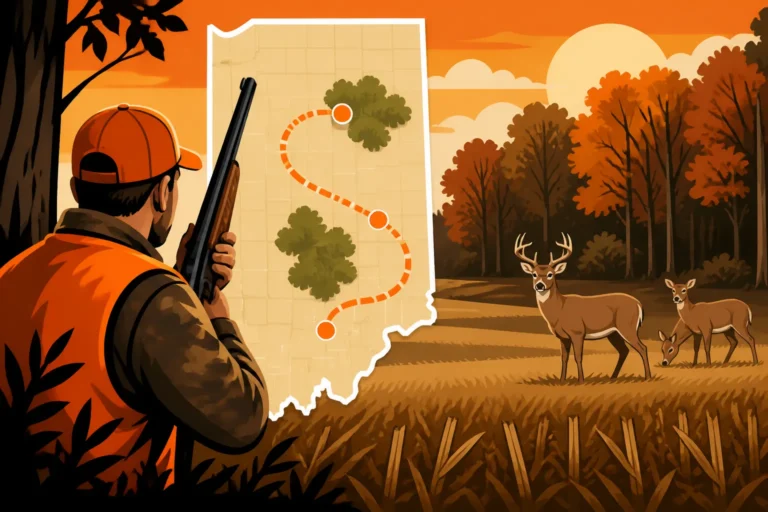
Before you even step foot in the woods, the best scouting begins at home with a good mapping application. Tools like GoHunt (or similar detailed mapping apps) are invaluable for analyzing the terrain of the Hoosier National Forest. You can spend hours poring over aerial imagery and topographic maps, identifying potential bedding areas without ever leaving your couch. Look for the distinct "fingers" of thick cover extending into more open timber, sudden changes in elevation that suggest benches or saddles, and areas of dense, dark green canopy that might indicate evergreen thickets.
Specifically, use the topographic lines to visualize elevation changes. Tight contour lines mean steep terrain, while spaced-out lines indicate flatter ground, often hinting at benches or saddles. Overlaying these maps with property boundaries (especially critical on public land) and satellite imagery showing vegetation density can reveal hidden pockets of cover that bucks will favor. This initial digital reconnaissance allows you to mark potential bedding spots and plan your on-the-ground visits efficiently. It's truly a game-changer for understanding the layout of Public Hunting Land in Indiana.
On-the-Ground Reconnaissance and Reading Sign
Once you've identified potential bedding areas on your map, it's time to hit the woods. This is where your woodsman skills come into play. On-the-ground reconnaissance during the off-season, or at least during non-hunting hours, is crucial. You're not just looking for deer; you're looking for the evidence of deer. Look for heavily used deer trails leading into and out of those thick cover areas you marked on your map. Pay close attention to rub lines and scrape lines, as these indicate buck activity and often lead to or from bedding.
The actual "beds" themselves will look like oval depressions in the leaves or dirt, often with a fresh deposit of droppings nearby. These are best found after a snow or during the late season when ground visibility is high. When you find a bed, analyze its surroundings: what's the wind doing? What's the escape route? Can the buck see or smell danger from multiple directions? This analysis confirms your hypothesis from the map and helps you understand the buck's strategic mindset. You can gain valuable insights by simply observing Finding Sign in Big Hoosier Forest Timber. Remember, you want to get in and out of these areas without disturbing them, especially during the season.
Wind and Thermal Considerations for Approach and Stand Placement
Understanding how wind and thermals interact with the terrain is perhaps the most critical component of successfully hunting a buck's bedding area. As mentioned earlier, bucks rely heavily on these natural air currents for scent detection. When approaching a potential bedding area, you must consider the prevailing wind direction and how it will carry your scent. You always want to approach from a direction where your scent is blowing away from the buck's probable location.
Furthermore, remember the thermal currents, especially in the hilly terrain of the Hoosier National Forest. In the morning, thermals rise, carrying scent uphill. In the evening, they fall, carrying scent downhill. A buck bedded on a ridge bench might use the rising morning thermal to detect danger coming from below. If you're planning a morning hunt, you'd want to approach from the side, with the wind ideally quartering away, staying below his likely line of sight, and letting the rising thermal carry your scent up and away. Setting up a stand, or planning a still-hunt, requires a deep understanding of these invisible forces. Using a reliable app like GoHunt can help you track real-time wind data and predict thermal shifts, allowing you to fine-tune your approach and Hunting the Hoosier Forest's Deer-Heavy Coves with confidence.
Ultimately, consistently locating where Hoosier National Forest bucks bed down comes from a blend of diligent digital scouting, patient on-the-ground reconnaissance, and a profound respect for the deer's natural defenses. It's a challenging endeavor, but one that makes success all the more rewarding in our wild Indiana woods.
Disclaimer
Hunting is an inherently dangerous activity. This guide provides general information and tactics for hunting in the Hoosier National Forest. Always prioritize safety, follow all Indiana Department of Natural Resources regulations, and obtain proper licenses and permits before hunting. Consult official DNR resources for the most current rules and safety guidelines. The information herein is for educational purposes only and should not be considered a substitute for personal judgment, professional instruction, or adherence to all applicable laws.