Coyote Calling in Indiana Farm Country
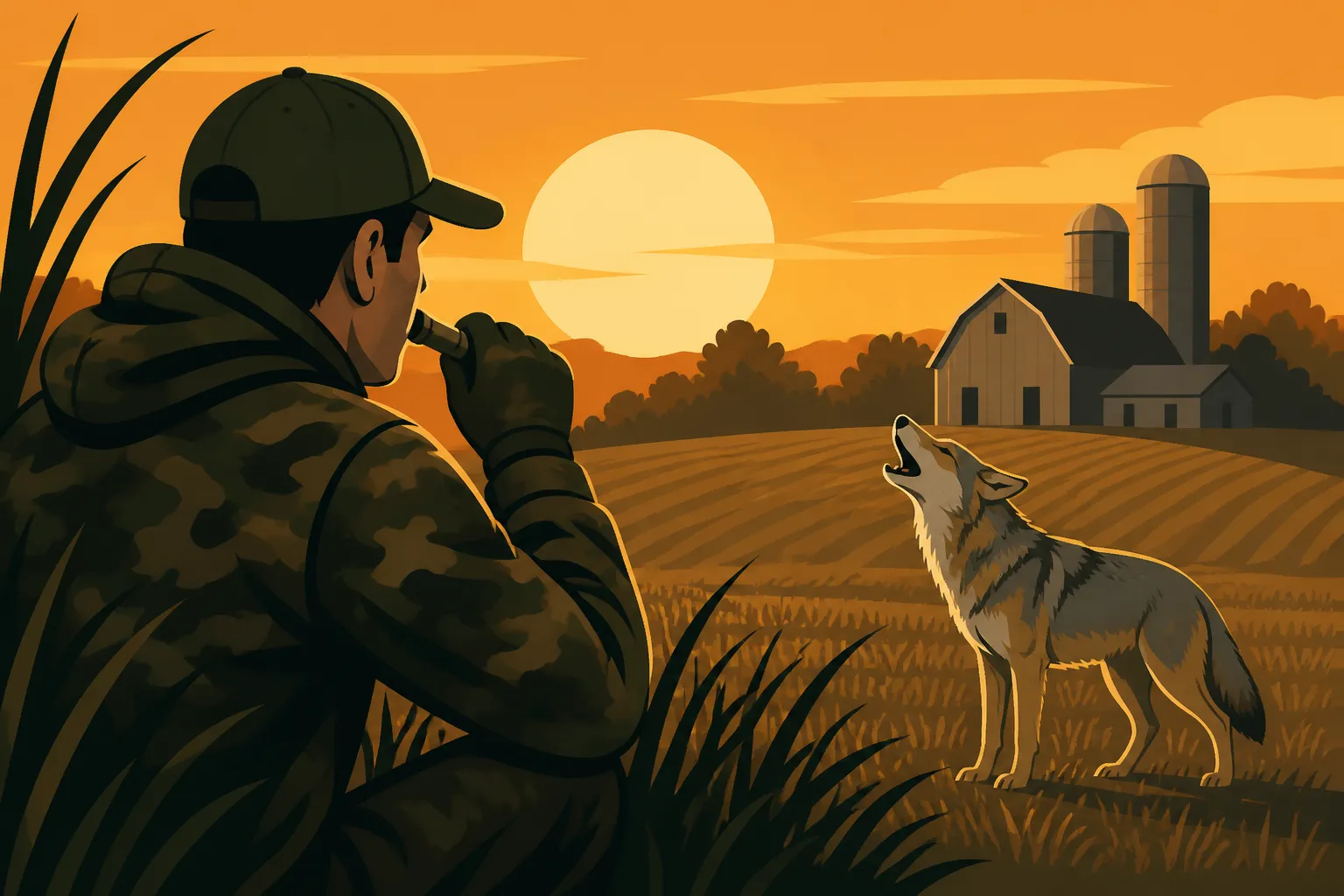
Coyotes in Indiana farm country can be a real headache, right? You're seeing fewer rabbits and pheasants, maybe even losing a calf or two, and that unmistakable yipping chorus at night just tells you they’re out there, and they're thriving. Trying to call these intelligent predators in can feel like a guessing game, especially when they're wary of human presence and the vastness of agricultural landscapes gives them endless places to hide. This guide is here to break down the complexities of coyote calling in Indiana’s farmlands, offering practical, on-the-ground strategies to help you become more effective and hopefully, bring those elusive 'yotes into range.
Understanding the Indiana Farm Country Coyote
To effectively hunt coyotes in Indiana's agricultural areas, you first have to understand them. These aren't the same coyotes you might find in dense forests or remote wilderness. Farm country coyotes are incredibly adaptable, constantly learning, and often more wary due to consistent human interaction and hunting pressure. Their lives revolve around the rhythm of farming, from planting to harvest, and understanding this cycle is your first step to success.
Their Role in the Ecosystem and Farmer Frustrations
Coyotes play a significant role in managing smaller prey populations, and in many ways, they are a vital part of the natural balance. They'll readily predate on rodents, rabbits, and even ground-nesting birds, which can be beneficial in some contexts. However, in Indiana's rich agricultural landscape, their adaptable diet often extends to livestock. Farmers, understandably, face real frustrations when coyotes impact their livelihood, whether it's through preying on chickens, lambs, or even vulnerable calves. This direct economic impact is why many landowners are eager to have coyotes managed, and as hunters, we often become part of that solution. The sheer numbers of coyotes in some areas can lead to a noticeable decline in small game species that hunters also pursue, adding another layer to the complex dynamic between coyotes and the ecosystem here in the Hoosier state.
Daily and Seasonal Behavior Patterns
Coyotes are most active during the low-light hours of dawn and dusk, though it's not uncommon to see them moving in broad daylight, especially during the colder months or when food is scarce. Their activity patterns shift throughout the year, heavily influenced by breeding cycles, pup rearing, and food availability. In late fall and winter, as deer season wraps up and crops are out, coyotes become more visible and often bolder, drawn to fields for rodents and carrion. This is often the prime time for hunters to capitalize.
The breeding season, typically from late January through March, also sees increased activity and territorial behavior. Males will roam more widely in search of mates, and both sexes become more vocal, making this a fantastic time for calling. Once pups are born in spring, adults are constantly on the move, hunting to feed their young. This period can present opportunities as well, but caution is needed to avoid disrupting dens. Understanding these shifts, from the intense territoriality of the breeding season to the constant foraging during pup rearing, allows you to tailor your calling strategies to their current motivations. You'll find success by matching your calls to what a coyote is naturally doing or reacting to at that particular time of year.
Key Habitat in Agricultural Landscapes
While we talk about "farm country," that doesn't mean coyotes are exclusively in open fields. Indiana's agricultural regions are a patchwork of cultivated fields, woodlots, creek bottoms, fencerows, and brushy drainages. These smaller, often overlooked pockets of cover are precisely where coyotes thrive. They use thick fencerows as travel corridors, dense multiflora rose thickets for bedding, and wooded creek bottoms for denning and escape cover.
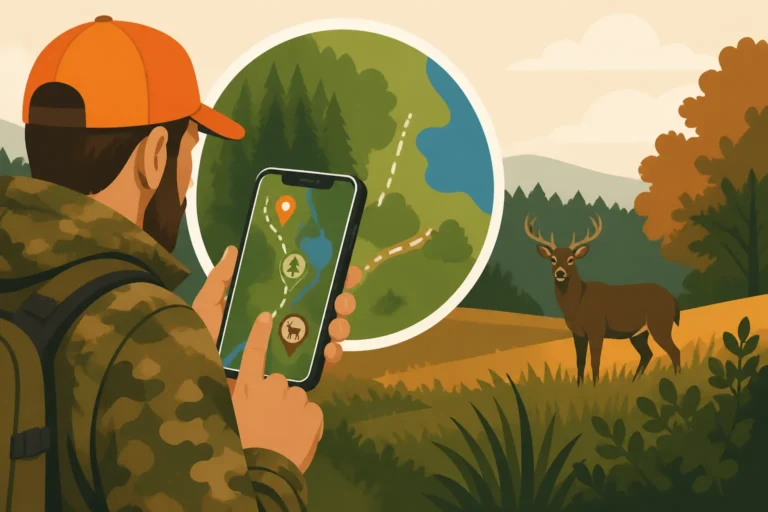
You'll rarely find a coyote far from some form of cover, even if it's just a small patch of weeds in the middle of a vast cornfield. When scouting, focus on the edges where different habitats meet: the transition from a standing bean field to a small woodlot, the winding path of a creek through open ground, or overgrown ditches that offer concealment. Understanding these features, often visible through aerial maps on tools like GoHunt, is crucial for setting up a successful stand. Look for where a cornfield meets a timbered fence line or where a drainage ditch provides a natural corridor, as these are prime locations for them to travel and hunt. Knowing where to look for this kind of subtle cover on a map before you even step foot in the field can give you a significant advantage, helping you pinpoint those crucial transition areas where coyotes feel secure traveling.
Essential Gear for Calling Indiana Coyotes
Just like any other hunting endeavor, having the right gear can make or break your coyote calling success. In the open, often exposed environments of Indiana farm country, your equipment choices, from calls to optics and camouflage, become even more critical.
Calls: Electronic Versus Hand Calls
This is often where hunters start their coyote calling journey, and for good reason: your call is your primary tool. You've got two main categories: electronic calls and hand calls.
Electronic Calls: These are the workhorses for many serious coyote hunters. Brands like Foxpro or Primos offer a huge library of realistic sounds, from distress cries of rabbits, fawns, and birds, to coyote vocalizations like howls, barks, and pup distress. The biggest advantages of e-calls are volume control, sound variety, and the ability to place the speaker away from your hiding position, drawing attention away from you. This remote placement is a game-changer, as it pulls a coyote's focus to a sound source that isn't you, letting them close the distance without ever pinpointing your exact location. For pressured coyotes in farm country who have heard it all, an e-caller can often be the most effective choice. They allow you to cycle through various sounds without moving, which is key when you need to switch from a cottontail distress to a pup whimper in a matter of seconds.
Hand Calls: Don't underestimate the power and intimacy of a good hand call. These require more practice to master, but they offer unparalleled control over tone, volume, and cadence. Open-reed calls are versatile, mimicking everything from rabbit screams to fawn bleats, while closed-reed calls are often easier for beginners to pick up. The advantage here is portability, reliability (no batteries needed!), and the ability to add subtle nuances to your calling that an e-call might miss. Sometimes, especially when targeting less pressured coyotes or making a quick set-up, the raw, natural sound of a hand call can be incredibly effective. Many experienced hunters carry both, using an e-call for initial setups and long-range calling, and then switching to a hand call for close-in finesse or to seal the deal on a hung-up coyote. When you’re trying to call in a coyote off a distant fencerow, the reach of an e-caller is hard to beat, but for a soft whimpering sound to get a hesitant coyote to take those last few steps, a hand call can be perfect.
| Call Type | Pros | Cons | Best Use Case |
|---|---|---|---|
| Electronic Call | Wide variety of sounds, remote placement, volume control, realistic | Battery dependent, can be expensive, less nuanced for experienced callers | Long-range calling, highly pressured coyotes, varied soundscapes |
| Hand Call | Portable, no batteries, nuanced control, inexpensive, intimate sound | Requires practice, limited sound variety (per call), less volume | Close-range work, quick setups, adding realism, less pressured coyotes |
Optics and Shooting Aids for Open Terrain
In Indiana farm country, shots can range from mere yards in a brushy ditch to several hundred across a cut field. Good optics are non-negotiable.
Binoculars/Spotting Scope: You need quality binoculars, at least 8x or 10x, to scan those distant field edges, fencerows, and woodlots for subtle movement. Coyotes can materialize out of nowhere, and a good pair of binos will help you spot them before they spot you. A spotting scope might be overkill for walking and calling, but if you're setting up for a long vigil over a known travel corridor, it can be invaluable for identifying distant animals. Remember, a coyote's camouflage is excellent, and they can blend seamlessly with dormant crops or shadows, so good glass is paramount.
Rangefinder: Knowing your distances is critical for making ethical shots, especially with a rifle. A laser rangefinder will quickly tell you how far that patch of brush is, or where the distant tree line sits, allowing you to set up confidently and make quick adjustments when a coyote appears. This is particularly important for rifle hunters who need precise bullet drop compensation. When you're dealing with vast stretches of open ground, estimating distances can be notoriously difficult, making a rangefinder an absolute necessity.
Shooting Sticks/Bipod: Supporting your rifle for a steady shot is crucial in open country. Shooting sticks, a bipod, or even a backpack rest can make a huge difference, especially if you're shooting from a kneeling or sitting position. A wobbly off-hand shot at 200 yards is a low-percentage shot. Investing in a stable shooting platform will significantly increase your accuracy and confidence when a coyote commits and pauses for that final look.
Camouflage and Concealment Strategies
Coyotes have incredible eyesight and are masters of detection. In the open landscapes of farm country, you need to be a ghost.
Pattern and Color: Choose camouflage patterns that match the dominant colors and textures of the Indiana landscape during the season you're hunting. In winter, snow patterns or drab browns and grays are best. In fall, patterns mimicking dead leaves and cornstalks work well. The key is to break up your human outline. Don’t just think about color; think about texture and shadow. An effective pattern helps blur your edges.
Concealment: Merely wearing camo isn't enough. You need to position yourself to blend into the background. This often means setting up against a dense fencerow, a stand of evergreens, or even a large hay bale. Use natural shadows to your advantage. A pop-up ground blind can also be incredibly effective, especially if you brush it in well with local vegetation. When sitting, try to have a backdrop that helps break up your silhouette, not just an open sky. Any movement will be easily picked up by a coyote's keen eyes, so good concealment allows you to adjust your rifle or call without alarming an incoming animal. Remember that coyotes are always looking for movement and anything that looks out of place, so sitting still and being part of the environment is crucial.
Daytime Calling Strategies in Farm Country
Calling coyotes during the day in Indiana farm country is a challenging but incredibly rewarding experience. It demands meticulous planning, patience, and a deep understanding of how coyotes move and react in these open environments. This isn't just about making noise; it's about telling a story that brings them in.
Locating Stand Sites and Approach Routes
Before you even think about calling, you need to pick your stand. This is perhaps the most critical part of daytime calling in farm country.
Reading the Landscape: Look for key topographical features and cover transitions. Coyote travel corridors are almost always tied to cover – fencerows, creek beds, drainage ditches, and the edges of woodlots. A saddle between two ridges, even small ones, or a pinch point where a strip of timber funnels into a narrow bottleneck, can be prime locations. Consider where you expect the coyote to come from and where you want them to stop. Often, coyotes will circle downwind before committing, so try to anticipate this. If you are scouting using an app like GoHunt, look for areas where different cover types meet, like the intersection of a standing cornfield, a CRP field, and a small woodlot. These "edge" areas are magnets for coyotes as they offer both hunting grounds and escape routes.
The Wind is Your Friend (or Foe): Always, always consider the wind. Coyotes rely heavily on their sense of smell. You must set up so the wind blows from where you expect the coyote to come to you, never from you towards them. If a coyote gets downwind of you, they'll often pick up your scent and vanish before you even know they were there. This means planning your approach route carefully to avoid contaminating the area with your scent before you even sit down. Sometimes, the wind dictates that a particular spot simply isn't huntable that day, and it's better to pack up and try a different location than to educate a coyote by letting them wind you. For effective Still-Hunting Southern Indiana Ridges, understanding wind is paramount, and it applies just as much to calling in open country.
Approach and Exit: Your approach to the stand must be silent and unseen. Walk slowly, using available cover like ditch lines or the backside of a treeline. Never walk directly across an open field to your stand. The same goes for your exit. If you spook coyotes on your way in or out, you're educating them and making future hunts harder. Park your vehicle out of sight and as far away as needed to ensure a stealthy entrance.
Common Calling Sequences and Their Effectiveness
Once you're set up, it's time to make some noise. Your calling sequence is a story you're telling.
Distress Sounds (Rabbit, Fawn, Bird): These are the bread and butter of coyote calling. A dying rabbit, a fawn bleating for its mother, or a bird in distress signals an easy meal. Start with loud, attention-grabbing sounds to carry across open fields, then taper down to softer, more desperate whines as you expect a coyote to be getting closer. Electronic calls excel here, allowing you to project volume over long distances. A typical sequence might be 30-60 seconds of distress, followed by 1-2 minutes of silence, then repeat. Vary the intensity and duration.
Coyote Vocalizations (Howls, Barks, Whimpers): These are fantastic for both locating coyotes and enticing a territorial response.
- Howls: Use a lone howl to locate coyotes at long range. If they respond, you know where they are. Follow up with challenge howls or even group howls to mimic a pack and provoke a response.
- Barks: Short, sharp barks can simulate a territorial dispute or a coyote warning others, drawing curious coyotes in.
- Whimpers/Pup Distress: These can be incredibly effective during the breeding season or when pups are active. A pup in distress elicits a strong parental or curious response.
The key is to adapt. If a coyote shows interest but hangs up, try switching calls. If they're moving fast, keep the pressure on. If they're hesitant, back off the volume and go to softer, more urgent whimpers. Remember, every coyote is different, and what works one day might not the next. The best callers are those who can read the animal's reaction and adjust their calls accordingly.
Dealing with Wind and Thermals in Open Areas
We touched on wind for stand selection, but it's equally crucial during the actual calling sequence.
Wind Direction and Speed: Wind carries your scent, but it also carries your sound. A steady breeze can help push your calling sound farther downwind, acting as an amplifier. However, a swirling or gusty wind can make it nearly impossible to predict how a coyote will approach and whether they'll catch your scent. In these conditions, focusing on smaller, more protected areas like creek bottoms or dense woodlots where the wind is more stable might be your best bet. Always try to set up with the wind directly in your face or quartering.
Thermals: In flat, open farm country, thermals are less dramatic than in the hills of southern Indiana, but they still play a role, especially in the early morning and late evening. As the sun rises, warm air begins to lift, creating upward thermals. In the evening, as the ground cools, air flows downhill into low-lying areas. This means your scent will travel upwards during the day and settle into depressions at night. Factor this into your stand placement, especially if you're set up near a subtle dip or rise in the terrain. A coyote coming into a subtle depression with a slight thermal pulling air down into it might wind you even if the prevailing surface wind seems favorable. Understanding these movements of air, whether it's a strong crosswind or subtle thermals, is vital to avoid being scented.
Night Hunting and Thermal Tactics Where Legal
Night hunting coyotes has become increasingly popular in Indiana, offering unique challenges and opportunities. The low light can make wary coyotes bolder, but it also demands specialized gear and a thorough understanding of the regulations. Night Hunting Rules for Indiana Coyotes are specific and crucial to know before you ever head out.
Understanding Indiana's Night Hunting Regulations
Before you even consider stepping out after dark, you absolutely must be current on Indiana's specific regulations for night hunting. These rules are in place for safety and to manage wildlife effectively.
Legal Hours and Methods: Generally, coyotes are classified as furbearers in Indiana and can be hunted year-round, day or night. However, there are very specific rules about equipment you can use. Artificial lights, including spotlights, flashlights, and even vehicle headlights, are legal to use while hunting coyotes at night on private land with landowner permission. On public land, the use of artificial lights to take coyotes is typically restricted, so always check the specific property regulations. Remember that these rules can change, so a quick check with the Indiana DNR website or the current hunting guide is always a good idea before each season.
Firearms and Ammunition: The firearms legal for coyote hunting at night are generally the same as those allowed during daylight hours. This typically includes rifles, shotguns, and handguns. However, when using artificial light, you need to be acutely aware of your backdrop and potential hazards beyond your target. While Why Straight-Wall Rifles Are No Longer Required for deer hunting opened up many options for centerfire rifles statewide, always prioritize safety with shot placement at night.
Permission and Safety: Night hunting always requires permission on private land. Never assume. Furthermore, safety is paramount. You need to know your target and what lies beyond it. Identifying your target at night, especially with thermal or night vision, requires a heightened sense of awareness to prevent accidental shootings. Always ensure you have a clear, safe shooting lane and a solid backstop, even if it's just a rise in a field. Never shoot towards a road, house, or any area where people or livestock might be.
Setting Up for Success Under the Stars
Night hunting requires a different approach to stand selection and setup compared to daytime calling.
Maximize Visibility, Minimize Exposure: Find elevated positions if possible, or areas with clear sight lines over potential travel routes. Power line cuts, hilltops, or even the edge of a large, flat field can provide good visibility. However, you also need to ensure you're concealed. A dark fencerow, the shadow line of a woodlot, or a ground blind brushed into a field edge can be ideal. You want to be able to see the coyotes coming, but you don't want them to see you silhouetted against the night sky or the beam of your light.
Utilize the Wind (Again): Just like in the daytime, the wind is your most critical factor. Coyotes still rely heavily on their nose at night. Position yourself so the wind is blowing from the direction you expect coyotes to approach, directly into your face or quartering. This prevents them from winding you before they come into visual range. If you're using an electronic call, place it 50-100 yards upwind of your position to draw the coyote's attention away from you and force them to approach from a direction that exposes them to your light or thermal.
Controlled Light Use: If using artificial lights, use them strategically. Don't blast the landscape with light constantly. A common technique is to scan slowly with a dim red or green light, then increase intensity as you detect eye shine. Some coyotes can be very light-shy, so starting with minimal illumination and only increasing it when necessary can be effective. Other hunters prefer to use a constant, lower-intensity light to illuminate their calling area, allowing coyotes to approach without being suddenly hit by a beam. Experiment to see what works best in your specific hunting area and with the local coyotes.
Using Thermal and Night Vision Effectively
Thermal and night vision technology has revolutionized night hunting for coyotes. This advanced gear allows you to detect animals that would be otherwise invisible in the darkness.
Thermal Imaging: Thermal scopes and monoculars detect heat signatures, making coyotes glow brightly against the colder background of fields, trees, and dirt. This is a massive advantage for locating coyotes at long distances, even in thick cover where traditional night vision struggles. When scanning, move slowly and deliberately. Look for anything that stands out with a heat signature. Once a coyote is spotted, a thermal scope allows for precise aiming and ethical shot placement. However, thermal does not see through obstructions like dense brush or solid objects. It sees heat. It is an amazing tool for Predator Hunting in Indiana after dark.
Night Vision: Night vision amplifies ambient light (starlight, moonlight), allowing you to see in near darkness. While it doesn't "see" heat, it provides a more natural, grayscale image of the environment. Night vision devices (NVDs) come in various generations, with Gen 3 and digital night vision being popular choices for hunting. NVDs are excellent for identifying targets once they are within range and for navigating in low-light conditions. Many hunters combine thermal for detection and night vision for identification and shooting, or use a thermal monocular for scanning and a traditional scope with an illuminator for aiming.
Ethical Use: While these technologies provide a significant edge, responsible use is critical. Always positively identify your target before taking a shot. What might look like a coyote's heat signature through a thermal scope could be another animal. Double-check your surroundings and target. Also, be aware of the range limitations of your specific equipment. While you might see a heat signature at 500 yards, your ethical shooting range will be much shorter. Remember that Thermal and Night Vision Rules in Indiana are specific, especially regarding public vs. private land, so consult current regulations.
Advanced Tips for Pressured Coyotes
Coyotes in Indiana farm country are often highly educated. They’ve heard calls, seen hunters, and learned to associate certain sounds and situations with danger. To consistently bring in these smart, wary animals, you need to employ some advanced tactics and always be thinking a step ahead.
Incorporating Decoys and Scent Control
Pressured coyotes are suspicious. Giving them something visual to focus on, or removing your human scent, can be the missing piece of the puzzle.
Decoys: A simple decoy can be incredibly effective. A small, inexpensive motion decoy that mimics a dying rabbit or a flapping bird can pull a coyote’s attention away from your hiding spot and directly to the sound source. Coyotes are naturally curious and often approach cautiously, trying to get a visual confirmation of the distress. A decoy provides that visual, often causing them to commit the last few yards they otherwise wouldn't. Place your decoy 20-50 yards upwind of your calling position, slightly off to the side, so the coyote focuses on it while you remain unseen. Sometimes, a full-size coyote decoy can be used to elicit a territorial response, especially during the breeding season, but this is often less effective with highly pressured animals who may perceive it as a threat or simply a trick.
Scent Control: You can't eliminate all human scent, but you can certainly reduce it. This is even more crucial in farm country where coyotes may approach from any direction and their noses are their primary defense. Use scent-eliminating sprays on your clothes, boots, and gear. Store your hunting clothes in airtight containers with natural elements like pine needles or earth wafers. Avoid handling gasoline, food, or other strong-smelling items before or during your hunt. Even chewing gum or strong coffee odors can be detected by a coyote's keen sense of smell. Pay attention to your breath as well; some hunters use scent-killing breath sprays. While not foolproof, a disciplined approach to scent control will significantly reduce the chances of a coyote winding you and bolting.
Varying Your Approach and Call Types
Doing the same thing repeatedly with pressured coyotes will only guarantee failure. You need to be adaptable and unpredictable.
Change Up Your Stands: Don't hunt the same stand repeatedly within a short timeframe. Coyotes will quickly pattern hunting pressure. If you hunt a particular field edge on a Tuesday, give it at least a week or two (or longer) before returning, especially if you called in and harvested an animal or, worse, educated one. Have a rotation of potential stand sites, perhaps 10-15 locations across the farm country, and choose based on wind, time of day, and recent coyote activity. Consider scouting with the Scouting Indiana Public Land Before Season mentality, even if it's private land, looking for fresh tracks, scat, and other signs of recent activity that might indicate a new pattern.
Rotate Your Calls: Coyotes quickly learn to associate certain sounds with danger. If you consistently use the same dying rabbit call, they’ll catch on. Mix it up! Invest in a variety of calls. If you use an e-caller, have a large library of sounds at your disposal. If you use hand calls, practice different distress sounds (e.g., woodpecker, mouse squeaks, fawn bleats). Incorporate more coyote vocalizations like challenge howls or interrogation howls to gauge their interest, then follow up with a distress sound. Sometimes, a simple pup distress call, used sparingly, can be incredibly effective when everything else fails. Even the volume and cadence should change; sometimes, a soft, subtle series of calls works better than an aggressive, loud sequence.
Unexpected Entry and Exit: Coyotes become wary of predictable patterns. Instead of always entering from the same road access, consider walking in from a different field corner if permissible. Use cover you might not normally consider, like the backside of a hedgerow or a deep ditch, even if it means a longer walk. The less predictable you are, the more likely you are to catch a coyote off guard.
Safety Considerations and Ethical Hunting
As with all hunting, safety and ethics are paramount, especially when pursuing a cunning predator like the coyote.
Backdrop Awareness: In farm country, shots can be long, and backgrounds can be vast. Always be absolutely certain of your target and what is beyond it. A bullet can travel for miles. Identify potential houses, roads, livestock, or other human activity on your maps (using tools like GoHunt is excellent for this) and verify them on the ground. Never take a shot if there's any doubt about your backdrop. This is especially true at night, where identifying your target and what's beyond it is even more challenging.
Landowner Relations: Maintaining a good relationship with landowners is crucial for hunting access. Always get permission, respect their property, close gates, avoid driving in wet fields, and remove any trash. A bad experience by one hunter can ruin access for many. Offering to help with chores or sharing some venison can go a long way in building trust. For many farmers, coyote control is a benefit, so presenting yourself as a responsible hunter helping to manage a problem can ensure continued access.
Ethical Shot Placement: While coyotes are often seen as pests, they are still living creatures. Strive for quick, humane kills. This means practicing with your chosen firearm and ammunition regularly, knowing your effective range, and understanding coyote anatomy for proper shot placement. If you wound an animal, do everything in your power to recover it. This demonstrates respect for the animal and ensures you're upholding the highest standards of hunting ethics. When considering Predator Calling Southern Indiana Ridgelines or any other area, always prioritize ethical hunting above all else.
Disclaimer
Always consult the current Indiana Department of Natural Resources hunting regulations before heading afield. Laws and regulations can change, and it is the hunter's responsibility to know and follow all applicable rules.