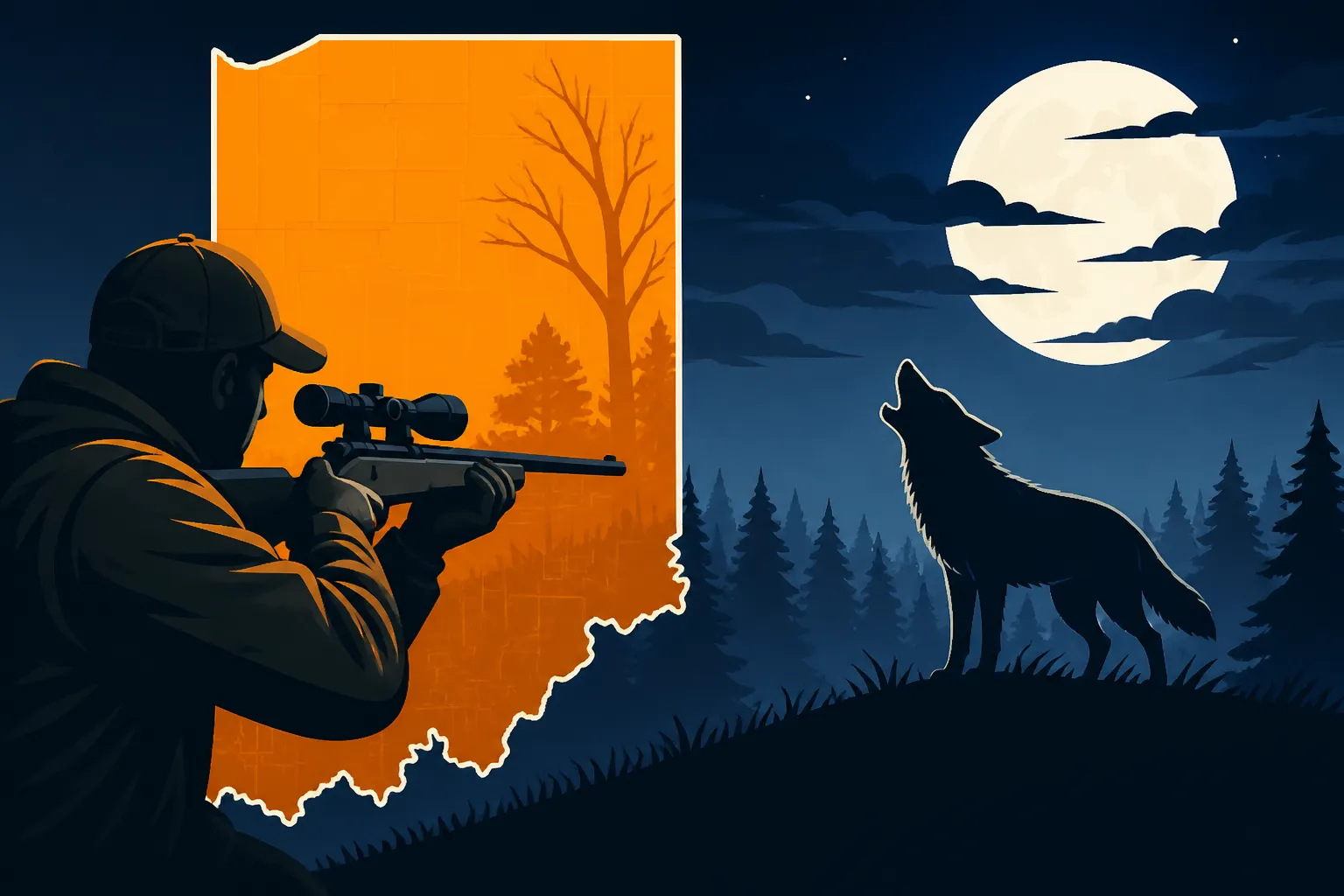
Night Hunting Rules for Indiana Coyotes
The struggle with coyote populations impacting livestock or deer herds is a real one for many Hoosier landowners and hunters. These intelligent predators can be incredibly challenging to manage during daylight hours, often remaining elusive and highly wary. When the sun goes down, however, a new opportunity arises. This comprehensive guide will walk you through everything you need to know about night hunting coyotes in Indiana, from navigating the specific legal regulations to mastering the tactics and gear that will give you the edge after dark.
Navigating Indiana's Legal Framework for Night Coyote Hunting
Night hunting coyotes isn't just about setting up under the stars; it's about knowing and adhering to the specific rules laid out by the Indiana Department of Natural Resources (DNR). Ignoring these regulations can lead to serious legal trouble, so understanding them thoroughly is your first and most critical step. It’s not always straightforward, and many hunters have questions about what’s allowed once the sun dips below the horizon.
Understanding Permitted Hours and Seasons
One of the biggest advantages of hunting coyotes in Indiana is their status as an unprotected species. This means there's no closed season and no bag limit on coyotes; you can hunt them year-round, day or night. This flexibility is a huge benefit, especially when you're dealing with a nuisance animal that needs to be removed promptly, or when you simply want to take advantage of their nocturnal habits. Unlike deer or turkey, where specific hunting hours are strictly enforced, coyotes offer a much broader window of opportunity.
While there are no specific "night hunting hours" defined for coyotes that would restrict you beyond daylight periods for other game, the crucial point is that artificial light is permitted for taking coyotes. This is a significant distinction from most other game animals in Indiana. Historically, rules about night hunting and artificial lights have been complex, sometimes leading to confusion about whether a fur buyer's license was required. Let's be clear: a valid Indiana hunting license is all that's typically needed to hunt coyotes, even at night with a light. You don't need a separate fur buyer's license for the act of hunting coyotes themselves. This clarity helps open up evening and early morning hours when coyotes are often most active, giving you a distinct advantage. If you're looking for broader information on predator management, check out our guide on Predator Hunting in Indiana.
Legal Use of Artificial Lights and Firearms
The use of artificial light is where night hunting truly differentiates itself. For coyotes in Indiana, you are permitted to use artificial light to aid in hunting them. This includes everything from handheld spotlights to weapon-mounted lights. However, there's a vital caveat: "It is illegal to use an artificial light to take any wild animal from a vehicle." This means you can't cruise around in your truck shining a light out the window and shoot a coyote. You need to be off-road, on foot, or in a stationary position, not using the vehicle itself as a hunting platform while shining lights. This regulation is in place to prevent dangerous and unethical "spotlighting" practices often associated with poaching.
Regarding firearms, Indiana's rules for hunting coyotes are quite liberal. There are no specific caliber or ammunition restrictions for hunting coyotes, as they are not classified as a "deer" or "furbearer" in the same restrictive sense. This means you can use centerfire rifles, shotguns, or even rimfire cartridges, depending on your preferred method and the terrain you're hunting. For example, a .223 Remington or a .204 Ruger are popular choices for their flat trajectory and minimal recoil, making them ideal for the longer shots often presented by coyotes in open fields. Just remember to always verify your specific weapon's legal use on any public land you might consider, as those areas often have additional restrictions. If you're considering a new rifle, our guide on Sighting In a Centerfire Rifle for Indiana Woods offers valuable insights into ensuring accuracy.
Public Versus Private Land Considerations
This is perhaps the most crucial distinction in Indiana night hunting rules. The liberal regulations for coyotes, especially regarding artificial lights, primarily apply to private land where you have explicit permission from the landowner. This cannot be stressed enough. Always, always, always get clear, unambiguous permission before stepping foot on private property, day or night. A simple verbal "sure, go ahead" might be fine for a buddy, but for safety and legal peace of mind, a written agreement is always best. Our article on Getting Private Land Permission in Indiana provides an in-depth look at how to approach landowners ethically and legally.
Public lands, such as Indiana Fish and Wildlife Areas (FWAs), State Forests, or the Hoosier National Forest, generally have much stricter rules. While coyotes can be hunted on many public lands during daylight hours, the use of artificial lights for hunting at night is often prohibited or requires a special permit. It’s absolutely essential to consult the specific rules and regulations for the public property you intend to hunt. For instance, some FWAs might have managed hunts or specific times when night hunting is allowed for nuisance animals, but these are exceptions, not the norm. Never assume that just because it's legal on private land, it's also legal on public land. Ignorance of these specific public land rules is not an excuse and can lead to fines or loss of hunting privileges. Always check the property-specific regulations, often found on the DNR website or by contacting the property manager directly, before planning any night hunting on public ground.
Essential Gear and Effective Tactics for Successful Night Hunts
Once you've got the legal side locked down, it's time to think about what you'll need and how you'll approach these wily creatures after dark. Night hunting coyotes is a different ballgame than daylight hunting; it demands specialized gear and a tactical mindset adapted to the challenges of low light and enhanced predator senses.
Calling Strategies for After Dark
Calling coyotes at night can be incredibly effective because their reliance on sight is diminished, making them more prone to respond to sound. Electronic callers are often the go-to choice for night hunting due to their versatility and ability to produce realistic, high-volume sounds. You can program them with a variety of distress calls (rabbit, fawn, bird), pup yips, and coyote howls. When darkness falls, a coyote's confidence can sometimes increase, making them more aggressive responders to territorial howls or distress calls.
Start with softer, more subtle sounds. A few lonesome howls to announce your presence can often draw a response, giving you an idea of a coyote's location. If you get a response, switch to a distress call. The key is realism and varying your cadence. Mimic a struggling animal; pause, then continue. Don't be afraid to experiment with different sequences. Sometimes a very aggressive, challenging series of howls can bring a dominant male charging in, especially during colder months or mating season. For more calling tips, our Coyote Calling in Indiana Farm Country guide offers additional strategies. Remember, during the quiet of night, sound travels farther, so consider your volume carefully to avoid spooking close-by coyotes.
Optics and Illumination Systems
The right optics and illumination are non-negotiable for night hunting coyotes. You need to be able to see them coming, identify them clearly, and make an ethical shot.
- Weapon-Mounted Lights: These are essential for target illumination. White lights are powerful, offering excellent clarity, but can sometimes spook wary coyotes if flashed directly. Red and green lights are popular alternatives because many animals, including coyotes, perceive these colors differently, making them less alarming. Green light is often favored for its clarity in varied terrain, while red is excellent for maintaining your own night vision. Look for lights with adjustable beams (flood to spot) and intensity settings. Brands like Wicked Lights or Kill Light offer popular options tailored for predator hunting.
- Handheld Spotlights: A powerful handheld spotlight is crucial for scanning. You can sweep the area, looking for eye-shine, which often appears as two glowing dots. Use a technique where you scan around your intended shooting lane first, then slowly bring the light in. Many coyotes will stop and look at the light, giving you a shooting opportunity.
- Thermal and Night Vision Devices: These are game-changers, offering a distinct advantage by allowing you to detect heat signatures or amplify ambient light. Thermal scopes and handheld monoculars can "see" through darkness, fog, and even light brush, making detection much easier. Night vision amplifies existing light, allowing you to see objects in near-total darkness. While these technologies are powerful, they come with a higher price tag. Always double-check Thermal and Night Vision Rules in Indiana to ensure legal compliance, though generally, thermal and night vision are permitted for hunting unprotected species like coyotes.
- Rangefinders: In the dark, distances can be incredibly deceiving. A reliable rangefinder is vital for making ethical shots. Before the hunt, range out known landmarks in your setup area. You can also integrate a mapping app like GoHunt to mark your setup locations, potential travel corridors, and even specific yardages to key landmarks or property lines. This helps immensely when a coyote materializes out of the darkness and you need to make a quick, accurate assessment of the shot.
Setting Up for a Nighttime Encounter
A successful night hunt starts with a well-chosen setup. Unlike daylight hunting, where you might rely more on natural light to see, at night you’re banking on controlling the engagement zone with your light.
- Elevated Positions: Often, a slight rise, a stand, or even a ground blind on a subtle elevation can give you a better field of view for scanning and shooting. This also helps project your calls and scents more effectively. However, in the dark, ascending and descending safely is paramount.
- Clear Shooting Lanes and Backstops: This is absolutely critical for safety. You need unobstructed views for your light to penetrate and for your bullet to travel safely. Identify clear shooting lanes during daylight hours. Just as important is having a safe backstop. Never take a shot where you're unsure of what lies beyond your target. Use GoHunt's satellite imagery and topographic maps during the day to scout potential setups, identify clear fields, and mark safe shooting zones. Pay close attention to any structures, roads, or residences that might be in your line of fire.
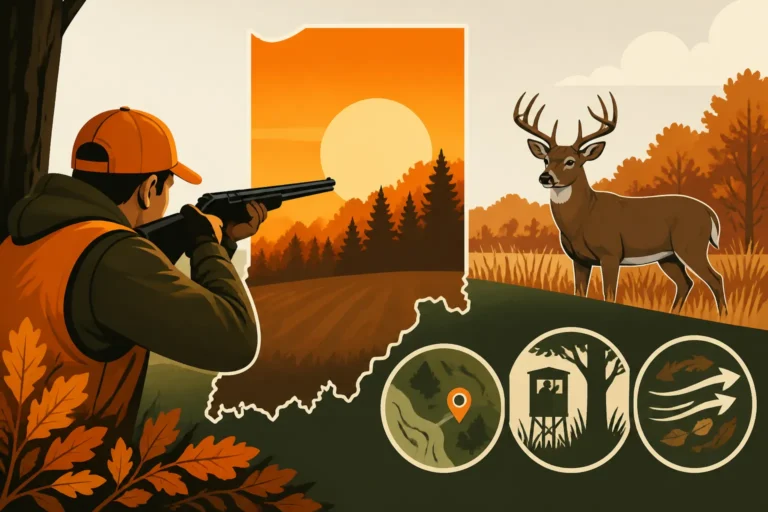
- Wind Direction: Coyotes have an incredible sense of smell. Always set up so the wind is blowing from where you expect the coyote to approach, towards you. This might mean setting up with the wind directly in your face or quartering. Even with the cover of darkness, your scent will carry, and a coyote will bust you if it gets downwind. Use a wind-checker puff bottle frequently to monitor shifts. Our guide on Reading Aerial Photos for Southern Indiana Deer offers good insights into understanding terrain and wind patterns, which can be applied to coyote hunting too.
- Concealment: While darkness provides some cover, breaking up your silhouette against the skyline or blending into a dark backdrop (like the edge of a timberline) can make you even less detectable to approaching coyotes. A good ground blind or even natural brush can serve this purpose well.
Prioritizing Safety and Ethical Conduct
Night hunting coyotes is exciting, but the inherent challenges of low light make safety and ethical conduct even more critical. You're responsible not only for a clean kill but also for the safety of everyone around you and for upholding the reputation of hunters everywhere.
Identifying Your Target and Backstops
In the pitch black, every flicker of light or rustle in the leaves can play tricks on your eyes. It is an absolute, unwavering rule: Never shoot at sound or movement alone. You must positively identify your target as a coyote before you even think about pulling the trigger. This means waiting until the animal is fully in your light and you can clearly distinguish its form, size, and characteristics. Mistaking a coyote for a domestic dog, another wild animal, or even a person could have catastrophic consequences. This is why powerful, clear illumination is so important.
Just as crucial is identifying a safe backstop. With reduced visibility, it's easy to overlook what's behind your target. Before the hunt, during daylight, familiarize yourself with your surroundings. Know where fences, roads, buildings, and livestock pastures are located. Every shot must have a safe and clear background to absorb your bullet. Earth berms, deep ravines, or the thick ground of a woodlot can serve as good backstops. If there's any doubt about target identification or your backstop, do not take the shot. Wait for a clearer opportunity or let the animal walk. This commitment to safety is paramount, particularly when hunting closer to developed areas or on Hunting Small Private Tracts in Indiana.
Hunting with Partners and Communication
Night hunting is often best done with at least one partner. A buddy system provides an extra set of eyes and ears, enhances safety, and can make the experience more enjoyable. When hunting with a partner, establish clear communication protocols before you even leave the truck.
- Designated Roles: One person can be the primary caller and shooter, while the other serves as the dedicated scanner and spotter. This allows each person to focus on their critical task without distraction. The spotter can scan for eye-shine with a handheld light or thermal device, alerting the shooter when a coyote is spotted.
- Communication: Whispers, hand signals, or low-volume two-way radios are essential for communicating positions, sightings, and intentions without alerting incoming coyotes. Discuss things like "coyote 100 yards, coming from the east," or "ready for light."
- Safety Zones: Establish clear lines of fire and no-shoot zones between partners to prevent accidents. Always know where your partner is located and where their muzzle is pointed. When moving, confirm safe passage with your partner.
Respecting Property and Public Perception
As night hunters, we have a responsibility to be excellent ambassadors for our sport. This means going above and beyond to respect landowners and the general public, especially given the nature of hunting after dark.
- Landowner Relations: Always have explicit, confirmed permission to be on private land. This isn't just a legal requirement; it's a matter of courtesy. Let the landowner know your plans: when you'll be there, what you'll be doing (using lights, calling), and when you expect to finish. This transparency helps avoid alarm calls from neighbors to the landowner or even law enforcement.
- Noise and Light Pollution: Be mindful of neighbors. While electronic callers are effective, their volume can carry for long distances. If hunting near residences, choose calls with a softer initial volume. Minimize unnecessary light usage that could disturb nearby homes. A sudden bright spotlight sweeping across a neighbor's house at 2 AM is likely to cause concern. Use weapon lights judiciously, only when necessary for target identification and shooting.
- Ethical Hunting: Beyond legalities, good ethics dictate clean kills. Practice shooting your chosen firearm and ammunition regularly so you're confident in your accuracy, especially in challenging conditions. The goal is a quick, humane harvest. Remember that being a responsible hunter contributes positively to Indiana Hunting Licenses and What They Cost and ensures the future of our hunting heritage.
Avoiding Common Pitfalls in Indiana Night Hunting
Even with the right gear and a solid understanding of the rules, night hunting coyotes presents unique challenges. Learning from common mistakes can save you a lot of frustration and increase your chances of success.
Misjudging Wind and Thermals
The wind and thermals behave differently after dark, and misjudging them is one of the quickest ways to educate a coyote and send it running. During the day, solar radiation heats the ground, causing thermals to rise. At night, the ground cools rapidly, and thermals tend to flow downhill, or "drain" into low-lying areas. This means that a thermal pattern you observe during the day might completely reverse at night.
- Pre-Hunt Assessment: Before heading out, pay close attention to the forecast for wind speed and direction, but also understand how the local topography will influence air movement. Ridges and valleys can create channels where wind flows predictably, while flat areas might experience more subtle, swirling currents.
- Constant Monitoring: Once on stand, don't just set up and forget about the wind. Carry a wind-checker and use it frequently. Small puffs of milkweed or powder will show you not only the horizontal wind direction but also if thermals are lifting or falling, which is crucial for determining where your scent is going. A coyote approaching from seemingly upwind might still catch your scent if the thermals are dragging it downhill into its path. Scent control, including wearing clean clothes and using scent-eliminating sprays, becomes even more critical when every little bit of advantage counts.
Inadequate Scouting and Stand Selection
"Hunt where the coyotes are" sounds obvious, but many night hunters rush into a spot without proper daytime reconnaissance. Scouting during daylight hours is absolutely essential for successful night hunting.
- Identifying Hot Zones: Look for coyote tracks, scat, and kill sites. Pay attention to pinch points, creek bottoms, and field edges where coyotes are likely to travel between bedding areas and hunting grounds. Entry Routes Through Standing Corn or along fencerows can be prime areas. These are the same kinds of places you might look for deer, as coyotes often follow deer trails.
- Mapping Key Features: Use a reliable mapping app like GoHunt to mark potential setup locations, identifying clear fields, potential ambush points, and most importantly, property lines and any off-limits areas. You can pre-program waypoints for your approach and exit paths, which will be invaluable when navigating in the dark. GoHunt's satellite imagery with topo overlays can help you visualize the terrain and identify features that will guide coyotes.
- Pre-Ranging: While scouting, take the time to pre-range distances to various landmarks from your intended setup spot. Knowing that the hay bale is 150 yards out and the far tree line is 250 yards will save precious seconds and eliminate guesswork when a coyote appears in your light. This proactive approach helps build confidence in your shot selection and ensures you're ready when the moment arrives. Our guide on Scouting Indiana Public Land Before Season emphasizes many techniques applicable to private land too.
Over-Calling or Becoming Impatient
Coyotes are incredibly intelligent, and they can learn quickly. Over-calling, or calling too aggressively for too long, can spook them. Likewise, impatience is the enemy of any hunter, especially at night.
- Less is Often More: Start with softer, shorter calling sequences. Sometimes, a few subtle whines or barks are all it takes to pique their curiosity. If you don't get an immediate response, wait. Don't immediately blast another series of calls. A coyote might be circling downwind, moving slowly, or simply taking its time to approach.
- The Waiting Game: Coyotes are notoriously cagey. They rarely come charging straight in, especially if they've been hunted before. Expect them to hang up at a distance, circle downwind to scent-check, or approach cautiously. Give them time. Many hunters pack up too early, missing the coyote that was just about to commit. A typical calling sequence might involve 2-3 minutes of calling, followed by 10-15 minutes of silence and intense scanning. Repeat this for 30-45 minutes before moving to a new setup. Patience truly pays off in the dark.
- Reading Body Language (in the dark): Even in low light, you can sometimes pick up subtle cues. If a coyote hangs up, try a softer, more pleading call to draw them closer. If they are circling, try a subtle howl in the direction they are headed to cut them off. It's an art, not a science, and requires careful observation and adaptation.
Here’s a quick overview of common illumination methods for night hunting coyotes:
| Illumination Type | Pros | Cons | Best Use |
|---|---|---|---|
| White Light (Spotlight/Weapon-Mounted) | Bright, excellent clarity, true color rendition. | Can spook wary coyotes; harsh on human night vision. | Target identification, scanning at long range on private land. |
| Red Light (Weapon-Mounted) | Less alarming to many animals, preserves human night vision. | Less intense, can reduce clarity at long distances. | Closer range shots, maintaining stealth, scanning. |
| Green Light (Weapon-Mounted) | Good clarity in varied terrain, less alarming than white. | Can still be detected by wary coyotes, less stealthy than red. | All-around effective for shooting, good for woods and fields. |
| Thermal Imaging | Detects heat signatures, sees through darkness/fog. | Expensive, no true color, can't identify exact species easily. | Detecting coyotes at extreme range, confirming presence, locating downed game. |
| Night Vision (Gen 2/3) | Amplifies ambient light, good clarity in starlight. | Requires some ambient light, can be washed out by bright lights. | Surveillance, navigating in low light, target acquisition. |
Disclaimer
Always consult the most current Indiana DNR hunting regulations before engaging in any hunting activity, as laws and rules can change. This guide is for informational purposes only and is not a substitute for official legal advice or current DNR publications.