Entry Routes Through Standing Corn
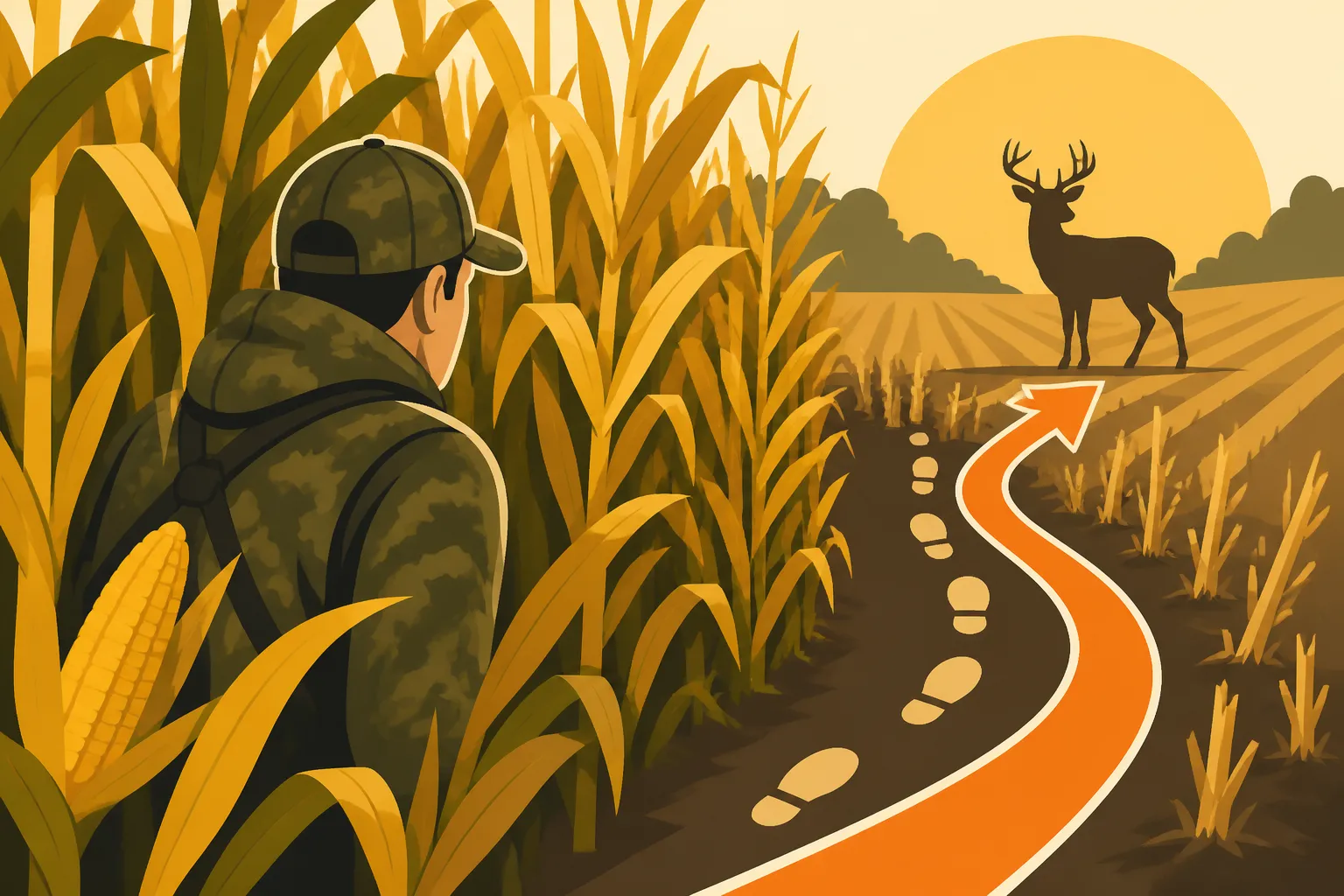
Trying to slip into a standing cornfield in Indiana to catch a whitetail off guard can feel like trying to walk through a crowded room blindfolded – you know there's something good in there, but getting to it without spooking everything is a whole different challenge. Deer use these dense agricultural labyrinths as both a dining hall and a bedroom, making them incredibly attractive but equally frustrating for hunters. This guide is all about figuring out those elusive entry routes so you can finally get close to the deer calling that standing corn home.
Understanding Deer Behavior in Standing Corn
Deer aren't just hiding in standing corn; they're living in it. These fields offer a perfect trifecta of food, cover, and security, especially from late summer through the early to mid-fall hunting seasons here in Indiana. If you want to hunt them effectively, you first need to understand why and how they utilize these golden jungles.
Why Deer Love Standing Corn
Imagine a deer's perfect world: endless food, thick cover that offers both concealment and protection from the elements, and a sense of security from predators, including us hunters. That's exactly what a mature standing cornfield provides. From the moment the kernels begin to harden, deer are drawn to the nutritious feast. They'll browse on the tender leaves, the developing ears, and even the stalks. As the season progresses and other food sources diminish or become less attractive, corn becomes an even more critical part of their diet.
What's more, the sheer density and height of standing corn create an incredible thermal and visual barrier. A deer can bed down just a few rows in and be virtually invisible. It's a sanctuary where they feel safe to bed, chew their cud, and move between feeding and bedding areas without ever truly leaving cover. This is why you'll often see them skirt the edges at dusk or dawn, but during the day, they are deep inside, feeling completely secure. Understanding this intrinsic desire for security is key to deciphering their movements and choosing your entry.
Reading Deer Sign at the Edges
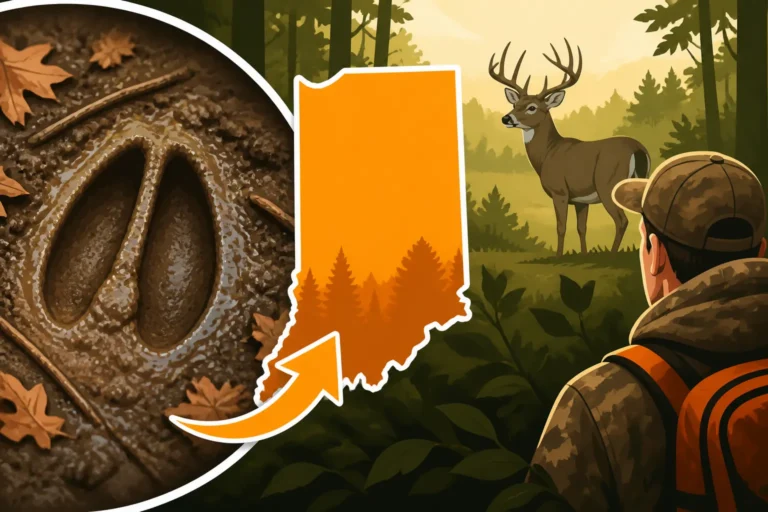
Even though deer spend most of their time inside the corn, they still have to enter and exit. This is where you, the hunter, gain your first advantage. Scouting the edges of a standing cornfield is absolutely crucial. Look for well-worn trails that disappear into the dense stalks. These aren't just random paths; they are highways deer use daily. Pay close attention to the size of the tracks and the amount of droppings. Are you seeing mostly doe and fawn tracks, or are there larger, splayed tracks indicating a mature buck?
Beyond the main trails, look for browse lines where deer have nibbled on the lower leaves of the corn, or even rub lines on nearby trees or small saplings where bucks have marked their territory. Scrapes along the corn's edge, especially near a treeline or a brushy fencerow, are also huge indicators of buck activity. These signs tell you where deer are entering and exiting, and more importantly, when. A fresh scrape or track indicates recent activity, guiding your decision on where to focus your efforts. This kind of diligent pre-season and in-season scouting is vital, and tools like the Indiana DNR App can help you pinpoint these promising areas.
The Wind and Thermals in Tall Corn
Hunting standing corn without understanding the wind and thermals is like throwing darts blindfolded. Inside a tall cornfield, the wind can swirl and be unpredictable, but the general direction still matters immensely. Always approach with the wind in your face or quartering to you, allowing your scent to be carried away from where you expect deer to be. Remember that air currents often funnel down rows, so a crosswind can still carry your scent deep into the field if you're not careful.
Thermals, the rising and falling air currents, are also at play, especially during dawn and dusk. In the mornings, as the ground warms, thermals will rise, carrying your scent upwards. In the evenings, as the air cools, thermals will fall, carrying your scent downwards into low-lying areas. While cornfields might seem flat, subtle changes in elevation, even a slight dip or rise, can create thermal sinks or lifts that deer use to their advantage. Planning your entry and exit routes around these predictable thermal patterns is just as important as minding the prevailing wind, especially if you're in a less uniform terrain like the Southern Indiana ridges.
Strategic Entry Methods into Standing Corn
Getting into a standing cornfield without blowing your cover requires more finesse than simply barging in. The goal is to be as invisible and silent as possible, using the corn itself as your ally.
The Stealth Approach: Using the Rows
The most straightforward way to enter a standing cornfield is to utilize the rows themselves. Think of them as natural corridors that offer both cover and a somewhat defined path. When you decide to venture in, commit to a single row and try to walk in its track. This helps minimize noise. Shuffle your feet rather than taking full strides, and keep your body centered within the row to avoid brushing against the stalks, which can create a surprisingly loud rustle that carries far on a still morning.
Before you even step foot into the corn, use your binoculars to scan the first few rows from the edge, if possible. Deer may be bedded very close. If you're hunting an area where deer are routinely pressured, they'll often push deeper into the field. This means you might need to move several hundred yards into the field before you get close to bedding areas. Remember, your scent trail will follow your path, so consider a long, winding approach to get to where you want to set up downwind of likely deer activity. For mobile hunters, this stealthy approach can be combined with a portable stand setup once you identify an active area, perhaps even on a small private tract in Indiana.
Identifying and Utilizing Natural Entry Points
While walking a row is effective, sometimes the best entry points aren't just random rows. Deer are lazy, and they will always take the path of least resistance. Look for breaks in the field – areas where a tractor might have turned, where a ditch or creek cuts through, or even where a natural funnel exists between the cornfield and an adjacent woodlot. These are natural funnels that deer use consistently. A small drainage ditch, for example, often provides a slightly lower profile and softer ground for silent entry.
Consider the layout of the entire landscape. Is there a woodlot or a creek bottom that runs alongside or through the corn? Deer will use these features to transition into the corn. If you're hunting Northern Indiana Farmland Deer, you'll often find these fields bordered by small woodlots or fencerows. A strategic entry might involve walking the edge of the woodlot, then slipping into the corn at a well-used trail that intersects with a prominent deer travel corridor. This method can also be incredibly effective when Hunting a Funnel Between Two Woodlots that are separated by a cornfield, as deer will use the corn to move between them.
A key aspect of this is using aerial maps to scout. Services like GoHunt, or even the basic satellite view on your phone, can reveal these natural breaks and transition zones that aren't apparent from the ground. Identify these areas and scout them on foot before you hunt to confirm deer activity.
Planning Your Exit Strategy
Just as important as planning your entry is thinking about your exit. Many hunters focus solely on getting in, only to spook deer when they try to leave. Your exit should be planned to minimize disturbance, especially if you intend to hunt the same spot multiple times. If you hunt in the evening, exiting with the wind at your back, pushing your scent away from known bedding areas, can prevent deer from becoming "educated" to your presence.
Sometimes, the best exit is the same as your entry, especially if it was stealthy and through a less active part of the field. Other times, it might involve circling around the field after dark, using a farm lane or a field edge, to avoid blowing out deer that might have moved back into the corn. If you successfully harvest a deer, having a clear plan for retrieval is paramount. Knowing the terrain, and considering how you will drag or cart out your game, will make the process much smoother. This is especially true if you are doing some late-season Hunting Into the Muzzleloader Close in December when temperatures are dropping.
Gear and Tactics for Success
Hunting standing corn requires a slightly different approach to gear and tactics than hunting timber or open fields. The dense environment dictates some specific choices.
Essential Gear for Cornfield Hunting
When you're slipping through standing corn, silence and stealth are your best friends. Your clothing should be quiet – think fleece or wool. Avoid anything that rustles loudly against stalks. A good quality pair of rubber boots or quiet hiking boots is essential, as the ground can be soft, muddy, or even uneven. You’ll be doing a lot of walking, so comfort is key.
A compact, versatile bow or a rifle that's comfortable to carry is ideal. If using a rifle, remember that even though Indiana's new statewide rifle rules have expanded options, you'll still mostly be dealing with shorter-range shots in dense cover. Sighting In a Centerfire Rifle for Indiana Woods at 100 yards or less is often sufficient. Binoculars with a wide field of view can be helpful for scanning those tight lanes, but often, the limited visibility makes them less critical than in open country. A rangefinder is always a good idea, as judging distance can be tough with so many visual obstructions. Don't forget a headlamp for those pre-dawn entries and post-dusk exits, especially when you might be Blood Trailing After Dark in Indiana. GoHunt's gear reviews can provide some excellent insights into durable, quiet clothing options that are perfect for this environment.
Here’s a quick overview of key gear considerations:
| Gear Item | Importance in Standing Corn | Specific Considerations |
|---|---|---|
| Quiet Clothing | High | Fleece, wool, silent fabrics to prevent rustling. |
| Comfortable Boots | High | Waterproof, good ankle support for uneven ground. Rubber for scent control. |
| Compact Weapon | Medium-High | Bow, crossbow, or shorter rifle for maneuverability. |
| Binoculars | Medium | Wide field of view, but often limited utility due to density. |
| Rangefinder | High | Crucial for accurate distance estimation in visually cluttered environment. |
| Headlamp | High | Essential for safe navigation in dark, dense cover. |
| Scent Control | Very High | Sprays, carbon clothing, washing for discreet entry/exit. |
| GPS/Phone App | High | Easy to get disoriented; aids navigation and marking spots. |
Calling and Decoying Considerations
Calling in standing corn can be tricky but effective. Grunt calls can work well to stop a deer that's moving through the rows, especially if you catch a glimpse of them. Rattling antlers, on the other hand, might be less effective deep within the corn due to the sound absorption of the stalks, but they can be deadly along the edges, especially during the peak rut. If you're deep in the corn, consider softer, more subtle calls that mimic natural deer sounds, like a doe bleat or fawn distress call.
Decoys are generally not practical inside standing corn due to the lack of visibility. However, they can be highly effective at the edges, particularly if you're set up in a ground blind overlooking a major entry point or a field edge. A single doe or buck decoy placed to draw a deer's attention as it exits the corn can sometimes provide that perfect shot opportunity. Always remember to check Indiana Deer Season Structure Explained for any specific rules on decoys, though generally, they're permitted.
Adapting to Different Weather Conditions
Indiana weather can be unpredictable, and hunting standing corn means adapting to various conditions. A light rain can be your best friend, masking your sound as you move through the rows and washing away some of your scent. However, heavy rain can make the ground incredibly muddy and slick, making silent movement nearly impossible. Mud-caked boots are loud boots.
Cold fronts, especially in the fall, can make deer more active as they seek out food sources to build up fat reserves. This often means more movement in and out of cornfields. On bright, sunny, and windy days, deer might stay deeper in the corn for shade and security, only venturing out during low-light hours. Adjust your approach accordingly. On a calm, sunny day, you'll need even greater stealth. On a windy day, the wind might cover some sound, but it also makes it harder for you to hear deer. Always consider the elements and how they influence both deer behavior and your ability to hunt effectively. Don't forget to layer up with appropriate Clothing for an Indiana Late Season if you're pushing into December.
Safety First: Navigating Dense Cover
Hunting in standing corn can be disorienting and presents unique safety challenges. It's crucial to prioritize safety, especially when visibility is limited.
Communication and Awareness
If you are hunting with a partner, communication is absolutely vital. You can get disoriented incredibly quickly inside a cornfield, losing track of direction and where your hunting partners are. Two-way radios are a great tool for maintaining contact. Establish clear zones of fire and stick to them. Before entering, agree on a signal for "I'm here" or "I'm moving."
When still-hunting solo, constantly be aware of your surroundings. Use a compass or a GPS app on your phone to maintain your direction. Mark your entry point on your device, and consider marking your path with non-toxic, biodegradable trail markers if you're going deep. Remember that sound carries differently in corn, so what sounds far away might be closer than you think. Always identify your target clearly and ensure nothing is beyond it before taking a shot.
Blaze Orange and Visibility
Indiana law requires hunters to wear hunter orange during certain firearms seasons, but even during archery season, wearing some blaze orange is a smart safety precaution, especially if you're hunting public land or near other hunters. When hunting standing corn, where visibility can be limited to just a few feet, blaze orange becomes even more critical.
Even if you're bowhunting during an archery-only period when orange isn't mandatory, consider wearing a blaze orange hat or vest, especially when moving. You can easily remove it once you're settled into a stationary position, or simply wear a vest that's easy to shed or cover. The goal is to make yourself visible to other humans, not to deer. Deer perceive colors differently, so they typically won't be alerted by blaze orange in the same way they would by other colors. When visibility is poor due to dense cover or low light, always err on the side of caution with visibility, for your safety and the safety of others. Familiarize yourself with all Indiana Blaze Orange Requirements before heading afield.
Disclaimer
Please remember that hunting regulations and conditions can change. Always consult the latest Indiana Department of Natural Resources (DNR) rules and regulations before heading into the field. This guide is for informational purposes only and does not supersede official DNR guidelines. Stay safe, hunt ethically, and enjoy your time in Indiana's beautiful outdoors.