Hunting Northern Indiana Farmland Deer
Hunting deer in Northern Indiana's vast stretches of farmland can feel like a completely different ballgame compared to the timbered hills of the southern part of the state. Many hunters get frustrated, staring across endless fields, wondering where the deer even hide, let alone how to get close to them. This guide is here to walk you through the unique challenges and rewarding opportunities that hunting Northern Indiana farmland deer presents, offering practical advice to help you punch your tag.
Understanding the Landscape and Deer Behavior
Northern Indiana's landscape is a mosaic of agriculture, interspersed with small woodlots, fencerows, and drainages. This environment shapes deer behavior in profound ways, creating both challenges and distinct advantages for the savvy hunter. You can't just apply your deep timber tactics here and expect the same results.
The Patchwork of Cover and Agriculture
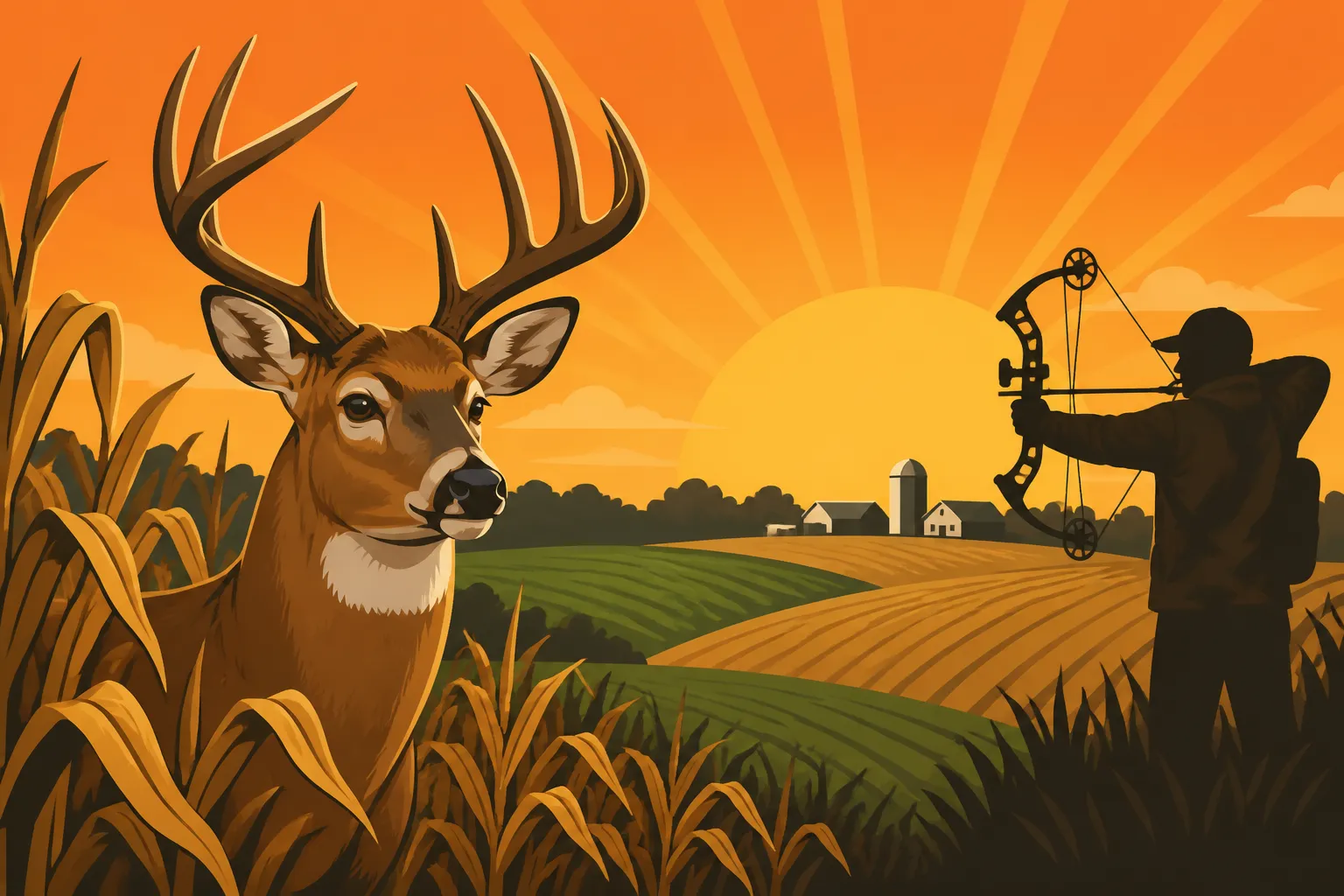
Unlike the expansive, contiguous forests found further south, Northern Indiana is characterized by a fragmented habitat. You'll find vast fields of corn, soybeans, or wheat, broken up by thin strips of woods, brushy fencerows, and occasionally larger, isolated timber blocks. These scattered pockets of cover are absolutely critical to understanding how deer use the landscape. Deer will travel significant distances through open fields to reach these safe havens, using fencerows and ditches as travel corridors. During the early archery season, especially in September and October, standing crops like corn offer incredible cover, essentially becoming mobile forests that deer live within. This means the deer aren't always where you expect them to be, and their patterns can shift dramatically once a crop is harvested. It’s a constant puzzle, but one that rewards meticulous observation.
Deer Movement Patterns in Farm Country
Deer in farmland environments often exhibit different movement patterns than their forest-dwelling counterparts. They are masters of using the available cover, no matter how thin. During daylight hours, they'll typically bed down in dense woodlots, brushy ditches, or deep within standing crops. As dusk approaches, they'll often emerge from these covers, using fencerows and creek bottoms as hidden highways to access feeding areas in harvested fields or even still-standing crops. Understanding these daily patterns is key. In the pre-rut and rut phases, bucks might become more visible during the day as they cruise these same travel corridors, searching for does. Conversely, during the late season, after crops are down and temperatures drop, deer will often concentrate around remaining food sources, like a secluded standing soybean field, and seek out the thickest thermal cover available, often reverting to nocturnal movements if pressure is high. For instance, knowing Late-Season Food Sources for Indiana Whitetails can be crucial after the combines have left the fields barren.
Scouting Tactics for Farmland Whitetails
Effective scouting in Northern Indiana farmland requires a blend of modern technology and old-fashioned legwork. You need to understand how deer are using the land before you ever think about hanging a stand or planning a hunt. This is where many hunters fall short, rushing into an area without truly understanding the patterns.
Aerial Photo Analysis and Digital Tools
Before you ever set foot in the field, fire up your favorite digital mapping tool. Platforms like GoHunt provide invaluable satellite imagery that can help you decipher the landscape from your couch. Look for distinct features:
- Small Woodlots and Islands of Timber: These are obvious bedding and staging areas.
- Fencerows and Hedgerows: These are often primary travel corridors, especially those connecting larger blocks of timber or acting as arteries into crop fields.
- Drainage Ditches and Creek Bottoms: These natural depressions offer hidden pathways through open fields, providing cover and often leading to water sources.
- Crop Field Transitions: Identify where different crop types meet, or where fields meet timber. These are often high-traffic zones.
- Swamps or Wet Areas: Even small, seemingly insignificant wet spots can offer dense, undisturbed cover for bedding.
By spending time digitally scouting, you can identify potential hotspots and travel routes, saving yourself countless hours of aimless wandering. It's like having an eagle-eye view of the deer's world without ever spooking a single animal. This initial phase of Scouting Indiana Public Land Before Season is a critical first step, whether on private or public land.
Boots-on-the-Ground Reconnaissance
Once you've identified promising areas on your digital maps, it's time to hit the ground. This is where you confirm your hypotheses and find the fresh sign that tells you deer are actively using an area.
- Walk Fencerows and Ditch Lines: Look for tracks, rubs, and droppings. Deer will often leave definitive sign along these linear features. Pay close attention to where multiple fencerows converge or where they meet a woodlot – these are natural funnels.
- Check Woodlot Edges: Look for entry and exit points into fields. Find where deer are browsing, and identify heavily used trails leading into bedding cover.
- Scout Standing Crops (if allowed and with permission): If you have permission to enter standing corn or soybeans, look for trails leading deep into the field, or for bedding areas within the crop itself. This is particularly effective during the early season.
- Identify Water Sources: Even small puddles or seeps can be deer magnets, especially during dry periods.
- Pinpoint Rub Lines and Scrapes: These tell you where bucks are actively marking territory. A fresh rub line along a woodlot edge or a scrape under a low-hanging limb in a fencerow is a strong indicator of current buck activity. During the pre-rut and Hunting the Rut in Early November, these signs become even more pronounced and critical.
Always be mindful of wind direction when scouting to avoid leaving your scent in key areas. A little stealth during scouting can make a big difference when the season opens.
Strategic Stand Placement and Access
Getting into position without alerting deer is paramount in open farmland environments. Stand placement isn't just about finding sign; it's about playing the wind, understanding lines of sight, and ensuring a quiet entry and exit.
Field Edge and Woodlot Funnels
These are arguably the most crucial locations for hunting Northern Indiana farmland deer.
- Field Edges: Deer will frequently walk the edges of crop fields, especially where they meet timber. These are natural travel lanes. Look for trails entering and exiting the fields. Setting Up on a Northern Indiana Field Edge requires careful consideration of prevailing winds, sun position, and the deer's expected entry and exit points. A prime spot might be where a small point of timber juts out into a field, or where a fencerow leads directly to a feeding area.
- Woodlot Funnels: These are constricted travel routes between two blocks of cover. It could be a narrow neck of timber between two fields, a brushy pinch point, or even a deep ditch line that deer use to avoid exposure. Deer are inherently lazy and will often take the path of least resistance, especially if it offers cover. Identifying these funnels on your map and confirming them with sign on the ground can lead to consistent encounters. Think about where a mature buck might cruise from one bedding area to another without being seen.
When setting up, consider a portable treestand or a ground blind. For ground blinds, ensure it's brushed in thoroughly well in advance, giving deer time to get used to its presence. For an ideal setup on a field edge, you'll want to be positioned downwind of the anticipated travel route, with a clear shooting lane and good visibility into the field and along the edge.
Hunting Standing Crops and Transition Areas
Standing crops, particularly corn, are phenomenal deer magnets in the early season. They provide both food and incredibly dense cover.
- Entry and Exit Points: Deer will have distinct trails leading into and out of standing cornfields. Finding these main entry points and setting up on the downwind side, typically 10-20 yards inside the timber edge or along a parallel fencerow, can be deadly. Remember, Entry Routes Through Standing Corn are often well-defined, and you might even find small pockets of open ground or "bunkers" within the corn where deer bed down.
- Hunting the Inner Field: While challenging, hunting inside a large standing cornfield can be effective. This often requires still-hunting techniques or using a small, well-camouflaged ground blind placed where trails converge. The key is to be extremely scent-conscious and move slowly, taking advantage of the noise reduction provided by the corn.
- Transition Areas: These are where one type of cover or food source meets another. Think where standing corn meets soybeans, or where a cut alfalfa field meets a woodlot. These intersections are natural gathering points for deer. Hunting a Standing Soybean Field in the early archery season, especially one adjacent to thick cover, can be incredibly productive as deer gorge on the protein-rich plants. As the season progresses and crops are harvested, attention shifts to remaining food sources and the densest thermal cover.
When selecting a spot, always think about your approach and departure. Can you get in and out undetected? In open farmland, this often means using the cover of darkness, low spots, or fencerows to shield your movement.
Effective Hunting Methods for Northern Indiana
Given the unique layout of Northern Indiana farmland, you often need to adapt your hunting methods. Sticking to a single strategy might limit your success, so being versatile is a huge advantage.
Still-Hunting and Glassing Opportunities
Still-hunting is a highly effective tactic, especially in the scattered woodlots and fencerows of Northern Indiana. It's about slow, deliberate movement, focusing on observation.
- Slow Movement: Move at a snail's pace, taking one or two steps, then stopping to scan intently for deer. Use your binoculars constantly to pick apart cover, looking for a horizontal line, an ear twitch, or a patch of hide that doesn't belong.
- Utilize Cover: Stick to the densest parts of woodlots or along fencerows where you have some concealment. Move into the wind, or with a crosswind, so your scent isn't blowing ahead of you.
- Focus on Transition Zones: Still-hunt along the edges of timber blocks where they meet fields, or through areas where different types of cover converge. Deer will often be feeding or staging in these areas.
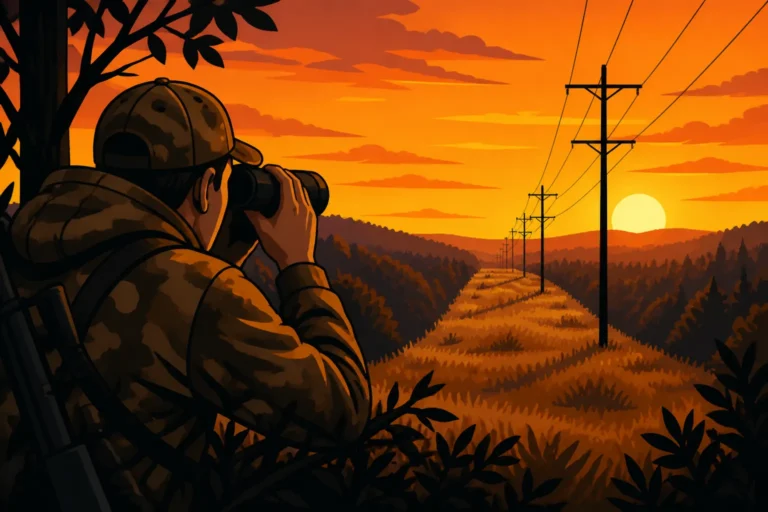
- Glassing from a Distance: In the more open areas of Northern Indiana, especially after crops are harvested, sitting back with a good pair of binoculars or a spotting scope and Glassing a Powerline Cut at Last Light (or a large field) can be incredibly effective. Find a vantage point, such as a slight rise or the top of a grain bin (with permission, of course!), and systematically scan fields at dawn and dusk. Once you spot deer, you can formulate a stalk or plan a setup for the next day. This method allows you to scout without putting pressure on the deer.
This combination of slow, methodical movement and strategic long-distance observation gives you a significant edge in these open landscapes.
Utilizing Calls and Decoys in Open Terrain
While calls and decoys might seem more suited to thick timber, they can be surprisingly effective in Northern Indiana farmland, especially during the rut.
- Rattling and Grunting: In these more open environments, a buck might hear your calls from a greater distance. Aggressive rattling sequences, followed by a series of grunts, can draw in curious bucks during the pre-rut and peak rut. Be mindful of Rattling Volume in Thick Cover; in open areas, you can sometimes get away with a bit more noise, but don't overdo it. The key is to sound realistic. Follow your rattling with a few soft grunts, mimicking a buck that's just finished a fight and is now looking for the doe that attracted them.
- Doe Decoys: A single doe decoy, especially during the rut, can be a magnet for a cruising buck. Set the decoy upwind of your position, facing away from you, as if she's looking for the approaching buck you're trying to lure. This presents a realistic scenario and can pull a buck directly into your shooting lane. Ensure your decoy is visible from a distance but also has a natural backdrop.
- Fawn Decoys and Distress Calls: Earlier in the season, a fawn decoy paired with a fawn distress call can sometimes bring in a curious doe or even an antlerless deer. However, this is generally less effective for mature bucks.
- Safety First: Always use extreme caution when using decoys, especially during firearms season. Ensure your decoy is visible to you and that you have a clear understanding of the backdrop and potential shot angles.
The effectiveness of calling and decoying often comes down to timing. They are most potent when bucks are actively seeking does, usually from late October through mid-November.
| Hunting Tactic | Best Time of Season | Ideal Conditions | Pros | Cons |
|---|---|---|---|---|
| Field Edge Stand | All season, esp. early | Calm, consistent wind | Predictable deer movement, good visibility | Can be exposed, wind critical |
| Standing Crop Hunt | Early Archery | Cool, overcast days | Excellent cover, deer feel secure | Limited visibility, easy to spook deer |
| Still-Hunting Woodlots | Anytime | Windy, rainy, or quiet conditions | Highly mobile, actively seeking deer | Requires extreme patience and stealth |
| Glassing & Stalking | Post-Harvest, Late-S. | Clear visibility, calm winds | Covers large areas, low pressure on deer | Difficult to execute a stalk successfully |
| Rattling/Grunting | Pre-rut & Rut | Calm, crisp mornings | Can bring deer to you from afar | Can spook deer if overdone, timing vital |
| Doe Decoy Setup | Rut | Calm, clear days | Highly enticing for cruising bucks | Requires careful placement, safety concerns |
Navigating Pressure and Securing Permission
Hunting Northern Indiana farmland often means dealing with significant hunting pressure, especially on public land, and the ever-present challenge of securing private land access. These are hurdles, but not insurmountable ones.
Understanding Public Land Hotspots and Avoidance
Indiana does have public hunting opportunities in the north, but these areas, such as certain Fish and Wildlife Areas (FWAs) or State Forests, can experience heavy pressure. Everyone else is often thinking the same thing you are: "Where are the deer?"
- Deep Access: On public land, don't be afraid to walk further than most hunters. Many hunters stick close to parking areas or easily accessible trails. The deer know this. By Finding Ground Others Walk Past, even just an extra half-mile or mile, you can often get into areas where deer feel safer and are more likely to move during daylight.
- Hunt Mid-Week: If possible, hunt during weekdays when pressure is significantly lower than on weekends.
- Scout Beyond the Obvious: Look for overlooked pockets of cover, thick briar patches, or swampy areas that other hunters avoid. These can be incredible bedding areas, even if they seem small.
- Utilize Marginal Habitat: Deer will use even small, seemingly insignificant ditches or brush piles if they offer enough cover to move unseen. Don't overlook these "trashy" spots. When reviewing satellite imagery on GoHunt, zoom in on these less obvious features.
Managing your hunting pressure on public land is key. If you bump deer out of an area, give it a few days to settle down before returning.
The Art of Knocking on Doors for Private Access
Private land access is the holy grail for many hunters, especially in Northern Indiana where property ownership is predominantly private. It's often the best way to get away from crowds and find less pressured deer.
- Be Respectful and Prepared: When you approach a landowner, be polite, well-groomed, and have a clear, concise request. Introduce yourself, explain why you're interested in hunting their property (e.g., deer numbers, crop damage), and clearly state what you're asking for.
- Offer Something in Return: This is huge. Don't just ask. Offer to help with chores, fix fences, or assist with crop damage control. Many farmers are dealing with deer eating their crops, so offering to help reduce the herd can be a strong incentive. Mentioning you can help fill an Indiana Deer Damage Permit for Farmers can be a compelling offer.
- Be Specific: If possible, scout the property first (from public roads or with permission) and identify specific areas you'd like to hunt. This shows you're serious and knowledgeable.
- Leave Your Contact Information: Have a small card with your name, phone number, and a brief note about your request. This makes it easy for them to get back to you.
- Start Small: Don't ask for exclusive rights to their entire farm for the whole season. Start by asking for permission to hunt a small woodlot or a specific field for a short period. Build trust over time.
- Follow Through and Be Considerate: If you get permission, abide by all their rules. Close gates, don't drive on wet fields, report any trespassers you see, and share some venison if you're successful. A positive relationship can last for years. GoHunt's mapping features can also help you quickly show a landowner exactly where you'd be hunting and your planned access points.
Remember, a "no" today doesn't mean "no" forever. Be persistent but respectful. The reward of a low-pressure private land hunt is well worth the effort.
Disclaimer
Hunting involves inherent risks. Always prioritize safety, understand and follow all Indiana hunting regulations, and ensure you have the appropriate licenses and permits. Wildlife populations and rules can change, so always consult the latest Indiana Department of Natural Resources (DNR) guidelines before heading afield. This guide is for informational purposes only and does not endorse illegal or unsafe hunting practices.