Finding Ground Others Walk Past
It’s a tale as old as time for Indiana hunters: you’ve scouted your heart out, picked a promising spot on public land or a small woodlot, only to arrive opening morning and find another truck parked right where you planned to go. Or worse, you sit all day, seeing nothing but squirrels, only to realize later that the deer are hunkered down somewhere else, avoiding the throngs of orange. This guide is all about changing that narrative, helping you discover those hidden pockets of unpressured ground that other hunters routinely overlook.
Understanding Hunting Pressure in Indiana
Hunting in the Hoosier State, especially for deer, can often feel like a competition, particularly on public lands like the Hoosier National Forest or various Fish and Wildlife Areas. Hunters are creatures of habit, and deer are even more so, though they're quick to adapt when their world gets noisy. The key to finding success where others fail is understanding these ingrained behaviors and leveraging them to your advantage.
The Reality of Public Land Traffic
Think about it: most hunters want convenience. They'll typically stick to areas close to parking lots, well-worn trails, old logging roads, or easily accessible field edges. You'll see this pattern everywhere, from the vast timber blocks of Yellowwood State Forest to the smaller tracts scattered across the agricultural landscape of northern Indiana. These "easy access" spots become magnets for foot traffic, scent trails, and general human disturbance from the moment archery season opens in October. While they might produce a deer or two early on, the consistent pressure quickly pushes mature bucks and even doe groups into harder-to-reach sanctuaries. It's a frustrating reality when you put in the effort, only to have your spot effectively "burned out" by the collective presence of other well-meaning but predictable hunters.
How Deer React to Pressure
Deer aren't dumb; they're incredibly resilient and adaptive creatures. When hunting pressure mounts, their behavior shifts dramatically. They become more nocturnal, moving primarily under the cover of darkness. They'll often relocate from areas of consistent human disturbance to dense, remote thickets, steep ravines, or overlooked swampy bottoms that offer maximum security. These become their "safe zones," where they feel comfortable bedding and moving during daylight hours. This is why you might walk through a prime-looking woodlot and see no fresh sign during the day, yet trail cameras capture plenty of activity at night. They've learned that daylight hours in easy-to-access areas mean danger, prompting them to seek out truly secluded spots for survival.
Identifying "Hot Spots" That Are Actually Burnt Out
Many popular hunting spots become "hot spots" because they initially hold a lot of deer or offer obvious advantages, like a clear funnel or a productive food source. However, relentless pressure quickly turns these into "burnt out" zones. These might be a well-known ridge top saddle, a creek bottom funnel between two woodlots, or a lush green field planted for deer that's easily viewed from a road. Hunters, relying on past success or common knowledge, flock to these locations, inadvertently driving deer away. What looks good on a map, or what produced a buck for someone last year, might now be a barren wasteland during hunting hours because every hunter in the county knows about it. The trick is to recognize these commonly pressured areas and instead focus your efforts on the less obvious, harder-to-reach places that surround them.
Strategic Scouting for Overlooked Areas
The antidote to hunting pressure is strategic scouting, focusing not just on where deer should be, but where other hunters aren't. This often means looking at the landscape with fresh eyes and a willingness to put in extra effort.
Digging Deeper with Aerial Reconnaissance
Before you ever set foot in the woods, spend serious time with aerial maps. Tools like the Indiana DNR app or robust mapping platforms are your best friends. Look for features that scream "difficult access." We're talking about steep topographical changes, deep ravines, dense stands of briars or regenerating timber, or isolated pockets of cover surrounded by open fields. Don't just look for deer sign; look for human absence.
Consider areas where a creek forms a natural barrier, or where a deep ditch makes for a challenging crossing. Perhaps there's an old, overgrown timber cut that's now a nearly impenetrable briar patch – those are often prime bedding areas that hunters avoid. Utilize the topographical lines to find benches and subtle saddles on difficult-to-navigate hillsides. These are often small, out-of-the-way features that deer will use to travel or bed because they offer concealment and a vantage point without being in plain sight. Many hunters stick to the ridge lines and valley floors; finding those mid-slope features can be golden. When reading aerial photos for Southern Indiana deer, pay close attention to the contours.
Boots on the Ground, Off the Beaten Path
Once you've identified potential overlooked spots on your map, it's time for the boots-on-the-ground phase. This is where most hunters quit. Instead of following the main hiking trails, bushwhack your way to those difficult-access spots. Wear tough clothing, be prepared for briars and mud, and expect to work for it. You might find a small, secluded bench with excellent rubs and scrapes, or a dense cedar thicket that's virtually untouched.
When you're out there, look for subtle deer trails that lead into the densest cover, rather than along the edges. These are often escape routes or primary travel corridors for deer that feel safe. You're looking for older, less distinct deer trails, which might indicate that they are less frequently disturbed by human activity. Don't be afraid to walk much further than others might. Sometimes, how far to walk from a forest road is the biggest determinant of whether you find unpressured game.
Focusing on Micro-Terrain and Cover
Sometimes the most overlooked spots aren't large, sweeping areas, but tiny pockets of micro-terrain or specific cover types. This could be a small clump of pines in a hardwood forest, a narrow finger of woods extending into a vast crop field, or a rocky outcrop with dense undergrowth. Deer use these features for thermal cover, concealment, and as strategic ambush points. These areas might only be a few acres, but they can be incredibly productive because other hunters simply walk past them, not recognizing their value or deeming them "too small" to bother with.
Focus on finding transition zones that offer both security cover and access to food or water, but are tucked away from obvious routes. A hidden spring in a deep hollow, a patch of oaks producing acorns further off the main ridge, or a small, isolated food plot on private land that’s not visible from public access points are all examples. Even something as small as a cluster of honeysuckle or multiflora rose can provide enough security cover to hold a pressured buck during daylight hours.
Tactics for Hunting Low-Pressure Zones
Finding these overlooked spots is only half the battle. You need to approach them with tactics that capitalize on their secluded nature and minimize your own impact.
The Early Bird Gets the Worm (and the Deer)
When you've identified one of these low-pressure sanctuaries, getting there before anyone else is paramount. This often means waking up much earlier than you might for a traditional hunt, especially during firearm season. You want to be in your stand or blind, settled and quiet, well before legal shooting light. Deer in these unpressured zones are more likely to be moving at first light, before any human activity begins to stir.
Plan your entry route meticulously to avoid bumping deer or leaving excessive scent. Use natural cover to conceal your approach, and try to walk against the prevailing wind, especially if you expect deer to be moving towards a feeding area. If you’re hunting a Brown County ridgeline public access, consider how thermals will affect scent early in the morning, typically moving downhill.
Playing the Wind and Thermals Smart
Understanding wind and thermals is critical in any hunting scenario, but it's even more vital when targeting deer in their security zones. These deer are often hyper-sensitive to human scent. In hilly southern Indiana terrain, thermals typically drop downhill in the morning and rise uphill in the afternoon. You need to factor this into your stand placement and approach. If you're still-hunting southern Indiana ridges, for example, move in a way that keeps your scent from preceding you into potential bedding areas.
For a morning hunt, position yourself above where you expect deer to be moving, allowing your scent to rise over them. In the afternoon, set up lower, letting your scent fall away from their approach. Always consider secondary wind directions due to swirling currents in thick cover or draws. Using a wind checker frequently can provide invaluable real-time information, helping you adjust your strategy on the fly.
Adapting Your Setup for Seclusion
Since you'll be venturing into harder-to-reach areas, your gear and setup need to be adaptable and minimalist. Hauling a bulky ladder stand deep into a briar thicket is often impractical. This is where portable treestands, climbing sticks, or saddle hunting setups truly shine. They allow you to be mobile, get into trees that might be overlooked, and leave minimal impact.
Alternatively, don't underestimate the power of a well-placed ground blind, especially one brushed in naturally. Sometimes the best spot doesn't have a suitable tree for a stand, but offers dense natural cover perfect for concealment. Just remember the rules for ground blind rules on Indiana wildlife areas if hunting public land. The goal is to be as inconspicuous as possible, blending into the environment so effectively that the deer never know you're there.
Here's a quick comparison of common hunter habits versus strategies for finding overlooked ground:
| Aspect | Common Hunter Habit | Strategy for Overlooked Ground |
|---|---|---|
| Access | Stays near parking, uses main trails. | Ventures far from roads, bushwhacks through dense cover. |
| Scouting | Looks for obvious deer trails, open food sources. | Searches for subtle micro-terrain, thick bedding, escape routes. |
| Location Choice | Favors historically "hot" spots, easily visible areas. | Targets difficult-access sanctuaries, hidden pockets of cover. |
| Timing | Arrives at legal light, moves during daylight. | Arrives well before dawn, minimal movement during prime hours. |
| Gear | Heavy, less mobile stands; relies on established spots. | Lightweight, mobile setups (saddles, climbers), minimalist approach. |
| Mapping Focus | Food plots, open areas, main funnels. | Topo lines for subtle breaks, dense cover, water barriers. |
| Pressure Awareness | Assumes deer are still in "good" areas despite traffic. | Understands deer relocate immediately when pressure builds. |
Leveraging Technology and Local Knowledge
To truly excel at finding ground others walk past, you need to combine old-school woodsmanship with modern tools and a deep understanding of local conditions.
Mapping Apps as Your Secret Weapon
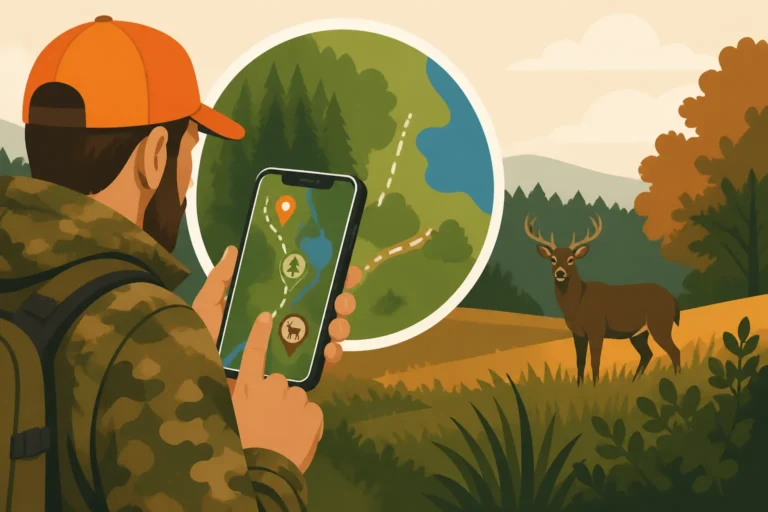
Modern mapping applications are absolute game-changers for identifying overlooked spots. Tools like GoHunt (known for its Western big game focus, but useful for understanding mapping principles) or more localized apps with detailed satellite imagery and property line overlays are indispensable. They allow you to virtually "walk" miles of terrain from your couch, identifying potential escape routes, natural barriers, and dense cover that would be impossible to see without them.
Look for subtle changes in vegetation (e.g., darker green indicating evergreen thickets), water features like small ponds or marshes that deter casual hunters, and topographical features that create natural funnels or hidden benches. The ability to overlay property lines is critical, especially when hunting small private tracts in Indiana or finding public land fingers that jut into private ground. These often go unmolested because hunters assume they are private. You can mark waypoints for potential stand sites, entry and exit routes, and even areas you want to scout on foot later.
Weather Patterns and Their Impact
Weather is a powerful, often overlooked, ally in finding unpressured deer. Harsh weather – heavy rain, high winds, or significant snow – often drives other hunters out of the woods, creating prime opportunities. Deer still need to move, and they often become more active as a front moves in or immediately after it passes. A heavy snowfall can simplify tracking and reveal deer movement patterns into and out of bedding areas that might otherwise be hidden.
Cold fronts, in particular, can trigger significant deer movement. If you're willing to brave the elements when others are staying home, you'll often find less pressure and more active deer. Pay attention to how different weather conditions might push deer into specific types of cover – thick pines for thermal protection during a cold snap, or dense river bottom cover during high winds. This kind of knowledge helps you predict where deer will be when no one else is looking.
Learning from Others and DNR Data
While the goal is to find ground others walk past, you can still learn a lot from publicly available information. The Indiana DNR publishes annual harvest reports that can show you which counties or regions have high deer densities, but also which ones might be experiencing heavier hunting pressure. Understanding these broader trends can help you decide where to focus your efforts.
Don't discount local knowledge, but filter it. Talk to long-time locals, but instead of asking "where should I hunt?", ask "what areas do most people avoid?" or "where does no one like to walk because it's too thick?" You might get some valuable insights into overlooked pockets of cover or challenging terrain features that deter the average hunter. Even if you're knocking on doors in Indiana farm country for private land access, show respect and ask about the parts of their property that might be less accessible or less productive to them, but could be a gold mine for you. These harder-to-reach corners often become natural sanctuaries.
Disclaimer
Hunting is an inherently dangerous activity. Always prioritize safety, understand and follow all Indiana hunting regulations, and ensure you have the necessary licenses and permits. The information provided here is for educational purposes only and should not replace professional guidance or personal judgment. Be aware of your surroundings, inform others of your hunting plans, and always practice ethical hunting.