Using a Ground Blind on Indiana Public Land
Trying to find a truly effective, mobile, and comfortable way to hunt deer and turkey on Indiana's diverse public lands can feel like a constant battle. Between navigating crowded areas, finding cover in open farmlands, or dealing with the ever-present challenge of changing wind, many hunters get discouraged. This guide will walk you through everything you need to know about successfully using a ground blind on Indiana public land, offering practical tips to overcome these common frustrations and put more game in your freezer.
Why Ground Blinds Make Sense for Indiana Public Land Hunting
For years, treestands were the default choice for serious deer hunters, especially in heavily timbered areas. And don't get me wrong, they're fantastic tools. But on Indiana's public lands, from the sprawling Hoosier National Forest to the open fields of properties like Tri-County Fish and Wildlife Area, ground blinds offer a unique set of advantages that are often overlooked. The reality is, public land hunting pressure on Indiana public land can make deer wary, and a well-placed ground blind provides a different kind of advantage.
Stealth and Concealment Advantages
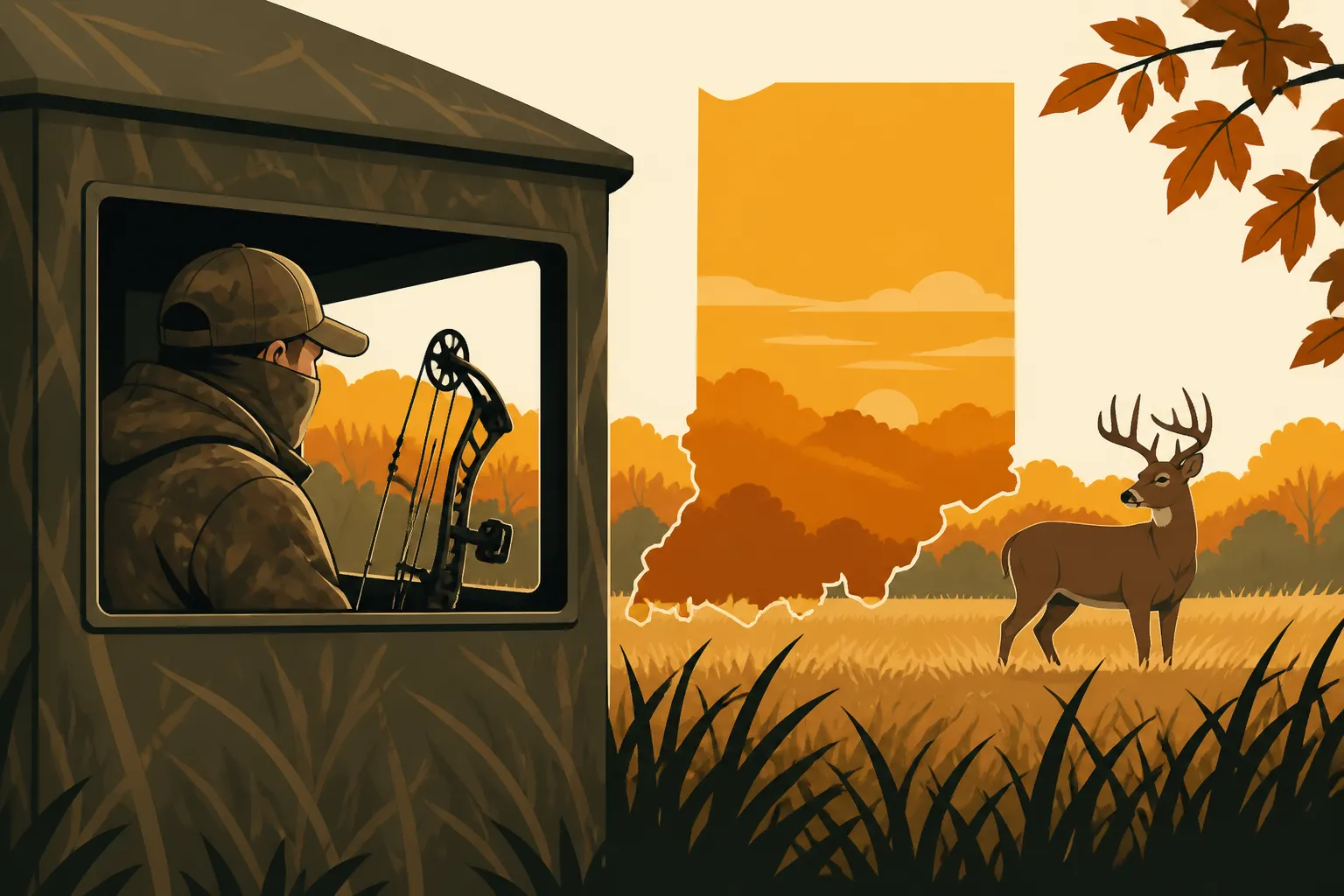
One of the biggest struggles on public land is simply getting to your spot undetected and staying hidden once you're there. Deer and turkeys become incredibly alert to human shapes and movements. A ground blind, when properly set up, breaks up your silhouette completely. You can fidget, check your phone, eat a snack, or even stretch a bit without spooking game. This is huge, especially if you're like me and struggle to sit perfectly still for hours on end in a treestand. Imagine being able to make minor adjustments to your gear or even scratch an itch without a deer at 50 yards instantly flagging and bounding off.
Furthermore, many public land areas, particularly in northern Indiana, feature significant tracts of farmland with limited mature trees suitable for a treestand. Think about those vast standing corn or soybean fields that border small woodlots. A ground blind allows you to set up directly on the edge, or even a short distance into these fields, offering concealment where a treestand would be impossible or expose you high in the air. This gives you access to feeding areas that might otherwise be unhuntable, which is a major leg up when trying to target deer moving between bedding and food sources.
Mobility and Versatility for Diverse Terrain
Indiana's public hunting ground is incredibly varied. One day you might be hunting deep in the rugged hills of southern Indiana, and the next you're on a flat, open parcel of a Fish and Wildlife Area. Ground blinds excel in this diverse landscape because they don't rely on suitable trees. You can put them in heavy thickets, along fencerows, in brushy creek bottoms, or even tucked into tall weeds in an abandoned field. This versatility means you're not limited by the availability of the "perfect tree."
Consider a scenario where you've been scouting Indiana public land before season and found a hot new scrape line in a thick, brushy draw with no mature trees nearby. A treestand is out. But a ground blind, brushed in effectively, becomes your perfect solution. Or perhaps you're planning for spring turkey hunting in Indiana and found a gobbler roosting in a stand of pines with no hardwoods to hang a stand. Again, a ground blind allows you to get in close and set up shop effectively. This adaptability empowers you to hunt the best sign, not just the best trees, which can make all the difference, especially when you're trying to find ground others walk past.
Understanding Indiana's Public Land Ground Blind Rules
Before you even think about hauling your brand-new blind onto state land, it's absolutely crucial to understand the rules. Indiana DNR has specific regulations regarding the use of ground blinds on public properties, and ignorance is no excuse when a conservation officer checks your setup. These rules are in place for safety, to manage habitat, and to ensure fair chase, so respecting them is paramount.
Specific Regulations for State Properties
Each type of public land in Indiana might have slightly different rules, but generally, properties managed by the Indiana Department of Natural Resources (DNR) such as State Forests, Fish & Wildlife Areas (FWAs), and some State Parks (during managed hunts) follow a similar set of guidelines. The most common rule is that ground blinds, like treestands, usually cannot be left unattended for extended periods. On many properties, this means your blind must be removed at the end of each hunting day. Leaving a blind up for days or weeks is often prohibited, as it can damage vegetation, deter other hunters, or simply be considered littering.
For instance, on most Indiana Fish and Wildlife Areas, you'll find strict rules about leaving structures overnight. If you're planning to hunt the Winamac Fish and Wildlife Area for ducks or Sugar Ridge Fish and Wildlife Area for deer, you'll need to know their specific ground blind rules on Indiana Wildlife Areas. Always check the property-specific regulations on the Indiana DNR website or the kiosks at the property entrance. They'll often have a pamphlet detailing acceptable blind use, or you can check the DNR hunting guide, often found through resources like the GoHunt app or website. Some properties might even require a sign-in at a check station, and they’ll outline these rules there.
Blaze Orange and Safety Considerations
Just because you're inside a blind doesn't mean you're exempt from Indiana's blaze orange requirements. During firearms seasons, all hunters — even those in ground blinds — are required to wear hunter orange. The specifics usually mandate a minimum amount of material, like an outer garment with at least 500 square inches of solid hunter orange, visible from all directions. This is for your safety and the safety of others, especially crucial in areas where deer drives on Indiana public land might be taking place.
It's tempting to think your blind offers complete invisibility, but remember, other hunters might be moving through the woods. To ensure maximum safety, consider hanging an extra piece of blaze orange material on the outside of your blind, perhaps on the back or top, to make it even more visible to other hunters. This also serves as a clear indicator that the spot is occupied. When hunting during archery season outside of the firearms seasons, blaze orange is not legally required, but it's still a good practice to wear it while walking to and from your blind in the dark, especially if you anticipate encountering other hunters. Always prioritize safety, for yourself and for others sharing the woods.
Strategic Placement and Concealment for Success
A ground blind isn't a magic invisibility cloak. Simply popping it up in an open field and hoping for the best is a recipe for an unsuccessful hunt. The real art of ground blind hunting, especially on pressured Indiana public land, comes down to smart placement and meticulous concealment. Deer are incredibly wary, and anything that looks out of place will put them on high alert.
Blending into the Environment
The key to successful ground blind hunting is making your blind disappear into the natural surroundings. This isn't just about camouflaged fabric; it's about using the natural cover around you. Don't place your blind in a completely open area unless it's a last resort and you've spent significant time brushing it in. Look for areas with dense undergrowth, fallen trees, brush piles, or the edge of a thicket. The goal is to break up the blind's outline so it doesn't stick out like a sore thumb.
If you're hunting a field edge, instead of placing the blind directly on the edge, push it back a few feet into the timber or brush line. This uses the existing vegetation as a natural screen. Cut small branches, weeds, and tall grasses and weave them into the blind's exterior loops. Don't be shy; overdo it rather than underdo it. On a property like Salamonie Lake or even when hunting northern Indiana farmland deer, you might have access to standing corn. If the regulations allow, tucking your blind a few rows deep into the standing corn provides incredible concealment and allows you to set up directly on a travel corridor or a feeding area. The GoHunt mapping system can be invaluable here, allowing you to identify these types of cover and plan your entry routes through standing corn well in advance.
Using Terrain and Features to Your Advantage
Beyond just blending, consider how the terrain itself can aid your concealment and hunting strategy. Look for natural funnels, pinch points, and cover changes that dictate deer movement. A well-placed blind in a subtle dip in the land, behind a rise, or along a creek bank can put you in a prime ambush spot.
For example, finding a funnel between two woodlots where deer travel consistently can be a game-changer. Position your blind slightly off the main trail, perhaps downwind, and heavily brush it in. Similarly, if you're hunting a late-season food source like a standing soybean field, place your blind where it breaks up the edge, rather than on a perfectly straight line. Always consider the wind direction for your chosen setup. Deer rely heavily on their nose, and even the best-concealed blind won't hide your scent. Use an app like GoHunt to check prevailing winds for your hunt dates and plan your entry and exit routes accordingly to avoid contaminating your hunting area. If you can approach and leave your blind without deer detecting you, you've significantly increased your chances of success.
Ground Blinds for Different Indiana Game Species
While ground blinds are most commonly associated with deer hunting, their versatility makes them an excellent tool for pursuing other game animals across Indiana's diverse landscapes. Understanding how to adapt your blind usage for different species can open up new hunting opportunities and extend your season.
Deer Hunting Scenarios
For white-tailed deer in Indiana, ground blinds really shine in several specific scenarios. As mentioned, field edges, especially in agricultural areas, are prime locations. Picture a brisk November morning, and you're tucked into your blind, brushed into a fencerow overlooking a cut cornfield. You've scouted this particular spot, perhaps using tools like GoHunt to identify key travel corridors and historical deer movement, and you know bucks are likely to cruise this edge looking for does. The blind keeps you warm, concealed, and ready for that perfect shot.
They're also fantastic for hunting the rut in early November when deer activity peaks. Bucks are on the move, sometimes covering long distances. Setting up a blind in a natural bottleneck, a ridge-top saddle, or even near a scrape line along a logging road can give you a crucial advantage. In more rugged terrain, such as the Hoosier National Forest, a blind can be placed strategically in a deep, timber-filled hollow or along a creek bottom where deer might be seeking refuge from hunting pressure. During archery season, especially early season when foliage is thick, a well-placed blind offers complete concealment for close-range shots. For hunters participating in managed hunts or seeking extra tags in where Indiana's deer reduction zones are located, a ground blind allows for extended sits and focused effort.
Turkey and Small Game Applications
Ground blinds aren't just for deer; they're arguably even more popular and effective for wild turkeys in Indiana. During the spring season, setting up a blind allows you to sit comfortably and patiently, minimizing movement as you call to a wary gobbler. Imagine having a decoy spread out front and being able to make subtle adjustments to your calls or even pour a cup of coffee without a sharp-eyed tom spotting you. This is especially useful when hunting public land where turkeys can be heavily pressured and incredibly sensitive to movement.
For small game hunters, ground blinds can be surprisingly effective for species like squirrels, rabbits, or even pheasants on properties where they are stocked. While not as common, a small, pop-up blind can provide a concealed position for squirrel hunting Indiana bottomland hardwoods, allowing you to observe squirrel activity without being detected. For rabbit hunting thick Indiana brush or even hunting pheasants in Indiana grasslands, a blind can offer a static ambush point along fencerows or hedgerows that these animals frequent. The ability to sit still and blend in completely makes a blind a valuable, though perhaps less conventional, tool for a variety of Indiana hunting pursuits.
| Feature | Ground Blind Advantages | Treestand Advantages |
|---|---|---|
| Concealment | Excellent, breaks up human silhouette, hides movement | Good, gets hunter above line of sight |
| Mobility | High, can be set up almost anywhere with natural cover | Moderate, requires suitable tree |
| Comfort | High, can use chairs, stay out of elements | Moderate, depends on stand type, exposed to elements |
| Safety | Very High, stable on the ground | Moderate, fall risk, requires safety harness |
| Setup Time | Fast for pop-ups, more for brushing in | Moderate to high, climbing sticks/ladder |
| Wind/Scent | Still need to manage scent, some wind protection | Scent disburses better with elevation, full wind exposure |
| Visibility | Limited view, dependent on shooting windows | Excellent, wide field of view |
| Legalities | Must be removed daily on most public lands | Specific rules for public land, sometimes left longer |
Overcoming Challenges and Maximizing Your Blind's Potential
Hunting from a ground blind on Indiana public land, while offering many benefits, isn't without its challenges. From dealing with limited visibility to managing scent and making sure you don't stick out, there are hurdles to overcome. But with a bit of foresight and preparation, you can turn these challenges into advantages and truly maximize your blind's potential.
Dealing with Limited Visibility and Shot Opportunities
One of the most common complaints about ground blinds is the limited field of view compared to a treestand. You're at eye level with the brush, and those small shooting windows can feel restrictive. This isn't necessarily a bad thing; it forces you to focus on specific lanes and areas where you expect game to appear. However, it means meticulous scouting is even more critical. Use your GoHunt app or other mapping tools to pinpoint exact travel corridors, pinch points, and feeding areas. Know precisely where deer or turkeys are likely to emerge.
To combat limited visibility, set your blind up so that it overlooks natural openings, clearings, or distinct travel lanes. Trim small branches or weeds just enough to create clear shooting lanes, but avoid over-clearing, which can make your blind stand out. Use good quality binoculars to constantly scan your immediate area. Being ready to quietly open a window and draw your bow or shoulder your firearm when game appears is key. Practice shooting from your blind before the season, getting comfortable with the angles and window sizes. Knowing your maximum effective range from that confined space is crucial for ethical shots.
Scent Control and Entry/Exit Strategies
Even though you're enclosed in a blind, scent control remains paramount, especially on public land where deer are highly sensitive to human odor. Your blind material itself can hold scent, and your body odor will still escape through windows and seams. Always use scent-free laundry detergent for your hunting clothes and store them in airtight containers. Utilize scent-eliminating sprays on yourself and the inside of your blind.
However, the most critical aspect of scent control with a ground blind involves your entry and exit routes. You can have the most scent-free blind in the world, but if you walk directly through the area you intend to hunt, you'll ruin it. Plan your approach and departure meticulously, always considering the prevailing wind. Access your blind from downwind, ideally using a natural cover like a creek bank or a fence line. On a property like Atterbury Fish and Wildlife Area, where deer pressure can be intense, using a less obvious entry route, perhaps a long loop around a field, can prevent deer from patterning your movements. Never walk directly to or from your blind in the dark without considering the wind and potential game movement. This careful planning is what separates successful ground blind hunters from those who just pop one up and hope for the best.
Disclaimer
The information provided in this guide is for general informational purposes only and does not constitute legal advice. Hunting regulations, licensing requirements, and property-specific rules in Indiana can change frequently. It is the responsibility of every hunter to consult the most current Indiana DNR hunting regulations and to verify specific rules for any public land property before hunting. Always prioritize safety and ethical hunting practices.