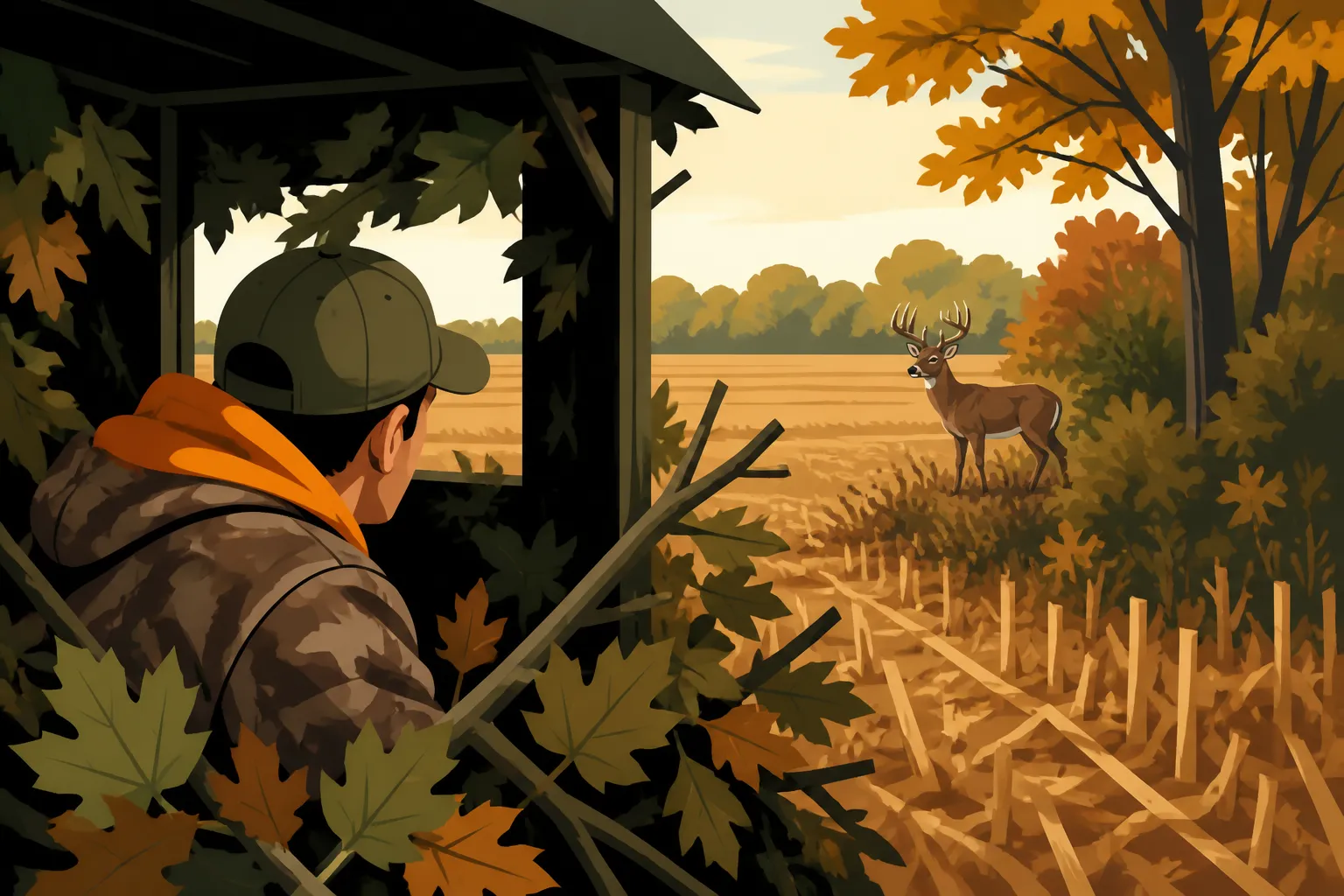
Brushing In a Blind on a Field Edge
There’s nothing quite as frustrating as spending hours setting up what you think is a perfect ground blind on a field edge, only to have a mature whitetail buck stop dead in his tracks, stare directly at your setup, and then melt back into the timber without ever offering a shot. This common scenario highlights a crucial truth: deer see things that look out of place. This guide will walk you through the essential techniques and considerations for effectively brushing in your ground blind on Indiana field edges, turning your "eyesore" into an invisible ambush point.
Why Blind Placement and Concealment Matters on Field Edges
Hunting the edges of agricultural fields or food plots in Indiana is a classic tactic for a reason. These areas are magnets for deer, especially during the colder months when natural browse dwindles, and throughout the rut as bucks cruise for does. However, this prime real estate comes with a significant challenge: concealment.
Understanding Deer Behavior Near Open Fields
Deer are incredibly observant animals, and they don't get big by being careless. When approaching an open field, whether it's a freshly cut cornfield in Newton County or a lush soybean plot in Rush County, deer often use a specific sequence of behaviors. First, they'll usually stage up in the cover of the timber, often scent-checking the wind to ensure the area is safe. They'll use their powerful noses to pick up any threats before stepping out.
Once they determine the air is clear, they'll often scan the field and its edges thoroughly with their eyes. Any unnatural shape, color, or shadow will immediately grab their attention. They've evolved to recognize patterns in their environment, and a blocky, dark ground blind is a pattern that screams "danger!" If you've ever seen a deer stand perfectly still for minutes, head up, ears swiveling, it's because something caught its eye. That something is often a poorly concealed blind. Understanding how deer approach these open areas is critical to successful Setting Up on a Northern Indiana Field Edge. They want security cover to feel safe, even when they're feeding in the open.
The Hunter's Visibility Problem
The problem for us hunters is that manufactured ground blinds, right out of the box, stick out like a sore thumb. They are usually uniformly colored, often dark green or brown, with sharp, angular lines that simply don't exist in nature. Imagine a big, square box sitting in front of a tree line – that's what a deer sees. This visibility issue is compounded by the fact that field edges often provide a clean backdrop, making any foreign object even more noticeable.
Furthermore, blinds cast shadows. A shadow that doesn't move with the natural sway of vegetation or that appears at an odd angle compared to the surrounding trees can instantly alert a deer. We also have to consider the movement inside the blind. Even the slightest shift, the raising of a window, or the glint of an optic can be picked up by a deer's keen eyesight, especially in the low light of dawn or dusk when they are most active near fields. This is why just deploying a blind isn't enough; true success comes from making it disappear, making it an integral part of the landscape so deer perceive no threat as they come in to feed in Late-Season Food Sources for Indiana Whitetails.
The Art of Blending In: Materials and Techniques for Brushing In
Brushing in a blind isn't just about throwing some branches on it. It's a strategic process that requires thoughtful planning and execution. The goal is to break up the blind's outline, soften its edges, and make it look like a natural part of the environment.
Sourcing Natural Materials and Legalities
The best materials for brushing in a blind are always those found naturally in the immediate area. This ensures the colors and textures blend seamlessly with the surroundings. Think about what's growing right where you want to set up your blind. Are there cedars, honeysuckle thickets, fallen hardwood limbs, or tall grasses? These are your camouflage tools.
For instance, if you're hunting a soybean field in southwestern Indiana, near Sugar Ridge Fish and Wildlife Area, look for leftover cornstalks if it's late season, or sumac and briars from the adjacent fencerows. If you're on the edge of a timber block next to a standing cornfield, cut some branches from nearby saplings or gather fallen limbs. Always be mindful of the rules, especially on public land. Most Indiana Fish and Wildlife Areas and State Forests have regulations regarding cutting vegetation. On private land, always get explicit permission from the landowner before cutting anything. It's a good practice to ask about this when you're Knocking on Doors in Indiana Farm Country to gain hunting access. GoHunt, a popular scouting app, can also help you identify habitat types and potential natural blind materials in your target area before you even set foot there, helping with your pre-hunt planning and ensuring you respect property boundaries and rules.
Step-by-Step Brushing In Process
Once you've chosen your spot and gathered your materials, it's time to get to work. Remember, the key is to eliminate the unnatural outline of the blind.
-
Placement First: Before any brushing, carefully consider your blind's placement. Is it against a dark background? Is it tucked into a natural depression or behind existing cover like a large tree or dense shrub? Sometimes, a slightly less "perfect" shot angle is worth it for superior concealment. When scouting, think about Reading Aerial Photos for Southern Indiana Deer to identify natural edges and cover.
-
Anchor the Base: Start by placing heavier, more substantial pieces of cover around the base of the blind. Think thick brush, logs, or large fallen branches. This helps to hide the bottom edges and integrate the blind into the ground itself, eliminating that "floating box" look. If you're utilizing a blind for Hunting the Indiana Youth Deer Weekend, making sure it's stable and well-hidden will increase the chances of success for younger hunters.
-
Break Up the Top and Sides: Now, focus on the vertical and horizontal lines of the blind. Attach smaller branches, tall grasses, or leafy limbs to the blind itself, or arrange them leaning against it. Many blinds have loops or straps specifically for this purpose. The goal is to create an irregular, textured surface that breaks up the flat planes. Don't be afraid to overdo it slightly; you can always trim back. For instance, if you're working on a blind for Hunting Northern Indiana Farmland Deer, you might use tall switchgrass or cornstalks.
-
Cover the Roof (If Exposed): If your blind is exposed from above, consider placing some lighter branches or leafy material on the roof. This helps to break up its profile against the skyline, especially if deer might be approaching from higher ground or if you're near a slight rise.
-
Create Shooting Lanes (and Maintain Concealment): While you need clear shooting lanes, don't sacrifice concealment. Instead of cutting wide-open gaps, create "tunnels" or "windows" of vision using your brushed-in material. Trim just enough to get a clean shot, but keep the surrounding material tight to the blind's windows. This maintains the illusion of dense cover. Remember that Grunt Calls in Mature Indiana Timber might bring deer closer, negating the need for wide-open lanes.
-
Use Natural Shadows: Position your blind to take advantage of natural shadows. If possible, set it up on the north side of a dense tree line so the sun is always behind it, helping to keep it in shadow throughout the day. This is a subtle but effective trick.
-
Step Back and Evaluate: Once you think you're done, step back about 30-50 yards and look at your blind from various angles – especially the directions deer are likely to approach. Does it blend in? Can you still see its hard lines? Repeat this process until you're satisfied. Consider using an app like GoHunt to mark your blind's location and approach routes, allowing you to review its visibility from different perspectives on your map before the season starts.
Advanced Tips and Seasonal Considerations for Blind Concealment
Brushing in a blind isn't a one-and-done deal. It requires ongoing attention and adaptation to the changing environment and hunting conditions.
Adapting to Seasonal Changes
Indiana's seasons bring dramatic changes to the landscape. What works for early September archery won't cut it for a late December muzzleloader hunt.
- Early Archery (September/October): During the lush green of early fall, use leafy branches, tall weeds, and green saplings. Focus on matching the vibrant colors and dense foliage. As you might be hunting When Indiana's Archery Season Opens, ensure your green camouflage is fresh and vibrant.
- Late Fall (November/Early December): As leaves change and fall, your blind needs to change too. Start incorporating more brown, red, and orange foliage. Use dried cornstalks if available, and focus on breaking up the silhouette against the now-skeletal trees. This is crucial for success during Hunting the Rut in Early November, when deer activity is high.
- Late Season (December/January): With winter setting in, most trees are bare, and snow might be on the ground. Use evergreens like cedar or pine branches if present, or focus on bare, dark branches and logs. If there's snow, a white sheet or spray paint can sometimes be used on the blind itself, then covered with sparse natural snow-covered branches. This adaptive approach is key for Hunting Deer After a January Cold Front.
Make it a point to check your blinds periodically. Strong winds, heavy rain, or even curious critters can dislodge your carefully placed brush. A quick refresh before each hunt, or at least once a month, will keep your blind optimally concealed.
Pre-Season Setup and Scent Control
The absolute best time to set up and brush in your blind is weeks, or even months, before opening day. This gives the local deer herd ample time to get used to its presence. What might initially appear as an "anomaly" will, over time, become just another part of their familiar landscape. Animals are creatures of habit, and they tend to accept things that don't move or change for extended periods.
When you do set up, always practice good scent control. Wear rubber boots and gloves while handling your blind and brushing materials. Avoid touching the blind directly with bare hands. Human scent lingers for a long time and can spook deer even if they don't visually detect your blind. Some hunters even spray down their blinds with scent eliminator or natural earth-scented sprays after setup. Think of it as part of your overall Scouting Indiana Public Land Before Season strategy. Getting your blind out early, brushed in, and left alone allows time for human scent to dissipate and for deer to habituate. You can use a mapping tool like GoHunt to pinpoint your precise blind location, track historical deer movement in the area, and plan your entry/exit routes to minimize scent disturbance.
Comparing Brushing Materials
Here’s a quick overview of common materials and their characteristics for blind concealment:
| Material Type | Best Use Case | Pros | Cons |
|---|---|---|---|
| Fallen Hardwood Limbs | Base concealment, breaking up hard lines | Durable, readily available, natural look, excellent for shadows | Can be heavy, may require trimming to size |
| Cut Green Saplings | Filling gaps, adding leafy texture (early season) | Great for early season color match, provides dense cover | Requires cutting (check regulations), leaves will brown/fall off |
| Tall Grasses/Weeds | Softening edges, blending into field backdrop | Lightweight, abundant, excellent for field edge transitions | Less durable, can flatten over time, needs frequent refreshing |
| Evergreen Boughs | Year-round concealment (if available) | Holds color well in winter, dense, good for breaking up outlines | Can be scarce in some areas, needles can be messy |
| Cornstalks/Crop Residue | Late season field edge blending | Perfect for agricultural fields, good texture and color | Only available after harvest, can be brittle |
| Artificial Blinds/Nets | Supplementing natural cover | Durable, reusable, easy to attach, consistent color | Can look unnatural if not blended well, adds weight/cost |
Ultimately, the best approach is a combination of these elements, tailored to your specific hunting spot. The more variety you incorporate, the more natural and indistinguishable your blind will become. A well-brushed blind will significantly increase your odds of success, allowing you to focus on the hunt rather than worrying if you've been spotted.
Disclaimer
Hunting is an inherently dangerous activity. Always prioritize safety, understand and follow all Indiana hunting regulations, and ensure you have the appropriate licenses and permits. Be aware of your surroundings, know your target and what's beyond it, and never hunt alone without informing someone of your whereabouts.