Breaking Up a Fall Turkey Flock
Hunting fall turkeys can feel like an impossible task. Those birds are constantly bunched up in big, wary flocks, making them nearly impossible to sneak up on, and their collective eyes and ears make traditional calling tactics a real challenge. But don't despair! This guide is going to walk you through the tried-and-true method of breaking up a fall turkey flock, explaining why this strategy is so effective and exactly how you can put it into practice across Indiana's diverse hunting landscapes to fill your tag.
Why Busting a Fall Turkey Flock Works
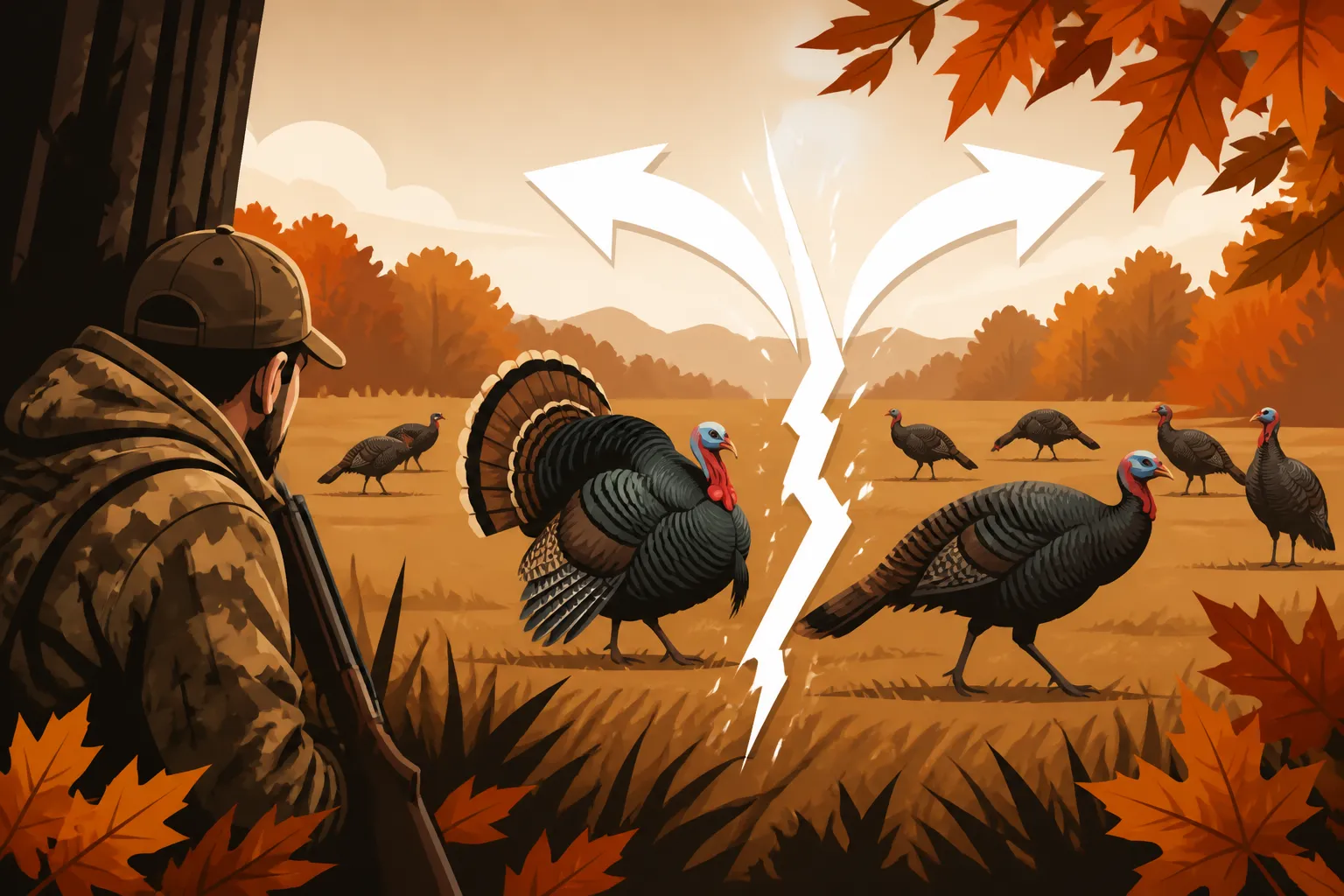
When you see a large flock of turkeys in the fall, your first instinct might be to try to sneak in or call them in as a group. But let's be realistic, those big fall flocks are incredibly hard to fool. They've got dozens of eyes and ears, and they stick together for safety and companionship. That's why the most effective tactic isn't to hunt the flock, but to destroy it.
The Strong Social Instinct
Turkeys, especially the hens and their poults, are incredibly social animals. They live and travel in these tight-knit family groups for protection, warmth, and finding food. When you suddenly scatter them, you're tapping into a deep-seated instinct to reunite. Imagine being a young turkey, suddenly separated from your mother and siblings in a chaotic explosion of sound and feathers. You'd be disoriented, a little scared, and desperately want to find your family. This distress is exactly what makes the "kee-kee run" call so potent after a break-up. It mimics the plaintive, lost call of a young turkey trying to locate its flock, and it's a sound that other scattered birds, especially the hens and jakes, simply can't ignore. They want to reassemble, and your calling offers them a way back to perceived safety and companionship.
This inherent need to regroup is your biggest ally. Unlike gobblers in the spring, which are driven by breeding instincts, fall turkeys are primarily motivated by social bonds and survival. When those bonds are violently broken, their priority shifts from feeding or traveling to finding their flock mates. This strong desire overrides some of their natural wariness, making them more susceptible to calling and approaching a perceived flock member. It’s not about enticing them with a seductive call, but rather preying on their vulnerability and social nature.
Timing Your Approach for Maximum Effect
The success of breaking up a flock hinges on timing and aggression. You can't tiptoe around and hope they scatter gently. You need to hit them hard and fast to ensure they fly and run in every direction, truly disorienting them. The best opportunities usually arise when turkeys are on the ground, either moving between roost and feeding areas or actively feeding in an open field or timber stand. Catching them as they drop from the roost in the early morning can be highly effective, as they’re still consolidating for the day. However, it can be tougher to predict their exact flight path from a high roost.
A more common scenario for many Indiana hunters is catching them mid-morning to early afternoon while they're feeding. This is often when flocks are spread out a bit more, scratching for acorns in a hardwood bottom or foraging along a field edge. When you spot them, the key is to close the distance quickly and quietly, then charge into the middle of the flock with as much noise and chaos as you can muster. Yell, clap your hands, run like a madman – whatever it takes to send them airborne and scattering in multiple directions. The goal is to completely separate every bird, ensuring none land together. If a few birds land just out of sight in a group, they’ll reassemble much faster and be far less responsive to your calls.
Executing the Break-Up on Indiana Ground
Indiana offers a fantastic variety of habitats, from the rolling hills and deep hollows of the Hoosier National Forest to the expansive farmlands of the north. This means you need to adapt your approach to breaking up a flock based on the specific terrain you're hunting.
Identifying Ideal Break-Up Locations
Knowing where turkeys like to hang out is half the battle. In the fall, they'll often be found in areas with reliable food sources like acorn flats, standing corn, soybean fields, or even clear-cuts that produce soft mast. Scouting these locations, even before the season, can give you a massive advantage. Apps like GoHunt can be invaluable here, allowing you to mark potential roosting areas, feeding zones, and travel corridors on aerial maps. For instance, in southern Indiana, turkeys will frequently roost along major ridge lines and then filter down into the hollows to feed on acorns. A good break-up location might be a wide, relatively open area within those hollows where you can sprint through the flock.
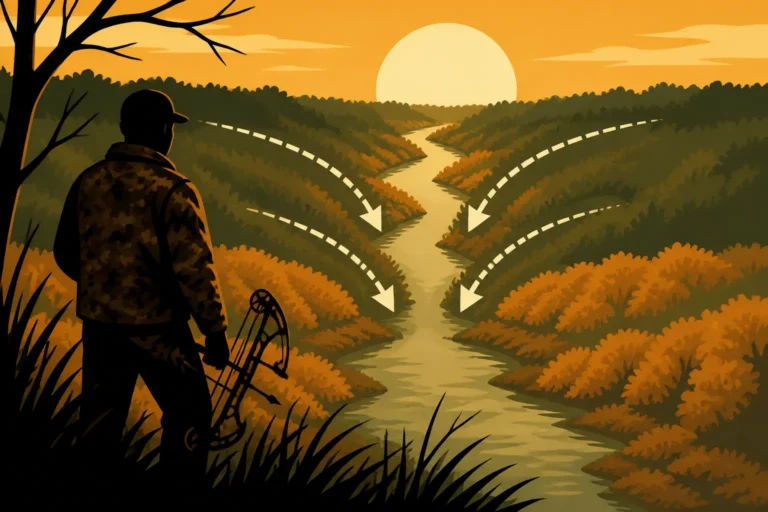
Conversely, if you're hunting in the northern Indiana farmland regions, flocks might be found along creek bottoms, drainage ditches, or small woodlots surrounded by crop fields. You might catch them feeding in cut cornfields or staging along a fencerow before heading into a timbered patch. The open nature of these areas can sometimes make the initial stalk difficult, but once you close the distance, the wide-open spaces allow for a truly effective scatter. Remember, the goal is to get them to fly in every direction, not just run into the nearest patch of cover. Check out guides like Scouting Indiana Public Land Before Season to get a leg up on finding these key spots.
Post-Scatter Setup: Finding Your Ambush
Once you've successfully busted a flock, the clock starts ticking, but don't rush! Your immediate next step is to find an ambush point. This needs to be a spot with good visibility in the direction you expect birds to return from, excellent concealment for yourself, and preferably a clear shooting lane. Think about the terrain – a knoll overlooking a hollow, a natural funnel where two pieces of cover meet, or the edge of a field. If you scattered them near their roost, they'll likely try to return to that general area. If you busted them in a feeding area, they'll want to gather back there or at a nearby rendezvous point.
Using a mapping app like GoHunt again can be super helpful. Mark the exact spot you scattered them, then quickly identify potential ambush points within a 50-100 yard radius. Get to your chosen spot, get comfortable, and get hidden. This usually means setting up against a wide tree trunk, in a thick cedar patch, or in a brushy fence line. Sometimes you might need to quickly construct a makeshift ground blind by pulling some dead branches around you. The key is to disappear into the landscape because those birds will return wary, even if they're lonely. A detailed look at Decoy Placement for Pressured Indiana Birds can offer some transferable insights on how turkeys react to perceived safety, even if you’re not using decoys immediately after a scatter.
Calling Turkeys Back After the Scatter
Once you’re set up, the real waiting game begins. Don't be tempted to start calling immediately. Give the birds some time to settle, get disoriented, and start feeling that strong urge to regroup.
The Art of the Kee-Kee Run and Other Calls
The "kee-kee run" is your bread and butter after a scatter. It's a series of three to five clear, high-pitched whistles followed by a short, soft yelp or two. It sounds like "kee-kee-kee-yelp-yelp." Practice it until it sounds natural. Young turkeys make this call when they're lost and trying to find their family. Once 15-30 minutes have passed after the scatter, start with a few soft kee-kees. Don't wail away; be subtle at first. If you don't hear a response after 5-10 minutes, try again, perhaps a little louder, and wait.
As you get responses, you can mix in some soft clucks and purrs. These are reassuring sounds that mimic a contented turkey. If you hear a distant yelp, respond with a kee-kee run, letting that lost bird know you're there. Sometimes, an adult hen yelp can also be effective, especially if you believe there are dominant hens trying to gather their poults. For archers particularly, mastering subtle calling for close encounters is critical, as detailed in Fall Turkey Tactics With Archery Gear. Remember that during Hunting the Indiana Rut in Early November for deer, patience is paramount, and the same applies to calling in scattered turkeys.
Patience and Observation are Key
This is where many hunters make mistakes. Impatience can quickly ruin a perfectly executed break-up. You need to be prepared to sit for a long time, sometimes an hour or more, especially if the weather is calm and the birds aren't feeling an immediate rush to regroup. Listen intently. Turkeys will often give soft clucks or purrs as they start to move back towards the scatter point. They might even sneak in silently, so constant vigilance is crucial.
Avoid overcalling. A few well-timed kee-kee runs or soft yelps are far more effective than a constant barrage of noise. If a bird responds, let it work its way towards you. Often, the best strategy is to call sparingly and let their natural social drive pull them in. If they get close and hang up, a few soft clucks or purrs might be all it takes to seal the deal. Remember that understanding Roost Hunting Indiana Gobblers involves similar principles of patience and observing their natural patterns.
| Call Type | Purpose | When to Use |
|---|---|---|
| Kee-Kee Run | Mimics lost poult, signals "I'm here!" | 15-30 min after scatter, in response to yelps |
| Soft Clucks | Reassuring, "All clear, come here" | Close-in birds, to seal the deal |
| Purrs | Contentment, "Everything's fine" | Very close birds, to ease nervousness |
| Yelp (Hen) | Adult hen trying to regroup flock | To draw in lost jakes/poults, or if you hear an adult yelp |
| Assembly Yelp | Dominant hen gathering scattered flock | When you hear multiple birds calling distantly |
Gear and Tactics for Fall Success
Having the right gear and adapting your tactics to Indiana’s unique habitats will significantly increase your odds of success. Fall hunting isn't just about the break-up; it's about being prepared for what comes next.
Essential Gear for Fall Flock Hunting
First and foremost, full camouflage is absolutely critical. Turkeys have incredible eyesight, and a slight glint or unnatural outline can send them packing. A quality face mask, gloves, and full-pattern camo, including a hat, are non-negotiable. For firearms hunters, a shotgun patterned tightly for turkey loads is ideal. If you're pursuing Hunting Indiana's Fall Turkey Windows with archery gear, ensure your bow is tuned, and your broadheads are sharp. Many archers prefer a more mobile setup, perhaps a saddle or a lightweight portable treestand, allowing quick adjustments after a scatter, though ground setups are more common after a break-up.
Beyond your weapon, a good set of calls is a must. A mouth call for hands-free kee-kee runs is invaluable, but a slate or box call can offer a different tone and louder projection if needed. Don't forget your mapping app, like GoHunt, to quickly mark your scatter point and potential setup locations. Some hunters use a single hen or jake decoy to give a visual focal point, especially if they are sitting in a more open area, but it's not always necessary and can sometimes be a hindrance if not placed carefully, as detailed in Decoy Placement for Pressured Indiana Birds.
Adapting to Indiana's Diverse Landscapes
Indiana's landscape varies dramatically, and so should your tactics. In the dense, hilly terrain of southern Indiana, like parts of the Hoosier National Forest, turkeys will use the topography to their advantage. After a scatter, they might fly across a hollow or up a steep ridge. Knowing how to read those ridges and identify saddles or benches where they might regroup is vital. You'll need to be physically fit and ready to move quickly to your ambush point after the break-up.
Up north, in the vast expanses of farmland dotted with smaller woodlots, the challenges are different. Turkeys here might fly into standing corn or across open fields. Your ambush points might be the edges of those fields, creek bottoms, or a brushy fencerow. Visibility can be higher, making concealment even more critical. You might need to cover more ground, and scouting for suitable cover and travel lanes is paramount. For those focusing on Turkey Tactics for Farmland Field Edges, understanding how birds use these linear features after being scattered will be key. Remember, Indiana Fall Turkey Season Structure allows for various methods, so choose what best suits the terrain and your hunting style. Whether you're hunting during the Indiana Fall Turkey Archery Dates or looking at specific Why Fall Firearms Turkey Is County-Restricted counties, adapting your setup is crucial.
Disclaimer
Hunting is an activity with inherent risks. Always prioritize safety, understand and adhere to all Indiana hunting regulations, and be aware of your surroundings and local conditions. This guide provides general information and should not replace official DNR resources or professional instruction. Respect private property and always secure permission before hunting.