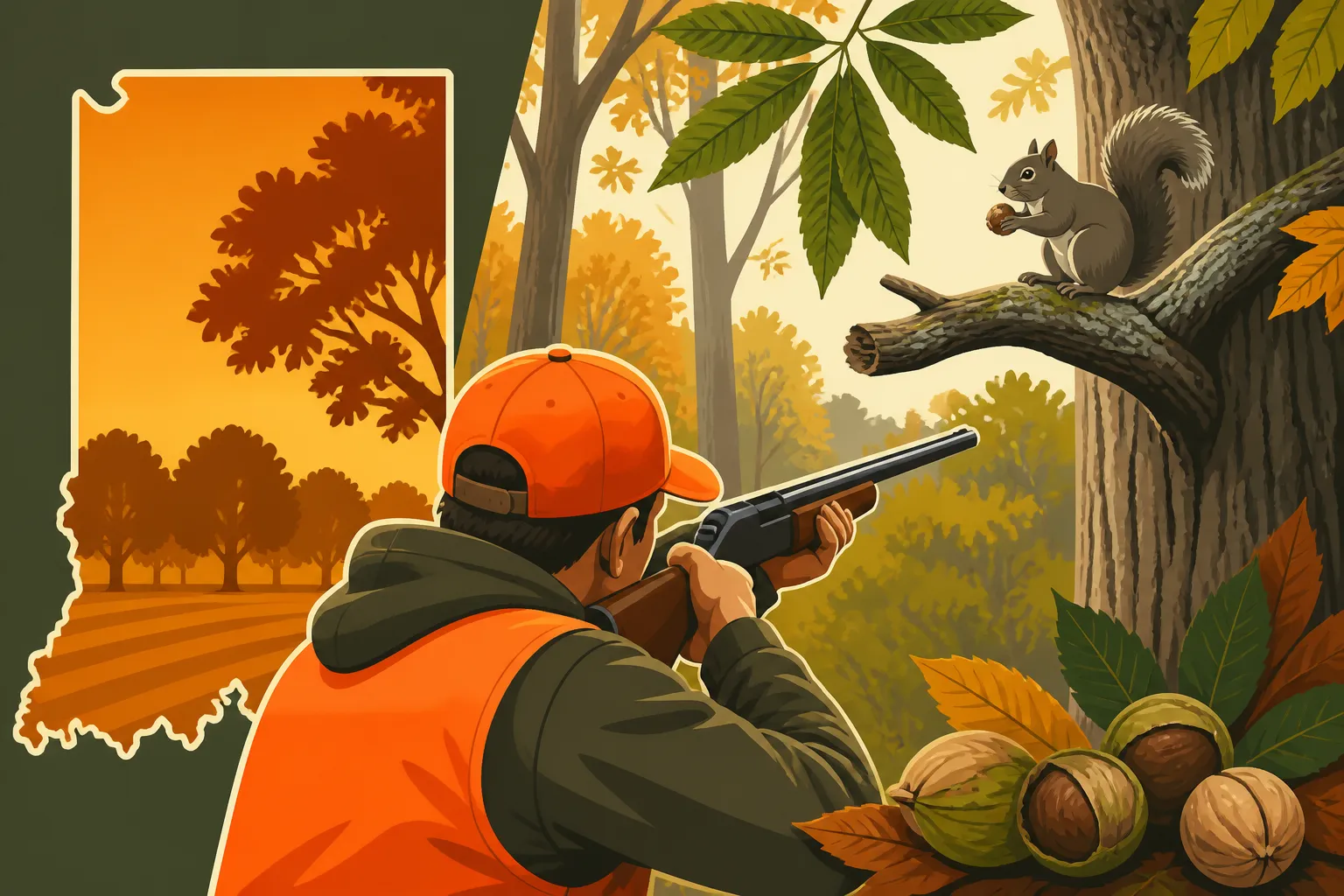
Squirrel Hunting Indiana Hickory Groves
Many Hoosier hunters, myself included, often get so caught up in the pursuit of whitetails and turkeys that we sometimes overlook a truly rewarding and accessible game animal: the squirrel. But if you’ve ever found yourself frustrated by crowded deer woods or waiting for the big game seasons to open, you're missing out on some incredible action and fantastic table fare, especially when targeting those bushy-tailed acrobats in Indiana's rich hickory groves. This comprehensive guide is here to walk you through everything you need to know to successfully hunt squirrels in these productive and often overlooked natural larders, turning your attention to a hunt that offers skill, challenge, and a full freezer.
Understanding Indiana's Hickory Groves and Squirrel Behavior
To truly succeed at squirrel hunting, you first need to become a student of their habitat and habits. In Indiana, few habitats are as important to squirrels as hickory groves. These areas are not just patches of trees; they are vibrant, dynamic ecosystems that dictate squirrel movements, feeding patterns, and survival strategies throughout the year.
The Lifeblood of the Hickory: Why Hickories are King for Squirrels
When we talk about hickory groves in Indiana, we're typically looking at a few key species that are absolute magnets for squirrels. You’ve got your shagbark hickory ( Carya ovata ) with its distinctive peeling bark and incredibly sweet nuts. Then there's the pignut hickory ( Carya glabra ), a bit less preferred by humans due to its bitter nut, but still a vital food source for wildlife. And let's not forget the shellbark hickory ( Carya laciniosa ), producing some of the largest, sweetest nuts – a true squirrel jackpot.
These trees are paramount because their nuts are incredibly high in fat and protein, essentially nature's superfood for squirrels. As fall approaches and the nuts mature, squirrels go into overdrive, cutting nuts from the branches, carrying them off, and burying them for the leaner months ahead. This frantic activity is a direct result of their instinct to survive the winter, making these groves buzzing hubs of energy and movement. Without a reliable hickory mast crop, squirrel populations can suffer, and their patterns of movement change drastically, often leading them to seek out other food sources or even migrate to new areas.
The presence and abundance of hickory nuts directly influence the health and density of squirrel populations. A good mast year means more squirrels survive, reproduce, and grow, leading to better hunting opportunities down the line. Conversely, a poor mast year can make hunting much tougher, as squirrels become more dispersed and cautious, constantly searching for dwindling food. Understanding this cycle is your first step to becoming a more effective squirrel hunter.
Seasonal Shifts in Squirrel Activity Around Hickories
Squirrel hunting isn't a static endeavor; it changes with the seasons, and so does squirrel behavior around hickory groves. Your tactics need to adapt accordingly.
In the early season, typically late summer through early fall, when Indiana's archery season opens, you'll find squirrels in their most active and visible phase. The hickory nuts are maturing, and squirrels are in a frenzy of activity, "cutting" nuts from the branches. You’ll hear the distinct tink-tink-tink of falling husks and nuts, and see them scampering up and down trunks, leaping through branches. This is a fantastic time for still-hunting or finding a strategic ambush point. The foliage is still thick, providing excellent cover for you to move quietly, but also making spotting difficult. Pay close attention to the sound of falling nut pieces – it’s a dead giveaway.
As mid-season progresses into late fall and early winter, once the majority of nuts have fallen, squirrel activity shifts. They’re less focused on cutting and more on burying and accessing their cached food. You'll still find them in hickory groves, but they might be more concentrated around den trees or areas where they've buried their stash. Their movements become a bit more predictable, often traveling along established routes between dens and feeding spots. The leaves are typically off the trees by this point, which makes spotting easier but also means less cover for you. This is when patience and observation really pay off.
Finally, in the late season (deep winter), squirrels are less visible, especially during severe cold snaps. They spend more time denning, conserving energy. Their activity will often be tied to brief periods of warmer weather or sunshine, prompting them to emerge to access cached food. Hunting during this time might mean targeting den trees directly or observing sunny sides of trees where squirrels might emerge to warm up. They're still in those hickory groves, but you'll have to work harder and be more patient to find them. This late period can also be productive after a fresh snowfall, as tracks can reveal exactly where they are moving.
Identifying Key Hickory Hotspots
Finding the squirrels in a hickory grove isn't always as simple as just walking into any patch of trees. You need to identify the key hotspots within those groves, the places where squirrels are most actively feeding, traveling, and denning.
Start by scouting, even before the season. Look for physical evidence. Cut nuts are the most obvious sign: small pieces of nut husks, often piled up at the base of a favorite feeding log or stump. The fresher the cuts, the more recent the activity. Also, look for chewed bark, especially on younger hickory trees, which squirrels sometimes gnaw on for moisture or minerals. Leaf nests, those bulky, spherical masses of leaves high in the canopy, indicate active squirrel residences, though they’ll also use den trees with natural cavities. A good pair of binoculars, like the ones you might use for deer, can be invaluable for spotting these signs from a distance, or checking out tree cavities.
When using mapping tools like those offered by GoHunt, don't just look for green patches. Zoom in and identify distinct stands of hardwood timber, often indicated by subtle color differences or forest type overlays. Cross-reference these with known public hunting lands in Indiana or your private permission areas. Remember that squirrels need water, too. A hickory grove situated near a creek bottom or a small pond will often hold more game than one on a dry ridge top. Pay attention to how the land lays; draws and saddles can act as natural funnels that squirrels use to travel between feeding and bedding areas. Spending time observing before you hunt can dramatically increase your success rate.
Effective Strategies for Hunting Hickory Groves
Once you understand the habitat and the squirrels' habits, it's time to put that knowledge into action. There are several proven strategies for hunting squirrels in Indiana's hickory groves, each with its own advantages depending on the time of year, terrain, and your personal hunting style.
Still-Hunting and Stalking Tactics
Still-hunting is perhaps the most rewarding and challenging method for squirrels in hickory groves. It demands stealth, patience, and keen observation. The basic idea is simple: move slowly, take a few steps, then stop and scan, listening intently. Think of yourself as a predator, flowing through the woods, barely disturbing the environment. This isn't a deer drive; it's a silent ballet.
When still-hunting, always use the available cover to your advantage. Duck behind large trees, move slowly over crunchy leaves, and try to use the terrain to mask your approach. Pay meticulous attention to silence – every snapped twig can broadcast your presence. A good tip is to take one or two steps, then pause for several minutes, scanning the trees both high and low, and listening for the telltale sounds of a squirrel cutting nuts or chattering. Often, when you stop, a squirrel that had frozen will resume its activity, giving itself away. This "stop-and-go" rhythm is crucial.
Reading squirrel movement is also key. Are they running along a specific limb? Are they always descending a certain side of a tree? Understanding their routes can help you anticipate where they'll be next. Always try to hunt into the wind, or at least with a crosswind, to minimize scent detection. The sun can also play a role; if you're hunting into the rising or setting sun, your outline will be harder to discern. Consider checking out tips on how early season squirrels give themselves away, as many of those early season behaviors are amplified in prime hickory areas.
Ambush Hunting from a Stationary Position
Sometimes, the most effective strategy isn't to move at all, but to become part of the landscape and let the squirrels come to you. Ambush hunting, or sitting, can be incredibly productive, especially during periods of high squirrel activity like the early morning or late afternoon feeding windows.
The key to successful ambush hunting is finding the right spot. Look for a location within a dense hickory grove that offers good visibility of multiple nut-producing trees. A fallen log, a comfortable stump, or even a small, portable stool can be your "stand." The goal is to be comfortable enough to sit motionless for extended periods, but also have shooting lanes to several active trees. Face away from direct sunlight if possible, and ensure your background breaks up your outline.
Patience is your best friend here. Set up before first light or in the mid-afternoon, giving the woods time to settle down around you. Squirrels, especially after a brief period of quiet, will often become very active. Watch for the subtle flick of a tail, the rustle of leaves, or the sound of nut pieces hitting the ground. Often, if you sit long enough, a squirrel will pop out from behind a tree you thought was empty. This method is particularly effective if you've scouted a particular hickory grove and know where the heavy feeding is taking place, perhaps using information from your Scouting Indiana Public Land Before Season trips.
Leveraging Calls and Decoys
While not as common as with turkeys or predators, squirrel calls can absolutely enhance your hunting success in hickory groves. They are primarily used as locator calls or to stimulate activity.
A barking call is your most versatile tool. Squirrels bark when they’re agitated, defending territory, or alerting others to perceived threats. Mimicking this can often provoke a response from a nearby squirrel, revealing its position. If you hear a squirrel barking, a well-placed series of barks on your call can make it bark back, pinpointing its location. They can also be used to "wake up" a quiet woods, making squirrels curious enough to show themselves.
Chatter calls, which mimic the excited chattering of squirrels, can also be effective. These are best used when squirrels are already somewhat active, as they can sometimes draw in curious individuals or make nearby squirrels move more freely. However, be mindful not to over-call, as too much noise can also make them cautious.
While less frequently used, squirrel decoys do exist. They are typically static models of squirrels that can be placed on a tree limb or at the base of a trunk. Their effectiveness is limited, but in areas with particularly dense squirrel populations or during certain times of year when squirrels are more territorial, they can sometimes draw a squirrel closer for a shot. However, for most hunters, the real value in decoys is minimal compared to good calling and observation skills. The best times to use calls are often on calm days when sounds travel well, and squirrels are more likely to respond to auditory cues.
Gear and Equipment for Hickory Grove Squirrels
Having the right gear for squirrel hunting in Indiana's hickory groves can make a significant difference, not just in your success rate but also in your overall comfort and enjoyment of the hunt. It’s not about having the most expensive stuff, but the right stuff for the job.
Firearms and Ammunition Choices
When it comes to taking down squirrels, precision and minimizing meat damage are often key. This leads to a few popular and highly effective firearm choices.
The .22 rimfire rifle is, without a doubt, the classic squirrel hunting tool. Its advantages are numerous: excellent accuracy at typical squirrel hunting ranges (25-75 yards), very low recoil, minimal report (less likely to scare off other squirrels), and incredibly affordable ammunition. With a good scope, a .22 allows for precise headshots, ensuring quick, humane kills and leaving the maximum amount of meat intact. Brands like Ruger 10/22 or Savage Mark II are popular choices, but any accurate .22 will do. When selecting ammunition, try a few different brands of standard velocity .22 LR to see which one performs best in your rifle.
Shotguns, especially smaller gauges like a .410 or 20 gauge, also have their place. They are particularly effective when squirrels are moving fast through thick canopy or when you're jump-shooting them on the ground. A shotgun provides a wider pattern, increasing your chances of a hit. Use small shot sizes, like #6 or #7.5, which are adequate for squirrels without being overkill. While shotguns might damage more meat than a well-placed .22 bullet, they offer a forgiving pattern that can be crucial in challenging situations. For those who also Hunt Indiana's Fall Turkey Windows or pheasant, a 20 gauge can be a versatile choice.
For those seeking the utmost stealth and a unique challenge, air rifles are gaining popularity. Modern PCP (pre-charged pneumatic) air rifles can deliver incredible accuracy and knockdown power on squirrels, often with less noise than a .22 rimfire. They are excellent for close-range shots in dense woods where disturbing the area as little as possible is a priority. Calibers like .22 or .25 are common for hunting small game with air rifles. Regardless of your choice, remember that shot placement is paramount – aim for the head or vitals for the quickest, most ethical harvest.
Optics and Scouting Tools
Good vision is critical for spotting squirrels, which are master hiders, especially when frozen against a tree trunk.
A quality pair of binoculars, preferably 8x or 10x magnification with 32mm or 42mm objective lenses, will dramatically increase your ability to locate squirrels. They help you pick apart dense foliage, identify the subtle flick of a tail, or confirm whether that lump on a branch is a squirrel or just a knot. When still-hunting or sitting, regularly scan the trees with your binoculars, paying close attention to any irregularities. Don't just scan the obvious trunks; look high in the canopy, along horizontal limbs, and even at the base of trees.
In today's hunting world, mapping apps are indispensable. Services like GoHunt or OnX Hunt allow you to pinpoint hickory groves, identify property lines (crucial for hunting private or public land in Indiana), and mark potential hotspots or den trees you've scouted. You can use these apps to plan your entry and exit routes, avoid walking into known high-pressure areas, and even mark where you harvested an animal. While trail cameras are less common for squirrel hunting, they can be useful during scouting season to confirm general squirrel activity in a particular grove, especially if you're trying to gauge mast crop usage before the season opens.
Clothing and Accessories
Comfort and stealth are the watchwords for squirrel hunting attire.
Layered, quiet clothing is essential. Think wool, fleece, or soft-shell synthetics that don't make a lot of noise when you move or brush against branches. Camouflage patterns are helpful for breaking up your outline, but more important is the quietness of the fabric. Layers allow you to adapt to changing Indiana weather, from cool mornings to warmer midday temperatures, and then back to chilly evenings. Consider a good base layer, a warm mid-layer, and a quiet outer shell, especially if you'll be out for hours.
Your boots should be comfortable, provide good ankle support, and be quiet. You'll be doing a lot of walking, stopping, and starting, so good traction is important, especially on slippery leaves or uneven terrain. Rubber boots can be excellent for scent control if you're sensitive to that, but leather or synthetic hiking boots are generally fine.
Finally, don't forget the small but important accessories. A small game vest or game bag is crucial for carrying your harvested squirrels comfortably and keeping them cool. A sharp field dressing knife is always useful, not just for squirrels but for any unexpected needs. Carry water, a compass or GPS (even with phone apps, a backup is smart, especially in deeper woods), and maybe a small snack. For those longer treks into the woods, consider a day pack. The right gear will ensure you're focused on the hunt, not on discomfort.
Field Dressing, Cooking, and Conservation
Bringing a squirrel home from the woods is only half the adventure. Knowing how to quickly and cleanly field dress your game, prepare it for the table, and understand your role in conservation completes the ethical hunting cycle.
Quick and Clean Field Dressing
Once you’ve harvested a squirrel, quick and clean field dressing is important for meat quality. While squirrels are small, neglecting this step can lead to tougher, less flavorful meat. The good news is, they are relatively easy to process.
There are several techniques for skinning squirrels quickly in the field, but one common and efficient method is the "tail-pull" or "foot-stomp" technique. Make a cut across the squirrel's back, just behind the front legs. Then, grasp the fur on both sides of the cut, one hand pulling up towards the head and the other towards the tail, peeling the skin off like a banana. Alternatively, after making the cut, you can step on the tail (or secure it to a sturdy branch) and pull the body upwards, the skin often comes right off. This can be a bit messy but is incredibly fast.
After skinning, you’ll want to eviscerate the squirrel. Make a shallow cut from the breastbone to the pelvis, being careful not to puncture the intestines. Remove all organs. If you're planning to process the squirrel within an hour or two of the harvest, you might even skip the gutting in the field, as the small body mass cools quickly, but for warmer days, or longer hikes back to the truck, it’s always best to gut them out to prevent spoilage. Always ensure you cool the meat down as quickly as possible, especially during Indiana's early archery season when temperatures can still be quite warm. Check out tips on Field Dressing Knives Worth Carrying for a good blade selection.
Delicious Ways to Prepare Your Harvest
Squirrel meat is lean, flavorful, and incredibly versatile in the kitchen. Don't let anyone tell you it's not delicious; it's a true delicacy when prepared correctly.
For classic comfort food, nothing beats fried squirrel. After soaking the pieces in buttermilk overnight (this helps tenderize and remove any gamey flavor, though good quality squirrel rarely needs it), dredge them in seasoned flour and pan-fry until golden brown and crispy. Serve with mashed potatoes and gravy for a meal that would make any Hoosier proud.
If you have older, tougher squirrels, or just prefer a hearty meal, squirrel stew is an excellent option. Slow cooking breaks down the connective tissues, making the meat incredibly tender. Brown the squirrel pieces first, then simmer them for hours with vegetables like potatoes, carrots, onions, and celery, along with your favorite broth and seasonings. Another fantastic slow-cook method is squirrel gravy. Once the meat is tender, pull it off the bone and incorporate it into a rich, savory gravy to serve over biscuits or rice.
Many hunters swear by marinating squirrel meat for several hours or overnight before cooking. Simple marinades with vinegar, lemon juice, or even plain old Italian dressing can add moisture and flavor. Experiment with different spices and cooking methods – grilling, baking, or even braising – to find your favorite. Squirrel truly is some of the Best-Eating Game in Indiana.
Conservation and Ethical Hunting Practices
As hunters, we are the first line of conservationists. Understanding and adhering to regulations, as well as practicing ethical hunting, ensures healthy wildlife populations for future generations.
Always be aware of Indiana's bag limits and season dates for squirrels. These regulations are set by the Indiana DNR based on population assessments to ensure sustainable harvests. While squirrel populations are generally robust, respecting these limits is crucial. You can find detailed information on Indiana Squirrel Season Dates through the Indiana DNR website or their "Go Outdoors Indiana" app.
Beyond regulations, ethical hunting means making clean, humane kills, and retrieving every animal you shoot. It also involves respecting private land boundaries and always obtaining permission before hunting private property. On public lands, be mindful of other users and leave no trace – pack out everything you pack in, including spent casings. Understanding your impact and acting responsibly helps maintain a positive image for hunting and ensures continued access to hunting grounds. Data on Indiana Squirrel Harvest Numbers helps the DNR monitor populations and make informed management decisions, highlighting the importance of every hunter’s role in contributing to that data through ethical hunting and reporting.
Disclaimer
Always consult the official Indiana Department of Natural Resources (DNR) regulations before heading afield, as rules and seasons can change. This guide is for informational purposes only and does not constitute legal advice or a substitute for current hunting regulations.