Calling Crows Over a Winter Feed Site
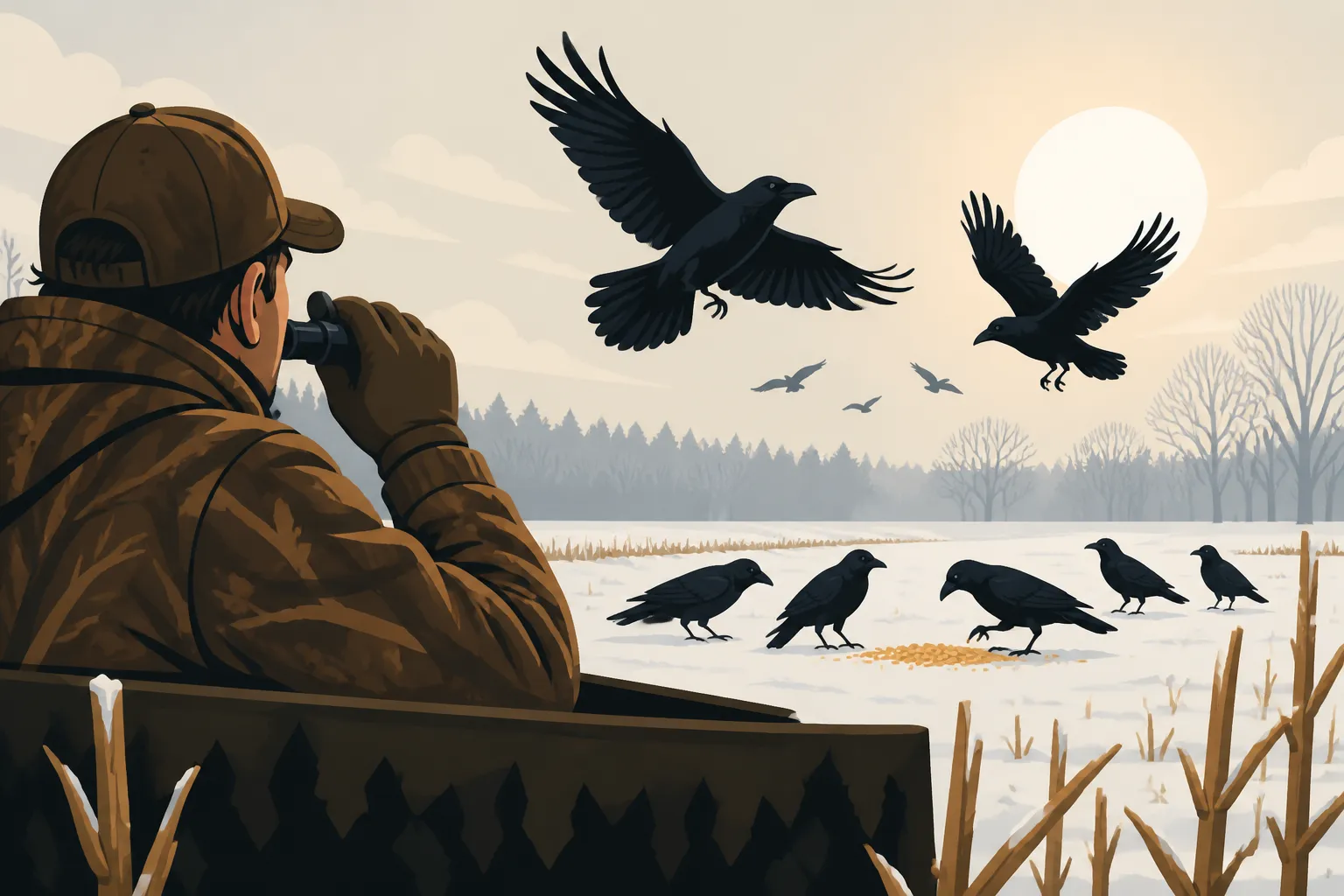
The quiet chill of winter in Indiana might make you think the hunting season is winding down, but for those who know, it's actually prime time for some exhilarating action: crow hunting. After the hustle and bustle of deer season, the idea of getting back out into the crisp air and engaging with one of nature's most intelligent, and often frustrating, birds can be incredibly appealing. But let's be real, simply showing up and cawing isn't going to cut it, especially when you're trying to lure them into a specific winter feed site. This guide is all about giving you the proven strategies and realistic expectations needed to turn those quiet winter fields into a symphony of calls and, hopefully, success.
Understanding Winter Crow Behavior in Indiana
Crows are incredibly intelligent creatures, and their behavior shifts significantly with the seasons. In winter, they tend to congregate in much larger numbers, often forming massive roosts at night before dispersing during the day to find food. This change in behavior is what makes winter an excellent time for hunting them, but it also presents unique challenges.
Why Winter is Prime Time for Crow Hunting
The cold months consolidate crow activity. Gone are the days of small family groups scattered across vast woodlands. Instead, you'll find them concentrating in larger flocks, driven by the need for consistent food sources and collective safety. This means if you can locate their preferred feeding grounds, you're often looking at a target-rich environment. Less leaf cover on trees also makes spotting incoming birds easier, and their flight patterns more predictable against the stark winter sky. It's a fantastic way to extend your hunting season and stay sharp.
Typical Winter Feed Sites for Crows
During winter, crows are constantly on the lookout for reliable, calorie-rich food. They aren't picky, which is both a blessing and a curse for hunters. You'll often find them working over fields where corn has been harvested, gleaning any leftover kernels. Livestock operations, especially those with cattle or hogs, are huge attractors, as crows will scavenge spilled feed or even afterbirth. Landfills are veritable buffets, though often not huntable areas. Even something as simple as roadkill can bring them in. The key is to identify these high-value food sources. Think about a recently harvested cornfield near a woodlot, or a cattle pasture on the edge of a timber block – these are prime locations in Indiana where crows will spend their daylight hours. To really narrow down these spots, consider scouting ahead of time, much like you would for other game. If you're looking for more general information on how to find good crow hunting spots, check out our guide on Crow Hunting Seasons and Tactics in Indiana.
Crow Intelligence and Wariness
This is where crow hunting really earns its stripes. Crows aren't dumb birds. They have an incredible memory, can recognize individual human faces, and quickly learn to associate vehicles or specific sounds with danger. They post sentinels, often high in a tree or on a power line, whose job it is to spot potential threats and alert the flock. Trying to sneak up on a feeding flock without proper concealment is often a fool's errand. They'll spot you from a mile away and be gone before you even shoulder your gun. This inherent wariness is why effective calling and decoy strategies are absolutely paramount. You're not just hunting a bird; you're trying to outsmart a highly organized, highly intelligent group that has evolved to survive by being constantly vigilant. This is a far cry from the run-and-gun approach some might take for other game, like when considering Run-and-Gun Turkey Tactics on Public Land.
Essential Gear for Winter Crow Calling
Just like any other hunting pursuit, having the right gear can make all the difference, especially when you're trying to fool a flock of wary crows in cold weather. It's not just about the calls; it's about blending in and being prepared for the conditions.
Calling Devices for Maximum Impact
When it comes to calls, you have a few options, each with its own advantages. Hand calls are classic and allow for a lot of nuance. A good distress call, mimicking a crow in trouble, can be incredibly effective at drawing in curious birds looking to mob a predator or come to a flock mate's aid. Assembly calls, which sound like a large group of crows gathering, can convince distant birds that a party is happening. The key is variety and realism.
Electronic callers are a game-changer for many, as they can produce a wide range of realistic crow vocalizations at high volume. From distress calls to fighting crows, baby crow cries, and even hawk or owl sounds (to mimic a predator attracting crows), an e-caller can paint a vivid auditory picture. Just be sure to check local regulations regarding the use of electronic callers for crows, as rules can vary. When choosing an e-caller, look for one with clear sound quality and a remote control for easy operation from your blind. Brands like Foxpro and Primos make excellent electronic calls that often come pre-loaded with a variety of crow sounds. For general calling principles, you might find some crossover knowledge by looking into Coyote Calling in Indiana Farm Country.
Decoy Strategies: Luring Them Close
Decoys are absolutely critical for crow hunting, especially over a feed site. Without a visual stimulant, even the best calling might only bring them to a certain distance before their natural wariness kicks in.
Here's how to think about decoys:
- Predator Decoys: An owl or a hawk decoy can be incredibly effective. Crows have an instinct to mob predators, and seeing one in their feeding area, especially combined with distress calls, can really get them riled up and draw them in close. Place these slightly elevated, as if observing the feed site.
- Crow Decoys: These are essential to create the illusion of a safe feeding area. Use a mix of full-bodied plastic decoys and lightweight silhouette decoys. Place some on the ground, as if feeding, and others in nearby trees or on fences, acting as sentinels. A few decoys that mimic a crow with its wings spread, as if it's just landed or is about to take off, add realism.
- Dead Crow Decoys: Believe it or not, a few actual dead crows (if you've harvested some previously) or realistic imitations can be a powerful draw. Crows are drawn to areas where other crows have fallen, often out of curiosity or alarm, which can bring them into range.
- Placement: Your decoys should be set up within your effective shooting range, typically 20-35 yards. Create a "landing zone" in the middle of your spread, which is where you expect the crows to try and land or circle. For more advanced scouting and planning, utilizing mapping apps like those from GoHunt can help you visualize terrain and plan decoy spreads in relation to potential feed sites.
| Call Type | Primary Use | Effective Range | Notes |
|---|---|---|---|
| Distress Call | Mimics injured crow, attracts curious/aggressive | Up to 400 yards | Often used to initiate calling sequence, high urgency |
| Assembly Call | Gathers distant crows, signals "all clear" | Up to 800 yards | Used to draw in large flocks, lower urgency |
| Fight Call | Crows fighting, draws in mobbing crows | Up to 300 yards | Aggressive, good for getting reluctant birds to commit |
| Owl/Hawk Alarm | Mimics predator, draws mobbing crows | Up to 200 yards | Used with predator decoys, creates strong visual/auditory |
| Young Crow Call | Young crows calling for food, can attract adults | Up to 150 yards | Useful when targeting family groups, less common in winter |
Concealment: The Unsung Hero
Crows have incredible eyesight. If they see you, even a hint of movement, the game is over. That's why concealment is paramount.
- Ground Blinds: A pop-up ground blind is often the easiest and most effective way to hide. Ensure it's brushed in well with natural vegetation to break up its outline. Position it in a strategic location that offers a good view of your decoy spread and covers your approach. You can learn more about effective blind usage in our article on Using a Ground Blind on Indiana Public Land.
- Natural Cover: If you don't have a blind, utilize thick hedgerows, fence lines with heavy brush, or dense evergreens. The key is to be completely obscured from every angle a crow might approach from. Don't underestimate how high crows fly or how wide their field of vision is.
- Camouflage: Head-to-toe camouflage, including a face mask and gloves, is non-negotiable. Break up your human silhouette as much as possible. Movement is your biggest enemy, so get comfortable and stay still. Also, remember to dress in layers for the cold Indiana winter. You'll want to be warm and dry for long sits, and picking the right gear, like Insulated Boots for All-Day Sits, can make a huge difference. Don't forget a comfortable pack to carry all your gear, especially if you're hiking into a remote feed site; our guide on Packs for a Day on Public Land might offer some useful insights.
Mastering the Art of the Call Over a Feed Site
Calling crows isn't just about making noise; it's about mimicking their language and understanding their responses. Over a winter feed site, your calling strategy needs to be precise to overcome their inherent wariness.
Reading the Situation and Choosing the Right Call
This is where experience really pays off. When you first approach a potential feed site and set up, you might start with softer, inquisitive assembly calls to see if you can get a distant response. If you hear a caw back, you know they're in the area and somewhat receptive.
Once you have birds in sight, or if you know they're actively feeding nearby, switch to more aggressive or distressed calls. A series of urgent "caw-caw-caw" calls, perhaps with a raspy edge, can simulate a crow that's found something exciting, or is in trouble. If you’ve placed an owl decoy, a frantic series of distress calls can make them think a flock mate is under attack, triggering their mobbing instinct. The goal is to make the scene irresistible or alarming enough that they can't help but investigate. Don't just blast calls; listen to the crows' responses and adjust your calling to match their mood and intensity.
Call Sequences and Cadence
Crows are masters of communication, and their calls aren't random. A consistent, well-timed sequence can be far more effective than sporadic, loud blasts.
- Start Soft, Escalate Slowly: Don't blast a loud distress call right off the bat, especially if crows are distant. Start with a few medium-volume assembly calls, almost inviting them. If you get a response, slowly increase the urgency and volume.
- Distress Sequence: If using distress calls, mimic a crow struggling. A common sequence might be 3-5 sharp, urgent caws, a pause, then another 2-3, perhaps followed by a shriek or gurgle. Vary the pitch and intensity. Think about a crow that's caught by an owl or has found a sudden food source.
- Mimic Flock Dynamics: Crows often caw back and forth. If you're using hand calls, you can mimic this by varying your calls, as if several crows are talking. With an e-caller, use pre-programmed sequences that sound like multiple birds. Don't be afraid to pause your calling completely sometimes, letting the visual of your decoys do the work, and then re-engage. Just like how you might adjust the volume when trying to call other game in different cover, like discussed in Rattling Volume in Thick Cover, timing and volume are crucial.
Volume, Direction, and Wind Considerations
Volume is key for reaching distant birds, but too much volume too close can scare wary crows.
- Adjust for Distance: Start with moderate volume, especially if you suspect crows are nearby. Once you have their attention and they're responding, you can increase volume to keep them interested as they approach.
- Wind: Wind can carry sound surprisingly far, but it can also dissipate it or make it hard to pinpoint. Try to position your calls so the sound carries downwind or across to potential flight paths. The wind also affects how crows approach; they often fly into the wind when landing, so keep that in mind when setting up.
- Direction: If you're using multiple hand calls or an e-caller with directional speakers, try to make the sounds come from different directions to mimic a larger, more active flock.
Patience and Persistence
Crow hunting can be frustrating. You might call for 20 minutes with no response, or a flock might circle high above, never committing. Don't give up immediately. Crows can be slow to respond, or they might be circling wide to check for danger. Sometimes, a well-timed pause in calling, letting them see the decoys, is what finally draws them in. Other times, a sudden, aggressive burst of calls is needed to push them over the edge. Persistence, combined with the willingness to adapt your calling strategy based on their reactions, is what will ultimately lead to success.
Setting Up for Success: Decoys and Blinds
Beyond just calling, how you set up your decoys and conceal yourself is paramount to tricking these sharp-eyed birds. A poor setup can render the best calling useless.
Decoy Placement and Numbers
This isn't a "more is always better" situation, but a good number of decoys certainly helps create the illusion of a thriving, safe feeding ground.
- Numbers: Aim for at least 6-12 crow decoys for a good spread. More can be better if you have them, especially in open fields. If using a predator decoy (like an owl), one or two of those is usually sufficient.
- The "Kill Zone": Arrange your crow decoys in a horseshoe or "J" shape, leaving a clear opening directly in front of your blind. This opening is your "kill zone"—the area where you want the incoming crows to land or circle. This area should be within your effective shooting range, typically 20-35 yards for shotguns.
- Variety and Realism: Mix up the poses of your decoys – some feeding, some looking alert, some perched. Place a few in nearby fence posts or low branches to act as sentinel birds. Ensure decoys are visible from a distance and oriented naturally, facing into the prevailing wind (as birds typically do when landing).
Blind Concealment Techniques
Your blind is your fortress. It needs to be impenetrable to crow eyesight.
- Brushing In: This is non-negotiable for pop-up blinds. Collect natural vegetation like cornstalks, evergreen branches, or dead grass and weave them into the blind's loops or netting. The goal is to break up the hard lines and make it blend seamlessly with the surrounding environment. If you're hunting in a cut cornfield, pile cornstalks around it. If it's a fencerow, use the brush from the fencerow.
- Using Terrain: Whenever possible, position your blind against a natural backdrop that further helps it disappear. A tree line, a large hedgerow, or even the slight rise of a knoll can provide excellent cover. Avoid placing a blind in the dead center of an open field with nothing behind it.
- Minimizing Movement: Once in the blind, stay still. Crows will pick up the slightest movement inside a blind, especially through shooting windows. Wear dark clothing inside the blind and only move when absolutely necessary, preferably when crows are looking away or have committed to landing.
Wind Direction Considerations and Scouting
Wind plays a critical role in how crows approach a feed site. They typically land into the wind, so understanding the prevailing wind direction on your hunt day is crucial for decoy placement and blind setup.
- Approach Angle: Position your blind so that incoming crows, landing into the wind, will present a broadside shot as they approach your kill zone. Often, this means having the wind blowing from behind or slightly to your side, towards your decoys.
- Scent (Less Critical but Consider): While crows don't have a strong sense of smell like deer, setting up downwind still helps mask any human scent from other animals that might be in the area, or simply from crows that might pass directly overhead.
- Pre-Season Scouting: This is the most overlooked but arguably most important step. Don't just drive by a field and assume. Use mapping tools like those offered by GoHunt, or the Indiana DNR app, to identify potential feed sites, large roosts, and travel corridors between them. Look for areas with heavy crow activity. Spend time observing their flight patterns, where they land, and how they react to different situations. This intelligence is invaluable. For more general scouting tips that apply to all game, check out our guide on Scouting Indiana Public Land Before Season or even how to Reading Aerial Photos for Southern Indiana Deer. Often, the best crow spots are those that other hunters overlook, so it might be worth exploring Finding Ground Others Walk Past.
By combining these strategies for calling, decoys, concealment, and thorough scouting, you can dramatically increase your chances of success and enjoy some truly exciting hunting during Indiana's quieter winter months.
Disclaimer
Always check the latest Indiana Department of Natural Resources (DNR) regulations before hunting. Seasons, bag limits, and specific equipment restrictions can change. This guide is for informational purposes only and does not supersede official DNR guidelines.