Why Straight-Wall Rifles Are No Longer Required
For years, Indiana deer hunters faced a unique challenge: convoluted and restrictive firearm regulations that often felt out of step with neighboring states and modern hunting practices. The frustration of being limited to straight-wall cartridges, shotguns, or muzzleloaders while other states enjoyed the flexibility of centerfire rifles for deer was a common complaint. This comprehensive guide will delve into the legislative changes that finally brought Indiana into the 21st century, explaining why straight-wall rifles are no longer required and what this means for your hunting experience in the Hoosier State.
Understanding Indiana's Historic Rifle Restrictions
Indiana, for a long time, had a reputation among hunters for its peculiar and often restrictive firearms laws when it came to deer hunting. While many states allowed a wide array of centerfire rifles for big game, Hoosier hunters were confined to specific types of firearms. This wasn't just a matter of preference; it dictated gear choices, hunting styles, and even the effective range hunters could realistically expect.
The Rationale Behind Straight-Wall Cartridge Rules
The primary reasoning behind Indiana's long-standing straight-wall cartridge requirement was often cited as public safety, particularly in a state with a relatively high population density and a mix of agricultural land and scattered woodlots. The idea was that straight-wall cartridges, like the .45-70 Government or the .44 Magnum, would shed energy faster and travel shorter distances than bottlenecked rifle cartridges, thereby reducing the risk of stray bullets traveling too far and endangering bystanders or property.
This thinking, while well-intentioned, became increasingly outdated as firearm and ammunition technology advanced. Modern bullet designs and improved propellants meant that many straight-wall cartridges actually retained significant energy and range, sometimes even surpassing certain bottlenecked handgun or rifle cartridges at typical hunting distances. Yet, the law persisted, creating a unique set of challenges for hunters who had to adapt their gear and tactics. For example, a hunter in the vast woods of the Hoosier National Forest might have been comfortable with a longer-range rifle, but the law mandated a cartridge more traditionally associated with brush or shorter distances. This disconnect caused significant frustration.
Frustrations for Hunters and the Call for Change
Imagine planning a deer hunt in southern Indiana's rolling hills or a thick woodlot bordering a cornfield in the northern part of the state. You’d spend countless hours scouting, setting up stands, and practicing your shot. Then comes the gun choice. You might own a perfectly capable .30-06 or .270 rifle, but because it fired a bottlenecked cartridge, it was illegal for deer hunting in Indiana. Instead, you were forced to choose a shotgun slug gun, a muzzleloader, or one of a select few straight-wall rifle cartridges.
This limitation led to a culture of innovation among Indiana hunters, but also a lot of grumbling. Many felt that the law didn't reflect the reality of modern ballistics or the responsible nature of Indiana's hunting community. It created an unnecessary barrier, forcing hunters to buy specialized equipment or compromise on their preferred methods. The market responded with a surge in popularity for highly accurate slug guns and powerful straight-wall rifle options like the .450 Bushmaster or .350 Legend, which became de facto "Indiana deer rifles." However, the underlying desire for common-sense reform grew louder and louder, with organizations and individual hunters advocating for legislative change for years.
The Legislative Shift: Senate Bill 280 and What It Meant
The persistent call for reform finally culminated in a significant legislative victory for Indiana hunters. After years of discussion, debate, and advocacy, a crucial piece of legislation passed, fundamentally altering the landscape of deer hunting firearms in the state. This wasn't just a tweak; it was a comprehensive overhaul that brought Indiana's regulations much closer to those of its neighbors.
Key Changes to Indiana's Firearms Regulations
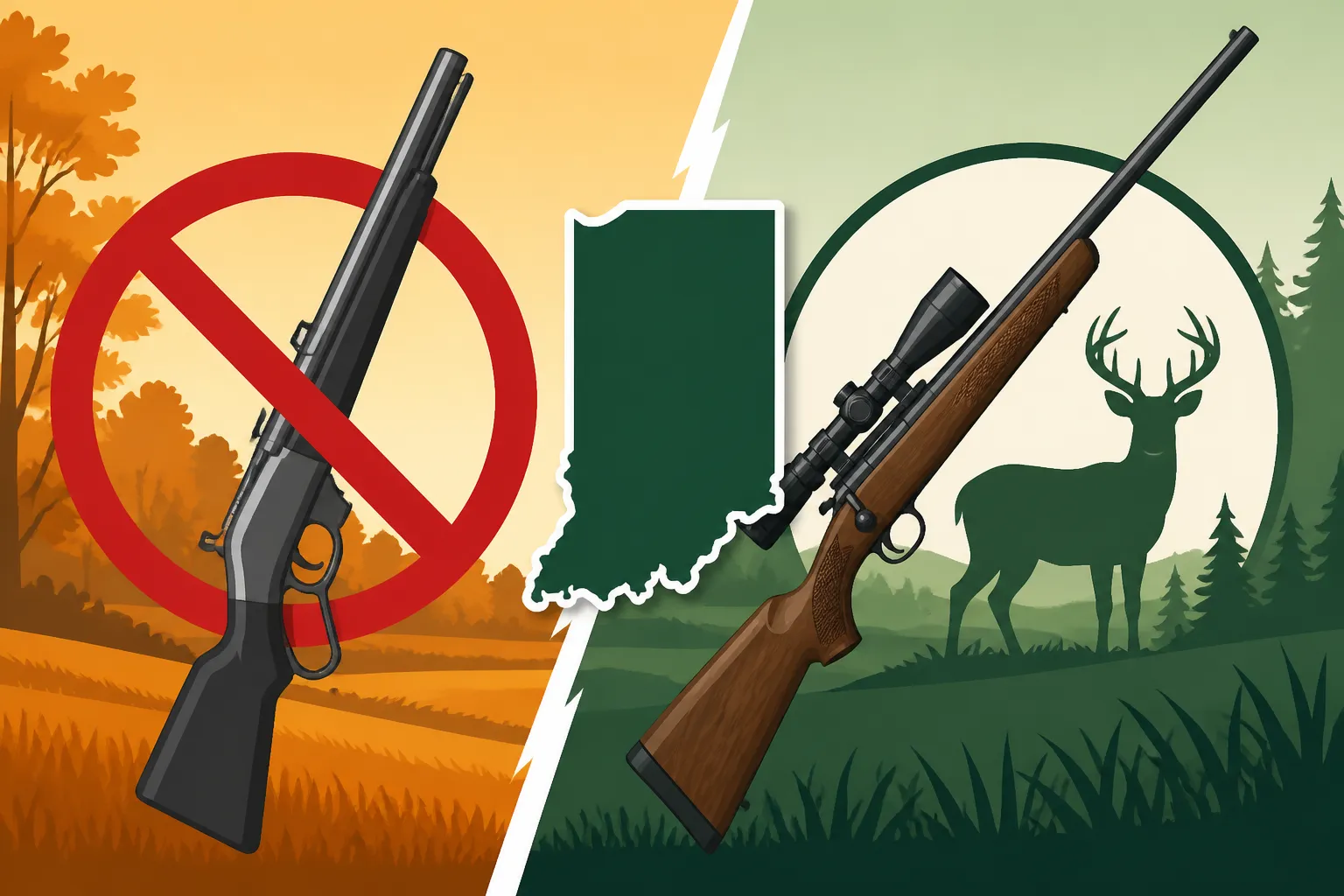
The turning point arrived with Senate Bill 280. This bill, signed into law, effectively removed the long-standing straight-wall cartridge requirement for deer hunting statewide. For decades, hunters were limited to specific firearm types and cartridge designs, typically shotguns, muzzleloaders, handguns, and rifles chambered in cartridges that were "straight-walled" like the .44 Magnum or .45-70 Government. The explicit goal was to move Indiana away from these outdated restrictions, providing hunters with a broader range of safe and effective firearm choices.
This change means that the vast majority of common centerfire rifle cartridges, which were previously prohibited, are now legal for deer hunting during the firearms season. Think about popular calibers like .30-06 Springfield, .270 Winchester, .308 Winchester, 6.5 Creedmoor, and many others. This expanded eligibility allows hunters to use firearms they might already own for hunting in other states or for different game, eliminating the need for specialized "Indiana-legal" deer rifles. It also simplifies the learning curve for new hunters, allowing them to choose from a wider, more accessible range of firearms. If you're looking for more details on the legislative process, you can explore information like What Senate Bill 280 Changed for Rifle Hunters.
Impact on Cartridge Length and Bullet Diameter
Beyond just lifting the straight-wall mandate, Senate Bill 280 also clarified and modified specific technical requirements related to cartridge dimensions. Prior to the bill, Indiana law specified a minimum case length of 1.16 inches and a maximum case length of 1.62 inches for rifle cartridges. This was a critical factor in determining which straight-wall cartridges were legal, effectively excluding many common handgun cartridges while also preventing the use of longer rifle cartridges. The new legislation, however, did away with these arbitrary case length restrictions for centerfire rifles.
Now, instead of relying on case length, the law primarily focuses on bullet diameter for traditional bottlenecked centerfire rifle cartridges. The requirement specifies that the bullet must be .243 inches (6mm) in diameter or larger. This is a common and widely accepted minimum for deer hunting across many states, ensuring that hunters use cartridges with sufficient power for a clean kill. So, while a .223 Remington might still be too small, popular options like the .243 Winchester, 6.5 Creedmoor, .270 Winchester, and anything larger are perfectly legal. This shift represents a more scientifically sound approach to firearm regulation, aligning Indiana with contemporary ballistics standards. It's important to be clear on details like Minimum Bullet Diameter Under Indiana's New Law to ensure your chosen rifle is compliant. For those wondering about the specifics of why case length restrictions were removed, further insights are available on Why the State Can No Longer Limit Case Length.
What This Means for Indiana Deer Hunters Today
The changes brought about by Senate Bill 280 are monumental for Indiana deer hunters. No longer are we forced into a narrow set of choices; the field of options has burst wide open. This means a lot of rethinking, re-evaluating, and maybe even a trip to the gun shop for many folks.
Expanded Firearm Choices for the Hoosier Hunter
For decades, if you wanted to hunt deer in Indiana during firearms season, you likely owned a dedicated slug gun, a muzzleloader, or perhaps one of the newer straight-wall cartridge rifles like the .350 Legend or .450 Bushmaster. These were excellent tools, don't get me wrong, and many still prefer them. But now, the world of modern centerfire rifles is at your fingertips.
This means if you already own a .308 Winchester that you use out west, or a .270 Winchester that’s been sitting in the safe for an Ohio hunt, you can now bring it to your favorite Indiana hunting spot. The flexibility is huge. You’re no longer limited to short-range options if your hunting scenario would benefit from a rifle capable of a 200-yard shot across a large field or down a long powerline cut. This is especially true in regions like southern Indiana's hill country, where longer shots can occasionally present themselves. It also makes things easier for non-resident hunters who no longer need to borrow or buy a specific "Indiana legal" firearm just for a trip to the Hoosier State. The options are truly expansive now, making it an exciting time for those considering Choosing a Rifle Now That Cartridge Limits Are Gone.
Rethinking Your Deer Hunting Rifle Setup
With this newfound freedom comes the opportunity to truly optimize your deer hunting setup for Indiana's diverse terrain and conditions. While a powerful straight-wall like the .45-70 is still incredibly effective in thick timber, now you can also consider a flatter-shooting cartridge if your hunting grounds involve more open spaces.
For hunters working large crop fields in northern Indiana or navigating the expansive public lands of the Hoosier National Forest, a rifle chambered in a cartridge like the 6.5 Creedmoor or .30-06 could offer a distinct advantage in terms of effective range and bullet trajectory. This allows for more precise shot placement at varying distances, and less holdover guesswork. However, if you primarily hunt dense river bottom funnels or small, brushy woodlots, a shorter, handier rifle in a caliber like .30-30 Winchester or a trusty slug gun might still be your best bet. It’s all about matching the tool to the task, and now you have a full toolbox. It's a great time to evaluate different Rifle Setups for Indiana Deer Hunting that suit your specific style and location. A good resource like GoHunt can provide mapping data and harvest reports to help you assess typical shot distances in your preferred areas, aiding in your rifle choice.
Considerations for Public Land and Safety
While the expanded rifle options are exciting, it's crucial to remember that responsible hunting practices remain paramount, especially on public lands where hunting pressure can be higher. Just because a rifle can shoot 500 yards doesn't mean you should attempt such a shot in typical Indiana woods. Most deer are still taken at much closer ranges, often under 100 yards.
When hunting popular public areas like Atterbury Fish and Wildlife Area or Morgan-Monroe State Forest, remember that other hunters are likely nearby. Always be absolutely certain of your target and what lies beyond it. The fundamental safety rules – treat every firearm as if it's loaded, never point a firearm at anything you don't intend to shoot, keep your finger off the trigger until ready to fire, and be sure of your target and what's beyond – are more important than ever. While new rifles offer extended range, personal discipline and understanding the typical shooting distances in Indiana's varied terrain are key. You'll want to spend ample time Sighting In a Centerfire Rifle for Indiana Woods to truly understand its capabilities in your specific hunting conditions.
Here's a quick overview of some popular cartridge types and their general suitability for Indiana hunting conditions, now that the rules have changed:
| Cartridge Type | Former Legal Status | New Legal Status (post-SB 280) | Typical Indiana Application | Pros | Cons |
|---|---|---|---|---|---|
| Straight-Wall Rifles | Legal | Legal | Dense woods, brush, shorter ranges (under 150 yds) | High energy transfer at close range, good brush penetration | Limited range, more drop at distance |
| Shotgun Slugs | Legal | Legal | Very dense cover, close ranges (under 100 yds) | Devastating power, still a great option for thickets | Most limited range, less accuracy at distance |
| Muzzleloaders | Legal | Legal | All ranges (during muzzleloader season) | Traditional experience, powerful | Single shot, slow reload, weather sensitive powder |
| Bottleneck Rifles | Illegal | Legal | Open fields, longer timber cuts, varied terrain | Excellent range, flat trajectory, wide caliber choice | Overpenetration risk (always know your backdrop), more recoil |
Beyond the Rifle: Broader Implications for Indiana Hunting
The legislative change regarding rifle cartridges isn't just about what firearm you carry; it ripples through other aspects of Indiana hunting, from dispelling old myths to potentially influencing future regulations. It's part of a larger conversation about how the state manages its wildlife and ensures hunting remains accessible and safe for everyone.
Dispelling Myths and Understanding Nuances
One of the biggest benefits of this change is the opportunity to dispel some long-held myths about rifle ballistics and hunting safety in Indiana. For years, the narrative was that bottlenecked rifle cartridges were inherently dangerous or unsuitable for the state's landscape due to their alleged long-range capabilities. This often ignored the reality that a responsible hunter always knows their target and what lies beyond, regardless of the firearm. The new law acknowledges that hunter education and ethical practice are far more critical than an arbitrary cartridge shape.
It also highlights that effective range isn't solely dictated by the cartridge. Factors like shooter skill, optics quality, bullet construction, and the specific terrain are equally, if not more, important. A hunter using a .30-06 in dense cover will still likely take a deer at 75 yards, just as they might with a slug gun. The change empowers hunters to make informed decisions based on their individual hunting situation, rather than being restricted by an outdated, one-size-fits-all rule. This opens up conversations about how to make smart choices, such as selecting from the Best New Rifle Calibers for Indiana's Statewide Rule and understanding their true capabilities in the field.
The Future of Firearms Regulations in the Hoosier State
The passage of Senate Bill 280 marks a significant shift in Indiana's approach to firearms regulations for hunting. It demonstrates a willingness by lawmakers to listen to the hunting community and adapt laws to modern realities. This move away from the straight-wall restriction suggests a more progressive, evidence-based approach to wildlife management and firearm legislation in the future. It’s a positive sign for hunters who value common sense and flexibility in their pursuit of game.
While it's unlikely we'll see radical changes every year, this precedent could open doors for further refinements or discussions on other aspects of hunting regulations. For instance, discussions around Indiana Legal Firearms for Deer Hunting will now be framed by the new, broader allowances. As technology continues to evolve and hunting practices adapt, an open dialogue between the DNR, legislators, and hunters will be crucial to ensure Indiana remains a premier hunting destination. Platforms like GoHunt, with their detailed mapping and regulatory updates, will continue to be invaluable resources for hunters looking to stay informed about changes and optimize their hunting strategies within the evolving legal framework. This also impacts the broader Indiana Deer Season Structure Explained as hunters now have more options for the firearms portion of the season.
Disclaimer
The information provided in this guide is for general informational purposes only and does not constitute legal advice. While we strive to provide accurate and up-to-date information, hunting regulations are subject to change. Always consult the most current Indiana Department of Natural Resources (DNR) hunting regulations and laws before planning any hunting activities.