Dragging a Deer Out of a River Bottom
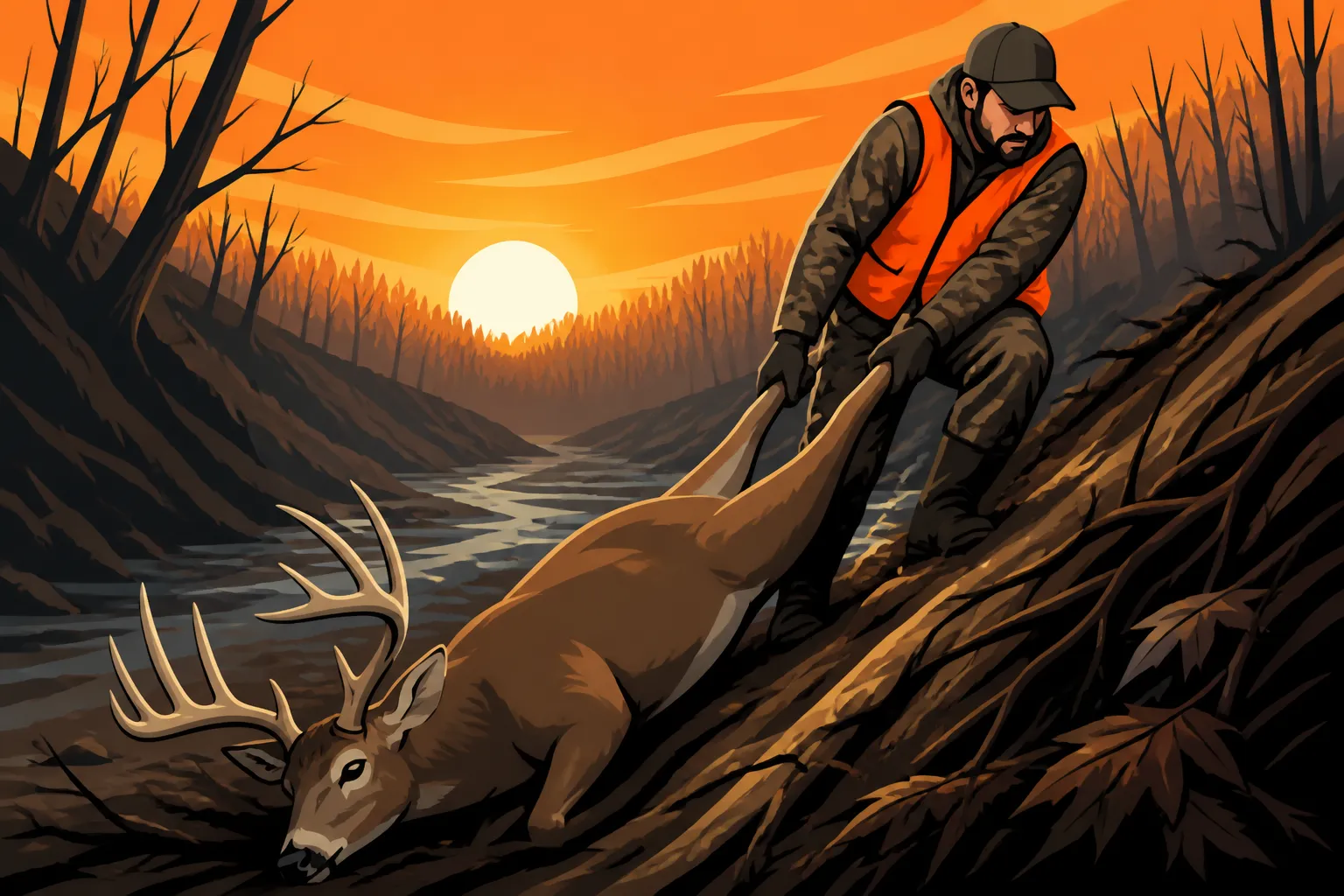
The sheer thrill of dropping a deer in Indiana is quickly followed by the daunting reality of getting it out, especially when that trophy buck or vital doe takes its last breath deep within a soggy river bottom. We've all stood over an animal, surrounded by briars, sucking mud, and winding creeks, wondering how to haul it back. This guide offers practical strategies and essential gear to retrieve your deer from even the most challenging Indiana river bottom terrain, saving your back and sanity.
Understanding the River Bottom Challenge in Indiana
Indiana's diverse landscape offers incredible hunting opportunities, but nowhere does it present a more unique set of challenges for deer retrieval than in its river bottoms. These fertile, often overlooked areas are magnets for whitetails, but they demand a different kind of preparation and grit from the hunter once the shot is fired. The effort required to get a deer out of these places can quickly turn a moment of triumph into an exhausting ordeal if you’re not prepared for what lies ahead.
The Unique Terrain of Indiana River Bottoms
Indiana's river bottoms, whether you're hunting along the mighty Wabash River, the meandering White River, or any of the countless smaller creeks and tributaries, are truly distinct ecosystems. They are often characterized by incredibly rich, deep soil, which supports dense vegetation and mature timber, making them prime habitat for deer seeking food and cover. However, this same environment that attracts deer also presents formidable obstacles for the hunter trying to extract one. You'll typically encounter bottomland hardwood species like sycamore, cottonwood, and various oaks, often intertwined with an understory so thick it can feel like a solid wall of green, even in late fall. Think impenetrable briar patches, tangles of thorny locust trees, and dense stands of invasive honeysuckle and multiflora rose that can snag and scratch with every step.
The ground itself is rarely forgiving. The silty, clay-rich soils common in these areas are excellent at retaining moisture, which means that after any significant rainfall – or even just prolonged damp weather – the ground can quickly transform into a sticky, energy-sapping quagmire. Every step becomes a struggle, your boots sinking deep, making the simple act of walking difficult, let alone dragging a heavy deer. The topography, while generally flatter than the southern Indiana hills, is far from uniform. You'll often find subtle depressions, old oxbow lakes, and small sloughs that hold standing water and deceptively deep, soft mud, often hidden beneath a layer of fallen leaves. It's easy to follow a blood trail deeper and deeper into this challenging terrain, only to realize the path out with a deer will be far more arduous than the path in.
Common Obstacles and Hazards
Beyond the ubiquitous mud and thickets, Indiana river bottoms throw several specific hazards your way that can make deer retrieval particularly difficult. Water, in its various forms, is an ever-present feature. You might encounter sluggish creeks that seem small on a map but are surprisingly deep and wide on the ground, or larger, swift-moving streams that demand careful consideration before attempting a crossing. These waterways might have soft, uneven bottoms, or slick, algae-covered rocks that can cause a dangerous slip. Deeper sections could necessitate a precarious balance across a fallen log or, in extreme cases, even a short swim, which is a situation you absolutely want to avoid with a harvested deer. During periods of higher water levels, entire sections of the bottomland can become inundated, turning previously walkable terrain into chest-deep swamp, effectively cutting off escape routes.
Then there’s the vegetation itself, which isn't just a physical barrier but can also be a painful one. Pushing through head-high nettles, battling thorny patches, or trying to navigate around vast expanses of tangled grapevines isn't just annoying; it can snag clothing, scratch exposed skin, and even puncture tires on a deer cart if you're attempting to use one. Fallen timber is another consistent hurdle. Strong winds, seasonal storms, and natural decay regularly bring down large trees, creating crisscrossing obstacles that demand climbing over, crawling under, or making significant detours. These natural obstacles are frequently compounded by the sheer isolation of many prime river bottom hunting spots. You're often miles from any maintained trail or road, meaning that if you get into trouble or need assistance, self-extraction or calling for help becomes significantly more complicated and time-consuming.
Pre-Hunt Planning for a River Bottom Retrieve
Successfully getting a deer out of a river bottom doesn't begin after you pull the trigger; it starts long before, with diligent scouting and smart, deliberate gear choices. I've personally seen and experienced the frustrations that come from a lack of foresight in these challenging environments. Thinking ahead can drastically reduce the physical strain, prevent potential dangers, and ultimately ensure a smoother, more enjoyable hunting experience. A little planning goes a long way when you’re facing a heavy load in tough terrain.
Scouting Entry and Exit Points
Before you even think about hanging a stand or still-hunting a river bottom area, dedicate significant time to scouting with a retrieval plan firmly in mind. Identify potential entry and exit routes that prioritize ease of movement, not just speed. Look for natural pinch points, old logging roads, agricultural field edges, or even subtle rises in elevation that might offer slightly firmer footing. Use mapping tools like the Indiana DNR app or the advanced layers on onX Layers for Indiana Land Status. These resources allow you to study aerial photos closely, looking for changes in vegetation patterns that might indicate drier ground, or faint lines that suggest old trails or drainages. Sometimes, a narrow strip of higher ground along an abandoned railroad grade or an old levee can provide a surprisingly easy path through otherwise impenetrable sections of a river bottom.
It's absolutely crucial to mark these routes on your GPS unit or a hunting app like GoHunt. This way, if you do harvest a deer, you already have a mental map and digital waypoints for extraction, rather than trying to forge a new path in the dark with a heavy load. Remember to consider multiple options for both entry and exit, as conditions can change rapidly. A path that was relatively dry and firm during early September scouting might be a muddy, waterlogged mess after a week of heavy rain in November. It’s a common mistake to assume the easiest path to your hunting spot will be the easiest path out with a deer, but in river bottoms, this is rarely the case.
Essential Gear for Tough Retrieves
Your gear selection is paramount for a successful river bottom retrieve, second only to your strategic planning. First and foremost, sturdy, waterproof footwear is not just recommended, it's absolutely non-negotiable. Forget your lightweight hiking boots; you need high-quality rubber boots that can stand up to constant moisture and abrasive briars. Think knee-high or even hip waders if you anticipate significant water crossings or consistently saturated ground. Brands like Lacrosse (their Alpha Burly series is fantastic) or Muck Boots offer excellent options that are both durable and comfortable enough for long walks. For more specific recommendations, take a look at Rubber Boots for Swamp Walking. Keeping your feet dry and protected is critical for comfort, preventing blisters, and maintaining proper body temperature during a potentially hours-long retrieve.
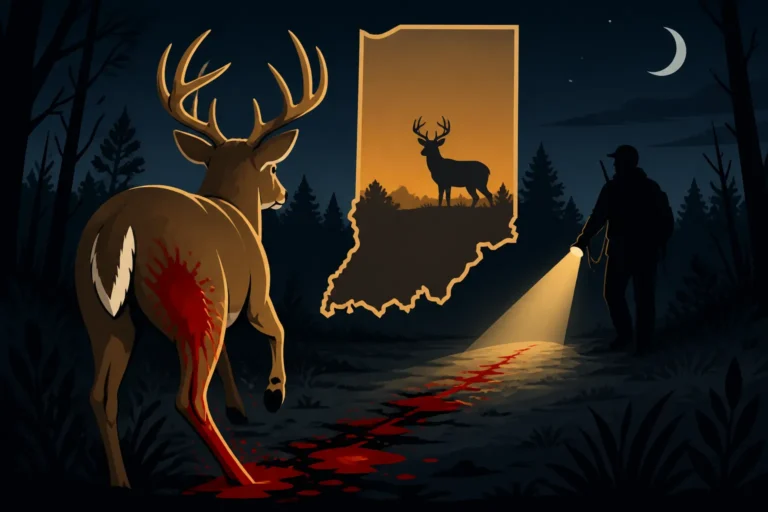
Next, prioritize retrieval aids. A robust deer drag or harness is essential, as these distribute the deer's weight much more efficiently than simply grabbing an antler or a leg, saving your hands and back. For truly challenging terrain, particularly where mud and uneven ground are prevalent, a purpose-built deer sled can be a complete game-changer. Companies like Shappell make compact, durable sleds that glide surprisingly well over mud, snow, and even through lighter brush, while also protecting the carcass from excessive dirt and debris. Don't forget a razor-sharp field dressing knife and several pairs of disposable gloves for hygiene and to protect your hands. A powerful headlamp with a long-lasting battery is absolutely critical, especially if you anticipate Blood Trailing After Dark in Indiana. Finally, carry a small, high-quality backpack for essentials like extra water, high-energy snacks, a first-aid kit, and a fully charged cell phone (with a portable power bank, as service can be spotty). A river bottom retrieve can easily turn into an hours-long ordeal, and being properly equipped is paramount.
| Retrieval Aid | Pros | Cons | Ideal Terrain |
|---|---|---|---|
| Deer Drag/Harness | Lightweight, compact, easy to carry, minimal setup. | Requires maximum human effort, can cause back strain, carcass drags directly on ground. | Relatively flat, firm ground; short distances; one-person retrieve for smaller deer. |
| Deer Sled | Reduces friction significantly, protects carcass from dirt/debris, good for longer distances. | Can be bulky to carry in, can get stuck in very deep, viscous mud or dense tangles, harder to pull uphill. | Muddy flats, snow, some brush, swampy areas; multi-person retrieve for best results. |
| Deer Cart/Game Cart | Excellent for firm, somewhat even ground; good weight distribution, preserves energy. | Useless in deep mud, standing water, or very thick brush; wheels get stuck or break; noisy to transport. | Defined trails, old logging roads, open woods with minimal obstacles, field edges. |
| Heavy-Duty Rope/Pulley System | Can assist with steep banks, lifting over large obstacles, or getting out of deep holes. | Requires suitable anchor points (sturdy trees), more complex setup, specialized knowledge to use safely. | Steep inclines/declines, large fallen timber, deep ditches; often requires multiple people. |
Executing the Retrieve: Strategies and Techniques
You've made the shot, and your deer is down in the challenging river bottom. Now comes the hard work. Approaching this task with a clear plan and a calm mind will make a world of difference. Resist the urge to rush. Instead, take a few moments to assess the situation, formulate your strategy, and gather your composure before you begin the physical labor. Over-exertion and hasty decisions can quickly complicate an already difficult situation.
Field Dressing and Weight Reduction
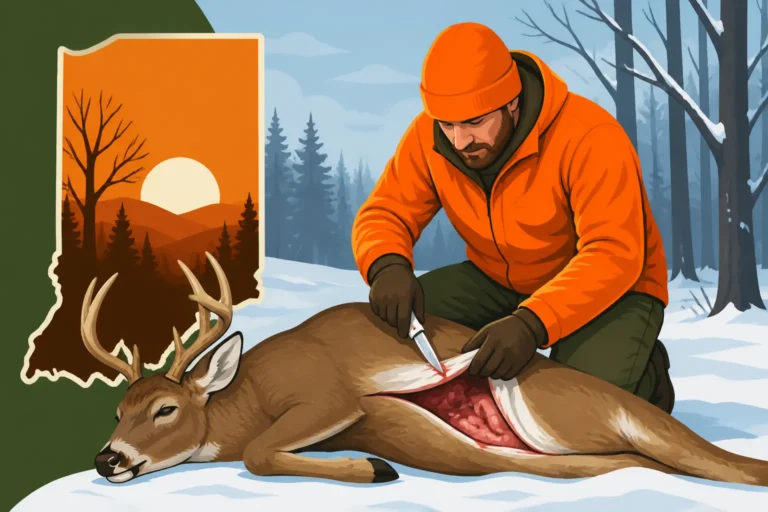
The first and most crucial step in any difficult deer retrieve, particularly from a river bottom, is to field dress the deer as soon as possible. Removing the entrails immediately reduces the deer's total weight by a significant margin—often 20-30% or more, depending on the size of the animal. This weight reduction is invaluable when you're facing the added resistance of slogging through mud, pushing through thick brush, and navigating over fallen timber. Even if you plan on taking the deer to a professional processor, field dressing is a non-negotiable step for proper meat cooling and preservation, especially during warmer early archery seasons. While the advice in Field Dressing a Deer in Cold Weather, focuses on winter, the principles of weight reduction and immediate processing apply universally.
Beyond the initial gutting, consider the nuclear option if the distance to your vehicle is truly extreme and the terrain is brutal: quartering or even completely boning out the deer. While this is more labor-intensive upfront, carrying out manageable quarters in a robust frame pack (like those designed for a Packs for a Hoosier Forest Day Hunt) is often far less taxing than dragging a whole deer for miles through brutal river bottom conditions. This strategy is common in western big game hunting but is gaining traction in eastern states for those deep public land retrieves, especially in expansive areas like the Hoosier National Forest where a deer could be a very long way from the nearest road or access point.
Utilizing Mechanical Aids and Teamwork
As discussed in the planning phase, deer sleds are highly effective in mitigating the difficulties of river bottom retrieves. They work by distributing the deer's weight over a larger surface area, which significantly reduces friction. This means the carcass is less likely to dig into soft ground, snag on roots, or get bogged down in thick mud. When using a sled, always try to keep it on the flattest, clearest path possible, even if that path means a slightly longer route. It's often more efficient to go a bit out of your way to find easier terrain than to fight through every obstacle directly.
If you have the luxury of hunting with others, teamwork is absolutely paramount in river bottoms. If two or more people are available, have one person pull from the front using a sturdy rope or harness attached to the sled, while another pushes, lifts, or guides from the rear. This coordinated effort is exponentially more efficient than one person trying to manage the entire load alone, especially over logs or through particularly dense brush. Many hands truly make light work in these situations. If you're hunting with a group, establishing a clear plan for deer retrieval before anyone shoots is a smart move. Even a seemingly straightforward task like a Deer Drives With Three or Four Hunters, on public land can lead to a long retrieve if the landing zone for the deer wasn't considered. Coordinate your efforts, communicate clearly, and take frequent breaks.
Navigating Water and Muddy Areas
Encountering water crossings is almost a certainty when retrieving a deer from Indiana's river bottoms. If the water is shallow enough to wade safely, the most direct approach is often to pull the deer directly through it, especially if you're using a sled. The water itself can sometimes reduce friction, making the pull easier, though the slick, muddy banks on either side will still present a challenge. If the water is too deep, too swift, or too cold to safely wade, you must find an alternative. Look for fallen trees or log jams that might offer a makeshift bridge, but always test the stability of such crossings without the deer first, as they can be treacherous.
For truly deep, sucking mud, short, choppy steps are often more effective than long, lunging strides. Try to keep your feet moving rather than letting them sink in too deep with each step. If the mud becomes so deep and viscous that a sled starts to become counterproductive—sinking in and creating too much suction—you might need to temporarily abandon the sled and opt for a traditional drag with a harness until you reach firmer ground. Sometimes, a slight detour around an especially muddy or overgrown section, even if it adds a little distance, can save a tremendous amount of effort and time. This is where using the satellite imagery on apps like GoHunt can be invaluable in identifying dryer sections or subtle rises in elevation you might not see from ground level. Knowing how to read the terrain and adapt your strategy on the fly is a critical skill for any river bottom hunter.
Safety First: Avoiding Common Pitfalls
Retrieving a deer from a challenging Indiana river bottom can be one of the most physically demanding aspects of hunting, akin to an endurance event. It also comes with its own unique set of risks. Your safety, and the safety of anyone assisting you, should always be the absolute top priority. Pushing yourself too hard, ignoring warning signs, or making rash decisions can quickly lead to injury, illness, or even a more serious emergency. Being prepared for these eventualities is just as important as knowing how to drag a deer.
Assessing Risk and When to Call for Help
Before you even begin the retrieve, take a moment to objectively assess the situation. How far is the deer from your vehicle or the nearest accessible road? How difficult and complex is the terrain between you and your extraction point? Are there significant water crossings, steep, muddy banks, or unusually dense, tangled cover? What are the current weather conditions, and are they expected to worsen during the retrieve? If you're hunting alone and the retrieve looks particularly arduous, or if you're feeling unwell, it's always better to call a friend, family member, or even emergency services for help than to push yourself to the point of exhaustion or injury. There is absolutely no shame in admitting you need assistance; it's a sign of good judgment and self-preservation.
Ensure your cell phone is fully charged before you head into the woods, and ideally, carry a portable power bank. Cell service can be notoriously spotty in many Indiana river bottoms and other remote public lands. For added safety, consider carrying a satellite communication device like a Garmin inReach or Zoleo if you frequently hunt remote areas. These devices allow you to send messages and, crucially, call for emergency help even when you have no cell signal. If you do need to call for assistance, be prepared to give precise coordinates of your location, which can be easily obtained from your phone's GPS or hunting app like GoHunt. Having GPS Units Versus Phone Apps, in your pack ensures you always have a way to pinpoint your location.
Hydration, Fatigue, and Emergency Preparedness
A long, strenuous retrieve, especially in warmer early season temperatures or if you're exerting yourself intensely, will dehydrate you quickly. Always carry ample water, even on cool days. Dehydration can lead to cramping, dizziness, confusion, and impaired judgment, making an already difficult task even more dangerous. Pack high-energy snacks like granola bars, trail mix, or energy gels to replenish your caloric reserves. Your body is burning a tremendous amount of fuel dragging a 150-pound deer through mud and over obstacles, and you need to keep that fuel tank topped off.
Fatigue is another silent killer in the woods. Pushing yourself past your physical limits can lead to severe muscle strains, falls, or even more serious cardiac events. Take frequent breaks. Sit down, catch your breath, drink water, and reassess your progress. If you feel dizzy, nauseous, or experience chest pain, stop immediately and rest. Do not try to push through it. Don't be afraid to take a multi-hour break or even come back the next morning if temperatures are cool enough to prevent spoilage. While proper meat care is important, your personal safety is paramount. Always carry a basic first-aid kit with essentials like bandages, antiseptic wipes, pain relievers (like ibuprofen for muscle aches), and any personal medications you might need. Knowing basic first aid for cuts, scrapes, and strains can prevent minor issues from becoming major emergencies.
| Item | Purpose | Notes for River Bottom Retrieval |
|---|---|---|
| Assorted Bandages & Gauze Pads | Cuts, scrapes, abrasions | Essential for briar scratches, minor falls, or blisters. |
| Antiseptic Wipes/Spray | Cleaning wounds | Crucial for preventing infection from mud and dirty water exposure. |
| Medical Tape | Securing bandages, minor splints | Consider waterproof tape for better adhesion in wet conditions. |
| Pain Relievers (e.g., Ibuprofen) | Muscle aches, headaches, minor pain | For post-retrieve soreness or minor injuries from exertion. |
| Allergy Medication (e.g., Antihistamines) | Insect stings, plant reactions | Especially for nettles, poison ivy, or unexpected insect bites. |
| Moleskin/Blister Pads | Foot care, blister prevention | Critical for long, wet walks in challenging terrain. |
| Emergency Whistle | Signaling for help | If cell service is out and you are injured or disoriented. |
| Space Blanket (Mylar) | Hypothermia prevention | Compact, lightweight, provides warmth in unexpected cold or wet conditions. |
| Disposable Gloves (Nitrile) | Hygiene, wound care | For field dressing and safe application of first aid. |
| Hand Sanitizer | Cleanliness | Before/after handling game, before eating, after wound care. |
| Small Flashlight/Headlamp | Illumination | Backup for primary headlamp, for detailed first aid. |
When you're out there, navigating the intricate and challenging Indiana river bottoms, remember that these beautiful and productive areas demand respect, thorough preparation, and a healthy dose of caution. Planning your retrieve as meticulously as you plan your hunt can truly mean the difference between a triumphant haul and a grueling, potentially dangerous ordeal. Always prioritize your safety, respect the land, and happy hunting! Don't forget to report your successful harvest to an Indiana Wildlife Area Deer Check Station Data.
Disclaimer
The information provided in this guide is for informational purposes only and is not a substitute for professional training, personal experience, or local regulations. Hunting involves inherent risks. Always consult official Indiana DNR regulations, practice safe hunting techniques, and use common sense afield. The author and publisher are not responsible for any incidents or injuries that may occur from following the advice in this article.