Hunting the Fall Firearms Turkey Counties
If you've ever tried your hand at fall turkey hunting, especially with a firearm, you know it's a completely different ballgame than the spring gobbler pursuit. The frustrations are real: those once-vocal longbeards are now often silent, tucked away in large, nomadic flocks, and the legal window for firearms can feel incredibly short and restricted to specific parts of the state. This comprehensive guide is here to unravel the complexities of hunting the fall firearms turkey counties in Indiana, helping you understand the regulations, locate elusive flocks, and employ effective tactics to fill your tag when the leaves are turning.
Understanding Indiana's Fall Firearms Turkey Season
Fall turkey hunting in Indiana presents a unique challenge, primarily because the behavior of the birds is so different from their spring antics, and the firearms season itself is geographically limited. Many hunters accustomed to the thrilling gobbling of spring find fall birds silent and much harder to pinpoint. This isn't just a casual observation; it's a fundamental shift in their biology and social structure that demands a different approach.
Which Counties Are Open for Fall Firearms Turkey
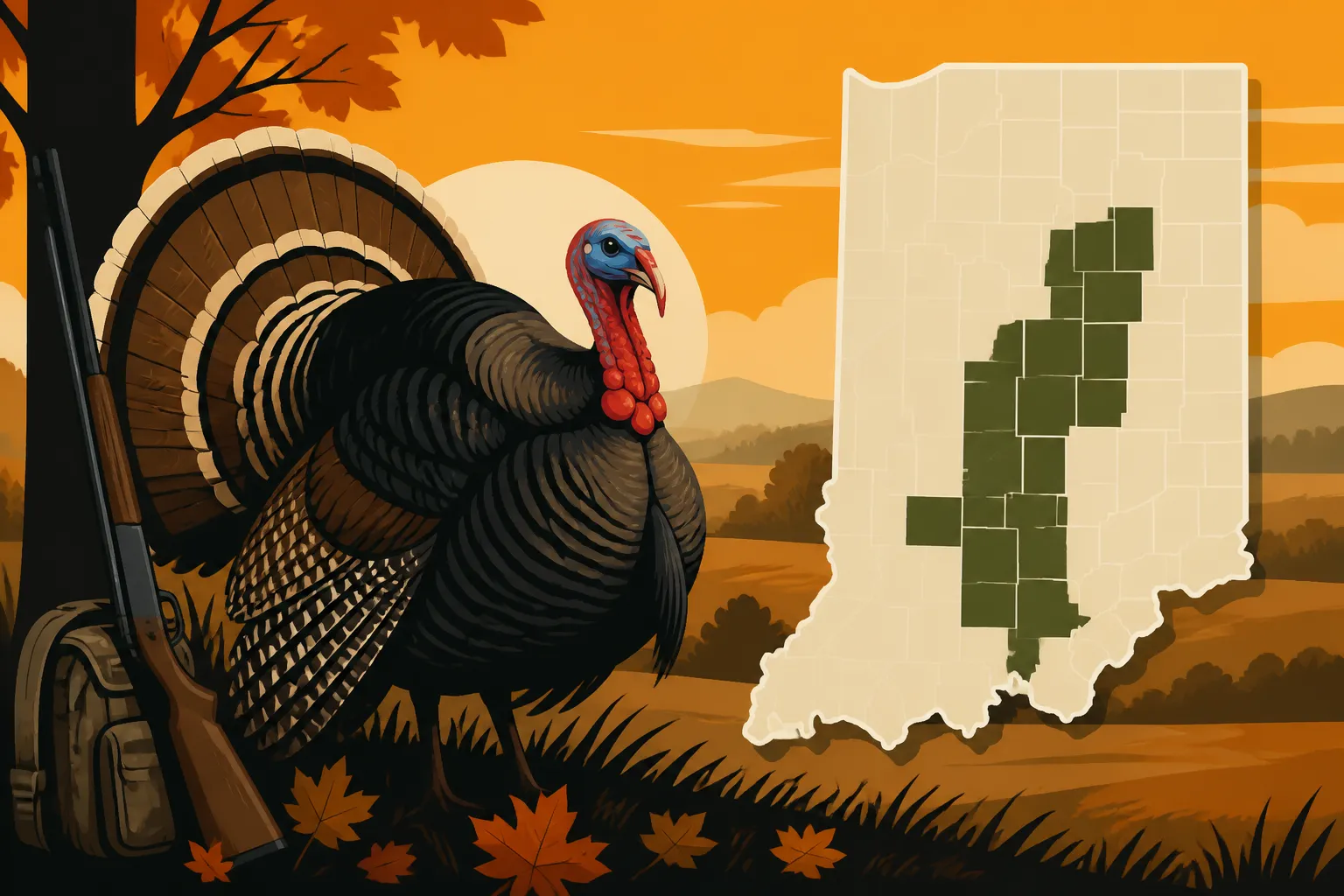
One of the biggest hurdles for any aspiring fall firearms turkey hunter in Indiana is knowing where you can even hunt. Unlike the widespread opportunities during the spring season, the fall firearms season is typically restricted to a select number of counties, usually concentrated in the southern and southeastern portions of the state. These are generally the areas with higher, more stable turkey populations, capable of sustaining additional harvest pressure.
For any given season, this list can vary slightly, so your first and most critical step is to check the current Indiana DNR hunting regulations. However, historically, you'll often find counties like Brown, Jackson, Monroe, Lawrence, Washington, and Harrison on that list, along with many others in the state's hilly, timbered regions. These areas provide the expansive, mature hardwood forests and mixed agricultural lands that turkeys thrive in. Before you even think about packing your shotgun, grab the latest hunting guide or visit the Indiana DNR website to confirm the exact boundaries. There's nothing worse than doing all your homework, only to find out you're in a closed county. Always confirm the specific counties for the current year.
Key Dates and Regulations
The fall firearms turkey season in Indiana is a relatively short window, often spanning just a couple of weeks in late October and early November, designed to coincide with a period when turkeys are typically flocked up after the breeding season. This is distinctly different from the longer archery season which begins much earlier. For a deeper dive into the overall structure, you can always consult the guide on Indiana Fall Turkey Season Structure.
Here's a quick rundown of what you need to keep in mind:
- Season Dates: These are critical. They typically fall within a two to three-week period in late October and early November. Mark your calendar, because missing this short window means waiting another year.
- Bag Limit: The bag limit for fall turkey in Indiana is usually one bird of either sex. This means you can harvest a hen or a gobbler, which is a major departure from the spring season's "bearded bird only" rule. This flexibility is important as it reflects the fall tactics often employed, which are less about targeting dominant gobblers and more about locating and scattering entire flocks.
- Legal Hours: Hunting hours generally run from one-half hour before sunrise to sunset. Remember, legal shooting light is crucial for ethical shot placement and bird identification.
- Licenses and Stamps: You'll need a valid Indiana hunting license, a fall turkey license, and if you're a migratory bird hunter, a Harvest Information Program (HIP) registration, though turkeys are resident game. Always ensure your paperwork is in order before heading afield.
It's a lot to keep straight, especially when compared to the archery season which has a much longer run, sometimes starting in October and continuing into December. If you're considering the earlier archery opportunities, checking out Hunting the Fall Archery Turkey Window might provide some useful insights into the earlier part of the season.
Why Fall is Different from Spring
The transformation in turkey behavior from spring to fall is profound, and it's the single most important factor shaping your hunting strategy. In spring, male turkeys are driven by the urge to breed, making them vocal, strutting, and often predictable as they seek out hens. They respond aggressively to hen yelps and gobble fiercely to establish dominance.
Come fall, that all changes. The breeding season is long over, and turkeys' priorities shift dramatically to survival: finding food, avoiding predators, and staying warm. They form large, social flocks – often segregated by sex and age (hens with their poults, jakes together, and older gobblers forming bachelor groups). These flocks roam widely, sometimes covering significant ground in search of mast crops, waste grain, or insects.
- Vocalizations: Fall birds are significantly less vocal. The booming gobble of spring is rare, replaced by softer clucks, purrs, and the distinctive "kee-kee" run of young birds. This means calling is less about drawing in a territorial gobbler and more about imitating a lost bird trying to reunite with its flock.
- Flocking Behavior: Finding one bird in spring might lead you to others. In fall, finding one bird often means you've found a dozen or more. This makes scouting for flocks paramount, rather than just listening for isolated gobblers.
- Tactics: Spring hunting often involves patience, setting up near a roost, and enticing a gobbler to come to you. Fall hunting is far more dynamic. It frequently involves aggressively "breaking up" a flock, waiting for them to re-group, and then calling lost birds back in.
This shift means your gear, your calls, and your mindset need to adapt. You're no longer just after a big tom; you're looking for any legal turkey within the designated fall firearms counties.
| Aspect of Hunting | Spring Turkey Season | Fall Firearms Turkey Season |
|---|---|---|
| Primary Goal | Harvest a bearded gobbler | Harvest one turkey (either sex) |
| Bird Behavior | Breeding-focused, vocal, territorial | Survival-focused, flocked, less vocal |
| Typical Tactics | Calling to bring gobblers in, ambush | Breaking up flocks, re-calling lost birds |
| Vocalizations | Gobbles, excited yelps, drumming | Kee-kees, assembly calls, soft clucks |
| Duration | Longer, statewide | Shorter, restricted counties |
| Hunter Numbers | Very high | Moderate to low |
Locating Fall Flocks in Specific Counties
The vast, silent woods of fall can feel daunting when you're trying to find turkeys that aren't gobbling their presence away. Success in the fall firearms season hinges almost entirely on your ability to locate where these birds are feeding, roosting, and traveling. This requires diligent scouting, keen observation, and a good understanding of turkey ecology.
Reading the Landscape for Turkey Sign
Unlike spring, where a booming gobble might draw you to a location, fall turkey hunting demands that you read the landscape like a detective. Turkeys are constantly on the move, primarily driven by food sources.
- Food Sources are King: In the fall, turkeys are voracious eaters, building up reserves for the colder months. They will heavily utilize mast crops like acorns (especially white oaks, which are less tannic), beechnuts, and hickory nuts. Focus your scouting efforts on areas with abundant hard mast. If acorns are scarce in one area, they'll move. Beyond mast, they'll forage in agricultural fields for waste grain like corn or soybeans, especially after harvest. Look for scratching in leaf litter under oak trees – fresh sign will have distinct, large scrapes where they've turned over leaves to find nuts.
- Roosting Areas: Turkeys will roost in tall, mature trees, often near water sources or along ridges where they have good visibility and feel secure. Look for droppings and feathers on the ground directly beneath large, sturdy limbs, especially in stands of mature hardwoods or pines. Finding a reliable roost site can be a goldmine, allowing you to intercept birds in the morning or evening. You can learn more about this by checking out Roost Hunting Indiana Gobblers.
- Travel Corridors: Turkeys often use predictable travel routes between roosting sites, feeding areas, and water. These might be old logging roads, ridgetops, creek bottoms, or natural funnels through timber blocks. Look for tracks in mud or soft dirt, and droppings along these paths. A heavy concentration of fresh tracks indicates regular use.
Don't just walk and look up; pay attention to the ground. Turkeys leave behind plenty of clues if you know what to look for. The more fresh sign you find, the closer you are to a fall flock.
Leveraging Topographical Maps and Satellite Imagery
Before you ever set foot in the woods, the best scouting tool you have might be right at your fingertips: digital mapping applications and satellite imagery. These tools are invaluable for narrowing down potential hotspots in the vastness of Indiana's fall firearms counties.
- Identifying Key Terrain Features: Look for drainages, creek bottoms, and ridgetops that might serve as travel corridors. Identify areas with dense stands of mature oaks or other mast-producing trees. Satellite imagery can often show you clearings, logging roads, or transitions in timber types that might be invisible from the ground. Many public lands in Indiana, particularly the Hoosier National Forest or various State Forests like Yellowwood or Morgan-Monroe, offer a mix of rugged terrain and accessible areas.
- Pinpointing Potential Roosts: Look for clusters of tall, mature trees, especially on higher ground or near water. While satellite imagery won't show you the birds, it can highlight likely roosting habitat.
- Agricultural Field Edges: In counties with mixed timber and farmland, identify cut corn or soybean fields adjacent to timber. These are prime feeding areas. You can often see the patterns of combines, indicating where waste grain will be abundant.
- Public vs. Private Land: Mapping apps are essential for distinguishing public land boundaries from private property. This is especially crucial in a state like Indiana, where public land often borders private holdings. Know where you can legally hunt, and where you'll need to seek permission. For tips on where to find public land, check out Finding an Indiana Fish and Wildlife Area Near You. A good strategy is to scout areas that might be less accessible to other hunters, perhaps a longer walk in, which often hold less pressured birds.
Public Land vs. Private Land Strategies
Whether you're hunting public ground like a Fish and Wildlife Area (FWA) or a cooperative farmer's field, your strategy for locating birds needs to adapt.
- Public Land: Indiana's public lands, such as Glendale FWA or Sugar Ridge FWA, offer vast opportunities but often come with more hunting pressure. On these lands, think about going deeper, farther from parking areas and main trails. Turkeys on public land learn quickly to avoid easily accessed spots. Focus on overlooked pockets, hard-to-reach creek bottoms, or remote ridgetops. Early morning reconnaissance, listening for the subtle clucks and purrs of turkeys leaving the roost, can be incredibly effective. Remember, a lot of other hunters will be scouting the same popular areas, so look for ground others might walk past. You can get more information on general scouting tips from Scouting Indiana Public Land Before Season.
- Private Land: If you've secured permission on private land, you often have an advantage due to less pressure. This allows for more flexibility in your scouting. You might be able to talk to the landowner about recent turkey sightings or known food sources. On private land, you can often monitor specific fields or woodlots more intensely. Always be respectful of the landowner's property and their wishes. Often, a farmer will be thrilled to have you thin out turkeys that might be eating their crops, just be sure to ask specifically about hunting the fall firearms season.
No matter where you hunt, the key is pre-season scouting. Drive the roads, hike the trails, look for tracks, droppings, and scratching. The more time you spend looking for sign before opening day, the higher your chances of success during the short fall firearms season.
Effective Fall Firearms Turkey Tactics
Once you've located a promising area holding fall turkey flocks, the real work begins. Fall firearms turkey hunting is less about calling a lovesick gobbler to you and more about understanding flock dynamics, executing decisive moves, and then bringing scattered birds back within range. It’s an active and engaging form of hunting that can be incredibly rewarding.
Breaking Up the Flock
This is the quintessential fall turkey hunting tactic, and for good reason—it works. Turkeys are highly social animals, and when a flock is suddenly scattered, their instinct is to regroup. This vulnerability is what you exploit.
- The Approach: The first challenge is to locate a flock. This often means still-hunting quietly through good habitat, using binoculars to scan ahead, or listening intently for the soft clucks and purrs of feeding birds. Once you spot or hear a flock, the goal is to rush them, running and yelling directly at them. The objective isn't to shoot a bird in the chaos, but to send them flying and running in every direction, disorienting them completely. You want every bird to be separated from its companions.
- The Set-Up: After the scatter, immediately find a good hide. This means getting against a wide tree that breaks up your silhouette, in thick brush, or in a ground blind. The key is to be completely still, silent, and invisible from all directions, especially the direction you expect birds to return from. You'll want to set up in the general area where you scattered them, as this is their natural reunion point. When setting up against cover, remember to consider options like Setting Up Against a Big Oak for optimal concealment.
- The Wait and Call: Now comes the patience. Wait at least 15-30 minutes, or even longer, before making any calls. This allows the birds to calm down and realize they are alone. Then, begin with soft, inquisitive calls. You're trying to sound like a lost turkey looking for its family.
Calling Strategies for Fall Birds
Fall calling is dramatically different from spring calling. You’re not trying to entice a dominant male; you’re playing on the social instinct of a scattered flock to reunite.
- Assembly Calls: These are loud, insistent series of yelps designed to gather a dispersed flock. If you've just broken up a flock, this is your primary call. Start with soft calls, but if you get no response, you can increase volume and urgency. Remember, the goal is to sound like a lost, slightly anxious turkey trying to find its family.
- Kee-Kee Run: This high-pitched, pleading whistle is the sound of a lost young turkey. It's incredibly effective in the fall, particularly on flocks composed of hens and their poults. Practice making this call, as it needs to sound natural and slightly desperate to really draw birds in. Many fall flocks respond very well to it.
- Soft Clucks and Purrs: Once birds start responding and getting closer, switch to softer clucks and purrs. These are reassuring, social sounds that tell incoming birds, "I'm here, I'm safe, come join me." These calls are often all you need to seal the deal when birds are within sight but still a bit hesitant. For a wider range of calls to consider, check out Turkey Calls Worth Carrying in Indiana.
Listen intently. When birds start calling back, gauge their direction and distance. Resist the urge to call too much, especially as they get closer. Just enough to keep them coming.
Stalking and Still-Hunting Techniques
While breaking up a flock is a common and effective tactic, it's not the only way to hunt fall firearms turkeys. Sometimes, you just can't get close enough to scatter them, or you find a small group that you don't want to break up. In these scenarios, stalking and still-hunting become crucial.
- Still-Hunting: This involves moving incredibly slowly and deliberately through the woods, pausing frequently to scan and listen. Take 3-4 steps, then stop for a minute or two, observing every shadow, every movement. Use your binoculars constantly. Look for turkeys feeding, moving, or even just standing still. This is especially effective in areas with good visibility or along travel corridors. The goal is to spot the birds before they spot you, allowing you to set up for a shot or plan a strategic approach.
- Stalking: Once you've spotted birds that haven't seen you, stalking is the art of closing the distance stealthily. Use terrain, dense cover, and changes in elevation to your advantage. Move when birds have their heads down, feeding, or when a rustle of wind can cover your movement. This requires extreme patience and slow, deliberate steps. If you're on public land, especially in larger areas like the Hoosier National Forest, a run-and-gun approach, mixing careful movement with calling, can also be effective, as detailed in Run-and-Gun Turkey Tactics on Public Land.
- Wind and Thermals: Always pay attention to the wind direction. Turkeys have an incredible sense of smell and hearing. Try to approach from downwind. In hilly terrain, understand thermals; in the morning, air flows downhill, and in the evening, it flows uphill. Use this to your advantage to keep your scent from drifting towards the birds.
Both still-hunting and stalking demand a high level of woodsmanship and patience. They are often best suited for smaller groups of birds or when you're working an area where turkeys are known to frequent but are highly wary.
Gear Considerations for Fall Firearms Turkey Hunters
The gear you choose for fall firearms turkey hunting isn't drastically different from what you'd use in spring, but there are a few nuances that cater to the cooler temperatures, different tactics, and the specific regulations of Indiana. Comfort, concealment, and reliability are your watchwords.
Shotgun and Load Choices
Your firearm for fall turkey hunting will likely be the same trusted shotgun you use in the spring, but the choice of choke and load can be critical.
- Shotgun Gauge: A 12-gauge shotgun is the most popular choice, offering excellent patterns and knockdown power. A 20-gauge is also a very capable option, especially for younger hunters or those who prefer a lighter firearm. Given that shots in fall are often at closer ranges due to the nature of calling scattered birds, either gauge works well.
- Choke: For fall turkey, a full or extra-full choke is generally preferred. This tight constriction keeps your pattern dense, ensuring maximum pellet count in the turkey's head and neck vital zone, even at typical turkey ranges of 20-40 yards. Pattern your shotgun beforehand to see what choke and load combination performs best.
- Shot Size: Lead shot sizes like #4, #5, or #6 are excellent choices for turkey. Many hunters are now opting for denser, non-toxic shot like Tungsten Super Shot (TSS) which offers incredible pellet energy and penetration, allowing for smaller shot sizes (e.g., #9) and often extending effective range. However, standard lead loads are perfectly adequate for fall turkey. Be sure to pattern your gun with your chosen load at various distances to understand its capabilities. For a deeper dive into shotgun setups, check out Turkey Shotguns and Chokes.
Essential Apparel for Cooler Weather
Fall in Indiana can be unpredictable. One day it's mild and pleasant, the next it's damp and chilly. Layering is key.
- Layering System: Start with a moisture-wicking base layer, add an insulating mid-layer (fleece or wool), and top it with a quiet, waterproof/windproof outer layer in a good camouflage pattern. This allows you to shed or add layers as the day warms or cools, and as your activity level changes from still-hunting to sitting.
- Camouflage: Full camouflage is crucial. Turkeys have excellent eyesight and can pick up on movement and unnatural shapes very easily. Cover your face with a mask or face paint and wear gloves to conceal hands. The fall woods can have very specific color palettes, with browns, grays, and tans dominating, so choose a pattern that blends well with the fallen leaves and bare timber.
- Blaze Orange: This is a critical safety consideration for firearms season. In Indiana, hunters are required to wear hunter orange when hunting deer, but turkeys are not specifically mentioned under the same requirements unless hunting during a youth deer season, during the firearms deer season, or when firearms turkey season overlaps with other seasons that require it. However, it is always a wise safety practice to wear blaze orange when moving to and from your hunting spot, especially on public land during any firearms season, even if not strictly required for turkey hunting itself. You can remove it once you are set up and concealed. Always refer to current Indiana DNR regulations for the precise requirements. A good resource for understanding this is Indiana Blaze Orange Requirements.
Optics and Ancillary Gear
Beyond your firearm and clothing, a few other items will significantly enhance your fall turkey hunting experience.
- Binoculars: Essential for spotting birds before they spot you, especially when still-hunting. A good pair of 8x or 10x binoculars will help you pick apart distant woods for movement or subtle colors that indicate a turkey.
- Calls: A variety of calls is recommended: a friction call (slate or glass) for yelps and purrs, a box call for assembly yelps, and a diaphragm call for soft kee-kees and clucks, allowing hands-free operation when a bird is coming in.
- Turkey Vest: A good vest organizes your calls, allows for quick access to shells, and often includes a comfortable seat pad, which is a lifesaver during long waits after breaking a flock.
- Comfortable Boots: You'll be doing a lot of walking, often over uneven terrain. Waterproof, comfortable boots are non-negotiable.
- Decoys: While not always necessary, a single hen or jake decoy can sometimes draw in a hesitant bird during the re-assembly phase. They can provide a visual target and reassure an incoming turkey.
Packing light but smart is the key. You want enough gear to be effective and comfortable, but not so much that it hinders your mobility or makes a long walk in unbearable.
Safety and Ethical Considerations
Hunting is a privilege, and with that privilege comes a profound responsibility to hunt safely and ethically. This is especially true during the fall firearms turkey season, where specific regulations and the presence of other hunters require extra vigilance.
Blaze Orange Requirements and Awareness
Safety is paramount, and wearing blaze orange or blaze pink is a non-negotiable part of hunting during firearms seasons in Indiana. As mentioned before, while the direct requirement for turkey hunting might depend on overlap with other seasons, the spirit of the law, and good common sense, dictate its use.
- When to Wear It: If you are hunting during the firearms deer season or any other season where blaze orange is mandated, you must wear it. The Indiana DNR states that hunters are required to wear hunter orange or hunter pink when hunting deer, rabbit, pheasant, quail, or grouse with a firearm. Always check the current Indiana hunting regulations for the exact requirements of the fall firearms turkey season. Even if not strictly required for turkeys, wearing it while walking to and from your hunting location, especially on public land, is simply smart.
- Concealment vs. Safety: The standard practice is to wear blaze orange while moving through the woods, then remove it or cover it with camouflage once you are settled in your hunting spot. The moment you move again, put it back on. This protects you from other hunters who might be in the area, particularly if deer seasons are open concurrently.
Beyond just the legal requirements, being aware of your surroundings and other hunters is crucial. On public lands, expect company, and always assume there might be other hunters nearby.
Knowing Your Target and Backstop
This is the golden rule of firearm safety, and it applies unequivocally to turkey hunting. In the excitement of a turkey approaching, it's easy to rush, but a clear, ethical shot is always the priority.
- Positive Identification: Always identify your target positively. In the fall, with either-sex turkeys being legal, distinguishing between a mature gobbler and a hen is less critical than in spring. However, it's still vital to confirm it's a turkey and not another animal, or worse, another hunter. The subtle movements in the woods, the colors, and shapes can deceive you. Use your binoculars to make sure.
- Clear Shot at the Head/Neck: The only ethical shot on a turkey with a shotgun is at the head and neck. The body is heavily feathered and provides poor penetration to vital organs. Wait until the bird presents a clear, unobstructed shot to this small target area.
- Be Aware of Your Backstop: Before you pull the trigger, ensure you know what is behind your target. Are there trees? A hillside? What about the possibility of another hunter or a nearby road? Shotgun pellets can travel further than many people realize and can cause serious injury or damage. Never shoot at a bird silhouetted on a ridge or skyline.
Respecting Private Land Boundaries
Much of Indiana's best turkey habitat is on private land. Whether you have permission or are simply hunting adjacent public land, respecting private property is fundamental.
- Permission is Key: If you intend to hunt private land, you must obtain explicit permission from the landowner. In Indiana, hunting on private property without permission is trespassing and carries legal penalties. Always ask well in advance, and confirm the specific areas you are allowed to hunt. Many landowners appreciate hunters who are respectful and perhaps offer a helping hand with chores or share some of the harvest.
- Know the Lines: Use a reliable mapping app (like the Indiana DNR app or a commercial one) to clearly identify property boundaries. Even if you have permission, know the extent of that permission. If you're hunting public land, be acutely aware of where public ends and private begins. Do not cross onto private property, even to retrieve a downed bird, without explicit permission from the landowner.
- No Trespassing: Respect posted "No Hunting" or "No Trespassing" signs. These are there for a reason, and ignoring them not only puts you in legal jeopardy but also gives all hunters a bad name. Remember, your actions reflect on the entire hunting community.
By adhering to these safety and ethical guidelines, you not only ensure a safer and more successful hunt for yourself but also contribute positively to the image of hunting in Indiana. Always prioritize safety, respect, and responsibility in the field.
Disclaimer
Please note that hunting regulations, season dates, and specific county listings for fall firearms turkey can change annually. This guide provides general information based on typical patterns. Always consult the most current Indiana Department of Natural Resources (DNR) hunting regulations and official publications before planning and executing your hunt to ensure compliance with all state laws and safety guidelines.