Setting Up on a Northern Indiana Field Edge
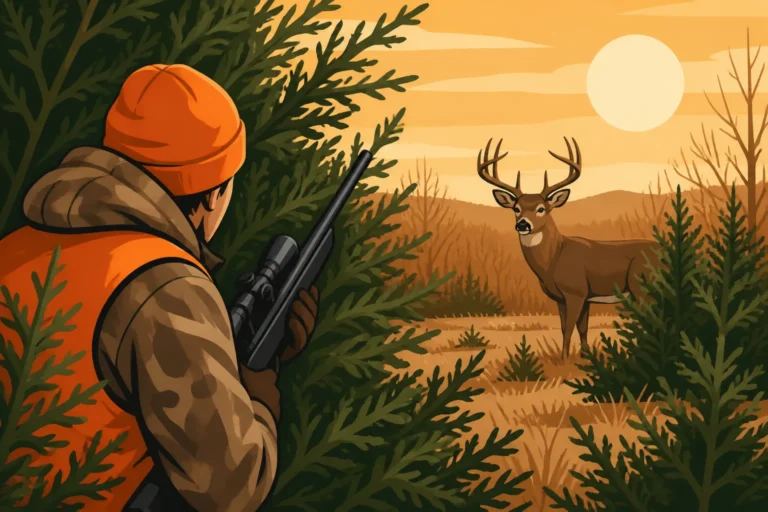
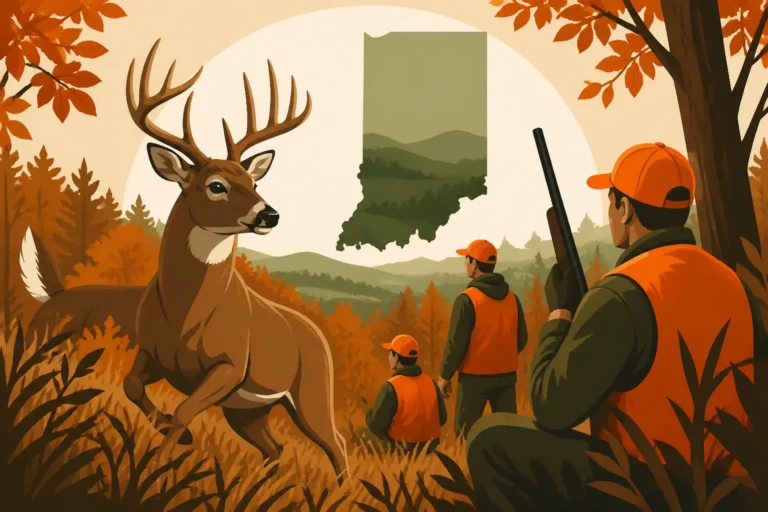
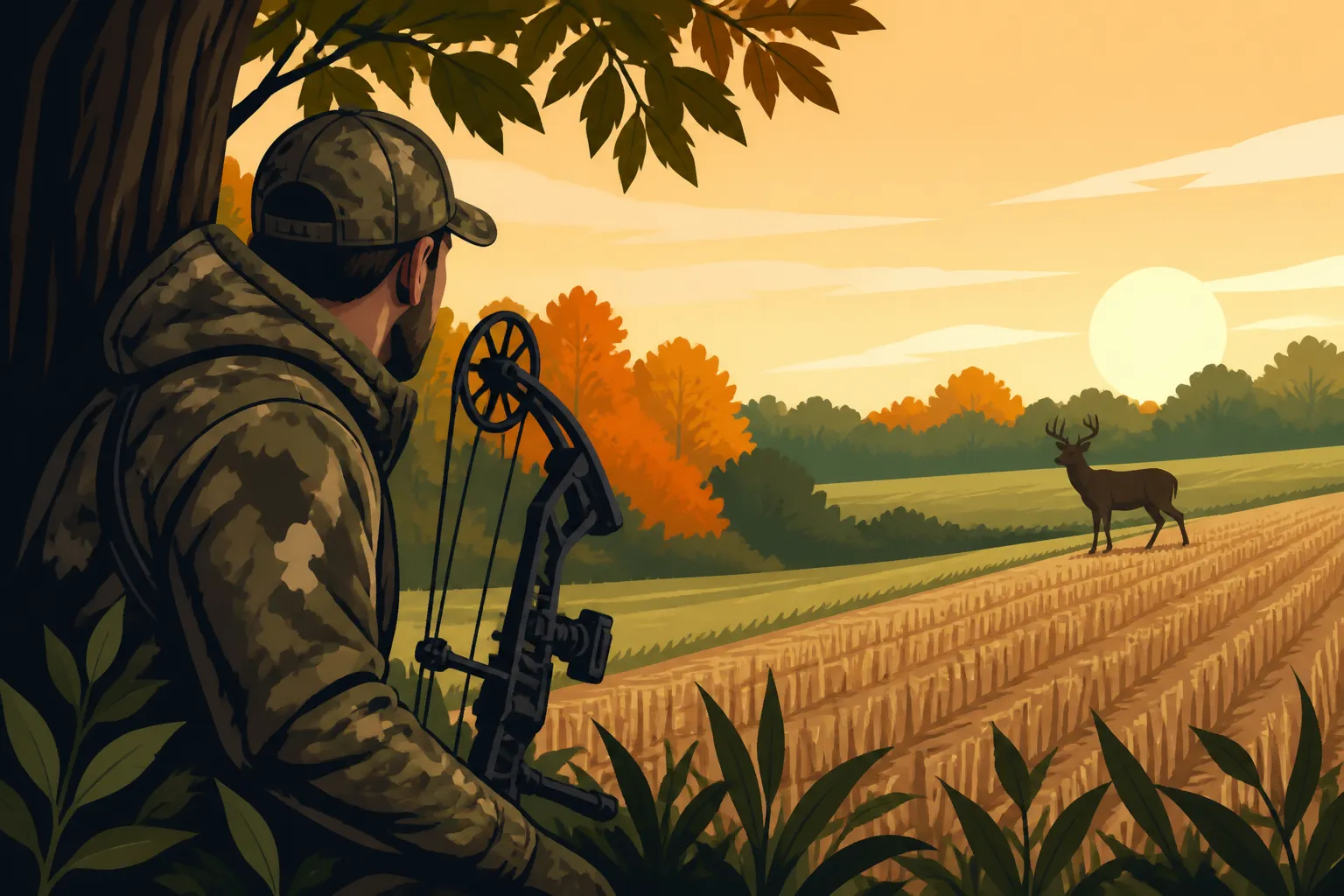
Hunting the edge of an agricultural field in Northern Indiana can feel like a game of chess against a truly wily opponent. The sheer openness of many of these landscapes often leaves hunters feeling exposed and unsure of how to approach without spooking every deer within a quarter-mile. This guide is all about giving you the practical, on-the-ground strategies to confidently set up on a Northern Indiana field edge, turning those wide-open spaces into your advantage for tagging a Hoosier whitetail.
Understanding Northern Indiana Field Edge Dynamics
Northern Indiana’s landscape, characterized by vast expanses of farmland interspersed with woodlots, fencerows, and creek bottoms, presents a unique set of challenges and opportunities for deer hunters. Unlike the rugged, dense hills of the southern part of the state, hunting up north often means navigating more open terrain where deer movements are highly influenced by food sources, cover, and prevailing winds.
The Allure and Challenges of Farmland Edges
Farmland edges are undeniably attractive to deer, offering a consistent buffet of crops like corn, soybeans, and alfalfa, alongside crucial escape and bedding cover in adjacent timber or thickets. This natural intersection of food and security makes them prime locations for deer activity, especially during the early season and into the rut. Deer will travel significant distances to access these resources, often using the very edges of these fields as their primary travel corridors.
However, this allure comes with significant challenges. The open nature of agricultural fields means deer are constantly on alert. They rely heavily on their eyesight and sense of smell, making a hunter's presence easily detected if not meticulously managed. Pressure from other hunters, agricultural equipment, and even domestic animals can push deer into nocturnal patterns or make them incredibly wary. Without a strategic approach, a well-intentioned field edge setup can quickly become a bust, leaving you watching an empty field while deer sneak by unseen just inside the woods.
Key Elements of a Productive Field Edge
Not all field edges are created equal. Identifying the truly productive ones requires a keen eye for subtle details that channel deer movement and offer them a sense of security. Look for natural pinch points where a wide field necks down, forcing deer into a smaller area. These can be formed by a bend in a creek, a change in timber type, or even a sudden drop in elevation. Funnels, often created by strips of timber or thick brush extending into a field, act as natural highways, guiding deer from bedding to feeding areas.
Transition zones are also critical. This is where one type of cover gradually shifts to another, like a dense cedar thicket meeting a mature oak stand, or a fencerow thickening into a substantial woodlot. Deer often stage in these areas before entering a field, browsing or scent-checking for danger. Finally, don't overlook features like deep ditches, overgrown fencerows, or small, isolated thickets within or along the field edge. These seemingly minor details offer deer valuable cover in otherwise open areas, providing safe travel lanes or temporary bedding spots that can bring a big buck right past your stand. Successfully identifying these elements is key to Hunting Northern Indiana Farmland Deer.
Scouting and Reconnaissance for Field Edge Success
Before you even think about hanging a stand or brushing in a blind, thorough scouting is absolutely non-negotiable for Northern Indiana field edges. You need to understand not just where deer are, but how they're using the terrain, what their daily patterns look like, and what the prevailing winds might dictate.
Digital Scouting with Mapping Tools
Your scouting efforts should always start from the comfort of your home. High-quality mapping applications are absolute game-changers, especially when dealing with the expansive nature of Northern Indiana's agricultural land. Using your GoHunt app or other similar platforms, you can spend hours analyzing aerial imagery to identify potential hotspots without ever stepping foot on the property and leaving your scent. Look for those subtle changes in vegetation, variations in field patterns, and the distinct lines of fencerows or woodlot edges.
Pay close attention to where timber fingers extend into fields, where creek bottoms intersect with crop lines, or where two different crop types meet. These are often high-traffic areas. You can also identify potential bedding areas in denser timber patches adjacent to fields, and visualize the most likely travel routes between them. Digital tools allow you to pinpoint pinch points, funnels, and potential stand sites before you ever venture out, helping you formulate a game plan and minimizing disturbance on the ground. Think of it as a blueprint for your in-person scouting.
Boots-on-the-Ground Verification
Once you have a solid digital game plan, it's time to hit the dirt. There's simply no substitute for walking the ground, especially when fine-tuning your field edge strategy. This is where you verify your digital findings and uncover the fresh sign that tells you exactly what deer are doing right now. Look for active trails leading in and out of the fields, paying close attention to where they enter the standing crops or transition into the timber. You might find a well-worn path where deer are making their Entry Routes Through Standing Corn or coming out of a woodlot to access a Hunting a Standing Soybean Field.
Fresh tracks, droppings, rubs on trees, and scrapes along field edges are invaluable clues. They confirm deer presence and often indicate the direction of travel and the size of the deer using the area. During this phase, absolute scent control is paramount. Wear rubber boots, spray down with a scent eliminator, and try to scout during midday or after a rain when your scent is less likely to linger. The goal is to gather as much information as possible without alerting a single deer to your upcoming presence.
Strategic Stand Placement on a Field Edge
Setting up on a field edge is inherently different from hunting deep timber. Your margin for error is often much smaller due to the open nature of the environment. Every detail, from wind direction to concealment, must be meticulously considered to ensure success.
Playing the Wind and Sun
Wind is the ultimate equalizer on a Northern Indiana field edge. Deer will almost always approach a feeding area with the wind in their favor, allowing them to scent-check for danger ahead. Your stand placement must account for the prevailing winds, and you should have multiple stand options for different wind directions. For instance, if you expect deer to enter a field from the west, you'll want your stand positioned on the east side, allowing the wind to blow your scent away from their approach. Always consider secondary winds and thermals as well; even in relatively flat country, subtle elevation changes can create localized thermal currents, especially in the mornings and evenings. A general rule of thumb from the hills of Southern Indiana is that "cold air falls, warm air rises," so thermals will often pull your scent downwards in the morning and upwards in the evening, affecting how your scent is carried off a field edge. Ignoring the wind is a surefire way to educate every deer in the vicinity.
The sun can also be a significant factor. While it's tempting to face into the setting sun for visibility, that blinding glare can actually hide deer approaching from the side or behind you. Ideally, you want the sun at your back during prime hunting hours, illuminating the field in front of you and keeping your position obscured by shadow. This is particularly important for those golden hour sits when deer are most active on the field edges.
Concealment and Vantage Points
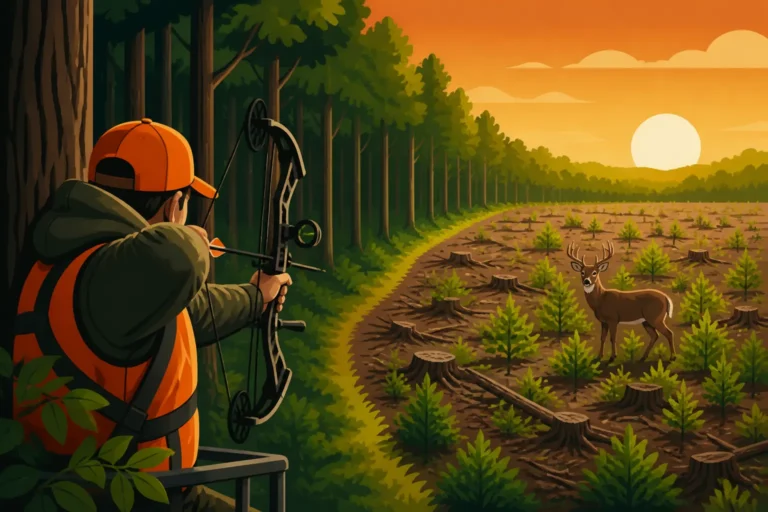
Once you've factored in wind and sun, the next step is finding the perfect balance between concealment and a clear shot opportunity. Unlike deep woods, natural cover can be sparse on field edges. Look for mature trees with thick canopies or substantial double trunks that can break up your silhouette for a treestand. If you're going with a ground blind, ensure it's brushed in meticulously, becoming an extension of the natural vegetation. You can often find excellent spots in hedgerows, at the intersection of a fencerow and a woodlot, or near a cluster of brush that provides just enough screening. Consider the various angles deer might approach from, and ensure you have shooting lanes clear for those critical first shots. Remember, a good setup provides you with a commanding view of the field while keeping you virtually invisible to deer. When considering Treestand Setups in Hoosier National Forest, many of the principles of breaking up your silhouette and controlling movement translate directly to field edges, even if the trees themselves are different.
When placing your stand, think about the deer's line of sight, not just yours. How high do you need to be to avoid detection? How far from the edge should you set up to intercept deer before they commit to the open field, or as they exit? Sometimes, a stand placed 20-30 yards into the timber from the actual field edge offers a better chance at intercepting deer moving along internal trails, before they expose themselves.
Adapting Tactics for Different Field Types and Seasons
The crops planted in Northern Indiana's fields dictate deer behavior as much as topography. A standing cornfield in September is a completely different beast from a harvested soybean field in December. Understanding these nuances is crucial for success.
Hunting Corn and Soybean Fields
Cornfields, especially standing ones, offer an incredible amount of security and food for deer. Early in the season, deer will spend entire days bedded deep within standing corn, only venturing out to the edges at night or in low light to feed. When the corn is tall, it acts as a massive linear bedding area and travel corridor. Your strategy for Entry Routes Through Standing Corn needs to be precise. Look for trails leading into the corn, not just along the edge. Deer often create distinct "tunnels" through the rows. Setting up near these entry points, especially where they meet a woodlot or fencerow, can be highly effective.
Once corn is harvested, the dynamics shift. The security cover is gone, and deer will transition to feeding on leftover kernels. This can be fantastic for late-season hunting, but it also means deer are more exposed. They'll often feed in these fields during low light, then retreat to nearby timber for bedding.
Soybean fields provide a different kind of attraction. In the early archery season, deer will aggressively browse on the green soybeans. As the season progresses and the beans mature, they become another high-energy food source. Like corn, once soybeans are harvested, deer will return to glean any fallen beans, making Hunting a Standing Soybean Field or a harvested field edge a prime spot, especially in the colder months when protein and fat sources are critical. For both crops, consider hunting during midday if there's significant pressure, as deer might feel more secure feeding then if the pressure has pushed them off their usual low-light patterns.
Targeting Deer on Alfalfa, Wheat, and Pasture Edges
While corn and soybeans are staples, Northern Indiana also features plenty of alfalfa, wheat, and pastureland, all of which can be magnets for deer. Alfalfa fields, in particular, are incredible food sources from spring through fall, offering high protein content that deer crave. They'll often feed in alfalfa throughout the day, especially on cooler, overcast days. Setting up on an alfalfa field edge, particularly where it borders dense cover, can be very productive.
Wheat fields, especially after harvest, offer tender green shoots in the late fall and early winter, making them a key food source when other crops are dormant or harvested. Deer will often transition to these green fields as winter approaches, providing excellent opportunities for Late-Season Food Sources for Indiana Whitetails. Pastures, while sometimes less concentrated in food, often feature good visibility and can draw deer for grazing, particularly if they are near good bedding cover. Look for trails along the edges of pastures where deer cross between woodlots or thickets. The key with all these field types is timing and observation: understand when deer are most likely to be feeding in them and position yourself accordingly. Remember to leverage scouting tools like GoHunt to track crop rotations and plan for these changing food sources year-round. Knowing what crops are planted can significantly impact your scouting efforts, even during the off-season for activities like Shed Hunting on Indiana Public Land.
| Field Type | Best Time to Hunt | Stand Location Considerations | Primary Food Source |
|---|---|---|---|
| Standing Corn | Early Season, Evening | Interior trails, funnel points, where corn meets timber | Kernels (after maturity), cover |
| Harvested Corn | Late Season, Low Light | Edges bordering bedding, entry/exit trails | Leftover kernels |
| Standing Soybeans | Early/Mid Season, Evening | Edges near bedding, pinch points, transition zones | Green pods (early), mature beans (late) |
| Harvested Soybeans | Late Season, Low Light | Edges bordering thickets, travel corridors | Leftover beans |
| Alfalfa | Early-Mid Season, All Day | Downwind of primary feeding, near dense cover | High-protein forage |
| Wheat (Green) | Late Fall/Early Winter, Low Light | Edges of new growth near bedding areas | Tender green shoots |
| Pasture | Any Season (less predictable), Low Light | Near travel corridors between bedding/other food | Grazing, browse |
Choosing Your Weapon: Treestand or Ground Blind
The choice between a treestand and a ground blind on a Northern Indiana field edge often comes down to the available cover, the terrain, and your personal hunting style. Both have distinct advantages and disadvantages in these open environments.
Advantages of Elevated Stands
A treestand offers a significant advantage in elevation, allowing you to see over tall crops (like early season corn or mature soybeans) and providing a wider field of view across the open field. The elevated position also helps with scent control, lifting your scent plume above the immediate ground level where deer are most likely to detect it. In areas where trees are mature and plentiful along the field edge, a well-placed treestand can be incredibly effective. It allows you to spot deer approaching from a distance, giving you more time to prepare for a shot. Even if you're adapting principles from Hanging a Stand on a Southern Indiana Ridge, the elevation here is critical for visibility over crops.
When selecting a treestand site, prioritize trees that are both tall and offer natural cover to break up your silhouette. Think about a tree with a thick canopy, or one with vines growing up it. A double-trunk tree can also work wonders for concealment. Pay careful attention to your entry and exit routes, ensuring you can get to and from your stand without spooking deer in the field or the adjacent woods. This often means using natural terrain features, ditches, or existing fencerows for cover during your walk.
Maximizing Concealment with Ground Blinds
While treestands are great where trees are available, many Northern Indiana field edges might have sparse or insufficient trees for an elevated setup. This is where a ground blind shines. A properly set up and brushed-in ground blind offers incredible concealment and allows you to hunt in locations where a treestand simply isn't an option. They also provide excellent protection from the elements, which can be a huge bonus during a long, cold sit in late season. Using a ground blind, as detailed in guides like Using a Ground Blind on Indiana Public Land, gives you the flexibility to adapt to changing deer patterns and pressure.
The key to ground blind success on a field edge is thorough brushing in. Don't just set it up and hope for the best; actively weave local vegetation—corn stalks, cattails, saplings, branches—into the blind's exterior until it virtually disappears into the background. Set it up well in advance of your hunt, if possible, to allow deer to get accustomed to its presence. Pay close attention to your shooting lanes from a seated position, and ensure you have clear views without having to move too much inside the blind. Often, positioning a blind with a dense background, like a thicket or the edge of a woodlot, helps it blend in naturally.
Advanced Field Edge Tactics for Wary Whitetails
Northern Indiana deer, especially those on highly pressured public land or near suburban areas, can be incredibly wary. To consistently find success, you need to think beyond the basic setup and incorporate advanced tactics that address their heightened senses and caution.
Using Terrain and Cover to Your Advantage
Even in relatively flat Northern Indiana, subtle terrain features can make all the difference. Dips, swales, ditch lines, and even slight rises in elevation along a field edge can serve as natural travel corridors or offer momentary concealment for approaching deer. When you're Reading Aerial Photos for Southern Indiana Deer, look for these features, and understand that similar principles apply up north. A small ditch that offers a deer a few feet of cover might be the exact path a mature buck takes to enter a field. Identifying these "low spots" or natural draws can give you an edge.
Additionally, don't underestimate the value of linear cover. Overgrown fencerows, thin strips of timber, or even wide grassy waterways cutting through fields can provide critical travel routes. Deer use these to move between bedding and feeding areas, often avoiding the wide-open expanse of the field itself. Setting up on a Hunting a Brushy Fence Row at Dusk can be incredibly effective, as deer often use these features as they filter out into the open for evening feeding. By understanding how deer exploit even minimal cover, you can position yourself for intercepts that other hunters might miss.
Adapting to Hunting Pressure
Hunting pressure is a constant reality in many parts of Indiana, and Northern Indiana's accessible farmland is no exception. Deer quickly learn to avoid high-traffic areas and become increasingly nocturnal or wary. If you find your primary field edge spots are being hammered, it's time to adapt. One common strategy is to back off the immediate field edge. Instead of setting up right on the treeline, consider moving 50-100 yards into the timber, hunting secondary trails that parallel the field edge or lead from bedding areas towards the field. Deer might be staging deeper in the woods, waiting until after dark to approach the open.
Another tactic is to focus on less obvious, harder-to-access areas. Perhaps there's a small, isolated woodlot surrounded by fields that requires a longer walk, or a creek bottom that's too swampy for most to bother with. Often, the deer that survive pressure are those that utilize these out-of-the-way spots. Scout these areas heavily, even if it means putting in extra effort. You might find a hidden Hunting a Funnel Between Two Woodlots that is overlooked, providing a sanctuary for mature deer. Furthermore, consider hunting during off-peak times, like mid-morning or during adverse weather conditions, when other hunters are less active, and deer might be more willing to move.
Disclaimer
Hunting is an inherently dangerous activity. Always prioritize safety, follow all local and state regulations, and obtain proper licenses and permits. The advice provided here is for informational purposes only and should not replace proper hunter education or professional guidance. Always respect private property and practice ethical hunting techniques.