Hunting a Standing Milo Field for Deer
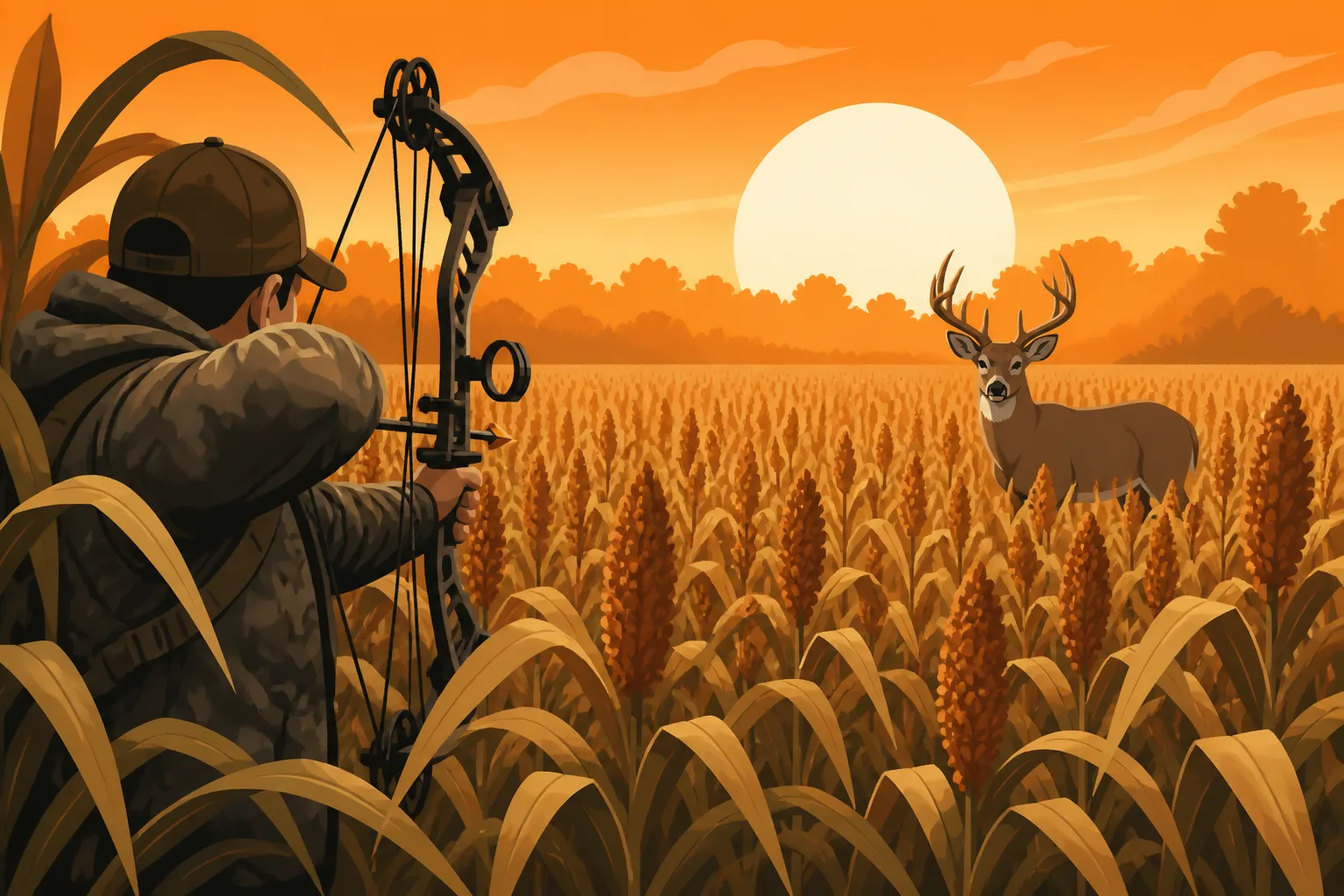
Hunting deer in a standing milo field presents a unique set of challenges that can leave even seasoned hunters scratching their heads. The dense, towering stalks offer incredible cover for whitetails, making them feel incredibly secure, but also making it incredibly difficult for us to even catch a glimpse, let alone get a shot. This guide is all about dissecting the mystique of milo fields, providing you with actionable strategies to successfully locate and harvest deer in these tricky, yet highly productive, agricultural havens across Indiana.
Understanding Why Deer Love Milo Fields
If you’ve ever stood next to a mature milo field, you know immediately why deer are drawn to them like a magnet. These fields aren't just a place to grab a quick bite; they're a fortress of food and cover, offering everything a whitetail needs to thrive, especially during those critical fall and early winter months when other food sources might be dwindling.
Food Source and Nutritional Value
Milo, also known as grain sorghum, is a fantastic late-season food source. The grain itself is packed with carbohydrates, providing deer with essential energy as they head into the colder parts of the year or recover from the rut. Unlike corn, which is often harvested earlier, milo frequently stands well into late fall and even early winter, especially on smaller, less intensely farmed plots. This extended availability makes it a prime target for deer looking for consistent sustenance. They'll browse on the leaves and stalks, but the real draw is those grain heads. When the weather turns nasty, or hunting pressure on other food plots ramps up, that standing milo becomes a deer's cafeteria and safe haven rolled into one. It's not uncommon to see deer literally buried within the rows, nibbling away for hours.
Security and Thermal Cover
Beyond the food, the sheer density and height of a standing milo field offer unparalleled security. A mature milo field can easily reach 6-8 feet tall, creating a thick, tangled jungle that deer can disappear into completely. This dense canopy provides excellent thermal cover, shielding them from biting winds and keeping them cooler on warmer days. Think of it as a natural, living ground blind for the deer themselves. They can bed down in the middle of a large field, feeling virtually invisible to predators and hunters alike. This security is particularly attractive to mature bucks, who are notoriously wary. They know they can escape the prying eyes of hunters and find refuge, often only emerging at dusk or after dark to browse the edges or head to water. This makes Hunting Northern Indiana Farmland Deer especially challenging but rewarding, as these areas often feature such crop fields.
Scouting Strategies Before the Season
You simply can’t walk into a standing milo field blind and expect success. These fields demand diligent scouting, both from the comfort of your home and with boots on the ground. Understanding deer movement patterns before they vanish into the dense stalks is critical.
E-Scouting with Digital Tools
Before you even step foot near the field, spend some serious time with your digital mapping tools. Platforms like GoHunt are invaluable for really digging into aerial imagery and property lines. Look for fields that are adjacent to known bedding areas, thick timber, or water sources. Deer rarely bed right in the milo for their primary daytime bedding, but rather use it as a sanctuary between their true bedding and their feeding. Identify potential funnels, pinch points, or creek bottoms that deer might use to travel to and from the milo. Pay close attention to subtle terrain features within or around the field—a small ditch, a slight elevation change, or a patch of thicker brush—these can all be highways for deer.
You can also use GoHunt to overlay wind directions on a map and see how prevailing winds might affect entry and exit routes to different stand locations. Identifying these routes virtually will save you countless hours and minimize your disturbance in the actual field. This is also a great time to check public land boundaries, if you’re hunting on or near public access, as understanding Scouting Indiana Public Land Before Season is always key. Look for those small, overlooked corners or isolated woodlots bordering milo fields where deer might stage before entering the main crop.
Boots-on-the-Ground Reconnaissance
Once you've narrowed down some key areas on your map, it's time to hit the field, ideally before the milo gets too tall or too close to hunting season. This early scouting allows you to walk the perimeter and identify actual trails. Look for well-worn deer trails leading into the milo from timber, fencerows, or draws. Pay attention to rubs and scrapes along these entry points; they'll tell you what bucks are in the area and how they're entering and exiting.
Walk just inside the edge of the field if possible, looking for tracks and droppings. Sometimes deer will create distinct "lanes" within the milo, especially if it's a larger field. These are essentially travel corridors through the thick stuff. Finding these can be a game-changer. Don't be afraid to poke around a bit, but remember, every time you enter, you're leaving scent. If the milo is already tall, concentrate your ground scouting on the perimeter. Consider setting up a few trail cameras on prominent trails leading into the field, or at key intersections of trails. This can give you an invaluable insight into not just what deer are using the field, but when they are using it. These scouting methods are similar to those used when Hunting a Standing Soybean Field or when identifying Entry Routes Through Standing Corn.
Effective Hunting Tactics for Milo
Hunting milo fields requires patience, stealth, and a keen understanding of deer behavior in dense cover. Simply plopping down on the edge and hoping for the best usually leads to frustration. Instead, focus on calculated approaches and understanding the subtle cues deer provide.
Setting Up Near Entry and Exit Points
Deer will have preferred ways in and out of a milo field, especially if it's large. Your goal is to intercept them along these travel routes. Look for trails that lead directly from thick timber or known bedding areas into the milo. These are often used just before dark as deer move to feed, and just after dawn as they head back to bed.
Position your stand or blind downwind of these primary entry/exit points. A common mistake is to set up too close to the actual field edge, only to have deer slip in or out further down the line, catching your scent. Give yourself some breathing room, perhaps 20-30 yards into the timber or along a fencerow, allowing you to catch deer as they commit to entering or leaving the dense cover. This strategy is also effective when Hunting a Funnel Between Two Woodlots, emphasizing the importance of predicting movement.
Using Ground Blinds and Treestands
Both ground blinds and treestands have their place when hunting milo, but each has distinct advantages and disadvantages.
Ground Blinds:
- Pros: They offer excellent concealment directly on the field edge or even slightly within the milo, if you can brush them in effectively. A good ground blind helps contain your scent and allows for more movement, which is a blessing on a long sit. When you're Using a Ground Blind on Indiana Public Land, especially near a field, remember that blending in is paramount.
- Cons: Visibility can be severely limited by the tall milo. You might only see deer when they are very close, and tracking a shot can be incredibly tough if a deer runs back into the dense cover. They also require more pre-season setup and brushing in, as described in Brushing In a Blind on a Field Edge.
Treestands:
- Pros: Elevated positions give you a much better vantage point over the milo, allowing you to spot deer at a greater distance and potentially see them move through the crop. This improved visibility is a huge advantage for shot placement and tracking.
- Cons: Getting into a treestand quietly can be challenging, especially if you're hunting right on the edge. You're also more exposed to the elements and any deer that might pick up your silhouette. The specific setup will depend on the available trees along the field edge, similar to Treestand Setups in Hoosier National Forest.
| Feature | Ground Blind in Milo | Treestand Near Milo |
|---|---|---|
| Visibility | Limited, only close shots, hard to track | Excellent, wider view, easier tracking |
| Concealment | Very high, helps with scent control, easy to brush in | Moderate, silhouette possible, requires good tree cover |
| Mobility | Limited once set, but comfortable for long sits | More mobile if using climber/saddle, but harder to set quietly |
| Scent | Better contained within blind | Disperses more easily with wind, good wind needed |
| Setup Time | Can be quick if pre-set, requires brushing | Can be quick (climber) to moderate (hang-on) |
Still-Hunting the Edges and Interior
For the experienced and patient hunter, still-hunting can be an incredibly effective, albeit challenging, tactic in milo fields. This isn't about busting through the middle, but rather slowly, deliberately picking apart the edges and sometimes even making shallow forays into the field itself.
Move with agonizing slowness, taking one or two steps, then pausing for several minutes to glass and listen. Focus your attention not just ahead, but to your sides and even behind you. Deer have an uncanny ability to materialize out of thin air in dense cover. Use the wind to your advantage, always moving into it to keep your scent from blowing ahead of you. This is where understanding Wind and Thermals on a Southern Indiana Ridge becomes universal, regardless of the specific terrain.
If you decide to venture slightly into the milo, pick your path carefully, using existing deer trails if possible. Move against the grain, meaning if the deer typically move from west to east through the field, you might still-hunt from east to west, catching them by surprise. This is a tactic that requires extreme patience and precision, as a wrong move will send deer scattering.
Considerations for Wind and Thermals
Wind direction is paramount when hunting milo. Because deer rely so heavily on their noses, playing the wind correctly can make or break your hunt. Always approach and set up downwind of where you expect deer to travel or bed. If the wind shifts, be prepared to adjust your strategy or relocate.
In areas with slight topography, thermals can also play a significant role. In the mornings, air often sinks down into draws and low spots, while in the evenings, it tends to rise. If you're hunting an entry point in a bottomland area adjacent to a milo field, be mindful of how these air currents will carry your scent. Use your digital mapping tools like GoHunt to visualize these elevation changes and predict thermal currents, even if they're subtle.
Gear Essentials for Milo Field Hunting
Hunting in and around dense milo requires specific gear choices to maximize your chances of success and ensure a comfortable, productive hunt.
Optics for Dense Cover
Given the limited visibility, good optics become even more critical. While you might not be glassing vast distances, you need binoculars that can gather light effectively in the low light conditions often found within a milo field and allow you to pick out subtle details. An 8×42 or 10×42 binocular is generally ideal for this type of hunting. You'll be using them to scrutinize every rustle, every flicker of movement in the dense stalks. Focus on quality glass with excellent low-light performance to discern deer in the shadows. This is where your Binocular Choice for Indiana Whitetails really matters. A rangefinder is also helpful, as distances can be deceiving in the close confines of standing crops.
Appropriate Clothing and Footwear
Your clothing needs to be quiet, durable, and provide adequate concealment. The milo stalks can be abrasive, so choose rugged fabrics that won't snag or make excessive noise as you brush past them. Layering is always smart for Indiana hunting, as temperatures can fluctuate wildly, especially during the fall.
When it comes to footwear, waterproof and comfortable boots are a must. Milo fields, especially after a rain or with morning dew, can be incredibly wet and muddy. You'll be doing a lot of walking, potentially through thick, uneven terrain, so support and comfort are key. Consider rubber boots for ultimate waterproof protection if you anticipate wet conditions or crossing damp areas. For colder late-season hunts, ensure your boots are well-insulated to keep your feet warm during long sits. These are similar considerations to those when contemplating Cold-Weather Sitting Strategy in Indiana where staying warm and dry is paramount.
Navigating Common Challenges
Milo fields are not for the faint of heart. They present unique challenges that can frustrate even the most seasoned hunter. However, understanding these hurdles beforehand can help you develop strategies to overcome them.
Dealing with Limited Visibility
The biggest challenge in a standing milo field is undoubtedly visibility. Deer can be just yards away, and you might never see them. This means you need to hone your senses beyond just sight. Listen for the subtle sounds of deer moving: the crunch of stalks, the rustle of leaves, or the soft blowing of a deer.
When still-hunting or sitting in a blind, scan in small, methodical sections. Don't just look generally; actively search for horizontal lines (a deer's back) in a vertical world, or the flick of an ear. Use your binoculars to pick apart dense areas that look like potential bedding spots or travel lanes. If you hear something, freeze and wait. Often, the deer will move again, giving you a better chance to pinpoint its location. This is also where understanding deer behavior on a micro-level, like Where Hoosier National Forest Bucks Bed, can inform your decisions, even if the habitat is different.
Managing Scent in Standing Crops
Scent control is absolutely critical when hunting milo. The dense cover tends to hold and channel scent, making it easier for deer to pick up your presence. Every possible measure should be taken to minimize your scent footprint.
- Pre-Hunt Routine: Shower with scent-free soap, use scent-free laundry detergent for your hunting clothes, and store them in airtight bags or containers.
- During the Hunt: Use scent-eliminating sprays on your clothing and gear. Be mindful of your breath; chewing scent-free gum can help. Try to avoid touching vegetation unnecessarily.
- Wind Awareness: Always play the wind. This cannot be stressed enough. If the wind is wrong for your desired setup, either move or choose a different day to hunt that location. Deer will bust you every single time if your scent is blowing into their sanctuary or travel path. In areas with significant thermal drafts, like a creek bottom next to the milo, pay extra attention to how Wind and Thermals on a Southern Indiana Ridge affect scent dissipation throughout the day.
By understanding these challenges and proactively planning for them, you can turn a potentially frustrating milo field into a productive hunting ground. It requires a different mindset than hunting open woods, but the rewards of harvesting a mature whitetail from such a secure environment are incredibly satisfying.
Disclaimer
Hunting is an inherently dangerous activity. Always prioritize safety, understand and obey all local, state, and federal hunting regulations, and ensure you have proper training and licensure before entering the field. The information provided in this guide is for informational purposes only and should not replace professional guidance or personal judgment.