Hunting Brown County Ridgelines
Hunting Brown County's rugged ridgelines can feel like tackling a puzzle where the pieces are all steep hills and dense timber. It’s undeniably beautiful, but that beauty comes with its own set of challenges, from navigating treacherous terrain to understanding the swirling winds. This guide is dedicated to helping you unlock the secrets of those formidable hills, equipping you with the strategies and insights needed to successfully hunt deer in one of Indiana's most iconic and demanding landscapes.
Understanding Brown County's Unique Terrain
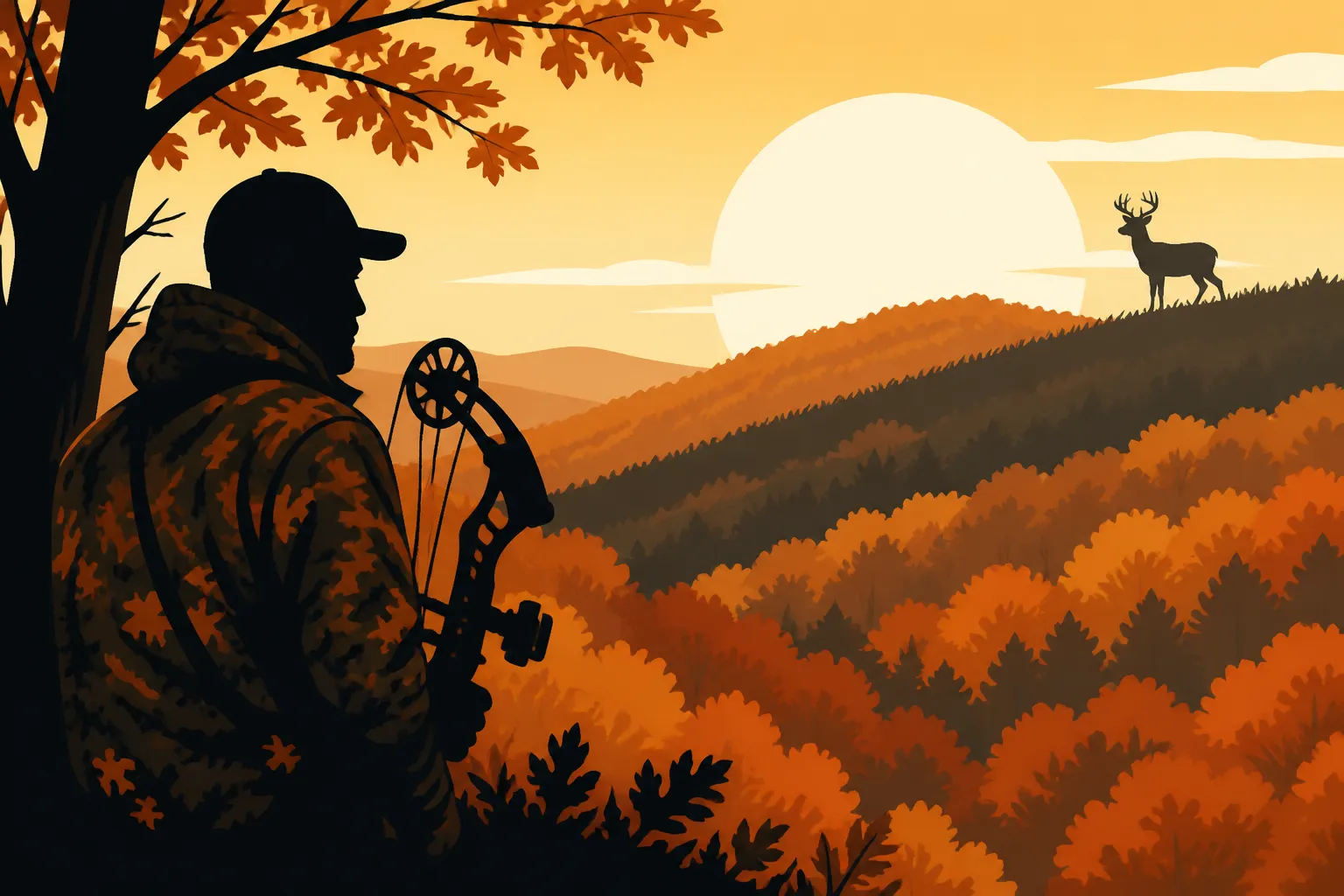
Brown County, often called the "Little Smokies" of Indiana, is a stark contrast to the flat farmlands that define much of the state. Its rugged, unglaciated topography presents a unique environment for both deer and the hunters who pursue them. Getting a handle on this distinctive landscape is the first step to becoming a more effective hunter here.
The Lay of the Land: Steep Slopes and Deep Hollows
When you first step into Brown County's hills, the sheer elevation changes can be a shock. You'll find yourself traversing endless series of steep ridges, deep valleys (often called hollows or draws), and sharp ravines that funnel down to small creek bottoms. These aren't gentle rolling hills; they're often severe, with drops of hundreds of feet in short distances.
Deer, being creatures of efficiency, have adapted their movements to this demanding environment. They rarely travel straight up or down the steepest parts of a ridge unless pressured. Instead, they prefer to use the contours. Look for benches – those flatter, shelf-like areas that interrupt a steep slope – which offer ideal travel routes. Saddles, the low points between two ridge tops, are absolute magnets for deer movement, serving as natural highways for bucks cruising during the rut or does moving between bedding and feeding areas. Creek bottoms, while often thick and difficult to navigate, can also be critical travel corridors, especially during dry spells or as sources of water. Understanding these features is paramount when you're Reading a Ridge for Hoosier Forest Deer.
Forest Composition and Deer Behavior
The forests of Brown County are predominantly mature oak and hickory, forming a crucial part of the deer's ecosystem. Acorns from these trees are a primary food source, especially in the fall, drawing deer to specific ridge tops and slopes where mast crops are heaviest. A keen hunter will pay attention to the annual acorn crop, as a bumper crop can concentrate deer in certain areas, while a poor one might force them to seek alternative food sources like green browse or honeysuckle thickets.
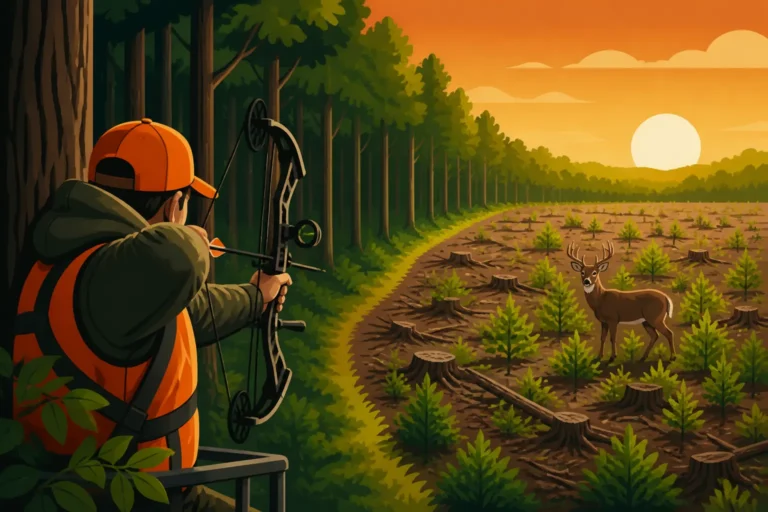
While ridge tops can sometimes be more open, offering longer sightlines, the hollows and north-facing slopes often hold denser undergrowth, providing critical thermal and security cover for bedding deer. During cold snaps, deer will seek out south-facing slopes and thickets to bed, catching the warmth of the sun. Conversely, on warmer days, they might prefer the cooler, shaded north-facing slopes. These variations in cover density and food availability directly influence where deer choose to spend their time, and therefore, where you should focus your efforts. Logging operations, which do occur in some parts of Brown County's state forests or Hoosier National Forest lands, can create new growth and edge habitat that deer will readily exploit for both food and cover, drastically altering movement patterns in localized areas.
Scouting Strategies for Brown County Ridgelines
Hunting Brown County effectively starts long before you ever step foot in the woods with your bow or rifle. The sheer scale and complexity of the terrain demand thorough scouting, both from the comfort of your home and with boots on the ground.
Leveraging Digital Tools for Remote Scouting
In today's hunting world, digital mapping applications are indispensable, especially for rugged areas like Brown County. Tools like GoHunt or the Indiana DNR's mapping system allow you to pour over topographic maps and aerial imagery, identifying key features without burning precious calories. You can pinpoint saddles, benches, natural funnels created by converging ridges, and potential creek crossings. Look for areas where finger ridges extend off a main ridge, creating natural pinch points where deer traffic is likely to condense. You can also identify potential access points, estimate distances, and note elevation changes, which will be crucial for planning your approach and exit routes.
This remote scouting is vital for understanding Reading Aerial Photos for Southern Indiana Deer. It helps you eliminate vast tracts of less promising ground and focus your in-person efforts on areas with the highest potential. Mark potential bedding areas on leeward slopes or in thick pockets of cover, and feeding zones on ridge tops with abundant oak trees or in secluded creek bottoms. While these digital maps are incredibly powerful, remember they are just a starting point. They give you a theory, and your boots on the ground will confirm or deny it.
Boots-on-the-Ground Reconnaissance
There's no substitute for getting into the woods and seeing the sign firsthand. Pre-season scouting in Brown County is tough work, but it's where you truly confirm your digital theories. You need to be prepared for strenuous hikes, carrying plenty of water and wearing sturdy Boots for Indiana Mud and Snow.
When you're out there, look for fresh rub lines and scrape lines, especially along benches or leading into saddles. These are clear indicators of deer movement. Follow faint trails along contours, observing where they intersect or narrow. Pay close attention to bedding areas—these are often found on specific benches on the downwind side of a ridge, offering deer a view of approaching threats from below and using the wind to detect anything coming from above. Look for persistent food sources, beyond just acorns, like browse lines on honeysuckle or other brush. Identifying these specific areas during your pre-season visits will allow you to plan precise stand locations. The more you explore, the better you'll understand the intricate network of deer trails and how they relate to the landscape. It's truly a deep dive into Finding Sign in Big Hoosier Forest Timber.
Brown County Terrain & Strategy Overview
| Feature | Deer Behavior | Hunting Strategy | Key Considerations |
|---|---|---|---|
| Steep Ridgelines | Travel along contours, bed on benches. | Focus on saddles, benches, and ridge points. | Physical exertion, wind/thermals. |
| Deep Hollows/Draws | Provide security cover, travel to water/food. | Hunt intersections with ridges, funnel points. | Swirling winds, dense cover. |
| Saddles | High traffic corridors, natural bottlenecks. | Primary stand locations, especially during rut. | Wind direction is critical here. |
| Benches | Preferred travel routes and bedding sites. | Place stands overlooking these shelves. | Approach quietly, avoid being silhouetted. |
| Oak/Hickory Forests | Primary food source (acorns). | Scout mast production, hunt areas with heavy drop. | Acorn crop varies year to year. |
| Thick Cover | Bedding, escape routes. | Use as drive blockers, still-hunt edges. | Difficult visibility, noisy movement. |
| Creek Bottoms | Water source, travel corridors, late-season food. | Hunt crossings, transition areas up to ridges. | Can be marshy, avoid high-water areas. |
Effective Hunting Tactics for Brown County Ridgelines
Once you've done your homework and understand the terrain, it's time to translate that knowledge into actionable hunting tactics. Brown County's hills demand a nuanced approach, combining patience with strategic movement.
Playing the Wind and Thermals
In flat country, wind direction is usually straightforward. In Brown County, it's a whole different ballgame due to thermals. Thermals are air currents driven by temperature changes. In the morning, as the sun warms the earth, air rises, carrying your scent up the hill. In the evening, as the air cools, it falls down the hill, carrying your scent into the hollows.
This means a steady west wind at ridge-top level can be entirely different just 50 feet down a slope. You need to position yourself not just with the wind in mind, but also considering the thermal effect. If you're hunting a morning sit, often positioning yourself below a ridge top where deer might be moving up from bedding in the hollows, with your scent rising, can be effective. For an evening hunt, setting up higher, allowing your scent to fall away from where deer are likely to be approaching from the ridge or moving up from below, works better. Always be mindful of swirling winds in saddles and at the confluence of draws; these areas can be tricky. Don't forget the importance of scent control in a country where your scent can be carried for long distances, even up or down hills. This is a topic thoroughly explored in Wind and Thermals on a Southern Indiana Ridge.
Stand Placement and Still-Hunting Approaches
Brown County is ideal for a mobile hunting style. Lugging a bulky ladder stand deep into the Hoosier National Forest is often impractical. Instead, consider lightweight hang-on treestands or, even better, a saddle hunting setup. These allow for deep penetration into remote areas and offer incredible flexibility to adjust your setup based on changing deer movement or wind direction. Optimal stand placement involves overlooking those key saddles, benches, and the intersection of finger ridges that funnel deer traffic. You want to set up where you can intercept deer traveling between bedding and feeding areas, or bucks cruising during the rut. For detailed advice on this, check out Treestand Setups in Hoosier National Forest.
Still-hunting is another incredibly effective tactic in this terrain. This involves moving slowly and deliberately, taking a few steps, then pausing for several minutes to scan for movement. The undulating terrain and dense pockets of cover can hide deer surprisingly well, making patient observation paramount. Focus on moving along contours, using the landscape to break up your silhouette, and always be ready for a shot. The sounds of crunchy leaves can be a challenge, especially in dry conditions, so pick your steps carefully. The art of Still-Hunting Southern Indiana Ridgelines truly shines here.
Mid-Day and Late-Season Strategies
Don't make the mistake of leaving your stand too early or arriving too late in Brown County. Mid-day can be incredibly productive, especially during the rut, when bucks are actively cruising for does. Instead of heading back to camp for lunch, consider hunting a transition area between two known bedding areas or a primary ridge that bucks might use to travel between properties. Deer in Brown County often bed down and then move again in the mid-morning or mid-afternoon, seeking out new food sources or checking scrape lines.
As the season progresses into the late season, deer patterns shift dramatically. Food becomes scarcer, and thermal cover becomes more critical. Focus your efforts on persistent food sources, like remaining acorns (if any), browse (such as honeysuckle or greenbriar in thickets), or areas with standing corn or soybeans on the perimeter of the hills, if private land borders the public ground. South-facing slopes with dense cover are prime bedding locations during cold weather, as deer seek warmth from the sun. A Cold-Weather Sitting Strategy in Indiana might involve setting up in a protected pocket or sun-drenched slope, facing away from the prevailing wind, and being prepared to sit all day with proper layering and insulation.
Gear and Logistics for Rugged Terrain
Brown County isn't a place where you want to be unprepared. The unforgiving terrain and often remote nature of the hunting mean your gear choices and physical readiness are paramount to a safe and successful hunt.
Essential Gear for Brown County Hunts
Your pack is more than just a place to stash a sandwich; it's your lifeline in these hills. A quality hunting backpack, like those from Badlands or Mystery Ranch, should be large enough to carry all your essentials: plenty of water (more than you think you'll need!), snacks, extra layers of clothing for temperature fluctuations, a first-aid kit, and essential navigation tools. OnX Hunt and other GPS apps are fantastic, but always carry a compass and a physical map as a backup – cell service can be spotty at best in the deep hollows. For more on what to carry, check out Packs for a Hoosier Forest Day Hunt.
Footwear is non-negotiable. You need sturdy, waterproof hiking boots with excellent ankle support and aggressive tread. The steep, often leaf-covered slopes are notorious for causing slips and twisted ankles. Consider brands like Kenetrek or Crispi for their durability and support. Your clothing system should be built on layers. Start with a good moisture-wicking base layer, add insulating layers like fleece or wool, and top it off with a quiet, waterproof outer shell. Wool is especially effective as it retains warmth even when wet. Finally, don't forget quality optics. Good binoculars (8x or 10x power) are crucial for picking apart distant hillsides, and a reliable rangefinder is a must for accurately judging distances in varied terrain. More specific recommendations can be found in Optics for Southern Indiana Ridgelines.
Physical Preparation and Safety
Let's be real: Brown County will test your fitness. The constant ups and downs are physically demanding. Start a walking or hiking regimen well before the season, ideally incorporating hills or stairs, to build up your endurance and leg strength. Being in good physical condition not only makes the hunt more enjoyable but also significantly reduces the risk of injury.
Safety should always be your top priority. If hunting alone, always tell someone where you're going and when you expect to return. Carry a fully charged cell phone (though be aware of service limitations) and a personal locator beacon (PLB) for emergencies. A comprehensive First Aid Kits for Remote Forest Ground is non-negotiable, containing essentials for cuts, sprains, snake bites (yes, timber rattlesnakes and copperheads are present in parts of southern Indiana, though encounters are rare), and hypothermia. Be mindful of your surroundings; steep drops can appear suddenly, and slippery leaves on wet slopes are a common hazard. Always maintain three points of contact when climbing or descending steep terrain. Know your limits, and don't push yourself past the point of exhaustion, especially when far from your vehicle.
Disclaimer
Hunting is an inherently dangerous activity. This guide provides information for educational purposes only. Always consult the latest Indiana Department of Natural Resources regulations and local ordinances before hunting. Ensure you have proper licenses and follow all safety guidelines. The author and publisher are not responsible for any accidents, injuries, or legal issues that may arise from using this information. Hunt ethically, legally, and safely.