Finding Sign in Big Hoosier Forest Timber
Hunting the vast, ancient timber of the Hoosier National Forest can feel like searching for a needle in a haystack, especially when you're trying to pinpoint subtle deer sign. It's easy to get discouraged by the sheer scale of the woods and the seemingly endless tracts of seemingly barren ground. This guide is for every Hoosier hunter who's felt that frustration, offering realistic strategies to effectively find and interpret deer sign in big timber, giving you an edge in these challenging but rewarding environments.
Understanding the Hoosier National Forest Landscape
When you step into the Hoosier National Forest, you're not just stepping into "the woods." You're entering a complex, sprawling ecosystem that demands a different approach than hunting small woodlots or farmland edges. It's a place where deer have room to roam, where food sources can be scattered, and where the sign you're looking for might be less concentrated than what you're used to.
The Scale and Challenges of Big Timber
The sheer size of areas like the Hoosier National Forest, covering over 200,000 acres across south-central Indiana, can be incredibly intimidating. Unlike small private parcels where deer might be funneled into predictable patterns, big timber offers an almost limitless array of hiding spots and travel corridors. This means that deer sign, while present, is often less obvious and requires a keen eye and a patient approach to locate. You might walk for miles without seeing much, only to stumble upon a concentrated area of activity that makes all the effort worthwhile. It's easy to feel defeated after hours of searching with little to show for it, but remember that the deer are there, they're just spread out and masters of their environment.
The terrain itself presents its own set of challenges. Southern Indiana's hill country, a significant portion of the Hoosier, is defined by steep ridges, deep hollows, and dense undergrowth in many areas. Navigating this can be exhausting, and it often dictates how deer move. They'll use the contours of the land to their advantage, often moving along benches, down creek bottoms, or over saddles that provide easier travel. Understanding these natural highways is just as important as finding specific rub lines or scrapes. Knowing how to read a ridge for Hoosier Forest deer can save you a lot of wasted effort.
Furthermore, hunting pressure on public land, especially during firearms season, can push deer into even thicker, more remote sections of the forest. This makes finding fresh, undisturbed sign even more critical. You need to look for those out-of-the-way pockets that other hunters might overlook or simply not be willing to hike into. This usually means venturing deeper than most, or finding those less obvious access points that lead to hidden sanctuaries.
Key Habitat Features to Prioritize
While big timber offers a lot of ground, not all of it is equally attractive to deer. Savvy hunters learn to prioritize specific habitat features that are more likely to hold deer, thus increasing their chances of finding sign. Acorn-producing oak ridges are a classic example. When acorns drop, deer will congregate in these areas, leaving behind a wealth of tracks, droppings, and feeding sign. Look for white oaks, red oaks, and pin oaks, as they will drop at different times, providing food throughout the fall.
Water sources are another critical element, particularly during dry spells or in areas where natural water is scarce. Creek bottoms, spring seeps, or even small depressions that hold rainwater can be magnets for deer. Identifying these areas on a map, then scouting them on foot, can reveal well-worn trails and bedding areas nearby. Don't overlook these subtle water features; they can be as important as a food source.
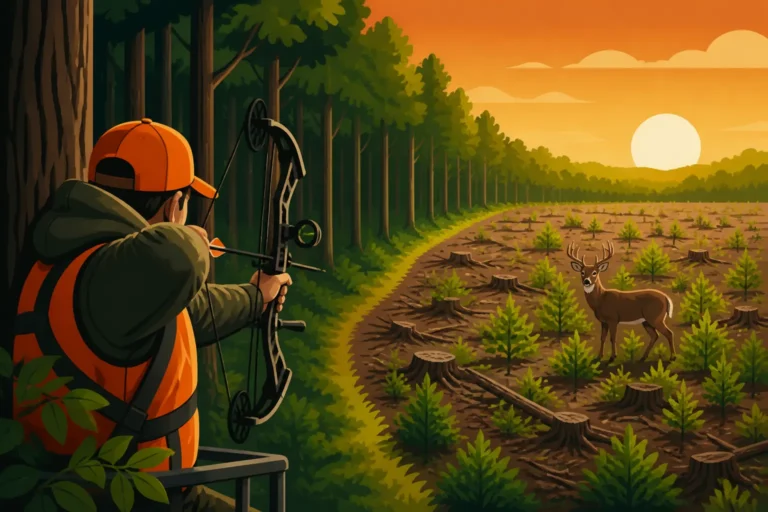
Dense thermal cover, such as thick stands of young pines, cedar thickets, or even areas with heavy multiflora rose or honeysuckle, provides deer with security and protection from the elements and predators. These are prime locations for bedding areas, especially on north-facing slopes that offer refuge from prevailing winds or south-facing slopes that catch the sun on cold days. When you find these pockets, you'll often discover beds, fresh droppings, and subtle trails leading in and out. Understanding where Hoosier National Forest bucks bed is crucial for predicting their movements.
Deciphering Fresh Deer Sign on the Ground
Once you've narrowed down your search to promising habitat, the real work begins: meticulously searching for and interpreting the actual deer sign. It's not just about seeing something, it's about understanding what that sign tells you about the deer's current activity and patterns.
Reading Rubs and Scrapes for Clues
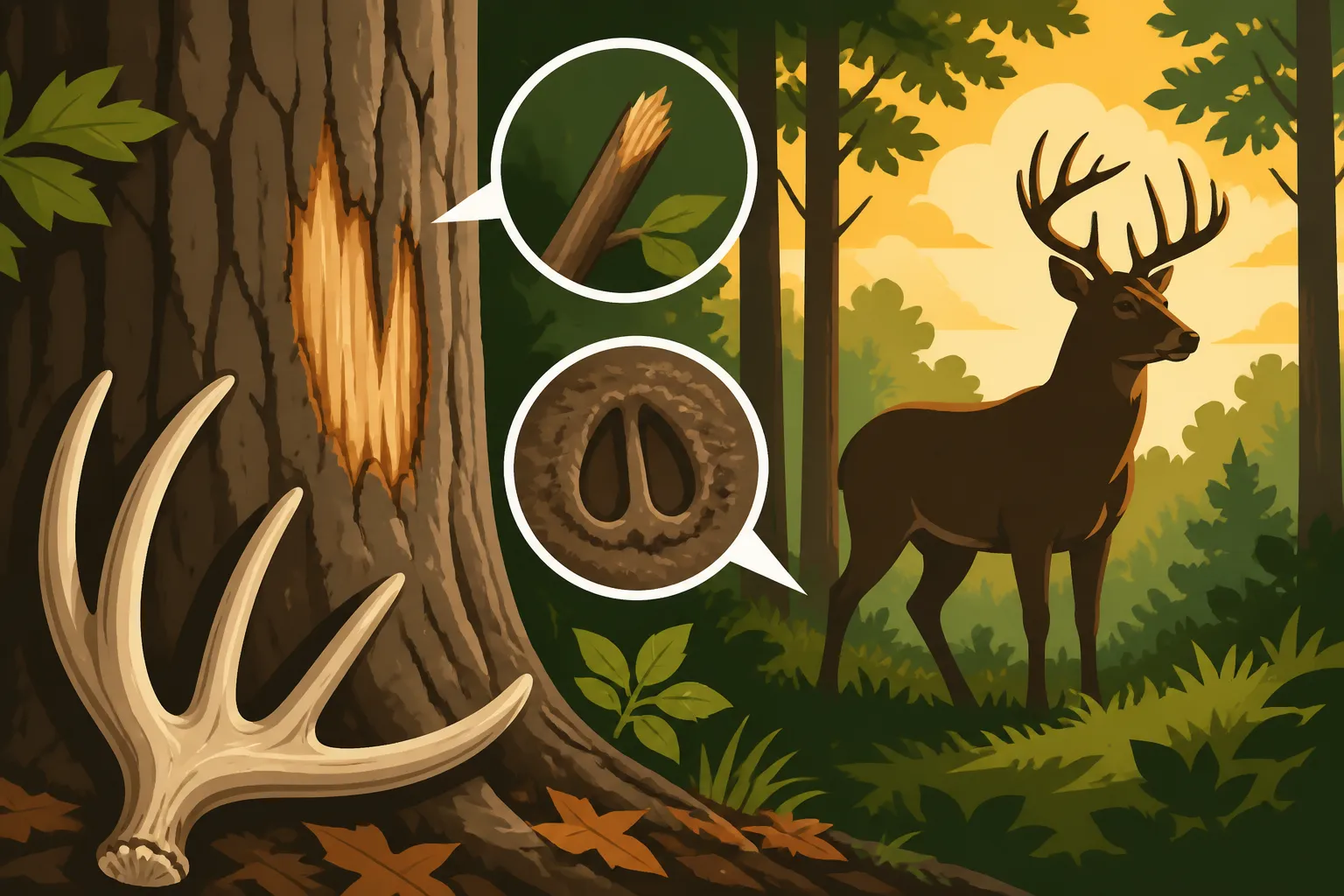
Rubs are probably one of the most exciting pieces of sign to find, especially in big timber where they often indicate a buck's presence and direction of travel. A rub is simply where a buck has scraped his antlers against a tree or sapling. But it's not just any rub you're looking for. The freshness of a rub tells a story. Fresh rubs will have light-colored wood exposed, and the shredded bark will still be moist or pliable. Older rubs will be darker, weathered, and harder to the touch. A line of fresh rubs, especially if they're increasingly larger, suggests a buck working his way through an area, often leading to a bedding area or a food source. The height of the rub can also give you an indication of the buck's size, with larger bucks typically rubbing higher up on trees.
Scrapes are another powerful indicator, particularly during the pre-rut and rut phases. A scrape is an area of ground pawed clear by a buck, often under an overhanging branch (the "licking branch"). Bucks will urinate in the scrape and rub their preorbital glands on the licking branch, depositing scent. The smell is incredibly potent to other deer. Again, freshness is key. A fresh scrape will have disturbed, moist earth and a strong odor. If the leaves have blown back into it or it's dry and packed down, it's an older scrape. Finding an active scrape line, especially near a food source or travel corridor, can be a game-changer. It signals a buck that is actively marking his territory and checking for does. For insights into this crucial period, consider exploring Hunting the Rut in Early November.
When you find rubs and scrapes, don't just note them and move on. Look at their direction. Are the rubs all facing one way, indicating a buck moving consistently? Are they on the edges of thick cover, hinting at a bedding area nearby? Are they along a natural funnel in the terrain? These details paint a picture of deer movement patterns. Even if a scrape isn't fresh, if it's in a prime location, it's worth monitoring, as bucks often revisit historic scrape sites year after year.
Tracks, Trails, and Droppings: The Subtle Indicators
While rubs and scrapes are clear signs, tracks, trails, and droppings are the bread and butter of finding deer in big timber. They are everywhere, and learning to read them accurately is an art form. Fresh tracks, especially those with sharp edges and clearly defined dew claws (if present), tell you deer were recently in the area. Look for tracks that overlap or show a distinct pattern of movement, not just a random print. A larger, deeper track often signifies a bigger deer, and observing the stride length can also give you clues to their size and speed of travel. In the soft mud of a creek bottom or a wet hollow, tracks can be remarkably clear, giving you a wealth of information.
Deer trails are the highways of the forest. In big timber, these aren't always super-highway obvious paths. Sometimes they're subtle, barely discernible lines through the leaves, especially if hunting pressure is low or in remote areas. Look for broken twigs, displaced leaves, and flattened vegetation that deviates from the natural flow of the woods. Heavily used trails will connect bedding areas to food sources or water, often following contours, crossing saddles, or running along creek beds. Pay close attention to trails that intersect or converge, as these create natural funnels where deer movement is concentrated. Scouting Indiana Public Land Before Season often involves identifying these key travel routes long before opening day.
Droppings, while perhaps not as glamorous as a giant rub, are excellent indicators of recent activity and can even tell you about a deer's diet. Fresh droppings are typically moist, shiny, and dark. As they age, they become drier, duller, and might break apart easily. The size and shape can also give clues about the deer, with larger, more irregular piles often indicating a buck. The consistency can hint at their diet – softer, clumpier droppings might mean they're feeding on lush greens, while harder, pelleted droppings suggest a diet of mast like acorns or browse. Finding fresh droppings in a specific area confirms deer are actively using that spot for feeding or bedding.
Here's a quick guide to interpreting various deer sign:
| Type of Sign | What it Looks Like | What it Tells You | Freshness Indicators |
|---|---|---|---|
| Rubs | Bark scraped off a tree/sapling, exposing wood | Buck activity, travel direction, potential size | Light-colored, moist wood; shredded bark pliable |
| Scrapes | Pawed-out bare earth, often under a licking branch | Buck marking territory, checking for does, pre-rut/rut activity | Disturbed, moist earth; strong musky odor |
| Tracks | Indentations in soil/mud, cloven hoof shape | Deer presence, direction of travel, size, speed | Sharp, clear edges; moist soil; dew claws visible in soft ground |
| Trails | Worn path, broken twigs, flattened leaves | Deer travel routes, frequency of use | Freshly disturbed leaves, recent breaks in vegetation |
| Droppings | Pellets or clumps of fecal matter | Deer presence, recent feeding activity, diet, potential size | Moist, shiny, dark; strong scent |
| Beds | Oval depression in leaves/grass, often sheltered | Deer bedding area, frequently used if fresh | Warm to the touch; fresh droppings nearby; compressed vegetation |
Strategic Scouting: Beyond Just Walking Around
Finding sign in big timber isn't just about putting in the boot leather; it's about smart, strategic effort. Leveraging modern tools and understanding how environmental factors influence deer behavior can drastically increase your success rate.
Leveraging Technology for Efficient Scouting
In the vastness of the Hoosier National Forest, technology can be your best friend. Gone are the days of relying solely on paper maps and compasses, although those are still invaluable backup tools. Modern mapping applications, like those offered by GoHunt or OnX Hunt, allow you to overlay property boundaries, topographic maps, and aerial imagery, giving you an unprecedented view of the landscape before you even set foot in it. You can identify potential funnels, saddles, ridge lines, water sources, and areas of dense cover right from your couch. This allows you to plan your scouting routes efficiently, focusing on high-probability areas rather than just wandering aimlessly.
Using these apps, you can mark potential bedding areas, identify access points that might see less pressure, and even drop pins on specific sign you find while scouting. This builds a digital log of deer activity over time, helping you establish patterns. For example, you might see on the aerial map a thick clear-cut regrowth edge adjacent to a mature oak ridge – that's a prime spot to investigate for food and cover. Similarly, you can scout with the Indiana DNR App to understand public land boundaries and specific regulations for different areas. Knowing where to hang a camera on a logging road can also be made easier by pre-scouting these routes on your mapping app.
Weather apps and historical weather data also play a crucial role. Understanding prevailing winds is paramount, especially when deciding on approach routes or stand locations. A good mapping app will often integrate wind direction, allowing you to plan your entry and exit routes to minimize scent dispersion. Furthermore, looking at historical rainfall can tell you which creek bottoms or low-lying areas might have temporary water sources that deer would utilize, especially in dryer conditions. Don't underestimate the power of these tools to help you narrow down the endless possibilities of big timber.
The Importance of Wind, Thermals, and Timing
Deer in big timber are acutely aware of wind and thermals, and so should you be. Wind carries scent, and deer rely heavily on their sense of smell for survival. Always hunt with the wind in your favor, meaning your scent is blowing away from where you expect deer to approach. This might seem obvious, but in the undulating terrain of the Hoosier, winds can swirl and change direction unexpectedly. Understanding wind and thermals on a Southern Indiana ridge is critical.
Thermals are essentially localized air currents that rise and fall with temperature changes. In the morning, as the sun warms the ground, thermals generally rise, carrying scent uphill. In the evening, as the air cools, thermals drop, carrying scent downhill. This means if you're set up on a ridge in the morning, your scent could be rising up to deer above you. In the evening, that same scent might be dropping into a hollow below. Neglecting thermals can quickly bust a hunt, even if the general wind direction seems favorable. It requires a nuanced understanding of how air currents move through specific terrain.
Timing your scouting and hunting efforts is also vital. The early season is a great time to find fresh food sources before heavy leaf fall obscures the ground. As the season progresses into the rut, bucks become more active, and scrapes and rubs become more prevalent. Late season, with colder temperatures and snow on the ground, can be ideal for tracking and identifying late-season food sources for Indiana whitetails like remaining acorns or evergreen browse. Packing the right gear for a Hoosier Forest day hunt, especially a good pair of boots for navigating the varied terrain and potentially harsh weather, will ensure you can stay out longer and cover more ground when the conditions are right.
Remember, finding sign in big timber is a continuous process of observation, adaptation, and patience. The Hoosier National Forest is a challenging but incredibly rewarding place to hunt, and with these strategies, you'll be well on your way to unlocking its secrets.
Disclaimer
Hunting is an inherently dangerous activity. Always prioritize safety, understand and follow all Indiana hunting regulations, and ensure you have the necessary licenses and permits. Be aware of your surroundings and any potential hazards. This guide is for informational purposes only and does not substitute for proper hunter education or professional guidance.