Where to Hang a Camera on a Logging Road
Finding the perfect spot to hang a trail camera on a logging road can feel like a guessing game in Indiana, leaving you with countless photos of squirrels, empty stretches of road, or worse, blurry images of deer tails heading the wrong way. It’s frustrating when you invest in good camera gear only to get unhelpful data. This guide is all about cutting through that frustration, helping you understand why logging roads are deer magnets and how to strategically place your cameras for maximum intelligence on Indiana's public and private lands.
Understanding Logging Roads as Deer Highways
Logging roads, whether they're well-traveled gravel paths or barely discernible two-tracks overgrown with weeds, are often the unsung heroes of deer movement in Indiana. We often think of deer sticking to the deepest, thickest cover, but these linear features can be just as crucial. They essentially act as highways and byways for whitetails, influencing their daily routines and seasonal travel patterns.
Why Deer Use Logging Roads
Deer, much like us, prefer the path of least resistance. A logging road offers a clear, relatively open travel corridor through dense timber, making it easier for them to move from bedding areas to food sources, water, or even just to check for other deer. Imagine traversing a thick Indiana woods, fighting through briars and downed timber. Now imagine a path that cuts right through it. Deer think similarly. These roads provide a natural funnel, channeling deer movement in predictable ways. In areas like the Hoosier National Forest or any of our state forests, you'll find deer using these old roads to navigate steep terrain, often choosing a gradual incline along a road instead of busting straight up a ridge. They also use the edges of these roads for browsing on new growth or to catch some sun on a frosty morning.
Beyond simple convenience, logging roads offer tactical advantages for deer. They can be escape routes, providing a quick path out of danger. A deer spooked from a thicket might not plunge deeper into impenetrable cover but might instead hit an old road to put distance between itself and a perceived threat. They also serve as boundaries, defining territories or acting as natural breaks in the habitat that deer use for reference points. For hunters who spend time Scouting Indiana Public Land Before Season, recognizing these patterns on logging roads is a huge step.
Common Deer Movement Patterns on Roads
Deer don't just randomly wander logging roads; they use them with purpose. You'll often see specific patterns emerge. During the rut, bucks will cruise these roads, scent-checking for does, especially in the early mornings and late evenings. Does, in turn, use them for daily travel, often with fawns in tow, moving between different feeding areas or water sources. In Southern Indiana hill country, deer will often parallel contour lines on these roads, avoiding unnecessary climbs or descents.
Observing or capturing these patterns with a camera can reveal a lot. Do deer simply cross the road at certain points, or do they walk down it for a significant distance? Are they using it to access a particular stand of oaks, a hidden food plot on private land, or a dense bedding area nearby? You might find deer using them more heavily during inclement weather, seeking a slightly more open path when snow is deep or heavy rain makes thick cover unpleasant. Understanding these nuances is key to knowing Where Hoosier National Forest Bucks Bed and how they access those areas. Different times of day will also show different activity. Expect more casual, exploratory movement at night, and more direct travel during dawn and dusk.
Strategic Camera Placement Principles on Logging Roads
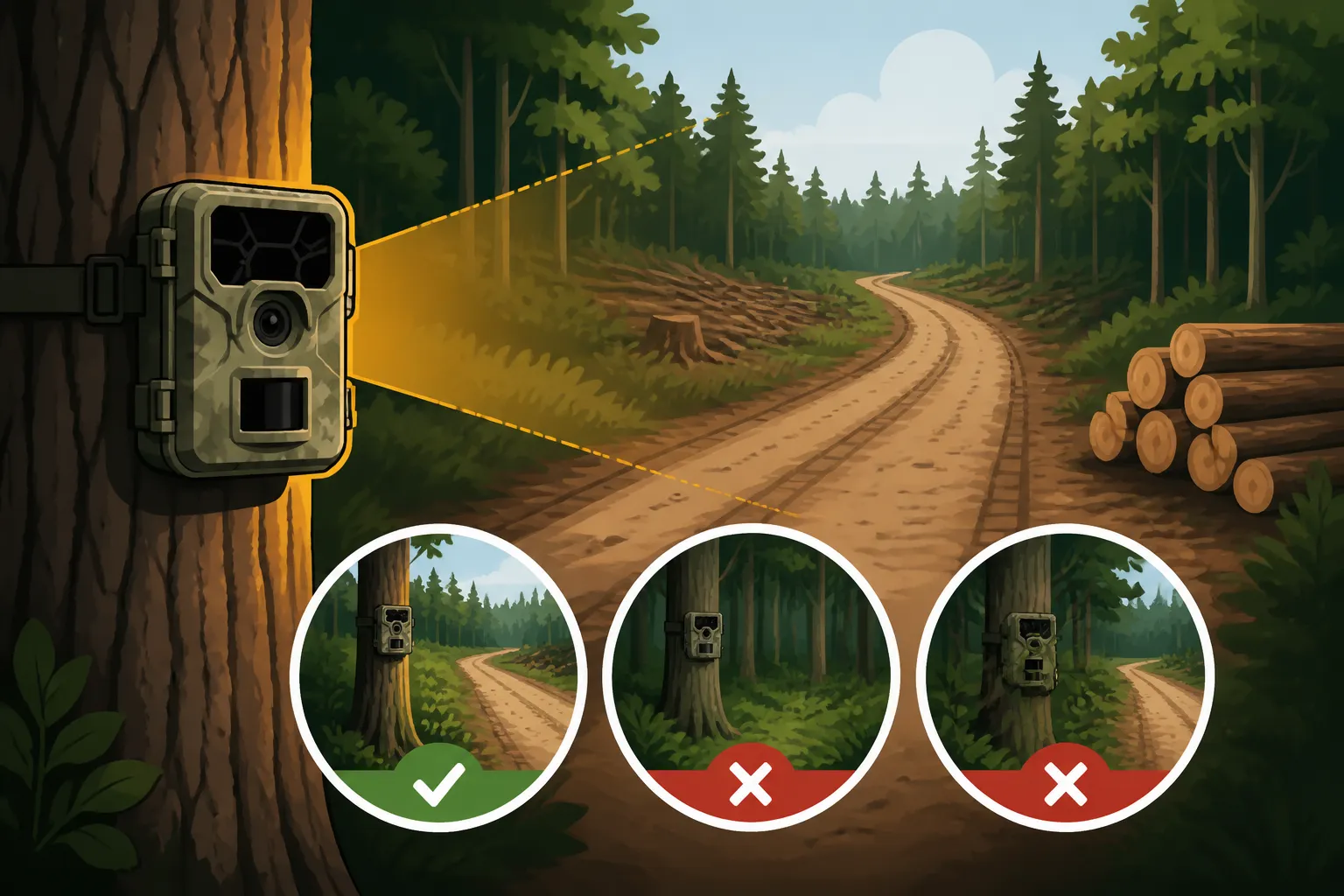
Simply hanging a camera facing straight down a logging road is a common mistake. It often leads to photos of deer walking away from you, or, if the sun is wrong, completely washed-out images. Strategic placement means thinking like a deer and considering environmental factors. It's about funneling deer past your camera at the right angle, ensuring good lighting, and, let's be honest, keeping your expensive gear safe from two-legged predators.
Identifying Key Funnels and Intersections
The most productive spots on logging roads are almost always where deer have to concentrate their movement. Look for natural funnels where the road narrows or is pinched between thick cover and a steep drop-off. Any point where a smaller game trail intersects the logging road is gold. These intersections are like highway exits for deer, creating multiple points of interest. A deep ditch or a creek crossing that runs alongside the road might force deer to jump across at a specific spot, creating another natural funnel.
When you're out scouting, pay close attention to the details. Are there rubs or scrapes near a particular intersection? This is a strong indicator of consistent buck activity. Look for clusters of fresh tracks. If you're Reading Indiana Mud for Fresh Deer Movement, these intersections often show the heaviest traffic. Sometimes, a fallen tree or a rocky outcrop will force deer to walk around it in a specific way, narrowing their path. These subtle features, often overlooked, are prime camera locations because they force a deer into a predictable line of travel, giving your camera a better chance at a clear shot.
Angle, Distance, and Security Considerations
Once you've found a funnel or intersection, the next step is precise camera placement. Never aim your camera directly into the rising or setting sun; you'll get blown-out pictures. Ideally, the sun should be hitting the side of the deer as it passes your camera. Consider a north or south-facing position relative to the main deer trail. Mount your camera approximately 10-15 feet from where you expect the deer to pass, at a height that captures the deer's body, not just its legs or head. Around 3-4 feet off the ground is usually ideal, but adjust for terrain. If the deer are uphill from your camera, you might need to go a bit lower.
Security is paramount, especially on public land. Thieves are always a concern. Try to pick a tree that isn't too obvious, perhaps one slightly off the main road, or use a camouflage case. Some hunters even mount cameras higher and angle them down, though this can make battery changes tricky. A strong cable lock is a non-negotiable. Also, consider the background. You don't want a busy background full of swaying branches triggering false positives, especially in windy Indiana weather. Look for a clear shot with minimal clutter. A common frustration is pulling an SD card only to find hundreds of photos of leaves blowing in the wind or an empty road where a deer should have been. Investing in a camera with good motion detection and adjustable sensitivity can help mitigate this.
Here’s a quick reference for common camera placement scenarios:
| Scenario | Ideal Camera Position | Angle & Distance | Notes |
|---|---|---|---|
| Direct Logging Road Travel | Perpendicular to the road, slightly off to side | Aim across, 10-15 ft away | Captures broadside photos, avoids direct sunlight. |
| Road Intersection | Between two trails, covering main approach | Aim at confluence, 12-18 ft away | Captures traffic from multiple directions. Consider a wider lens. |
| Tight Funnel/Pinch Point | Facing into the funnel from one side | Aim slightly angled, 8-12 ft away | Forces deer past camera closely, often at a walk. |
| Creek/Ditch Crossing | On a tree overlooking the crossing point | Aim down at crossing, 10-15 ft away | Catches deer as they step up/down, often pausing. |
| Edge of Road/New Growth | Facing parallel to road, capturing edge | Aim along edge, 15-20 ft away | Captures deer browsing along edges, especially in early season. |
Interpreting Camera Data and Adjusting Strategy
Hanging a camera is only half the battle. The real work—and the real fun—comes from analyzing the data. Your trail camera photos are like little clues in a big mystery, helping you piece together the daily lives of the deer in your hunting area. It's not just about seeing a big buck; it's about understanding when and why he was there.
Reading Your Photos for Patterns
When you pull that SD card, don't just scroll through looking for antlers. Pay close attention to the timestamps. Is that big buck consistently showing up at dawn or dusk? Or is he a nocturnal ghost? Note the direction of travel. Is he heading towards a known bedding area or a food source? This can inform your stand placement. If you see a lot of does moving through a particular section of logging road, you know bucks will eventually follow, especially during Hunting the Rut in Early November.
Beyond individual deer, look for overall patterns. Are there more deer on the road after a rain? Do they avoid it on windy days? Are young bucks pushing through regularly? This helps you gauge the health and activity level of the local herd. Mapping tools, like those offered by GoHunt, can be invaluable here. You can plot your camera locations and mark where specific deer were seen, building a visual representation of their movements across the landscape. This data can inform where you might consider a Treestand Setups in Hoosier National Forest or if you need to scout a different area.
Adjusting for Pressure and Season Changes
Deer movement isn't static; it changes with hunting pressure and the seasons. What works in early archery might be useless during the firearms season. As hunting pressure increases, especially on public land, deer often become more nocturnal or move to thicker, less disturbed areas. Your cameras might show a shift from daylight activity to almost entirely nighttime movement on a particular logging road. This is a clear signal that it's time to adjust your strategy or move your cameras to more secluded spots, perhaps deeper in the woods where you're Finding Ground Others Walk Past.
Seasonal shifts also play a massive role. In the early fall, deer might be hitting acorns aggressively near logging roads that traverse oak flats. As winter approaches, they'll shift to different food sources, and their travel patterns will change accordingly. During Hunting the Late-Season January Lull, they'll be focused on high-energy foods, and a logging road leading to a standing bean field or a hidden brassica plot could become a hotspot. Always be ready to move your cameras to match these changing patterns. Don't be afraid to pull a camera from a dead spot and relocate it. Remember, these cameras are scouting tools, not permanent fixtures.
Utilizing Technology and Local Knowledge
In today's hunting world, we have more tools at our disposal than ever before. Combining modern technology with a deep understanding of Indiana's diverse landscapes can drastically improve your trail camera success, particularly when dealing with logging roads.
Leveraging Mapping Tools Like GoHunt
Digital mapping applications, such as GoHunt, are game-changers for identifying potential camera locations on logging roads. Before you even set foot in the woods, you can use satellite imagery to identify old logging roads, clear-cuts, creek crossings, and potential funnels. You can overlay property lines, elevation changes, and even habitat types. This allows you to plan your camera placement precisely, marking potential spots on the map, and then using the app to navigate directly to them in the field.
These tools are especially useful for Reading Aerial Photos for Southern Indiana Deer where the terrain can be challenging. You can identify those subtle saddles where a logging road cuts through, or where a hidden bench intersects a road, creating a natural pinch point. They also help you plan your access routes, ensuring you can approach and check your cameras with minimal disturbance. After all, the best camera strategy is useless if you're spooking every deer in the county on your way in. For those venturing into new public land, knowing the lay of the land digitally beforehand can save hours of aimless wandering and ensure your Packs for a Hoosier Forest Day Hunt are packed for success.
Learning from Indiana's Diverse Landscapes
Indiana isn't a monolithic landscape. The strategies for hanging cameras on logging roads will differ significantly between the heavily timbered, steep hills of Southern Indiana and the flatter, agricultural regions of Northern Indiana.
- Southern Indiana Hill Country: Here, logging roads often follow contour lines or wind up and down ridges. Focus your cameras on saddles, points where roads cross steep draws, or where multiple old logging paths converge. Deer will naturally use the easiest path, and these roads provide it. Look for areas where the road might be the only flat-ish ground on a steep hillside. This is where you might also be Finding Sign in Big Hoosier Forest Timber. Consider how Wind and Thermals on a Southern Indiana Ridge might influence deer travel along these roads.
- Northern Indiana Farmland: In these areas, logging roads might be less common, but old farm lanes, fencerow trails, or access roads for timber blocks are just as valuable. Here, deer are often using these linear features to move between woodlots, travel along field edges, or get to isolated cover patches. Cameras should focus on points where these roads enter or exit standing corn or bean fields, or where they connect two small woodlots. These can be prime spots for Hunting Northern Indiana Farmland Deer. Deer will often use these roads as Entry Routes Through Standing Corn as the season progresses.
Ultimately, successful camera placement on logging roads in Indiana comes down to observation, strategic thinking, and adapting to the deer and their environment. Don't just set it and forget it; use your cameras as dynamic scouting tools that help you learn and grow as a hunter, making every minute you spend in the Hoosier woods more productive.
Disclaimer
The information provided in this guide is for general informational purposes only and does not constitute professional hunting advice. Hunting regulations and conditions can change rapidly. Always consult the most current Indiana Department of Natural Resources (DNR) regulations and local laws before engaging in any hunting activities. Adhere to all safety guidelines and respect private property.