First Aid Kits for Remote Forest Ground
There's nothing quite like the solitude of the deep woods, miles from the nearest road, a crisp Indiana morning settling in around your treestand. The world feels far away, and that's precisely why we head out there, isn't it? But that beautiful isolation carries a real risk. A slip on a wet log, a knife accident while field dressing, or a sudden, unexpected medical emergency can turn a perfect day into a harrowing struggle for survival when help is hours away and cell service is a distant dream. This guide isn't about fear-mongering; it's about empowerment. It's about equipping you, the dedicated Indiana hunter, with the knowledge and tools to assemble a comprehensive first aid kit specifically designed for the remote forest ground you love to roam, ensuring you can handle the unexpected and make it home safely.
Why a Dedicated Backcountry First Aid Kit Isn't Optional in Indiana
It’s easy to dismiss a first aid kit as just another piece of gear, something you throw in the truck and forget about. But when you're truly out there, whether it's deep in the Hoosier National Forest, a remote corner of a Fish and Wildlife Area, or even just a thick woodlot far from the farmhouse, the rules of accessibility change drastically. Emergency services can't just drive up to your location. Every minute counts when an injury occurs, and those minutes can stretch into an hour or more for responders to even reach you, let alone transport you to definitive care. This isn't your suburban backyard; this is wild Indiana, and preparation is paramount.
The Realities of Remote Injuries
Think about the kinds of incidents that can happen when hunting. We’re often moving through uneven terrain, carrying sharp objects like broadheads and knives, climbing into and out of treestands, and pushing our physical limits. A simple misstep on a rock can lead to a severely twisted ankle, making every step excruciating and self-extraction nearly impossible. A dull knife or a lapse in concentration during field dressing might result in a deep laceration that bleeds profusely. Even something as seemingly benign as an allergic reaction to a bee sting or a sudden bout of severe stomach upset can become a serious problem when you're miles from a restroom or a quick trip to the pharmacy. These aren't just "what ifs"; they are real scenarios that play out for hunters every season.
Furthermore, Indiana's diverse terrain presents its own challenges. The steep, rocky ravines and slippery creek bottoms of southern Indiana's hill country, like those found around Brown County, are prime spots for falls. The dense undergrowth and swampy sections of northern Indiana's marshlands or river bottoms can conceal hazards and lead to scrapes, punctures, or even hypothermia if you take an unexpected plunge in cold weather. Having the right supplies means you can immediately address these issues, control bleeding, stabilize a sprain, or prevent an allergic reaction from escalating while you wait for assistance or begin a slow, painful self-rescue. It’s about being proactive, not reactive, and ensuring that you have the immediate resources to mitigate a bad situation before it becomes catastrophic.
The Time and Distance Dilemma
When you’re relying on a phone in a remote area, you’re often gambling with signal strength. Many excellent hunting spots in Indiana, especially in vast public lands, are notorious for dead zones. Even if you get a call out, giving accurate directions to responders who might be unfamiliar with the obscure logging roads or thick timber can be incredibly difficult. Tools like GoHunt can help you pinpoint your location, but getting an ambulance to that exact spot is a different story. The time it takes for emergency medical services (EMS) to reach you can be significantly longer than what most people assume, especially if extraction from dense woods or across difficult terrain is required.
Consider a scenario: you're Hunting the Wabash River Bottoms on a frosty November morning, and you take a tumble, hitting your head. You're conscious but disoriented, maybe bleeding a bit. If you can't self-treat, stabilize, and signal for help, that time lag can have severe consequences. A proper first aid kit acts as your immediate response team, giving you or a hunting partner the ability to administer critical care during that waiting period. It buys you precious time and can make the difference between a minor inconvenience and a life-threatening emergency. Having the right tools means you're not just waiting; you're actively managing the situation, which is a powerful feeling in a vulnerable moment.
Essential Components for Your Indiana Remote Hunting First Aid Kit
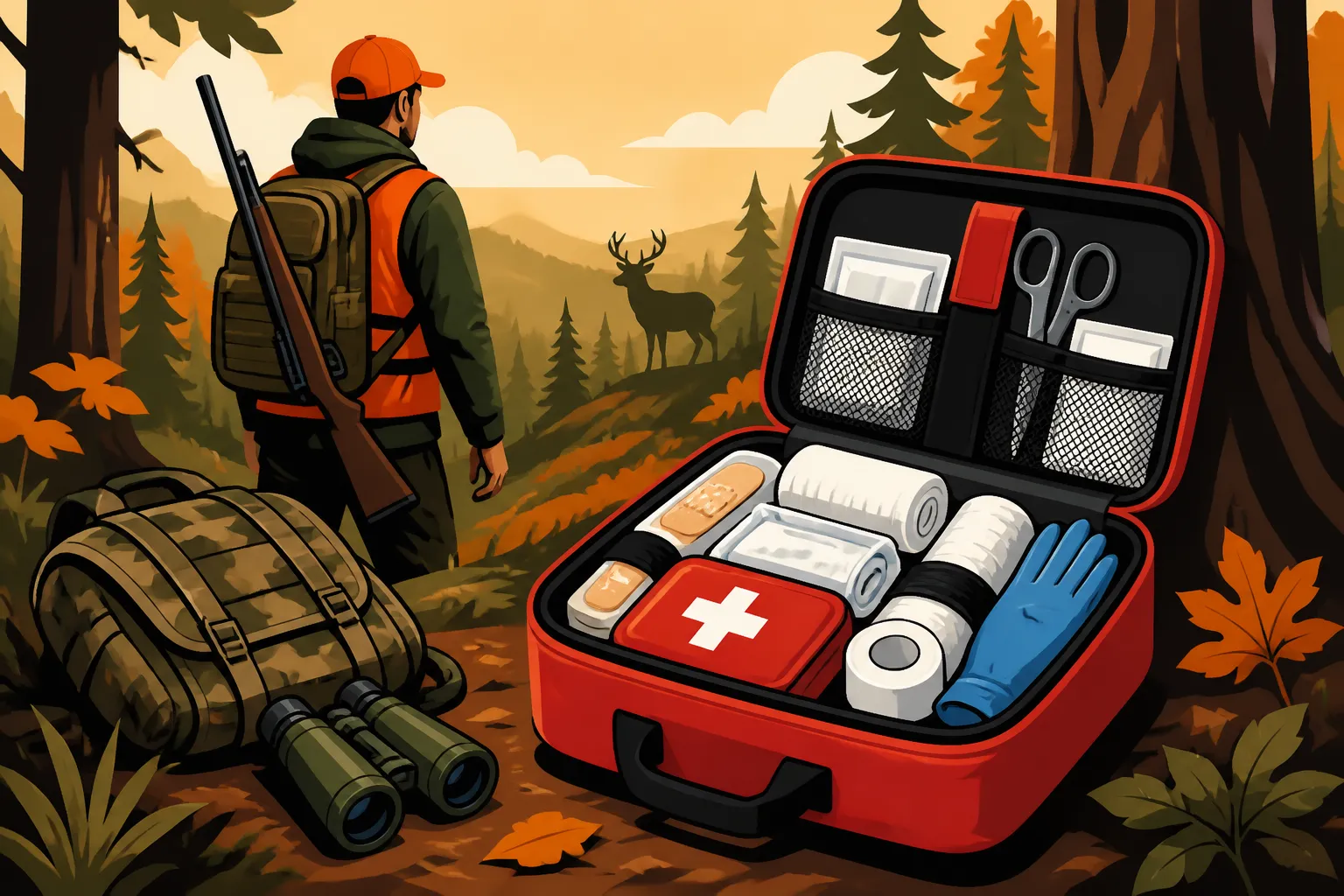
Building a solid first aid kit for remote hunting isn't about stuffing a few band-aids into a Ziploc. It's about thoughtful selection of items that address the most common, and potentially most serious, injuries you might face. Your kit needs to be comprehensive, yet compact and organized, so you can find what you need quickly, even under stress. Think of it as your portable emergency room, ready for anything the Indiana wilderness throws at you.
Wound Care and Bleeding Control
This is often where the most immediate needs arise. Cuts, scrapes, and punctures are common. More severe incidents, like broadhead injuries or accidental knife wounds, require rapid and effective bleeding control.
- Assorted Band-Aids: From small ones for nicks to larger, heavy-duty strips for more substantial scrapes. Don't skimp here; have a variety.
- Gauze Pads and Rolls: Sterilized gauze is crucial for cleaning wounds and absorbing blood. Have several sizes, including larger trauma pads. Rolled gauze can be used to wrap injuries or create pressure dressings.
- Medical Tape: This is your best friend for securing gauze, wrapping sprains, or even improvising minor repairs. Look for athletic tape or strong, waterproof medical tape.
- Antiseptic Wipes or Solution: Individually packaged alcohol wipes or a small bottle of antiseptic like Betadine or hydrogen peroxide are essential for cleaning wounds before bandaging, preventing infection.
- Butterfly Closures or Steri-Strips: For smaller, cleaner cuts that might benefit from having the edges pulled together, these can be a temporary substitute for stitches until professional help can be reached.
- Moleskin or Blister Pads: Miles of walking in hunting boots, especially if they get wet, can lead to painful blisters. Moleskin can prevent them or provide relief once they've formed.
- Trauma Dressing or Israeli Bandage: This is a compact, multi-purpose bandage designed for significant bleeding. It combines a non-adherent pad, an elastic bandage, and a pressure bar, allowing for rapid application to create direct pressure on a wound.
- Tourniquet: For severe, life-threatening arterial bleeding that cannot be controlled by direct pressure. This is a critical item, but requires training to use effectively and should be a last resort. Brands like CAT or SOF-T are widely trusted.
Medications and Personal Needs
Beyond immediate injuries, consider general health issues or allergic reactions that could impair your ability to hunt or self-rescue.
- Pain Relievers: Ibuprofen or acetaminophen can go a long way in managing pain from a sprain, headache, or muscle soreness, making it easier to walk out or simply tough out the night.
- Anti-Inflammatories: Medications like naproxen sodium can help reduce swelling from sprains or strains.
- Antihistamines: Diphenhydramine (Benadryl) is crucial for allergic reactions to insect stings, poison ivy, or certain foods. Consider carrying an EpiPen if you or your hunting partners have known severe allergies.
- Anti-Diarrhea Medication: Nothing ruins a hunt faster, or makes you more vulnerable, than a sudden onset of gastrointestinal distress.
- Personal Prescription Medications: Always carry an extra day or two's supply of any vital prescription medications, stored in a waterproof container.
- Electrolyte Tablets/Powder: Dehydration can be a sneaky killer. These can help replenish lost salts and minerals, especially on warmer hunting days.
Tools and Miscellaneous Gear
These are the items that often get overlooked but are indispensable for effective first aid and general wilderness survival.
- Trauma Shears/Medical Scissors: Far more effective than regular scissors for cutting through clothing, tape, or bandages without harming the patient.
- Tweezers: For splinter removal, tick extraction, or other small foreign objects.
- Safety Pins: Multi-purpose for securing bandages, slings, or emergency repairs.
- Latex-Free Gloves: Essential for protecting both you and the injured person from blood-borne pathogens. Carry several pairs.
- CPR Face Shield/Mask: If you know CPR, this provides a barrier during rescue breaths.
- Small, Bright Headlamp or Flashlight: For working in low light or signaling. Don't forget extra batteries!
- Emergency Whistle: For signaling for help if you're injured and unable to shout, or to alert others to your location. This is especially vital when Hunting Pressure on Indiana Public Land means other hunters might be nearby, but out of sight.
- Duct Tape: The ultimate multi-tool. Can be used for improvised repairs, securing splints, or even creating makeshift bandages.
- Small Notebook and Pen/Pencil: To record injuries, medications given, and times. Useful for relaying information to EMS.
- Hand Sanitizer: For cleaning hands before and after administering first aid when water isn't available.
This table provides a snapshot of a basic kit for a solo day hunt versus an expanded kit for a multi-day trip with partners:
| Category | Solo Day Hunt Basic Kit | Group Multi-Day Hunt Expanded Kit |
|---|---|---|
| Wound Care | Assorted Band-Aids, small gauze, medical tape, wipes, moleskin, trauma dressing | All basic items, plus: more gauze, large trauma pads, Steri-Strips, multiple tourniquets, burn gel, triangular bandages |
| Medications | Pain reliever, antihistamine, personal meds | All basic items, plus: anti-diarrhea, antacid, electrolyte tabs, hydrocortisone cream, insect bite relief |
| Tools | Gloves, small shears, tweezers, whistle, headlamp | All basic items, plus: larger shears, CPR mask, small mirror (signaling), small saw (for splints) |
| Trauma/Stabilization | Trauma dressing, small roll of self-adherent wrap | All basic items, plus: SAM Splint, cravats (slings/ties), larger elastic bandages, space blanket |
| Hygiene/Miscellaneous | Hand sanitizer, duct tape | All basic items, plus: waterproof matches/lighter, cordage, map of area, backup compass, water purification tabs |
Customizing Your Kit for Indiana's Unique Challenges
No two hunts are exactly alike, and neither should two first aid kits be. While a basic kit provides a solid foundation, tailoring it to the specific environment, duration, and type of hunting you'll be doing in Indiana is crucial for maximum effectiveness. This personalization acknowledges that hunting Southern Indiana Hills Versus Northern Farmland Deer presents different risks and requires slightly different considerations.
Terrain and Environmental Factors
Indiana's landscape varies dramatically from north to south, and even within regions. The steep, often slippery slopes and rocky creek beds of places like the Hoosier National Forest demand specific considerations. A twisted ankle is a much higher probability here than on flat farmland. For these areas, adding a lightweight, moldable splint like a SAM Splint and more elastic bandages is a smart move. When you're Reading a Ridge for Hoosier Forest Deer, you're often navigating precarious footing, making robust ankle and knee support items invaluable.
Weather is another huge factor. Indiana can swing wildly from warm, humid early archery season days to frigid, wet late-season conditions. Your kit should reflect this. For warmer weather, consider insect bite relief and more thorough tick removal tools, as ticks are prevalent. Dehydration is a concern, so electrolyte packets are valuable. In colder, wetter conditions, items for preventing and treating hypothermia become vital. A small emergency blanket (mylar "space blanket") or even a few large, durable plastic bags can be used to create an improvised shelter or provide insulation if you're stuck out longer than planned. Don't forget a small, chemical hand warmer to help rewarm extremities.
Type of Hunt and Potential Injuries
The weapon you carry and the game you pursue can also influence your kit. Archery hunting, especially with broadheads, introduces a specific type of laceration risk. If you're Bowhunting Indiana's Long Archery Season, a trauma dressing and tourniquet are even more critical, as broadhead wounds can be particularly severe. Always handle broadheads with extreme caution, but accidents do happen. Similarly, if you're carrying a firearm during Indiana's Firearms Deer Season, while less common, accidental gunshot wounds require immediate and intense bleeding control measures. Having extra trauma pads and hemostatic gauze (gauze treated to help blood clot) could be life-saving.
Small game hunting, like Squirrel and Small Game Hunting in Indiana, might seem less dangerous, but it often involves navigating dense brush and fencerows, increasing the risk of scrapes, thorns, and eye injuries. A small eye wash solution and an eye patch could be useful additions. Waterfowl hunting in the Kankakee Marshes means exposure to cold water, potential falls into icy depths, and the risk of hypothermia. Waterproof containers for all your kit's contents are a must, and extra emergency blankets are well worth the space. The longer you plan to be out, and the more rugged the conditions, the more robust your kit should be.
Group Size and Skill Level
Are you hunting solo, with a single partner, or in a larger group doing a deer drive? A solo hunter needs a kit with enough supplies to self-administer aid, potentially for a longer period. A larger group might distribute supplies or benefit from a more comprehensive, centrally located kit, along with individual smaller kits. If you or your hunting partners have specific medical conditions, like diabetes or severe allergies, ensure their necessary medications (insulin, EpiPen, etc.) are included and easily accessible, and that others know where they are and how to administer them.
It's also important to consider the first aid training within your group. If no one has advanced medical training, focusing on basic wound care, bleeding control, and stabilization (like splinting) with clear instructions is key. If someone is a trained EMT or has wilderness first aid certification, they can utilize a more advanced kit more effectively. Regardless of skill level, knowing the basics of how to use every item in your kit is non-negotiable. Practice applying bandages, using a tourniquet (on a dummy or willing volunteer, safely!), and identifying common injuries. Resources like the American Red Cross or Wilderness Medical Associates offer excellent training courses that can make a huge difference in an emergency situation.
Integrating Your Kit into Your Hunting Safety Plan
A first aid kit, no matter how well-stocked, is only one piece of a larger, comprehensive safety plan. Carrying the kit is essential, but equally important is knowing how to use it, communicating your plans, and understanding the broader context of wilderness emergencies. Think of it as a crucial element in your overall strategy to stay safe and responsible while pursuing game in Indiana's beautiful but unforgiving outdoors.
Pre-Hunt Planning and Communication
Before you even set foot in the woods, a good safety plan starts at home. Always, always let someone know where you're going and when you expect to return. Be specific: "I'll be hunting the north end of Yellowwood State Forest, near the old logging road off Bear Wallow Road, and I expect to be back by dark." Give them a map reference or GPS coordinates if possible. This seemingly simple step can be the difference between a swift rescue and a prolonged search if something goes wrong. If you are venturing deep into areas where cell service is questionable, consider investing in a satellite messenger device. These allow you to send SOS messages with your exact GPS coordinates to emergency services, even without cell signal, and often include two-way communication capabilities. Scouting With the Indiana DNR App and tools like GoHunt can help you pinpoint your exact location to share.
Another crucial part of pre-hunt planning is Scouting Indiana Public Land Before Season. This isn't just about finding deer sign; it's about identifying potential hazards, escape routes, and areas with better cell service or easier access for emergency vehicles. Knowing the terrain ahead of time can help you avoid areas prone to slips, falls, or getting disoriented. Understand that even seemingly small woodlots can become mazes in the dark or fog.
Knowledge and Practice
Having a comprehensive kit is great, but it’s useless if you don't know how to use its contents. Invest a little time and effort in basic first aid training. Online courses or local Red Cross chapters often offer classes focused on wilderness first aid. Knowing how to properly apply a pressure bandage, splint a broken limb, or recognize the signs of hypothermia can literally save a life, including your own. Practice using the items in your kit. Can you open the packaging with cold, gloved hands? Can you apply a tourniquet effectively in under a minute? Can you quickly find the pain relievers in the dark? Regularly checking expiration dates on medications and refreshing any used supplies is also part of responsible ownership. Treat your first aid kit like any other critical piece of gear—maintain it and know its capabilities.
Consider how your other gear integrates with safety. Carrying a Packs for a Hoosier Forest Day Hunt that is properly sized and organized means you can easily access your first aid kit when needed. Wearing the required How Much Blaze Orange Indiana Requires is not just about legality; it's about being visible to other hunters and, crucially, to potential rescuers if you become injured and immobile. Even something as simple as carrying a fully charged phone with an external battery pack is part of your communication and safety plan, enabling you to use GPS features even if calls can't go through.
Staying Calm and Self-Reliance
When an emergency strikes, panic is your worst enemy. A well-stocked and understood first aid kit provides a tangible sense of control in a chaotic situation. Knowing you have the means to address an injury can help you stay calm, think clearly, and make rational decisions about next steps, whether that’s administering aid, signaling for help, or beginning a slow self-extraction. The goal of any remote first aid kit isn't just to treat injuries, but to empower you with the self-reliance needed to mitigate risks and increase your chances of a successful and safe return home. The Indiana woods offer incredible experiences, and by being prepared, you ensure those memories are good ones.
Disclaimer
This article is for general informational purposes only and does not constitute professional advice. Laws, prices and regulations vary by location and change over time. Consult a qualified professional for guidance on your specific situation.