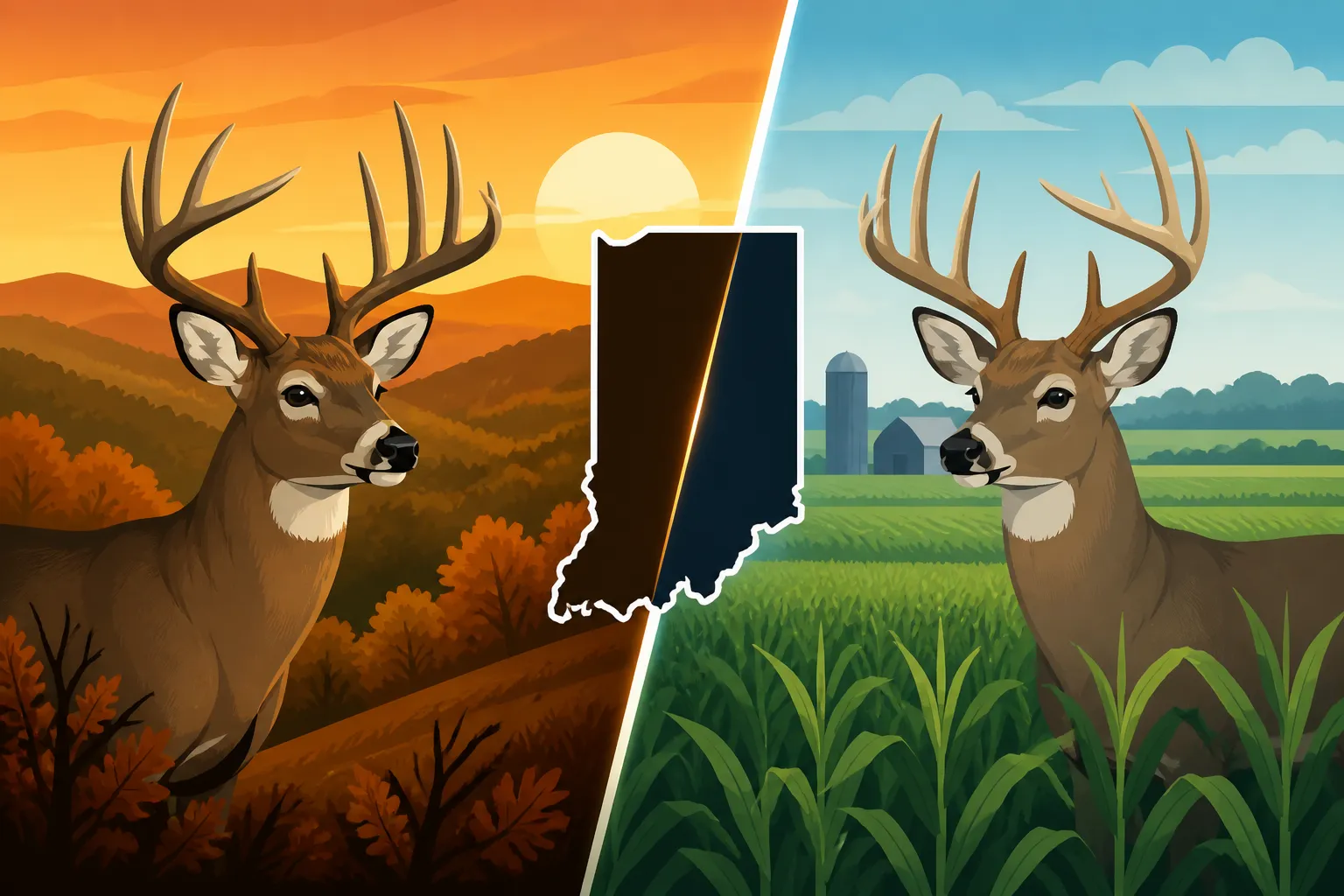
Southern Hills Versus Northern Farmland Deer
Navigating the diverse deer hunting opportunities across Indiana can feel like trying to solve two completely different puzzles, especially when you consider the vast differences between our rugged Southern Hills and the expansive Northern Farmland. It’s a common frustration for hunters, whether you’re a lifelong Hoosier or just visiting, to know what to expect and how to adapt your strategies. This comprehensive guide is here to untangle those complexities, offering a deep dive into the unique challenges, deer behaviors, and successful tactics for hunting whitetails in both of Indiana’s distinctive regions.
Understanding Indiana's Deer Landscape
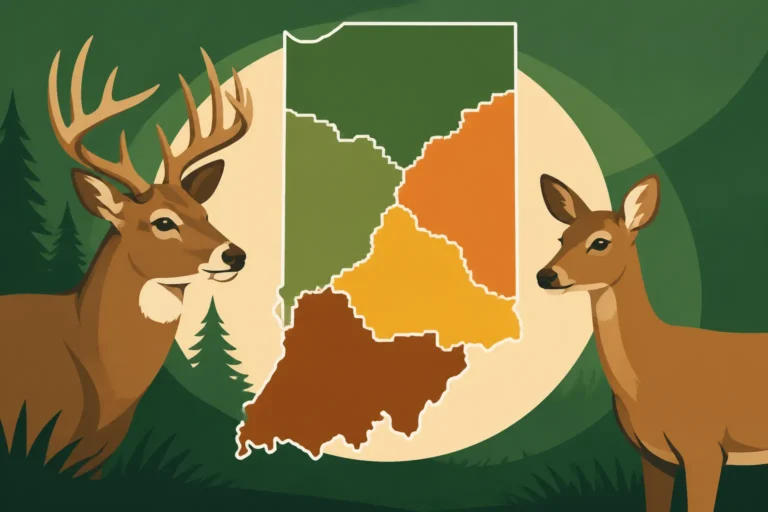
Indiana, while often thought of as a flat agricultural state, actually boasts a surprisingly varied topography that profoundly impacts its whitetail deer populations and, by extension, our hunting experiences. From the rolling hills carved by ancient glaciers to the fertile river valleys and flat plains, each region presents its own set of characteristics that shape deer habits and, naturally, our approach as hunters. It's not just about the trees or the corn; it's about how every aspect of the environment molds the deer that call it home.
The Geographic Divide and Deer Habitats
When we talk about the "Southern Hills" in Indiana, we're generally referring to the unglaciated, rugged terrain that dominates counties like Brown, Monroe, Lawrence, and extending south towards the Ohio River. This region is characterized by steep ridges, deep valleys (often called hollows or draws), and vast expanses of contiguous hardwood timber, primarily oaks, hickories, and maples. Agriculture here is much more limited, confined to narrow creek bottoms or smaller, isolated plots on flatter ridge tops. The sheer amount of unbroken forest means deer have extensive areas to roam, bed, and find sanctuary, leading to different movement patterns than their northern counterparts. Think long walks, steep climbs, and dense undergrowth.
Contrast this with the "Northern Farmland," which stretches across the central and northern parts of the state. This landscape is largely defined by vast agricultural fields – corn, soybeans, and wheat – interspersed with smaller woodlots, fencerows, and creek drainages. The topography is generally flatter, a legacy of glacial activity, and large, unbroken tracts of timber are far less common. Deer here live in an agro-forest mosaic, constantly interacting with human activity and the seasonal cycles of crops. Their movements are dictated by food sources in the fields and bedding cover in the fragmented woodlots and thick fencerows. It's a game of hide and seek in a much more open, yet equally challenging, environment.
Deer Population Dynamics and Management
The Indiana Department of Natural Resources (DNR) works tirelessly to manage deer populations across these varied landscapes, but their strategies often have to adapt to regional nuances. In the Southern Hills, deer populations tend to be lower in density compared to the northern counties, primarily due to the less abundant and less nutritious food sources available year-round. While the woods offer consistent browse, it rarely matches the caloric punch of a standing cornfield. Deer in the hills might have larger home ranges as they search for food and water, often traversing considerable distances over rugged terrain. The DNR's management here often focuses on maintaining a healthy herd structure and ensuring adequate natural resources.
In the Northern Farmland, the story is often quite different. The sheer abundance of high-quality agricultural crops provides an almost endless buffet for deer, leading to higher population densities in many areas. Deer here often have smaller home ranges, living out their lives within a few hundred acres, moving between a bedding woodlot and the adjacent crop fields. This can lead to increased deer-vehicle collisions and crop damage concerns for farmers. Consequently, DNR management in these areas often includes tools like Indiana's Deer Reduction Zones and bonus antlerless tags to help control populations and mitigate conflicts. Understanding these different population dynamics is crucial for setting realistic expectations and choosing appropriate hunting methods, whether you're trying to fill a freezer or chase a trophy buck.
Hunting the Southern Indiana Hill Country
The Southern Indiana Hill Country is a wild, rugged, and often unforgiving place to hunt deer. It’s where many Hoosiers cut their teeth, learning the hard lessons of mountain hunting in a surprisingly dense forest. The challenges are numerous, but so are the rewards for those willing to put in the work. It’s a completely different rhythm than hunting flat ground, demanding a different mindset and skillset.
Terrain Challenges and Opportunities
The first thing that strikes you when hunting the Southern Hills is the sheer amount of elevation change. You'll encounter steep ridges that seem to go on forever, dropping into deep, winding hollows, often with small, clear creeks babbling at the bottom. This terrain is physically demanding, especially when packing in stands or, more importantly, packing out a deer. Access can be a real issue; while there are vast tracts of public land like the Hoosier National Forest Hunting and various State Forests, finding an entry point that doesn't put you right on top of another hunter, or require an exhausting hike, is a skill in itself. Often, the best hunting spots are miles from the nearest road, deep in the timber.
However, these very challenges create incredible opportunities. The ruggedness naturally disperses hunting pressure, meaning if you’re willing to walk further and climb higher, you can find untouched pockets where deer feel safe. The terrain itself creates natural funnels and pinch points. Saddles between ridges, benches along hillsides, and the confluence of multiple draws are all prime areas where deer movements are concentrated. Learning to read this landscape is paramount. You might spot a deer trail cutting across a steep face or find a series of scrapes along a rocky bench where a buck feels secure enough to mark his territory. This is where patience and observation pay off big time.
Food Sources and Deer Movement Patterns
Unlike the consistent agricultural buffets of the north, food in the Southern Hills is more varied and often less concentrated. The primary food source for deer here, especially in fall, is the acorn crop. Oak ridges, particularly those with a mix of red and white oaks, become deer magnets when acorns drop. When acorns are scarce, deer will turn to various types of browse, greenbrier, honeysuckle, and other woody plants found throughout the forest. You might also find scattered persimmon or wild apple trees, which, when producing, can be absolute hotspots. Water sources, often found in the bottoms of hollows or in small, spring-fed seeps, also play a critical role, especially during drier periods.
Deer movement patterns are heavily influenced by this food distribution and the hilly terrain. Bucks often cruise ridge tops, using them as travel corridors, especially during the rut, scent checking for does. Does and their fawns, on the other hand, might stick closer to benches and saddles, or filter through hollows, especially when feeding or moving to water. Understanding Wind and Thermals on a Southern Indiana Ridge is absolutely critical here. As the sun rises, thermals typically rise up the hillsides, carrying scent upwards. In the evening, as temperatures drop, thermals fall down into the hollows. Ignoring these subtle air currents will often lead to deer busting you before you even know they're there.
Effective Hunting Strategies for the Hills
Hunting the Southern Hills demands a more active and adaptable approach than simply sitting over a food plot. Still-hunting, where you move slowly and deliberately through the timber, pausing frequently to glass and listen, can be incredibly effective. It allows you to cover ground and adapt to changing conditions. When selecting a stand location, focus on terrain features. Saddles are classic rut spots. Benches provide natural travel routes. Points overlooking multiple hollows can offer excellent visibility. Look for areas where two or more ridges converge, or where a deep hollow naturally funnels deer past a certain point. Our guide on Treestand Setups in Hoosier National Forest delves deeper into these specific tactics.
Scouting is paramount. Before the season, spend time walking the ridges and hollows, looking for old rubs, scrapes, and bedding areas. Don’t be afraid to use mapping apps like GoHunt to identify potential travel corridors, property lines, and elevation changes from home. Once the season starts, look for fresh sign: tracks, droppings, and recent rubs. Even without immediate deer sightings, fresh sign tells you deer are using the area. A patient approach, often involving long sits in strategic locations, is also key. When you do get a shot, be prepared for a difficult recovery. A good game cart or a plan for getting help is not just a luxury, it's a necessity when hunting deep in the hills.
Navigating Northern Indiana Farmland Deer
While the Southern Hills present physical challenges, Northern Indiana Farmland hunting brings its own unique set of puzzles. Here, deer live a life intimately tied to agriculture, and understanding their interaction with crops, fencerows, and small woodlots is the key to success. It's often a game of precision and understanding localized deer movement, rather than covering vast tracts of timber.
Agriculture's Influence on Deer Behavior
In Northern Indiana, the annual cycle of corn, soybeans, and other crops dictates deer behavior more than any other factor. In summer, standing cornfields provide unparalleled cover and food, making deer virtually disappear. They'll bed deep within the corn, moving only short distances to feed. As crops are harvested in the fall, deer are suddenly exposed and forced to adapt. They'll shift their bedding to the remaining woodlots, thick fencerows, and brushy creek bottoms. Their feeding patterns will change too, as they move from the once-lush fields to glean leftover grains or search for new food sources like winter wheat or clover.
This constant interaction with agriculture creates very specific patterns. Deer will use fencerows and tree lines as travel corridors between bedding and feeding areas, often avoiding open fields during daylight hours unless under the cover of darkness or during the peak rut. Woodlots, even small ones, become crucial bedding sanctuaries, especially if they offer thick thermal cover. Understanding which crops deer prefer at different times of the year, and anticipating how they will move once those crops are harvested, is a critical skill for Hunting Northern Indiana Farmland Deer. Observing these patterns allows you to predict their movements with surprising accuracy.
Pressure and Access on Farmland
One of the biggest differences, and often the biggest frustration, in hunting Northern Indiana Farmland is the issue of access and hunting pressure. Most of the land is privately owned, typically by farmers. Large tracts of public land, common in the south, are much rarer here, often limited to smaller Fish and Wildlife Areas (FWAs) or fragmented state-owned properties. This means gaining permission to hunt private land is often essential for consistent success. This can be a daunting task, requiring polite persistence and a willingness to build relationships with landowners.
Furthermore, the smaller, fragmented nature of the cover means deer are often under higher pressure. Many small woodlots might be hunted by several different individuals, or by groups running deer drives. Deer in these areas become incredibly wary, often going completely nocturnal if pressured too heavily. They learn quickly where safe zones are, and they use every bit of cover to their advantage. This makes scouting even more critical, as you need to find those overlooked pockets or develop a strategy that circumvents the typical hunting patterns. Utilizing tools like GoHunt can be invaluable here, helping you identify landowners and parcel boundaries, which is the first step in respectfully requesting access.
Tactics for Field Edges and Small Coverts
Hunting strategies for farmland deer often revolve around capitalizing on their predictable movements between bedding and feeding. Setting up on field edges is a classic tactic, especially during the morning and evening hours when deer are moving to or from crops. Look for pinch points, where a woodlot narrows or a fencerow creates a funnel, as these are natural ambush sites. Our guide on Hunting a Funnel Between Two Woodlots offers excellent insights into these kinds of setups. These areas force deer into predictable travel lanes, increasing your chances of an encounter.
Ground blinds are particularly effective in farmland settings. They allow you to set up on field edges without excessive disturbance and offer excellent concealment, especially if brushed in properly. They also work well in smaller woodlots where large, permanent stands might be too conspicuous or simply not practical. Pay close attention to wind direction; deer will typically approach fields with the wind in their favor, so setting up downwind of their expected travel route is paramount. Remember, these deer are highly sensitive to human presence, so a quiet, scent-controlled entry and exit is crucial to avoid educating them further. During the rut, don't overlook calling tactics like rattling and grunting, as a buck might be more willing to check out "another deer" in his territory, especially if he thinks a hot doe is involved.
Key Differences in Deer Characteristics and Behavior
Beyond the hunting strategies, the deer themselves exhibit some fascinating differences between Indiana's Southern Hills and Northern Farmland. These aren't necessarily hard-and-fast rules for every single deer, but rather general trends that you'll notice over time. Understanding these distinctions can further refine your hunting approach and expectations.
Size and Antler Development
It's a common belief among hunters that Southern Indiana grows bigger bucks, and there's definitely some truth to the perception. Our guide on Why Southern Indiana Grows Big Bucks explores this in detail. While the population density is generally lower in the hills, the deer that do survive often have the opportunity to reach older age classes. Older bucks, regardless of location, simply have more time for their antlers to mature. Additionally, the lack of intense agricultural competition might mean less stress for individual deer on natural forage, allowing resources to be funneled into antler growth. Southern deer might also have to cover more ground, leading to more muscular, leaner bodies, even if their live weight isn't always significantly higher than a farmland buck.
Northern Farmland deer, on the other hand, benefit from an extremely rich, high-protein diet provided by agricultural crops. This often translates to heavier body weights and, sometimes, more robust antler development at younger ages, given sufficient nutrition. A two-year-old buck in prime farmland habitat might already carry a respectable rack due to the abundance of food. However, intense hunting pressure can mean fewer bucks survive to older age classes, potentially limiting the overall number of truly "giant" deer. So, while both regions can produce impressive animals, the factors driving their size and antler growth are distinct.
Rutting Behavior and Timing
The timing of the rut, that magical period of intense breeding activity, is largely driven by photoperiod (the length of daylight) and is fairly consistent across the entire state of Indiana, typically peaking in early to mid-November, as detailed in Hunting the Rut in Early November. However, the manifestation of that rutting behavior can differ between the regions. In the Southern Hills, with vast, unbroken timber, bucks might cruise more widely, covering greater distances along ridges and through hollows, scent checking for does. Finding a buck during the rut can be like finding a needle in a haystack, but if you hit the right travel corridor, it can be incredibly productive.
In the Northern Farmland, the rut often seems more concentrated. Bucks will still cruise, but their movements are more likely to be along fencerows, through small woodlots, and around field edges, constantly checking for does moving between bedding and feeding. The intensity of interactions might feel more localized, with multiple bucks vying for does within a smaller geographic area. This can make calling tactics like rattling and grunting particularly effective, as bucks are more likely to respond to perceived competition within their tighter home ranges.
Adaptations to Habitat
Deer in both regions display remarkable adaptations to their specific habitats. Southern Hills deer are masters of using topography to their advantage. They'll bed on steep points overlooking hollows, allowing them to detect danger from multiple directions. They'll use deep draws to escape quietly or slip from one ridge to another unnoticed. Their primary escape mechanism is often to vanish into the dense undergrowth and utilize the terrain to put distance between themselves and a perceived threat. They are often more wary of human scent due to the heavy timber and reliance on their nose in a complex environment.
Northern Farmland deer, living in a more fragmented and often pressured environment, learn to utilize every bit of available cover. They might bed in surprisingly small pockets of dense brush, understanding that staying motionless in thick cover is their best defense. They master the art of slipping in and out of fields under the cover of darkness or fog. Their escape routes are often quick dashes across open ground to the nearest cover, or a rapid retreat into the deepest part of a standing crop field. They are highly attuned to human activity, learning to associate certain sounds or vehicle movements with danger, and adapting their movements accordingly, often leading to increased nocturnal activity.
Gear and Scouting Considerations
Preparing for a hunt in Indiana means more than just grabbing your rifle or bow. The drastically different environments of the Southern Hills and Northern Farmland demand thoughtful consideration of your gear and a nuanced approach to scouting. What works wonders in one area might be a hindrance in the other.
Essential Gear for Each Terrain Type
For the rugged Southern Hills, mobility and comfort are king. You’ll be doing a lot of walking, climbing, and often, sitting in remote spots. Lightweight, durable boots with good ankle support are non-negotiable for navigating steep, uneven terrain. Think about your clothing in layers, as you’ll sweat climbing those ridges, then cool off quickly during a sit. Merino wool or synthetic base layers are excellent for managing moisture and regulating temperature. Your pack needs to be comfortable for long hauls, capable of carrying water, snacks, emergency gear, and potentially a boned-out deer. Our guide on Packs for a Hoosier Forest Day Hunt highlights some excellent options. A sturdy, lightweight treestand or saddle setup is ideal, allowing you to move and adapt to where the deer are. Opt for powerful, yet compact binoculars (like 8×42 or 10×42) to pick apart distant timber and glass for deer movement on opposing hillsides.
In the Northern Farmland, while you still need quality gear, the priorities shift slightly. Comfort for long sits in blinds, often in colder, windier conditions, becomes more important. Insulated, waterproof boots and outer layers are crucial. A quality ground blind, properly brushed in, can be a game-changer. Optics can be more powerful; a good pair of 10x or 12x binoculars, or even a spotting scope, can be invaluable for glassing distant fields at dawn and dusk. A rangefinder is essential for precise shot placement across open fields. While mobility is still important, you might not be covering the sheer distances you would in the hills, so a slightly heavier, more comfortable setup for a long sit can be justified.
Scouting Techniques and Technology
Scouting is fundamental to success in both regions, but the methods vary significantly. In the Southern Hills, pre-season scouting on foot is incredibly important. You need to learn the topography intimately, identifying saddles, benches, creek crossings, and potential bedding areas. Look for historical sign, even if it’s old, to understand general deer movement patterns. Reading features like elevation changes, timber type transitions, and water sources from aerial maps (like those found on GoHunt or the Indiana DNR app) before you ever step foot in the woods can save you miles of walking. Our guide on Reading Aerial Photos for Southern Indiana Deer offers more detailed advice. Once on the ground, look for fresh tracks, droppings, rubs, and scrapes to pinpoint current activity.
For Northern Farmland, aerial imagery becomes even more critical due to the fragmented nature of cover and the prevalence of private land. Using GoHunt, you can analyze crop rotations, identify small woodlots, fencerows, and creek drainages that deer use for cover and travel. Look for subtle changes in elevation or thickets that might provide bedding cover in an otherwise open landscape. Glassing fields from a distance at dawn and dusk can reveal deer entry and exit points, helping you narrow down stand locations. Trail cameras are highly effective in these smaller, more confined areas, helping you pattern specific deer and understand their nocturnal versus diurnal movements. For both regions, remember that Scouting Indiana Public Land Before Season gives you an edge by identifying high-percentage areas before the pressure sets in.
Public vs. Private Land: A Regional Perspective
The availability and nature of hunting land in Indiana also play a huge role in how you approach your season, with stark differences between the southern and northern halves of the state.
Public Land Opportunities
If you love the challenge and freedom of hunting vast public tracts, the Southern Hills are your playground. This region is home to the bulk of Indiana's public hunting land, including the expansive Hoosier National Forest Hunting and several large State Forests like Morgan-Monroe, Yellowwood, and Jackson-Washington. These areas offer thousands upon thousands of acres of contiguous timber, providing ample room to roam, escape pressure, and truly get away from it all. While deer densities might be lower, the sense of wildness and the potential for a truly challenging hunt are unparalleled. These lands also support species like turkeys and squirrels, making them great for diversified hunting opportunities. For more on public land access, check out our guide on Public Hunting Land in Indiana.
In Northern Indiana, public land is generally more limited and often consists of smaller parcels. These include various State Fish and Wildlife Areas (FWAs) like Winamac, Tri-County, and Willow Slough, as well as some scattered state-owned tracts. While these FWAs can offer excellent hunting, they often see much higher pressure due to their smaller size and the overall lack of public access in the region. They are frequently managed with specific goals, sometimes including controlled hunts or special draws for deer and waterfowl, which requires careful attention to specific regulations. Be prepared for company if you hunt these smaller public areas, and always check the individual FWA rules and sign-in requirements.
Gaining Private Land Access
While private land hunting is prevalent across Indiana, it is an absolute necessity for consistent success in the Northern Farmland. With fewer public options, building relationships with landowners becomes your primary strategy for finding hunting spots. This can involve knocking on doors, offering to help with chores, or simply introducing yourself and being polite and respectful. Showing respect for the land, promising to be clean, and perhaps even offering some venison in return, can go a long way. Platforms like GoHunt can be particularly useful here, as they allow you to easily identify parcel boundaries and landowner information, which is the first step in making a respectful request for access. For more comprehensive advice, our guide on Getting Private Land Permission in Indiana walks you through the process.
In the Southern Hills, while public land is abundant, private land still offers incredible opportunities. Smaller private parcels, often bordering large public holdings, can act as deer sanctuaries, especially if they are not heavily hunted. Gaining access to these parcels can provide an edge, especially during periods of high pressure on public land. Whether in the north or south, always remember that obtaining permission is a privilege, not a right. Be a good ambassador for hunting, respect property, and always thank the landowner.
Comparative Overview: Southern Hills vs. Northern Farmland Deer Hunting
To help visualize the distinct differences we’ve discussed, here’s a quick overview contrasting deer hunting in Indiana’s Southern Hills versus its Northern Farmland.
| Feature | Southern Indiana Hill Country | Northern Indiana Farmland |
|---|---|---|
| Terrain | Rugged, steep ridges, deep hollows, dense hardwood timber | Flat to gently rolling, vast agricultural fields, fragmented woodlots, fencerows |
| Deer Density | Generally lower, larger home ranges | Generally higher, smaller home ranges |
| Primary Food | Acorns, natural browse, wild fruit | Agricultural crops (corn, soybeans), gleaned grains, some browse |
| Hunting Pressure | Dispersed over vast public lands, can be intense near access | Concentrated in smaller coverts, often high on private land |
| Public Land | Abundant (Hoosier National Forest, State Forests) | Limited (FWAs, scattered parcels), often higher pressure |
| Access | Easier on public land, private land permission still valuable | Primarily private land, permission crucial, harder to obtain |
| Deer Behavior | Uses topography for bedding/escape, wider cruising in rut | Heavily influenced by crop cycles, uses small coverts, can be nocturnal |
| Scouting Focus | Topography, water, mast crops, historical sign | Crop fields, fencerows, small woodlots, current sign, trail cams |
| Gear Focus | Lightweight, mobile, good boots, layered clothing | Warm, insulated, ground blinds, powerful optics, rangefinder |
| Challenges | Physical exertion, difficult recoveries, vastness of area | Gaining access, high pressure, deer going nocturnal, limited cover |
| Opportunities | Seclusion, patient still-hunting, mature deer in older age classes | Abundant deer, predictable movement (when unpressured), high nutrition |
Disclaimer
Hunting is an inherently dangerous activity. Always prioritize safety, adhere to all Indiana hunting regulations, and ensure you have proper training and equipment. The information provided in this guide is for informational purposes only and should not be considered legal advice. Always consult the latest Indiana DNR regulations before heading afield.