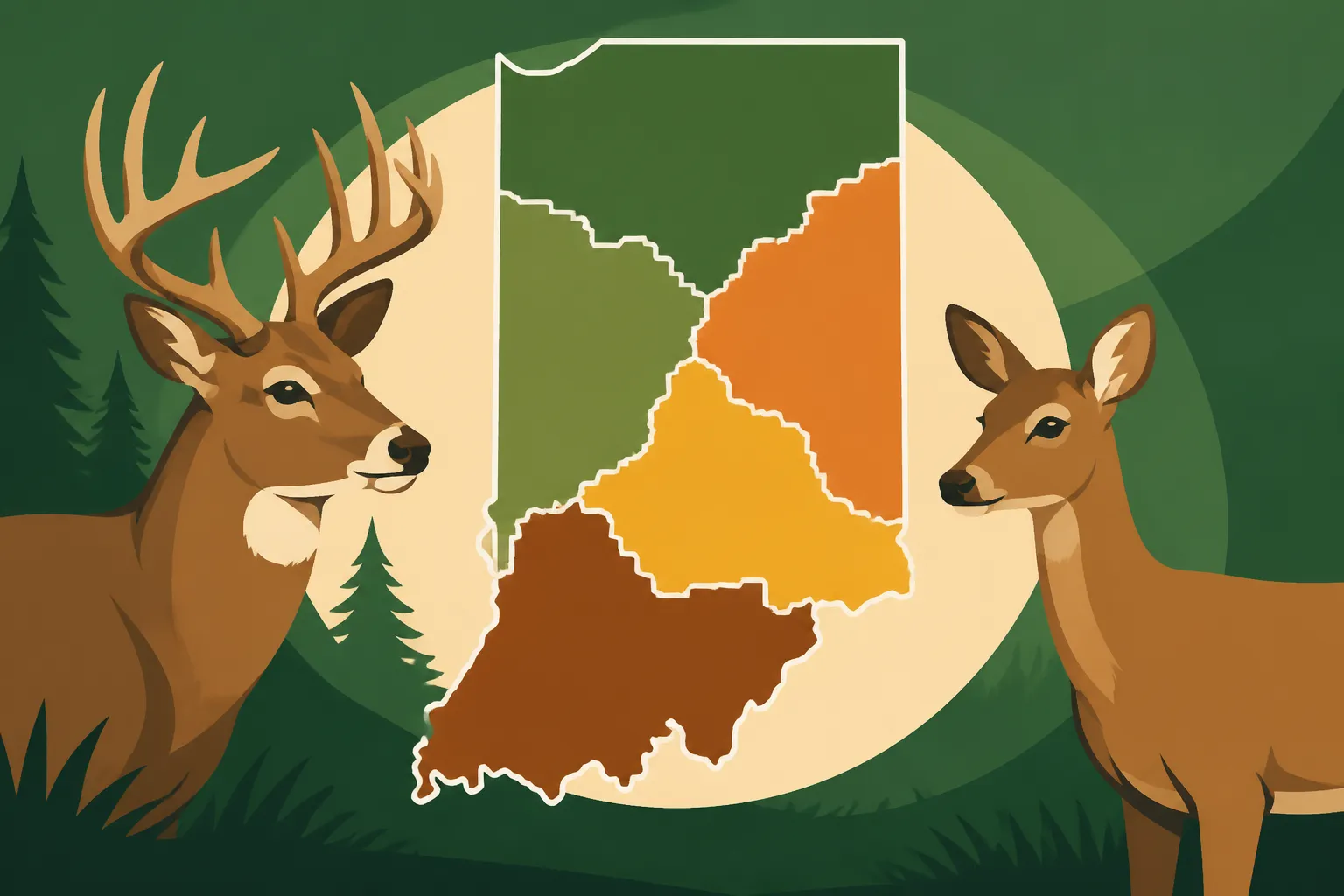
Indiana Buck-to-Doe Ratio by Region
It's an age-old question that keeps us Hoosier hunters up at night: where are the mature bucks, and how healthy is the herd truly looking? We spend countless hours scouting, hanging stands, and pouring over aerial maps, often feeling like we're just guessing when it comes to the overall deer population dynamics. One of the most telling indicators of herd health, and a real game-changer for how you approach your season, is the buck-to-doe ratio. This guide is going to peel back the layers on what those numbers mean and how they vary across our diverse Indiana landscape, helping you refine your hunting strategy no matter where you chase whitetails.
Understanding Indiana's Buck-to-Doe Ratio
When we talk about the buck-to-doe ratio, we're not just throwing around numbers. This figure is a critical piece of the puzzle for understanding deer behavior, herd health, and ultimately, your chances of encountering the kind of deer you're after. It's a snapshot of how many does there are for every mature buck in a given area, and it can fluctuate quite a bit from one county to the next, or even from one woodlot to another.
What the Ratio Means for Hunters
Imagine standing in your favorite piece of timber during the peak of the rut. If the buck-to-doe ratio is heavily skewed, say five or six does for every mature buck, what does that really mean for your hunt? Well, it often translates to a less intense, less dramatic rut. Those bucks just don't have to work as hard to find receptive does. They might not be as eager to respond to calling or rattling, because there's always another doe just around the corner. You might see more small bucks running around, but the bigger, older bucks might just casually move from one group of does to the next without much fuss or territorial aggression. It can be frustrating to hunt in these conditions, feeling like the bucks are just ghosts.
On the flip side, in an area with a more balanced ratio—perhaps two or three does per buck—the rut is usually explosive. Bucks are constantly competing, fighting, and scent-checking. They are highly responsive to calls and decoys because they know a hot doe is a prize, and there's competition. This balance leads to healthier does, too, as they aren't constantly being bred by younger, less desirable bucks. For us hunters, it means the classic rut strategies really shine. You're more likely to catch a mature buck on the move during daylight, driven by that primal urge to find a mate and fend off rivals. It's the kind of hunting we all dream about, where the woods are alive with deer activity.
How Ratios Are Measured and Monitored
You might wonder, how do wildlife biologists even figure out these ratios? It's not like they're counting every single deer in the state. Instead, it's a combination of methods, and it's important to remember these are always estimates. One primary source of data is hunter harvest reports. When we report our deer through the Go Outdoors Indiana system, whether online or via the app, that data is crucial. The sex and age of harvested deer, especially bucks, gives the DNR a general idea of how many antlered deer are being removed from the population.
Beyond harvest data, biologists use various techniques. Observation surveys, where trained personnel or even citizen scientists record deer sightings over specific routes, can provide trends. Spotlight counts, done at night, illuminate how many deer are present and their general sex ratios in open areas. Increasingly, trail camera data from research projects on both public and private lands also contributes to these estimates. While these numbers aren't perfect, they offer invaluable insights into the overall health and structure of Indiana's deer herd, guiding management decisions like Indiana Deer Season Structure Explained and specific bag limits. The more accurate and consistent our reporting is as hunters, the better picture the DNR has, and the better they can manage the resource for everyone.
Regional Differences in Indiana's Buck-to-Doe Ratios
Indiana is a surprisingly diverse state when it comes to deer habitat. From the rolling hills of the south to the flat, fertile farmlands of the north, and even the pockets of urban sprawl, each region presents a unique set of challenges and opportunities for deer, and consequently, different buck-to-doe ratios. Understanding these regional variations can seriously impact your hunting approach.
Southern Indiana's Hill Country (Hoosier National Forest and State Forests)
Ah, southern Indiana. My stomping grounds, and where many a hunter dreams of chasing a mature whitetail. This region, encompassing areas like the Hoosier National Forest Hunting and various state forests such as Yellowwood or Morgan-Monroe, is characterized by rugged topography, dense timber, and often larger, less fragmented tracts of public land. Here, you'll generally find more balanced buck-to-doe ratios, sometimes even leaning towards more bucks in truly remote, lightly pressured pockets.
Why is this the case? Several factors contribute. First, the habitat itself naturally supports lower overall deer densities compared to the agricultural powerhouses up north. Food sources, while diverse, are often more spread out, and deer have to work harder to find consistent nutrition. The sheer amount of thick, unbroken cover means that bucks, especially younger ones, can often survive to older age classes without encountering as much hunting pressure. There are more places for them to hide, grow, and simply avoid detection. The average age structure of bucks in these areas tends to be older, which means more competition when the rut does kick in. If you're looking for an intense rut experience with active, vocal bucks, areas like Hunting Brown County Ridgelines or Reading a Ridge for Hoosier Forest Deer are often where you'll find it. The challenge here isn't necessarily finding deer, but finding the right deer – those mature bucks that have survived a few seasons in this unforgiving landscape.
Central and Northern Indiana Farmland (Agricultural Belt)
Now, let's head north to the vast agricultural expanses that define much of central and northern Indiana. This is prime deer country in a different way, characterized by sprawling crop fields, scattered woodlots, thick fencerows, and a higher human population density. The buck-to-doe ratios in these areas tend to be more doe-heavy, often significantly so. You might see ratios of 4:1 or even 5:1 (does to bucks) in some locales.
The primary driver here is food. Corn, soybeans, and alfalfa fields provide an almost unlimited buffet for deer, leading to higher fawn recruitment rates and the ability to sustain larger overall deer populations. However, this abundance comes with a trade-off. Bucks, particularly mature ones, can be harder to find and pattern because they have so many does to choose from. They don't have to travel as far, and the rut can feel more drawn out and less frenetic. Also, the smaller, fragmented woodlots and fencerows often mean bucks are more exposed to hunting pressure, and it can be harder for them to reach older age classes undetected. Hunters in these regions often focus on pinch points, travel corridors between feeding and bedding areas, and adapting their strategies for Hunting Northern Indiana Farmland Deer or Hunting a Funnel Between Two Woodlots. While big bucks certainly live here, finding them often requires meticulous scouting and understanding how they use these smaller, high-pressure tracts.
Urban/Suburban Deer Reduction Zones
Finally, we have the unique challenge of Indiana's urban and suburban areas, many of which are designated as deer reduction zones. These are pockets, often near larger cities or towns, where deer populations have grown so dense that they cause significant issues like increased deer-vehicle collisions, property damage, and landscape destruction. In these zones, the buck-to-doe ratios are often extremely skewed towards does, sometimes as high as 10:1 or more.
The purpose of hunting in these areas is primarily population control. The goal is to reduce the overall number of deer, with a heavy emphasis on antlerless harvest. For hunters, this means you'll likely see a lot of does. While mature bucks do exist in these zones – sometimes surprisingly large ones due to limited hunting pressure on antlered deer or sanctuaries they find within neighborhoods – the hunting strategy is vastly different. It's often about ethical and efficient harvest of any deer, especially does, to help manage the population. These hunts often involve specialized regulations, such as Indiana Suburban Archery-Only Zones or specific antlerless quotas. Participating in a Hunting a Deer Reduction Zone isn't just about filling your freezer; it's about being a part of critical wildlife management efforts that benefit both the deer herd and the human communities they interact with.
Impact on Hunting Strategy and Herd Management
Knowing the buck-to-doe ratio for the region you hunt isn't just an interesting factoid; it's a piece of actionable intelligence that can fundamentally change how you approach your deer season. It's about working with the herd, not against it, and making informed decisions that contribute to overall health and your personal success.
Adjusting Your Hunting Tactics Based on the Ratio
Let's break down how this information can guide your time afield. If you're hunting in a doe-heavy area, especially in northern Indiana's farmland, your early season strategy should heavily focus on identifying prime food sources. Bucks will be more concentrated around these areas, but they won't be actively chasing does yet. Once the rut begins, be prepared for a less frantic chase. Bucks might not be as responsive to aggressive calling or rattling because there are so many does available. Instead, focus on patterning specific bucks, identifying their travel routes between bedding and feeding areas, and being patient on stand. You might have better luck still-hunting slowly through cover or sitting over food plots, rather than trying to call a buck in from a distance. The key is to be where the does are, because the bucks will eventually show up to check them.
Conversely, if you find yourself in a more balanced buck-to-doe ratio area, perhaps in the public lands of southern Indiana, get ready for a more traditional, intense rut. This is where aggressive tactics like Rattling and Grunting in Indiana truly shine. Bucks will be competing fiercely, covering more ground, and responding to calls. Setting up on prominent ridges, saddles, and creek bottoms where bucks are cruising for does can be incredibly effective during the peak of the rut, typically in early November. This is also a great time to implement strategies for Hunting the Indiana Rut in Early November, knowing that bucks are on their feet during daylight hours, driven by the need to breed. Don't be afraid to be mobile and cover ground if you're not seeing activity, as the bucks will be on the move.
The Role of Hunters in Maintaining Healthy Ratios
As ethical hunters, we play an indispensable role in maintaining healthy deer populations and desirable buck-to-doe ratios. This isn't just the DNR's job; it's ours too. The most impactful way we contribute is through responsible antlerless harvest. In areas with high doe populations and skewed ratios, taking antlerless deer is not just permitted, it's encouraged and necessary. Removing surplus does helps bring the population back into balance with the available habitat, which in turn leads to healthier deer, better fawn survival rates, and often, more intense rut activity as bucks have to work harder to find receptive does. It also reduces pressure on food sources and can mitigate disease spread.
Every deer you harvest, whether it's a big buck or a mature doe, provides critical data. When you report your deer accurately, you're directly contributing to the DNR's ability to monitor these ratios and make informed management decisions. Platforms like GoHunt and the Indiana DNR App make this reporting process easy. Without this data, wildlife managers would be flying blind, making it much harder to ensure sustainable hunting opportunities for future generations. So, when you're considering your next tag, remember the bigger picture: filling an antlerless tag, especially in an area with a high doe count, is a valuable act of conservation that helps keep Indiana's deer herd vibrant and healthy.
Here's a quick overview of how buck-to-doe ratios often play out across our beautiful state:
| Region | Typical Buck-to-Doe Ratio (Does:Buck) | Key Characteristics & Hunting Implications |
|---|---|---|
| Southern Hill Country | 2:1 to 3:1 (more balanced) | More mature bucks, intense rut activity, larger tracts of timber, lower deer densities. Focus on calling, rattling, and cruising travel routes. |
| Central/Northern Farmland | 4:1 to 5:1 (doe-heavy) | Abundant food, higher deer densities, fragmented cover. Rut can be less intense. Focus on patterning specific bucks, food sources, and pinch points between cover and crops. |
| Urban/Suburban Reduction Zones | 6:1 to 10:1+ (highly doe-heavy) | High overall deer numbers, significant management pressure to reduce population. Emphasis on antlerless harvest. Tactics may involve specialized archery or managed hunts for population control, not just buck pursuit. |
Disclaimer
This article is for general informational purposes only and does not constitute professional advice. Laws, prices and regulations vary by location and change over time. Consult a qualified professional for guidance on your specific situation.