Indiana Turkey Harvest Numbers
For many Indiana hunters, the sound of a gobbler echoing through the hardwoods on a crisp spring morning is what truly awakens the soul after a long winter. But sometimes, it feels like those opportunities are few and far between, leading you to wonder if the turkey population is truly thriving or if success is just a lucky draw. This guide will dive deep into Indiana's wild turkey harvest numbers, offering a realistic look at recent trends, historical context, and the factors that truly shape a successful season for these wily birds, helping you understand what to expect when you head afield.
Understanding Indiana's Wild Turkey Comeback Story
It's hard to imagine today, but there was a time when wild turkeys were all but gone from the Hoosier State. The thought of hearing a gobbler in the spring or busting a flock in the fall would have been a pipe dream for hunters just a few generations ago. Their story is one of incredible resilience and dedicated conservation, a testament to what's possible when wildlife managers and passionate hunters work together.
The Near Extinction and Resurgence
Back in the early 20th century, due to a combination of widespread habitat destruction, particularly the clearing of vast timberlands for agriculture, and unregulated hunting pressure, wild turkeys in Indiana were practically extirpated. By the 1900s, it was believed that no viable wild turkey populations remained anywhere in the state. This was a common story across much of the Midwest and Northeast, where forests were cleared at an alarming rate. Imagine Indiana without these magnificent birds – it’s a stark reminder of how quickly wildlife populations can disappear without proper management.
The turning point came in the mid-20th century, primarily through strategic reintroduction efforts. Beginning in the 1950s and really picking up steam in the 1980s, the Indiana Department of Natural Resources (DNR) embarked on ambitious trap-and-transfer programs. Live-trapped wild turkeys from states like Missouri and Arkansas, which had healthy populations, were carefully released into suitable habitats in Indiana. These weren't farm-raised birds; these were tough, wild turkeys genetically equipped to survive and thrive. These initial releases were painstakingly slow, with small numbers of birds being introduced to carefully selected areas, often in the more heavily timbered southern parts of the state.
How Turkeys Were Restored to Indiana
The success of the reintroduction wasn't just about dropping birds into the woods and hoping for the best. It was a multifaceted effort that involved significant habitat management, strong partnerships, and well-thought-out regulations. The DNR, often working hand-in-hand with organizations like the National Wild Turkey Federation (NWTF), focused on restoring and enhancing critical turkey habitat. This meant ensuring there was a mosaic of mature hardwood forests for roosting, areas with open understories for foraging, and suitable nesting cover away from predators. Programs were put in place to educate landowners on how to improve habitat on their private properties, recognizing that private land makes up the vast majority of Indiana.
Equally important were the strict regulations implemented to protect the growing populations, especially in the early stages. Limited seasons, specific bag limits, and eventually the establishment of statewide spring and fall hunting opportunities, allowed the birds to expand their range and population numbers without being overharvested. These measures ensured that the burgeoning populations had the breathing room to establish themselves. The story of How Turkeys Were Restored to Indiana is truly one of the greatest conservation successes in American history, and it directly underpins the vibrant hunting seasons we enjoy today.
Analyzing Recent Indiana Turkey Harvest Trends
If you're wondering how the turkey hunting has been lately, you're not alone. Every hunter wants to know if the numbers are up or down, what affects their chances, and how their county stacks up. Understanding the recent harvest trends means looking at the data with a realistic eye, acknowledging that Mother Nature, human behavior, and regulations all play a part in those final reported numbers.
Spring Season Success Rates
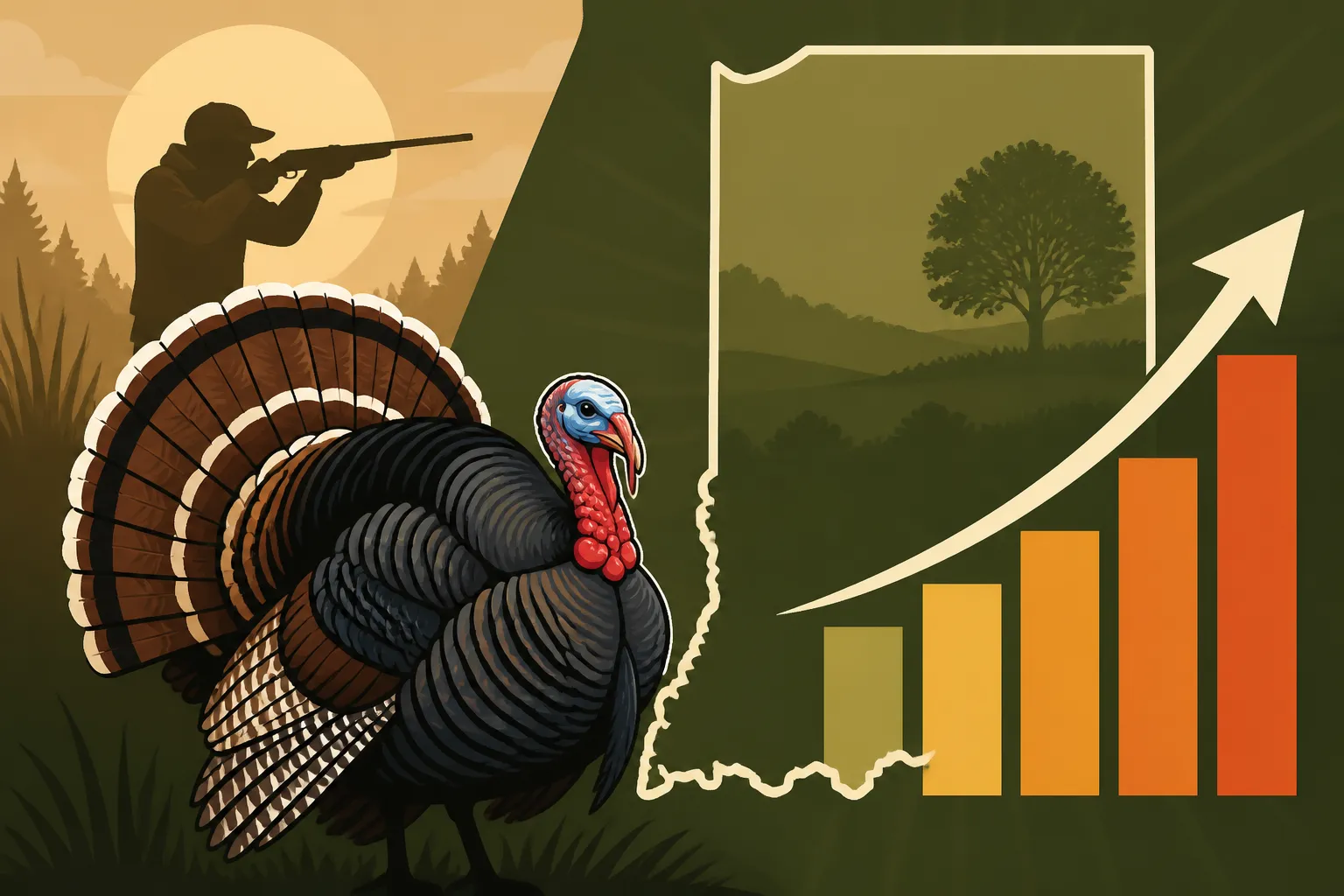
The spring turkey season is, without a doubt, the main event for most Hoosier turkey hunters. It's when the gobbling is at its peak, and the pursuit of a wary tom provides some of the most thrilling hunting experiences. Looking at the data from recent years, Indiana's spring turkey harvest has generally remained strong and relatively stable, though year-to-year fluctuations are common. For instance, in 2023, the total spring turkey harvest for Indiana was reported at 11,873 birds, a slight increase from the previous year. This figure combines both the youth season and the regular statewide season. A "good" spring season often hovers around or above the 12,000-bird mark, indicating a healthy population and decent hunter success.
However, these numbers aren't set in stone. Weather during the crucial breeding and nesting periods in early spring can significantly impact poult survival, which then affects the number of jakes and adult gobblers available in subsequent years. A cold, wet spring, for example, can decimate poult numbers, leading to fewer young birds entering the population. Conversely, a mild winter followed by a warm, dry spring can mean a bumper crop of poults, leading to better hunting a year or two down the line. Additionally, the weather during the hunting season itself plays a huge role. A week of heavy rain or high winds can keep hunters out of the woods and birds from gobbling, directly impacting the final harvest tally. This is why knowing Hunting the Indiana Spring Turkey Opener tactics often means adapting to whatever conditions Mother Nature throws at you.
Fall Season Opportunities and Challenges
While spring gets all the glory, Indiana also offers a fall turkey season, providing a completely different, yet equally rewarding, hunting experience. However, the fall harvest numbers are consistently and significantly lower than the spring take. In 2023, for example, the fall archery and firearms seasons combined yielded a harvest of just over 900 birds, a stark contrast to the spring's nearly 12,000. This isn't necessarily a sign of a struggling population but rather a reflection of differing hunting styles, hunter participation, and more restrictive regulations. Fall hunting often involves busting up flocks and then calling birds back to a scatter, a less vocal and often more challenging approach than the spring gobbler pursuit.
The regulations for the fall season are also different. The Indiana Fall Archery Turkey Rules allow for statewide hunting with archery equipment, but the Indiana Fall Firearms Turkey County List is much more limited, restricted to a handful of counties where populations can sustain additional pressure. This targeted approach helps protect populations in areas where they might be more vulnerable. Many hunters simply don't pursue turkeys in the fall, focusing instead on deer season. Those who do often find it a fantastic way to extend their time in the woods and engage in a truly unique turkey hunting challenge. It requires different skills, more scouting, and often a lot more patience.
The Impact of Hunter Numbers and Pressure
It stands to reason that the more hunters there are in the woods, the higher the potential for increased harvest numbers, assuming the turkey population can support it. Indiana's hunting license sales, especially for turkey, directly influence the overall harvest. If there's a surge in hunter interest one year, perhaps due to a good hatch or an economic downturn that pushes people outdoors, we might see a bump in the harvest. Conversely, a decline in hunter participation can lead to lower reported numbers, even if the birds are still plentiful.
However, there's also the concept of hunter saturation and pressure, particularly on public lands like the Hoosier National Forest or various Fish and Wildlife Areas. When too many hunters are chasing the same birds in a smaller area, the turkeys quickly become "educated" – they gobble less, become more wary, and move to thicker cover, making them much harder to harvest. This can lead to a paradoxical situation where a higher number of hunters results in lower individual success rates, even if the overall harvest is maintained. This is where tools that help hunters identify less-pressured areas or provide detailed property information become invaluable. Using platforms like GoHunt can help you research public land tracts and identify potential areas that might see less foot traffic, giving you a quiet edge on those pressured Indiana gobblers.
Factors Shaping Indiana's Annual Turkey Harvest
Wild turkeys are remarkably adaptable creatures, but their populations and thus hunting success are intimately tied to a complex web of environmental factors. From the subtlest shift in weather patterns to the long-term health of their habitat, countless elements conspire to make each hunting season unique. As hunters, understanding these influences helps us appreciate the birds more deeply and approach our seasons with realistic expectations.
Weather and Environmental Conditions
The weather, as any Indiana hunter knows, is a constant and often unpredictable force. For wild turkeys, spring weather during the nesting and brooding period is absolutely critical. A cold, prolonged, and wet spring can spell disaster for poults (young turkeys). They are highly vulnerable to hypothermia and disease in their first few weeks of life, and heavy rains can drown them or limit their access to crucial insect protein. Conversely, a warm, dry spring often leads to higher poult survival, which translates to more jakes and adult gobblers in future hunting seasons. This directly impacts Indiana Turkey Population Trends and subsequent harvest numbers.
While harsh winters are less directly impactful on adult turkeys due to their hardiness, extreme cold and deep snow can certainly put stress on the population by limiting access to food sources. More immediately, the weather during the hunting season itself can be a game-changer. A week of consistent rain, high winds, or unexpected cold fronts can severely depress hunter effort. Birds may gobble less, stay on the roost longer, or simply not move as much, making them harder to locate and call in. Hunters, too, might be less inclined to sit through miserable conditions, leading to lower harvest numbers even if the birds are present.
Habitat Quality and Mast Crops
You can't have healthy turkey populations without quality habitat, and Indiana is blessed with a diverse landscape that, in many areas, provides excellent turkey grounds. Turkeys thrive in a mosaic of mature hardwood timber for roosting, with an open understory that allows them to move freely and forage for insects, seeds, and nuts. Adjacent fields or clearings provide bugging areas for poults and supplemental food sources throughout the year. The loss or fragmentation of this diverse habitat directly impacts turkey numbers.
Mast crops, especially acorns from various oak species, are a cornerstone of a turkey's diet, particularly in the fall and winter. A bumper crop of acorns means birds are well-fed and often spread out, while a poor mast year can concentrate birds around alternative food sources. This can influence their health going into the spring breeding season and affect their distribution, making them harder or easier to locate depending on the localized food availability. Land management on both public and private land, including selective timber harvesting, prescribed burns, and planting food plots, all contribute to overall habitat quality and, by extension, the local turkey population. Hunters using tools like GoHunt can often scout aerial imagery for these habitat characteristics. For those looking to increase their odds, understanding Indiana Turkey Roost Tree Preferences is key, as ideal roosting habitat is a non-negotiable for a healthy flock.
Predator Pressure and Disease
While wild turkeys are robust birds, they are not without their natural challenges. Predator pressure, particularly on nests and poults, can be a significant factor in local population dynamics. Common turkey predators in Indiana include coyotes, bobcats (whose populations are rebounding in some areas), raccoons, opossums, and even domestic pets. These predators can raid nests, preying on eggs and young poults, which directly impacts recruitment into the adult population. However, adult turkeys are generally well-equipped to evade predators, especially in suitable cover.
Diseases can also play a role, though typically less dramatically than with deer, where Chronic Wasting Disease (CWD) is a major concern. Turkeys can be affected by avian pox, blackhead disease, or other parasitic infections, but widespread, population-decimating outbreaks are relatively rare. The DNR monitors the health of the state's wildlife populations closely, and any significant disease events would be quickly investigated. Ultimately, turkeys have evolved with these pressures, and healthy habitat combined with sensible hunting regulations allows populations to generally maintain themselves, even with natural predation. Insights into Nest Predation and Indiana Turkey Hatches are vital for understanding population recruitment.
Geographic Breakdown of Turkey Harvest
Indiana might seem like a fairly uniform state to an outsider, but any seasoned hunter knows that its diverse geography creates distinct hunting opportunities and challenges. This is particularly true for wild turkeys, where habitat variation across the state leads to vastly different population densities and, consequently, varying harvest numbers. Knowing these regional differences can significantly inform your hunting strategy.
Southern Hills vs. Northern Farmland
When we talk about turkey hunting in Indiana, the conversation almost inevitably gravitps south. The rugged, timbered hills of Southern Indiana, encompassing areas like the Hoosier National Forest and numerous state forests (such as Yellowwood and Morgan-Monroe), are generally considered the stronghold for wild turkeys in the state. This region boasts vast, contiguous tracts of mature hardwood forest, interspersed with creek bottoms, coves, and ridge tops – prime turkey habitat. These larger blocks of uninterrupted timber provide ample roosting sites, diverse foraging opportunities, and critical escape cover, leading to higher turkey densities and consistently higher harvest numbers. Hunters seeking consistent action will often find Best Indiana Counties for Turkeys are concentrated in this region.
In contrast, Northern Indiana is characterized by extensive agricultural lands, with smaller, more fragmented woodlots and fencerows. While turkeys have adapted to this landscape and can be found there, their populations are generally less dense, and their distribution can be patchier. Hunting in the farmland belt often requires more legwork to locate birds in isolated coverts or along river corridors like the Wabash. Success in these areas can be highly localized, depending on specific farm practices, habitat patches, and the amount of local pressure. While southern Indiana offers grand landscapes and big woods opportunities, the farmland can yield some impressive birds for hunters willing to put in the effort to find those isolated pockets.
Top-Producing Counties in Indiana
If you're looking for where the most turkeys are harvested year after year, the data consistently points to Southern Indiana counties. Counties like Greene, Martin, Brown, Morgan, Perry, and Crawford frequently lead the state in spring turkey harvest numbers. These counties offer vast expanses of the ideal mixed hardwood forest and rolling terrain that turkeys thrive in. For example, counties like Greene and Martin, with significant portions of public land and excellent private land habitat, often report harvests exceeding 500-600 birds in a single spring season.
| County (Sample) | 2021 Spring Harvest | 2022 Spring Harvest | 2023 Spring Harvest | Primary Habitat |
|---|---|---|---|---|
| Greene | 580 | 545 | 562 | Mixed Hardwood, Agriculture |
| Martin | 552 | 510 | 538 | Hoosier NF, Dense Forest |
| Brown | 475 | 450 | 468 | Hoosier NF, State Forest |
| Morgan | 420 | 405 | 412 | Mixed Forest, State Forest |
| Perry | 385 | 370 | 379 | Hoosier NF, River Hills |
Note: These numbers are illustrative based on recent Indiana DNR harvest data trends for top counties and may vary slightly year-to-year.
These top-producing counties aren't just good because they have a lot of turkeys; they often have a strong tradition of turkey hunting, a decent amount of public access, and a healthy mix of private land that supports robust populations. Hunters who use scouting tools, including aerial maps and public land layers often found on platforms like GoHunt, can effectively research specific areas within these counties to pinpoint potential hotspots. For those willing to learn to read the terrain, focusing on these areas and understanding factors like Hunting Brown County Ridgelines or similar topographical features can significantly increase their chances of success.
Interpreting Indiana's Turkey Data and Regulations
Understanding the raw numbers is only half the battle. To truly grasp Indiana's turkey hunting landscape, we need to look at how that data is gathered, what the regulations mean, and how ethical hunting practices tie into the bigger picture of conservation. It’s all interconnected, and knowing the mechanics makes us better, more responsible hunters.
How Harvest Data is Collected and Reported
The Indiana DNR relies on hunters to accurately report their harvests to gather the critical data needed for sound wildlife management. Just like with deer, all harvested wild turkeys in Indiana must be checked in through the state’s Fish & Wildlife online system or the Go FishIN and HuntIN mobile app. This mandatory reporting is crucial because it provides the DNR with real-time information on harvest trends, hunter effort, and population distribution. Whether you've just taken a gobbler during Spring Turkey Hunting in Indiana or bagged a bird during Hunting Indiana's Fall Turkey Windows, that check-in information is vital.
When a hunter checks in a turkey, they provide details such as the county of harvest, the date, and whether it was a male or female, and often if it was an adult or a jake in the spring. This data is then compiled by the DNR to produce the annual harvest reports, population estimates, and trends. Without this accurate reporting, wildlife managers would be flying blind, unable to make informed decisions about future season structures or bag limits. It's our collective responsibility as hunters to ensure we complete this step promptly and correctly. The process is similar to Reporting a Deer Through Indiana's App, so if you're familiar with deer check-in, turkeys are a breeze.
Indiana Spring Turkey Bag Limit Rules and Season Structure
Indiana's turkey hunting regulations are designed to provide ample hunting opportunity while ensuring the long-term sustainability of the wild turkey population. The Indiana Spring Turkey Bag Limit Rules allow a hunter to harvest one bearded wild turkey during the spring season. "Bearded" is the key word here, ensuring that hens (females) are protected during the crucial breeding season. There's also a youth-only season that typically opens a weekend before the statewide opener, allowing young hunters a unique opportunity to experience the woods with less pressure.
The season structure itself is carefully considered. The spring season generally runs for about three weeks in late April and early May, coinciding with the peak of gobbling activity. This timing is critical – it ensures that most hens have been bred before hunting pressure potentially disrupts their nesting, allowing for successful reproduction. The length of the season and the bag limit are routinely reviewed by the DNR, drawing on harvest data, population surveys (like poult-to-hen ratios), and habitat assessments. These regulations are a living document, evolving as the turkey population and environmental factors change, all with the goal of maintaining a healthy and huntable population for generations to come.
The Role of Hunter Education and Ethics
Beyond the numbers and regulations, ethical hunting practices and robust hunter education are foundational to the future of turkey hunting in Indiana. All new hunters are required to complete Indiana Hunter Education Requirements before purchasing a hunting license. This education covers not just safety and regulations, but also wildlife identification, conservation principles, and ethical conduct. For turkey hunters, this translates to understanding proper shot placement, calling techniques, and most importantly, making sure of your target before you shoot.
Ethical hunting means respecting the game, the land, and other hunters. This includes calling off a bird if you're unsure of its sex or legal status, especially in the low light of early morning or late evening. It also means respecting property lines, even when a gobbler slips onto private land, and doing your utmost to retrieve any harvested bird. Public perception of hunting is heavily influenced by the behavior of individual hunters. By upholding the highest standards of ethics, we not only ensure safe and fair chase hunting experiences but also contribute positively to the image of hunting, which is crucial for maintaining public support and future access to hunting opportunities in the Hoosier State.
Disclaimer
Please remember that hunting regulations, season dates, and bag limits are subject to change. Always consult the most current Indiana Department of Natural Resources (DNR) hunting and trapping guide before heading afield to ensure compliance with all state laws and regulations.