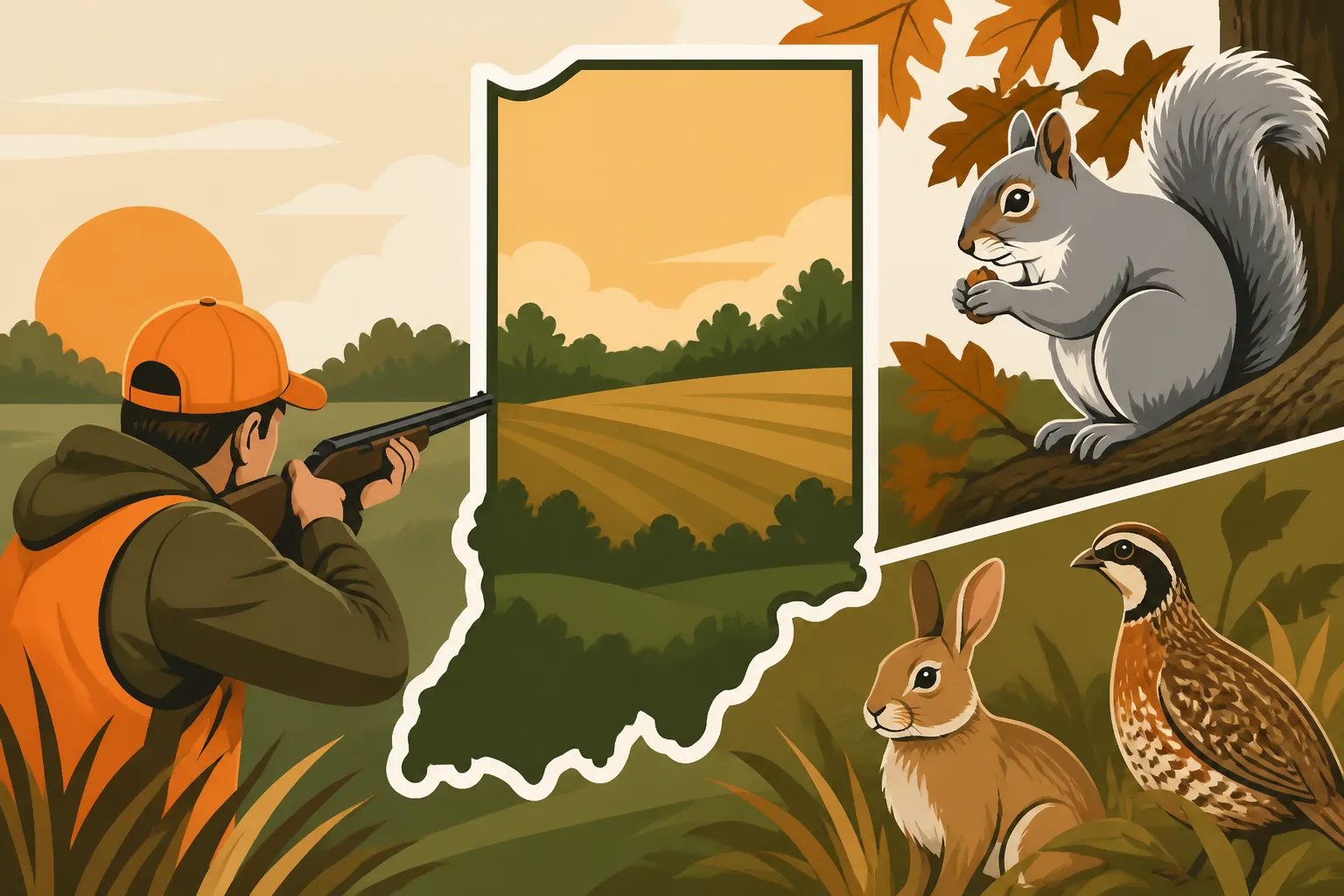
Squirrel and Small Game Hunting in Indiana
For many Hoosier hunters, the focus often drifts to whitetails or spring gobblers, but there's a whole world of opportunity just waiting in Indiana's woods and fields: small game. Trying to figure out where to start, what gear you actually need, and how to find these critters can feel overwhelming, especially if you're new to it or primarily a big game hunter. This guide is here to unravel the mysteries of squirrel and small game hunting in Indiana, offering practical advice, tactical insights, and a clear path to enjoying these exciting, accessible pursuits.
The Enduring Appeal of Indiana Small Game Hunting
Long before deer populations rebounded to their current levels, and before wild turkeys were successfully reintroduced, small game hunting was the bread and butter for generations of Indiana outdoors enthusiasts. There's a deep, foundational satisfaction that comes from outsmarting a cunning fox squirrel or flushing a fast-flying rabbit. It's not just about the harvest, though a squirrel stew or fried rabbit can be incredibly delicious; it's about sharpening your woodcraft, getting miles on your boots, and experiencing the wild in a more intimate way.
The beauty of small game hunting is its accessibility. You don't always need vast tracts of land, expensive gear, or days off work. A quick morning hunt before errands, or an afternoon jaunt with a buddy and a good dog, can be incredibly rewarding. It's a fantastic way to introduce new hunters, especially youth, to the ethics and excitement of the chase without the intensity or pressure of big game. Plus, it extends your time in the field, filling the gaps between those highly anticipated big game seasons.
A Legacy of Accessible Hunting
For decades, many Indiana families relied on small game hunting as a significant source of protein for their dinner tables. This tradition wasn't limited to large landowners or those with access to vast wilderness areas. Instead, it was often practiced on small woodlots, along fencerows, and in creek bottoms right in people's backyards or on neighboring farms with a simple handshake permission. This accessibility cultivated a culture of self-reliance and outdoor appreciation that still resonates today. You can still experience this by seeking out Hunting Small Private Tracts in Indiana.
Even now, with robust deer and turkey populations, small game retains its importance. It offers opportunities for hunters of all ages and abilities to engage with the natural world. From teaching a young hunter gun safety and tracking skills by pursuing squirrels, to the camaraderie of a rabbit drive with friends, these hunts build character and create lasting memories. It’s an ideal way to hone your shooting skills and develop a deeper understanding of animal behavior without the higher stakes often associated with bigger game. The physical demands can be tailored to the individual, ranging from a quiet sit for squirrels to an energetic walk-up hunt for rabbits.
Skill Building and Season Extension
One of the greatest benefits of diving into small game hunting is the invaluable skill-building it offers. Tracking, stealth, reading terrain, understanding animal habits, and sharp shooting become second nature. You learn to interpret subtle cues in the environment – a rustle in the leaves that isn't the wind, a fresh track in the mud, or the faint chatter of a squirrel. These are skills that transfer directly to big game hunting, making you a more observant and effective hunter all around.
Furthermore, small game seasons often open earlier and run much later than deer or turkey seasons, effectively extending your time in the field. Imagine kicking off your hunting year in August with squirrels, then transitioning to rabbits and pheasants as the weather cools, and continuing through the winter months when most other seasons are closed. This continuous engagement keeps your skills sharp and your passion alive, helping to prevent the "off-season blues" that can plague dedicated hunters. It’s also a perfect opportunity to scout future deer and turkey spots, as you traverse different areas and observe animal movement patterns that might otherwise go unnoticed.
Understanding Indiana's Key Small Game Species
Indiana is home to a diverse array of small game, each offering its own unique challenge and reward. While squirrels are perhaps the most common quarry, rabbits, pheasants, and even quail provide exciting opportunities for the dedicated hunter. Knowing the habits and preferred habitats of these species is the first step toward a successful hunt.
Indiana Squirrels: Fox and Gray
When most Hoosiers talk about squirrel hunting, they're usually referring to either the Eastern Fox Squirrel or the Eastern Gray Squirrel, both abundant across the state. Fox squirrels are generally larger, often displaying a reddish-orange hue on their bellies, and tend to prefer more open timber and woodlot edges, often venturing into cornfields for a meal. They're typically found in mature hardwood stands with plenty of mast trees like oaks and hickories. Gray squirrels, on the other hand, are smaller, with a predominantly gray coat and white belly, and are more at home in dense, unbroken forests. They're often seen in larger groups and can be incredibly agile and vocal.
Hunting squirrels can be a patient endeavor, requiring you to sit quietly and wait, or an active pursuit, involving still-hunting or stalking through the timber. Early in the season, during the warmer months, squirrels are highly active at dawn and dusk, feeding heavily on green mast and preparing for the lean winter months. As the season progresses and the leaves fall, they become more dependent on hard mast like acorns and hickory nuts. This shift in diet and habitat often means moving your focus to specific groves of trees. Understanding their daily patterns and food sources is key to consistent success. For a deep dive into specific habitats, check out Squirrel Hunting Indiana Bottomland Hardwoods.
The Elusive Indiana Cottontail
The Eastern Cottontail is a classic small game species in Indiana, known for its explosive burst of speed and ability to vanish into the thickest cover. Unlike squirrels that live in trees, rabbits are ground dwellers, preferring brushy fencerows, overgrown fields, briar patches, honeysuckle thickets, and dense creek bottom cover. They thrive in areas where agriculture meets woods, providing both food and immediate escape cover.
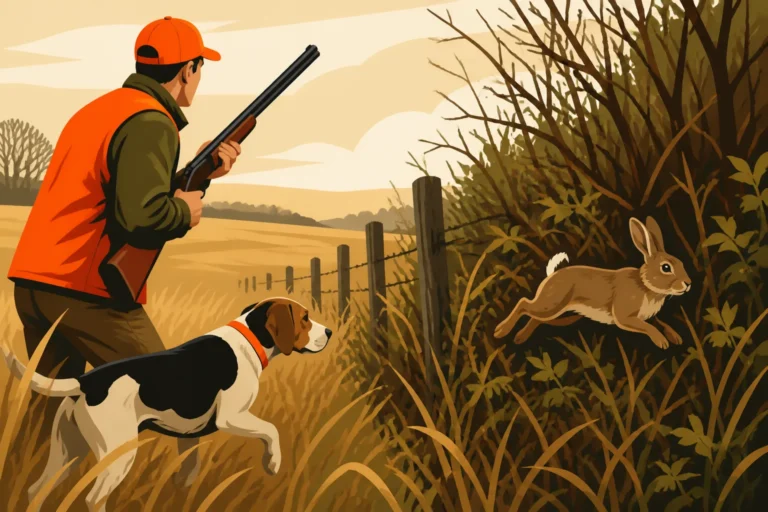
Hunting rabbits often involves walking through thick cover to flush them, either alone or with a partner. This can be physically demanding, pushing through tangles of briars and brush. For many, the quintessential rabbit hunt involves a pack of beagles. These dogs are specifically bred to track and "jump" rabbits, baying enthusiastically as they pursue the bunny in a circular pattern back towards the hunter. This form of hunting is not only highly effective but also incredibly social and exciting, with the baying of the hounds adding to the thrill. The key to successful rabbit hunting is knowing where they'll be hiding and how to move them out of their cover effectively. For specific strategies, consider Rabbit Hunting Indiana Fencerows.
Ring-Necked Pheasants and Stocking Efforts
While not as widespread as squirrels or rabbits, the Ring-Necked Pheasant holds a special place in the hearts of Indiana upland hunters. Native to Asia, pheasants were introduced to North America and thrived in agricultural landscapes. However, due to habitat loss and changing farming practices, wild pheasant populations in Indiana have significantly declined. Today, most pheasant hunting opportunities in the state are supported by stocking programs on public lands, primarily at certain Fish and Wildlife Areas (FWAs).
These stocked hunts offer a unique experience, often requiring advance reservations or participation in drawing systems. Hunters frequently utilize pointing dogs, like German Shorthaired Pointers, English Setters, or Brittany Spaniels, to locate and flush these brilliantly colored birds. The thrill of a pheasant exploding from cover with its distinct cackle is unforgettable. While some pockets of wild pheasants may still exist in areas of northern Indiana with suitable grassland and CRP (Conservation Reserve Program) fields, these are rare and require extensive scouting and local knowledge. Understanding the DNR's Indiana Pheasant Season and Stocking information is critical for planning a successful hunt.
The Challenge of Wild Quail
Another iconic upland bird, the Bobwhite Quail, once thrived in Indiana's agricultural mosaic. Like pheasants, however, their populations have suffered dramatic declines due to habitat fragmentation and loss. Today, wild quail hunting in Indiana is a far cry from its heyday. True wild coveys are few and far between, primarily found in very specific, well-managed habitats, usually on private lands or dedicated conservation areas in the southern part of the state.
Quail hunting requires exceptional habitat, dedicated bird dogs that can "point" a covey, and a keen eye for subtle signs. The sound of a whistling bobwhite on a crisp autumn morning is a rare and cherished experience for Indiana upland hunters. While the DNR has conservation efforts underway to restore quail habitat, hunters hoping to pursue them must temper expectations. It's a testament to the importance of habitat preservation and the delicate balance of ecosystems. For most, targeting pheasants or focusing on squirrels and rabbits will offer more consistent opportunities.
Essential Gear for Small Game Success
Small game hunting doesn't require an arsenal of specialized equipment, which is another part of its charm. However, having the right tools can significantly enhance your comfort, safety, and success in the field. From the firearm you carry to the boots on your feet, thoughtful gear choices make a big difference when you're pushing through briars or sitting quietly for squirrels.
Firearms and Ammunition Choices
When it comes to small game, versatility is key. The classic choice for squirrels and rabbits is often a .22 caliber rimfire rifle. These firearms are lightweight, accurate, and produce minimal recoil and noise, making them ideal for precise shots at stationary squirrels in trees or quick follow-ups on running rabbits. Different ammunition types, from standard velocity to high velocity hollow points, can be chosen based on target and desired effect. For very small game like squirrels, a .17 HMR or .22 Magnum can also be effective, offering flatter trajectories for longer shots.
For pheasants, quail, and flushing rabbits, a shotgun is the undisputed king. A 12-gauge or 20-gauge pump-action or semi-automatic shotgun is highly popular. The 20-gauge is often preferred for its lighter weight and reduced recoil, especially for younger or smaller hunters, while still offering plenty of knockdown power for upland birds. Modified or improved cylinder chokes are versatile choices for the close-range shots typical of small game. As for ammunition, standard game loads with shot sizes ranging from 6 to 7 ½ are common for pheasants, while rabbits and squirrels might call for slightly larger 5 or 6 shot for increased energy. Always ensure you are using lead shot for upland game unless explicitly stated otherwise (e.g., non-toxic shot zones for waterfowl). For more shotgun advice, read about Shotguns for Indiana Pheasant and Small Game.
Optics for Tight Cover and Timber
While long-range precision optics aren't typically a necessity for most small game hunting, a good set of binoculars can be incredibly useful, especially for spotting squirrels high in a tree canopy or scanning distant field edges for pheasants. Compact 8x or 10x binoculars are perfect – light enough to carry all day, but powerful enough to resolve details in dense cover. They allow you to identify game without having to raise your rifle or shotgun, minimizing movement and increasing your stealth.
For rifle hunters, a low-power variable scope (e.g., 1-4x, 2-7x, or 3-9x) on a .22 rifle is an excellent choice. At its lowest magnification, it provides a wide field of view for quick target acquisition in thick woods, while the higher end allows for more precise aiming at longer distances. A simple red dot sight can also be very effective on a .22 or even a shotgun, offering fast, intuitive aiming in brushy environments. For ethical shots, especially on squirrels, clarity of vision is paramount. Checking your optics for clarity and ensuring they are properly zeroed before heading afield is crucial.
Clothing and Footwear for Diverse Terrain
Indiana's varied landscapes and weather conditions demand adaptable clothing and durable footwear. Layering is always the name of the game, allowing you to adjust to temperature fluctuations throughout the day. Early season squirrel hunts might call for light, breathable clothing in camouflage or earth tones, while late-season rabbit drives in December will require warm, insulated layers. Blaze orange is a legal requirement during firearms seasons for deer, but even outside of those, it's a smart safety choice when hunting small game in shared public lands. Check Indiana Blaze Orange Requirements to be sure you are compliant.
For pushing through thick briar patches, durable brush pants or chaps are almost a necessity. They protect your legs from thorns and provide an extra layer of warmth. Waterproof and insulated boots are essential for keeping your feet dry and comfortable, especially when traversing dew-covered fields, creek bottoms, or snow. Look for boots with good ankle support for uneven terrain and aggressive tread for traction in mud or leaves. Nothing ruins a hunt faster than cold, wet feet. For more on this, check out Boots for Walking Indiana Farm Country. Don't forget a comfortable hunting vest with plenty of pockets for shells, snacks, and a game bag for your harvest. A good hat and gloves can round out your attire, protecting you from sun, cold, and stray branches.
Strategic Approaches for Indiana Squirrel Hunting
Hunting squirrels in Indiana is a time-honored tradition that offers some of the most accessible and rewarding experiences in the woods. These intelligent little critters provide a fantastic challenge and an excellent opportunity to hone your hunting skills, whether you're a seasoned veteran or just starting out. The tactics you employ will often depend on the time of year and the specific habitat you're targeting.
Early Season Bushy-Tails in Bottomlands
When Indiana's squirrel season kicks off in August, the woods are still thick with leaves, and temperatures can be quite warm. This early season period is prime for targeting squirrels in bottomland hardwood forests, especially along river and creek systems. These areas often feature a rich diversity of mature trees like oaks, hickories, and pecan, which provide abundant early mast crops such as green acorns and unripe hickory nuts. Squirrels will be actively feeding in these trees during the cooler morning and late afternoon hours, making them predictable.
The key to success in early season bottomlands is patience and keen observation. Find a comfortable spot with a good view of several nut-bearing trees, perhaps near a natural funnel or game trail. Sit quietly, remaining as still as possible, and let the woods come alive around you. Listen for the distinct chatter of squirrels, the rustle of leaves as they scamper through the canopy, or the tell-tale "tunk, tunk, tunk" of a squirrel cutting nuts. A good pair of binoculars will help you pick them out of the dense foliage. If you spot one, move slowly and deliberately to get into a shooting position, using tree trunks as cover. Sometimes a slight disturbance, like stomping your foot or tapping a tree, can make a "treed" squirrel flatten against a limb, making them easier to spot. This is the perfect setting for practicing Squirrel Hunting Indiana Bottomland Hardwoods.
Late Season Timber Tactics
As autumn progresses, the leaves begin to fall, and the woods open up, dramatically changing the dynamics of squirrel hunting. Late season, particularly after the deer firearms season, can be incredibly productive for squirrels. By now, they've been busy caching nuts for winter and are focused on the remaining hard mast. The absence of leaves makes spotting them easier, but it also makes you more visible.
During the late season, squirrels often spend more time on the ground, foraging for buried nuts or moving between den trees. This is where still-hunting or slow-stalking tactics become highly effective. Move through mature timber stands with a deliberate, almost imperceptible pace, stopping frequently to scan the trees and forest floor. Pay close attention to areas with concentrations of oak, hickory, and beech trees, as these will be their primary food sources. Look for fresh cuttings, dug-up areas, and drey nests high in the branches. As the weather gets colder, squirrels will spend more time in their den trees, often venturing out during the warmest part of the day. A patient approach, combining quiet movement with strategic stops, is crucial for catching these wary critters off guard.
Spot and Stalk in Mature Woods
Spot and stalk is an exciting and challenging method for squirrel hunting that demands stealth, excellent woodsmanship, and precise shooting. This tactic is most effective in mature, open timber where you can see farther and move more quietly, especially after leaf-fall. Instead of waiting in one spot, you actively pursue squirrels, using the terrain and natural cover to your advantage.
Begin by slowly walking through a productive area, scanning every branch and tree trunk. Use binoculars frequently to pick out subtle movements or the outline of a squirrel against the bark. Once you spot a squirrel, the real challenge begins. Plan your approach carefully, moving only when the squirrel's attention is diverted, or it's behind a tree. Use natural cover like large tree trunks, fallen logs, or changes in elevation to mask your movement. Every step should be slow and quiet, mindful of snapping twigs or rustling leaves. The goal is to get within comfortable shooting range without alerting the squirrel. If it sees you, it will often "tree" on the opposite side of the trunk. This is where a partner can come in handy, moving to the other side to try and get it to circle back into your view. This method not only yields squirrels but also dramatically improves your stalking skills for larger game.
Effective Tactics for Indiana Rabbit Hunting
Rabbit hunting in Indiana is often a fast-paced, action-packed affair that harks back to classic hunting traditions. The thrill of a cottontail bursting from cover and the challenge of a quick shot make it a favorite for many. Whether you're hunting solo or with a group, understanding rabbit behavior and habitat is paramount to success.
Working Fencerows and Brush Piles
Rabbits are masters of concealment, and their survival depends on their ability to quickly disappear into dense cover. In Indiana's agricultural landscapes, this often means fencerows, overgrown ditches, and brush piles are prime rabbit real estate. These linear features provide essential travel corridors and immediate escape routes from predators, including hunters. Fencerows especially, with their tangled growth of multiflora rose, briars, and honeysuckle, are a rabbit magnet.
To effectively hunt these areas, a systematic approach is best. If hunting alone, walk slowly and deliberately along one side of the fencerow, kicking at every brush pile, clump of grass, and dense thicket. Rabbits will often hold tight, only flushing when you're almost on top of them. Be ready for a quick, instinctive shot. With a partner, one hunter can walk on each side of the fencerow, creating a pincer movement that pushes rabbits out. When working brush piles, don't be afraid to give them a good boot or even poke them with a stick. Many a rabbit has been jumped from what looked like an empty pile of branches. These types of features are exactly why Rabbit Hunting Indiana Fencerows is such a rewarding endeavor. Remember to keep safety in mind, always knowing where your hunting partners are and having a clear background for your shots.
Hunting with Beagles and Other Dogs
For many rabbit hunters, the experience isn't complete without a pack of beagles. These tenacious hounds are specifically bred for rabbit hunting, possessing an incredible nose and an unwavering desire to chase. The sound of a beagle pack in full cry, baying as they track a rabbit, is one of the most exciting and unique sounds in the hunting world. Dogs transform rabbit hunting from a challenging walk-up into a dynamic, interactive pursuit.
When hunting with beagles, the dogs do most of the hard work of finding and flushing rabbits from cover. Once a rabbit is jumped, the dogs will follow its scent trail, usually pushing it in a large circle back towards the point where it was originally flushed, or back to the hunters waiting on stand. Hunters position themselves strategically along known rabbit escape routes or where the dogs initially jumped the rabbit. It requires patience and good listening skills to anticipate where the rabbit will appear. Using an e-collar with GPS tracking can be invaluable, especially if your dogs range far or hunt in dense cover, helping you keep track of their location and ensuring their safety. Hunting with dogs is a social affair, often involving multiple hunters, and it strengthens the bond between hunter and canine.
Post-Snow Rabbit Hunting
A fresh blanket of snow can transform rabbit hunting into an incredibly productive and visually striking experience. Snow not only makes it easier to spot rabbits against the white backdrop but also highlights their tracks, revealing their travel patterns and hiding spots. Following fresh tracks can lead you directly to a rabbit hunkered down in a briar patch or under a thick cedars.
After a snowfall, focus your efforts on the same dense cover rabbits prefer year-round: fencerows, briar patches, brush piles, and the edges of standing corn or soybean fields that provide thermal cover. Rabbits will often be less active on extremely cold days, conserving energy, so a thorough search of their preferred bedding areas is crucial. The distinct contrast of a brown rabbit against white snow makes for much easier target acquisition once they flush. Be aware that rabbits may sit even tighter in severe cold, relying on their camouflage and the warmth of their cover. A slow, methodical approach, coupled with keen eyesight to pick out their camouflaged forms, can lead to great success on a snowy day. Plus, tracking in the snow provides excellent education for reading deer sign as well.
Pursuing Pheasants in the Hoosier State
Pheasant hunting in Indiana, while not as prevalent as it once was, still offers exciting opportunities, particularly for those willing to seek out stocked areas or dedicate time to finding remnant wild populations. The vibrant colors and explosive flush of a ring-neck make it a prized game bird.
Navigating Stocked Pheasant Areas
The most reliable way to hunt pheasants in Indiana is by targeting the stocked birds on various Fish and Wildlife Areas (FWAs) across the state. The Indiana Department of Natural Resources (DNR) actively manages these areas and releases pheasants, often on specific dates or through controlled hunts. Popular FWAs known for stocking pheasants include Willow Slough, Atterbury, and Glendale. These hunts often require hunters to purchase a put-and-take pheasant permit in addition to a standard hunting license, and some areas may have specific sign-in procedures or draw systems.
Hunting stocked pheasants typically involves walking through designated habitat areas such as grassland, CRP fields, or food plots. Using a well-trained bird dog, particularly a pointing breed, greatly increases your chances of success. The dogs quarter the field, pick up scent, and "point" the hidden bird, allowing the hunter to walk in and prepare for the flush. Even without a dog, a group of hunters walking abreast through cover can effectively flush birds. Success often hinges on knowing the release schedules and understanding the specific rules for each FWA, which can be found on the DNR website. It's a great way to experience upland hunting, even if wild birds are scarce in your local area. Knowing the Indiana Pheasant Season and Stocking details will be critical.
Hunting Wild Pheasant Patches
While rare, small, isolated pockets of wild pheasants do still exist in Indiana, primarily in the northern counties where suitable habitat can still be found. These areas typically consist of large tracts of undisturbed grasslands, fallow fields, dense fencerows, and wetland edges that provide year-round cover and food. Finding these wild pheasant patches requires extensive scouting, local knowledge, and often, permission from private landowners. These are truly elusive birds, far warier and faster than their stocked counterparts.
Hunting wild pheasants is a much more challenging endeavor. These birds are quick to run and will flush out of range if they detect human presence. A fast, wide-ranging pointing dog is almost a necessity, as they can cover more ground and pinpoint birds before they run. When a dog goes on point, hunters need to quickly and quietly move into position, ready for a flush that can happen at any moment. The rewards of bagging a wild Indiana pheasant are immense, a testament to true hunting skill and a deep appreciation for healthy habitat. This type of hunting requires a different mindset than stocked hunts, focusing more on understanding the specific microhabitats that sustain wild birds and reading subtle cues from the environment.
Finding Prime Small Game Habitat in Indiana
One of the biggest hurdles for any hunter, especially when targeting small game, is finding suitable land. Indiana offers a mix of public and private opportunities, each with its own set of considerations. Knowing where to look and how to gain access is as important as the hunting tactics themselves.
Indiana State Forests and FWAs
Indiana is fortunate to have a substantial amount of public land managed by the DNR, including State Forests and Fish and Wildlife Areas (FWAs), which offer excellent small game hunting opportunities. State Forests, such as Yellowwood, Morgan-Monroe, and Jackson-Washington, often feature large tracts of mature timber interspersed with younger growth and creek bottoms – ideal for squirrels. The vastness of these forests means less hunting pressure in some areas, especially if you're willing to walk a bit farther off the beaten path.
Fish and Wildlife Areas, on the other hand, are specifically managed for wildlife and public recreation. Many FWAs, like Sugar Ridge, Glendale, and Winamac, have designated areas for small game hunting and actively manage habitat for species like rabbits and pheasants. They often include grassland fields, brushy edges, and food plots specifically designed to attract and hold small game. While some FWAs require checking in at a property office or using an online system like GoHunt, they provide consistent opportunities. Always check the specific rules and regulations for each property before you go, as they can vary greatly. Leveraging resources like the Indiana DNR app or a mapping tool like GoHunt can reveal these prime public hunting grounds. For an overall guide, refer to Public Hunting Land in Indiana.
Gaining Private Land Access
While public lands are valuable, some of the best small game hunting, particularly for rabbits and squirrels, often takes place on private property. Farms, timber tracts, and even suburban woodlots can hold abundant small game. The challenge, of course, is gaining permission. This often comes down to respectful communication, building relationships, and demonstrating responsible behavior.
Start by identifying potential private land parcels near you, perhaps using an aerial mapping tool. Look for properties with good habitat: fencerows, brushy creek bottoms, woodlots adjacent to agricultural fields, or neglected corners of farmland. Once you've identified a promising spot, approach the landowner respectfully and in person, if possible. Dress neatly, introduce yourself, and clearly state your intentions. Offer to share some of your harvest, help with chores, or assist with nuisance animal control, like coyotes. Be prepared to be told "no," but don't let that deter you. A positive attitude and persistence can pay off. Always get clear permission before stepping foot on private land, and respect any specific requests the landowner might have. Building a reputation as a trustworthy and responsible hunter can open doors to incredible hunting opportunities for years to come. For more on this, consult Knocking on Doors in Indiana Farm Country.
Conservation and Responsible Small Game Hunting
Hunting small game isn't just about the chase; it's also about being a responsible steward of our natural resources. Understanding conservation principles, adhering to regulations, and practicing ethical hunting are crucial for ensuring these opportunities continue for future generations of Hoosier hunters. Our actions in the field directly impact the health of game populations and the perception of hunting as a whole.
Understanding Seasons and Bag Limits
One of the most fundamental aspects of responsible small game hunting is knowing and strictly adhering to Indiana's hunting seasons and bag limits. These regulations are not arbitrary; they are carefully crafted by the Indiana Department of Natural Resources (DNR) based on scientific data and population surveys to ensure sustainable harvests and healthy game populations. Hunting out of season or exceeding bag limits can severely impact local populations and is illegal.
Always consult the most current Indiana Hunting & Trapping Guide before heading afield. This guide provides opening and closing dates for species like squirrels, rabbits, and pheasants, as well as daily bag limits and possession limits. For example, Indiana Squirrel Season Dates and Indiana Rabbit Season Dates are clearly outlined. Some regulations might vary by specific property, such as on Fish and Wildlife Areas or during special hunts for pheasants, so always double-check those local rules. Keeping track of your harvest and making sure you are compliant is not just about avoiding a ticket; it's about doing your part for conservation.
The Role of Habitat in Small Game Populations
Perhaps the single most critical factor influencing small game populations is habitat. Without adequate food, water, and cover, populations simply cannot thrive. Modern agricultural practices, urban sprawl, and changes in land use have all contributed to habitat loss and fragmentation, which in turn has significantly impacted species like wild pheasants and quail. However, even for more adaptable species like squirrels and rabbits, quality habitat makes a world of difference.
Responsible hunters understand that good habitat is the backbone of good hunting. This means supporting conservation efforts that protect and restore wetlands, grasslands, and native forests. On a smaller scale, landowners can enhance their property for small game by leaving brush piles, maintaining hedgerows, planting native grasses and food plots, and encouraging natural regeneration of woody cover. Every small effort to improve habitat contributes to the overall health of the ecosystem and provides more opportunities for small game to flourish. By understanding these dynamics, we can be more effective advocates for wildlife and ensure that small game hunting remains a vibrant tradition in Indiana.
Table: Indiana Small Game Seasons & Bag Limits (General Statewide)
It's important to remember that these are general statewide regulations for resident hunters. Always consult the most current Indiana Hunting & Trapping Guide published by the Indiana DNR for precise dates, specific property regulations, and any changes that may occur. Non-resident licenses and specific permits for certain areas (like put-and-take pheasant hunts) may have additional requirements or costs.
| Game Species | General Season Dates | Daily Bag Limit | Possession Limit | Notes |
|---|---|---|---|---|
| Squirrel (Fox & Gray) | Mid-August – Late January | 5 | 15 | Open statewide, typically shotgun or rimfire rifle |
| Rabbit (Cottontail) | Early November – Late January | 4 | 12 | Open statewide, often hunted with dogs |
| Pheasant | Early November – Mid-January | 2 | 4 | Stocked birds on FWA's are primary opportunity. |
| Quail (Bobwhite) | Early November – Mid-December | 4 | 12 | Very limited wild populations, primarily South IN. |
| Raccoon | Mid-November – Late January | No limit | No limit | Furbearer, often hunted at night. |
| Opossum | Mid-November – Late January | No limit | No limit | Furbearer, often hunted at night. |
| Crow | July – Early March (specific dates) | No limit | No limit | Migratory bird, consult regs for specific dates. |
Disclaimer: Hunting regulations, seasons, and bag limits can change. Always consult the most current Indiana Hunting & Trapping Guide from the Indiana Department of Natural Resources (DNR) or visit their official website before participating in any hunting activity. This content is for informational purposes only and should not be considered legal advice.