Shotguns for Indiana Pheasant and Small Game
Choosing the right shotgun for Indiana's diverse small game and upland bird opportunities can feel like a puzzle. You want something versatile enough to handle quick-flushing pheasants in a wind-swept field, yet also agile enough for tight fencerows thick with rabbits or squirrels darting through timber. This guide will walk you through everything you need to know about selecting, equipping, and understanding the perfect shotgun for your Indiana small game pursuits, ensuring you're ready for whatever the Hoosier outdoors throws your way.
The Versatility Challenge: Why One Gun Might Not Fit All (But We Try!)
Let's face it, most of us don't have a dedicated shotgun for every single type of small game out there. We're often looking for that reliable workhorse that can pull double, or even triple, duty. This pursuit of versatility is a hallmark of the Indiana small game hunter, who might be after squirrels one weekend and pheasants the next. The challenge lies in the vastly different environments and shooting scenarios these various species present, making a "one-size-fits-all" truly aspirational.
It's common to hear hunters debate the merits of a fast-swinging 20 gauge versus a harder-hitting 12 gauge, or a quick-cycling semi-auto compared to the steadfast reliability of a pump. Each choice comes with its own set of advantages and compromises. What works perfectly for a pheasant busting out of thick cover might feel cumbersome when trying to track a squirrel through dense canopy, or vice versa. Understanding these inherent trade-offs is the first step in making an informed decision that best suits your personal hunting style and the variety of game you pursue across Indiana's varied landscapes.
Indiana's Diverse Small Game Opportunities
Indiana is truly a small game hunter's paradise, offering a surprising array of species across its varied terrains. From the rolling hills and hardwood forests of the south to the agricultural fields and scattered woodlots of the north, there's always something to chase. This diversity means your shotgun needs to be adaptable. Imagine a crisp autumn morning spent hunting for gray and fox squirrels in a mature hickory grove. You'll likely be taking shots at small, fast-moving targets often high in the trees, requiring quick reflexes and a pattern that holds tight. Squirrel Hunting Indiana Hickory Groves is a classic Hoosier pursuit, and the demands on your equipment are quite specific.
Later in the season, perhaps after a fresh snow, you might be out rabbit hunting thick Indiana brush along a fencerow. Here, shots are often close, fast, and through dense cover, demanding a shotgun that's easy to maneuver and can put a quick, dense pattern on a bounding cottontail. The ability to switch ammunition types and chokes quickly becomes a real asset when transitioning between these different types of hunting. The variety truly shapes how we think about our gear.
The Unique Demands of Pheasant Hunting
Pheasant hunting, especially on stocked public lands or specific game preserves, presents an entirely different set of challenges for your shotgun. These birds are renowned for their explosive flush, often bursting from cover with incredible speed and power. You're typically shooting at longer ranges than you would for a rabbit or squirrel, and the bird's tougher feathers require a denser, harder-hitting pattern to bring them down cleanly. Pheasant Hunting Indiana Grassland is a thrilling experience, but it demands performance from your shotgun.
When you're walking through tall CRP fields or working a fencerow edge with a good bird dog, every shot is precious. A shotgun that swings smoothly, comes to the shoulder instinctively, and can deliver a consistent pattern at 30-40 yards is absolutely paramount. Recoil management also becomes a factor, particularly if you're doing a lot of shooting or using heavier pheasant loads. This often leads hunters to consider certain gauges and actions over others, prioritizing knockdown power and consistent performance on these fast-flying, resilient game birds.
Understanding Shotgun Gauges for Indiana Small Game
The gauge of your shotgun refers to the diameter of its bore, and it's one of the most fundamental decisions you'll make when selecting a firearm for small game. It impacts everything from the amount of shot you can deliver downrange to the felt recoil and the overall weight of the gun. For many Indiana hunters, the choice often boils down to a few popular options, each with its own loyal following and distinct advantages depending on the game being pursued.
Choosing a gauge isn't just about raw power; it's about finding a balance that complements your physical stature, shooting style, and the typical ranges at which you'll be engaging game. A smaller framed hunter might find a 12 gauge cumbersome after a long day in the field, while a larger hunter might feel under-gunned with a lighter gauge for pheasants. Thinking about the overall experience, from carrying the gun to managing recoil, is just as important as the ballistics.
The Enduring Popularity of 12 Gauge
The 12 gauge shotgun remains the undisputed king of versatility, and for good reason. It offers the widest range of ammunition options, from light target loads perfect for grouse or close-range rabbit hunting to heavy pheasant and turkey loads that deliver maximum knockdown power. For Indiana hunters who participate in a variety of seasons, a 12 gauge can genuinely be a "do-it-all" firearm. Its ability to handle larger shot sizes and greater shot payloads means a denser pattern and more energy on target, which can be critical for tougher birds like pheasants or when taking slightly longer shots on squirrels. Many hunters who also use a shotgun for deer, often switching to slugs, appreciate the 12 gauge's power and commonality.
However, the 12 gauge isn't without its considerations. It typically comes with more recoil, especially with heavier loads, which can be a deterrent for some shooters or after a long day of shooting. The guns themselves also tend to be heavier, which can be a factor if you're covering a lot of ground in tough terrain. Despite these points, its sheer adaptability and the vast array of available ammunition make it a top choice for most Indiana small game hunters. If you're looking for one gun to cover all your bases, from Squirrel and Small Game Hunting in Indiana to larger birds, the 12 gauge is hard to beat.
The Nimble 20 Gauge Advantage
For many, the 20 gauge represents the sweet spot in small game hunting. It's lighter, typically results in less felt recoil, and its slimmer profile can make it a joy to carry through thick cover or across expansive fields. Don't let its smaller size fool you; modern 20 gauge ammunition is incredibly efficient and capable, delivering effective patterns for most small game and upland birds. For those chasing rabbits in dense fencerows or squirrels in tight timber, the improved maneuverability of a 20 gauge can make a real difference in getting on target quickly.
The reduced recoil of a 20 gauge also makes it a fantastic option for younger hunters or those who are recoil-sensitive, allowing for more comfortable shooting and fostering better shooting habits. While its effective range might be slightly less than a 12 gauge on the heaviest pheasant loads, it's more than sufficient for the vast majority of shots encountered in typical Indiana small game hunting scenarios. Many seasoned hunters actually prefer the 20 gauge for upland birds specifically because of its quick handling characteristics. If you're spending your day Rabbit Hunting Indiana Fencerows or still-hunting for squirrels, the 20 gauge is an excellent companion.
Considering Smaller Gauges (28 and .410)
While less common as primary small game guns for general purposes, the 28 gauge and the .410 bore (which is technically a bore, not a gauge, but often grouped this way) certainly have their place, especially for experienced shooters or specific hunting situations. The 28 gauge is often lauded for its incredibly dense, consistent patterns and very light recoil, making it a joy to shoot. It's an elegant choice for those who appreciate finesse and precision, often favored for quail or dove hunting where consistent patterns on smaller birds are key.
The .410, on the other hand, is generally considered a specialist's gun due to its very small shot charge and tight pattern. It requires a high degree of shooting skill to be consistently effective on moving game. While it can be fantastic for squirrels at close range or for teaching very young hunters basic safety (with appropriate supervision and an understanding of its limitations), it's generally not recommended for fast-flushing pheasants or rabbits that require a wider, more forgiving pattern. However, for an expert shooting at Squirrel Hunting Indiana Hickory Groves at short range, a .410 can be a real challenge and a rewarding experience.
Here’s a quick overview of how these popular gauges stack up for Indiana small game:
| Gauge | Typical Use Cases (Indiana) | Pros | Cons | Ideal for |
|---|---|---|---|---|
| 12 Gauge | Pheasants, Rabbits, Squirrels, Waterfowl | Most versatile, widest ammo selection, power | More recoil, heavier guns | All-around, pheasant, mixed bag |
| 20 Gauge | Rabbits, Squirrels, Grouse, Pheasants | Lighter, less recoil, nimble | Slightly less shot/range than 12ga | Upland, youth, recoil-sensitive, long walks |
| 28 Gauge | Quail, Grouse, closer-range Pheasant | Excellent patterns, very light recoil | Limited ammo options, specialized | Finesse hunting, experienced shooters |
| .410 Bore | Squirrels (close), beginner training | Minimal recoil, very light | Very small shot charge, demands precision | Close-range squirrel, youth (supervised) |
Shotgun Actions: Finding Your Rhythm in the Field
Beyond the gauge, the action of your shotgun – how it loads, fires, and ejects shells – profoundly impacts your shooting experience. Each action type has its distinct feel, rhythm, and practical implications in the field, from the speed of follow-up shots to overall reliability and maintenance. Indiana hunters often develop a strong preference for one type of action over others, sometimes influenced by family tradition, the specific type of hunting they do, or simply what feels best in their hands.
Consider the pace of your hunt. Are you meticulously walking through thick cover for cottontails, where a second shot might be unlikely, or are you expecting multiple birds to flush simultaneously on a pheasant drive? Your chosen action should align with these expectations, ensuring you can operate your firearm smoothly and effectively when the moment of truth arrives. The choice of action is as much about personal preference and comfort as it is about mechanical efficiency.
Pump-Action Reliability
The pump-action shotgun is a classic workhorse, renowned for its rugged reliability and relatively affordable price point. For many, it's the first shotgun they ever owned, and for good reason. The manual cycling of the pump slide means fewer moving parts exposed to the elements, making it an incredibly dependable choice even in the harshest Indiana weather conditions, be it sleet, mud, or snow. There's a certain satisfaction that comes with shucking a spent hull and chambering a fresh round with a decisive pump, a sound that is instantly recognizable to any hunter.
While not as fast for follow-up shots as a semi-automatic, a practiced pump shooter can be remarkably quick. The ability to manually cycle also means pump-actions are less sensitive to varying ammunition loads; they'll usually feed and eject whatever you throw at them. This makes them a great choice for hunters who might switch between light target loads for practice and heavier field loads for game. For general Squirrel and Small Game Hunting in Indiana where dependability trumps speed of second shot, a pump-action is a solid, enduring choice. Many hunters also appreciate the added control over shell ejection, which can be useful in certain hunting situations.
Semi-Automatic Speed and Comfort
Semi-automatic shotguns operate by using a portion of the gas from the fired shell, or the recoil energy, to automatically cycle the action, ejecting the spent hull and chambering a new round. The primary advantage here is speed – you can deliver rapid follow-up shots with minimal interruption to your sight picture, which can be crucial when multiple birds flush, or a pheasant gets up strong. This quick cycling also means less felt recoil, as some of the energy is diverted to operate the action, making semi-autos a more comfortable option for high-volume shooting days or for hunters sensitive to recoil.
The reduced recoil and smooth operation make semi-autos popular for Pheasant Hunting Indiana Grassland where multiple shots might be needed quickly. However, semi-automatics typically have more intricate mechanisms, requiring more diligent cleaning and maintenance, especially after being exposed to dirt, mud, or heavy rain. Some older or simpler designs can also be particular about the loads they cycle reliably, sometimes preferring heavier loads over very light ones. Despite this, the comfort and rapid-fire capability of a modern semi-auto make it an attractive option for many Indiana small game hunters, and brands like GoHunt often showcase various reliable models for every budget.
Over/Under and Side-by-Side Elegance
Over/under (O/U) and side-by-side (SxS) shotguns are often seen as the epitome of classic upland hunting. These break-action shotguns feature two barrels, allowing for two immediate shots without needing to cycle an action. Their distinct advantages include the ability to have two different chokes installed simultaneously – for example, an improved cylinder in one barrel for close shots and a modified choke in the second for longer shots. This versatility, combined with their balance and often beautiful craftsmanship, makes them a favorite among traditionalists and those who appreciate the aesthetic of a fine firearm.
The lack of a moving action in the fore-end contributes to a very stable, predictable swing, which can be beneficial when tracking fast-moving targets. Their compact length, even with longer barrels, also makes them highly maneuverable in thick cover, which is a big plus for Rabbit Hunting Indiana Fencerows. The primary drawback is capacity, limited to two shots, and typically a higher price point than pump or semi-automatic models. However, for hunters who value balance, swift target acquisition, and the classic feel of a double gun, an O/U or SxS offers an unparalleled experience in the field. They are often lighter than their semi-auto counterparts, making them easy to carry on long treks.
Barrel Length, Chokes, and Patterning for Success
Once you've settled on a gauge and action, the next critical factors are barrel length and choke constriction. These two elements work hand-in-hand to dictate how your shotgun performs at various distances and against different types of game. Too long a barrel can make a gun unwieldy in dense cover, while too short might sacrifice swing smoothnes on longer shots. Similarly, the wrong choke can either blow out a pattern too quickly or keep it too tight for effective close-range shooting. Understanding how these components interact, and taking the time to properly pattern your shotgun, is key to consistent success in the field.
It's not just about what the manufacturer recommends; it's about what works for your gun and your ammunition. Every shotgun is a unique combination of bore diameter, forcing cone geometry, and choke constriction, and these subtle differences can lead to significant variations in how a pattern develops. Investing a little time on the patterning board can dramatically improve your confidence and ethical effectiveness when hunting.
Balancing Maneuverability and Swing
The barrel length of your shotgun plays a significant role in its overall balance, swing, and maneuverability. Historically, longer barrels (28-32 inches) were common for waterfowl and trap shooting, where a smooth, controlled swing on distant targets was paramount. For Pheasant Hunting Indiana Grassland where birds flush hard and fast, a slightly longer barrel (say, 26-28 inches) can still offer that desirable smooth swing, helping you stay on target. However, anything much longer can become cumbersome when navigating thick brush or quickly shouldering the gun in tight quarters.
Conversely, shorter barrels (24-26 inches) excel in situations demanding quick handling and maneuverability. If you're busting through dense multiflora rose thickets for rabbits or still-hunting through a cedar thicket for late-season deer (with slugs, of course!), a shorter barrel makes the gun much easier to point and swing in confined spaces. The trade-off is often a slightly choppier swing, which some find less conducive to hitting fast, crossing targets at longer ranges. For most general Indiana small game and upland hunting, a 26-inch barrel is a popular compromise, offering a good balance of swing and maneuverability. For even more detailed insights on how barrel length impacts handling for specific game, resources like GoHunt often provide in-depth comparisons.
Choke Selection for Different Game
Chokes are removable or fixed constrictions at the end of your shotgun barrel that control the spread of the shot pattern. Choosing the right choke is absolutely vital for effective and ethical hunting. Too open a choke for a distant bird might lead to a sparse pattern and missed or wounded game, while too tight a choke for a close-flushing rabbit could result in an overly dense pattern that mangles the meat. Most shotguns come with a set of interchangeable choke tubes, allowing you to adapt your pattern to the specific game and hunting conditions. Choke Choice for Fast Flushes is a critical decision, and understanding your options is key.
Common choke constrictions include:
- Cylinder (Cyl): The most open choke, providing the widest, most scattered pattern. Best for very close shots (under 20 yards) like jump-shooting rabbits in thick cover.
- Improved Cylinder (IC): Slightly tighter than cylinder. Good for shots out to 25-30 yards. Excellent for quail, grouse, and early-season rabbits where shots are often quick and close.
- Modified (Mod): A good all-around choke, offering a balanced pattern for shots out to 30-40 yards. Often considered the most versatile for pheasant, ducks, and general small game.
- Full (F): A tight choke that delivers a dense pattern at longer ranges (40+ yards). Historically popular for turkeys and distant waterfowl, but can be too tight for upland birds at closer ranges.
- Improved Modified (IM) and Light Modified (LM): Intermediate chokes that fall between Modified and Full or IC and Modified, respectively, offering fine-tuning for specific loads and ranges.
For most pheasant and rabbit hunting in Indiana, a Modified or Improved Cylinder choke will cover the majority of your needs. For squirrels high in the trees, a Modified or even Light Full might be preferred to keep the pattern dense at longer, upward angles.
The Critical Art of Patterning Your Shotgun
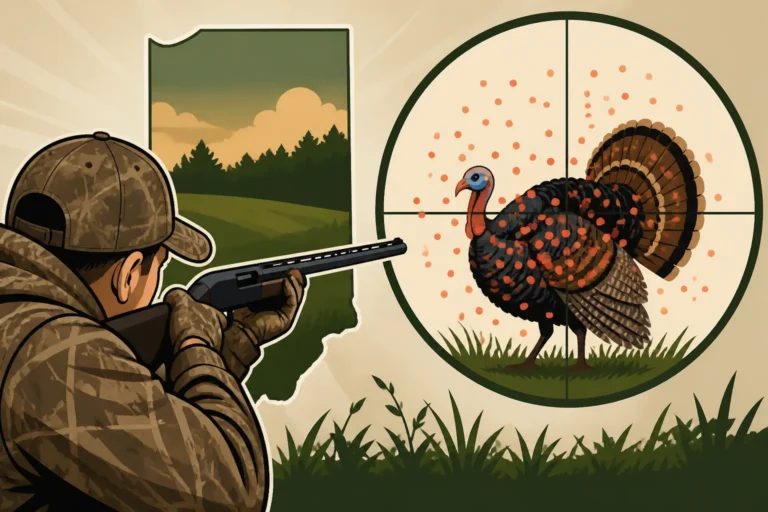
You simply cannot overstate the importance of patterning your shotgun with the specific ammunition you intend to use for hunting. Every gun, even two identical models, will throw a slightly different pattern with the same load. Patterning involves shooting your shotgun at a large piece of paper (typically 40×40 inches or larger) at typical hunting distances (e.g., 20, 30, and 40 yards) to see how your shot spreads. You're looking for an even distribution of pellets within a 30-inch circle, with enough pellets to cleanly kill your target animal.
This process helps you understand:
- Point of Impact: Does your gun shoot exactly where you're looking? Often, shotguns will shoot slightly high or low, or off to one side. Knowing this allows you to adjust your aiming point.
- Pattern Density: Is there enough shot in the vital area of your target at your maximum effective range? For pheasants, you need a dense pattern to ensure multiple pellet strikes.
- Holes in the Pattern: Are there any noticeable "holes" or gaps in the pattern that a bird or rabbit could slip through?
- Choke Effectiveness: Does the choke you've chosen deliver the pattern you expect with your chosen load? You might find that a certain brand of shell patterns better with one choke than another.
Don't skip this step! It's an investment in ethical hunting and ultimately, your success. Think of it like sighting in a rifle; you wouldn't head to the deer woods without knowing where your bullet hits, so don't head to the pheasant fields without knowing your shotgun's pattern. GoHunt often features articles on optimal patterning techniques and what to look for when analyzing your patterns.
Ammunition Choices: Matching the Load to the Game
The ammunition you choose for your shotgun is just as important as the gun itself. With so many options available – different shot sizes, shell lengths, payload weights, and material compositions – it can be overwhelming to pick the right one for Indiana's small game. The goal is to select a load that delivers enough energy and a sufficient number of pellets to cleanly harvest your target species at typical hunting ranges, without excessive damage to the meat or unnecessary recoil.
Beyond the specific game, environmental factors and legal requirements also play a role. Understanding when and where lead shot is permissible versus when non-toxic alternatives are mandated is crucial for any responsible hunter. The right shell in the right gun, combined with proper choke selection, creates a highly effective system.
Lead vs. Non-Toxic Shot Requirements
For the vast majority of small game hunting in Indiana, traditional lead shot remains perfectly legal and highly effective. Lead is dense, relatively inexpensive, and performs well for rabbits, squirrels, pheasants, and other upland birds. However, there are important exceptions to be aware of. All waterfowl hunting in Indiana, including ducks and geese, requires the use of non-toxic shot (e.g., steel, bismuth, tungsten-matrix). While this article focuses on upland and small game, it's worth noting in case you ever transition to ducks on a local marsh or Hunting Kankakee River Marsh Waterfowl.
Additionally, some specific public hunting areas, particularly certain Fish and Wildlife Areas (FWAs) or special managed hunts, may have restrictions on lead shot for all game, not just waterfowl. It's imperative to check the current regulations for the specific area you plan to hunt before heading out. Always carry your regulations guide or consult the Indiana DNR website (or the Go Outdoors Indiana app) to confirm local rules. Using lead shot where it's prohibited can result in fines and loss of hunting privileges.
Shot Sizes for Rabbits, Squirrels, and Birds
The size of the individual pellets within your shotgun shell (the "shot size") is critical. Generally, smaller numbers denote larger pellets. Larger pellets carry more energy per pellet and penetrate deeper, but you get fewer of them in a given payload. Smaller pellets create denser patterns but have less individual energy and range. Shot Size for Pheasant and Rabbit is a fundamental consideration.
Here’s a general guide for Indiana small game:
- Rabbits: For cottontails bursting from cover, especially in thick fencerows, a dense pattern is key. #6 lead shot is a very popular choice, offering a good balance of pellet count and energy. Some hunters prefer #5 for slightly longer shots or denser cover, while others opt for #7.5 for very close work.
- Squirrels: Whether you're targeting gray or fox squirrels, often in hardwood timber, #6 lead shot is again a highly effective choice. For squirrels high in the canopy, a slightly larger #5 shot might offer a bit more punch and range. Many squirrel hunters also use #4 lead shot, especially if they anticipate longer shots through leaves.
- Pheasants: These hardy birds require a robust load. #5 or #6 lead shot are the go-to choices for pheasants, providing excellent pattern density and stopping power. For non-toxic options (if required or preferred), steel #3 or #2, or bismuth #5, would be suitable. Remember to consider the greater velocity but lighter weight of steel shot compared to lead.
- Quail/Grouse: If you're lucky enough to find huntable populations of quail or grouse in Indiana, their smaller size and typically closer flushing ranges make #7.5 or #8 lead shot ideal. These smaller pellets create very dense patterns, increasing the likelihood of multiple hits on small, fast-moving targets.
Always consider the range at which you expect to take most of your shots. For example, if you're Running Beagles on Indiana Cottontails, shots are often close and fast, so #7.5 or #6 lead will provide plenty of pellets for a quick kill.
Understanding Shotgun Shell Components
Beyond shot size and material, the other components of a shotgun shell contribute to its performance.
- Gauge and Length: Shells are specific to their gauge (e.g., 12 gauge, 20 gauge) and come in various lengths (e.g., 2 ¾ inch, 3 inch, 3 ½ inch). Always ensure your shotgun is chambered for the length of shell you are using; using a shell that is too long for your chamber can be dangerous. For most small game, 2 ¾-inch shells are perfectly adequate and produce less recoil than 3-inch alternatives. The 3-inch 12 gauge is more common for waterfowl or turkeys where maximum payload is desired.
- Shot Weight (Payload): This refers to the total weight of the shot charge, typically measured in ounces. A heavier shot weight means more pellets, leading to a denser pattern, but also typically more recoil. Common payloads for small game range from 1 oz to 1 ¼ oz in 12 gauge, and ¾ oz to 1 oz in 20 gauge.
- Velocity: Measured in feet per second (fps), velocity indicates how fast the shot leaves the barrel. Higher velocity loads often hit harder and reduce lead needed on crossing targets, but can also increase recoil and potentially string out the shot pattern more.
- Wad: The wad is a component inside the shell that separates the powder from the shot and protects the shot as it travels down the barrel. Different wad designs can influence pattern uniformity and felt recoil.
Considering these components helps you fine-tune your ammunition selection for optimal performance, whether you're taking your shotgun to the trap range to practice or into the field for a day of hunting.
Essential Features and Accessories for Indiana Upland Hunting
A great shotgun is just the beginning. To truly optimize your experience in the Indiana uplands, you need to consider the features that enhance comfort, effectiveness, and safety, as well as the essential accessories that make a long day in the field more enjoyable and productive. From the ergonomics of your stock to reliable slings and the right cleaning gear, these details can significantly impact your hunting success and your overall enjoyment.
Don't underestimate the small things; a poorly fitting stock can lead to missed shots and bruising, while a flimsy sling can be a constant annoyance. Investing in quality accessories is an investment in your hunting comfort and efficiency.
Stock Fit and Comfort for Long Days
A shotgun that fits you properly is paramount. Unlike a rifle, where a perfect cheek weld is crucial for scope alignment, a shotgun relies on instinctive pointing and a natural mount to the shoulder. If the stock is too long or too short, or if the comb (the top part of the stock where your cheek rests) is too high or too low, you'll be constantly fighting the gun to get on target. This leads to missed shots, poor recoil management, and general discomfort.
Many modern shotguns offer adjustable stocks, allowing you to fine-tune the length of pull (distance from the trigger to the buttpad) and comb height. If your shotgun doesn't have these features, a qualified gunsmith can often help you achieve a better fit. When shouldering the gun, your eye should naturally align down the rib of the barrel, and the gun should feel like an extension of your body. A comfortable fit also means better recoil absorption, which is especially important on days when you might be firing a lot of pheasant loads. A well-fitting gun reduces fatigue, allowing you to stay focused and make accurate shots even after hours of walking.
Sling and Carrying Options
Let's be real, carrying a shotgun for hours across fields, through fencerows, and up and down creek banks can get tiresome. A quality sling is an absolute must-have for Indiana upland hunting. It frees up your hands for navigating difficult terrain, opening gates, or even taking a quick sip of water. Look for a sling that is wide, padded, and made from a durable, non-slip material. Neoprene slings are popular for their comfort and grip on your shoulder.
Beyond the sling, consider how you prefer to carry your gun. Some hunters like to carry it muzzle-up, while others prefer muzzle-down. Practice both to see what feels most natural for you and allows for the quickest, safest presentation when game flushes. In heavy cover, keeping the muzzle protected from dirt and debris is important. If you’re often Hunting the Wabash River Bottoms or other wet environments, a waterproof or water-resistant sling material can be a wise choice. Having a comfortable, reliable way to carry your firearm significantly reduces fatigue and keeps you fresh for when the birds flush or the rabbit bolts.
Protecting Your Investment: Cleaning and Maintenance
Your shotgun is a significant investment, and proper cleaning and maintenance are essential to ensure its reliability, longevity, and safe operation. Indiana's weather can be notoriously unpredictable, from dusty dry fields to muddy, rainy days. Dirt, moisture, and powder residue can quickly degrade the performance of your firearm if left unchecked.
After every hunting trip, especially if the gun has been exposed to moisture or heavy use, give it a thorough cleaning. This typically involves:
- Safety First: Always ensure the gun is unloaded and pointed in a safe direction.
- Bore Cleaning: Use a cleaning rod, appropriate bore brush, and patches with a good solvent to clean out powder and plastic wad fouling from the barrel.
- Action Cleaning: Wipe down the action, bolt, and receiver, removing any dirt, grim, or spent powder residue. Pay special attention to semi-automatic gas systems, which can get particularly dirty.
- Lubrication: Apply a light coat of gun oil to all moving parts and pivot points. Don't over-lubricate, as excessive oil can attract dirt.
- External Wiping: Wipe down all external metal surfaces with an oiled rag to prevent rust.
- Choke Tubes: Remove and clean your choke tubes regularly, applying a small amount of anti-seize compound to the threads before reinserting to prevent them from seizing.
Regular maintenance not only keeps your gun functioning flawlessly but also allows you to inspect for any wear or damage that might need attention. A well-maintained shotgun is a safe and reliable shotgun, ready for years of Pheasant Hunting Indiana Grassland or chasing Rabbit Hunting Indiana Fencerows.
Legality and Best Practices for Shotgun Hunters in Indiana
Beyond the gear, understanding the legal framework and adopting best practices are fundamental to being a responsible and successful shotgun hunter in Indiana. Laws regarding hunting hours, public land access, blaze orange requirements, and ethical shooting distances are in place to ensure safety, fair chase, and the conservation of wildlife resources. Ignorance of the law is never an excuse, and adhering to these guidelines protects both you and the future of hunting.
Being a good steward of the land and respectful of other outdoor enthusiasts, whether they are hikers, bird watchers, or other hunters, is a crucial part of the hunting tradition. It’s about more than just pulling the trigger; it’s about conducting yourself with integrity and responsibility.
Public Land Regulations and Safety
Indiana offers a good amount of public land for small game hunting, including Fish and Wildlife Areas (FWAs), State Forests, and portions of the Hoosier National Forest. However, each type of public land often has its own specific regulations that may differ from statewide rules. For instance, some FWAs require checking in and out, using specific parking areas, or may have special regulations on hunt dates or allowed firearms. Always consult the specific property rules before you hunt. A tool like GoHunt or the Indiana DNR website is invaluable for this.
Safety is paramount, especially on public land where other users might be present. Always know your target and what is beyond it. Never take a shot if you’re unsure. Observe the mandatory blaze orange requirements: How Much Blaze Orange Indiana Requires is important for deer hunters, and while specific requirements for small game can vary, wearing blaze orange or pink is always a wise choice for visibility, especially if you are hunting with dogs or others. Remember, you are responsible for every pellet that leaves your barrel.
Ethical Shotgun Hunting Considerations
Ethical hunting goes hand-in-hand with legal hunting. This means striving for clean, quick kills and making every effort to recover any game you shoot. Understanding your shotgun's effective range with your chosen ammunition and choke is key here. Don't push shots beyond what you know you can reliably hit. A wounded animal that escapes is a profound waste of the resource.
Consider these ethical practices:
- Know Your Range: As discussed in patterning, understand the maximum effective range of your shotgun and load. For most upland birds, this is often 35-40 yards.
- Clean Kills: Aim for vital areas to ensure a quick, humane death.
- Retrieve All Game: Make every reasonable effort to find and recover any animal you shoot. This might mean training a dog or marking where the animal fell.
- Respect Property: Whether on public land or private property with permission, respect boundaries, gates, and existing infrastructure. Leave no trace of your presence other than footprints.
- Report Violations: If you witness unethical or illegal hunting activity, report it to the Indiana DNR.
By adhering to these ethical principles, you uphold the integrity of hunting and ensure that future generations can continue to enjoy Indiana's rich small game opportunities. Happy hunting, Hoosiers!
Disclaimer
This article is for general informational purposes only and does not constitute professional advice. Laws, prices and regulations vary by location and change over time. Consult a qualified professional for guidance on your specific situation.