Shot Size for Pheasant and Rabbit
There’s nothing quite as frustrating as watching a pheasant flush with a cackle, pulling the trigger, and seeing a puff of feathers fly, only for the bird to sail off untouched, or worse, wounded and unrecoverable. Or, maybe you’ve had a speedy cottontail burst from a brush pile, and despite your quick shot, it keeps running, leaving you wondering if your ammunition was up to the task. Choosing the right shot size for pheasants and rabbits in Indiana isn't just about what's legal; it's about ethical hunting and maximizing your success in the field. This guide is here to walk you through the nuances of selecting the perfect load for these popular Hoosier small game species.
Understanding Shotgun Shell Basics for Indiana Small Game
Before we dive into specific recommendations for pheasants and rabbits, let's lay a foundation on how shotgun ammunition works and what the different numbers and terms mean. It's not just about gauge; the actual pellets inside make a huge difference.
What Do Shot Numbers Actually Mean?
It can be a bit confusing, can't it? You see numbers like 4, 5, 6, 7.5, and 8, and it's easy to assume a higher number means bigger shot, like with rifle calibers. But with shotgun pellets, it’s the opposite: the smaller the number, the larger the individual pellet size. So, a #4 shot pellet is significantly larger than a #7.5 shot pellet.
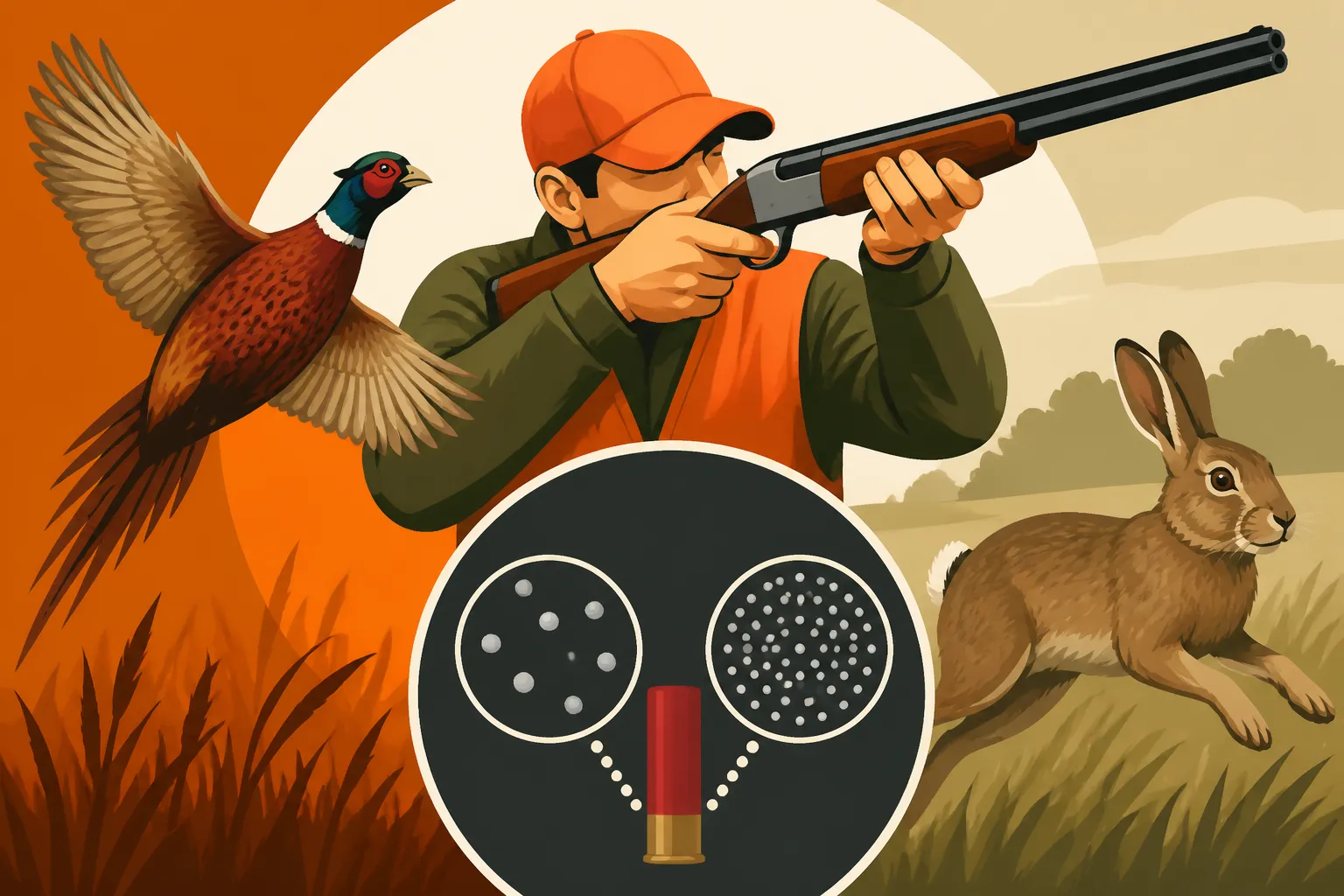
Why does this matter? Larger pellets carry more energy, penetrate deeper, and are less affected by wind, making them better for tougher, larger birds like pheasants. However, larger pellets mean fewer pellets can fit into a standard shell, which results in a thinner shot pattern. Conversely, smaller pellets (like #7.5 or #8) create a denser pattern, increasing the chance of hitting a fast-moving target like a rabbit, but each pellet has less energy and penetrates less. This trade-off is crucial when you're deciding what to load up for a day chasing Indiana Small Game and Furbearers. Think about a fast-flushing quail versus a hardy pheasant; you need different tools for different jobs.
The Importance of Shell Length and Gauge
While shot size is our main focus, it’s also important to briefly touch on shell length and gauge. Most pheasant and rabbit hunters in Indiana are using 12-gauge or 20-gauge shotguns, with 16-gauge and .410 also having their dedicated fan bases. A 12-gauge, for example, can hold more shot and often delivers a harder-hitting pattern than a 20-gauge, especially with heavier loads. However, the 20-gauge is lighter to carry all day, quicker to shoulder, and still perfectly capable of taking both pheasants and rabbits cleanly with the right shot size and choke.
Shell length, typically 2 ¾ inch or 3 inch for hunting, also affects payload. A 3-inch shell can hold more shot or larger shot than a 2 ¾-inch shell of the same gauge. While a 3-inch magnum load might seem like overkill for a cottontail, it could be just the ticket for those longer shots on a wary pheasant that's trying to make it to the next county. Always match your shell length to what your shotgun is chambered for, which is usually stamped on the barrel. You definitely don't want to try to cram a 3-inch shell into a 2 ¾-inch chamber!
Deciphering the Best Shot Size for Indiana Pheasant
Pheasants are magnificent birds, known for their explosive flush and hardy nature. They aren't flimsy targets, and they require a good punch to bring down cleanly.
Why Pheasants Are Tough Birds
If you've ever hunted pheasants, you know they're not like doves or quail. A healthy rooster pheasant, especially a wild bird on public land, is built like a tank. They have dense feathers, thick bones, and a surprising amount of grit. This means that simply peppering them with small shot won't often result in a clean kill; you need enough kinetic energy to penetrate and disrupt vital organs. A marginal hit can lead to a long chase through thick cover, or worse, a lost bird.
This is why many experienced pheasant hunters in Indiana will tell you that it's far better to err on the side of slightly larger shot than too small. You might sacrifice a few pellets in the pattern, but the pellets that do connect are much more likely to be effective. For those tough birds found around properties managed for upland game, often near areas where Indiana Pheasant Season and Stocking occurs, you need something that can really reach out and anchor them.
Optimal Shot Sizes for Roosters
For pheasants, the consensus among most experienced upland hunters tends to lean towards #4, #5, or #6 shot.
- #4 Shot: This is often considered excellent for larger, wilder pheasants, especially when you anticipate longer shots or when hunting in windy conditions. The larger pellets retain energy well and penetrate deeply. If you're on a mission specifically for big roosters in open fields, this is a fantastic choice.
- #5 Shot: Many hunters consider #5 shot the "all-around" best choice for pheasants. It offers a good balance of pellet energy and pattern density. It's heavy enough to deliver a solid blow to a pheasant, even at moderate distances, while still putting enough pellets in the air to ensure multiple hits. It's a reliable choice for most Pheasant Hunting Indiana Grassland scenarios.
- #6 Shot: This is still very effective, particularly for pheasants flushing at closer ranges or in heavy cover where shots are quicker and shorter. While #6 shot can be perfectly adequate, some hunters feel it loses a bit too much energy for those 40+ yard shots on a tough bird. However, if you're hunting with dogs that get you close, or in thick habitat where shots are consistently within 30 yards, #6 shot can provide a dense, lethal pattern.
I’d typically suggest carrying #5 shot as your primary load, and perhaps a few #4s if you know you’ll be in very open areas or have a dog that stretches birds.
Considering Choke and Range for Pheasant
Your shotgun's choke constricts the shot pattern as it leaves the barrel, influencing how tight or spread out your pellets will be at a given distance. For pheasants, especially those that tend to flush and fly away quickly, a modified or improved modified choke is often favored.
A modified choke provides a good balance, keeping your pattern dense enough for mid-range shots (25-40 yards) while still offering some forgiveness if your lead isn't perfect. If you're using GoHunt maps to identify those transition areas where pheasants might hold tight, an improved cylinder could even work for very close flushes. For longer shots or late-season birds that are more wary, a full choke might be considered, but remember it makes your pattern very tight, leaving less margin for error. The tighter the choke, the smaller your effective pattern, so practice is key.
Remember, the goal is to put 3-5 pellets into the bird's vital zone for a quick, clean kill. Patterning your shotgun with your chosen loads and choke is absolutely critical. You might be surprised at how much difference there is between brands and shot sizes in the same choke.
Choosing the Right Shot Size for Indiana Rabbits
Unlike the powerful flight of a pheasant, rabbits are all about quick bursts and darting movements. Your shot choice needs to reflect this dynamic.
The Fast and Furry Challenge of Cottontails
Indiana cottontail rabbits are masters of camouflage and sudden sprints. They'll often hold tight in dense cover—like briar patches, honeysuckle thickets, or the fencerows that dissect so much of Indiana’s farmland—until you’re almost on top of them. When they explode, they're not flying; they're zigging and zagging through brush, often presenting very short-range, fleeting targets.
Because they aren't as physically robust as a pheasant and are typically engaged at much closer distances, the need for deep penetration isn't as high. Instead, you need a dense pattern to increase the probability of hitting a small, fast-moving target that might only be visible for a split second. A single pellet might not be enough, but several small pellets will anchor a rabbit quickly. When you're Rabbit Hunting Indiana Fencerows, those shots often happen in a flash.
Recommended Shot Sizes for Rabbits
For rabbits, you'll generally want to move to smaller shot sizes than those used for pheasants, prioritizing pattern density over individual pellet energy.
- #6 Shot: This is a fantastic all-around choice for rabbits. It provides a dense pattern with enough energy to take down a cottontail cleanly at typical ranges. It's particularly versatile if you might encounter both rabbits and pheasants, though it’s definitely on the larger side for rabbits.
- #7.5 Shot: Many dedicated rabbit hunters consider #7.5 shot to be ideal. It throws a very dense pattern, which is exactly what you need for those quick, close-range shots in thick cover. While each pellet is smaller, the sheer number of pellets hitting the rabbit ensures a quick, humane kill. This is probably the most popular choice for general small game, offering a great balance.
- #8 Shot: For very close-quarters rabbit hunting, especially with dogs where shots are consistently under 20 yards, #8 shot can be excellent. The pattern density is superb, giving you a high probability of multiple hits. However, for anything stretching past 25 yards, #8 shot starts to lose energy quickly and can result in wounded game.
My personal preference for rabbits would be #7.5 shot, as it gives a little more versatility than #8 without sacrificing too much pattern density. If you're running beagles and expecting very close shots, #8 is a good bet.
When Habitat Dictates Your Choice
Just like with pheasants, the habitat you're hunting rabbits in can influence your optimal shot size.
If you're hunting thick, dense briar patches and heavy cover where shots are almost guaranteed to be up close and personal—think 10 to 20 yards—then a smaller shot like #7.5 or even #8 can be incredibly effective. The dense pattern from these smaller pellets helps you connect through small gaps in the foliage and ensures multiple hits on a zipping rabbit. This is often the case if you're actively pushing brush with a partner or running dogs for Running Beagles on Indiana Cottontails.
However, if you're hunting more open areas, like the edges of cornfields or sparse fencerows where a rabbit might bolt and offer a longer running shot, then #6 shot might be a better choice. The larger pellets will retain more energy over slightly longer distances, giving you a bit more reach if a rabbit gets some distance on you before you can swing. Consider the typical shot distance you expect, and choose accordingly. The beauty of shotgunning for small game is that you can often carry a mix of loads in your vest, allowing you to adapt to changing conditions.
| Shot Size | Typical Pellet Diameter (approx.) | Primary Use (Indiana) | Ideal Target (Indiana) | Notes |
|---|---|---|---|---|
| #4 | 0.13 inches | Long-range pheasant | Pheasant, occasional large rabbit | High energy, deep penetration, thinner pattern. Good for wary birds. |
| #5 | 0.12 inches | All-around pheasant | Pheasant, larger rabbits | Excellent balance of energy and pattern density. My preferred pheasant load. |
| #6 | 0.11 inches | Close-range pheasant, all-around rabbit | Pheasant, Rabbit | Good for close pheasants; a bit heavy but effective for rabbits. Versatile if carrying one load. |
| #7.5 | 0.095 inches | All-around rabbit, close small birds | Rabbit, Quail, Squirrel | High pattern density, lower energy. Ideal for fast, close targets. |
| #8 | 0.09 inches | Very close rabbit, quail | Rabbit, Quail, Dove | Maximum pattern density, shortest effective range. Best for tight cover. |
Ethical Considerations and Patterning Your Load
Beyond simply hitting your target, ethical hunting demands that we strive for quick, humane kills. This responsibility falls squarely on our shoulders as hunters, and it starts with understanding our equipment.
Ensuring Clean Kills and Minimizing Wounding
No one wants to wound an animal and have it suffer or be unrecoverable. That's why shot selection and proper gun handling are paramount. Using too small a shot size for a pheasant, or using a load that doesn't pattern well in your specific shotgun, greatly increases the risk of simply wounding the bird. The same goes for rabbits; if your pattern is too sparse or the pellets too light, you might just knock them down without anchoring them, leading to a lost animal.
The goal with every shot should be to deliver enough energy and enough pellets into the vitals to cause immediate incapacitation. This means thinking about not just the shot size, but also the velocity of the load, the choke you're using, and your own shooting ability. Don't push your limits. If a pheasant flushes at 55 yards, and you know your gun and load are only reliably effective to 40, let it fly. There will be other opportunities. Responsible hunting is about taking high-probability, ethical shots. Using tools like GoHunt can help you scout and identify good cover where you can get closer to game.
The Critical Step of Patterning Your Shotgun
I cannot stress this enough: you must pattern your shotgun with the specific loads and chokes you plan to use for hunting. Every shotgun is a law unto itself. What patterns perfectly in your buddy's Mossberg 500 with #5 shot and a modified choke might spray like a garden hose out of your Remington 870 with the exact same load.
To pattern your shotgun, set up large sheets of paper (like butcher paper or cardboard) at the distances you expect to shoot pheasants (e.g., 30, 40, 50 yards) and rabbits (e.g., 15, 25, 35 yards). Shoot several rounds at each distance, aiming at the center of the paper. Then, examine the patterns. Are they evenly distributed? Is there a dense enough core to reliably hit a target the size of a pheasant or rabbit? Are there any gaping holes in the pattern? This process will tell you exactly how your shotgun, choke, and ammunition combination performs. You might find that your chosen shotgun loves #5 shot but hates #4, or that a slightly tighter Choke Choice for Fast Flushes makes all the difference. This simple exercise builds confidence and ensures you're sending a lethal pattern downrange.
Carrying the Right Shells for Mixed Bags
Sometimes, especially on Indiana public lands, you might be out hunting for pheasants but know there are plenty of rabbits around, or vice versa. If you anticipate a mixed bag scenario, you have a couple of options.
One approach is to load up with a versatile shot size, like #6. It's on the lighter side for pheasants but capable of taking them at closer ranges, and it’s a bit heavier for rabbits but still very effective. This avoids needing to swap shells constantly.
Another strategy, if your shotgun allows for quick changes or if you have a double-barrel, is to load different shells. For example, you might put a #7.5 or #6 in the first barrel for an immediate, close-flushing rabbit, and a #5 or #4 in the second barrel for a pheasant that gets up further out. This provides maximum versatility but requires you to be aware of what's loaded and to practice your quick-draw skills. Understanding your targets and how your gear performs across various scenarios, informed by detailed scouting on GoHunt, will always lead to more successful and ethical hunts.
Disclaimer
This article is for general informational purposes only and does not constitute professional advice. Laws, prices and regulations vary by location and change over time. Consult a qualified professional for guidance on your specific situation.