Broadheads for Timber Shots
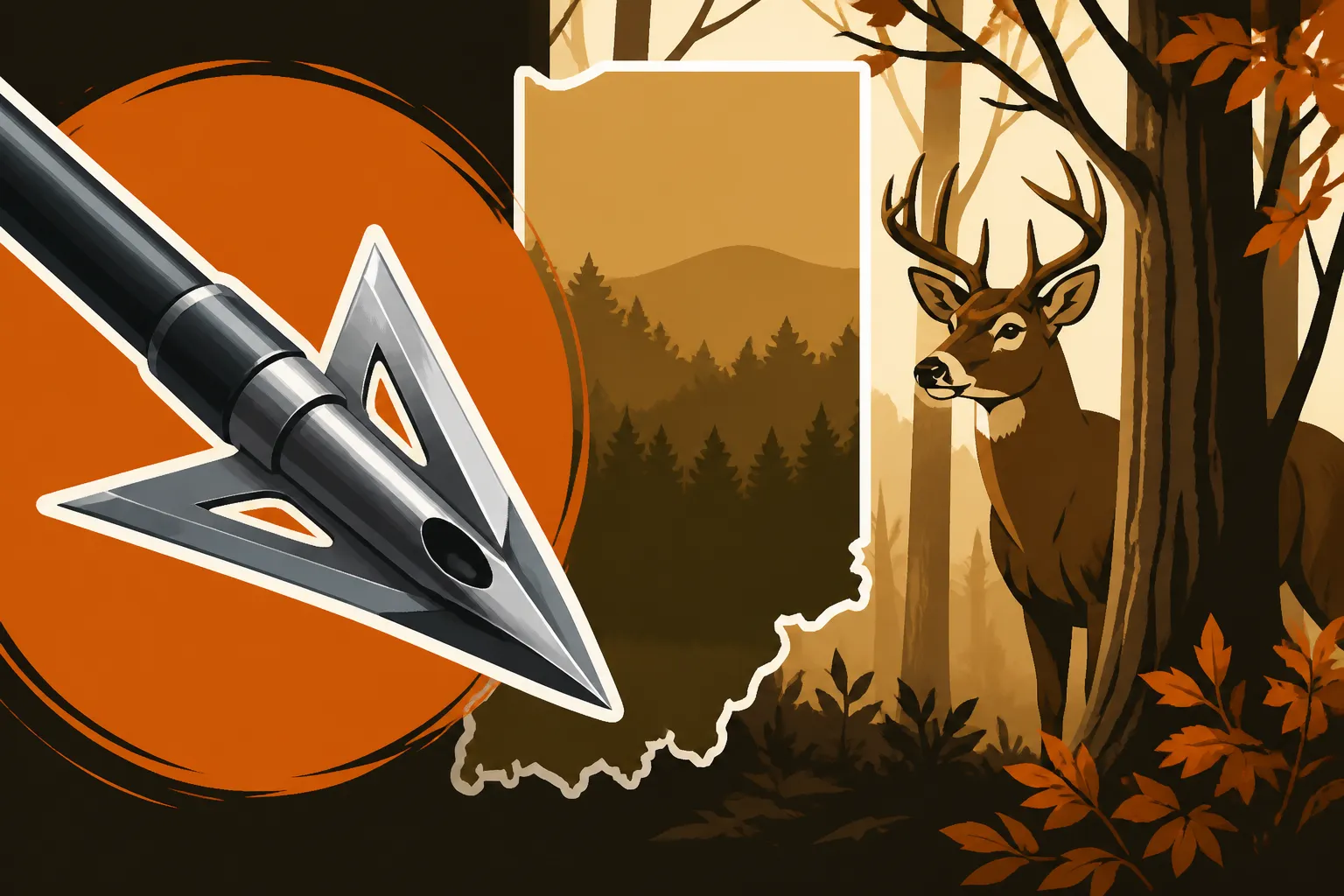
There’s nothing quite as frustrating as making what feels like a perfect shot in the thick Indiana timber, only to find a poor blood trail or, worse, a complete miss because your broadhead deflected or didn't perform as expected. Hunting whitetails in the dense woods of our state presents unique challenges that demand specific broadhead considerations. This guide is all about helping you understand those challenges and choose the right broadhead to maximize your chances of a clean, ethical kill when hunting in the heavy cover that defines much of Indiana's best deer habitat.
Understanding the Unique Challenges of Timber Shots in Indiana
Hunting in Indiana's woods, whether you're deep in the Hoosier National Forest or tucked into a small woodlot bordering a cornfield, means you're almost certainly going to face a "timber shot." These aren't like open-field shots in the West. We're talking about close quarters, obscured lines of sight, and the ever-present risk of hitting something other than your intended target before it even reaches the deer.
Dense Cover and Obstructions
Indiana's timber can be incredibly dense. From thick saplings and brush to thorny briars and vines, there's a lot between you and that deer. When a broadhead encounters even a small twig or branch before hitting the animal, its flight path can be significantly altered. A slight deflection can turn a heart shot into a gut shot, or a clean pass-through into a superficial wound. This isn't just about broadhead design; it's about understanding how your entire arrow setup interacts with potential obstructions.
Imagine sitting in your stand, patiently waiting, when a beautiful buck finally steps into a shooting lane you’ve carefully trimmed. He's at 20 yards, but there's a thin branch, barely thicker than your thumb, just two feet in front of his shoulder. If your broadhead is prone to planing or isn't robust enough to push through that minor obstruction without major deviation, you could be facing a devastating outcome. Many hunters have experienced the heartbreak of a well-aimed shot that goes awry due to what seemed like an insignificant twig. It makes you realize that what flies perfectly clean in practice might not hold up when things get bushy.
Shot Angles and Deer Behavior in Woods
Deer in heavy timber often present tricky shot angles. They might be quartering away sharply, or you might only get a small window through the trees. Unlike open-field scenarios where a deer might stand broadside for a longer period, timber deer are often on the move, picking their way through cover, forcing you to take a less-than-ideal angle. A broadhead needs to be able to penetrate deeply and consistently, even when hitting bone or gristle from an oblique angle.
Think about a deer that’s slowly walking through a stand of oaks, browsing on acorns. You get a small opening, but the deer is quartering sharply away, exposing only one lung and the liver. A broadhead that relies on large cutting diameter but sacrifices penetration might not give you the exit wound you need for a good blood trail. In contrast, a broadhead designed for maximum penetration, even if its cutting diameter is smaller, could be the difference between recovering that deer or spending hours searching fruitlessly. The ability of your broadhead to hold its course and drive through resistance is paramount in these situations.
The Importance of a Clean Pass-Through
A clean pass-through, meaning the arrow completely exits the deer, is often the holy grail for timber hunters. Why? Because it creates two holes for blood to escape, significantly improving your blood trail, especially in dense cover where a single entrance wound might quickly clot or be obscured by hair. When you're tracking a deer through briars and thickets in the fading light, a visible, continuous blood trail is your best friend.
Consider a scenario where you make a decent shot, but the arrow stays in the deer. The deer runs off into a swampy area near a river bottom. Without an exit wound, the internal bleeding might be severe, but the external sign will be minimal, making recovery incredibly difficult. However, if that same broadhead created an exit wound, even a small one, you’d have blood on both sides of the deer's path, dramatically increasing your chances of finding it. This is particularly crucial when Hunting Indiana River Bottom Funnels, where dense vegetation and water can make tracking a nightmare. The goal isn't just to hit the deer; it's to create maximum trauma and a reliable blood trail for recovery.
Fixed-Blade Broadheads: The Timber Workhorses
Fixed-blade broadheads have been around since the dawn of archery hunting, and for good reason. Their robust construction and unwavering design make them incredibly reliable, especially when encountering the inevitable twigs and branches that come with hunting in Indiana's thick woods.
Strengths and Design Principles
The primary strength of a fixed-blade broadhead lies in its simplicity and structural integrity. There are no moving parts to fail, no blades to deploy, and generally, a more rigid ferrule and blade system. This design means that when a fixed blade hits an obstruction, it's far more likely to power through or deflect minimally compared to a mechanical broadhead. The blades are fixed in place, often an integral part of the ferrule or securely screwed in, creating a solid, unyielding cutting surface.
This inherent stability translates to excellent penetration, which is vital for Indiana whitetails. Whether you hit a shoulder blade, a rib, or even a small sapling on the way to the target, a quality fixed-blade broadhead is designed to maintain its form and continue its work. Many experienced bowhunters who spend their time in tight timber swear by them, knowing that a well-tuned bow and a sharp fixed blade offer the most consistent performance against unforeseen obstacles. For deep penetration on a quartering shot, or when that buck is Hunting a Ridge-Top Saddle for Rutting Bucks and offering a tricky angle, the reliability of a fixed blade is hard to beat.
Different Blade Configurations (2-blade, 3-blade, 4-blade)
Fixed-blade broadheads come in various blade configurations, each with its own advantages.
-
Two-blade broadheads are often prized for their exceptional penetration. With fewer blades, there's less surface area to create friction, allowing the broadhead to slice through tissue and even bone with less resistance. This can be a huge advantage when you anticipate hitting heavier bone on a difficult shot angle, or when using a lower draw-weight bow. They excel at maximizing kinetic energy transfer to drive deeper into the animal, often resulting in a complete pass-through, even with a moderate Bow Draw Weight for Indiana Whitetails. However, their cutting diameter is typically smaller, which some hunters feel results in a smaller wound channel and potentially a less robust blood trail if the shot isn't perfectly placed.
-
Three-blade broadheads strike a balance between cutting diameter and penetration. They create a triangular wound channel, often leading to a good blood trail. Many hunters find them to be a versatile choice, offering a good compromise for various hunting situations, from broadside shots to slightly quartering angles. Brands like Muzzy and Montec are well-known for their durable three-blade designs, which have a strong track record in timber.
-
Four-blade broadheads tend to offer a larger overall cutting surface than two-blades, without the complex deployment of mechanicals. While they might sacrifice a tiny bit of penetration compared to a pure two-blade, they often create a more substantial wound channel, which can be beneficial for blood trails. Some designs feature bleeder blades in addition to the main blades, further increasing cutting surface. The key with multi-blade fixed broadheads is ensuring they are impeccably sharp and that your bow is well-tuned to shoot them accurately.
When to Choose Fixed Blades for Indiana Timber
For hunting Indiana's timber, fixed-blade broadheads are often the go-to choice, particularly if you prioritize reliability and penetration over a massive cutting diameter. If you anticipate shots where there might be a chance of hitting a twig or if you're targeting those deep, quartering shots where bone might be encountered, a well-constructed fixed blade is your best bet.
Consider the classic scenario of still-hunting through a thick hardwood forest in late October. A buck bolts and stops momentarily, quartering hard away. You have a small window. Your fixed blade, tuned to your arrow, will fly true and penetrate deep, despite the angle. It’s also an excellent choice for public land hunting where you can't always control your shooting lanes as precisely as you might on private ground. The confidence that your broadhead won't pre-deploy or lose energy on an incidental brush contact is invaluable. Many seasoned hunters will tell you that the peace of mind a reliable fixed blade provides, especially when you're hiking into a remote section of the Hoosier National Forest Hunting, is worth any perceived trade-off in cutting size. For reliable performance shot after shot, fixed blades truly shine in the tough timber of Indiana.
Mechanical Broadheads: When and Where They Shine (and Don't)
Mechanical broadheads, also known as expandable broadheads, offer a different approach to wound creation. They fly with a smaller profile, similar to a field point, and then deploy their blades upon impact, creating a larger cutting diameter. This design has captivated many hunters, but it's crucial to understand their limitations, especially in dense timber.
Deployment Mechanisms and Cutting Diameter
The core concept of a mechanical broadhead is its ability to remain compact during flight, minimizing air resistance and theoretically improving accuracy. Upon impact, blades are designed to deploy, typically through a spring-loaded system or kinetic energy transfer, expanding to create a much wider wound channel than most fixed blades. This large cutting diameter is the main draw, as it often results in profuse blood trails, especially on broadside shots that hit soft tissue.
There are various deployment mechanisms: some broadheads have blades held by O-rings or collars that break upon impact, while others use a slip-cam or rear-deploying design. The goal is always the same: a wide cut that maximizes damage to vital organs. For instance, a mechanical broadhead might open to a 2-inch cutting diameter, significantly larger than many fixed blades. This can be devastating on a deer hit perfectly broadside in an open lane. However, this deployment is also where the potential issues for timber hunting begin, as the mechanism itself can be a point of failure if obstructions are met before the target.
Potential Issues with Obstructions
Here's the rub with mechanical broadheads in dense timber: their deployment mechanism can be compromised by contact with anything other than the deer. A twig, a tough vine, or even heavy brush could potentially pre-deploy a blade, causing erratic flight, or worse, prevent a blade from deploying fully upon impact with the animal. If a blade only partially deploys, you end up with a broadhead that performs worse than a small fixed blade, creating a minimal wound channel and poor penetration.
Imagine a deer moving through a slightly overgrown shooting lane. You shoot, and your arrow clips a small sapling. If your mechanical broadhead pre-deploys a blade, the arrow could veer off course, resulting in a clean miss, or worse, a wounded animal that’s incredibly difficult to track. Even if it doesn't pre-deploy, the energy expended in cutting through that obstruction might reduce the kinetic energy available for penetration into the deer. This vulnerability makes mechanicals a riskier choice when you know you'll be shooting through or near heavy cover. It's a calculated gamble that many timber hunters, myself included, are often unwilling to take.
Scenarios Where Mechanicals Might Be Considered
Despite their drawbacks in heavy cover, mechanical broadheads do have their place in Indiana hunting, primarily in more open scenarios or with very clear shooting lanes. If you're hunting over a carefully manicured food plot on private land, or from a ground blind meticulously brushed in on a field edge where you have zero obstructions, a mechanical can be incredibly effective.
For example, Hunting a Green Field Planted for Deer where you've cut all the saplings and branches, and your shots are reliably open, a mechanical broadhead with a large cutting diameter can put a deer down quickly and leave a phenomenal blood trail. In these ideal conditions, their field-point accuracy can be a real advantage, helping you remain confident in your shot placement. Some hunters who use Crossbows Under Indiana Rules also favor mechanicals due to the higher arrow speeds, believing the increased energy helps ensure reliable deployment. However, for the majority of situations in the dense woods of Indiana, especially when dealing with unpredictable deer movement and natural vegetation, the trade-offs of mechanicals often outweigh their benefits.
Hybrid Broadheads: Trying to Get the Best of Both Worlds
Hybrid broadheads represent an attempt to combine the best attributes of both fixed-blade and mechanical designs. They typically feature a set of small, fixed blades that are always exposed, combined with larger, deployable blades that open on impact. The idea is to offer the reliability of a fixed blade for initial penetration and cutting, coupled with the expanded wound channel of a mechanical.
Combining Fixed and Deployable Blades
The fundamental design of a hybrid broadhead is to have small "bleeder" blades that are always exposed, acting like a mini fixed-blade broadhead. These fixed blades provide an initial cutting surface and help stabilize flight, theoretically making the broadhead more forgiving if it encounters a minor obstruction. Behind or around these fixed blades, larger, expandable blades are tucked away, designed to deploy once the broadhead has entered the animal.
This dual design aims to ensure that even if the deployable blades fail to open, or if they only partially open, you still get a substantial wound channel from the fixed components. Think of it as a safety net. The fixed blades are always working, providing at least some cutting, while the mechanical blades add the potential for a massive wound channel. Brands like Rage with their "chisel tip" designs and other similar models have explored this hybrid approach, recognizing the desire among hunters for both reliability and a wide cut. When checking out various designs, you might use a resource like GoHunt to compare user reviews and reported performance for different hybrid models in timber environments.
Performance Expectations and Compromises
In theory, hybrids offer a compelling solution for the Indiana timber hunter who wants both penetration and a large wound channel. The fixed blades should help bust through minor brush or even bone, while the mechanicals open inside for maximum devastation. However, as with many hybrid designs, there are often compromises.
While the fixed blades offer some protection against pre-deployment issues, they are generally smaller than dedicated fixed blades, meaning they might not offer the same robust performance through heavier bone or significant obstructions. The mechanical blades still rely on proper deployment, and if they hit something hard, they can still be compromised. Furthermore, the more complex design of a hybrid can sometimes lead to slight differences in flight compared to a simple field point, requiring more meticulous tuning. It’s a delicate balance to strike, and while many hybrids perform admirably, it’s crucial to test them thoroughly with your specific setup.
Are Hybrids the Answer for Variable Timber?
For Indiana hunters who find themselves in varied terrain—sometimes in dense timber, sometimes on more open field edges—hybrid broadheads can be a strong contender. They offer a middle-ground that can adapt to different shot scenarios better than a pure mechanical, while potentially offering a larger wound than many traditional fixed blades.
Consider hunting an area where a thick woodlot funnels into a standing cornfield. You might take a close-range shot in the timber, or a slightly longer shot where the deer steps into the open. A hybrid could offer the versatility to handle both. However, if your hunting is exclusively in the densest, brushiest timber where shot integrity through minor obstructions is your absolute top priority, then a robust, traditional fixed blade might still be the most conservative and reliable choice. Ultimately, the choice often comes down to personal confidence and extensive testing. Make sure to shoot your chosen hybrid broadheads a lot before season to understand their flight characteristics and penetration capabilities.
Key Broadhead Characteristics for Timber Hunting
Choosing a broadhead for timber hunting isn't just about picking fixed versus mechanical. There are several key characteristics that contribute to a broadhead's effectiveness in dense Indiana cover.
Durability and Construction Quality
In timber, your broadhead might encounter more than just soft tissue. It might glance off a rib, hit a shoulder blade, or even cut through a small sapling before reaching your target. For this reason, durability and robust construction are non-negotiable. A broadhead that bends, breaks, or loses its structural integrity on impact is useless, regardless of its cutting diameter.
Look for broadheads made from high-quality materials, such as hardened steel or aircraft-grade aluminum for ferrules, and strong, thick blades. Inspect how the blades are seated and secured. Are they firmly fixed, or do they feel flimsy? A one-piece machined fixed blade, for example, often offers superior strength. If you’re using mechanicals, examine the deployment mechanism for any weak points. A well-constructed broadhead will retain its shape and cutting edge, even after encountering resistance. This means better penetration and a higher chance of a clean pass-through, which is especially important if you're trying to Recovering a Deer From a River Bottom where tracking can be tough. Don't skimp on quality; a cheap broadhead can cost you a deer.
Flight Characteristics and Tunability
While fixed blades are often associated with needing more bow tuning, any broadhead will perform best when your bow is perfectly tuned for it. In timber, shots are often close, but even a slight wobble or inconsistent flight path can lead to a miss or a poor hit. A broadhead that flies true, consistently hitting the same point of impact as your field points, inspires confidence.
Fixed blades, with their exposed blades, can act like small wings, causing the arrow to plane if the bow is not properly tuned (e.g., cam lean, rest position, fletching clearance). Take the time to "broadhead tune" your bow—this involves shooting broadheads at various distances alongside field points and making small adjustments until they group together. Many hunters use paper tuning or walk-back tuning methods. Even mechanicals, while often advertised as "field point accurate," can show slight differences in flight at longer distances or with less-than-perfect bow tuning. Don't assume; always test. Tuning your setup to handle Arrow Weight for Short Shots with broadheads is crucial, as is ensuring your Bow and Crossbow Setups for Indiana are dialed in for optimal flight.
Sharpening and Edge Retention
A dull broadhead is a liability. A razor-sharp edge is essential for clean cuts, maximum hemorrhaging, and ethical kills. The ability of a broadhead to retain its sharpness after penetrating initial material (like hide or a small twig) and then continue to slice through vital organs is paramount.
For fixed-blade broadheads, assess how easily they can be resharpened. Some designs allow for easy blade replacement, while others require manual sharpening. When you purchase broadheads, they should be hair-shaving sharp right out of the package. If not, sharpen them before hunting. For mechanicals and hybrids, ensure the deployable blades are also razor-sharp. Edge retention is a function of the steel quality and heat treatment. You want blades that won't dull quickly. This attention to detail can make all the difference in achieving that critical pass-through and ensuring the deer goes down quickly. Even the most perfectly placed shot with a dull broadhead can lead to a long tracking job.
Sharpening and Maintenance for Peak Performance
Even the best broadheads aren't "set it and forget it" gear. Proper sharpening and maintenance are crucial to ensure they perform flawlessly when it matters most, especially in the demanding environment of Indiana's timber.
Keeping Fixed Blades Razor Sharp
For fixed-blade broadheads, sharpness is your greatest ally. A dull broadhead tears tissue, a sharp one slices it. This difference can profoundly impact penetration and the amount of blood trail left behind. Think of it like a surgeon's scalpel – you want that clean, effortless cut.
Before every hunt, or even before putting broadheads in your quiver for practice, check their sharpness. Many hunters use the "thumbnail test" – if the blade catches on your thumbnail, it's sharp enough. If it slides, it needs work. You can use various sharpening tools, from diamond files and stones to specialized broadhead sharpeners. Follow the original angle of the blade, applying even pressure. For replaceable blade broadheads, simply swap out old blades for new, factory-sharp ones. For one-piece designs, investing in a good sharpening system is a must. A truly sharp broadhead will shave hair off your arm with ease. Don't ever head into the woods with anything less. This also applies when preparing for a focused hunt like Hunting the Indiana Rut in Early November, where every advantage counts.
Inspecting Mechanicals and Hybrids
Mechanical and hybrid broadheads have more moving parts, which means more points of inspection beyond just sharpness. While their main blades also need to be razor-sharp, you also need to ensure the deployment mechanism is fully functional and free of defects.
Before each hunting trip, and certainly before any practice session where you intend to shoot them, carefully inspect your mechanical or hybrid broadheads. Check the O-rings, collars, or retention clips that hold the blades in place. Are they intact and not brittle or cracked? Do the blades deploy smoothly and fully when activated, and then retract securely? Look for any bent blades, damaged ferrules, or debris that might impede deployment. If you've shot them into a target, even a soft one, always clean them thoroughly and check for any nicks or burrs that could affect flight or deployment. It’s better to find a problem on the bench or in practice than when you're looking at a trophy buck in your shooting lane. Resources like GoHunt can provide forums or community reviews where hunters share tips for inspecting and maintaining specific broadhead models.
Tuning Your Bow for Optimal Broadhead Flight
No matter how sharp or well-built your broadhead is, it's only as good as the bow that launches it. Proper bow tuning ensures that your broadheads fly consistently and hit where you aim, which is absolutely critical for precision shots in timber.
Broadhead tuning involves making small adjustments to your bow's rest, nocking point, or even cam timing to ensure that your broadheads impact the target precisely where your field points do. If your broadheads are hitting differently than your field points, you have a tuning issue, not necessarily a broadhead problem. This discrepancy can be exaggerated by the "wing" effect of fixed blades or inconsistencies in mechanical blade deployment. Methods like paper tuning (shooting through paper to analyze arrow flight) or bare shaft tuning can help diagnose issues. It’s a process that requires patience, but the confidence gained from knowing your arrow and broadhead will fly true is invaluable. This attention to detail in your gear & optics setup will pay dividends, particularly when you’re relying on a precise shot in a tight window in the dense Indiana woods. Take the time to get it right.
Broadhead Comparison for Indiana Timber
To help visualize the trade-offs, here's a quick comparison of the three broadhead types often considered for Indiana timber hunting.
| Broadhead Type | Primary Strength | Key Weakness | Ideal Timber Scenario | Penetration | Cutting Diameter |
|---|---|---|---|---|---|
| Fixed Blade | Reliability, Penetration | Smaller wound channel | Dense brush, potential bone hits, tricky angles | Excellent | Moderate |
| Mechanical | Large wound channel | Susceptible to pre-deployment, potential penetration issues | Open lanes, food plots, clear shots | Variable | Large |
| Hybrid | Blend of reliability & wound | Design complexity, potential compromises | Varied terrain, combining open and thick cover | Good | Good-Large |
This table provides a generalized view. Individual broadhead models within each category will have specific nuances in design and performance.
Disclaimer
This article is for general informational purposes only and does not constitute professional advice. Laws, prices and regulations vary by location and change over time. Consult a qualified professional for guidance on your specific situation.