Slug Guns and Shotgun Deer Loads
For generations, Indiana deer hunters knew that when it came to firearms season, the trusty slug gun was often their only option beyond muzzleloaders. While recent changes have opened the door to a wider array of rifle cartridges, many hunters still swear by their shotguns, and understanding the nuances of slug guns and their ammunition is crucial for success in our diverse Hoosier landscape. This guide will walk you through everything you need to know to make the most of your shotgun for deer hunting in Indiana, from barrel types to load selection and maximizing accuracy.
The Enduring Relevance of Indiana Shotgun Hunting
For decades, Indiana deer hunters navigated a landscape of strict firearms regulations, primarily limiting them to shotguns, muzzleloaders, and specific handgun cartridges. This meant that the slug gun wasn't just an option; for many, it was the option for firearms deer season. This history has ingrained slug gun proficiency into the fabric of Hoosier hunting culture, creating a strong tradition and a deep understanding among local hunters.
Historical Context: Straight-Wall Restrictions
Before recent legislative changes, Indiana's deer firearms season was largely defined by the "straight-wall cartridge" rule. This regulation mandated the use of firearms chambered for cartridges with straight walls, effectively limiting centerfire rifles to calibers like .45-70 Gov't, .444 Marlin, and specific pistol cartridges in rifle platforms. The rationale behind this was often cited as public safety, especially in densely populated areas or regions with smaller land tracts, to limit the effective range of bullets compared to bottlenecked rifle cartridges. For many, this meant slug guns were the most practical and accessible firearm choice that offered reasonable range and power.
This era fostered innovation in slug technology and shotgun design, pushing manufacturers to create more accurate slug barrels and specialized ammunition. Hunters invested heavily in these setups, mastering their performance. Even though Why Straight-Wall Rifles Are No Longer Required is now a thing of the past, the skills and knowledge gained from that era remain incredibly valuable.
Why Shotguns Still Matter Today
Even with the advent of statewide legal rifles, the slug gun is far from obsolete in Indiana. There are several compelling reasons why many hunters continue to choose a shotgun for deer:
- Familiarity and Investment: Many hunters already own highly accurate slug guns, often paired with dedicated optics. For these folks, switching to a new rifle setup can be a significant investment of time and money, making their tried-and-true shotgun the obvious choice. There's comfort in knowing your equipment inside and out, especially when that big buck steps out.
- Heavy Cover Hunting: Much of Indiana's deer habitat, especially in the southern hills or dense river bottoms, is characterized by thick timber and brush. In these environments, shot distances are often short, rarely exceeding 100-150 yards. A well-tuned slug gun is perfectly capable of ethical kills at these ranges, offering plenty of knockdown power. For those hunting in areas like Hunting Southern Indiana Hill Country, short, powerful shots are the norm.
- Public Land Considerations: On crowded public hunting grounds, some hunters prefer the perceived safety margin of a slug's generally shorter maximum range compared to a high-powered rifle bullet, though responsible shot selection is paramount with any firearm.
- Versatility: A shotgun, especially one with interchangeable barrels, offers incredible versatility. The same receiver can be used for deer with a slug barrel, then swapped for a smoothbore barrel for Spring Turkey Hunting in Indiana or Waterfowl Hunting the Kankakee Marshes, making it a multi-purpose tool for the budget-conscious hunter.
Anatomy of a Slug Gun: Rifled vs. Smoothbore Barrels
The core of any effective slug gun setup lies in its barrel. The type of barrel you choose dramatically impacts the accuracy and type of ammunition you should use. Understanding these differences is key to unlocking your shotgun's full potential for deer hunting.
Smoothbore Barrels and Traditional Slugs
Smoothbore barrels are the standard barrels found on most shotguns, designed primarily for shooting shot (pellets) for birds and small game. These barrels lack rifling, meaning the inside is a smooth, continuous tube.
When using a smoothbore barrel for deer, you'll typically use what are known as "rifled slugs" or "Foster slugs." These slugs aren't actually rifled themselves, but have angled grooves on their exterior. These grooves are designed to allow the slug to compress slightly as it passes through a choke (though shooting full choke with these is generally ill-advised) and, more importantly, to impart a slight spin from air resistance once the slug leaves the barrel, theoretically stabilizing it in flight. In practice, this stabilization is minimal. Smoothbore setups are generally limited to ranges under 75 yards for reliable accuracy, and often less, making them ideal for very dense cover or still-hunting in tight quarters. Your older, more basic shotgun likely has a smoothbore barrel, and with the right slug, it's still a deadly deer tool within its limitations.
Rifled Barrels and Sabot Slugs
For hunters seeking rifle-like accuracy and extended range from their shotgun, a fully rifled barrel is the game-changer. These barrels have helical grooves (rifling) cut into the bore, similar to a rifle barrel. This rifling spins the projectile as it travels down the barrel, much like a football spiraling, providing significant gyroscopic stability.
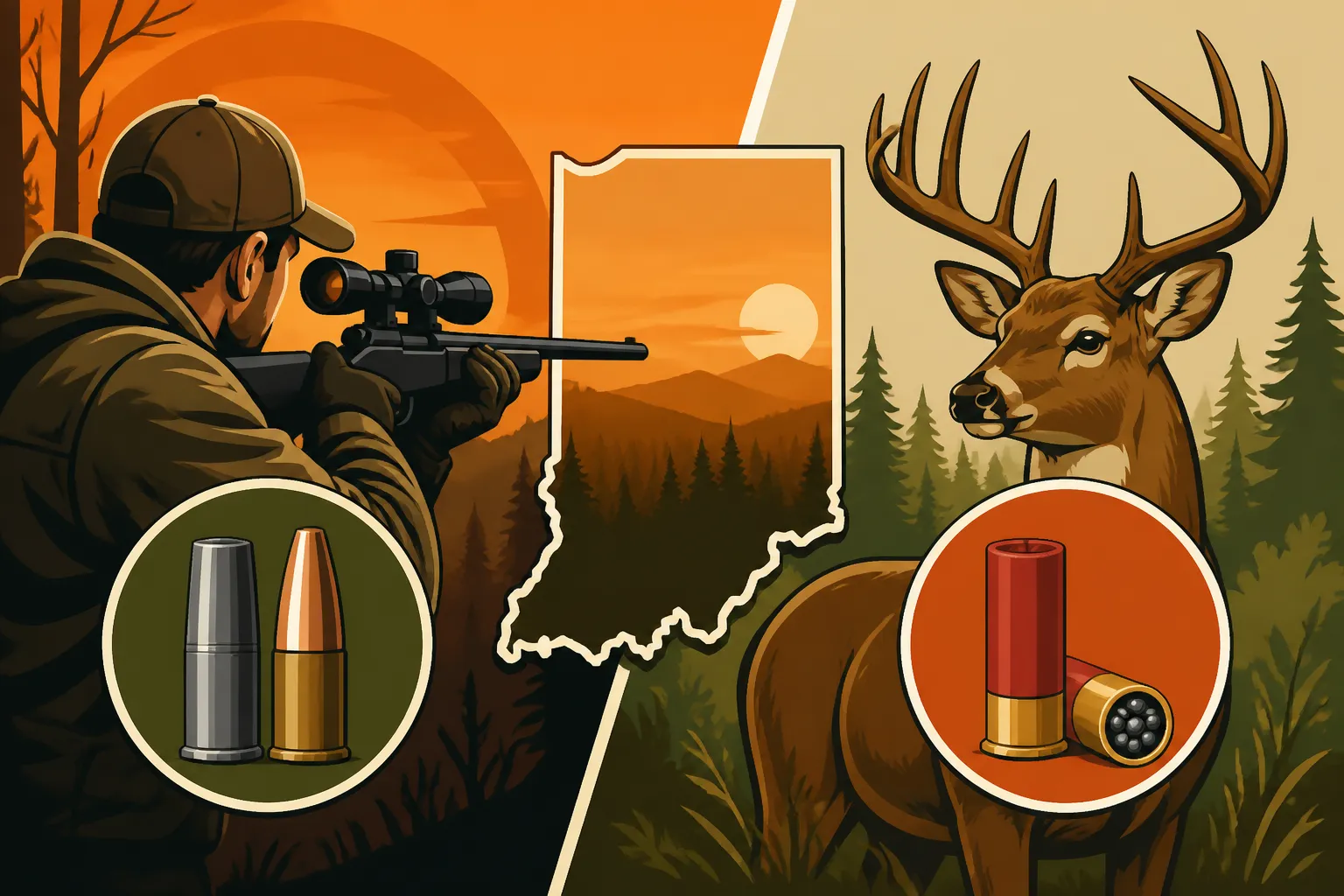
Rifled barrels are designed to be used exclusively with "sabot slugs." A sabot (pronounced SA-boh) is a plastic cup or sleeve that encases a smaller, typically bullet-shaped projectile. The sabot engages the rifling in the barrel, imparting spin to the projectile. Once the slug exits the barrel, the sabot separates, allowing the aerodynamic projectile to continue its stable, accurate flight. This combination can push the effective range of a slug gun out to 150-200 yards, sometimes even further with advanced loads and skilled shooters. This is where Rifled Versus Smoothbore Slug Barrels really shows its advantage. The precision and consistency of a good sabot slug out of a rifled barrel can truly surprise those accustomed to traditional smoothbore performance.
Decoding Shotgun Deer Loads: Sabots, Full Bores, and Ballistics
The ammunition you choose for your slug gun is arguably even more critical than the gun itself, especially given the various barrel types and hunting scenarios. Matching the right load to your barrel and intended range is fundamental.
Foster, Brenneke, and Sabot Slugs Explained
Let's break down the main types of slugs you'll encounter:
- Foster Slugs (Rifled Slugs): These are the most common and oldest type of shotgun slug. They are hollow-based, creating a "shuttlecock" effect in flight, and feature angled exterior grooves. They are designed for smoothbore barrels and are generally lead-based. They shed energy quickly but deliver a massive punch up close. Foster slugs are excellent for dense woods hunting where shots are almost guaranteed to be inside 75 yards. They are relatively inexpensive, making them a good option for practice, but their external "rifling" doesn't provide true spin stabilization.
- Brenneke Slugs: Similar to Foster slugs, Brennekes are also designed for smoothbore barrels. However, they are typically solid lead with a wad permanently attached to the base. This design makes them more stable and often more accurate than Foster slugs out of a smoothbore, especially at slightly longer ranges (up to 100 yards in some cases). The attached wad keeps the slug pointed forward, enhancing stability. They tend to be heavier and retain more energy downrange than Fosters.
- Sabot Slugs: As discussed, these are the choice for rifled barrels. The actual projectile inside the sabot can vary wildly in material, weight, and design, from copper solids to bonded lead core bullets. Their aerodynamic shape and spin stabilization lead to flatter trajectories and better energy retention at extended ranges. Sabot slugs are generally more expensive than Foster or Brennekes, reflecting the precision engineering of both the slug and the sabot. When you're trying to stretch your shotgun's range in Indiana's more open farmland edges, these are your go-to.
Ballistics and Energy Transfer
Regardless of the slug type, shotgun slugs hit hard. Their large diameter and heavy weight mean they transfer a tremendous amount of kinetic energy upon impact, creating large wound channels. This is why Shotgun Slugs for Indiana Deer have always been so effective.
Here's a quick comparison of general performance characteristics:
| Slug Type | Intended Barrel | Effective Range (yards) | Trajectory | Recoil Level | Typical Cost (per box) |
|---|---|---|---|---|---|
| Foster (Rifled) | Smoothbore | 25-75 | Rainbow-like | Moderate-High | Lower |
| Brenneke | Smoothbore | 50-100 | Slightly flatter | High | Medium |
| Sabot | Rifled | 100-200+ | Flatter | Moderate-High | Higher |
Note: Specific ranges and trajectories can vary significantly between manufacturers and individual gun setups. Always pattern your chosen load.
It's crucial to understand that even with sabot slugs and rifled barrels, their ballistic coefficient (how efficiently they cut through the air) is generally lower than a purpose-built rifle bullet. This means they drop faster and are more susceptible to wind drift at longer distances. Always verify the advertised ballistic data with your own testing, and don't hesitate to consult resources like GoHunt for comparative ballistic charts or user experiences with various slug loads. Understanding how your chosen slug performs at different distances is a non-negotiable step before hitting the woods.
Achieving Accuracy: Sights, Scopes, and Practice
A shotgun, even a dedicated slug gun, isn't inherently as precise as a rifle straight out of the box. However, with the right accessories and diligent practice, you can achieve excellent accuracy for deer hunting in Indiana.
Iron Sights vs. Optics
For smoothbore shotguns used at very short ranges (under 50 yards), simple bead sights or basic adjustable iron sights can suffice. However, for any serious deer hunting, especially with a rifled barrel and sabot slugs, optics are almost a necessity.
- Red Dot Sights: Red dot sights are fantastic for fast target acquisition at close to medium ranges (up to 100 yards). They offer a wide field of view and allow for quick, instinctive shooting. They excel in thick cover where deer might appear suddenly and close. Their simplicity and durability make them a popular choice.
- Low-Power Variable Scopes: For rifled slug guns, a low-power variable scope (e.g., 1-4x, 2-7x, or 3-9x) is often the ideal choice. The lower magnification settings are perfect for quickly acquiring targets in dense timber, while the higher magnifications allow for more precise shot placement at extended ranges. A good scope with Low-Light Performance in a Scope can also be a huge advantage during those crucial dawn and dusk hours. Ensure your scope is rated for the heavy recoil of a slug gun; a standard rifle scope might not hold up.
Patterning Your Slug Gun and Zeroing
This step cannot be overstated: you must pattern your slug gun with your chosen ammunition. Unlike rifles where many brands perform similarly, shotguns can be incredibly finicky about slug brands. A slug that shoots like a laser in one gun might scatter wildly from another, even identical model.
Here’s the process:
- Choose Several Brands: Buy a few different brands and types of slugs (e.g., Remington AccuTip, Hornady SST, Federal TruBall, Winchester Super-X). Even slight variations in slug design or weight can make a huge difference.
- Shoot from a Rest: At 50 yards, shoot 3-shot groups from a solid bench rest. This eliminates shooter error and helps you see the true mechanical accuracy of the gun/load combination.
- Evaluate: The load that gives you the tightest group at 50 yards is your starting point. Some loads might surprise you, outperforming more expensive options.
- Extend Range: Once you find a consistent performer, extend your range to 100 yards, and then 150 yards if your setup allows. Adjust your scope accordingly. Remember, Zeroing at 100 Yards for Woods Hunting is a common starting point, but a slug gun's trajectory usually requires more holdover past that.
- Practice Standing and Kneeling: Once zeroed, practice shooting from hunting positions (off-hand, kneeling, against a tree) to build muscle memory and confidence.
Choosing Your Ideal Shotgun Deer Setup
With so many options, putting together the perfect slug gun setup can feel daunting. It's about matching your equipment to your hunting style, budget, and the specific Indiana terrain you'll be covering.
Matching Barrel to Load and Hunting Style
Your primary decision will be between a smoothbore and a rifled barrel, which in turn dictates your slug choice and effective range.
- For Dense Cover, Drive Hunting, or Budget-Conscious Hunters: A smoothbore shotgun with a cylinder or improved cylinder choke and Foster or Brenneke slugs is a solid choice. This setup is often more affordable, versatile for other game, and perfectly adequate for shots within 75 yards. If you're participating in Deer Drives With Three or Four Hunters on public land, quick, close-range shots are typical, and a smoothbore excels here.
- For Open Fields, Power Line Cuts, or Extended Range: A dedicated rifled barrel (often a separate purchase for many shotguns) paired with quality sabot slugs and a good scope is the way to go. This transforms your shotgun into a highly capable 150-yard-plus deer stopper, allowing you to confidently take shots across cornfields or along logging roads.
Many popular shotgun models like the Remington 870, Mossberg 500/590, and Benelli Nova/Supernova offer interchangeable barrels, allowing you to easily switch between smoothbore and rifled options, giving you ultimate flexibility. Before investing, a quick search on GoHunt or checking manufacturer specifications can help you compare models and barrel availability.
Scopes, Mounts, and Accessories
A quality scope is crucial for a rifled slug gun. Don't skimp here; the heavy recoil can quickly ruin a cheap scope. Look for scopes with ample eye relief, strong construction, and clear glass.
- Mounts: Use robust, steel scope rings and a solid one-piece base if possible. Many slug barrels come with cantilever mounts, where the scope base is attached directly to the barrel itself, ensuring the scope stays zeroed even if you swap barrels. This is a highly recommended setup.
- Slings: Don't forget a comfortable sling, especially if you're covering ground in the Hoosier National Forest. A padded sling will make those long walks much more manageable.
- Recoil Pad: Shotguns loaded with deer slugs can have significant recoil. An aftermarket recoil pad, like those from Limbsaver or Pachmayr, can make a huge difference in shooting comfort during practice sessions and can help you stay on target for follow-up shots.
Field Considerations and Maintenance
Taking your slug gun into the varied Indiana weather and terrain requires some specific considerations for both performance and longevity.
Shooting Angles and Bullet Drop
When hunting in hilly Southern Indiana, understanding bullet drop at various angles is critical. Shooting downhill or uphill dramatically affects where your slug will impact compared to a flat-ground shot. This is especially true for slugs, which have a more pronounced trajectory curve than most modern rifle cartridges.
- Uphill/Downhill: The general rule of thumb for relatively steep angles (30 degrees or more) is to aim as if the target were horizontally closer. Gravity acts perpendicular to the earth, not parallel to your line of sight. For most hunting distances, this effect becomes noticeable, meaning your slug will hit higher than it would on flat ground at the same measured distance. Always practice a few shots at varying angles if possible, or consult a ballistic calculator that accounts for incline/decline.
- Obstructions: Slugs are large and heavy, but they are still susceptible to deflection by small twigs and branches. Avoid shooting through brush if at all possible. A small sapling might seem insignificant, but it can easily send a slug off course, resulting in a missed shot or, worse, a wounded animal. Always try to find a clear lane to your target.
Weatherproofing and Cleaning Your Shotgun
Indiana weather can be unpredictable, often swinging from mild to freezing, wet to dry, all within a hunting season. Keeping your slug gun in top shape ensures it performs when you need it most.
- Moisture Protection: Rain, snow, and even heavy dew can quickly lead to rust. After any wet hunt, wipe down your shotgun thoroughly with a lightly oiled cloth. Pay special attention to areas where moisture can collect, like around the forend and receiver. Consider a light coat of rust-preventative oil on all exposed metal surfaces before heading out. Don't forget the bore; a quick pass with a bore snake and some oil can prevent rust from forming inside. Think of it like Cleaning a Rifle After a Wet Sit, but with the added concern for potentially corrosive residue from slug combustion.
- Cold Weather Care: Extreme cold can affect lubricants, making actions sluggish. Use cold-weather-rated oils and greases. Condensation can also form when moving a cold gun into a warm space (like a truck or cabin), so allow the gun to warm slowly to prevent moisture buildup inside the action and optics.
- Regular Cleaning: Slugs, especially those with plastic wads or sabots, can leave significant plastic fouling in the barrel. This fouling can build up and negatively impact accuracy. Regular cleaning with a good quality bore cleaner and a brush designed for plastic fouling is essential, especially for rifled barrels. Swapping to a copper jacketed sabot slug might minimize plastic fouling but could introduce copper fouling, so keep an eye on your bore after each range session or hunt.
Remember, a well-maintained and properly understood slug gun can be an incredibly effective tool for deer hunting in Indiana, offering reliability and stopping power that rivals many rifles within ethical hunting distances. Embrace the shotgun tradition, hone your skills, and you'll be well-prepared for success.
Disclaimer
This article is for general informational purposes only and does not constitute professional advice. Laws, prices and regulations vary by location and change over time. Consult a qualified professional for guidance on your specific situation.