Climbing Sticks for Rough Bark
Indiana's woods, particularly in the southern hill country, are renowned for their majestic hardwood forests. While beautiful, these towering oaks, hickories, and maples often present a unique challenge for deer hunters: rough, deeply furrowed, and sometimes shaggy bark. Trying to get climbing sticks to bite securely and quietly into such gnarly surfaces can be incredibly frustrating, leading to unstable setups or, worse, safety concerns. This guide will walk you through selecting and properly using climbing sticks specifically designed to tackle the demanding bark conditions prevalent across the Hoosier state, ensuring you can reach your stand safely and stealthily.
The Unique Challenge of Indiana's Rough-Barked Trees
Hunting in Indiana means dealing with a diverse range of tree species, many of which have bark that simply isn't conducive to every climbing stick design out there. Understanding these challenges is the first step to a safer, more stable setup.
Common Tree Species and Their Bark Characteristics
When you're out scouting or setting up a stand in Indiana, you're likely to encounter a few dominant tree types, each with its own bark personality that can complicate your climb:
- Oaks (White, Red, Black): These are the kings of the Indiana forest, especially in areas like the Hoosier National Forest Hunting. Their bark is typically very thick, with deep furrows and ridges that can make it hard for a flat contact point to get a solid purchase. White oaks, in particular, often have thick, blocky bark.
- Hickories (Shagbark, Pignut): Shagbark hickories are infamous for their long, peeling strips of bark that seem to defy gravity. While distinctive, these loose strips offer no stable surface for a climbing stick. Pignut hickories have tighter, ridged bark that's still quite rough.
- Maples (Sugar, Red): While young maples might have smoother bark, mature sugar and red maples develop deeply furrowed and scaly bark. These crevices can either swallow a climbing stick's contact points or prevent them from sitting flush, leading to instability.
- Elms: Many elm varieties, like the American elm, feature distinctive ridged and furrowed bark that’s rough to the touch. The irregularity can make securing a climbing stick a genuine wrestling match.
The core problem here is that many traditional climbing stick designs, especially those with flat contact points or weak strapping systems, simply cannot get a deep, consistent bite into these irregular surfaces. They might slide, tilt, or feel precarious, making your climb unsafe and nerve-wracking.
The Impact on Stability and Safety
Beyond the sheer annoyance, improperly secured climbing sticks on rough bark have serious implications for both your safety and your hunt:
- Slippage: This is the most obvious and dangerous concern. If a stick can't get a good grip, it can tilt sideways or, worse, slide down the trunk while you're ascending or descending. Even a small shift can throw you off balance and lead to a fall. This is why Safety Harnesses and Lifelines are absolutely non-negotiable for any elevated hunting.
- Noise: Rough bark combined with a poorly designed stick or incorrect attachment technique can be a recipe for noise. Bark fragments can scrape, snap, or fall, and metal components might grind against the tree. This cacophony echoes through the quiet woods, alerting every deer within earshot and completely ruining your stealthy approach to your stand, whether you're hunting Southern Indiana Hill Country or a northern woodlot.
- Damage to Bark: While our primary concern is often the hunter, aggressive or ill-fitting climbing stick designs can also cause unnecessary damage to trees. On public lands, where regulations often emphasize Leave No Trace principles, excessive tree damage can be frowned upon and, in some cases, even lead to rule violations. Ethical hunters strive to minimize their impact on the environment.
Essential Features for Climbing Sticks in Rough Terrain
Navigating Indiana's rough-barked trees successfully starts with choosing the right gear. Not all climbing sticks are created equal, and specific features can make a world of difference when you're trying to get a secure setup.
Advanced Attachment Systems
The method by which a climbing stick attaches to the tree is perhaps its most critical feature for rough bark. You need systems that can conform to irregularities and maintain a powerful grip.
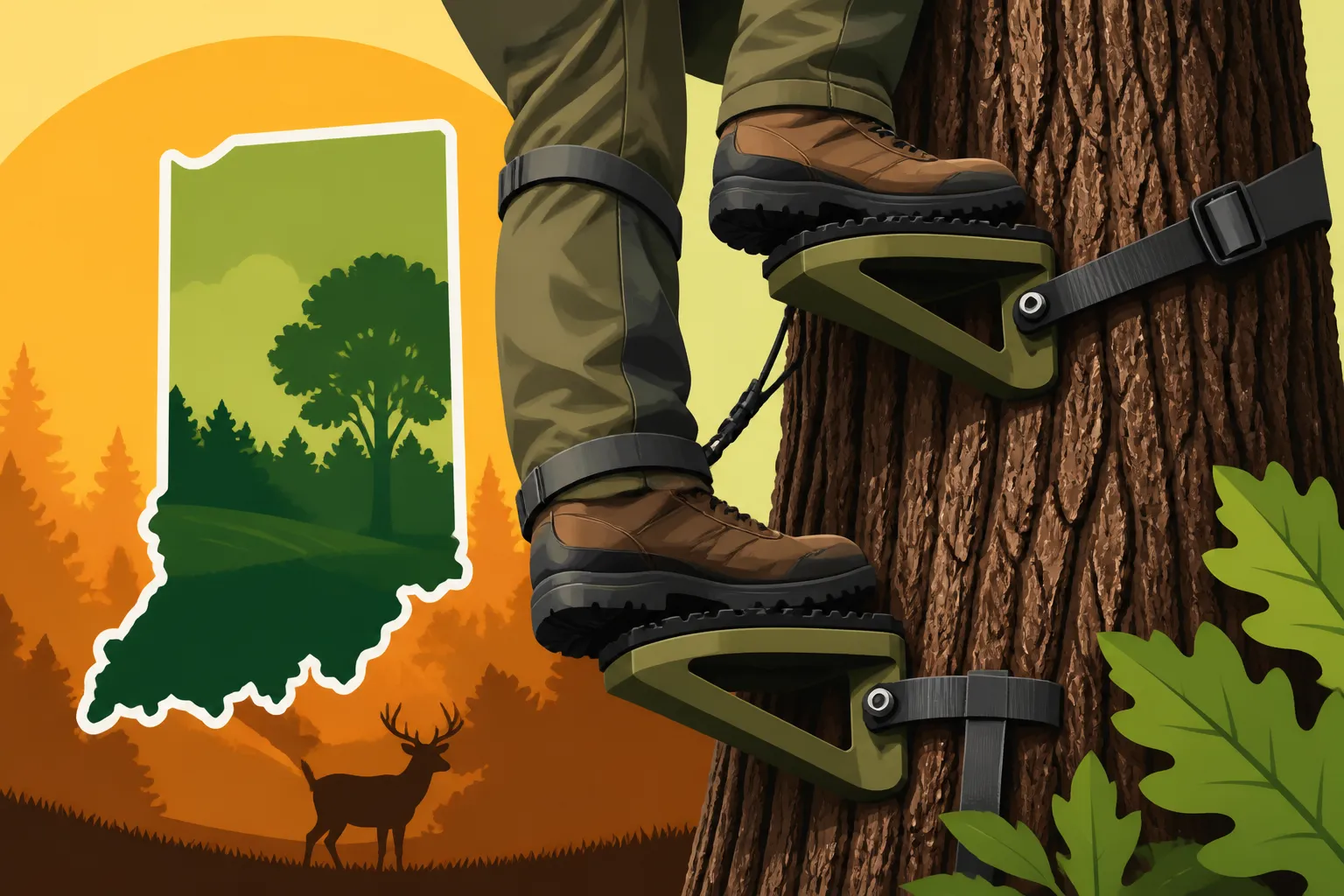
- Robust Cam-Buckle Straps: Look for straps made from durable, thick webbing with large, aggressive cam teeth within the buckle mechanism. These teeth need to bite firmly into the strap itself to prevent slippage under load. Some buckles even feature small, built-in teeth or textured surfaces on the part that contacts the tree, offering an extra layer of grip. The length of the strap is also crucial; longer straps allow you to wrap around wider, older trees common in Indiana's mature timber.
- Chain or Cable Systems: Less common but highly effective, some climbing sticks use a flexible chain or coated cable that wraps around the tree. These systems can often conform to the irregular contours of rough bark better than rigid straps. They secure with a pin or cleat, providing a remarkably stable hold. The downside can be a bit more weight or potential for noise if not properly managed.
- V-Shaped or Pivoting Stand-Offs: This is the component of the stick that rests directly against the tree trunk.
- V-shaped stand-offs are designed to cradle the curvature of the tree, providing multiple points of contact rather than just a flat plate. This distributes pressure more evenly and helps prevent the stick from rotating or sliding.
- Pivoting stand-offs take this a step further, allowing the stick to adjust its angle slightly to match the natural lean or curve of the tree, ensuring maximum surface contact and stability. When researching gear, keep an eye out for reviews from sources like GoHunt, as they often highlight innovative designs like these that address real-world hunting challenges.
Material and Design Considerations
Beyond the attachment, the overall construction and design of the climbing sticks play a significant role in their performance and suitability for Indiana's tough hunting conditions.
- Material (Aluminum vs. Steel):
- Aluminum sticks are generally lighter, making them ideal for hunters who pack deep into public land for Deer Drives on Indiana Public Land or Hunting the Wabash River Bottoms. Their weight saving is a huge advantage when you're carrying a pack full of gear and multiple sticks. However, they can sometimes be more expensive.
- Steel sticks are heavier but often more durable and can sometimes feel more rigid and stable once installed. If your walks are short or you prioritize absolute rigidity, steel might be an option, but the weight penalty for carrying several sticks can quickly add up.
- Step Design: The steps themselves need to be safe and functional. Look for:
- Wide, anti-slip steps: Narrow steps are uncomfortable and less secure. Wide steps provide better boot purchase and reduce fatigue during ascent.
- Textured surfaces: Raised ridges, aggressive knurling, or even small, integrated teeth on the step surface provide critical grip, especially when your boots are muddy, wet, or icy. This is important for early season hunts where dew is heavy or late season when frost is common.
- Stackability and Portability: For mobile hunters covering significant ground, how well your sticks pack together is key. Look for designs that nest tightly, minimizing bulk and rattling. Efficiently packed sticks make for a quieter walk-in and easier transport, especially when combined with a well-designed pack like those discussed in Packs for a Hoosier Forest Day Hunt.
- Weight Rating: Always, always check the manufacturer's maximum weight capacity. This rating includes your body weight, clothing, and all your gear (bow, pack, rifle). Never exceed this limit.
Noise Reduction and Tree Protection
Stealth and ethical hunting go hand-in-hand. The right climbing sticks should allow you to ascend quietly and leave minimal impact on the trees.
- Coated Components: Many quality sticks now feature rubberized or plastic coatings on the stand-offs, steps, and even the straps themselves. These coatings serve a dual purpose: they reduce metallic clanking and scraping noises against the tree and help protect the tree's bark from being gouged.
- Silent Straps and Buckles: Look for strap materials that are inherently quiet and buckles that don't clang when handled. Some companies offer silencing sleeves or covers for buckles to minimize noise.
- Tree-Friendly Design: While aggressive grip is necessary for rough bark, the best designs balance this with features that disperse pressure or use materials that are less abrasive. This ensures a secure climb without scarring the tree, an important consideration when hunting on public land and upholding responsible hunting practices.
Techniques for Securely Attaching Sticks to Rough Bark
Even with the best climbing sticks, technique matters. Knowing how to properly select a tree and attach your sticks can mean the difference between a wobbly, noisy climb and a solid, silent ascent.
Choosing the Right Tree and Spot
The tree itself is half the battle. Not every tree, even a perfect-looking hunting spot, is ideal for climbing sticks, especially with rough bark.
- Seek Straighter Sections: Even deeply furrowed oaks will have sections of their trunk that are relatively straighter and more uniform. Avoid trying to attach sticks to major knots, massive burrs, or where the trunk forks. These irregularities make it nearly impossible to get even contact. Take your time to scan the tree from the ground up to your desired stand height.
- Assess Bark Integrity: Give the bark a knock or a light scrape. Ensure it's firm and not rotten, spongy, or excessively loose (like the shaggy strips of a shagbark hickory). Loose bark will simply pull away, preventing any stick from getting a secure hold. This is where Scouting Indiana Public Land Before Season becomes invaluable, allowing you to identify these perfect trees well before opening day.
- Consistent Diameter: While not always possible, a tree with a relatively consistent diameter from the ground to your stand height makes for easier, more uniform stick attachment. Drastically changing diameters can necessitate adjusting your technique or even using different length straps for different sticks.
Step-by-Step Attachment Process
Once you've found your ideal tree, a methodical approach to attaching your sticks will ensure maximum security and minimal noise.
- Clear the Area: Before attaching the first stick, use your hand to quickly clear away any loose bark flakes, small twigs, or debris from where the stick's stand-offs and strap will contact the tree. This ensures clean contact and prevents anything from interfering with the grip.
- Apply Firm Inward Pressure: As you wrap the strap around the tree, apply strong inward pressure to the climbing stick, pressing it firmly against the trunk. This helps any V-shaped stand-offs or integrated teeth on the stick bite into the bark's contours. Don't just hold it loosely; lean into it.
- Cinch Tightly and Leverage: Once the strap is around the tree and through the cam buckle (or secured via chain/cable), cinch it as tightly as possible. For cam buckles, sometimes a bit of leverage helps. You can pull the strap tight, then use your knee or even gently bounce on the stick (while still safely on the ground for the first stick) to ensure the strap compresses fully and the stick is seated firmly. The strap should feel rock-solid with no slack. GoHunt often advises against shortcuts here – tightness is paramount.
- Test Each Stick Individually: Before you commit your full weight to any climbing stick, gently test it. Put one foot on the step, apply some downward pressure, and try to wiggle it side to side. Listen for any creaks or feel for any lateral movement. If it feels anything less than perfectly stable, take it down and re-attach it. This momentary inconvenience is a small price to pay for your safety. Remember your Treestand Setups in Hoosier National Forest should always prioritize safety first.
Overcoming Common Issues
Even with the right gear and technique, you might encounter some common challenges.
- Slippage During Ascent: If you feel a stick start to slip or shift as you climb, stop immediately. If you can, reach down and try to re-tighten the strap while maintaining three points of contact. If it continues to slip or you can't re-tighten it safely, it's best to carefully descend and re-attach that stick, perhaps trying a slightly different angle or spot on the bark. Sometimes, a very small, thin piece of rubber (like from an old innertube) strategically placed between the stand-off and an especially slick spot of bark can help, but this should be used cautiously and tested rigorously.
- Difficult Angles on Leaning or Twisted Trees: Indiana's older trees, especially in areas like Hunting Brown County Ridgelines, can be gnarled and twisted. If the tree leans or twists significantly, try to attach your sticks at an angle that counters the lean. This means placing the part of the stick that's away from the lean slightly lower, forcing the stick to sit more horizontally. Pivoting stand-offs excel in these situations.
- Packing Challenges for Remote Stands: Long walks to your hunting spot mean every ounce counts. If your sticks are rattling or unwieldy, it's a huge distraction. Ensure your sticks are stacked tightly and secured with bungee cords or straps designed for transport. Many hunters use specialized hunting packs that have external compression straps or pockets specifically designed to carry Climbing Sticks for Indiana Hardwoods without noise or hassle.
Maintenance, Safety, and Ethical Considerations
Your climbing sticks are essential safety gear, and treating them as such is vital. Proper maintenance, adherence to safety protocols, and ethical considerations ensure a successful and responsible hunting season.
Regular Maintenance and Inspection
Like any critical piece of hunting equipment, your climbing sticks need attention to remain reliable.
- Inspect Straps and Buckles: Before and after every hunting season, thoroughly inspect all straps, buckles, and attachment hardware. Look for any signs of wear, fraying, cuts, stretched webbing, or damage to the cam teeth. Rodents love to chew on straps if gear is stored in sheds or garages, so be extra vigilant. GoHunt contributors frequently remind hunters that gear failure often stems from neglected maintenance. Replace any damaged components immediately.
- Clean and Lubricate: Remove any caked-on mud, sap, or debris from your sticks and buckles. A damp cloth often suffices. If your cam buckles or pivoting parts seem stiff, a tiny drop of a non-petroleum-based lubricant (like silicone spray) can help, but avoid over-lubricating, as it could compromise grip.
- Proper Storage: Store your climbing sticks in a dry, cool place out of direct sunlight. This prevents rust on steel components and protects webbing from UV degradation, which can significantly weaken straps over time.
Safety Protocols When Using Sticks
No matter how experienced you are, safety is paramount. Cutting corners with climbing sticks can lead to severe injury or worse.
- Always Wear a Full-Body Harness: This is non-negotiable. From the moment your feet leave the ground until they return, you should be wearing a full-body harness and be tethered to the tree. This means using a lineman's belt for safety during the ascent and descent, and a tree strap with a tether once you're in your stand. This continuous connection is your lifeline.
- Maintain Three Points of Contact: When climbing or descending, always keep three points of contact (two hands and one foot, or two feet and one hand) on the sticks or tree at all times. This provides maximum stability and minimizes the risk of a slip.
- Know Your Limits: Don't push yourself if you're feeling fatigued, or if weather conditions (ice, heavy rain, strong winds) make climbing unsafe. A deer isn't worth a broken bone or worse. Always assess the conditions before you ascend. Practice your climbing technique in a controlled environment, such as your backyard, to build confidence and refine your movements, especially if you're new to using sticks.
- Check for Obstructions: Before you start climbing, look up and make sure there are no dead limbs or heavy vines that could fall or interfere with your ascent.
Ethical Considerations on Public Land
Hunting on public land is a privilege, and ethical hunters strive to leave the environment as they found it, or better.
- Minimize Tree Damage: While some minor bark displacement can be inevitable when securing sticks, excessive gouging or scarring of trees is frowned upon. Choose sticks with tree-friendly stand-offs and use proper technique to minimize your impact. This is especially important in heavily used areas or on properties like Indiana State Forests, where tree damage is monitored.
- Leave No Trace: Unless specific regulations explicitly state otherwise, all climbing sticks, stands, and personal property must be removed from public land at the end of your hunt, or at the close of the season. Always check the current regulations for the specific Fish and Wildlife Area or State Forest you are hunting. Leaving gear behind can be considered littering or abandonment and may result in fines or loss of hunting privileges.
- Respect Other Hunters: Be mindful of your noise levels during your ascent and descent. The crackle of breaking bark or the clang of metal can carry surprisingly far in the still woods, potentially disturbing wildlife or other hunters who might be in the vicinity Hunting Pressure on Indiana Public Land. Plan your entry and exit routes carefully and try to be as quiet as possible.
Choosing and using climbing sticks effectively on Indiana's rough-barked trees is a skill developed through informed gear selection, practice, and unwavering attention to safety. By understanding the challenges, leveraging advanced stick features, and employing proper techniques, you'll be able to ascend to your stand quietly and securely, putting you in the best position for a successful hunt.
| Feature | Description | Benefits for Rough Bark | Considerations |
|---|---|---|---|
| Attachment System | Method of securing the stick to the tree (cam-buckle strap, chain/cable, rope). | Aggressive cam teeth, strong cinching, adaptable to irregular tree shapes. | Strap length for large trees, potential noise of chain, ease of operation in cold. |
| Stand-Off Design | How the stick contacts the tree (V-shaped cradle, pivoting, fixed flat plate). | Cradles irregular bark, adjusts to tree angles, multiple contact points for grip. | Material (rubberized for quiet/grip), depth of bite, prevents rotation. |
| Material | Primary construction (aluminum for lightweight, steel for durability). | Durability against rough bark abrasion, weight for packing into hunting areas. | Overall weight for transport, potential for rust (steel), cost differences. |
| Step Surface | Grip features on the climbing step (raised ridges, textured coating, aggressive knurling). | Prevents foot slippage in wet, muddy, or icy conditions, enhances boot traction. | Compatibility with various boot types, ease of cleaning off mud, wear resistance. |
| Noise Reduction | Integrated features to minimize sound (coated components, quiet buckles, dampeners). | Crucial for stealthy ascent and descent, prevents spooking wary game. | Durability of coatings, effectiveness in extreme cold, added manufacturing cost. |
Disclaimer
This article is for general informational purposes only and does not constitute professional advice. Laws, prices and regulations vary by location and change over time. Consult a qualified professional for guidance on your specific situation.