Deer Drives on Indiana Public Land
Hunting deer on Indiana public land can feel like an impossible puzzle, especially when those elusive whitetails seem to vanish into thin air the moment firearms season opens. After a few days of still-hunting through thick timber only to see nothing but tracks, it’s easy to get frustrated. This comprehensive guide is here to walk you through how to successfully execute deer drives on Indiana's public lands, turning those hidden deer into opportunities.
Understanding the Role of Deer Drives on Indiana Public Land
When you're out there pounding the public dirt, you quickly realize deer aren't just casually strolling through the woods waiting for you. They're masters of evasion, especially once they've had a few encounters with hunters. Deer drives, when done correctly, can be an incredibly effective method to overcome this inherent challenge.
Why Drives Work When Still-Hunting Fails
Let's face it, trying to sneak up on a mature whitetail in a pressured public land setting often feels like trying to catch smoke. You move slowly, carefully, watching every step, and still, nothing. That's because these deer have learned to bed down in the thickest, nastiest cover they can find, often only moving at night or during brief, unpressured windows. Still-hunting, while a noble and often rewarding pursuit on private or less-pressured ground, frequently falls short when deer have been bumped multiple times.
Deer drives, however, flip the script. Instead of you trying to find the deer, you're strategically encouraging them to move. You're using a small team to push deer out of those dense bedding areas, forcing them to react and often send them down their preferred escape routes. It’s about leveraging their natural instinct to flee pressure and predicting where they’ll go. This isn't about running deer aimlessly; it's about a controlled, thought-out maneuver to get them moving towards prepared standers.
The beauty of a well-executed drive is that it capitalizes on the very behavior that makes deer hard to hunt traditionally. When deer are holed up, a slow, methodical push can get them on their feet without spooking them into a dead run right out of the country. Instead, they often walk or trot out, offering calmer, more ethical shot opportunities for standers.
The Public Land Challenge: Pressure and Terrain
Indiana's public lands, from the rolling hills and deep hollows of the Hoosier National Forest to the fragmented woodlots and creek bottoms of northern farmland, all share one common characteristic: hunting pressure. This pressure significantly alters deer behavior. Instead of predictable patterns, deer become more nocturnal, utilize smaller, thicker pockets of cover, and become incredibly sensitive to human presence. What works on private, unpressured ground might be a complete bust on public land.
The terrain itself presents its own set of challenges. In southern Indiana, you're dealing with steep elevation changes, dense cedar thickets, and deep creek drainages that can swallow up a deer in an instant. These areas are perfect for deer to disappear into, making a drive logistically difficult but potentially very rewarding if you can navigate them. On the other hand, northern Indiana offers flatter, more open farmland with isolated woodlots, fencerows, and sloughs. Here, the challenge is often a lack of cover for hunters and the deer having long sightlines, making precise positioning and understanding wind even more critical.
Adapting your drive tactics to these specific public land features is paramount. A drive in the Hoosier National Forest will look very different from one in a small woodlot surrounded by cornfields. Understanding how deer utilize these different landscapes under pressure is the first step to a successful drive. You need to know not just where the deer are, but how they move through that particular piece of ground when disturbed.
Assembling Your Deer Drive Team and Roles
A successful deer drive isn't a solo act; it's a coordinated effort. Like any good team, everyone needs to know their role and execute it flawlessly. Trying to wing it with a disorganized group is a recipe for frustration, not venison.
The Ideal Number of Hunters and Their Positions
For public land drives in Indiana, I’ve found that a team of three to five hunters is often ideal. This size strikes a good balance between having enough presence to move deer effectively without creating so much commotion that you spook them entirely, or worse, become a safety hazard. More hunters can be effective on truly massive pieces of ground, but for typical public woodlots and patches in Indiana, a smaller, more agile team often performs better.
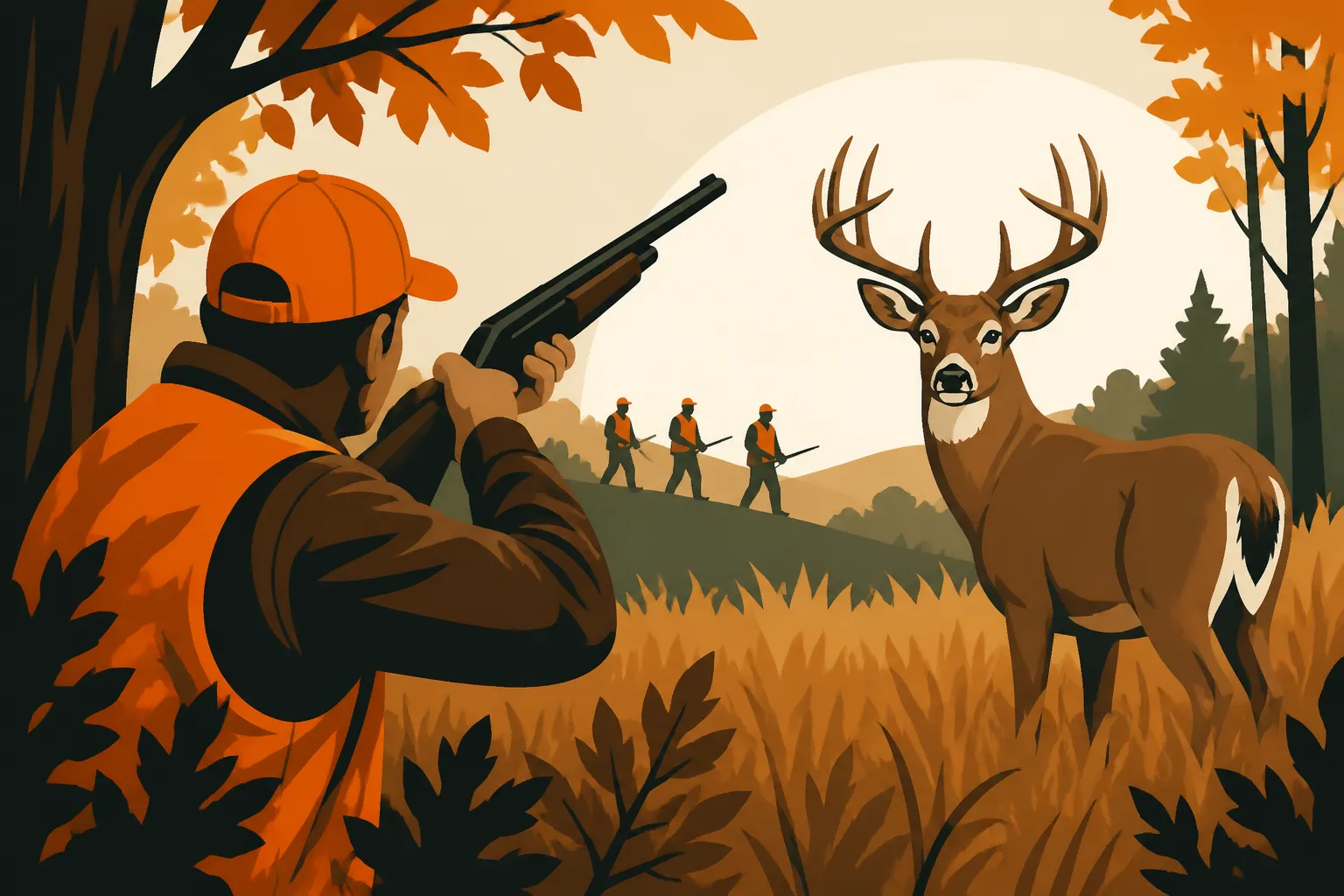
Within this team, you'll generally have two primary roles: the "drivers" and the "standers." The drivers are the ones who walk through the cover, pushing the deer. Their job isn't to walk fast or be loud and aggressive right away. Instead, they should maintain a slow, steady pace, making enough noise to keep the deer moving, but not so much that they bolt. Think of it more like a controlled sweep. They need to stay in line, covering the intended strip of cover, gently encouraging deer to leave their beds. Depending on the size of the area, you might have one to three drivers.
The "standers" are the critical component. These hunters are positioned strategically at the likely escape routes the deer will use. Their role is one of extreme patience and quiet anticipation. They should be in place, concealed, and ready long before the drivers even begin their push. Often, the standers are the ones who get the shot opportunity, as the deer are pushed out of the thick cover and present themselves as they try to slip away. They need to understand the terrain, predict where the deer will emerge, and be prepared for a quick, ethical shot. For a team of three, one driver and two standers can be very effective, especially for Deer Drives With Three or Four Hunters.
Effective Communication and Safety Protocols
Clear communication is the absolute bedrock of any successful deer drive. Before you even step foot in the woods, gather your team for a thorough briefing. Discuss the exact boundaries of the drive, who will be driving, who will be standing, and where everyone will be positioned. Talk about the intended start and end points, potential obstacles, and where you expect deer to try and escape. Agree on clear commands, hand signals, and what to do if a deer is shot.
Many teams find two-way radios incredibly useful, especially on larger parcels of public land where cell service can be spotty. Apps like GoHunt, which allow you to track each other's positions in real-time on a map, are also invaluable for maintaining situational awareness and ensuring everyone stays on track and within designated areas. This helps prevent hunters from getting lost or, more importantly, from getting ahead of the plan. Even with technology, never underestimate the power of a shouted "Stop!" or "Deer!" when conditions warrant.
Above all, safety must be the absolute priority. Indiana law requires hunters to wear hunter orange, and this is even more critical during a deer drive. Ensure everyone wears at least one outer garment of hunter orange (hat, vest, jacket) that is clearly visible from all directions. Before any hunter raises a firearm, they must positively identify their target and, crucially, know what is beyond it. Shots should always be taken towards the designated escape routes and away from drivers. Establishing clear shooting lanes and discussing angles beforehand is non-negotiable.
Scouting and Planning Your Public Land Drive
You can have the best team and the finest gear, but without proper scouting and planning, your deer drive is likely to fall flat. This is where you put in the homework, using maps, boots on the ground, and your best hunting instincts to predict deer movement.
Identifying Key Bedding Areas and Escape Routes
Before you even think about driving, you need to understand where the deer are bedding and how they are likely to react when pressured. This means thorough pre-season scouting or, if it’s too late for that, at least a good couple of hours with aerial photographs and topo maps. Look for the thickest, nastiest cover on the property – multi-flora rose thickets, downed timber, briar patches, regenerating clear-cuts, or dense cedar groves. These are the places deer will retreat to when pressure builds, their sanctuaries. Pay attention to how deer use these areas by looking for tracks, droppings, and rubbed trees.
Once you've identified potential bedding areas, the next step is to pinpoint the most likely escape routes. Deer are creatures of habit, and they prefer to travel along paths of least resistance or through areas that offer cover. Look for natural funnels like creek bottoms, saddles between ridges, logging roads that cut through dense woods, or pinch points where thick cover narrows. These are the highways deer use when they're trying to get from point A to point B, especially when they're being pushed. Remember that deer often try to skirt around pressure rather than bursting straight through it. Understanding Where Hoosier National Forest Bucks Bed or how deer might use Entry Routes Through Standing Corn will be critical for your planning.
By studying these areas, you can anticipate exactly where to place your standers. It’s not about randomly spreading out; it’s about putting someone in the most advantageous position to intercept a deer that’s trying to slip away.
Mapping Out the Drive: Boundaries and Wind Considerations
With bedding areas and escape routes in mind, it's time to map out your drive. This involves clearly defining the start and end points, the path the drivers will take, and the precise locations for the standers. This is especially important on public land, where property lines might be irregular or you might be sharing the woods with other hunters. Utilizing a mapping app like GoHunt can be incredibly helpful here, allowing you to mark waypoints, draw routes, and see property boundaries clearly. This prevents accidental trespassing and ensures your drive stays within legal and safe limits.
One of the most crucial elements in planning a successful drive is understanding and utilizing the wind. Deer have an incredible sense of smell, and they will almost always try to circle downwind of any perceived threat. Therefore, your standers should be positioned downwind of the expected escape routes, so the deer are moving into their scent cone, not away from it. Conversely, drivers ideally want the wind in their face, or at least quartering, so their scent isn’t pushed ahead of them, prematurely alerting the deer. Ignoring wind direction is one of the quickest ways to educate deer and send them exactly where you don't want them to go – usually, right back behind the drivers or out into a wide-open area.
A well-planned drive pushes deer into a funnel where standers are waiting, with the wind working in your favor. This might mean setting up to push deer along a ridge into a Ridge-Top Saddle for Rutting Bucks or out of a thicket towards a river bottom. The goal is to control the deer's movement as much as possible, preventing them from simply circling the drivers and making a clean getaway.
Executing the Drive: Tactics for Drivers and Standers
All the scouting and planning in the world won't matter if the execution isn't precise. This is where the rubber meets the road, and the coordination of your team truly shines.
Driver Strategy: Pacing, Noise, and Lane Discipline
The drivers are the engine of the operation, but it’s not about brute force. The key for drivers is to maintain a controlled, slow, and steady pace. Resist the urge to rush. Deer will often try to sneak back through the line of drivers if they sense a gap or if the pace is too fast. Think of it as a methodical sweep, slowly compressing the cover. The noise level should be consistent but not overwhelming. Talking, clanking sticks, or even light shouting are all effective, but avoid sudden, loud bursts that might panic deer into sprinting. The idea is to make them uncomfortable enough to move, not to send them into a full-blown panic.
Lane discipline is incredibly important for drivers, especially in thick cover. Each driver needs to maintain their assigned position relative to the others. If one driver gets too far ahead or falls behind, it creates a hole in the line, and deer will exploit it every time. Using two-way radios or apps like GoHunt to track positions can help maintain this alignment. If a deer is spotted slipping back through the line, drivers should communicate this to the standers and adjust their path slightly, but never break formation entirely to chase. The goal is to push deer forward, not to engage in a cat-and-mouse game within the thicket.
Drivers also need to be flexible and adapt to the terrain. If they encounter an impassable briar patch or a deep ravine, they need to communicate that and adjust the line accordingly, always keeping the overall objective in mind: moving deer towards the standers along predetermined escape routes.
Stander Strategy: Concealment, Patience, and Shot Selection
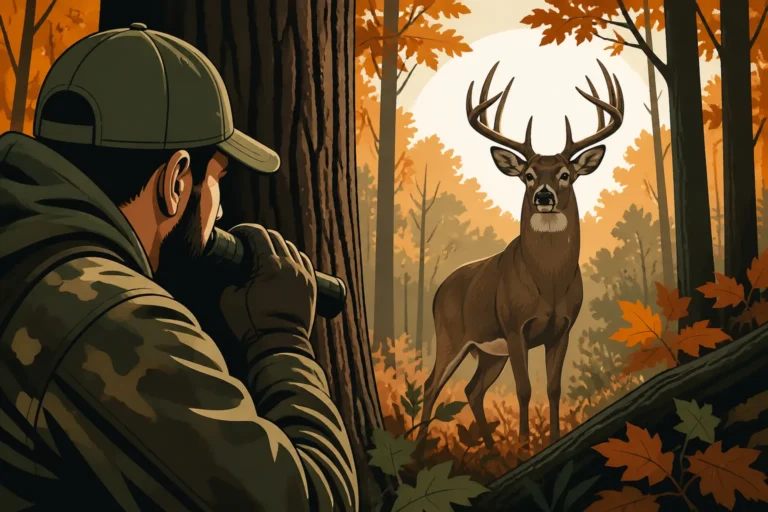
While the drivers are making all the noise and effort, the standers have the more critical, and often more challenging, job of being perfectly still, silent, and observant. Concealment is paramount. Don't stand out in the open; utilize natural cover like dense brush, a large tree trunk, or even a well-brushed-in ground blind, especially if you're on public land where deer are acutely aware of human forms. Get into position well before the drive starts, allowing any residual scent to dissipate and for the woods to settle. Remember, if you can see them coming, they can probably see you.
Patience is a virtue for standers. Deer that are being driven might emerge cautiously, pausing to look and listen before committing to an escape route. Don't rush your shot. Wait for the deer to present an ethical shot opportunity, ideally broadside or quartering away, where you can put your bullet or arrow into the vital zone. Remember, on pressured public land, deer often try to sneak out, not crash out. They might walk, trot, or even pick their way silently. Be ready for any scenario.
Shot selection is also crucial. Be absolutely certain of your target – never shoot at just movement or a flash of brown. Identify the animal clearly, assess its sex if you're targeting a buck, and ensure you have a safe backstop. Knowing your effective range and sticking to it is vital. On public land, there's always the chance of other hunters being around, so being hyper-aware of your surroundings and your shooting lanes is non-negotiable.
Post-Drive: Tracking and Recovery
So, you've made a shot. Now what? The immediate aftermath of a shot during a drive is critical. The first thing any stander should do is mark the exact spot where the deer was standing when shot, and the direction it ran. Use a piece of blaze orange ribbon, a hat, or a bright marker. If you're unsure of your hit, or if the deer seems to be slowing down but not falling, it's often best to wait a bit before taking up the trail. A deer that's hit but not dead can travel a long way if pushed too soon.
Once the drive is complete and everyone is accounted for, the team can regroup and focus on Tracking a Deer in Fresh Indiana Snow or Blood Trailing After Dark in Indiana if necessary. Everyone can contribute to the search. Look for blood, broken branches, disturbed leaves, and tracks. If the blood trail is sparse, spread out and walk slowly in the direction the deer was last seen, looking for any sign. When hunting dense cover, it's amazing how a deer can vanish into the landscape even with a good hit.
For successful recovery, having the right gear is a game-changer. Sleds and Drags for Farm Country or Deer Carts on Forest Roads can turn a back-breaking drag into a manageable task, especially when you're deep in the Hoosier National Forest or pulling a big buck out of a river bottom. Don't forget a sharp field dressing knife and the knowledge to Field Dressing a Deer in Cold Weather or warm weather.
Common Pitfalls and How to Avoid Them
Deer drives can be incredibly rewarding, but they also come with their own set of potential problems. Being aware of these common pitfalls can help you avoid frustration and ensure a safer, more successful outing.
The Dangers of Over-Aggressive or Uncoordinated Drives
One of the biggest mistakes hunters make is trying to be too aggressive with their drives. Yelling, running, and creating a chaotic environment might seem like it would move deer, but often it just spooks them into a full sprint. Panicked deer are much harder to track, can run further, and are less likely to present a calm, ethical shot for standers. Worse, a panicked deer might bolt in an unpredictable direction, potentially towards another hunter or out into an unsafe area. A controlled, steady push is almost always more effective.
Another significant danger is a lack of coordination. If drivers get too far apart, deer will slip through. If standers are in the wrong place or move prematurely, they can blow the entire drive. This is where clear communication, pre-drive planning, and understanding everyone's role becomes so vital. An uncoordinated drive is not only ineffective but also significantly increases the risk of a safety incident, such as a hunter walking into another's shooting lane. It’s crucial that everyone understands and adheres to the plan, resisting the urge to deviate independently.
Respecting Public Land Etiquette and Regulations
Hunting public land often means sharing the woods with others. It's frustrating to plan a perfect drive only to have another hunter walk right through your setup. While you can't control other people, you can do your part to be a respectful user of public resources. Be aware of Hunting Pressure on Indiana Public Land and try to pick times and locations that might be less crowded, such as mid-week or in areas that require a longer walk. Always be courteous if you encounter other hunters, even if they're inadvertently impacting your hunt.
It's also essential to be intimately familiar with specific regulations that apply to public lands in Indiana. Rules for placing Treestand Setups in Hoosier National Forest or Using a Ground Blind on Indiana Public Land might differ from one property to another. Some Fish and Wildlife Areas require you to sign in, others have specific dates or regulations for managed hunts. Always check the Indiana DNR regulations for the specific property you intend to hunt. This includes understanding blaze orange requirements, legal hunting hours, and rules about vehicle access or camping.
Finally, always practice good conservation and leave no trace. Pack out everything you pack in, including spent shell casings. If you harvest a deer, dispose of the remains properly, away from trails and public view. Being a responsible and ethical public land hunter ensures these resources remain available and enjoyable for everyone, for generations to come.
| Role | Primary Responsibilities | Key Behaviors | Required Gear |
|---|---|---|---|
| Drivers | Push deer out of thick cover towards standers | Slow, steady pace; consistent noise; lane discipline | Blaze orange, two-way radio, weapon, GPS/map (GoHunt) |
| Standers | Intercept deer at escape routes, take ethical shots | Concealment, extreme patience, keen observation | Blaze orange, two-way radio, weapon, rangefinder |
| Planner | Maps drive, assigns roles, communicates plan, monitors safety | Leadership, attention to detail, strong communication | Maps (GoHunt), compass, phone/radio, first-aid kit |
| Tracker | Locates downed game, follows blood trails | Patience, methodical search, good eyesight | Headlamp, flagging tape, knife, sled/cart |
Disclaimer
Hunting is an inherently dangerous activity. Always prioritize safety, follow all local and state regulations, and ensure you have proper training and equipment. The advice provided here is for informational purposes only and does not substitute for personal judgment, experience, or professional guidance.