Crossbows Under Indiana Rules
It can feel a little confusing to keep up with all the changes and nuances of hunting regulations, especially when it comes to specific equipment like crossbows in Indiana. What was legal last year or even a few years ago might have changed, leaving you wondering if your favorite setup is still good to go, or if you need to invest in something new. This guide is here to cut through that confusion, explaining everything you need to know about current crossbow rules and how to effectively hunt with one in the Hoosier State.
The Evolution of Crossbow Hunting in Indiana
For a long time, crossbows occupied a somewhat gray area in many states, often being restricted to disabled hunters or specific seasons. Indiana, like many others, has seen its regulations evolve over the years, reflecting both advancements in crossbow technology and a broader acceptance of these highly effective hunting tools.
From Traditional Archery to Modern Crossbow Acceptance
Back in the day, if you said "bowhunting," most people pictured a longbow or a compound bow – something you drew back with muscle power. Crossbows were often viewed differently, almost as a hybrid between a bow and a firearm due to their mechanical cocking and trigger release. This perception led to stricter regulations, often relegating them to firearm seasons or requiring special permits. However, as crossbow technology advanced, making them lighter, more efficient, and incredibly accurate, their popularity surged. Hunters appreciated the longer effective range compared to traditional archery, the reduced physical strain, and the consistent accuracy, especially for those who might struggle to hold a compound bow at full draw for an extended period.
The shift in attitude wasn't just among hunters; wildlife agencies also began to recognize the role crossbows could play in managing deer populations, particularly in areas where traditional firearms might be restricted or where longer archery seasons were desired. This growing acceptance paved the way for more inclusive regulations that are now standard in Indiana.
Key Regulatory Shifts Over the Years
Indiana's journey with crossbows has been a progressive one. Historically, crossbow use was much more limited. It wasn't until relatively recently that crossbows were fully integrated into the general archery season, allowing all hunters, regardless of physical ability, to utilize them during the entire archery period. This was a significant change, expanding hunting opportunities for many and acknowledging crossbows as legitimate archery equipment. These shifts are often a result of legislative action, feedback from hunters, and a recognition of the equipment's safe and effective use in the field. Keeping up with these changes often means checking the official DNR website or using handy tools like the GoHunt app to ensure you're always operating within the latest legal framework. Understanding the history helps appreciate the current freedom hunters now have.
Current Indiana Crossbow Regulations Explained
Understanding the precise rules for crossbow hunting in Indiana is paramount for any hunter stepping into the woods. The regulations are designed to ensure ethical hunting practices, promote safety, and maintain fair chase principles. It's not just about what you can use, but also when and how.
Defining a Legal Crossbow in Indiana
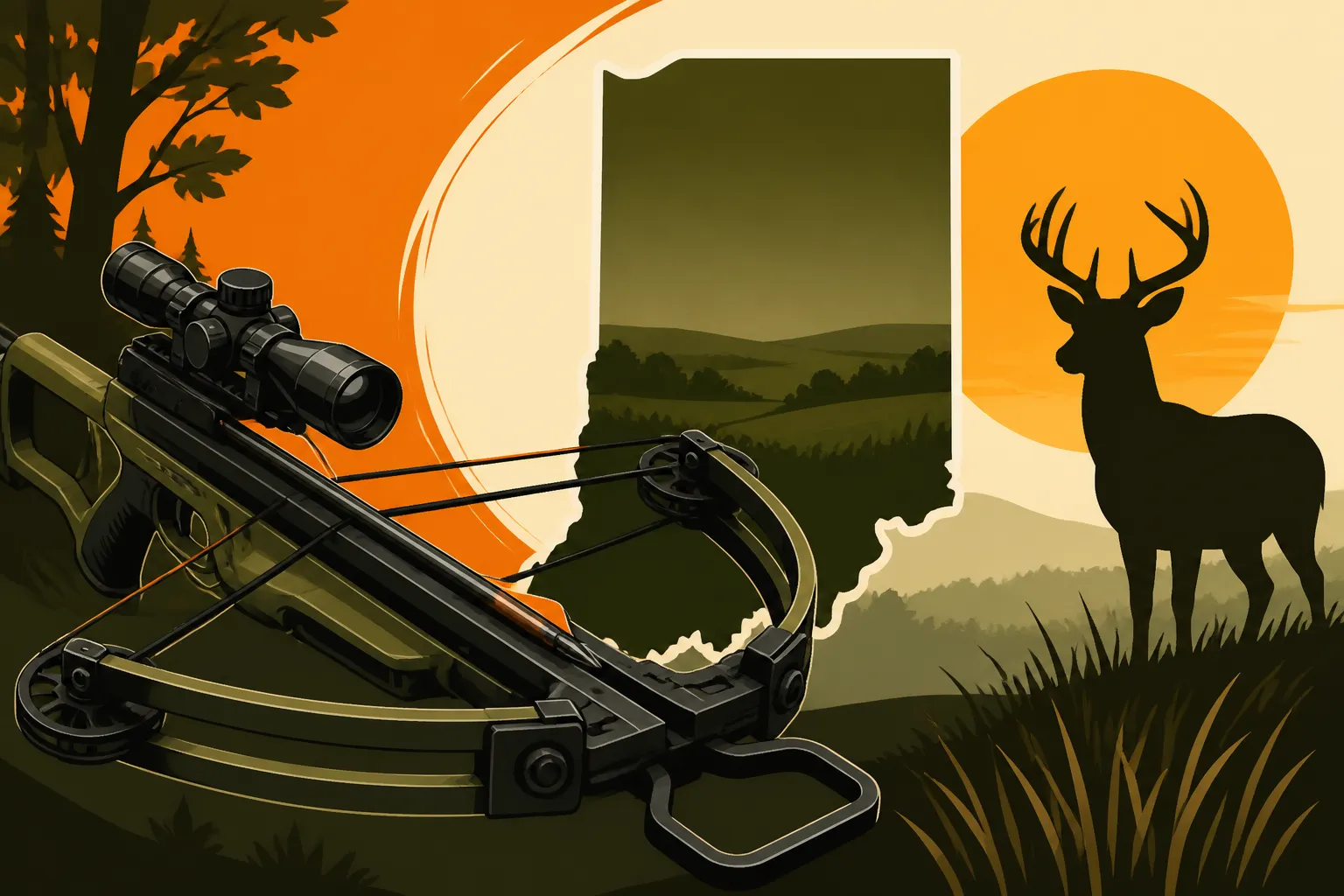
Indiana regulations are quite clear on what constitutes a legal crossbow for hunting purposes. Essentially, any crossbow that is drawn, held, and released by a mechanical trigger mechanism is permissible. There are no specific restrictions on draw weight, kinetic energy, or bolt speed, which gives hunters a wide range of options when selecting their equipment. However, it's implied that the crossbow must be designed for hunting and capable of cleanly taking game. This means using appropriate bolts and broadheads. For instance, broadheads must meet specific criteria regarding cutting diameter and number of blades, ensuring a quick and humane harvest. You can't just use target tips out in the woods. It's also important to remember that crossbows, while mechanically different, fall under the general umbrella of archery equipment for regulatory purposes in Indiana, unlike some states that treat them as a separate category entirely.
Season Specifics and Bag Limits
One of the biggest advantages for crossbow hunters in Indiana is that crossbows can be used throughout the entire Indiana Archery Season Dates. This means you can be out in the woods from early October all the way through the end of December, and even into January in some scenarios, depending on specific seasons. This long season provides ample opportunity to pursue deer, whether you're targeting early-season patterns, the intensity of the rut, or late-season food sources.
When it comes to bag limits, crossbow hunters adhere to the same deer bag limits as all other archery hunters. Typically, this includes one antlered deer and an appropriate number of antlerless deer, often with additional antlerless tags available in Hunting a Deer Reduction Zone or through bonus antlerless permits. It's crucial to consult the current hunting guide for the specific year you're hunting, as these limits can occasionally be adjusted by the Indiana DNR based on population management goals. Always report your harvest diligently through the official system, whether it's the DNR website or the Go Outdoors Indiana app.
Who Can Legally Use a Crossbow
The fantastic news for hunters in Indiana is that anyone with a valid hunting license and appropriate deer tags can legally use a crossbow during the archery season. There's no longer a requirement for a disability permit, special age restrictions beyond general hunting license requirements, or an additional crossbow endorsement needed. This broad access means that new hunters, seasoned veterans looking for a change, and those with physical limitations can all enjoy the benefits of crossbow hunting.
For youth hunters, particularly those participating in the Indiana youth deer weekend, crossbows are also a great option. They can offer a safer and more manageable shooting experience compared to a traditional compound bow, allowing younger hunters to focus on shot placement and ethical hunting. If you're mentoring a new hunter, a crossbow can be an excellent entry point due to its relative ease of learning and consistency. The key, as always, is proper hunter education and adherence to all safety protocols, no matter the age or experience level.
Choosing the Right Crossbow for Indiana
Picking out a crossbow can feel overwhelming with all the options on the market. It's not just about raw power; it's about finding a tool that fits your hunting style, your body, and the specific environments you'll encounter across Indiana's diverse landscapes, from dense southern hills to open northern farmlands.
Recurve vs. Compound Crossbows
When you start looking at crossbows, you'll quickly notice two main types: recurve and compound. Each has its own set of pros and cons, making the choice a personal one based on what you prioritize in your hunting gear.
Recurve crossbows are generally simpler in design, featuring limbs that curve away from the riser at the tips, much like a traditional recurve bow. They tend to be wider and can be a bit slower than compounds, but their simplicity means fewer moving parts and often greater reliability. If something goes wrong in the field, a recurve is typically easier to fix. They're often a good choice for hunters who value durability and straightforward mechanics. However, their wider stance can be a hindrance in thick brush or when maneuvering in a ground blind.
Compound crossbows, on the other hand, utilize a system of cams and cables, similar to compound vertical bows. This design allows for a narrower profile, higher speeds, and more stored energy, often resulting in flatter trajectories and more kinetic energy. They are generally more compact, which is a huge advantage when still-hunting through tight timber or setting up in a confined Ground Blind Rules on Indiana Wildlife Areas. The trade-off is their complexity; more moving parts mean more potential points of failure, and they usually require a pro shop for maintenance like string or cable changes. They can also be a bit noisier to cock and shoot, which is something to consider.
Here's a quick comparison:
| Feature | Recurve Crossbow | Compound Crossbow |
|---|---|---|
| Design Simplicity | High | Moderate |
| Width | Wider | Narrower |
| Speed | Moderate to Fast | Faster to Very Fast |
| Maintenance | Easier, often DIY-friendly | Typically requires specialized tools/shops |
| Noise | Generally quieter cocking/shooting | Can be louder cocking/shooting |
| Weight | Often lighter due to fewer components | Varies, can be heavier due to complexity |
| Cost | Generally less expensive | Often more expensive |
Speed, Power, and Accuracy Considerations
It's easy to get caught up in the "feet per second" numbers when buying a crossbow, but speed isn't the only metric that matters. While a faster crossbow can provide a flatter trajectory and potentially more kinetic energy, which translates to better penetration, extreme speed can sometimes come with increased noise or vibration. For hunting deer in Indiana, a crossbow shooting in the 300-400 FPS range is more than adequate for clean, ethical kills out to typical crossbow hunting distances.
Power, or kinetic energy, is crucial for penetration. This is a function of bolt weight and speed. You want enough power to ensure your broadhead passes through the animal, creating two holes for a better blood trail. Modern crossbows easily generate enough kinetic energy for deer.
Accuracy is, arguably, the most important factor. A less powerful but consistently accurate crossbow is always better than a super-fast, inaccurate one. Look for a crossbow that feels comfortable to shoulder and aim. Many modern crossbows are incredibly accurate right out of the box, often capable of shooting tight groups at 40-50 yards. Remember, practicing regularly is what truly builds accuracy, regardless of your equipment's potential. Don't fall for the trap of thinking a more expensive, faster bow will automatically make you a better shot.
Ergonomics and Fit for the Indiana Hunter
Just like a rifle, a crossbow needs to fit you. The length of pull, the grip angle, and the overall balance can significantly impact your comfort and accuracy. Before you buy, try shouldering several different models. Does the scope sit at a natural height? Can you comfortably reach the safety and trigger? Is the weight distributed well, or does it feel front-heavy? These are critical questions.
Consider where you'll be hunting. If you spend most of your time in a Treestands and Saddles on Public Land in the Hoosier National Forest, a more compact, balanced crossbow might be easier to manage than a longer, heavier model. For ground blind hunting near a Setting Up on a Northern Indiana Field Edge, a narrower crossbow will allow for easier maneuvering and shooting through small windows. The ability to cock the crossbow easily is also a major ergonomic factor; many modern crossbows come with integrated cocking aids or rope cockers that make the process much less strenuous. Think about how many times you might need to cock it on a long hunt and whether your chosen method is practical for repeated use.
Essential Crossbow Accessories and Maintenance
Having the right crossbow is only half the battle. Outfitting it with the necessary accessories and committing to proper maintenance are crucial for both performance in the field and the longevity of your investment.
Selecting Bolts, Broadheads, and Quivers
Your crossbow is only as good as the bolt you shoot from it, and the broadhead on the end of that bolt. Don't skimp here. Most crossbow manufacturers will recommend a specific weight range for bolts to optimize performance and prevent damage to the bow. Generally, a heavier bolt will carry more kinetic energy and offer better penetration, though it will fly slower and have more drop. Carbon bolts are standard due to their durability and consistent spine.
Broadheads come in two main types: fixed-blade and mechanical (or expandable). Fixed-blade broadheads are known for their strength and reliability, maintaining their cutting diameter upon impact. Mechanical broadheads, on the other hand, deploy their blades only after impact, often resulting in larger cutting diameters and better blood trails, sometimes with slightly better flight characteristics than fixed blades. However, they can sometimes fail to deploy or lose energy on impact. It's a personal choice, but ensure any broadhead you choose meets Indiana's legal requirements for cutting diameter. Carry a reliable quiver that holds your bolts securely and quietly, whether it's mounted on the crossbow itself or worn on your person.
Optics and Sighting Systems for Accuracy
Unlike traditional bows, crossbows are almost always equipped with some form of optic. This is where you really dial in your Crossbow Scopes for Indiana Timber Ranges. Most crossbows come bundled with a basic scope, often with multiple reticle dots for different yardages. While these can be functional, upgrading to a higher-quality scope can significantly enhance your accuracy and low-light performance. Look for scopes with clear glass, a wide field of view, and illuminated reticles for those crucial dawn and dusk shots.
Some hunters prefer red dot sights for quick target acquisition at closer ranges, though these lack magnification. A good rangefinder is also an indispensable tool, especially when hunting in varied terrain where distances can be deceiving. Knowing the exact distance to your target allows you to use the correct reticle dot, eliminating guesswork and dramatically increasing your chances of a clean shot. Brands like GoHunt often integrate rangefinding data with their mapping tools, which can be invaluable for pre-season scouting and shot planning.
Maintenance for Longevity and Safety
A crossbow is a powerful piece of equipment that endures immense stress with every shot. Regular maintenance isn't just about protecting your investment; it's about safety. First and foremost, always wax your crossbow string and cables regularly, especially if you hunt in wet or humid conditions. This prevents fraying and prolongs their life. Inspect your string and cables for any signs of wear, cuts, or damage before every hunt.
Keep your crossbow clean and dry. After a wet hunt, wipe it down thoroughly and apply a light coat of oil to any metal parts to prevent rust. Ensure all screws and bolts are tight, especially on the scope mount. A loose scope mount can quickly ruin your accuracy. Store your crossbow uncocked if possible, or at least relieve tension according to the manufacturer's recommendations, to prevent limb fatigue. A proper hard or soft case will protect your crossbow during transport and storage. Neglecting maintenance can lead to equipment failure in the field, which at best means a missed opportunity, and at worst, a dangerous malfunction.
Tactics for Hunting with a Crossbow in Indiana
Hunting with a crossbow combines elements of traditional archery with some of the range capabilities of a firearm. Success in Indiana's varied terrain hinges on adapting your tactics to the equipment's strengths and weaknesses, coupled with a deep understanding of deer behavior.
Optimal Stand Placement and Shot Angles
Because crossbows offer a greater effective range than many traditional bows, hunters might be tempted to take longer shots. However, the most ethical and successful crossbow hunting still often occurs at distances under 40-50 yards. This means stand placement remains critical, just as it would for a traditional archer. Focus on setting up in high-traffic areas like Hunting a Funnel Between Two Woodlots, along trails connecting bedding and feeding areas, or overlooking key food sources. Consider prevailing wind direction to avoid having your scent carried to approaching deer.
When positioning your stand, think about shot angles. A crossbow shot from an elevated position is usually best when quartering away, allowing the broadhead to enter behind the shoulder and angle forward into the vitals. Avoid straight-on or straight-away shots if possible, as these can reduce the chances of a vital hit and a quick recovery. Practice shooting from elevated positions to understand how the angle affects your aiming point and trajectory. Remember, even with a crossbow, precision is key.
Understanding Deer Behavior and Crossbow Limitations
Deer behavior in Indiana doesn't change just because you're carrying a crossbow. They're still wary, sensitive to scent, and keenly aware of unusual sounds and movements. Understanding When the Indiana Rut Peaks or Late-Season Food Sources for Indiana Whitetails is just as important for a crossbow hunter as for any other. Use mapping applications, potentially including GoHunt, to scout bedding areas, travel corridors, and feeding patterns specific to your hunting grounds.
While a crossbow extends your range beyond that of a traditional bow, it's still not a rifle. Crossbows are generally slower to reload than repeating firearms, and the shot is not silent. This means follow-up shots can be challenging, and deer often react quickly to the shot sound, sometimes "string jumping." Be prepared for deer to drop or "crouch" at the shot, which can cause a high hit if you aim for the very top of the vitals. Aim for the middle of the vital zone, and if the deer drops slightly, you'll still be in the kill zone. Patience, stealth, and a deep understanding of whitetail habits remain your most potent weapons.
Scouting and Pre-Season Preparation with a Crossbow
Successful hunting, regardless of the weapon, begins long before opening day. For crossbow hunters in Indiana, pre-season scouting is non-negotiable. Spend time in the woods identifying travel routes, rub lines, scrape areas, and primary food sources. Reading Aerial Photos for Southern Indiana Deer can help you pinpoint promising locations before you even step foot in the timber. Look for natural funnels, saddlebacks, and dense cover where deer feel secure.
Beyond just finding deer, use your scouting to identify potential stand sites that offer clear shooting lanes within your comfortable crossbow range. Trim any small branches that might deflect a bolt, but do so subtly and well in advance of the season to avoid alerting deer. Practice shooting your crossbow regularly, not just on a flat range, but from your actual treestand or ground blind, simulating real-world hunting scenarios. This practice builds confidence and muscle memory, ensuring that when that moment of truth arrives, you're ready to make an ethical shot.
Disclaimer
This article is for general informational purposes only and does not constitute professional advice. Laws, prices and regulations vary by location and change over time. Consult a qualified professional for guidance on your specific situation.