When the Indiana Rut Peaks
If you've spent any time chasing whitetails in Indiana, you know the rut is the most talked-about, anticipated, and often frustrating time of the season. We hear stories, see pictures, and wonder if we're missing the "peak" window where bucks seem to lose their minds. This guide is here to demystify when the Indiana rut truly peaks, what to expect from deer behavior during this magical period, and how to maximize your time in the woods during this coveted hunting opportunity.
Understanding the "Rut" – It's Not Just One Day
The rut, in its simplest form, is the whitetail breeding season. But for hunters, it's so much more than that. It’s a dynamic period characterized by increased deer activity, with bucks abandoning their nocturnal routines and becoming far more visible, sometimes even reckless, in pursuit of does. However, thinking of the rut as a single "day" or even a "week" is a common misconception that can lead to missed opportunities and a lot of head-scratching.
The reality is that the rut is a progression, a continuum of phases that gradually build, peak, and then subside. Understanding these stages is critical to being in the right place at the right time. It’s not just about a calendar date; it’s about recognizing the shifting behaviors of the deer herd as they move through the different breeding cycles.
The Pre-Rut Build-Up: Scrapes, Rubs, and Frustration
Before the actual peak, there's a thrilling period known as the pre-rut. This is when the testosterone levels in bucks are skyrocketing, and they're becoming increasingly aggressive. You'll start to see more and more evidence of their presence: freshly worked rubs on saplings and larger trees, where bucks are scent-marking and polishing their antlers, and scrapes, those tell-tale patches of pawed-up earth where bucks urinate and deposit scent from their forehead glands.
During this phase, bucks are feeling the urge, but most does aren't quite ready to breed yet. This leads to bucks cruising widely, checking those scrapes, and occasionally sparring with other bucks, all while trying to locate the first receptive does. Hunters often experience a mixture of excitement and frustration in the pre-rut. You'll see plenty of sign, and maybe even a few young bucks chasing, but those mature giants might still be largely nocturnal or only moving at the very fringes of daylight. It can feel like the deer are just about to turn on. If you're Reading a Ridge for Hoosier Forest Deer, you might notice new rub lines appearing along the contours.
This is a fantastic time to be in the woods, even if the action isn't constant. It's when bucks are establishing dominance and checking out their territory. Observing these early indicators, like fresh rubs or active scrapes, can give you a real edge in predicting where a buck might be once the does start coming into estrus. It's also prime time for using calls, as bucks are responsive to challenges. Learning about Rattling and Grunting in Indiana can be incredibly effective during this period when bucks are seeking out rivals.
The Peak: Does in Estrus and Frenzied Bucks
This is what every deer hunter dreams about. The "peak rut" is the window when the majority of does in a given area become receptive to breeding. When a doe enters estrus, she emits pheromones that drive bucks into a frenzy. All the prior buck behavior – the rubs, the scrapes, the sparring – was leading up to this. Bucks abandon most other activities, including regular feeding, to relentlessly pursue receptive does.
During the peak, you'll witness bucks chasing does across fields, through thick timber, and often right past your stand in broad daylight. They become less cautious and more singularly focused on breeding. This is when the biggest, most mature bucks, which might have been entirely ghosts the rest of the season, throw caution to the wind. They're covering a lot of ground, often following scent trails with their nose to the ground, or standing guard over a doe they've "locked down."
This concentrated period of breeding activity is without a doubt the best time for hunters to encounter mature bucks. Bucks are no longer just looking for does; they're actively with them or hot on their heels. This heightened activity makes them far more vulnerable to hunter encounters, especially in areas with good cover or natural travel corridors. If you're lucky enough to be Hunting the Rut in Early November, you'll understand why this is such a special time.
Using calls, particularly those that mimic a doe in estrus or a tending buck, can be incredibly effective right now. A well-placed grunt or bleat can pull a lovesick buck right into your shooting lane. You might be surprised at how responsive they are, especially if they haven't found a doe yet. Carrying and knowing how to use Grunt Calls in Mature Indiana Timber could be the difference between seeing a buck and getting a shot.
Pinpointing the Peak: Factors Influencing Indiana's Rut
So, if the rut is a progression, when does that "peak" actually hit in Indiana? This is where many hunters get tangled up in old wives' tales and misinformation. While it's tempting to think that the biggest full moon or a sudden cold snap causes the rut, the primary trigger is far more consistent and reliable.
Understanding the real drivers behind the rut will give you a better grasp of when to expect the peak, allowing you to plan your precious hunting days more effectively. It’s about separating the signal from the noise, and focusing on what truly dictates the deer's biological clock.
Photoperiod: The Unchanging Trigger
The number one, most consistent, and most reliable factor that triggers the whitetail rut is photoperiod – the amount of daylight in a 24-hour period. As the days grow shorter in the fall, a deer's brain registers this change, releasing hormones that initiate the breeding cycle. This biological mechanism is incredibly precise and consistent year after year, regardless of weather, moon phase, or anything else we humans tend to worry about.
Because photoperiod is the trigger, the timing of the rut's peak is remarkably stable. While local activity might fluctuate due to other factors, the biological peak of when the most does are receptive generally falls within a very predictable window. This is why seasoned hunters in Indiana can tell you with relative certainty when the best action will happen. It’s not a guess; it's nature's clock. Tracking how Indiana Deer Antler Growth Timeline progresses can also give you a sense of the seasonal shift.
Many dedicated Hoosier hunters rely on powerful mapping tools and data platforms like GoHunt to visualize terrain, identify potential funnel points, and even track historical weather patterns that can influence deer movement around the rut. These tools can help you be better prepared for where deer might move when their biological clock tells them it's time. While photoperiod drives the timing, tools can help you predict movement within that timing. Understanding the overall Indiana Deer Population Estimate for your area can also inform your expectations during this high-activity period.
Secondary Influences: Weather, Moon, and Pressure
While photoperiod sets the biological clock for the rut's peak, other factors can certainly influence when and how much you actually see deer moving during daylight hours. Think of these as amplifiers or dampeners, not initiators. A sharp cold front, for instance, won't make a doe go into estrus any sooner, but it can absolutely get bucks on their feet and moving during the day if the peak rut is already underway. Cooler temperatures make deer more comfortable moving and expending energy.
The moon phase is another factor often debated among hunters. While some believe a specific moon phase triggers the rut, scientific consensus is that it does not. However, a full moon can influence nocturnal activity. If bucks are feeding and breeding heavily at night under a bright moon, they might rest more during the day. Conversely, dark nights or cloudy periods could push more movement into daylight. This is less about when the rut peaks and more about when deer decide to move during that peak. Implementing a Cold-Weather Sitting Strategy in Indiana becomes crucial if the temperatures drop during the peak.
Hunting pressure, especially on public land, also plays a huge role. If an area gets hammered by hunters, deer will quickly adapt and become more wary, even during the rut. While their biological drive to breed is strong, their survival instincts are stronger. They might still breed, but they'll do it more discretely, often in thicker cover or during low-light hours. This is why finding areas with less Hunting Pressure on Indiana Public Land can be key to seeing more action during the rut.
The Best Window for Indiana Hunters
Taking all these factors into account, there's a pretty clear "golden ticket" window for hunters hoping to catch the peak of the rut in Indiana. While deer activity can be exciting throughout October and into December, there's a period where everything seems to align for maximum buck movement and visibility.
It’s crucial to remember that while the biology is consistent, local conditions—like food sources, habitat, and pressure—will always influence specific deer behavior in your hunting area. Being flexible and adaptive is part of the challenge and the fun.
Early November: The Golden Ticket
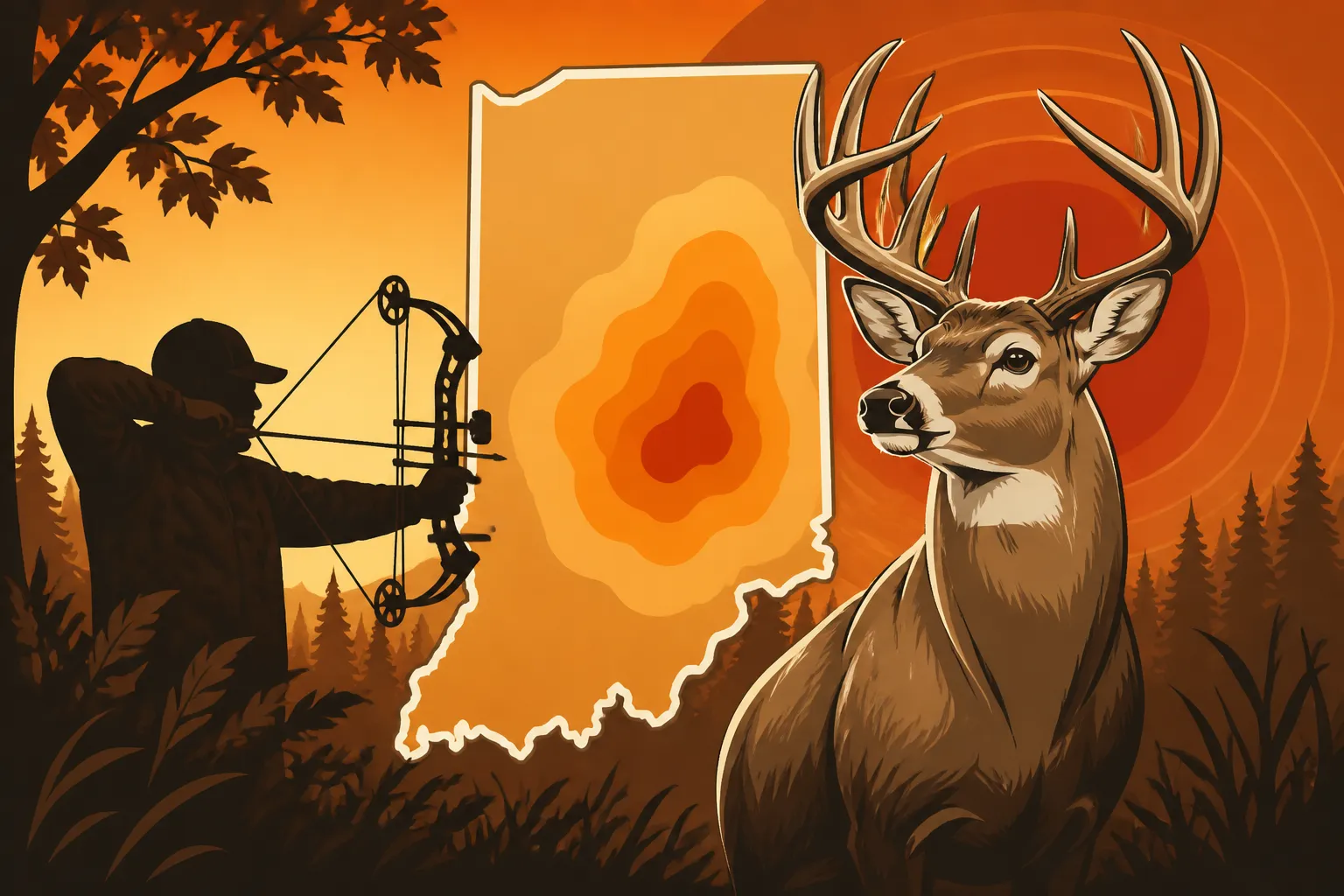
For Indiana hunters, the first two weeks of November, generally running from around November 1st through November 14th, represent the absolute peak of the rut. This is the period when the vast majority of does come into estrus, and buck activity reaches its fever pitch. If you have vacation time to take, this is when you want to be in the woods.
During this prime window, you can expect to see bucks actively cruising, chasing does, and often completely neglecting their usual cautious behavior. This is the time when you might spot a mature buck walking through an open field at midday, nose to the ground, or hear the frantic bleating of a doe being pursued through the timber. Bucks are focused, driven, and often less aware of their surroundings, making them more susceptible to well-positioned hunters. This is truly the time for Hunting the Rut in Early November.
This timeframe also often coincides with the opening of Indiana's firearms deer season, which can create both opportunities and challenges. The increased hunter presence can get deer moving, but also makes them more wary. Still, the biological urge to breed is so strong that even pressured deer will be active. This is also a wonderful time to consider taking a younger hunter out, as the increased action can make for an unforgettable experience during the Hunting the Indiana Youth Deer Weekend.
Beyond the Peak: The Post-Rut Lull and Secondary Rut
Once the primary peak of the rut subsides, typically by the middle to end of November, deer activity can slow down considerably. Many does have been bred, and bucks are exhausted, having expended massive amounts of energy during their frenzied pursuit. This period, often referred to as the "post-rut lull," can be a challenging time to hunt, as deer return to more regular patterns, often focusing heavily on recovering body condition and seeking out reliable food sources.
However, the rut isn't entirely over. There's often a "secondary rut" that occurs a few weeks later, usually in early to mid-December. This happens when any does that weren't bred during the primary rut, or yearling does (fawns from the previous year) that are now coming into estrus for the first time, become receptive. While the activity won't be as intense or widespread as the primary peak, it can still offer good hunting opportunities, especially for hunters willing to brave the colder weather.
During the secondary rut, bucks will again become more active, albeit usually not with the same single-minded intensity. Your strategy shifts from focusing on cruising lanes and calling to identifying key Late-Season Food Sources for Indiana Whitetails. Finding these concentrated food sources and setting up patiently can pay off. It’s a different game than the frantic chase of early November, but still offers a chance at success, particularly as you approach Hunting the Late-Season January Lull.
Using Tools to Track and Plan for the Rut
Knowing when the rut peaks is one thing; being prepared to capitalize on it is another. Modern hunting relies on a combination of traditional woodsmanship and cutting-edge technology. Leveraging both can significantly increase your chances of success during Indiana's rut. Beyond the classic scouting methods, modern tools like the GoHunt platform can provide invaluable insights by helping you analyze terrain, identify bedding areas, and understand how deer move through your chosen hunting grounds.
Whether you're hunting public land, private tracts, or participating in a managed hunt, thorough preparation is key. The rut is a short, intense period, and you want to ensure you're making the most of every hour you spend afield.
Reading the Woods: Sign, Sightings, and Experience
Nothing beats getting out into the woods and doing your homework. Scouting before the season, and even during, is paramount. Look for fresh rubs – the shinier and more recent the scrape on the tree, the more recent the buck activity. Active scrapes will have freshly pawed earth and often a strong smell. Observe any buck sightings you get, even from a distance, noting their direction of travel and what they're doing.
Pay attention to historical data from your own hunting experiences. When did you see the most chasing activity last year? Where did you encounter bucks? Over time, you'll develop a sense for your specific hunting areas. This boots-on-the-ground intelligence is irreplaceable. If you're serious about your success, make time for Scouting Indiana Public Land Before Season. The more you know about your patch of timber or farmland, the better equipped you'll be.
Even seemingly small details like freshly broken branches or disturbed leaf litter can indicate recent deer movement. Learning to interpret these subtle cues—Finding Sign in Big Hoosier Forest Timber for example—is a skill that comes with time and effort but is invaluable, especially during the rut when deer are moving with more intent.
Technology for Predicting Deer Movement
While your feet on the ground are essential, technology can certainly give you an advantage. Mapping applications are incredibly powerful for understanding terrain, identifying potential funnels, and marking key sign. You can use aerial imagery to pinpoint pinch points, saddles, and creek crossings that bucks will naturally use when cruising for does. Platforms like GoHunt offer detailed topographical maps, satellite imagery, and even layers that can show public vs. private land boundaries, helping you navigate and plan your approach.
Trail cameras are another invaluable tool. Deploying them strategically on scrape lines, rub lines, or travel corridors leading to bedding and feeding areas can confirm local buck presence and give you real-time intelligence on when and where mature bucks are moving. This helps you narrow down your hunting efforts to the most productive areas and times. Learning to use tools like Scouting With the Indiana DNR App can help you maximize your time.
By combining your personal scouting observations with the data from trail cameras and the strategic planning capabilities of mapping platforms like GoHunt, you can create a highly effective hunting strategy for the rut. Knowing Where to Hang a Camera on a Logging Road can provide critical intel. This layered approach ensures you're not just hoping for luck but actively putting yourself in the best position for success when Indiana's rut truly peaks.
Indiana Rut Phases and Deer Behavior
| Rut Phase | Typical Dates (Approx.) | Buck Behavior | Doe Behavior | Hunter Strategy |
|---|---|---|---|---|
| Pre-Rut | Mid-October to Early Nov | Increased rubbing and scraping, sparring, cruising, seeking first receptive does. | Still largely nocturnal or wary, feeding heavily. | Focus on fresh sign, transition routes, aggressive calling, mock scrapes. |
| Peak Rut | Early Nov to Mid-Nov | Frenzied chasing, breeding, locking down does, less cautious, less feeding. | Actively receptive to breeding, emitting pheromones. | Hunt travel corridors, bedding edges, focus on calling, all-day sits. |
| Post-Rut Lull | Mid-Nov to Early Dec | Exhausted, recovering, seeking food to regain weight. | Mostly bred, returning to normal patterns, feeding. | Focus on dense cover near reliable food sources, patient stand hunting. |
| Secondary Rut | Early to Mid-Dec | Renewed activity for unbred does or yearling does coming into estrus. | Yearling does or unbred mature does become receptive. | Focus on Late-Season Food Sources for Indiana Whitetails, cover, patient observation. |
Disclaimer
This article is for general informational purposes only and does not constitute professional advice. Laws, prices and regulations vary by location and change over time. Consult a qualified professional for guidance on your specific situation.