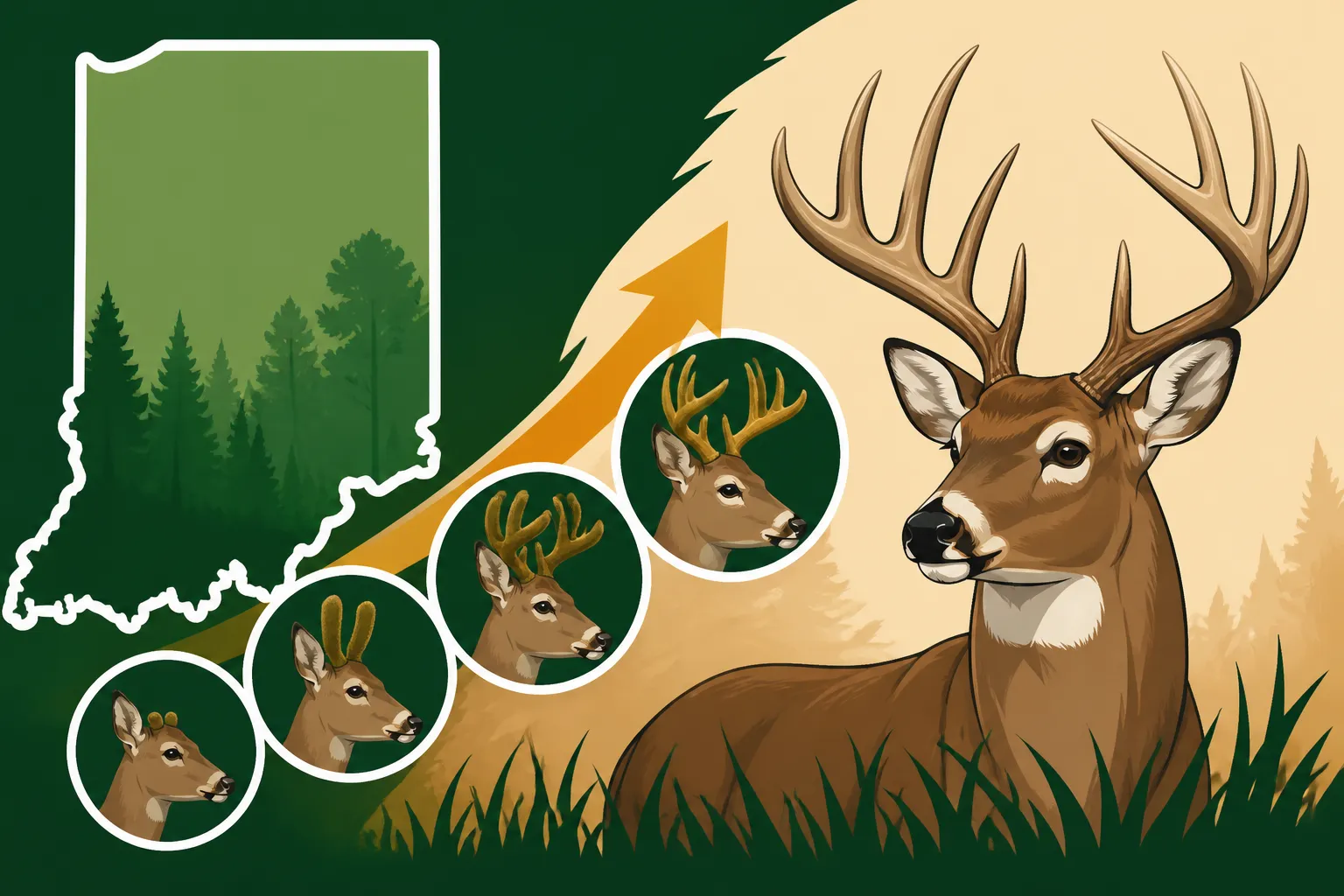
Indiana Deer Antler Growth Timeline
Many of us who spend time in the Indiana woods, whether with a bow or a rifle, are utterly fascinated by deer antlers. They're a symbol of the animal's vitality, age, and genetic potential. But have you ever watched a buck through the spring and summer, seeing his rack slowly take shape, and wondered exactly how that process works? It can be tricky to understand the intricate biological dance that leads to a hardened set of antlers by hunting season. This guide will walk you through the complete antler growth timeline for Indiana whitetails, helping you better appreciate the incredible biology of these animals and informing your scouting efforts.
The Annual Cycle of Antler Growth
Antlers aren't just bone; they're a dynamic, living tissue that undergoes an astonishing transformation each year. Unlike horns, which are permanent and grow continuously from the base, antlers are shed and regrown annually. This cyclical process is driven by a complex interplay of hormones, genetics, and environmental factors, all synchronized with the changing seasons here in Indiana.
Shedding and the Starting Point
For most Indiana bucks, the antler growth cycle truly begins when the previous year's antlers drop off. This shedding event typically occurs in late winter or early spring, usually between late December and early April, though the exact timing can vary widely. It’s a moment many of us look forward to, as it signals the start of shed hunting season, a unique way to connect with the deer even after the hunting seasons have closed.
The shedding process itself is triggered by a significant drop in testosterone levels after the breeding season, or rut. As testosterone decreases, a specialized layer of cells forms at the pedicle (the bony base on the skull from which the antler grows), weakening the connection until the antler detaches. You might find a single antler or stumble upon both in close proximity if you're lucky. Factors like a buck's age, overall health, nutritional intake during the preceding year, and even the severity of the winter can influence precisely when he casts his rack. Older, healthier bucks often shed earlier, ready to start the next growth phase.
Finding a shed antler can offer valuable clues about the bucks that survived the hunting season and are still calling your hunting grounds home. It’s a tangible piece of data that hunters use for Scouting Indiana Public Land Before Season or even on their private tracts. For many, finding a shed is just as exciting as harvesting a deer, offering a quiet, reflective moment in the off-season.
Early Velvety Growth in Spring
Once the old antlers are shed, a remarkable process begins almost immediately. Within a few weeks, sometimes even days, new bumps begin to form on the pedicles. These are the beginnings of the new year's antlers, encased in a soft, fuzzy skin called velvet. This velvet isn't just a covering; it's a highly vascularized tissue, rich in blood vessels and nerves, that supplies the rapidly growing bone underneath with all the nutrients it needs.
From April through late July, antler growth in Indiana bucks is nothing short of explosive. It's one of the fastest growing tissues in the animal kingdom, with some bucks adding an inch or more of growth per day during peak periods. This rapid expansion demands an enormous amount of energy and nutrients, particularly protein, calcium, and phosphorus. You'll often see bucks in the spring and early summer spending considerable time in food plots or areas rich in herbaceous browse, trying to pack in as much high-quality nutrition as possible to fuel this incredible growth.
Observing bucks during this velvet stage, especially with a good set of binoculars or trail cameras, is a true privilege. You can watch as the main beams stretch, tines emerge, and the overall shape starts to solidify. It's a time of optimism for hunters, picturing what that rack might look like come fall. Many hunters dedicate time to Scouting Indiana Public Land Before Season in spring, not just for sheds but to get a glimpse of this early velvet growth, using tools like GoHunt to mark sightings and track individual buck development.
Hardening and Mineralization in Summer
As the summer progresses, typically from late July through August, the process of hardening and mineralization takes over. This is when the soft, cartilaginous tissue beneath the velvet begins to ossify, transforming into dense bone. The rising testosterone levels in the buck's body, which are also signaling the approach of the rut, play a crucial role in this transition. The blood supply to the velvet gradually constricts, and the velvet itself starts to dry out and die.
By late August and early September, Indiana bucks begin the final stage of the annual cycle: shedding the velvet. This is often a dramatic sight, as bucks will rub their antlers vigorously against trees, saplings, and brush, stripping away the irritating, dying velvet. It's a messy, often bloody process that leaves behind torn strips of velvet hanging from branches, a clear sign that fall is just around the corner and antlers are now fully hardened and ready for battle.
Once the velvet is completely shed, the antlers are in their final, hardened state, ready for the breeding season. The timing of this velvet shedding can vary a bit, but it's a critical milestone for hunters, signaling that the deer are transitioning into their pre-rut and rut behaviors. The appearance of fresh rubs on small trees and scrapes in the dirt are direct results of bucks feeling their newly hardened antlers and testing them out, a welcome sign for anyone Hunting the Rut in Early November.
Factors Influencing Antler Size and Quality
While the annual growth cycle is a biological constant, the actual size and quality of a buck's antlers are anything but. Several key factors work in concert to determine whether an Indiana buck grows a basket rack or a Boone and Crockett contender. Understanding these influences can help you better assess the deer you see and appreciate the challenges and opportunities for antler growth in different parts of our state.
Age, the Primary Driver
Without a doubt, age is the single most important factor determining a buck's antler size and overall potential. A young, yearling buck (1.5 years old) typically dedicates most of its energy to growing its body, escaping predators, and simply surviving. Its antlers, if present, might be small spikes or a modest fork horn, showing only a fraction of its future capabilities. The buck's body is still maturing, and antler growth is a secondary concern.
As an Indiana buck matures, usually hitting its stride between 3.5 and 6.5 years old, more of its nutritional resources can be allocated specifically to antler development. It's during these prime years that a buck typically expresses its full genetic potential, growing the largest and most complex racks it will ever produce. A 4.5 or 5.5-year-old buck in good health will almost always have a significantly larger rack than a 2.5-year-old from the same area with similar genetics. After about 6.5 or 7.5 years, a buck's antler growth can sometimes begin to decline, a phenomenon known as "going downhill," where racks may become smaller or more atypical.
Many experienced Indiana hunters, especially those focused on quality deer management, prioritize observing body characteristics to accurately age deer rather than just counting points. Indiana Buck Age Structure reveals that allowing bucks to mature beyond their yearling years is crucial for seeing larger antler development across the herd. It's a long-term strategy, but one that pays dividends in impressive deer.
Nutrition and Habitat Quality
Even a genetically superior, mature buck won't grow impressive antlers without a consistent supply of high-quality nutrition. Think of antlers as a "luxury item" for a buck; if basic survival needs for growth, energy, and reproduction aren't met, antler development will suffer. This is why habitat quality plays such a critical role across Indiana.
In the rich agricultural regions of Northern Indiana, where corn and soybean fields provide a feast of carbohydrates and protein for much of the year, bucks often exhibit excellent antler growth. These areas provide the readily available energy and building blocks needed for rapid development. Contrast this with the rugged, often less fertile soils of Southern Indiana Hill Country, where deer rely more on natural browse, acorns, and varied mast crops. While these areas can certainly grow big bucks, especially with diverse habitat, a poor mast crop year due to drought or late freezes can significantly impact antler development. Bucks in these areas might have to work harder to find adequate nutrition, which could mean slightly smaller antlers or fewer tines than a counterpart in a cornfield-rich region.
The availability of key minerals like calcium and phosphorus is also paramount. While deer get most of these from their diet, mineral licks (where legal) or naturally occurring mineral-rich soils can supplement their intake, especially during the intense growth phase. Tracking changes in habitat quality or annual crop yields can offer clues about the likely antler potential for the upcoming season, helping you refine your hunting strategy.
Genetics and Herd Health
While age and nutrition are huge, genetics lay the blueprint for a buck's antler potential. A buck inherits traits from both its parents that influence everything from tine length and mass to spread and symmetry. Even with perfect nutrition and age, a buck with poor antler genetics will never produce a trophy-class rack. Conversely, a buck with superior genetics might still grow impressive antlers even under slightly less than ideal conditions.
Beyond individual genetics, the overall health of the deer herd significantly impacts antler quality. In areas with high deer densities, where the population exceeds the habitat's carrying capacity, competition for food can be fierce. This leads to chronic nutritional stress, which in turn results in smaller body sizes and stunted antler growth across the herd. Maintaining a healthy Indiana Deer Population Estimate and balanced buck-to-doe ratio through responsible harvest management helps ensure that deer have enough resources to thrive.
Diseases can also play a role. For example, widespread EHD (Epizootic Hemorrhagic Disease) outbreaks, which unfortunately do occur in parts of Indiana from time to time, can devastate deer populations and severely impact the health of surviving deer, often leading to reduced antler growth in the following year. Hunters concerned about herd health often use trail camera data collected via services like GoHunt to monitor population dynamics and track changes over time.
Observing Antler Development Through the Seasons
For dedicated Indiana deer hunters, the antler growth timeline isn't just a biological curiosity; it's a practical tool for scouting and planning. Understanding where a buck is in its annual cycle allows for more effective use of scouting cameras, more informed decisions about stand placement, and a deeper connection to the deer throughout the year.
Spring Scouting for Early Indicators
Spring might seem like a quiet time for deer hunting, but it's a crucial period for understanding the upcoming season's antler potential. The primary activity for many is shed hunting. Finding shed antlers, particularly large ones, is direct evidence that a mature buck survived the previous hunting season and is likely still in the area. Collecting these sheds over multiple years from the same general vicinity can help you identify a specific buck and track its general antler trajectory, though as we'll discuss, point count isn't the best age indicator.
Beyond sheds, spring is also when the first nubs of new antler growth begin to appear. While challenging to see directly, bucks will frequent green-up areas, mineral sites, or newly emerging food plots. Setting up trail cameras in these spots can capture the very early stages of velvet growth. It's a game of patience, but catching an image of a familiar buck with tiny nubs can be incredibly exciting, offering the first glimpse of what might become his fall rack. This early intelligence is vital for anyone planning out their season, whether it's Bowhunting Indiana's Long Archery Season or getting ready for firearms season.
Summer Trail Camera Monitoring
Summer is arguably the most exciting time for antler watchers, thanks to the explosive growth happening under the velvet. This is when trail cameras truly shine. Strategically placed cameras around natural travel corridors, water sources, mineral sites (where legal), and summer food plots allow you to monitor individual bucks as their antlers rapidly develop. You can watch a buck go from a few nubs to a full, impressive rack over just a few weeks.
During this period, you can often start to identify individual bucks based on unique antler characteristics that emerge, or by distinctive body features. This is also a good time to get a general sense of the Indiana Buck Age Structure on your property by observing both body size and antler development. Are you seeing lots of young deer with small racks, or a good proportion of mature bucks? Using a platform like GoHunt, you can categorize and store your trail camera photos, creating a timeline for specific bucks and understanding their home range. This data helps immensely when it comes time to set up your stands or blinds for the opening of archery season.
Fall and Winter Observations and Hunting Strategy
By late summer and early fall, the velvet has been shed, and antlers are fully hardened. This is when the true beauty of a buck's rack is revealed. As the hunting seasons approach, antlers become a key part of how bucks interact with their environment and each other. Fresh rub lines appearing on trees are visual cues that bucks are marking their territory and polishing their hardened antlers, signs that often guide hunters to productive areas. Similarly, active scrapes signal communication hubs where bucks check for estrus does and leave their scent.
During the archery and firearms seasons, observing antler size plays a direct role in a hunter's decision-making. Some hunters are primarily focused on meat for the freezer, while others might be seeking to harvest a mature buck with a specific antler score. Understanding the antler growth timeline helps distinguish a young buck with impressive potential from a fully mature buck that has reached its peak. For instance, knowing that a 2.5-year-old buck still has significant growth ahead might influence a hunter to pass on it in favor of an older, fully mature deer. This distinction is crucial for effective deer management and achieving personal hunting goals, whether you are Hunting the Rut in Early November or waiting for the late season.
Common Misconceptions About Antler Growth
Just like with any natural phenomenon, there are plenty of myths and misunderstandings surrounding deer antler growth. While some of these are harmless, others can lead to incorrect assumptions about a buck's age, health, or potential. As an Indiana hunter, it's helpful to separate fact from fiction to make more informed observations and decisions in the field.
The Myth of Counting Points for Age
Perhaps the most pervasive misconception about antlers is that you can accurately determine a buck's age by simply counting the number of points on its rack. This is a myth that needs to be thoroughly debunked. While it's true that older, more mature bucks often have more points, this is not a reliable indicator of age. A yearling buck (1.5 years old) with excellent genetics and abundant nutrition might grow a 6-point rack, while a 3.5-year-old buck in poor habitat or with different genetics might only be a 4-point.
The shape of a buck's body, particularly the length of its snout, the depth of its chest, and the muscle definition in its shoulders and neck, is a far more accurate way to estimate age. A young buck will look gangly, with a long neck and legs, and a relatively small body. A truly mature buck will have a deep chest, a thick, muscular neck (especially during the rut), and a sway in its back. Focusing on these body characteristics, rather than just the rack, will give you a much better understanding of the deer's actual age and its place in the Indiana Deer Population Estimate.
"Ground Shrinkage" vs. Reality
Every hunter has experienced it: you see a buck in the field, it looks like an absolute monster, and then you walk up to it on the ground, and it seems to have… shrunk. This phenomenon, affectionately known as "ground shrinkage," isn't due to the antlers actually getting smaller. It's a combination of optical illusions, the adrenaline rush of the moment, and the lack of familiar reference points in the field.
When you see a buck in its natural environment, especially if it's broadside or silhouetted against the sky, the antlers appear larger because there's nothing immediately next to them for scale. Your brain fills in the gaps, often exaggerating the size. Once the deer is on the ground, however, you're standing right next to it. You have direct reference points, and the excitement has worn off, allowing for a more objective assessment. Learning to accurately field judge antlers takes practice and experience, often by comparing deer to known objects or using rangefinders with objective measurements. It's a skill that improves over time and can be honed by reviewing countless trail camera photos and real-life observations, sometimes made easier using the analysis tools available through services like GoHunt.
Instant Antler Regrowth After Damage
Antlers are bone, and once they've hardened, they behave like any other bone in the body regarding injury. If a buck breaks an antler during velvet growth, it can result in a deformed or "atypical" antler for that year, as the damaged growth point heals irregularly. However, it's a common misconception that if a buck breaks an antler, it will instantly regrow or cause the other antler to deform symmetrically.
While an injury to one side during the velvet stage can cause a temporary or even permanent atypical point or shape on that specific antler, the other antler will usually continue to grow normally unless the pedicle itself is damaged. If the pedicle – the base where the antler attaches to the skull – is permanently injured, that can cause a non-typical antler to grow back year after year, or even prevent an antler from growing on that side entirely. Antlers do not instantly regrow after being broken; they must complete their cycle and shed before a new set begins to grow the following spring. It’s a slow, biological process that takes months, not minutes, to resolve.
The antler growth timeline in Indiana deer is a truly amazing annual event, a testament to the resilience and biological complexity of these animals. By understanding the shedding, velvet growth, and hardening phases, as well as the critical influences of age, nutrition, genetics, and herd health, you can become a more knowledgeable and effective deer hunter. This deeper appreciation for the annual cycle will not only enhance your scouting but also enrich every moment you spend in the Indiana woods.
| Antler Development Stage | Typical Timing in Indiana | Key Characteristics & Influences |
|---|---|---|
| Shedding Old Antlers | Late Dec – Early Apr | Triggered by testosterone drop post-rut. Influenced by age, health, nutrition, winter severity. Marks the start of the new cycle. |
| Velvet Growth (Early) | Apr – May | Rapid development of new antlers, encased in blood-rich velvet. High demand for protein, calcium, phosphorus. First nubs appear. |
| Velvet Growth (Peak) | Jun – Jul | Fastest growth period. Antlers elongate, tines form. Bucks are often solitary, focused on feeding to fuel growth. |
| Hardening/Mineralization | Late Jul – Aug | Antlers begin to ossify, transforming from cartilage to bone. Testosterone levels rise. Blood supply to velvet constricts. |
| Velvet Shedding | Late Aug – Early Sep | Velvet dries, peels, and is rubbed off by bucks against trees. Antlers are fully hardened and prepared for rut. |
| Hardened Antlers | Sep – Dec | Antlers are fully developed and used for sparring, marking territory, and attracting does during the breeding season. |
Disclaimer
This article is for general informational purposes only and does not constitute professional advice. Laws, prices and regulations vary by location and change over time. Consult a qualified professional for guidance on your specific situation.