Where Indiana Bobcats Are Rebounding
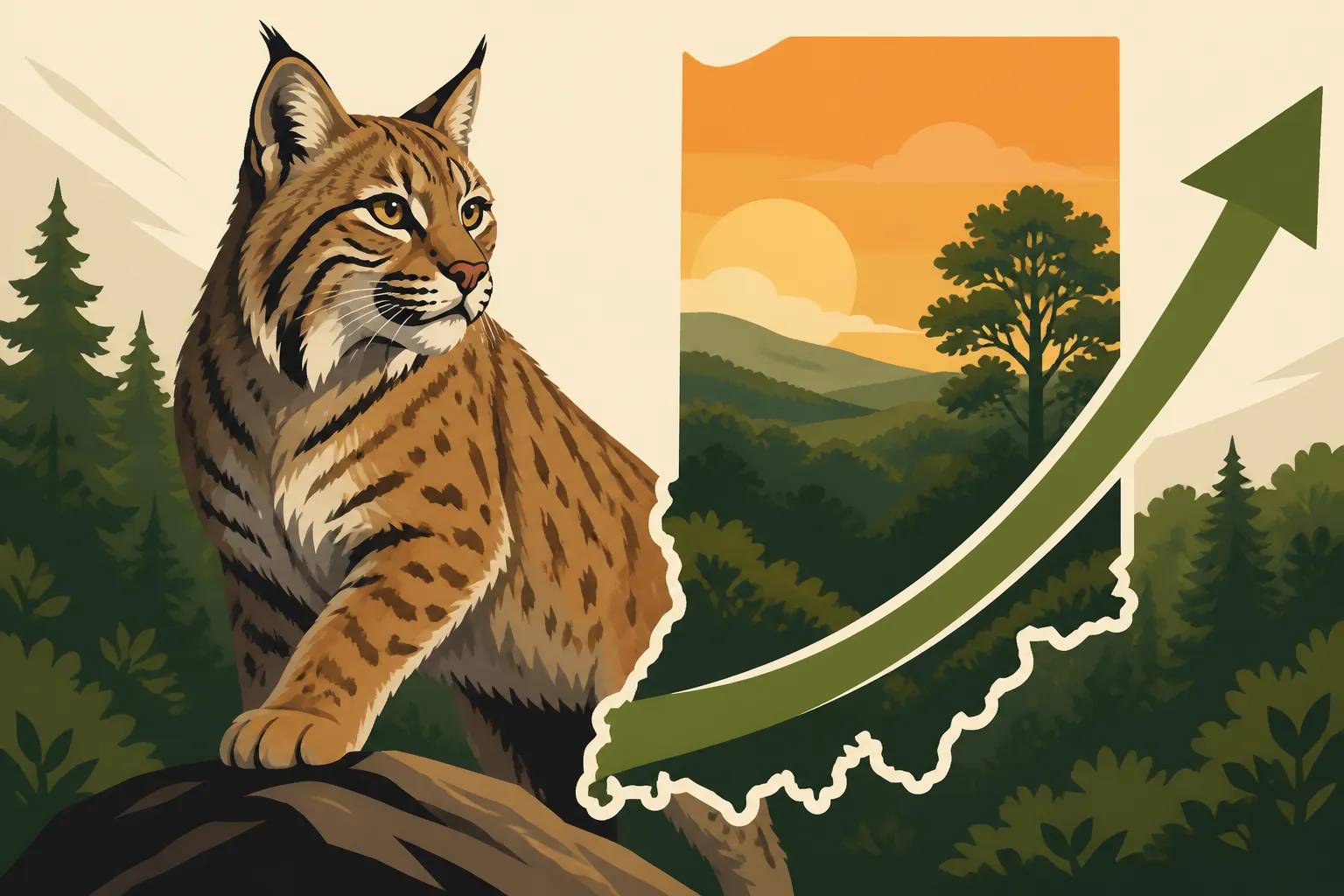
For years, hearing tales of a bobcat in Indiana felt like spotting Bigfoot – a mythical creature whispered about, rarely seen, and often dismissed. Many hunters and outdoor enthusiasts have spent countless hours in the woods, only to wonder if these elusive felines even existed beyond old photographs. But I'm here to tell you, the bobcat is making a comeback in the Hoosier State, and knowing where to look and what signs to read can dramatically increase your chances of an encounter with one of Indiana's most beautiful and secretive predators. This guide will walk you through the areas where Indiana's bobcats are thriving, what to look for, and how you can become a more observant tracker of these magnificent creatures.
The Quiet Return of Indiana's Bobcat Population
The bobcat, with its tufted ears and short, "bobbed" tail, is a creature of mystery and stealth. For decades, many believed they were largely gone from Indiana, pushed out by habitat loss and historical trapping pressures. The idea of seeing one was a dream for many, a rare glimpse into a wilder past. However, through conservation efforts and a natural reclaiming of suitable habitats, these adaptable cats have been slowly and surely increasing their numbers and expanding their range, particularly in specific regions of the state.
A History of Elusiveness and Decline
Back in the early to mid-20th century, bobcat sightings were incredibly rare, almost unheard of, across much of Indiana. They had been extensively trapped and hunted, often without regulation, leading to a significant decline in their population. Furthermore, the clearing of forests for agriculture and urban development severely fragmented the contiguous woodlands they needed to thrive. What remained were small, isolated pockets of habitat that made it nearly impossible for bobcats to maintain a healthy breeding population. The state considered them essentially extirpated from many areas, a ghost of the past, leaving only sparse evidence of their existence, mainly in the most rugged and least disturbed corners of southern Indiana.
Even in those few areas, their numbers were critically low. The dense forest cover they prefer, which also served as their hunting grounds, was shrinking, making it harder for them to find enough prey and raise their young successfully. Hunters and hikers might spend years in the backcountry without ever encountering one, fueling the perception that they were functionally extinct within the state. This deep-seated belief made it even more surprising when evidence of their resurgence began to appear, slowly at first, then with increasing frequency.
Conservation Efforts and Natural Recovery
The tide began to turn with changing land-use practices and increased conservation awareness. As some agricultural lands were abandoned or converted back to forest, and as more responsible timber management practices were implemented, critical habitat slowly started to return. Crucially, the Indiana Department of Natural Resources (IDNR) also implemented protective measures, classifying bobcats as a protected species and prohibiting their harvest. This gave the remaining scattered populations a much-needed reprieve, allowing them to stabilize and begin to expand.
The intrinsic adaptability of bobcats also played a huge role. They are not strictly deep-woods animals; they can thrive in mixed landscapes, using fencerows, thickets, and even suburban green spaces as corridors. As deer and small game populations rebounded across the state, so did the food source for these opportunistic predators. Their natural caution and nocturnal habits also helped them avoid human conflict, enabling them to quietly recolonize areas without drawing too much attention. This gradual, almost stealthy recovery is a testament to nature's resilience and the importance of allowing wildlife space to rebound.
Identifying Key Rebounding Regions
When we talk about bobcats making a comeback, it's not a uniform spread across the entire state. Like many other wildlife species, bobcats have specific habitat preferences that dictate where they're most likely to establish territories. For the Hoosier State, this largely means areas with dense cover, rugged topography, and abundant prey. If you're hoping to catch a glimpse or at least find solid evidence of a bobcat, knowing these key regions is paramount to your scouting efforts.
Southern Indiana's Woodland Strongholds
Without a doubt, the rugged, heavily forested hills of southern Indiana remain the heartland of the bobcat's resurgence. Areas like the Hoosier National Forest Hunting, stretching across several counties, provide exactly the kind of expansive, unbroken habitat that bobcats require. Here, you'll find a mosaic of mature hardwoods, dense undergrowth, rocky outcroppings, and steep ravines that offer both excellent cover for ambushing prey and secluded denning sites. The sheer vastness of these public lands allows bobcats to establish large territories with minimal human disturbance, which is crucial for their survival and breeding success.
Beyond the National Forest, state forests like Yellowwood, Morgan-Monroe, and Jackson-Washington also provide prime bobcat habitat. These areas share similar characteristics: deep timber, dense thickets, and a plentiful supply of small game like rabbits, squirrels, and even young deer, which constitute a significant part of a bobcat's diet. These forests are less impacted by agriculture and urban development compared to the northern parts of the state, making them natural sanctuaries. When you're Hunting Southern Indiana Hill Country, keep your eyes peeled for those tell-tale signs of bobcat activity.
River Bottoms and Creek Corridors
While the dense uplands are crucial, river bottoms and creek corridors are equally important, serving as natural highways for bobcat movement and providing critical resources. Rivers like the White River, the Patoka River, and countless smaller creeks create ribbons of dense vegetation, often including swamps, marshes, and brushy edges, even in areas that might otherwise be more open farmland. These riparian zones offer excellent cover for travel, hunting, and escape.
Consider a place like the Wabash River Valley, for instance. Even in highly agricultural areas, the river itself and its feeder creeks are often lined with thick timber and brush, forming vital green corridors. These corridors are rich in prey animals like muskrats, rabbits, and ground-nesting birds, providing a consistent food supply. Furthermore, the presence of water is essential for any predator. Bobcats will readily use these linear habitats to move between larger blocks of timber or even to explore new territories. If you're scouting along a creek bottom, whether it's in deep woods or bordering a farm field, you're in a prime spot to encounter signs of a bobcat.
Signs of Bobcat Presence and How to Spot Them
Seeing a bobcat itself can be incredibly difficult due to their secretive and nocturnal nature. They're masters of camouflage and silent movement. However, like any wildlife, they leave behind clues that, once you learn to recognize them, can reveal their presence. Becoming a good bobcat detective requires patience, attention to detail, and a good understanding of what distinguishes their signs from other animals.
Tracks, Scat, and Other Tell-Tale Signs
One of the most reliable ways to confirm a bobcat's presence is by finding their tracks. Bobcat tracks are typically rounder than a domestic cat's, about 1.5 to 2.5 inches wide, and they almost always lack claw marks because their claws are usually retracted. You'll often see four toe pads and a distinct heel pad. Look for these in soft mud along creek banks, sandy paths, or fresh snow. They also tend to walk in a straight line, placing their hind foot directly into the impression left by their front foot, a characteristic gait known as "direct registering." This efficient walking style conserves energy and helps them move silently through the woods.
Beyond tracks, keep an eye out for their scat (feces). Bobcat scat is usually segmented, tubular, and often blunt at one end, resembling large domestic cat droppings, but generally larger and containing fur, bones, or feathers from their prey. They often mark prominent spots like fallen logs, rocks, or trail junctions with their scat, using it as a territorial marker. You might also find scratch marks on trees, particularly small saplings, where they've sharpened their claws or marked their territory, though these can sometimes be confused with other animals. Look for signs of their kills too – a pile of feathers, a partially eaten rabbit, or the scattered remains of a squirrel might indicate a bobcat has been hunting in the area.
Utilizing Technology for Confirmation
In today's age, technology offers us incredible tools to glimpse the secret lives of elusive creatures like bobcats. Trail cameras are perhaps your best bet for confirming their presence without having to be there yourself. Set them up along game trails, creek crossings, or near natural funnels where you suspect animals are moving. Look for areas with dense cover and evidence of small game activity. A good trail camera, particularly one with fast trigger speed and good low-light performance, can capture those fleeting moments. While Trail Camera Rules on Indiana Public Land vary, on most public lands, they are generally allowed, just be sure to check specific FWA or State Forest regulations.
Mapping applications can also be invaluable for identifying potential bobcat habitat. Tools like GoHunt allow you to scrutinize aerial photos, highlighting areas of dense forest, riparian zones, and rugged terrain that bobcats prefer. You can mark potential ambush points, travel corridors, and even likely den sites. This kind of digital scouting, combining satellite imagery with your on-the-ground observations, helps you focus your efforts precisely where bobcats are most likely to be found. Utilizing these tools can make your quest for bobcat evidence far more efficient and rewarding.
Understanding Bobcat Behavior and Habitat Preferences
To successfully locate bobcats or their sign, it helps immensely to think like a bobcat. What are they looking for in their environment? What drives their daily movements? By understanding their core needs and behaviors, you can better predict where they'll be and focus your scouting efforts. They are highly adaptable, but certain elements are non-negotiable for their survival and success.
Cover, Prey, and Water: The Bobcat Trifecta
At the heart of any bobcat's preferred habitat are three critical elements: cover, prey, and water. These form the "trifecta" that dictates where they live and hunt.
Cover is paramount. Bobcats are ambush predators, and they rely on dense vegetation, rocky outcroppings, hollow logs, and brushy thickets to conceal themselves from both their prey and potential threats. This cover isn't just for hunting; it's also where they establish their dens for raising young and where they rest during the day. Think about areas of tangled briar patches, regenerating timber cuts, or deep, brush-choked ravines – these are classic bobcat hideouts. They love areas where they can melt into the shadows instantly.
Prey is the engine of their existence. Bobcats are carnivores, and their diet consists primarily of small to medium-sized mammals and birds. Indiana Squirrel and Rabbit Populations are a major food source, as are mice, voles, and various bird species. They are opportunistic and will also take larger game, like young or injured deer, especially during times of scarcity. If you find an area rich in small game, you've likely found a bobcat's pantry. Healthy prey populations mean healthy bobcat populations.
Finally, water is essential. While they might get some moisture from their prey, they still need access to standing or flowing water for drinking. This is why creek bottoms, river banks, and areas with numerous springs are so attractive to them. These water sources also draw in their prey, making them natural hunting grounds. When scouting, especially with a mapping app like GoHunt, look for areas where these three elements converge: dense cover near a reliable water source that also shows signs of abundant small game.
Expanding Territories and New Sightings
While southern Indiana remains the stronghold, evidence suggests that bobcats are slowly but steadily expanding their range northward and westward, venturing into areas where they haven't been seen in decades. This expansion is often driven by young, dispersing bobcats looking for new territories. As populations increase in the core areas, competition can push these younger animals to explore less traditional habitats. They might use river corridors or wooded fencerows to travel through agricultural landscapes, eventually establishing themselves in new pockets of suitable habitat.
These new sightings are often reported in counties bordering their established southern range, or along major river systems. Keep in mind that a single sighting doesn't necessarily mean a breeding population, but consistent reports and confirmed trail camera photos in a new area are strong indicators of range expansion. As more areas see the return of substantial forest cover and robust small game populations, we can expect to see bobcats become an even more regular, albeit still elusive, part of Indiana's diverse wildlife landscape. Staying informed about Indiana Wildlife Disease Monitoring can also provide insights into overall population health and potential impacts on their expansion.
Table: Key Bobcat Habitat Indicators
Here’s a quick reference table to help you identify prime bobcat habitat and signs of their presence in Indiana:
| Habitat Feature | Bobcat Preference | Scouting Tips |
|---|---|---|
| Topography | Rugged, hilly, steep ravines, rocky outcroppings | Focus on southern Indiana counties (Brown, Monroe, Lawrence, Perry, Crawford). |
| Vegetation | Dense undergrowth, thickets, mature hardwoods, briars | Look for clear-cuts with regenerating growth, old timber stands. |
| Water Sources | Creeks, rivers, springs, swamps, marsh edges | Scout along riparian corridors, especially where they meet dense woods. |
| Prey Abundance | High populations of rabbits, squirrels, rodents, birds | Look for squirrel nests, rabbit tracks, active bird feeders (if private land). |
| Sign – Tracks | Round, 1.5-2.5", no claw marks, direct registering | Check mud along water, sandy trails, fresh snow after precipitation. |
| Sign – Scat | Segmented, tubular, often blunt, contains fur/bones | Look on fallen logs, prominent rocks, trail intersections. |
| Sign – Scratches | Vertical marks on small trees/saplings | Examine tree trunks for claw marks at various heights. |
| Technology | Trail cameras, mapping apps (GoHunt) | Set cameras on game trails in dense cover; use apps to identify habitat mosaics. |
While seeing a bobcat in the wild in Indiana remains a challenging endeavor, it's no longer just a legend. These incredible predators are re-establishing themselves, piece by piece, across the state's most suitable landscapes. By understanding their needs, recognizing their signs, and focusing your efforts in the right places, you increase your chances of witnessing a true conservation success story unfolding right before your eyes in the Hoosier woods.
Disclaimer
This article is for general informational purposes only and does not constitute professional advice. Laws, prices and regulations vary by location and change over time. Consult a qualified professional for guidance on your specific situation.