Why Black Bear Sightings Are So Rare in Indiana
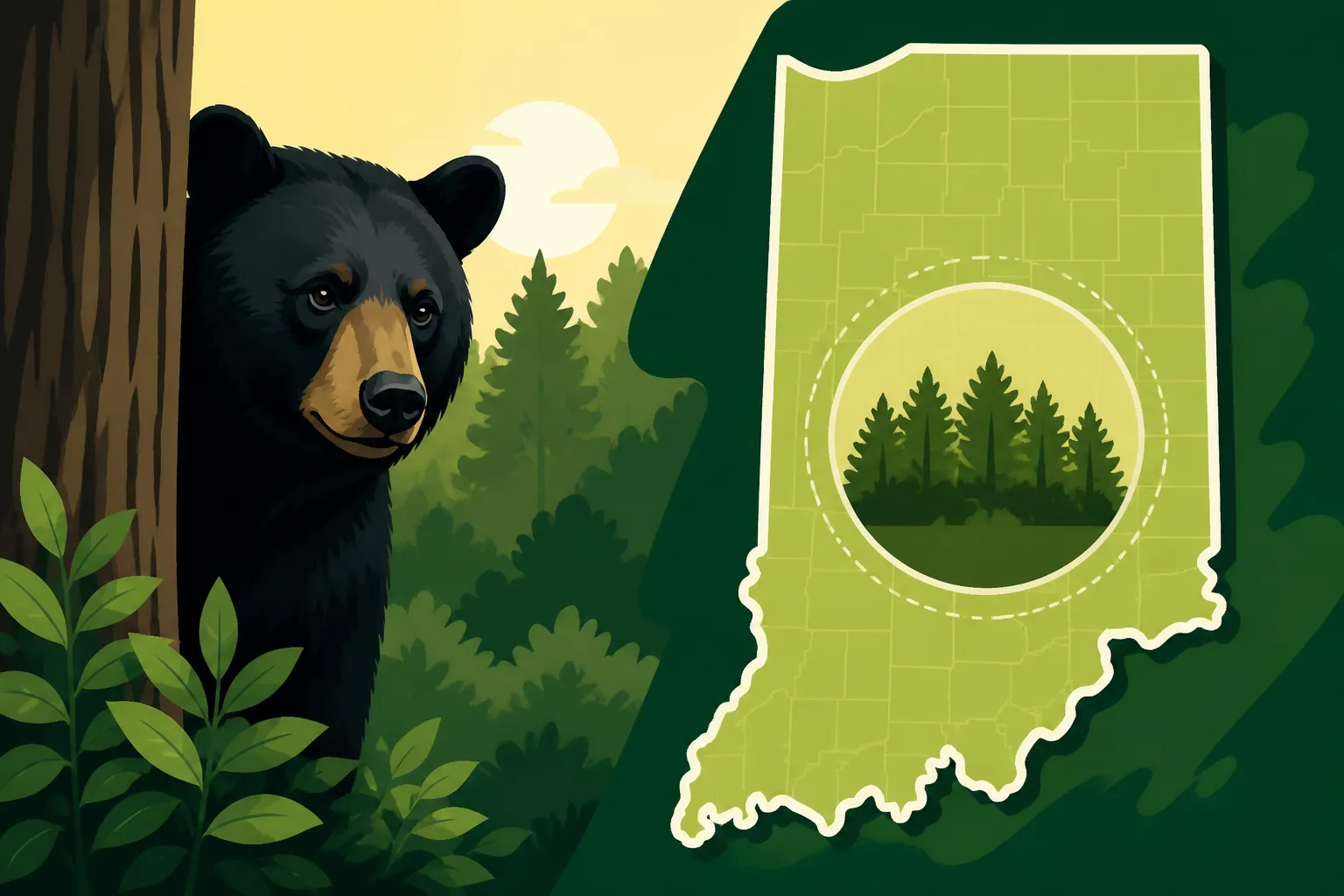
It’s a dream many Hoosier outdoors enthusiasts share: that moment you might actually spot a black bear lumbering through the Indiana woods. For many of us, the idea feels like something out of a fantasy, a whisper of a wilder past. While these magnificent creatures are definitely present in neighboring states, and sometimes wander across our borders, encountering a black bear in Indiana remains an incredibly rare event, making it a source of both fascination and a little bit of mystery. This guide aims to shed light on why these sightings are so infrequent, what factors contribute to their scarcity, and what you should know in the incredibly rare event you do come across one.
The Ghost of Indiana's Past: A Historical Look at Black Bears
For those of us who spend countless hours in Indiana's forests, the thought of black bears roaming free might seem alien, but it wasn't always this way. Indiana was once home to a thriving population of black bears, much like our neighboring states of Michigan, Wisconsin, Kentucky, and Ohio are today. These apex predators were an integral part of the Hoosier ecosystem, playing a vital role in maintaining ecological balance. They roamed the dense, unbroken forests that covered much of the state, feasting on berries, nuts, insects, and occasionally, smaller game.
However, as European settlers pushed westward, the landscape of Indiana changed dramatically and rapidly. The vast forests were cleared for agriculture, timber, and settlements. This aggressive habitat destruction, coupled with unregulated hunting, led to the eventual extirpation of black bears from Indiana. "Extirpation" is a fancy word for local extinction – they weren't wiped off the face of the earth, but they were certainly gone from our state. By the mid-1800s, the last native black bears were believed to have vanished from Indiana. It’s a somber reminder of how quickly human activity can impact wildlife populations, and it explains why the landscape of our state feels so different today than it did just a few centuries ago. This historical absence is the fundamental reason Why Indiana Has No Bear Season. We simply don't have a resident population to hunt.
Where Do Bears Actually Come From? Neighboring States and Natural Expansion
When a black bear is sighted in Indiana, it’s almost universally a transient animal, a wandering individual that has traveled from a more established population center in a neighboring state. Think of it like a young adult leaving home to explore new territory. Young male bears, in particular, are known to disperse over long distances in search of new hunting grounds, mates, and suitable habitat. They’re often pushed out of established territories by older, more dominant males, or they simply strike out on their own when resources get tight.
States like Michigan, with its healthy bear population, especially in the Upper Peninsula, and even down into the lower half, are a common source. Ohio has seen a resurgence in its bear population, and Kentucky has a growing number of bears, particularly in its eastern and central regions. These animals don't recognize state lines; they simply follow their noses, available food sources, and the path of least resistance. A bear might cross the Ohio River from Kentucky, or swim the St. Joseph River from Michigan, or meander across the state line from Ohio. These movements are often driven by an instinct to find new, unoccupied territory, but they’re also influenced by food availability and population density in their home range.
The journey for these bears is fraught with peril. They must navigate across major highways, through suburban areas, and often across vast expanses of agricultural land where cover is scarce. This explains why Indiana's Occasional Black Bear Wanderers are so sporadic and rarely settle down for long. We've seen them pop up in counties near the Ohio River, and occasionally in the north near the Michigan border. These are often young, curious bears simply making their way through unfamiliar territory.
Habitat and Human Impact: Why Indiana Isn't a Bear Hotspot (Yet)
While bears certainly can survive in Indiana, our current landscape presents significant challenges for them to establish a permanent, reproducing population. Unlike the vast, unbroken forests of the Appalachian Mountains or Michigan's Upper Peninsula, Indiana's forest cover is much more fragmented. Much of our state is dominated by agriculture and urban development. While we have beautiful state forests and the Hoosier National Forest Hunting grounds, these areas are often isolated from each other by fields, roads, and towns. This "habitat fragmentation" makes it difficult for bears to find continuous, secure areas for feeding, denning, and raising cubs without encountering humans.
Furthermore, bears are incredibly adaptable, but they thrive with certain resources. They need large tracts of diverse forest, rich in mast crops like acorns and berries, which provide essential calories, especially before denning for the winter. While Indiana certainly has areas with these resources, the overall amount of truly wild, undisturbed land is limited compared to states with robust bear populations. Human presence, even in our public lands, is generally much higher than in true wilderness areas, increasing the likelihood of human-bear conflict.
The presence of people also means more roads, more traffic, and thus, a higher risk of bears being hit by vehicles. These are all factors that contribute to Why Black Bear Sightings Are So Rare in Indiana. For a species that relies on vast, contiguous wild spaces, Indiana, with its patchwork of forests, fields, and towns, is a tough place to call home permanently. It's not impossible, as we've seen bears adapt to surprising environments, but it certainly doesn't offer the ideal conditions for a rapidly expanding bear population. We also don't have the same level of consistent public land hunting pressure that might push other game species into smaller, more remote pockets, as our public land is often used for diverse recreation, not just hunting.
What to Do (and Not Do) If You Spot a Rare Indiana Bear
Given how exceedingly rare it is to see a black bear in Indiana, if you do encounter one, it's a memorable moment for sure! But it's crucial to react appropriately, both for your safety and the bear's well-being. The Indiana Department of Natural Resources (DNR) wants to know about these sightings to help them How Indiana Tracks Wandering Bear Sightings and understand potential dispersal patterns. You can use resources like the Indiana DNR website or the Go Outdoors Indiana app to find the correct contact information for reporting. Hunters often rely on tools like GoHunt for detailed mapping and property boundary information, which can also be useful if you're trying to pinpoint the exact location of a sighting.
The most important thing to remember is to stay calm and never approach the bear. Wild animals, especially those unfamiliar with human interaction, can be unpredictable. Here's a breakdown of what to do:
- Do not run: Running can trigger a chase response in many animals, including bears.
- Make yourself look as big as possible: Raise your arms above your head, spread your coat.
- Make noise: Shout, clap your hands, bang pots and pans if you have them. You want to appear assertive and make the bear aware of your presence.
- Back away slowly: Give the bear plenty of space to retreat. Avoid sudden movements.
- Never feed a bear: This is paramount. A fed bear is a dead bear. When bears associate humans with food, they become bolder and can pose a danger, often leading to their removal or euthanasia. Even leaving out food, like pet food or unsecured garbage, can habituate bears.
- Secure food and garbage: If you're camping or in an area where a bear might be, always keep food in sealed containers, preferably in a vehicle or bear-proof cooler. Hang food bags from trees if necessary. This also applies to securing garbage at home, especially if you live in a wooded area near a reported sighting.
- Report the sighting: Contact the Indiana DNR immediately. Provide as much detail as possible: location, date, time, description of the bear (size, color, any distinguishing marks), and its behavior. Using a GPS or mapping app like GoHunt can help you provide precise coordinates, which is incredibly helpful for wildlife officials.
For a summary of what actions to take, consider this:
| Situation | Recommended Action | Actions to Avoid |
|---|---|---|
| Distant Sighting | Observe from a safe distance, make noise, slowly retreat. Report to Indiana DNR with location details. | Approaching the bear, trying to get closer for photos, making sudden movements. |
| Close Encounter | Stand your ground, appear large, make loud noises, slowly back away. Do not turn your back. | Running, screaming in panic, playing dead (unless it's a defensive attack). |
| Camping/Home Area | Secure all food, garbage, and scented items (grills, pet food). Store in locked vehicle or bear-proof containers. | Leaving food or trash unsecured, feeding the bear, leaving pet food outside overnight. |
| If Attacked | Fight back aggressively, aiming for the face and snout. | Playing dead (unless it's a defensive attack, which is rare for black bears). |
Remember, black bears are typically shy and prefer to avoid humans. Aggressive encounters are extremely rare, especially with transient bears who are likely more focused on finding food and cover than confronting people. Still, it pays to be prepared and knowledgeable. This guidance is part of why understanding What to Do If You See an Indiana Black Bear is so important.
The Role of Citizen Reporting and Wildlife Management
Every reported sighting helps the Indiana DNR piece together the puzzle of bear movements within the state. These reports are crucial for tracking potential dispersal corridors, identifying areas where bears might be pausing or even attempting to establish themselves, and informing public education efforts. It’s part of a broader wildlife management strategy that also looks at other species, like monitoring Indiana Deer Population Estimate or tracking the resurgence of furbearers.
While a permanent, breeding population of black bears isn't currently established in Indiana, continued sightings from neighboring states suggest that these animals are still expanding their range. As habitats change and populations grow in surrounding areas, it’s possible Indiana could one day see a more consistent presence. For now, however, each sighting remains a unique and special event, a fleeting glimpse into what our wild landscape might have been, and perhaps, what it could someday become again. Knowing what to do when you encounter such a rare visitor ensures both your safety and the bear's best chance of survival as it continues its journey through our Hoosier state.
Disclaimer
This article is for general informational purposes only and does not constitute professional advice. Laws, prices and regulations vary by location and change over time. Consult a qualified professional for guidance on your specific situation.