Why Indiana Has No Bear Season
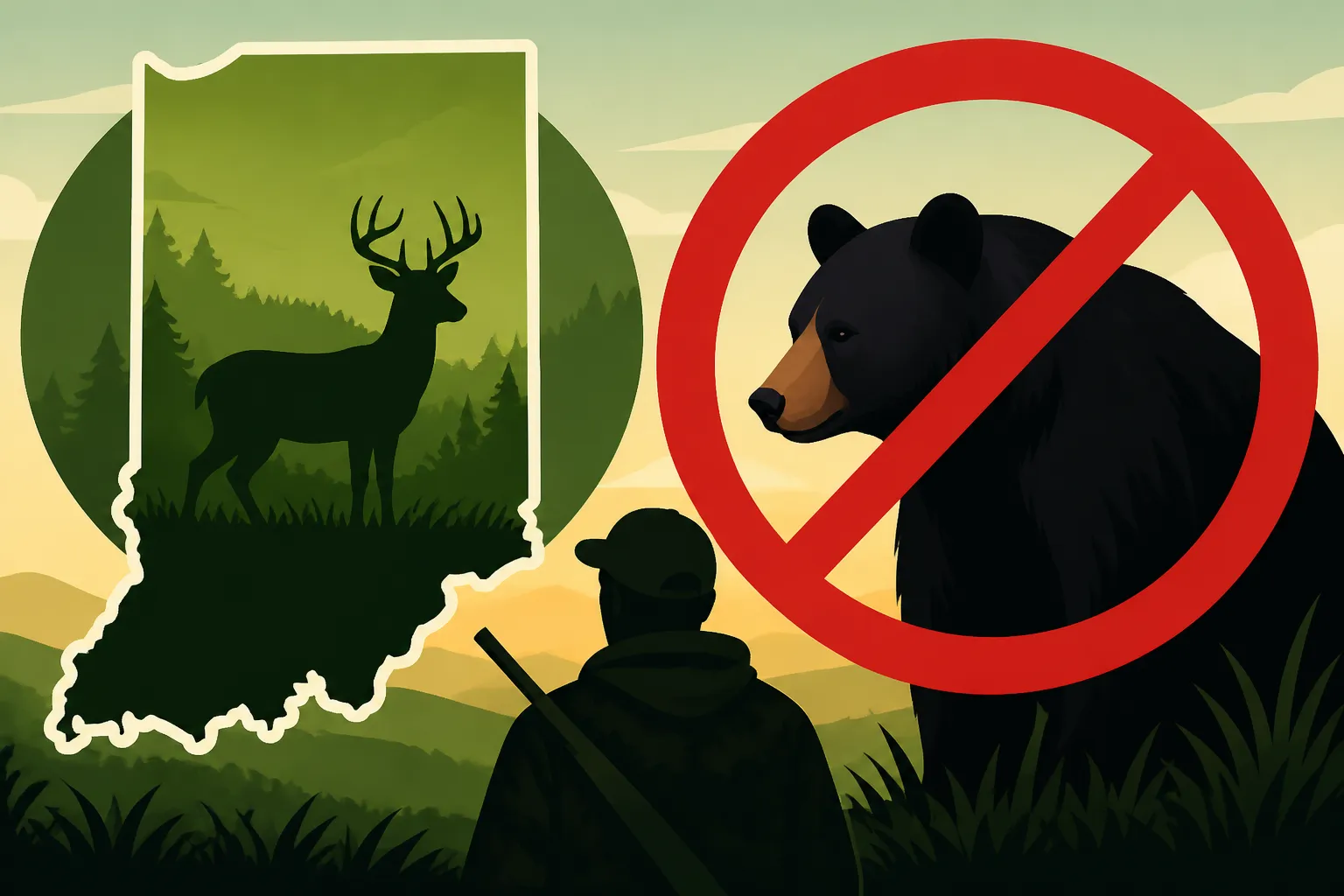
It can be incredibly confusing and even a little frustrating when you hear whispers or see blurry photos online about black bears making an appearance in Indiana, only to realize there’s no official hunting season for them. Many Hoosier hunters, myself included, have wondered, "What's the deal? Are they here or not?" This guide is going to clear up that confusion, diving deep into the history, current status, and management philosophy behind why Indiana doesn't currently have a black bear hunting season, despite those intriguing occasional sightings.
Understanding Indiana's Black Bear Status: Are They Even Here?
The first step to understanding why there's no bear season in Indiana is to get a handle on the actual presence of these magnificent creatures within our state borders. It's not as simple as a clear "yes" or "no," and it certainly isn't a situation like our thriving deer or turkey populations.
Historical Presence and Extirpation
To truly grasp the current situation, we have to look back in time. Yes, black bears were once a natural part of Indiana's diverse wildlife. Historically, these animals roamed the dense forests and river bottoms of what would become Indiana, just like elk, wolves, and bison. They were an integral part of the ecosystem, foraging for berries, nuts, insects, and small game. However, as European settlers moved westward, clearing land for agriculture, logging timber, and hunting extensively, the habitat bears needed to survive dwindled dramatically.
By the mid-19th century, sustained hunting pressure, coupled with widespread habitat destruction, led to the complete extirpation of black bears from Indiana. This means they were wiped out entirely within the state's boundaries. For generations, Indiana was a state without its native bear population, a testament to how profoundly human activity can reshape the natural world. This historical context is crucial because it means any bears we see today are not direct descendants of Indiana's original population in the same way our current deer herd is.
Modern-Day Sightings: Transient Visitors
Fast forward to the 21st century, and things have started to change, albeit slowly. In recent decades, there have been increasing reports and confirmed sightings of black bears in Indiana. These aren't just old wives' tales; the Indiana Department of Natural Resources (DNR) has verified a number of these encounters. So, if you've heard about a bear in southern Indiana or seen a social media post about one near the Ohio River, chances are it was legitimate.
These modern sightings are overwhelmingly of young, dispersing male bears. These adventurous youngsters are typically driven from their birth territories by older, more dominant males as they seek out new homes and potential mates. They are essentially pioneers, often traveling hundreds of miles in search of unoccupied habitat. Their journeys bring them across state lines, often from strong, established bear populations in neighboring states. These bears are rarely "settling down" in Indiana; rather, they are passing through, exploring, and sometimes lingering for a short period before moving on or retreating to more established territories.
The Indiana DNR's Official Stance
The Indiana DNR has a very clear and consistent stance on black bears in the state, which is vital for understanding the lack of a hunting season. They classify black bears as a "state-endangered" species within Indiana. This designation might seem counterintuitive if you've heard of recent sightings, but it reflects the underlying reality: while bears visit, there is no established breeding population within Indiana. This is the critical distinction. A few transient individuals do not constitute a self-sustaining population.
The DNR actively monitors these sightings, collecting data on where bears are seen, their estimated size, and their movements. They rely on public reports, trail camera footage, and even scat or hair samples to track these animals. This careful approach is why they've developed specific guidelines on What to Do If You See an Indiana Black Bear. Their primary goal is to ensure public safety while also allowing these animals to move through the landscape unmolested, hoping that one day, a sustainable population might re-establish itself naturally.
Why No Hunting Season? The Ecological Reality
The question "Why can't we hunt them?" is a natural one, especially for hunters who see these animals as a potential game species. However, the decision not to have a season is rooted deeply in ecological principles and responsible wildlife management.
Absence of a Breeding Population
The single most significant reason Indiana does not have a black bear hunting season is the fundamental absence of a sustainable, self-reproducing population. Hunting seasons are established for species that are robust enough to withstand harvest pressure without jeopardizing their long-term survival. For game animals like white-tailed deer, Indiana has a massive and healthy herd, allowing for generous bag limits and various hunting seasons. The same goes for Wild Turkeys in Indiana, which have seen a remarkable comeback.
Black bears in Indiana, however, exist as a collection of transient individuals. While a bear might wander into the state, forage for a few weeks or months, and then leave, there's no evidence of sows establishing dens, raising cubs, and contributing to a growing native population. Without this critical breeding component, any hunting pressure, no matter how limited, could decimate the few individual bears that do show up, effectively preventing any natural re-colonization. It would be akin to hunting a species that's barely trying to get a toehold in new territory.
The Importance of Habitat Connectivity
Even if bears wanted to stay, the fragmented nature of much of Indiana's landscape presents a significant challenge. While we have beautiful state forests and wildlife areas, much of our state is agricultural land or urban sprawl. For a wide-ranging animal like a black bear, traveling across these landscapes can be perilous, exposing them to roads, human conflict, and a lack of consistent food sources. Habitat connectivity refers to the presence of continuous or semi-continuous corridors of suitable habitat that allow wildlife to move safely between larger, more isolated patches.
While efforts are underway to restore and connect habitat, particularly in southern Indiana's hill country, these corridors are not yet robust enough to support a burgeoning bear population. Without strong connections to larger, more established bear populations in neighboring states, the likelihood of a significant and sustained influx of breeding bears is low. This makes the existing individual bears even more valuable from a conservation perspective, as they represent the potential seeds of future recovery.
Neighboring State Populations and Their Influence
Indiana's bear sightings are largely a reflection of the success of black bear conservation in surrounding states. States like Michigan, Wisconsin, Ohio, Kentucky, and especially Missouri, have thriving, huntable black bear populations. These populations are robust and continue to expand, leading to a natural phenomenon called "dispersal." As these populations grow, young bears, particularly males, are forced to seek new territories, often pushing the boundaries of their species' historical range.
| Neighboring State | Estimated Black Bear Population (approx.) | Hunting Season Status |
|---|---|---|
| Michigan | 12,000+ | Established |
| Wisconsin | 29,000+ | Established |
| Ohio | 500-1,000 | Limited/Management |
| Kentucky | 1,000+ | Established |
| Illinois | Few transients only | None |
This table illustrates that while states like Ohio and Kentucky are experiencing similar re-colonization patterns to Indiana, their populations are more established and their management strategies reflect that. The bears we see in Indiana are essentially the furthest reach of these expanding populations. They are explorers, not settlers, and their presence underscores the health of bear populations in other states, rather than a strong internal recovery within Indiana itself. This is why the DNR continues to emphasize Why Black Bear Sightings Are So Rare in Indiana – they are indeed rare, and almost always transient.
How Black Bears Arrive in Indiana: A Journey of Exploration
The appearance of black bears in Indiana isn't a random event; it's a predictable pattern driven by natural behaviors and landscape features. Understanding how they get here helps us appreciate the challenges they face and why their presence remains sporadic.
Dispersing Young Males
As mentioned, the vast majority of black bears documented in Indiana are young, sub-adult males. In the bear world, once a male cub reaches maturity (typically around 1.5 to 2.5 years old), he's often driven away by his mother or by larger, more dominant males in the area. This "dispersal" is a natural mechanism to prevent inbreeding and to expand the species' range. These young males are full of energy, genetically programmed to explore, and less risk-averse than older, more experienced bears.
Their journey is often a long and arduous one. They navigate unfamiliar terrain, cross busy roads, and encounter new human settlements. For them, Indiana represents the fringe of their species' current range, a place where they are less likely to encounter competition from other bears. They are driven by an innate biological imperative, making their way slowly but surely across landscapes that might seem utterly unsuitable for a large carnivore. It's a testament to their resilience that any make it at all.
Migration Corridors from Neighboring States
When we look at a map of reported bear sightings in Indiana, a pattern begins to emerge. Most sightings tend to occur along our borders, particularly in southern Indiana (from Kentucky) and northeastern Indiana (from Michigan or Ohio). These areas often feature more continuous forest cover or river systems that act as natural "migration corridors." Bears, like many other wildlife species, tend to follow these natural pathways, which offer better cover, food sources, and protection from human disturbance.
For instance, bears coming from Kentucky might follow the Ohio River valley, utilizing the forested hills and river bottomlands. Those coming from Michigan could travel through continuous woodlots and wetlands. These corridors, while not always perfect or entirely wild, offer the most viable routes for these dispersing animals to enter and traverse the state. Without these natural avenues, it would be far less likely for bears to make it into Indiana's interior.
The Role of River Systems and Forest Patches
Indiana's major river systems, such as the Ohio, Wabash, and Maumee, along with their associated tributaries and extensive floodplains, play a critical role in bear dispersal. River bottoms often harbor dense vegetation, diverse food sources (like acorns, berries, and fish), and a measure of isolation from human activity. These areas can act as natural highways for bears, providing both cover and sustenance as they travel.
Similarly, large contiguous forest patches, particularly in the unglaciated hill country of southern Indiana (like parts of the Hoosier National Forest Hunting region or the various state forests), offer crucial refuge. While these areas are not vast wildernesses, they provide enough cover and food to allow a transient bear to linger for a period. These scattered forest patches, connected by river systems, form a mosaic of potential, albeit temporary, bear habitat within the state. When scouting public land, such as Scouting Indiana Public Land Before Season, hunters might sometimes stumble upon signs of these rare visitors.
The DNR's Management Strategy for Black Bears
Given the unique and delicate status of black bears in Indiana, the DNR employs a specific management strategy that prioritizes monitoring, public education, and ensuring safety, rather than population control through hunting. Their approach is rooted in conservation and cautious optimism.
Monitoring and Documentation
The backbone of Indiana's black bear management is rigorous monitoring and documentation of every confirmed sighting. This isn't just about noting a bear's presence; it's about gathering as much detailed information as possible. When a report comes in, DNR biologists and conservation officers work to verify the sighting, often deploying trail cameras, looking for tracks or scat, and interviewing witnesses. They are interested in the bear's size, apparent health, gender (if discernible), and its direction of travel.
This data helps the DNR build a comprehensive picture of How Indiana Tracks Wandering Bear Sightings. They can analyze patterns of movement, identify potential travel corridors, and even discern if the same bear is being seen in multiple locations. This scientific approach is crucial for understanding if bears are merely passing through or if there's any indication of them attempting to establish more permanent residency. It allows them to make informed decisions without relying on anecdotal evidence alone.
Public Education and Coexistence
A significant part of the DNR's strategy focuses on public education. Since bears are so rare in Indiana, many residents are unfamiliar with how to react to a sighting or how to prevent attracting bears to their property. The DNR proactively distributes information on bear behavior, what to do during an encounter, and how to "bear-proof" residences, especially in areas where sightings are more frequent.
This emphasis on coexistence is critical. The goal is to minimize negative interactions between bears and humans. If bears become habituated to human food sources, they can become a nuisance and even a danger, leading to conflicts that often end poorly for the bear. By teaching residents how to properly store garbage, clean grills, feed pets indoors, and remove bird feeders, the DNR hopes to encourage bears to remain wild and wary of humans, increasing the chances of their natural, non-problematic return. This proactive education aligns with broader wildlife management principles seen for other species like coyotes, as discussed in Coyote Calling in Indiana Farm Country.
Handling Nuisance Bear Encounters
While the DNR aims for coexistence, there are inevitably situations where a bear becomes a nuisance. This could involve a bear repeatedly raiding garbage cans, damaging property, or showing an unusual lack of fear of humans. In these instances, the DNR has protocols in place to address the situation. Their primary goal is to deter the bear from engaging in these behaviors, not to harm it.
This might involve using non-lethal deterrents such as noisemakers, rubber bullets, or aversion conditioning techniques to reinforce the bear's natural fear of humans. If a bear poses a direct threat to public safety, or if repeated attempts at deterrence fail, more drastic measures, including trapping and relocating the bear, may be considered. Lethal force is always a last resort, reserved only for situations where there is an imminent threat to human life. The careful handling of these situations ensures that the few bears that do wander into Indiana are given every chance to survive and thrive.
What to Do If You Encounter a Black Bear in Indiana
Coming across a black bear in the wild can be an exhilarating, if not slightly nerve-wracking, experience. For Hoosiers, it's particularly uncommon, so knowing how to react is crucial for both your safety and the bear's well-being. Panic is often the most dangerous reaction.
Staying Safe in the Wild
If you're out hunting deer in the Hunting Southern Indiana Hill Country or scouting for turkeys and suddenly spot a black bear, remember these key principles:
- Stay Calm: The most important thing is to remain calm. A bear is usually as surprised to see you as you are to see it. Sudden movements or loud shouts can provoke an aggressive response.
- Make Yourself Look Big: If the bear is at a distance, slowly wave your arms above your head, and speak in a low, assertive voice. This makes you appear larger and less like prey. Avoid direct eye contact, as this can be perceived as a challenge.
- Back Away Slowly: Give the bear plenty of space. Do not run, as this might trigger a chase instinct. Instead, slowly back away while continuing to face the bear, allowing it an escape route.
- Do Not Approach: Never, under any circumstances, approach a bear, especially a sow with cubs. Cubs are incredibly cute, but a mother bear will be highly protective and can become extremely dangerous if she perceives a threat to her young.
- Fight Back If Attacked: While extremely rare for black bears, if a bear does make physical contact, fight back aggressively. Hit it with anything you can (sticks, rocks, your pack) and aim for the face and snout. Black bear attacks are almost always defensive, and fighting back can deter them. This is distinct from grizzly bears, where playing dead is sometimes recommended.
Securing Your Property and Food Sources
One of the biggest issues leading to human-bear conflicts is the availability of human food. Bears are opportunistic omnivores with an incredible sense of smell. If they associate humans with an easy meal, they will overcome their natural shyness. This is why it's so important to "bear-proof" your property, especially if you live in or near areas where bears have been sighted, or if you're camping in a state forest like Yellowwood State Forest Hunting.
- Store Garbage Securely: Use bear-resistant garbage cans or keep trash inside a garage or shed until collection day.
- Remove Bird Feeders: Bears are highly attracted to seeds and suet. Take down feeders, especially during spring, summer, and fall when bears are most active.
- Clean Grills Thoroughly: After cooking, clean your barbecue grill to remove food odors.
- Pet Food Inside: Feed pets indoors and don't leave pet food or water bowls outside overnight.
- Harvest Fruit Trees: Pick ripe fruit from trees and collect fallen fruit from the ground.
- Keep Camp Clean: If camping, store food in bear-resistant containers or hung from a tree, away from your tent. Never keep food in your tent.
Reporting a Sighting to the Authorities
Every bear sighting, no matter how brief or seemingly insignificant, is important for the DNR's tracking and management efforts. If you see a bear, or evidence of a bear (like tracks or scat), the DNR strongly encourages you to report it.
The best way to do this is to contact the Indiana DNR Law Enforcement Central Dispatch at 812-837-9536. Be prepared to provide:
- Exact Location: As precise as possible (address, GPS coordinates, nearby landmarks).
- Date and Time of Sighting:
- Bear's Description: Size, color, estimated age (adult/cub), and direction of travel.
- Your Contact Information: So DNR officials can follow up if needed.
Providing this information helps the DNR update their understanding of Indiana's Occasional Black Bear Wanderers and potentially deploy resources for verification or public safety advisories. It’s part of our collective responsibility to help manage and potentially welcome back this native species.
The Future of Black Bears in Indiana: Potential Return?
The question of whether Indiana will ever have a self-sustaining black bear population, and by extension, a hunting season, is a complex one. It involves ecological factors, human attitudes, and long-term conservation efforts.
Habitat Suitability and Recovery
Despite Indiana's agricultural dominance, there are still significant pockets of suitable black bear habitat, particularly in the southern half of the state. Areas like the Hoosier National Forest, various state forests (such as Morgan-Monroe State Forest Hunting), and the extensive river bottomlands offer the kind of dense cover, diverse food sources (like mast crops and berries), and water that bears need. Furthermore, some of these areas are experiencing natural reforestation as marginal farmland reverts to forest.
This habitat recovery is a critical component for any long-term re-establishment. If sufficient high-quality habitat exists, and especially if it's connected to strong populations in neighboring states via natural corridors, the chances of bears naturally recolonizing increase. Conservation efforts focused on forest management, wetland restoration, and establishing green infrastructure can all contribute to making Indiana more welcoming for bears.
Challenges to Establishing a Population
However, the path to a sustainable bear population in Indiana is fraught with challenges. The primary hurdle remains the lack of extensive, unbroken wilderness. Bears require large territories, and much of Indiana's landscape is still highly fragmented by roads, towns, and agricultural fields. This fragmentation leads to:
- Increased Human-Bear Conflict: Bears crossing roads are at high risk of vehicle collisions, and those encountering residential areas are more likely to become nuisance bears.
- Genetic Isolation: Without consistent gene flow from other populations, any small, isolated group of bears would face challenges with inbreeding and reduced genetic diversity, making them less resilient to disease or environmental changes.
- Public Perception: While many Hoosiers might be excited by the idea of bears, others may view them with fear or concern for safety and property. Broad public acceptance is vital for successful re-establishment.
These challenges highlight that while individual bears can wander into Indiana, creating a robust, breeding population that can withstand the pressures of a human-dominated landscape is a much larger undertaking.
The Long Road to a Possible Hunting Season
For Indiana to ever consider a black bear hunting season, several major milestones would need to be achieved. First and foremost, there would need to be clear, scientific evidence of an established, self-sustaining breeding population within the state. This means sows denning, successfully raising cubs year after year, and a measurable increase in the overall bear population. This is what agencies typically look for before listing a species as recovered, as seen in Indiana's Recovering Bobcat Population.
Secondly, robust population estimates and a management plan specifically for bears would be required. This plan would outline population goals, habitat needs, and strategies for managing human-bear interactions. Only once the population is deemed healthy, stable, and growing would the DNR even begin to explore the possibility of a highly regulated, limited hunting season, similar to what Ohio or Kentucky have. This would likely start with very small quotas in specific zones, focused on managing population growth or addressing nuisance issues, rather than broad recreational hunting. It's a journey that could take decades, if it happens at all, and would require ongoing public support and scientific monitoring.
The Broader Context: Wildlife Management in Indiana
Understanding Indiana's approach to black bears is easier when viewed through the lens of the state's overall wildlife management philosophy. The Indiana DNR balances conservation, recreational opportunities, and public safety across all species.
Focusing on Established Game Species
The Indiana DNR's current efforts and resources are primarily focused on managing the state's established game species, which directly provide recreational hunting opportunities for hundreds of thousands of Hoosiers. This includes intensive management of White-Tailed Deer Across Indiana, with a complex system of seasons and tags designed to maintain a healthy herd while providing ample harvest opportunities. Similarly, Spring Turkey Hunting in Indiana and other seasons for small game, waterfowl, and furbearers are meticulously planned and executed.
These programs involve habitat restoration, population monitoring (like harvest reporting through the GoHunt app), disease surveillance (such as for Indiana's Chronic Wasting Disease Positive Area), and law enforcement. The scale of these operations is immense, reflecting the health and recreational value of these species. Black bears, as a non-established species, simply don't fall into this category yet, and dedicating significant resources to their "game management" when they aren't truly here isn't feasible or appropriate.
The Process for Introducing New Hunting Opportunities
Should black bears ever naturally re-establish a viable population in Indiana, the process for introducing a hunting season would be lengthy, data-driven, and involve extensive public input. It's not a decision that would be made lightly or quickly. The steps would likely include:
- Species Status Reassessment: Changing the state-endangered status to something like "recovered" or "species of special concern."
- Population Goal Setting: Determining what a healthy, sustainable population size and distribution would look like for Indiana.
- Scientific Study: Extensive research into bear demographics, movements, and habitat use within Indiana.
- Drafting a Management Plan: Creating a comprehensive plan that outlines population objectives, monitoring methods, public education, and potential hunting strategies.
- Public Comment Period: Presenting the plan to the public, gathering feedback from hunters, conservationists, landowners, and the general citizenry.
- Rulemaking Process: Developing specific regulations for a hunting season, including season dates, bag limits, weapon restrictions, and tag requirements. This process is detailed and often involves multiple rounds of public hearings.
This methodical approach ensures that any new hunting opportunity is biologically sound, publicly supported, and aligned with conservation goals.
Balancing Conservation with Recreational Hunting
Ultimately, Indiana's wildlife management, particularly regarding black bears, is about striking a delicate balance. On one hand, there's a strong conservation ethic to protect and, where possible, restore native species to their historical ranges. On the other, there's a commitment to providing sustainable recreational hunting opportunities.
In the case of black bears, the conservation imperative currently outweighs the recreational hunting potential. Until a self-sustaining, robust population exists, the focus will remain on monitoring, education, and allowing natural processes to unfold. While the idea of hunting bears in Indiana might be exciting for some, responsible wildlife management dictates that such an opportunity can only arise once the species itself has made a significant and measurable comeback, ensuring its long-term presence in the Hoosier state for generations to come.
Disclaimer
The information provided in this article is for general guidance and informational purposes only. Hunting regulations, wildlife populations, and species statuses are subject to change. Always consult the most current Indiana Department of Natural Resources (DNR) regulations and guidelines before planning any hunting activities or acting on wildlife information.