Indiana’s Chronic Wasting Disease Positive Area
It’s a frustrating reality when something new and alarming suddenly enters the picture of our cherished Indiana hunting traditions. For many Hoosier deer hunters, the appearance and spread of Chronic Wasting Disease (CWD) across parts of our state has introduced a layer of concern and complexity that was previously unknown. This guide aims to demystify CWD, particularly focusing on Indiana's designated positive area, to help you understand the disease, navigate regulations, and continue to hunt responsibly in our beautiful state.
Understanding Chronic Wasting Disease and Its Threat
When we talk about CWD, it’s easy for fear and misinformation to creep in. But understanding the basics of this disease is the first step toward effective management and informed hunting decisions. It’s not just a deer problem; it’s a hunter’s problem, and we all have a role to play.
What is CWD and How Does It Affect Deer?
Chronic Wasting Disease is a serious, always-fatal neurological illness that affects cervids—that's deer, elk, moose, and caribou. It belongs to a family of diseases known as transmissible spongiform encephalopathies (TSEs), similar to "mad cow" disease in cattle. What makes CWD particularly insidious is that it's caused by abnormal proteins called prions, not a virus or bacteria. These prions essentially turn a healthy deer's brain into a sponge-like consistency, leading to a slow, debilitating decline.
The symptoms of CWD are heartbreaking to witness, often earning it the grim moniker of "zombie deer disease." Affected deer typically display drastic weight loss, becoming emaciated despite eating. They might exhibit unusual behaviors like staggering, drooling excessively, having a lowered head, and showing a general lack of fear of humans. You might even observe them drinking frequently. The problem is, these symptoms don't usually show up until the late stages of the disease, and by then, the deer has been infectious for a long time. Imagine you’re out for a late-season hunt near Syracuse, bundled up against the cold, and you spot a deer. It looks gaunt, its coat dull, and it barely reacts to your presence. Your gut tells you something is deeply wrong, and that’s precisely the kind of scenario where CWD suspicion should arise.
Transmission is another concerning aspect. CWD spreads through direct contact between animals, but also indirectly through the environment. Prions shed by infected deer—through saliva, urine, feces, and decomposing carcasses—can persist in the soil for years, possibly even decades, remaining infectious. Healthy deer can then pick up these prions from contaminated soil, plants, or even water. The long incubation period, which can be years, means an infected deer can look perfectly healthy while spreading the disease throughout its environment, making detection and containment incredibly difficult.
Why CWD Poses a Serious Challenge for Indiana Hunters
For us Hoosier hunters, CWD isn't just a scientific curiosity; it represents a significant challenge to the future of our deer herds and the hunting traditions we hold dear. The potential long-term impacts on deer population health are considerable. As prevalence rates increase in other states, we've seen localized declines in deer density, a shift in age structure towards younger deer, and a potential reduction in overall herd productivity. No one wants to see fewer deer in the woods or a decline in the health of our prized Indiana whitetails.
The disease also brings about changes in how we hunt and how deer are managed. The Indiana Department of Natural Resources (DNR) has had to implement new regulations, including mandatory testing and carcass movement restrictions, which can be frustrating and confusing for hunters who just want to enjoy their time afield. There's also the ethical consideration: no one wants to harvest an animal suffering from CWD, and the thought of consuming potentially infected meat is unsettling, despite current science. Understanding Chronic Wasting Disease in Indiana Deer is critical for every hunter.
The ease with which CWD prions can spread is what makes it so challenging to manage. If a deer with CWD is harvested and its carcass is improperly disposed of, or moved out of the positive area, those prions can be introduced to new locations. This isn't just about deer-to-deer contact; it's about hunter responsibility in preventing environmental contamination. The public perception of CWD, often fueled by sensationalized media reports of "zombie deer," can also impact hunter recruitment and retention, which is a big concern for the future of our sport. We value Indiana Deer Population Estimate data for sound management, and CWD threatens to complicate those numbers significantly.
Tracing the Spread: How CWD Arrived in Indiana
The news of CWD arriving in Indiana sent a ripple of concern through the hunting community. It was a moment many of us hoped would never come, but vigilance and quick action by the DNR have been paramount in understanding and managing its presence.
The First Confirmed Cases and Initial Responses
The unwanted news arrived in September 2021 when Indiana confirmed its first case of CWD in a wild deer. This initial detection occurred in LaGrange County, a moment that marked a new chapter for deer management in the state. For years, Indiana had been monitoring surrounding states where CWD was present, conducting surveillance, and hoping to remain free of the disease. The confirmed case was a stark reminder that CWD is an ever-present threat to deer populations across the country.
The first deer that tested positive was a hunter-harvested adult buck. This discovery immediately triggered a series of rapid responses from the Indiana DNR. Their biologists and wildlife health specialists moved quickly to assess the situation, establish a CWD response plan, and communicate the findings to the public and the hunting community. For local hunters in LaGrange County, this news was a genuine shock. They had always taken pride in their healthy deer herd, and now a new, invisible threat was at their doorstep. Many wondered what this would mean for their traditional hunting spots and annual routines. The DNR's initial response included increasing surveillance efforts in the immediate area, urging hunters to submit deer for testing, and setting up mandatory testing zones. Knowing Which County Found Indiana's First CWD Case is important for understanding the disease's entry point into Indiana.
Expansion of the Positive Area and Ongoing Surveillance Efforts
Unfortunately, the disease did not remain confined to a single county. Following the initial discovery, ongoing surveillance and testing revealed additional positive cases, leading to the expansion of Indiana's CWD Positive Area. In the years that followed, CWD was detected in wild deer in neighboring Noble and Steuben counties, and later, new cases appeared further south in Franklin and Rush counties. This geographic spread highlights the challenge of containing a disease that can take years to manifest symptoms and whose prions can persist in the environment.
The DNR's response to this expansion has been to adjust and enhance its surveillance and management strategies. This includes establishing mandatory testing zones in the counties where CWD has been detected. Within these zones, all harvested deer must be submitted for CWD testing, providing critical data on prevalence rates and helping to track the disease's progression. The continuous monitoring is essential for understanding Indiana's Expanding CWD Positive Area and making informed management decisions. It was particularly noteworthy when Why Noble County Expanded the CWD Positive Area became clear, demonstrating how closely interconnected deer populations are across county lines.
Beyond the mandatory testing zones, the DNR also conducts enhanced surveillance in other high-risk areas, such as Franklin and Rush Counties, which are considered to be within the buffer area of the CWD detections. This involves collecting voluntary samples from hunters and cooperating with landowners to monitor deer health. These efforts are crucial because they help identify new cases early, potentially limiting further spread. Hunters play a vital role in this process by cooperating with sample collection and reporting any deer that exhibit CWD-like symptoms.
Navigating Indiana's CWD Positive Area
Stepping into the woods within Indiana's CWD Positive Area means you've got a few extra considerations to keep in mind. It's not about being afraid, but about being informed and responsible.
Defining the CWD Positive Counties and Boundaries
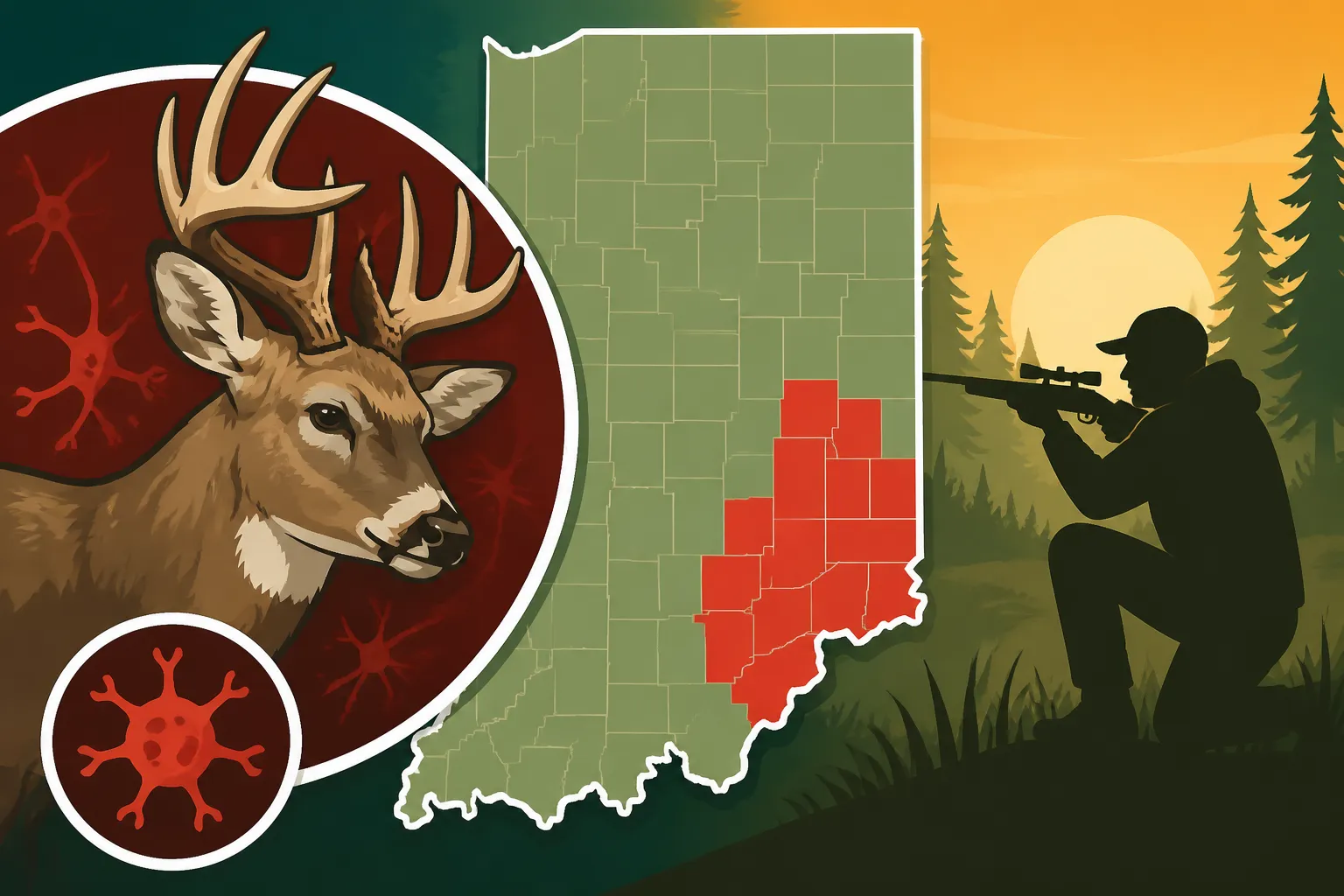
As of the most recent updates, Indiana's CWD Positive Area includes LaGrange, Noble, Steuben, DeKalb, Franklin, and Rush counties. These are the areas where CWD has been detected in wild deer, either through hunter-harvested animals or roadkill. It’s important to remember that these boundaries are not static; they can and will shift if new cases are confirmed in adjacent counties. The DNR works tirelessly to keep these maps current, and it’s always a good idea to check the official Indiana DNR website for the absolute latest information. Many hunters also find platforms like GoHunt invaluable for accessing up-to-date regulations and mapping features that highlight these specific zones.
When you're planning a hunt, especially near the edges of these counties, knowing exactly where you stand in relation to the CWD positive area is paramount. A deer harvested just outside a mandatory testing zone might have different processing and transport rules than one taken just inside. This can be confusing, so tools that visually display these boundaries are incredibly helpful. The goal is to ensure that hunters are aware of the increased risk in these areas and adhere to the necessary protocols designed to prevent further spread.
Here's a quick reference table for the currently designated CWD positive counties and their primary requirements:
| County Name | CWD Positive Status | Key Requirement | Notes |
|---|---|---|---|
| LaGrange | Positive | Mandatory CWD testing for all deer | Site of Indiana's first confirmed case. |
| Noble | Positive | Mandatory CWD testing for all deer | Adjacent to LaGrange, expanded the positive area. |
| Steuben | Positive | Mandatory CWD testing for all deer | Further detections in the northeast region. |
| DeKalb | Positive | Mandatory CWD testing for all deer | Part of the expanded northeast CWD positive area. |
| Franklin | Positive | Mandatory CWD testing for all deer | Southern Indiana detection, established a new positive area. |
| Rush | Positive | Mandatory CWD testing for all deer | Adjacent to Franklin, part of the southern CWD positive area. |
Always confirm the latest information directly from the Indiana DNR website, as these areas and rules can change.
Mandatory Check-In and Testing Requirements
Hunting within a CWD Positive Area means you'll encounter mandatory check-in and testing requirements. This isn't just a suggestion; it's a legal obligation designed to monitor the disease and gather critical data. If you harvest a deer in one of the designated CWD positive counties—LaGrange, Noble, Steuben, DeKalb, Franklin, or Rush—you are required to have that deer tested. This might sound like a hassle, but it's a crucial step in protecting Indiana's deer herd. Mandatory Testing Inside Indiana's Positive Area is non-negotiable for good reason.
The process usually involves taking your harvested deer, or at least the head, to a designated CWD sampling station within a specific timeframe after harvest. The DNR operates these stations, often at various Fish & Wildlife Areas (FWAs) or through cooperating taxidermists and processors. At the station, trained personnel will collect tissue samples, typically from the deer's lymph nodes and brainstem, for laboratory analysis. Imagine you've just dropped a nice buck in LaGrange County. Your excitement is high, but after field dressing, your next thought immediately shifts to, "Okay, where's the closest CWD sampling station?" You'll need to know Finding an Indiana CWD Sampling Location well in advance of your hunt.
What happens if your deer tests positive? While it's disheartening news, the DNR will contact you directly. They will provide guidance on safe disposal of the carcass and advise against consuming the meat. While there's no confirmed evidence of CWD transmitting to humans, health agencies like the CDC and WHO recommend caution and advise against eating meat from infected animals. It's a tough situation for any hunter, but these protocols are in place to prioritize public health and the long-term health of our wildlife.
Rules and Restrictions for Hunters in CWD Zones
Beyond the mandatory testing, there are specific rules about what you can and cannot do with a deer carcass if you harvest it within a CWD positive area. These restrictions are vital for preventing the accidental spread of prions to new locations.
Carcass Movement and Transport Restrictions
This is one of the most critical aspects for hunters to understand when hunting in a CWD positive area: you cannot move certain parts of a deer carcass out of a CWD positive county. The core idea behind these Indiana Carcass Movement Restrictions is to prevent the physical transport of prions to areas currently free of CWD. Prions are most concentrated in brain, spinal cord, lymph nodes, and spleen. Therefore, rules are designed to ensure these high-risk tissues remain within the designated zone or are disposed of safely.
So, what can you take out of a CWD positive county? Generally, deboned meat (with no brain or spinal tissue attached), boned-out quarters, cleaned skull plates with antlers attached (free of all brain material), raw antlers, hides (without head attached), and capes (without head or spinal material) are typically permitted for transport. Essentially, if it doesn't have central nervous system tissue or lymph nodes, it's usually good to go. This means if you're a hunter from Bloomington who travels up to Noble County and harvests a deer, you can't just throw the whole carcass in the back of your truck and drive it home to process. You'd need to either have it processed within Noble County or debone it completely before transporting the meat and other approved parts south. This requires careful planning and often means bringing along the right tools for field processing.
These rules aren't meant to inconvenience hunters; they are a direct and necessary measure to protect deer populations across the entire state. The movement of an infected carcass could inadvertently establish a new CWD hot spot far from the known positive area, undoing years of surveillance and management efforts. Adhering to these transport restrictions is one of the most impactful ways individual hunters can contribute to CWD containment.
Managing Your Harvest and Dealing with Positive Results
When you harvest a deer in a CWD positive area, the process extends beyond the shot and the drag. Proper management of your harvest, from field dressing to potential CWD test results, is paramount. After field dressing, if you plan to transport approved parts out of the positive area, ensure all non-approved materials (like the brain and spinal column) are properly disposed of according to DNR guidelines, typically in a landfill that accepts animal waste, or buried deep on private land with landowner permission. Many hunters opt to utilize local processors within the CWD positive counties to avoid the hassle of deboning in the field and ensuring all guidelines are met.
Receiving a positive CWD test result for a deer you've harvested is undeniably difficult. It can bring a mix of emotions, from disappointment over the lost venison to concern for the local deer herd. If your deer tests positive, the Indiana DNR will contact you directly to inform you of the results and provide instructions for the safe disposal of any remaining carcass or meat. While the Centers for Disease Control and Prevention (CDC) advises against consuming meat from CWD-positive animals, research is ongoing. The best practice is always to follow the DNR's guidance. This is also where resources like GoHunt become invaluable; they often provide easy access to current DNR advisories and offer tools to quickly locate approved processors or testing sites, making compliance less stressful during an already emotional time.
Remember, reporting and testing are the cornerstones of CWD management. Your participation, even in the face of a positive result, provides critical data that helps wildlife biologists understand the disease's prevalence and distribution, guiding future management strategies and protecting the broader deer population.
Ethical Hunting and Best Practices in CWD Areas
Hunting in a CWD positive area isn't just about following rules; it's about upholding the highest standards of ethical hunting and contributing positively to wildlife conservation. Our actions in the field have a direct impact on the health of the herd.
Responsible Field Dressing and Carcass Disposal
When you successfully harvest a deer in a CWD positive county, ethical practices for field dressing and carcass disposal take on an even greater importance. While it's common practice to field dress a deer where it falls, in a CWD zone, extra thought should be given to the disposal of the internal organs. The goal is to minimize the potential spread of prions. If possible, consider burying the internal organs deeply on private land, with the landowner's permission, rather than leaving them exposed. If hunting on public land, follow DNR guidelines, which often recommend leaving the gut pile at the kill site or disposing of it in a designated landfill that accepts animal waste. Never simply toss organs into a water source or along a public road.
Beyond the initial field dressing, think about how you handle the rest of the carcass. If you're bringing the deer out whole to a processor within the CWD positive county, ensure no blood or tissue drips from your vehicle onto public roadways, as this could inadvertently spread prions. Clean all your tools, knives, and even your boots thoroughly after processing or handling a deer from a CWD area. Simple bleach solutions are effective at deactivating prions on surfaces. These seemingly small actions collectively play a huge role in preventing environmental contamination and protecting future generations of deer. It's all part of being a responsible steward of the land and its wildlife.
Supporting DNR's CWD Management Efforts
As hunters, we are the front lines of conservation, and our cooperation is absolutely essential to the Indiana DNR's CWD management efforts. One of the most impactful ways to support these efforts is by actively reporting any sick or diseased-looking deer you encounter, regardless of whether you're in a CWD positive area or not. If you see a deer exhibiting symptoms like extreme emaciation, disorientation, drooling, or a lack of fear, do not approach it. Instead, contact the Indiana DNR immediately and provide detailed information about the location and observed behavior. Reporting a Sick Animal in Indiana can lead to early detection in new areas and helps biologists track the disease.
Furthermore, participating in voluntary testing, even if you hunt outside the mandatory zones, provides valuable surveillance data. The more samples the DNR can collect statewide, the clearer picture they have of CWD's presence or absence across Indiana. This Indiana Wildlife Disease Monitoring is a continuous effort, and hunter involvement is truly invaluable. By embracing these responsibilities, hunters act as crucial partners in public health and wildlife management, demonstrating our commitment not just to harvesting game, but to ensuring healthy populations for the long haul. It's about being part of the solution, not just observing the problem.
The Long-Term Outlook for Indiana's Deer Herd
Looking ahead, it's natural to wonder what CWD means for the vibrant deer hunting culture we have in Indiana. While the situation presents challenges, understanding the potential long-term impacts helps us prepare and adapt.
What CWD Means for Future Deer Populations
The presence of CWD introduces an element of uncertainty for the future of Indiana Deer Population Estimate. In states where CWD has been endemic for many years, biologists have observed several concerning trends. One of the primary long-term concerns is the potential for localized declines in deer density. As the disease spreads and prevalence rates increase within a herd, it can lead to higher mortality rates, particularly among older bucks, which are often the most exposed to prions due to their wider ranging behavior and social interactions.
This selective mortality can also impact the age structure of the deer herd, potentially leading to fewer mature animals. A healthy deer population typically has a balanced age structure, contributing to robust reproduction and overall herd resilience. CWD can disrupt this balance, potentially impacting the quality of the hunting experience and the genetic health of the herd. We've seen these long-term trends play out in neighboring states like Wisconsin and Illinois, where CWD has been present for a longer duration. While it doesn't typically wipe out an entire herd, it can certainly put significant pressure on local populations and require more intensive management strategies to maintain health and sustainable numbers.
The good news is that Indiana's CWD situation is still relatively new compared to some other states. This gives us the advantage of learning from their experiences and implementing proactive management strategies from the outset. Hunter cooperation, early detection, and adherence to regulations are key to mitigating the more severe long-term impacts observed elsewhere.
Adaptations and the Evolving Landscape of Indiana Hunting
The reality is, CWD will likely lead to some adaptations in how we approach hunting in Indiana. This isn't necessarily a bad thing; hunters have always been adaptable and resilient. One potential change could involve a greater emphasis on antlerless harvest in CWD positive areas. Reducing overall deer density can sometimes help slow the spread of the disease by reducing deer-to-deer contact. This might mean adjusting our personal hunting goals, perhaps focusing more on filling freezer tags than exclusively chasing trophy bucks, especially in areas with high CWD prevalence.
The evolving landscape of hunting will also place a continuous premium on staying informed. Regulations, CWD positive areas, and testing protocols are subject to change based on new scientific understanding and disease spread. Relying on reliable sources like the Indiana DNR website or comprehensive hunting platforms such as GoHunt will be essential for keeping up-to-date with current rules. These platforms often provide real-time updates and interactive maps that can make navigating regulations much simpler. Understanding Indiana Deer Season Structure Explained in the context of CWD management will become increasingly important for every hunter.
Ultimately, the future of Indiana's deer herd, particularly in the face of CWD, rests heavily on the continued dedication and responsible actions of its hunters. Our willingness to adapt, cooperate with wildlife agencies, and prioritize herd health will ensure that future generations can continue to enjoy the rich hunting heritage of the Hoosier state.
Common Questions and Concerns
It's completely normal to have a ton of questions and even some anxieties about CWD. Let's tackle some of the most common ones head-on, because clarity helps everyone.
Is CWD a Risk to Humans?
This is perhaps the most pressing question for many hunters: can CWD jump the species barrier and infect humans? The current scientific consensus, based on extensive research by organizations like the Centers for Disease Control and Prevention (CDC) and the World Health Organization (WHO), is that there have been no confirmed cases of CWD transmission to humans. This is a crucial point that should provide some reassurance.
However, the scientific community also advises a high degree of prudence and caution. While there's no direct evidence, some studies have shown that CWD can be transmitted to non-human primates in laboratory settings. Because of this, public health agencies strongly recommend against consuming meat from any deer that tests positive for CWD. They also advise avoiding the consumption of high-risk tissues such as the brain, spinal cord, eyes, spleen, tonsils, and lymph nodes from any harvested deer, regardless of CWD status, as a precautionary measure. It's a "better safe than sorry" approach, which most of us can appreciate when it comes to health. This ongoing research and vigilance are critical, and hunters should always stay updated on the latest recommendations from health and wildlife agencies.
What About Hunting on My Own Private Land?
If you're a private landowner, or if you have Getting Private Land Permission in Indiana and hunt on someone else's private tract within a CWD positive county, you are still subject to the same CWD regulations. The disease doesn't recognize property lines, and neither do the rules designed to manage its spread. This means mandatory testing requirements for harvested deer apply to both public and private land within the designated CWD positive areas.
It also means that carcass movement restrictions apply just the same. You cannot simply transport a whole deer carcass from your private land in LaGrange County to your processing facility or home in a CWD-free county. You'll need to follow the same rules about deboning or utilizing a local processor within the positive zone. Many private landowners are actively encouraged by the DNR to participate in voluntary testing programs, even if they're just outside the mandatory zone. This cooperation from private land hunters is incredibly valuable because it expands the surveillance network and provides a more complete picture of disease distribution. Open communication with neighbors and adherence to all regulations, regardless of land ownership, is essential for a unified front against CWD.
Beyond the Positive Area: Statewide Vigilance
Even if you hunt far from Indiana's current CWD positive areas, vigilance is everyone's responsibility. CWD doesn't stay neatly within lines on a map forever, and preventing further spread is a collective effort.
Scouting for Signs of CWD Statewide
As hunters, we spend countless hours in the woods, observing deer and their behavior. This unique position makes us invaluable allies in the fight against CWD. Regardless of where you hunt in Indiana, you should always be on the lookout for deer exhibiting symptoms that could indicate CWD. We talked about them earlier: extreme weight loss, stumbling, excessive drooling, lethargy, or a complete lack of fear toward humans. These are not normal behaviors for a healthy wild deer.
If you observe such a deer, the crucial step is to Reporting a Sick Animal in Indiana to the DNR immediately. Do not attempt to interact with or dispatch the animal yourself unless you are explicitly instructed to do so by a conservation officer. Provide the DNR with as much detail as possible, including the exact location, time of sighting, and a description of the deer's condition and behavior. Your eyes and ears in the field are a critical component of the state's Indiana Wildlife Disease Monitoring program, acting as an early warning system that could help detect CWD in a new area before it becomes widespread.
Preventing Further Spread and Staying Informed
Beyond reporting sick animals, every hunter can take practical steps to prevent the further spread of CWD. One of the simplest yet most effective actions is to thoroughly clean all your hunting equipment. This includes knives, saws, boots, ATVs, and even vehicle interiors that might have come into contact with deer fluids or tissues. A bleach solution is effective at deactivating prions. By ensuring your gear is clean, you prevent inadvertently transporting prions from one location to another.
Another vital preventative measure, especially if you hunt out of state, is to never transport whole deer carcasses, or even high-risk parts, from a CWD-positive state back into Indiana. This is a common pathway for disease introduction, and it's imperative that we respect these border restrictions. Finally, staying informed is paramount. Regulations, CWD-positive areas, and scientific understanding of the disease can evolve. Regularly checking the Indiana DNR's official website or utilizing up-to-date hunting information platforms like GoHunt for their robust regulatory updates will ensure you're always operating with the most current knowledge. This proactive approach, coupled with responsible hunting practices, is our best defense against the ongoing threat of CWD.
Disclaimer
The information provided in this guide is intended for educational and informational purposes only and is not a substitute for official regulations. Hunting laws and CWD management protocols are subject to change. Always consult the official Indiana Department of Natural Resources (DNR) website and regulations for the most current and accurate information before engaging in any hunting activities.