Indiana Deer Population Estimate
It can be incredibly frustrating, can't it? You spend hours scouting, hanging stands, and meticulously planning your hunts, only to feel like you're playing a guessing game when it comes to the actual number of deer roaming Indiana's woods and fields. We all want to know if the herd is healthy, if our efforts will pay off, and if there are enough deer to sustain our passion for hunting. This guide is here to pull back the curtain, diving deep into how Indiana estimates its deer population, what those abstract numbers truly mean for you as a hunter, and what influences the whitetail's health and distribution across our beloved Hoosier State.
Understanding Indiana's Deer Population Numbers
For many of us, the idea of estimating a wild deer population seems like an impossible task. We see deer sign, we might spot a few, but how does anyone put a number on it? Yet, these figures are crucial. They're not just arbitrary statistics; they directly impact the hunting seasons, tag allocations, and even the habitat work we see across the state.
Why Deer Population Estimates Matter to Hunters
Deer population estimates might seem like something only the Indiana Department of Natural Resources (DNR) cares about, but they have a profound effect on every hunter's experience. Have you ever wondered why certain counties have different antlerless bag limits, or why some areas are designated as deer reduction zones? It all comes back to these numbers. When populations are robust and exceeding carrying capacity in certain areas, the DNR might increase available tags, giving us more opportunities to fill the freezer. Conversely, if numbers are declining due to disease or habitat loss, regulations might become more conservative to help the herd recover.
This directly translates to your hunt planning. Imagine spending weeks scouting a piece of public land, only to find out later it's in a county with a significantly lower deer density than you expected. It's disheartening. Understanding these estimates can guide you to areas with a higher likelihood of success, helping you manage your expectations and focus your efforts where they'll make the most impact. Beyond our immediate hunting success, these numbers are the backbone of sustainable wildlife management. They help conservationists monitor herd health, track the spread of diseases like Chronic Wasting Disease in Indiana Deer, and direct resources to crucial habitat improvements, all of which ultimately ensure healthy deer populations for generations to come.
The Indiana DNR's Methodology for Deer Counts
So, how does the Indiana DNR actually count deer? It’s not as simple as flying over with binoculars and tallying every white tail. Instead, they employ a combination of scientific methods that, while imperfect, provide the best possible snapshot of the herd. One of the primary methods is analyzing annual harvest data. Every time a hunter registers a deer, whether online or through the app, that information—including sex, age, and location—is fed into a larger dataset. This extensive data, compiled in the Indiana Deer Harvest Records, helps biologists understand trends in reproduction, survival, and overall herd health.
Beyond harvest reports, the DNR conducts various surveys. Spotlight surveys involve driving designated routes at night, shining spotlights into fields and woodlots, and counting the deer observed. While labor-intensive, these surveys provide a direct count in specific areas. Aerial surveys, often using thermal imaging, can also be used in areas with less canopy cover, though Indiana’s dense forests can make this challenging. They also rely on landowner reports and biological samples from harvested deer to determine age structures and health markers. It's a complex, multi-faceted approach, and the DNR works tirelessly to piece together the most accurate picture possible despite the inherent challenges of counting wild animals across a vast and diverse landscape. While no one method is foolproof, this combination allows for a reasonably accurate assessment of the state's deer population, which hunters can sometimes cross-reference with tools like the mapping features offered by services like GoHunt to understand their local hunting grounds better.
Current Deer Population Trends Across Indiana
Like any dynamic wildlife population, Indiana's deer herd is constantly in flux. Understanding the overarching trends and how they manifest differently in various regions of the state is key to becoming a more informed and effective hunter.
Statewide Deer Population Estimate and Trends
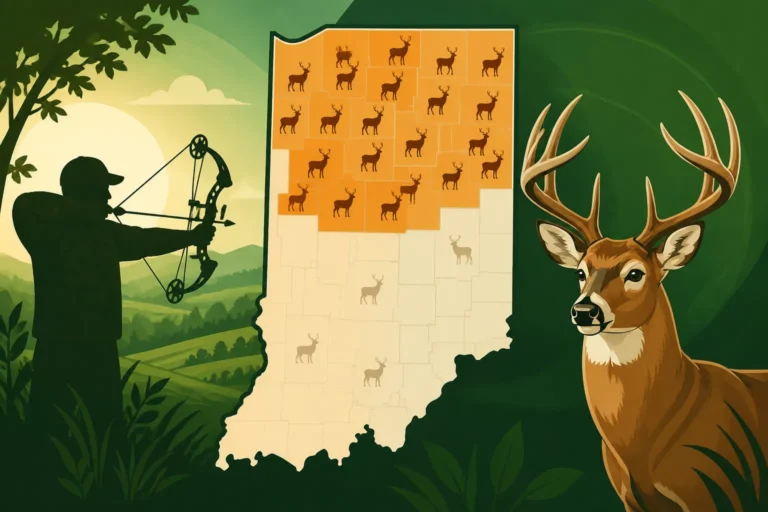
Indiana's deer population has seen significant growth over the past several decades, a testament to successful conservation efforts. While precise, real-time numbers are difficult to pin down given the nature of wildlife, the Indiana DNR manages the herd to maintain a balance between ecological health, recreational hunting opportunities, and minimizing negative impacts on agriculture and human safety. Based on recent data, Indiana's deer population is generally considered robust and stable, with estimates often ranging in the high hundreds of thousands, or even over a million, depending on the year and the methodology. For instance, recent DNR reports suggest the herd might be around 1.3 million deer statewide, with annual harvests for the 2022-2023 season nearing 130,000 deer.
This stability isn't accidental; it's the result of ongoing habitat management, controlled hunting pressure through careful season setting (Indiana Deer Season Structure Explained), and monitoring for factors that could cause significant declines. However, "stable" doesn't mean unchanging. Factors like severe winters, widespread disease outbreaks (such as EHD, which periodically causes localized die-offs), and shifts in land use can all cause localized fluctuations. Urban sprawl, for example, might push deer out of some areas while concentrating them in others, leading to increased deer-vehicle collisions. The goal isn't necessarily the highest deer population, but rather a healthy, resilient one that thrives within the ecological carrying capacity of its environment.
Regional Differences in Deer Density
One of the most fascinating aspects of Indiana deer hunting is the stark regional variation in deer density and characteristics. The Hoosier State can be broadly divided into several distinct ecological zones, and the deer population in each reflects the unique habitat, food sources, and hunting pressure present.
In Southern Indiana, particularly the rugged hills of the Hoosier National Forest and surrounding state forests (Brown, Monroe, Jackson-Washington, Yellowwood), deer densities tend to be lower than in the agricultural north. However, this region is often celebrated for producing older, larger-bodied, and bigger-racked bucks. Why? The challenging terrain, larger tracts of unbroken timber, and generally lower hunter access in some areas allow bucks to mature, leading to more impressive antlers. Food sources here primarily consist of mast crops like acorns and hickory nuts, supplemented by browse. When a hard mast crop fails, deer movement can be drastically altered as they search for alternative Late-Season Food Sources for Indiana Whitetails. Hunters in this region often employ strategies like Still-Hunting Southern Indiana Ridges to cover ground efficiently.
Conversely, Northern Indiana Farmland Deer thrive in a landscape dominated by corn and soybean fields. Here, deer densities are often significantly higher due to the abundance of high-energy food sources. These deer may not always grow to the same impressive size as some of their southern counterparts due to younger age structures (higher harvest rates), but the sheer numbers offer fantastic hunting opportunities. The challenge in these areas is often gaining access to private land or learning how to effectively hunt fragmented woodlots and fencerows. The fertile soils and intensive agriculture provide a consistent food supply, which can sometimes buffer the effects of poor mast crops elsewhere. Specific strategies are often required, such as Hunting Northern Indiana Farmland Deer tactics focusing on field edges and small cover. The Wabash River Valley, for example, presents a unique blend of both worlds, with agricultural fields bordering extensive river bottomlands, creating prime habitat funnels and dense pockets of deer.
These regional differences highlight the importance of understanding not just statewide numbers, but also the local dynamics of the area you plan to hunt.
Factors Influencing Indiana's Deer Herd Health
Indiana's deer herd, like any wild population, is constantly influenced by a variety of environmental and biological factors. These elements can dictate everything from average body weight and antler growth to overall population health and distribution. Understanding them helps us appreciate the complexity of wildlife management.
Habitat and Food Availability
The availability and quality of habitat are arguably the most critical factors influencing Indiana's deer herd. Deer are incredibly adaptable, but even they have limits, and their health is directly tied to what they can eat and where they can find cover. In the vast, timbered regions of Southern Indiana, mast crops like acorns, hickory nuts, and beechnuts are foundational. A bumper crop of acorns can lead to deer entering winter in prime condition, fostering strong fawn production and antler growth the following year. However, a poor acorn year can force deer to travel more extensively, browse on less nutritious forage, and enter the lean winter months in poorer health, potentially impacting fawn survival rates. This variation is a constant consideration for hunters planning to hunt specific areas.
In the agricultural heartland of central and northern Indiana, corn and soybean fields serve as massive, seasonal buffets for deer. The high caloric content of these crops contributes to larger body sizes and often robust antler development in younger bucks. However, this reliance on agriculture also brings challenges, primarily in the form of crop damage, which often leads to demand for more aggressive deer management, including Hunting a Deer Reduction Zone. When fields are harvested, deer are forced to shift their feeding patterns, often moving into remaining standing cover, small woodlots, or seeking out alternative food sources. Suburban expansion also plays a role, pushing deer into smaller green spaces and creating unique challenges for both deer and humans. Effectively, whether it's a deep forest or a field edge, a deer's local diet dictates its physical condition and behavior.
Disease and Predation Pressures
While food and habitat are vital for life, diseases and predation can act as natural checks on deer populations, sometimes with devastating local effects. Chronic Wasting Disease (CWD) is a persistent and growing concern in Indiana. This neurological disease, which is always fatal to deer, elk, and moose, has been detected in several counties in northeastern Indiana—specifically LaGrange, Steuben, Noble, DeKalb—and more recently in Franklin and Rush counties. The presence of CWD necessitates increased surveillance, mandatory testing in certain areas, and restrictions on carcass movement to prevent its spread. Hunters in affected counties are encouraged to get their deer tested, a crucial step in monitoring and managing this disease. It's a stark reminder that a seemingly healthy deer herd can face invisible threats.
Another significant health challenge is Epizootic Hemorrhagic Disease (EHD), a viral disease spread by biting midges, often called "no-see-ums." EHD outbreaks are cyclical, typically occurring in late summer and early fall during periods of drought and warm weather. Deer often congregate around dwindling water sources, making transmission easier. Symptoms include fever, swelling of the head and neck, and internal hemorrhaging, often leading deer to seek water, where many succumb. While EHD can cause localized die-offs that dramatically impact local deer numbers, it typically doesn't affect the long-term statewide population. Its localized nature can certainly lead to a frustrating season for hunters in a hard-hit area, though. Lastly, predation, primarily from coyotes, plays a role in fawn survival, especially in areas with poor fawning cover. While coyotes don't typically control adult deer populations, their impact on fawn recruitment is a factor considered by wildlife managers. Learning tactics like Coyote Calling in Indiana Farm Country can sometimes help manage local coyote populations, which might indirectly benefit fawn survival.
What Deer Population Estimates Mean for Your Hunt
Numbers can be dry, but when you translate Indiana's deer population estimates into actionable insights for your next hunt, they become incredibly powerful tools. Don't let the statewide figures overwhelm you; focus on how to use them to your advantage.
Interpreting Harvest Reports and County Data
The Indiana DNR's annual harvest reports are a goldmine of information, far more than just a tally of deer taken. These reports, often broken down by county, provide insights into the sex and age structure of the harvested deer, success rates, and even the relative health of the herd in different regions. By studying the Indiana Deer Harvest Records, you can identify trends: Are hunters taking more antlerless deer in a certain county, indicating a higher population density? Are bucks consistently older in one region versus another? This data can help you narrow down potential hunting spots and adjust your expectations.
For example, a county with a consistently high antlerless harvest and a large overall take might suggest a healthy, perhaps overpopulated, herd, potentially making it easier to fill an antlerless tag or encounter more deer in general. Conversely, if you're chasing a true trophy buck, you might look at counties known for producing older bucks, even if the overall harvest numbers are lower. Remember, high harvest numbers don't necessarily mean the most deer, but could reflect higher hunter pressure or more liberal regulations aimed at reducing the herd. Tools like those found on GoHunt, which often synthesize and visualize this kind of data, can make interpreting these reports even easier. They help you pinpoint Best Indiana Counties for Big Bucks or understand the dynamics of a specific region you plan to Scouting Indiana Public Land Before Season.
Adapting Hunting Strategies to Local Populations
Knowing the estimated deer population in your target area should directly influence your hunting strategy. This isn't just about going where there are "more deer," but understanding how deer behave differently in varying population densities and habitats.
In high-density farmland areas, especially in Northern Indiana, deer often have abundant food but limited secure cover. Here, your strategy might involve focusing on small woodlots, creek bottoms, and thick fencerows that connect larger parcels of timber or serve as bedding areas adjacent to agricultural fields. Understanding deer movement patterns between these cover pockets and feeding areas is paramount. You might find success with shorter-range setups, utilizing ground blinds, or even small-scale deer drives with a few buddies. When hunting these areas, paying close attention to entry and exit routes that minimize disturbance is crucial, as deer here are often very sensitive to pressure. Techniques discussed in Hunting Northern Indiana Farmland Deer often emphasize these close-quarters tactics.
Conversely, in the lower-density, vast tracts of Southern Indiana hill country, success often hinges on meticulous scouting and patience. Here, deer might be spread out over larger areas, and finding concentrations can be challenging. You'll want to focus on identifying key terrain features like ridge-top saddles, benches, natural funnels, and deep hollows where deer travel or bed. Food sources can be more scattered, making mast crop abundance a critical factor. Reading Aerial Photos for Southern Indiana Deer becomes an invaluable skill to pinpoint potential hotspots. Your hunts here might involve more still-hunting or long sits over carefully chosen ambush points, understanding that encounters might be fewer but potentially more rewarding with mature animals. Regardless of the region, using mapping apps like GoHunt can significantly aid in identifying these crucial features and understanding the land, helping you adapt your approach whether you're chasing numbers or a trophy.
| Feature | Northern Indiana (Farmland) | Southern Indiana (Hill Country) |
|---|---|---|
| Deer Density | Generally Higher | Generally Lower |
| Primary Food | Agricultural crops (corn, soybeans) | Mast crops (acorns), browse |
| Average Age of Bucks | Younger | Older |
| Antler Size Potential | Good, often rapid growth due to nutrition | Excellent, given age and genetics |
| Hunting Pressure | Moderate to High, especially on public | Moderate to High on public, but more remote |
| Typical Habitat | Woodlots, fencerows, creek bottoms | Steep ridges, deep hollows, thick timber |
Disclaimer
The information provided in this guide is for general informational purposes only and is based on current understanding of Indiana's hunting regulations and wildlife management practices. Hunting regulations and wildlife populations can change. Always consult the official Indiana Department of Natural Resources (DNR) website and current hunting guides for the most up-to-date and accurate information before planning any hunting activity.