Why Indiana Treats Hogs as Unprotected
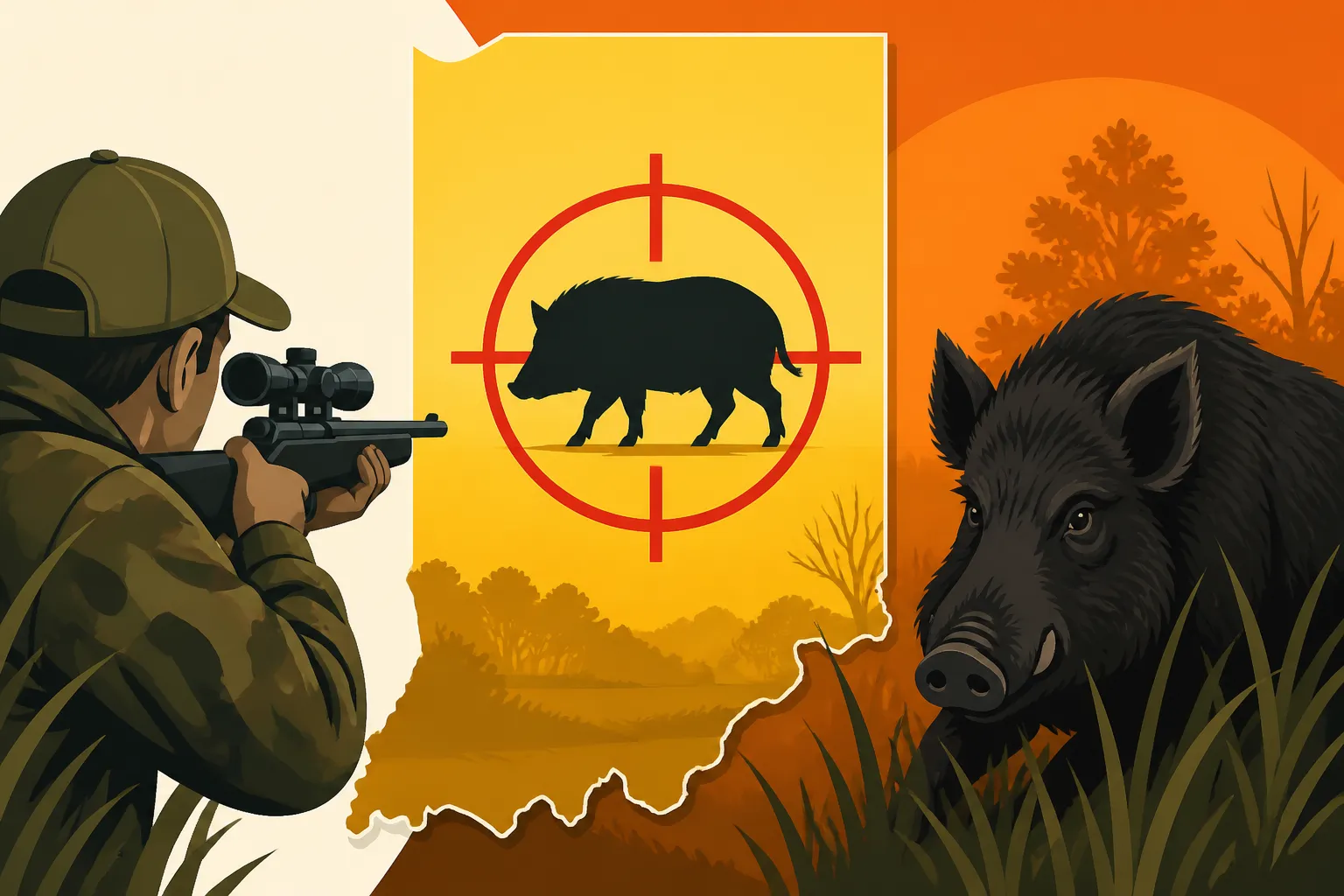
If you've spent any time at all looking into hunting regulations here in Indiana, you've probably noticed something a little peculiar about feral hogs: they're not exactly treated like our beloved whitetails or spring gobblers. In fact, Indiana takes a very aggressive stance, classifying them as unprotected and encouraging their removal. This guide will walk you through exactly why the Hoosier State has adopted such a firm position against these destructive invaders.
The Relentless Threat Feral Hogs Pose to Indiana
Let's face it, nobody wants to see a species completely unprotected unless there's a really good reason. And with feral hogs, those reasons are as clear as mud on a freshly rooted field. These aren't your typical wild animals; they're an ecological and agricultural catastrophe waiting to happen, or rather, already happening, right here in our backyard.
Ecological Devastation Caused by Hogs
Imagine going to your favorite woodlot, a place you've hunted for years, only to find it torn up as if a rototiller ran wild. That's the hallmark of feral hogs. Their incessant rooting for food disturbs soil, damages native vegetation, and destroys delicate ecosystems that our native wildlife depends on. They don't just eat acorns; they devour everything from plant roots to ground-nesting bird eggs, frogs, and even small fawns. This directly competes with native species like deer, turkeys, and small game for vital food resources. We often talk about Indiana Deer Antler Growth Timeline or Indiana Turkey Brood Survey Results, but what about the impact these hogs have on those very populations by destroying habitat and food sources? It's a significant and often underestimated threat.
Their wallowing habits, meant to cool themselves down and remove parasites, also contaminate water sources and destroy stream banks, leading to erosion and impacting water quality for all creatures, including us. It's a ripple effect across the entire landscape, altering the natural balance and making it harder for our treasured Indiana wildlife to thrive.
Agricultural Nightmare and Economic Loss
If you're a farmer in Indiana, the sight of feral hog damage isn't just an ecological concern; it's a direct hit to your livelihood. These animals are incredibly destructive to crops, be it corn, soybeans, or specialty produce. They'll root through fields, consuming newly planted seeds, mature plants, and even cause enough damage to make harvesting difficult or impossible.
The damage isn't limited to crops. Hogs will also tear up pastures, fences, and irrigation systems, leading to costly repairs and lost grazing land for livestock. The economic impact can be staggering for individual farmers, and cumulatively for the state's agricultural industry. The relentless nature of their destruction makes them a constant headache and a severe financial burden for those who work the land. Farmers are always looking at Indiana Deer Damage Permits for Farmers, but hogs cause damage on a different scale entirely.
Disease Vectors and Biosecurity Threats
Beyond the physical destruction, feral hogs are notorious carriers of diseases that can be transmitted to livestock, wildlife, and even humans. They can harbor diseases like pseudorabies, brucellosis, leptospirosis, and even transmit E. coli and salmonella through their waste. Imagine the devastating impact if a serious disease outbreak, carried by hogs, swept through a commercial hog farm or even our wild deer herd, which we already closely monitor for issues like Chronic Wasting Disease in Indiana Deer.
This biosecurity threat is a major concern for state agencies and agricultural producers. Their transient nature and ability to move long distances mean they can quickly spread pathogens across different areas. This potential for disease transmission is another critical reason why Indiana views feral hogs not as a game animal to be managed, but as a pest to be eliminated.
Indiana's Legal Stance: Why Hogs are "Unprotected"
The term "unprotected" isn't thrown around lightly when it comes to wildlife management. It signifies a clear policy direction: these animals are considered detrimental to the state's natural resources and agricultural interests, and their numbers need to be reduced, not maintained or managed. Indiana's approach is designed to give landowners and hunters the maximum flexibility to remove these animals.
Defining "Unprotected" in Indiana Law
When Indiana declares feral hogs "unprotected," it means a few crucial things for hunters and landowners. Firstly, there is no closed season for feral hogs. You can hunt them year-round. Secondly, there is no bag limit; if you can take one, five, or ten, you are encouraged to do so. And thirdly, on private land with landowner permission, you do not need a hunting license to harvest feral hogs. This is a significant departure from how virtually every other species is treated. For details, you can always check Indiana Hog Hunting Permit Requirements which often clarify what is not required due to this status.
This "unprotected" status underscores the urgency and severity of the threat. The state isn't trying to regulate a population for sustainable harvest; it's actively trying to prevent them from establishing permanent, widespread populations. It's a battle against an invasive species, and every hog removed is a win for Indiana's ecosystems and farms.
The Goal: Eradication, Not Management
Unlike our deer herd, which is carefully managed through various seasons and bag limits to maintain a healthy population balance, the goal with feral hogs is outright eradication. There's no desire to have a "healthy" population of feral hogs in Indiana. They are not native, they are destructive, and their presence causes far more harm than good.
This eradication philosophy means that hunters are viewed as a critical part of the solution, working in concert with landowners and state agencies. When you're out Hunting Indiana's Year-Round Feral Hogs, you're not just enjoying the outdoors; you're actively contributing to conservation efforts by removing a harmful invasive species. The state’s position on Indiana Feral Hog Regulations is very clear: get rid of them.
Contrast with Protected Game Species
To truly understand Indiana's approach to feral hogs, it helps to contrast it with how protected game species are handled. Think about Indiana Deer Season Structure Explained or Indiana Spring Turkey Season Rules. For these animals, there are strict seasons, bag limits, license requirements, and often specific equipment restrictions. The entire framework is built around ensuring healthy populations persist for future generations to hunt and enjoy.
| Feature | Feral Hogs (Unprotected) | White-tailed Deer (Protected) | Wild Turkey (Protected) |
|---|---|---|---|
| Hunting Season | Year-round | Specific seasons (Archery, Firearms, Muzzleloader) | Specific seasons (Spring, Fall Archery, Fall Firearms) |
| Bag Limit | No limit | Strict limits (e.g., 2 antlered, multiple antlerless) | Strict limits (e.g., 1 or 2 per spring season) |
| License Required | No license required on private land with permission | Yes, appropriate deer license/bundle required | Yes, appropriate turkey license required |
| Goal | Eradication | Sustainable population management | Sustainable population management |
| Ecological Status | Invasive, destructive | Native, integral part of ecosystem | Native, integral part of ecosystem |
| Reporting Harvest | Voluntary, but encouraged (especially for sightings) | Mandatory, within specific deadlines | Mandatory, within specific deadlines |
Feral hogs exist outside this regulatory structure entirely because they pose a fundamental threat to the very species and habitats we seek to protect. It's an "all hands on deck" approach, leveraging every available tool to combat their spread and impact.
How Hunters Can Help Control Feral Hogs
If you're a hunter in Indiana, you're uniquely positioned to make a difference in the fight against feral hogs. Your skills, dedication, and understanding of wildlife behavior can be invaluable in reducing their numbers and protecting our natural resources.
Effective Hunting and Trapping Methods
Hunting feral hogs can be challenging, as they are intelligent and adapt quickly to pressure. However, there are several effective methods.
Direct Hunting:
This involves actively pursuing hogs, often using thermal or night vision equipment on private land where legal, since hogs are largely nocturnal to avoid human activity. Stalking during daylight can also be effective, especially in dense cover where they like to bed. When hunting, focus on areas with fresh rooting or tracks, particularly near food sources or water. Using tools like GoHunt can help you scout and mark areas of activity before you ever step foot in the woods.
Trapping:
For larger groups of hogs, trapping is often the most effective method. Large corral traps, often equipped with remote triggers and cameras, can capture entire sounders (groups of hogs). This method is labor-intensive and requires commitment, but it yields the highest removal rates. Baiting with fermented corn is a common and highly effective strategy to draw them into traps. If you're serious about taking out a whole sounder, exploring resources on Trapping Indiana Feral Hogs will be invaluable.
Night Hunting:
On private land, with landowner permission, night hunting with artificial lights or thermal optics can be incredibly effective. This taps into the hogs' nocturnal habits and can give hunters an advantage. Just remember to always verify local regulations and ensure you have explicit permission. You can learn more about specific tactics in Night Hunting Hogs With Lights on Private Land.
Remember, the key is persistence and an understanding of hog behavior. They are smart, and they learn quickly, so varying your approach and staying vigilant is crucial.
The Critical Role of Landowner Permission
While you don't need a hunting license to take feral hogs on private land, you absolutely do need explicit permission from the landowner. Trespassing, even to remove a destructive animal, is illegal and will undermine the critical partnership between landowners and hunters. Many landowners are desperate for help with hog control, so don't be shy about asking. A clear conversation and perhaps even a written agreement can go a long way.
Establishing these relationships is vital not just for hog hunting, but for building goodwill within the hunting community. Landowners are the frontline defenders against these invaders, and hunters are their best allies. Respect for private property is paramount, and using mapping tools, like those found on GoHunt, can help you clearly identify property lines and ensure you're always on authorized ground.
Reporting Sightings and Harvests
While reporting a hog harvest isn't mandatory like it is for deer, it's highly encouraged by the Indiana Department of Natural Resources (DNR). The more data they have on where hogs are being seen and harvested, the better they can understand their distribution and develop strategies for control.
If you see hog sign, or if you harvest an animal, consider contacting your local DNR office or using their reporting system if available. This information helps them track How Many Feral Hogs Indiana Has and identify Which Indiana Counties Have the Most Hogs. This collective effort helps paint a clearer picture of the challenge and allows for more targeted intervention. Being a responsible hunter means not just taking an animal, but contributing to the bigger conservation picture, and in the case of feral hogs, that means being an active participant in their removal and monitoring.
Understanding the Broader Impact of Feral Hogs
The presence of feral hogs in Indiana isn't just a fleeting problem; it's a long-term challenge that requires ongoing vigilance and proactive measures. Their intelligence, adaptability, and incredibly rapid reproduction rates make them particularly difficult to control once established.
Hog Intelligence and Adaptability
Feral hogs are remarkably intelligent creatures. They learn quickly to avoid traps, evade hunters, and adapt their behavior to human pressure. This makes them a formidable adversary. If a sounder loses a few individuals to hunting pressure, the survivors often become even warier, shifting to more remote areas or becoming almost entirely nocturnal. This constant adaptation means that control efforts must be equally dynamic and persistent. Simply hunting them sporadically is rarely enough to make a significant dent in their numbers; consistent, year-round pressure is key.
Their diet is also incredibly flexible. They are true omnivores, eating almost anything they can find. This dietary versatility allows them to thrive in diverse habitats, from deep woods to agricultural fields, making them a threat across vast swaths of Indiana. Evidence of their varied diet and widespread rooting can be seen in reports on Indiana Feral Hog Diet and Rooting Damage.
The Reproductive Capacity Challenge
One of the most concerning aspects of feral hogs is their incredible reproductive capacity. Sows can begin reproducing at a very young age, sometimes as early as six months old, and can have multiple litters in a single year, often with 4-10 piglets per litter. This means that populations can explode in a very short amount of time. Even if hunters and trappers are successful in removing a significant number of hogs, if the breeding population isn't consistently suppressed, their numbers can quickly rebound.
This high reproductive rate is why a strategy of "management" simply isn't feasible. We're not talking about a species that slowly rebuilds its numbers. We're talking about a biological machine built for rapid expansion, making eradication the only viable long-term solution to protect Indiana's natural and agricultural heritage. The threat they pose to other species, for example, the impact on ground-nesting birds, is a growing concern, highlighted by topics like Indiana Songbird Nest Predation by Hogs.
The fight against feral hogs in Indiana is a critical one, demanding the active participation of hunters, landowners, and state agencies. By understanding why these animals are unprotected and what role we can play, we can all contribute to protecting our state's precious resources for generations to come.
Disclaimer
This article is for general informational purposes only and does not constitute professional advice. Laws, prices and regulations vary by location and change over time. Consult a qualified professional for guidance on your specific situation.