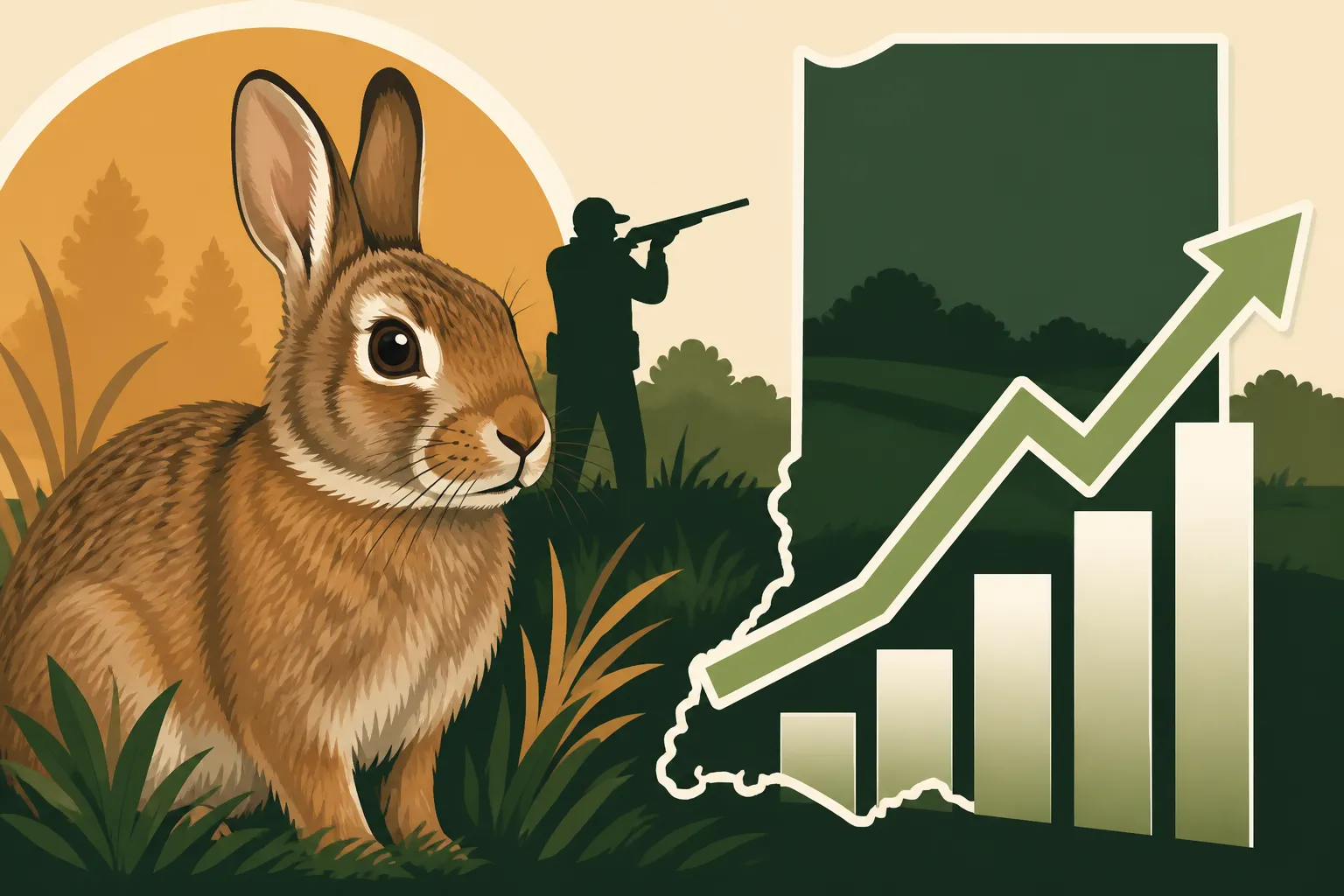
Indiana Cottontail Population Trend
If you've spent any time hunting rabbits in Indiana over the last few decades, you've probably noticed a significant change. Those once-bustling fencerows and briar patches that used to hold multiple cottontails seem quieter now, leaving many of us scratching our heads and wondering where all the rabbits have gone. This guide is here to shed some light on the complex factors influencing Indiana's cottontail population trends, helping you understand the bigger picture and how you might adapt your hunting strategies to find success.
The Shifting Landscape: A Look Back at Indiana's Cottontail History
For generations, hunting cottontail rabbits was a quintessential Hoosier tradition, a rite of passage for many young hunters, and a cherished social event for seasoned outdoorsmen. My grandpa used to tell stories of simply walking a ditch bank or a small woodlot and flushing a dozen rabbits in an afternoon, enough to fill the stew pot and enjoy some fantastic table fare. These tales weren't just fond memories; they reflected a genuine abundance that was common across much of Indiana.
Back then, the landscape supported cottontails in ways we often don't see today. Farms were smaller, less intensely managed, and often featured a mosaic of row crops, pastures, small woodlots, and, critically, miles of brushy fencerows and neglected field edges. These areas provided the perfect mix of food and cover that rabbits need to thrive. Think about it: a fencerow choked with multiflora rose, honeysuckle, and blackberry bushes offered immediate escape from predators, while the adjacent crop fields provided easy forage. The farming practices, though efficient for their time, inadvertently created ideal rabbit habitat, leading to robust populations that could withstand reasonable hunting pressure and natural predation. It wasn't uncommon for families to have a small pack of beagles, and a cold December day meant a hot pursuit through thickets, a tradition deeply embedded in Indiana's hunting culture.
The Modern Challenges: Why Cottontails Face an Uphill Battle Today
The reality is, the world has changed dramatically for Indiana's cottontails. While we sometimes attribute declines to increased predator populations or even disease, the biggest drivers are almost always rooted in changes to their environment. It's a tough pill to swallow because many of these changes are a byproduct of modern agriculture and urbanization, things we can't easily reverse.
One significant factor is simply the evolution of farming practices. Modern agriculture is incredibly efficient, a necessity to feed a growing world. However, this efficiency often means larger fields, fewer odd corners left to grow wild, and a strong push to eliminate "waste areas" like brushy fencerows. What might look like an unproductive strip of weeds and briars to a farmer is, in fact, prime real estate for a rabbit. When these strips are cleared, sprayed, or mowed down, the rabbits lose critical escape cover and nesting sites. They become more exposed to predators like coyotes, foxes, and raptors, and their ability to raise successful broods plummets. When you consider the vast amount of Indiana that is agricultural land, these changes have had a widespread and profound effect on rabbit numbers.
Another undeniable challenge is urbanization and suburban sprawl. As towns and cities expand, natural and semi-natural habitats are converted into housing developments, strip malls, and roads. Even if a small woodlot remains, it becomes an isolated island of habitat, often too small to support a stable population, especially when connected to further development. What was once a continuous stretch of fields and small woods becomes fragmented, making it difficult for rabbits to disperse, find mates, or escape localized threats. This habitat fragmentation can be a death knell for small game species like rabbits, which rely on having interconnected patches of cover.
Habitat: The Ultimate Driver of Rabbit Numbers
When we talk about cottontail populations, it always comes back to habitat. Rabbits are prolific breeders, capable of producing multiple litters a year. Their survival hinges on two things: readily available food and, even more critically, dense escape cover. Without safe places to hide from predators, raise their young, and weather harsh conditions, even a high birth rate can't sustain a population.
Think of a rabbit's ideal home. It's not just a grassy field; it's a field bordered by a dense thicket, a briar patch, or a multiflora rose hedge that's almost impenetrable to a coyote or a hawk. Within that cover, they can build nests and hide from danger. Adjacent to it, they need access to tender shoots, clover, and other forage. Unfortunately, these perfect conditions are becoming increasingly rare. Many of the old, unkempt fencerows that were once so common, acting like highways for small game, have been removed to accommodate larger farm equipment or to maximize tillable acreage. This "clean farming" approach, while economically sound for farmers, has removed millions of feet of vital linear habitat.
Furthermore, natural habitat succession plays a role. Old fields that aren't actively managed will eventually grow into young forests. While young forests can provide some cover, they often lack the dense, ground-level vegetation and diverse food sources that rabbits prefer compared to early successional habitats like old fields, brushy pastures, and shrubby wetlands. Habitat management efforts, often by organizations or state agencies, are crucial in creating and maintaining these specific types of cover. Without these concerted efforts, the natural progression of plant life often works against the cottontail. This is why you'll often see robust rabbit populations on managed public lands where specific habitat goals are in place. If you're using a tool like GoHunt to scout prospective hunting areas, look for those dense, brushy patches right next to open areas. The best rabbit hunting spots are rarely just open fields or dense woods; they're almost always that transitional, brushy edge.
The Role of Specific Cover Types
Different types of cover provide different benefits to rabbits, and a healthy population thrives when there's a good mix. Briar patches, honeysuckle thickets, multiflora rose, and even dense piles of brush or downed trees are absolute gold for cottontails. These thorny, tangled masses offer physical barriers against predators that might otherwise easily snatch a rabbit from a grassy field. They also provide crucial thermal cover, protecting rabbits from harsh winter winds and heavy snows.
Consider an unkempt property line or the edge of a woodlot that has been allowed to grow wild for years. That dense undergrowth, often considered "weeds" by some, is a rabbit haven. This type of habitat offers multiple layers of protection. Rabbits can burrow into the deepest parts of these thickets to escape and also use the edges for feeding. Unfortunately, the push for aesthetically "clean" property lines and the conversion of marginal lands to other uses often means these crucial thickets are the first to go. Finding areas where landowners have embraced a more natural approach to managing their field edges, or where public lands actively manage for early successional habitat, will be key for successful rabbit hunting. This is also where historical aerial imagery on mapping apps like GoHunt can be incredibly useful, showing you how habitat has changed over the years.
| Factor | Impact on Cottontail Populations | Trend in Indiana |
|---|---|---|
| Habitat Loss | Direct reduction of available living space and cover. | Increasing due to clean farming and development. |
| Habitat Fragmentation | Isolates populations, limits dispersal, increases exposure. | Increasing, breaking up continuous habitat. |
| Modern Farming | Removes fencerows, reduces edge habitat, limits food variety. | Dominant, pushing efficiency over diverse habitat. |
| Urban Sprawl | Converts natural areas to developed land. | Steady increase in many suburban and exurban areas. |
| Predation | Natural part of ecosystem; exacerbated by poor cover. | Potentially higher impact due to reduced cover. |
| Disease/Weather | Localized die-offs; severe winters can reduce numbers. | Fluctuates annually, less consistent than habitat. |
| Hunting Pressure | Generally localized, minor impact on overall population. | Minimal, given the scale of other factors. |
Hunting Smarter: Strategies for Finding Rabbits in a Changing World
Given these trends, the days of simply strolling through any old field and expecting to find a limit of rabbits are largely behind us. But that doesn't mean rabbit hunting is dead in Indiana. It simply means we need to adapt our approach. Hunting Rabbit Hunting Indiana Fencerows or Rabbit Hunting Thick Indiana Brush requires understanding where rabbits can still thrive despite the challenges.
First and foremost, focus your efforts on areas with the best remaining habitat. This means actively seeking out dense, brushy cover. Look for property lines that haven't been meticulously cleared, old overgrown ditches, stream banks choked with briars, or neglected corners of woodlots. These are the places where rabbits can still find the refuge they need. Using satellite imagery on mapping tools before you even leave home is crucial. You can scout for those tell-tale dense green patches that signify thick, rabbit-friendly cover. Pay attention to how these patches connect to potential food sources.
Secondly, don't overlook public land, but understand that even public land often requires specific scouting to find prime rabbit habitat. Some Indiana Fish and Wildlife Areas or State Forests actively manage for early successional habitat, which is fantastic for rabbits. Look for areas that have undergone recent timber stand improvement, clear-cuts, or shrub plantings. These disturbed areas, as they begin to regrow, often create excellent transitional cover that rabbits absolutely love. Don't be afraid to put in the legwork. Sometimes, the best rabbit spots are a good walk from the nearest access point, which also means less competition from other hunters.
Finally, consider the time of year and weather. Late season, after a good snowfall, can be particularly productive. Snow makes rabbit tracks easy to spot, revealing where they are concentrated and what routes they're using to move between cover and food. It also often forces rabbits into the densest cover, making them easier to pinpoint. Remember, rabbits are resilient, but they need help from the habitat to truly flourish. By understanding the challenges and adapting our strategies, we can still enjoy the timeless tradition of Squirrel and Small Game Hunting in Indiana, and especially chasing cottontails, in the Hoosier state. Don't forget to check Indiana Squirrel and Rabbit Season Rules before heading out.
Finding these pockets of habitat can feel like a treasure hunt, but with modern tools and a keen eye, it's absolutely achievable. Mapping applications are your best friend here. Before you even set foot on the property, use a platform like GoHunt to zoom in and identify specific types of cover. Look for those distinct patterns of dense, low-growing vegetation, often indicated by darker green hues or irregular shapes adjacent to open fields or timber. This "armchair scouting" can save you hours of fruitless walking and direct you straight to the most promising spots. Often, the best Running Beagles on Indiana Cottontails experiences come from scouting these spots beforehand.
Moreover, if you have private land access, consider having a conversation with the landowner about habitat improvements. Simple things like leaving a fencerow untrimmed, creating brush piles, or planting native shrubs can make a world of difference for local rabbit populations. Even small, unmanaged areas can become critical sanctuaries. These small, targeted efforts can create significant impact, especially when you think about connecting isolated patches of cover. Hunting the Indiana Rabbit Season Dates effectively is all about finding those forgotten corners.
Recognizing Prime Rabbit Habitat
To truly adapt, you need to develop an eye for what constitutes prime rabbit habitat. It’s more than just "some bushes." It’s about the density and structure of that cover. Imagine trying to push a dog through it – if it's so thick you can barely crawl, that's good! Rabbits want to be able to hide from a predator that might be bigger and faster.
Look for a combination of these elements:
- Dense, thorny thickets: Multiflora rose, blackberry briars, honeysuckle, osage orange hedges. These offer physical protection.
- Tall grasses and weeds: Especially those that have fallen over, creating a matted layer underneath, which provides both cover and nesting material.
- Brush piles and downed trees: These create instant pockets of cover and escape routes.
- Field edges with unkempt growth: Where the cultivated field meets the wild, and the transition zone is several feet wide and very dense.
- Drainage ditches or creek bottoms: These often have more persistent cover and slightly different vegetation types than the surrounding uplands.
- Conifer stands or cedar thickets: Especially in winter, these provide excellent thermal cover.
When you're out scouting, don't just look for tracks; look for the structure of the landscape. Are there travel corridors between dense cover and food sources? Are there safe spots to dart into immediately if danger approaches? Understanding these nuances of Indiana Rabbit Habitat Restoration Efforts will greatly improve your success. Remember, even in areas with fewer rabbits overall, pockets of excellent habitat will still hold them. Finding Ground Others Walk Past often means finding these overlooked, dense areas.
Impact of Weather and Other Environmental Factors
While habitat is king, we can't ignore the influence of weather and other environmental factors on annual fluctuations in cottontail numbers. Rabbits are pretty resilient, but extreme conditions can take a toll. Very harsh winters with prolonged deep snow and extreme cold can reduce survival rates, especially for younger or less robust individuals. It makes foraging difficult and increases exposure to predators. Conversely, mild winters can lead to better overwinter survival and earlier breeding in the spring.
Heavy, prolonged rainfall during nesting season can also be detrimental, especially to young rabbits in shallow nests. Kits are vulnerable to hypothermia and drowning in waterlogged nests. Disease outbreaks, while less common for cottontails than for some other species, can also occasionally cause localized population dips. However, these natural fluctuations are generally temporary. If good habitat is present, populations tend to rebound fairly quickly due to the rabbit's impressive reproductive capacity. The challenge arises when these environmental stressors hit populations that are already struggling due to inadequate habitat. They simply don't have the buffer to recover as robustly as they once did. So, while you can't control the weather, knowing its recent impact can help you manage your expectations when you're out Scouting Indiana Public Land Before Season for rabbits.
Disclaimer
This article is for general informational purposes only and does not constitute professional advice. Laws, prices and regulations vary by location and change over time. Consult a qualified professional for guidance on your specific situation.